Tropical Jungle Wallpaper Murals for a Resort Feeling at Home
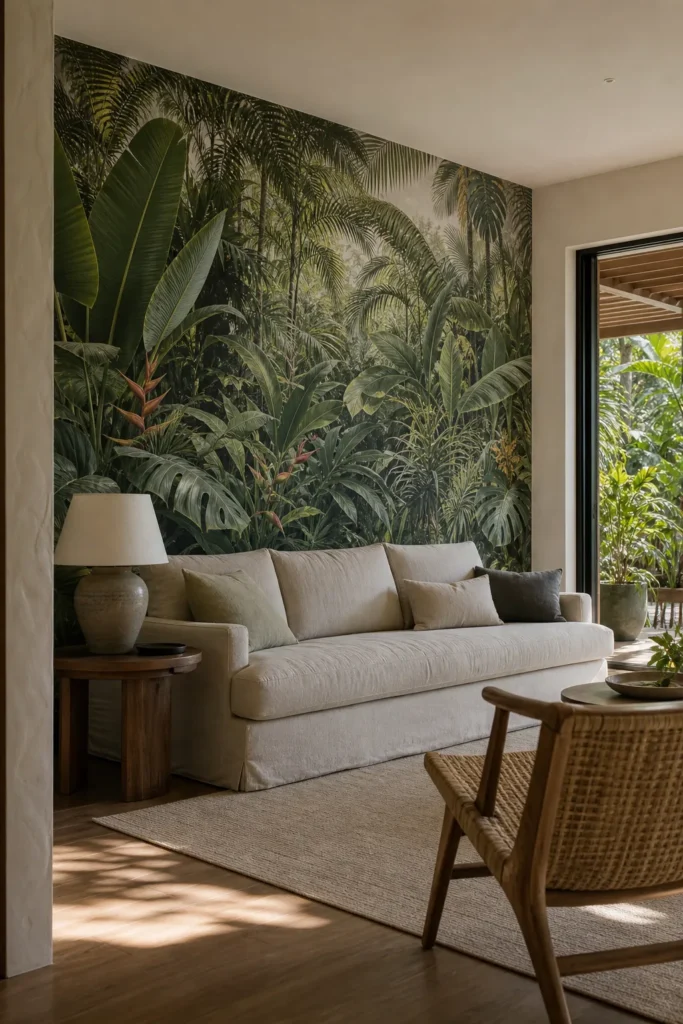
A resort room rarely feels relaxing because it contains more tropical objects. It feels relaxing because the view is strong, the palette is controlled, and everything else knows when to be quiet. That is the right way to use a tropical jungle wallpaper mural at home. Let the wall create the escape; use the rest of the room to make that escape believable.
The biggest hesitation is understandable: dense palms, oversized leaves, and deep greens can look immersive in a sample and overwhelming across an entire wall. The solution is not automatically choosing a timid print. It is choosing the right wall, scale, color temperature, and supporting materials before you order. Done with restraint, a jungle mural wallpaper can make an ordinary living room, bedroom, or dining nook feel like the best corner of a boutique resort.
Give the mural one clear job
Start by deciding what the wall needs to do. Should it create a view behind the sofa, turn the bed into a destination, add depth to a windowless dining area, or make an entry feel like a transition into somewhere calmer? A mural becomes easier to select when it has a specific job. “Make the room tropical” is too vague; “create a shaded garden view behind the low linen sofa” is useful.
The best focal wall is the one you naturally see when entering the room. It should have enough uninterrupted surface for the important foliage to read clearly. A wall broken by several doors, tall cabinets, or a large television can cut the composition into fragments. Outlets and a low console are usually manageable, but place the mural’s main palm, path, or bright opening where furniture will not erase it.
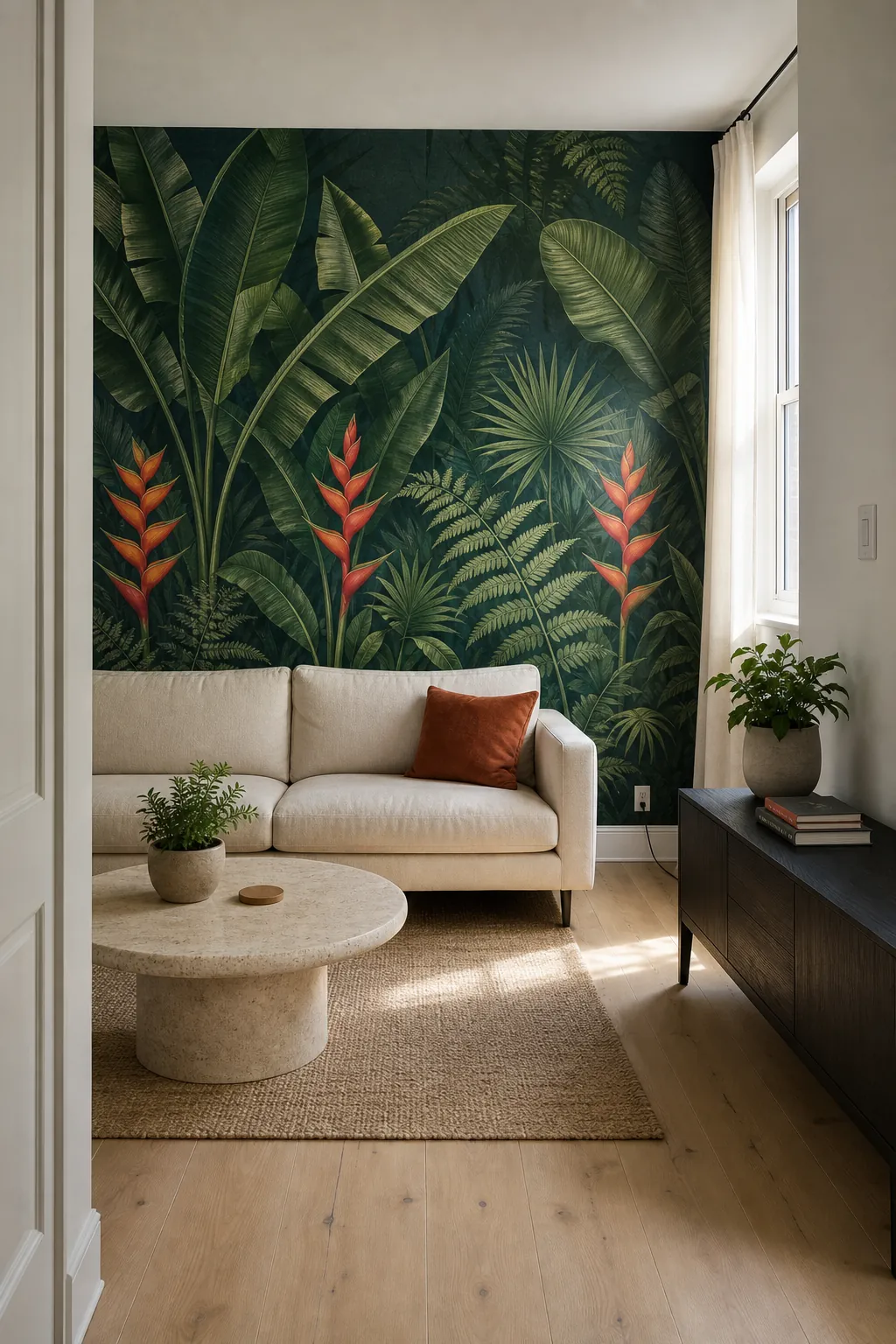

In an open-plan space, limit the strongest story to one visual zone. A full-height tropical mural living room wall can define the sitting area without painting architectural boundaries. Keep the adjacent dining or kitchen walls quieter so the eye can register where the moment begins and ends.
Choose depth and scale before choosing details
People often shop by motif first—monstera, banana leaf, palm, bird of paradise—but scale changes the room more than the species does. A tight repeat of small leaves reads as pattern. A large jungle wallpaper scene with overlapping foreground and background layers reads as a view. If the goal is a resort feeling, that sense of visual distance is usually more convincing than a busy all-over print.
Stand where you normally enter or sit and estimate the viewing distance. From across a living room, broad leaf shapes and one legible focal opening will remain clear. In a narrow powder room or compact reading nook, a large-scale design can still work, but choose a composition without several competing animals, flowers, and high-contrast landmarks. Large scale does not have to mean loud.
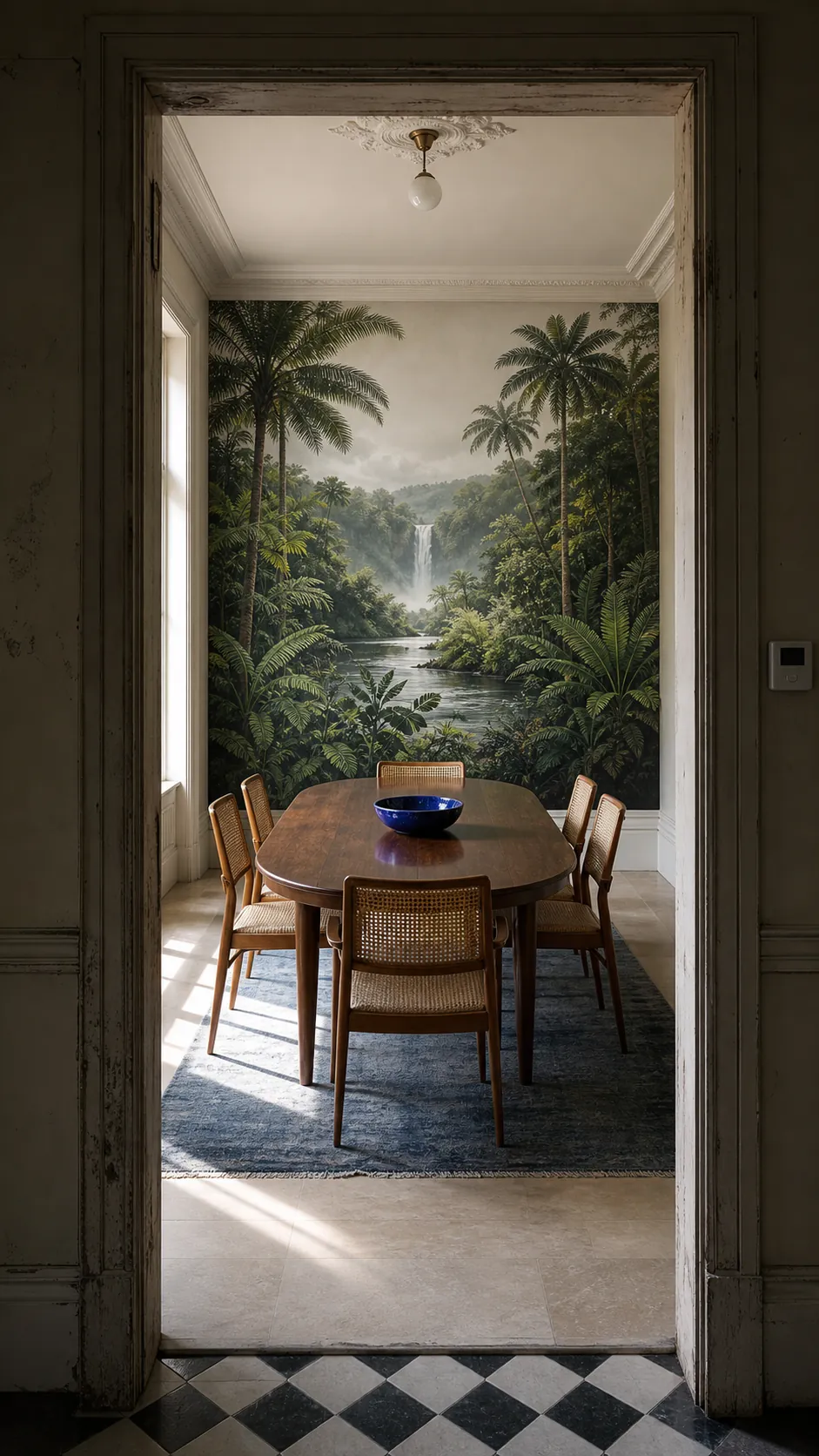

Check the crop on a proof made to your wall’s exact proportions. A generic product thumbnail may show a square scene while your wall is long and low. Measure the widest and tallest points, note slopes and permanent obstructions, and add the maker’s recommended trimming allowance. The beautiful bright clearing should not disappear behind a headboard because the crop was never tested.
Build the room from the mural’s quieter colors
A convincing resort palette is broader than emerald green. Look closely at the mural and pull two supporting colors from its less obvious areas: perhaps misty sage from the distance, warm sand from a path, charcoal from a palm trunk, or muted clay from a flower. Those secondary tones make the mural feel integrated instead of pasted onto an unrelated room.
- For an airy retreat: use pale oak, chalky white, linen, light rattan, and sage.
- For a shaded boutique-hotel mood: use walnut, tobacco leather, aged brass, deep olive, and warm cream.
- For a coastal tropical room: use washed timber, woven seagrass, soft blue-green, off-white, and a small amount of black for definition.
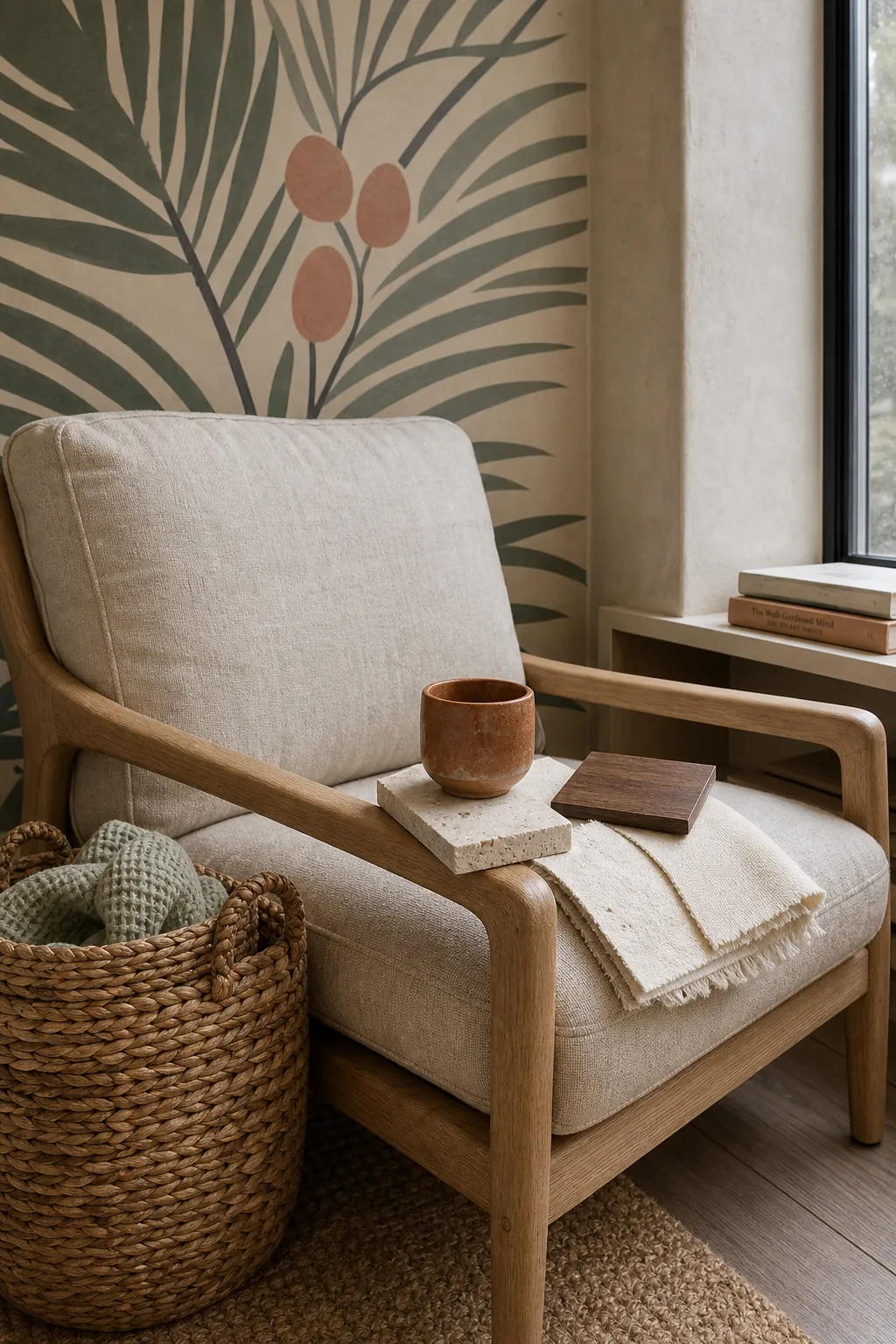

Resist the urge to repeat palm leaves on curtains, cushions, bedding, and rugs. That turns a panoramic scene into a theme. Solid fabrics with visible texture are usually stronger: slubby linen, cotton canvas, woven cane, honed stone, and timber with an honest grain. One striped cushion or hand-thrown ceramic vessel can add rhythm without competing with the wall.
Use light to reveal the jungle, not bleach it
Room light can turn the same resort style wall mural from crisp and fresh to flat and murky. Before ordering, tape a large printed sample to the intended wall and look at it in morning daylight, late afternoon, and after dark. North-facing or shaded rooms often suit murals with a lighter middle distance and fewer near-black areas. Sun-filled rooms can support deeper greens, provided direct glare does not wash out the print.
At night, use more than one light source. A shaded floor lamp near seating, a table lamp on a console, and an adjustable ceiling or wall light can reveal layers without flooding the mural evenly. Aim light across textured surfaces rather than directly at a glossy wallcovering. Warm-neutral bulbs keep the room welcoming, but extremely amber light can make fresh greens look muddy.
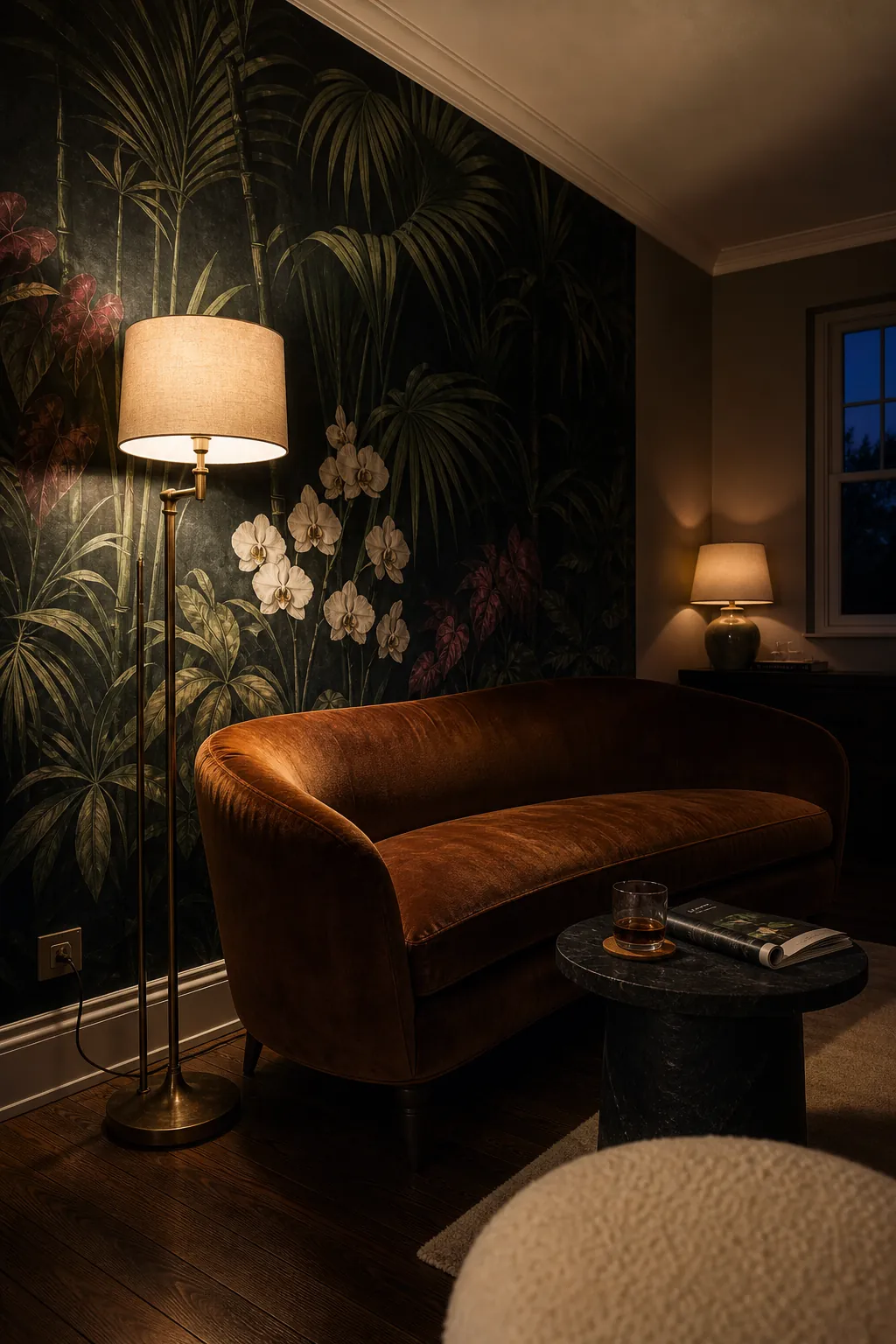

If the mural sits behind a sofa or bed, keep the nearest lamps simple and sculptural. Their silhouettes will be read against foliage, so open tripod bases, heavily patterned shades, and clusters of tiny objects can make the composition restless. A single ceramic lamp or slim aged-brass sconce gives the eye a clean foreground layer.
Let furniture create the resort rhythm
A vacation room feels unhurried because circulation is obvious and furniture is not pressed into every gap. Leave visible floor around the main seating group, keep the top of a headboard or sofa below important mural details, and give at least one corner a quieter pause. You do not need a canopy bed or a matching rattan set. One or two natural-material pieces are enough.
For a bedroom, pair a vacation home wallpaper scene with a low upholstered headboard, plain bedding, and a bench or stool in timber or woven fiber. In a living room, use a simple sofa profile and allow a round side table or curved lounge chair to echo the organic leaves. In a dining room, keep chair backs open or visually light so the mural remains legible behind them.
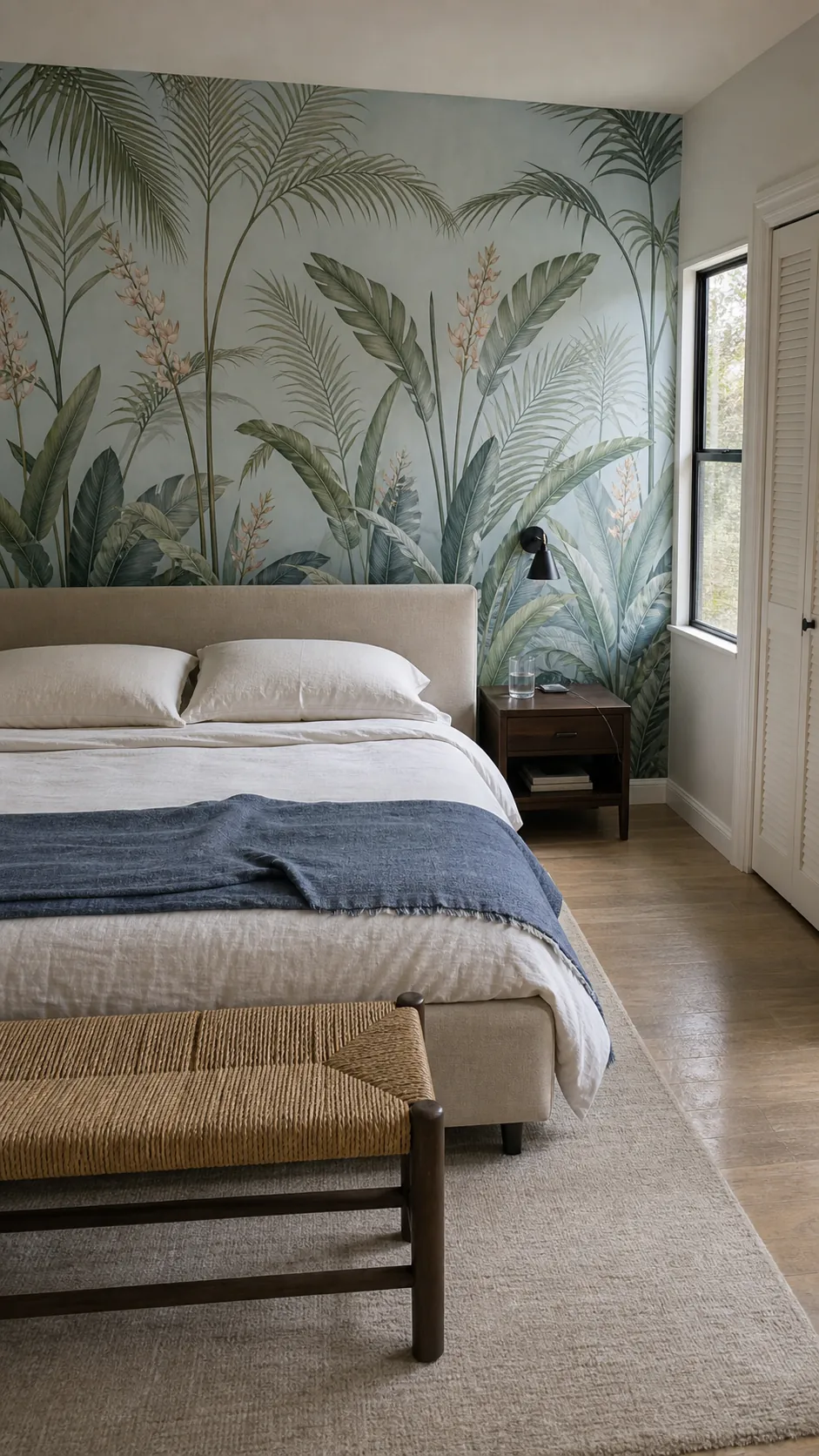

Plants are optional. The mural already supplies lushness, and too many real plants can blur the distinction between a designed interior and a display. If you add greenery, choose one plant with a contrasting leaf form and place it where it will not camouflage the mural’s focal point. A single kentia palm in a plain pot may be enough; in a mural already dominated by palms, a compact rubber plant or sculptural succulent can provide a cleaner contrast.
Plan the material and installation before committing
The visual decision is only half the project. A panoramic mural exposes poor preparation more readily than a forgiving small repeat because seams and alignment matter across one continuous scene. Confirm whether the product is paste-the-wall, pre-pasted, peel-and-stick, or a commercial wallcovering, then follow that manufacturer’s wall preparation and adhesive instructions rather than mixing advice from different systems.
- Repair dents and high spots, then make the wall clean, smooth, dry, and uniformly colored.
- Check whether fresh paint or plaster needs a full curing period or a compatible primer.
- Measure at multiple points; older walls and ceilings are rarely perfectly square.
- Mark a true vertical guide instead of trusting the nearest corner.
- Lay panels out in sequence and inspect the full image before adhesive touches the wall.
- Ask another person to help with tall peel-and-stick panels, which can fold onto themselves while being aligned.
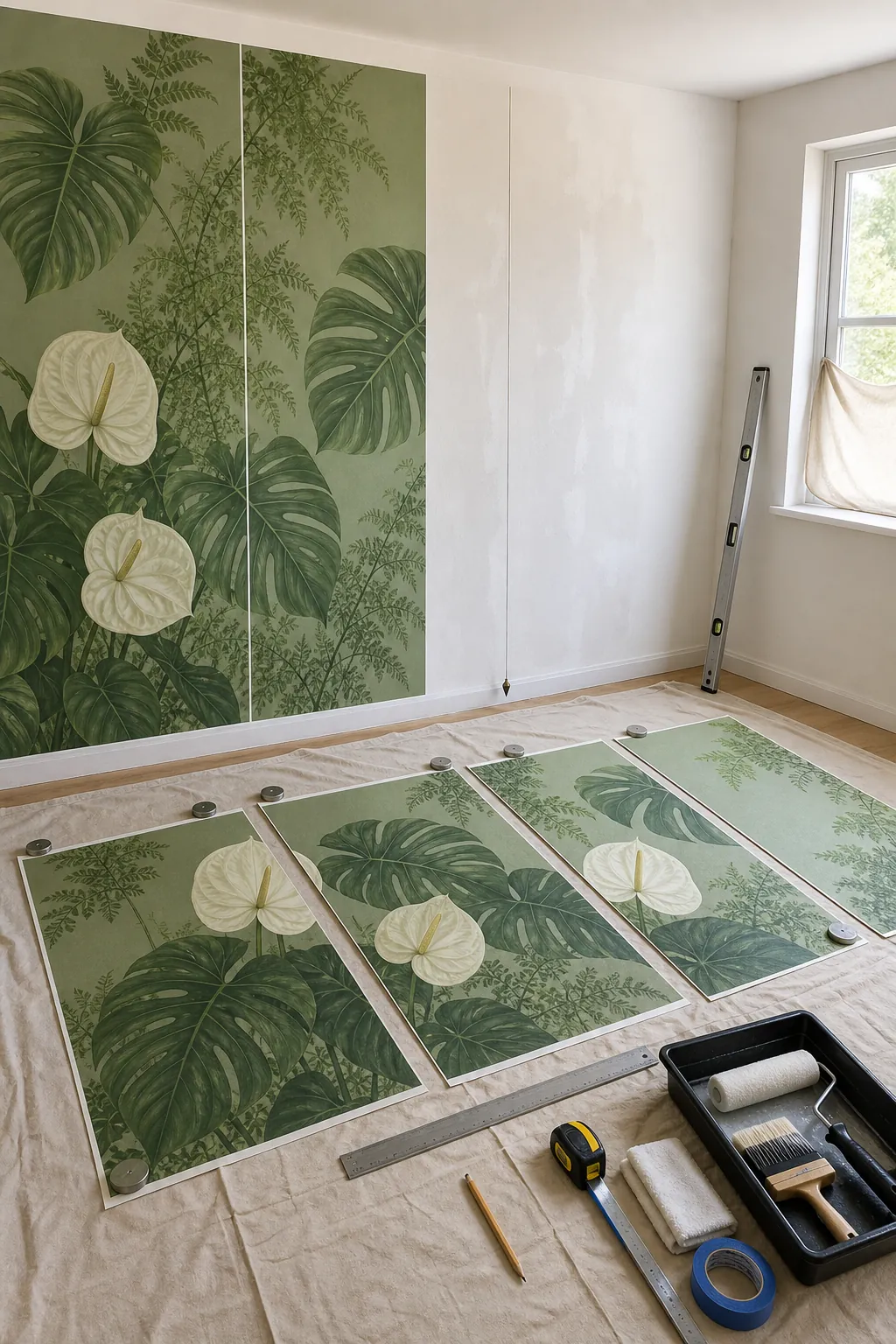

Renters should treat “removable” as a product claim to verify, not a universal guarantee. Adhesion and removal depend on paint condition, finish, wall texture, humidity, and how recently the wall was painted. Order a sample and test it in an inconspicuous area for the period recommended by the manufacturer. For high-humidity rooms, confirm that the wallcovering, adhesive, ventilation, and wall surface are all suitable for that environment.
Make the final decision from inside your real room
Do not approve a palm jungle mural from a phone screen alone. Print or order the largest sample available, move it around the wall, and place your actual sofa fabric, flooring sample, and curtain color beside it. Then remove a few decorative items from the room and look again. If the mural suddenly feels calmer, the mural was not the problem; the room needed editing.
The strongest tropical wall murals do not shout “vacation” through novelty décor. They change the perceived view, soften the boundary of the room, and create a backdrop for slower, more comfortable living. Choose one immersive scene, protect its breathing room, and let natural texture and thoughtful light finish the resort feeling.