Rolling Hills Wallpaper Murals for Soft Dining Room Focal Walls
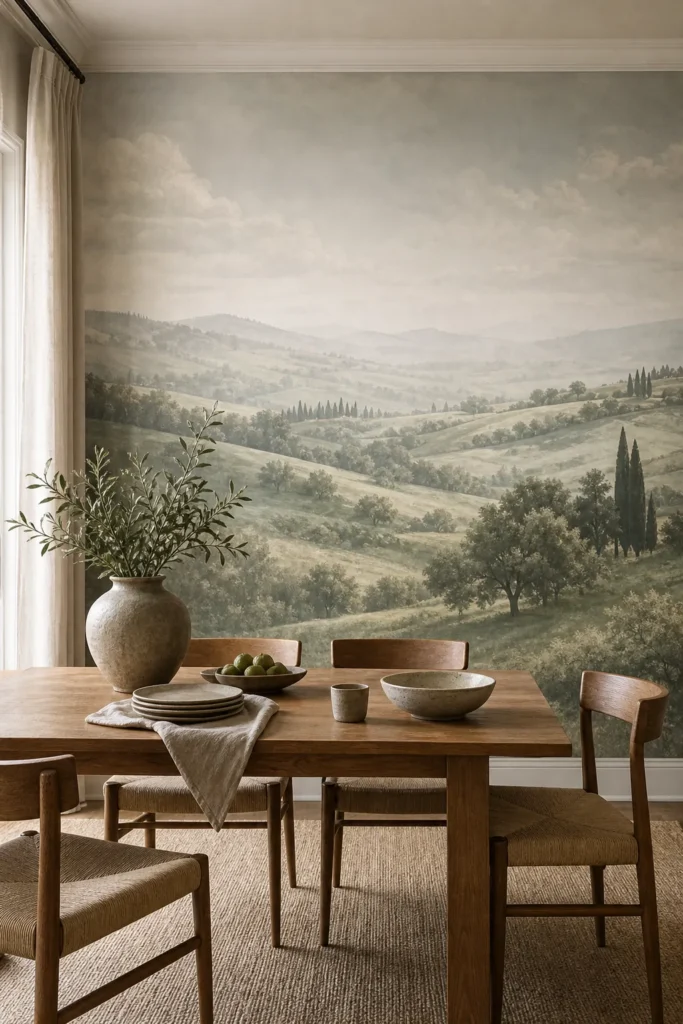
A rolling hills wallpaper mural is one of the gentlest ways to give a dining room a focal point. It brings in view, depth, and atmosphere, but it does not have to shout over the table. When the palette is muted and the horizon sits in the right place, the wall becomes more like a distant landscape outside the room than a loud accent wall.
That is why this idea works especially well for dining rooms that need softness. A dining space already has a strong center: the table, the chairs, the light fixture, and the people gathered there. A rolling hills wallpaper mural supports that center instead of competing with it. The best versions feel scenic, pastoral, and calm, with enough detail to hold attention during a slow meal and enough quiet space to let the room breathe.
Why Rolling Hills Work So Well Behind a Dining Table
A dining room scenic mural has to solve a different problem than wallpaper in a powder room or bedroom. It is not just there to be pretty in a photo. It needs to look good from seated height, across the table, through a doorway, and under evening lighting. Rolling hills are forgiving because the shapes are broad, horizontal, and naturally restful.
The soft curves echo the line of a tabletop. The distant horizon gives the wall a sense of depth. The muted greens, taupes, creams, and blue-grays often found in a pastoral wall mural are easy to repeat in upholstery, curtains, rugs, and painted trim. Instead of introducing a hard graphic pattern, the mural creates a background scene that can make the room feel finished without making it feel busy.

Start With the Wall, Not the Paint Color
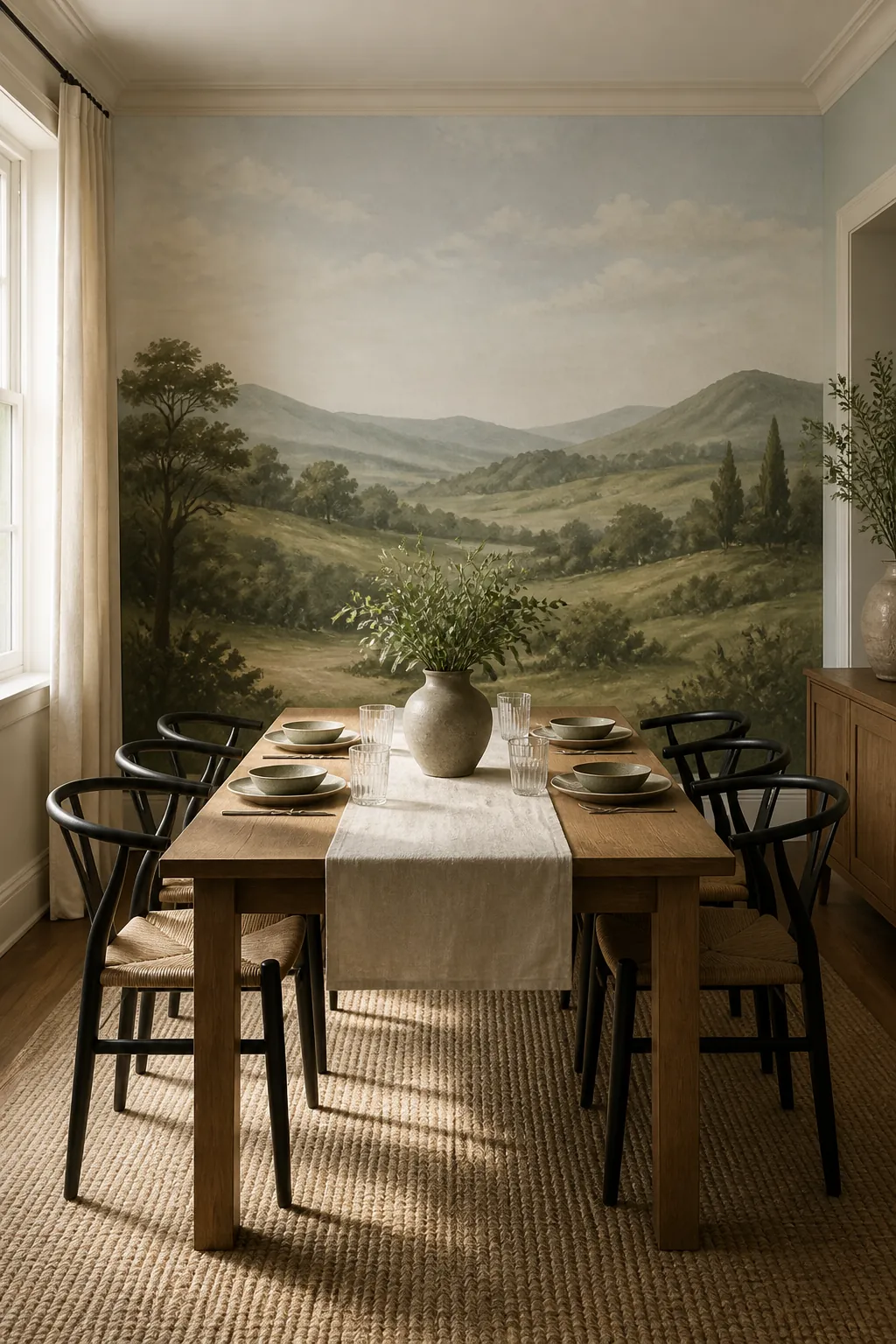
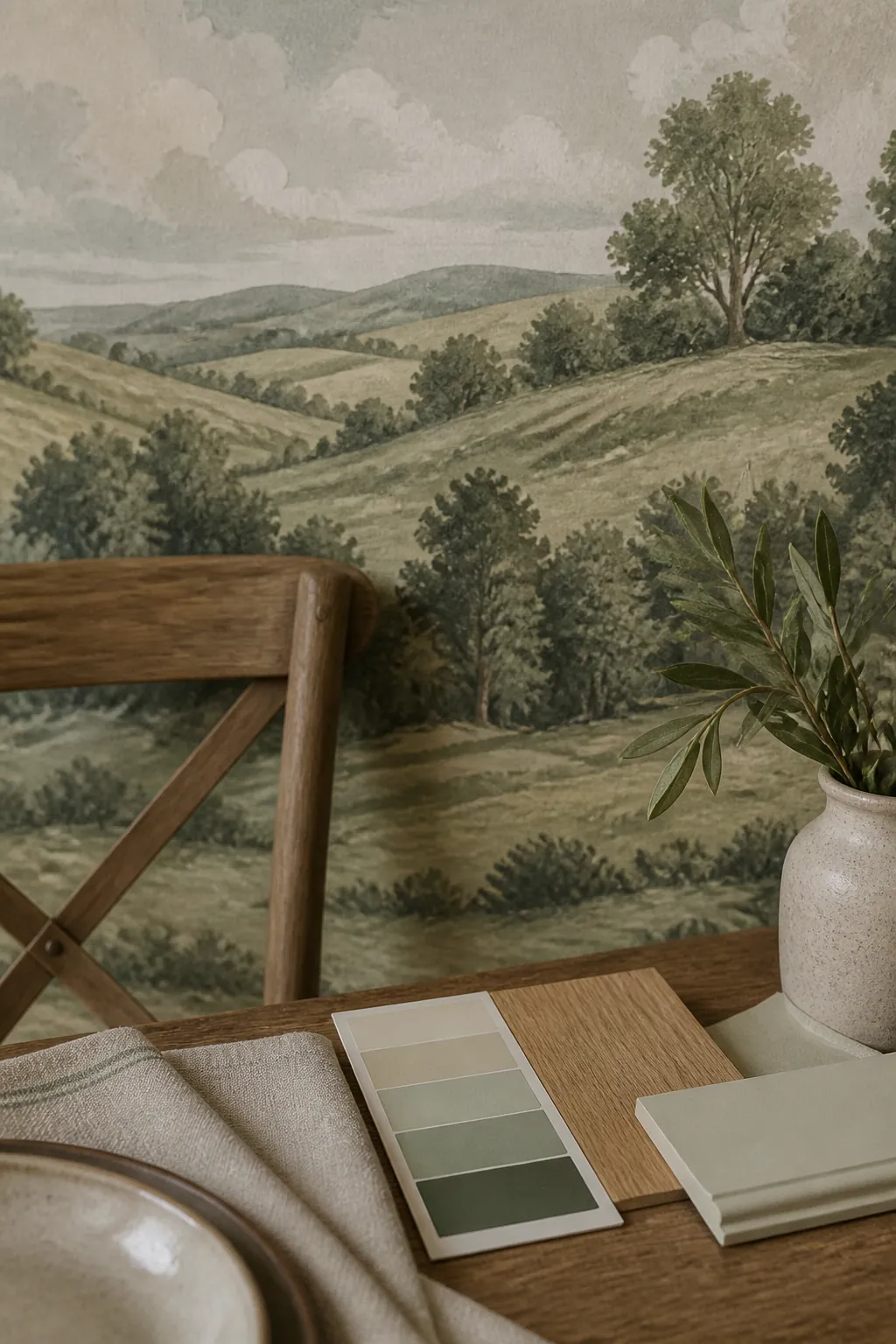
If you are choosing a soft landscape dining room wallpaper, pick the mural before you commit to surrounding paint, fabric, or chair finishes. Scenic wallpaper has undertones that are hard to judge from memory. A green hill can lean sage, olive, gray, yellow, or blue depending on the artwork and printing. Cream skies can turn pink, beige, or parchment once they sit beside your trim.
A simple order works best: choose the mural, order or view a sample when possible, then build the room palette around the quietest colors inside the scene. Use the darkest hill tone for small accents, the sky tone for adjacent walls, and a warm natural texture for the table or chairs. This keeps the mural tied to the room instead of looking pasted on after every other decision has already been made.

Choose the Right Wall for the Scene
The easiest place for a dining room mural wallpaper is the main wall behind the table. This gives the room a clear direction the moment someone enters. It also lets the table sit naturally in front of the view, as if the landscape belongs to the room.
Look for the wall with the fewest interruptions. A centered landscape mural behind a dining table works best when the main hills are not cut by a tall cabinet, doorway, thermostat, or large mirror. Windows can work if they are already part of the room’s architecture, but a full uninterrupted wall usually gives the most peaceful result.
If the room has wainscoting or a chair rail, use that to your advantage. Let the mural begin above the paneling so the landscape reads like a framed scenic artwork. In a smaller room, keeping the lower wall simple can stop the mural from feeling too tall or immersive.

Get the Horizon Line Right
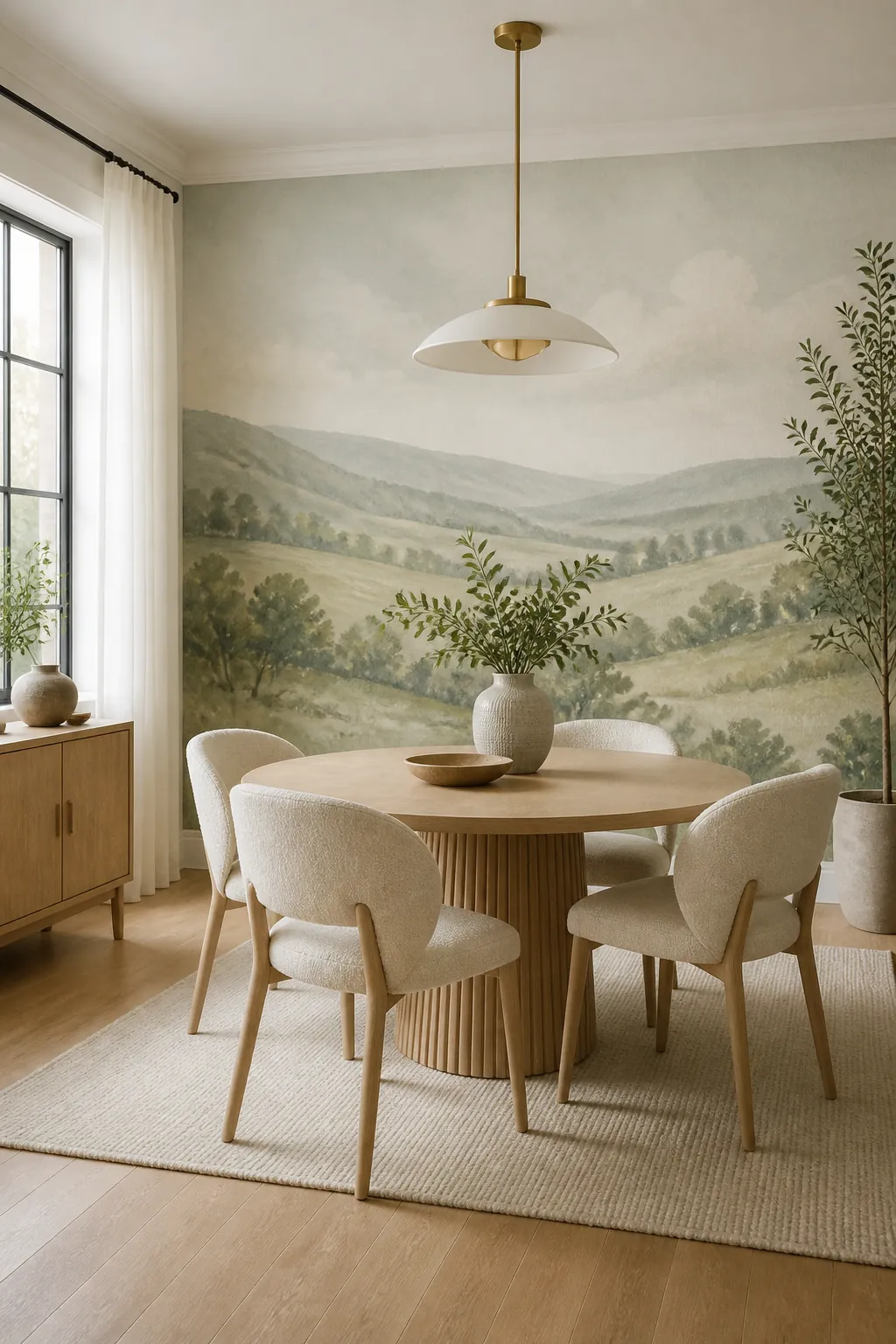
The horizon line matters more than most people expect. If it sits too low, chair backs and the tabletop can cover the best part of the scene. If it sits too high, the mural can feel like scenery floating above the room rather than part of it. For most dining rooms, the calmest placement keeps the main horizon slightly above the chair backs and below the highest visual weight of the chandelier.
This is especially important for a muted landscape mural. The beauty is often in the long, quiet sweep of the hills, not in one dramatic object. Before ordering, mark the height of your table, chair backs, sideboard, and light fixture on the wall with painter’s tape. Then compare those marks to the mural preview so the main scenery lands where seated guests can actually see it.
How to Keep the Dining Room Calm Instead of Themed
A rolling hills wallpaper mural can turn too literal if every object in the room tries to repeat the countryside idea. You do not need rustic signs, farm accessories, or heavy cottage styling unless that is truly your taste. The mural already carries the landscape. The rest of the room can stay simple.
- Use plain linen, woven cotton, boucle, or velvet instead of printed upholstery.
- Repeat one mural color in napkins, candles, or a vase rather than everywhere.
- Choose warm wood, black iron, aged brass, or matte ceramic for grounding texture.
- Keep artwork on nearby walls restrained so the scenic wall remains the focus.
For a modern room, pair the mural with a round table, pale oak, and simple chairs. For a traditional dining room mural, use wainscoting, a darker wood table, classic chair silhouettes, and a quiet chandelier. For a cottage or farmhouse dining room, let the mural be soft and painterly rather than overly saturated.

Small Dining Rooms Can Use the Look Too
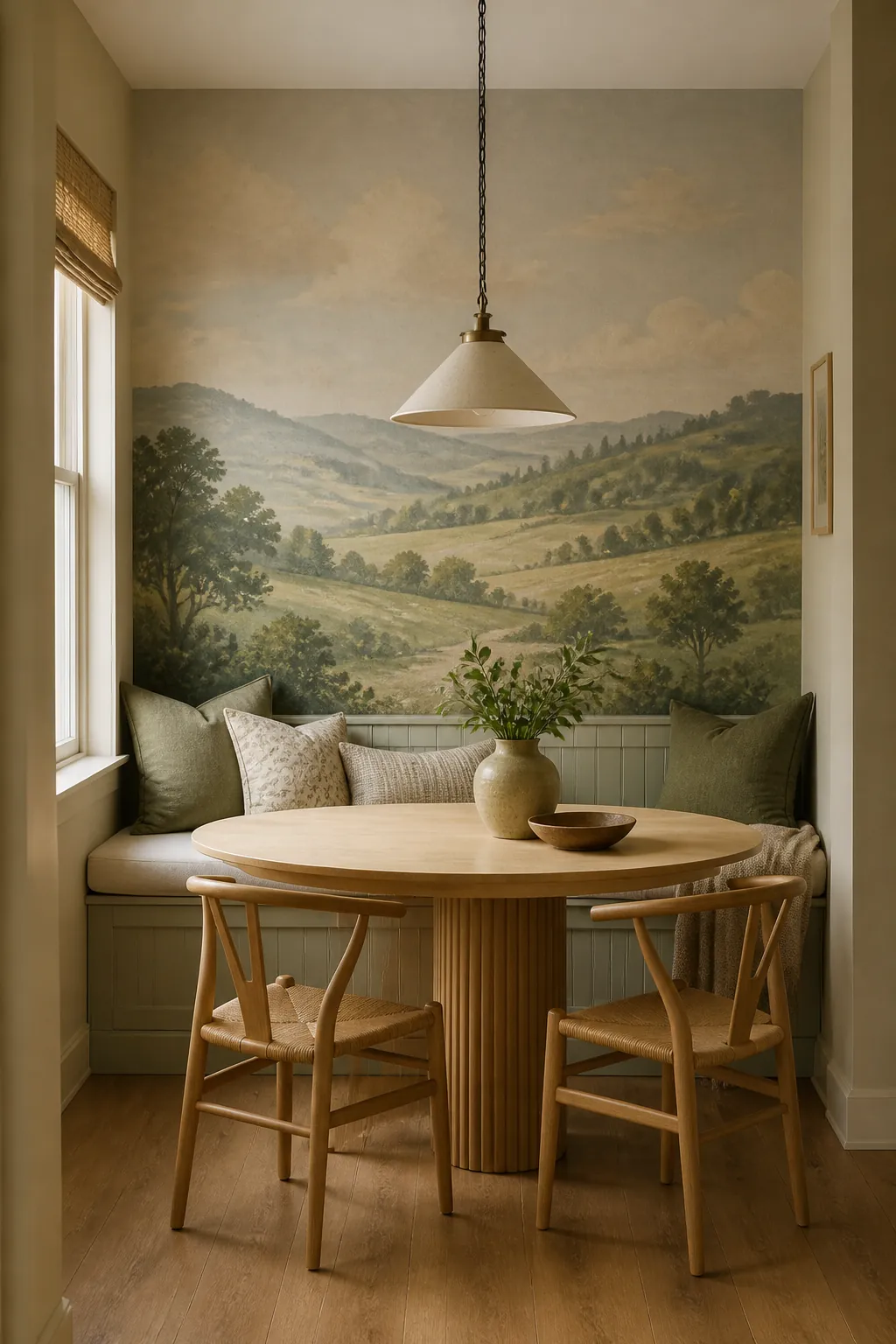
A small dining nook can benefit from a rolling hills mural because the view visually pushes the wall back. The key is restraint. Choose a mural with atmospheric distance, soft contrast, and open sky rather than a dense forest or high-contrast mountain scene. The more air inside the artwork, the less the nook will feel boxed in.
Built-in benches, banquettes, and small round tables work especially well with a soft scenic backdrop. Keep the side walls plain, and avoid placing tall shelves directly in front of the mural. If the dining nook is visible from the kitchen or living room, repeat one color from the hills elsewhere in the open space so the mural feels intentional from a distance.
Traditional Rooms Need Balance, Not More Ornament
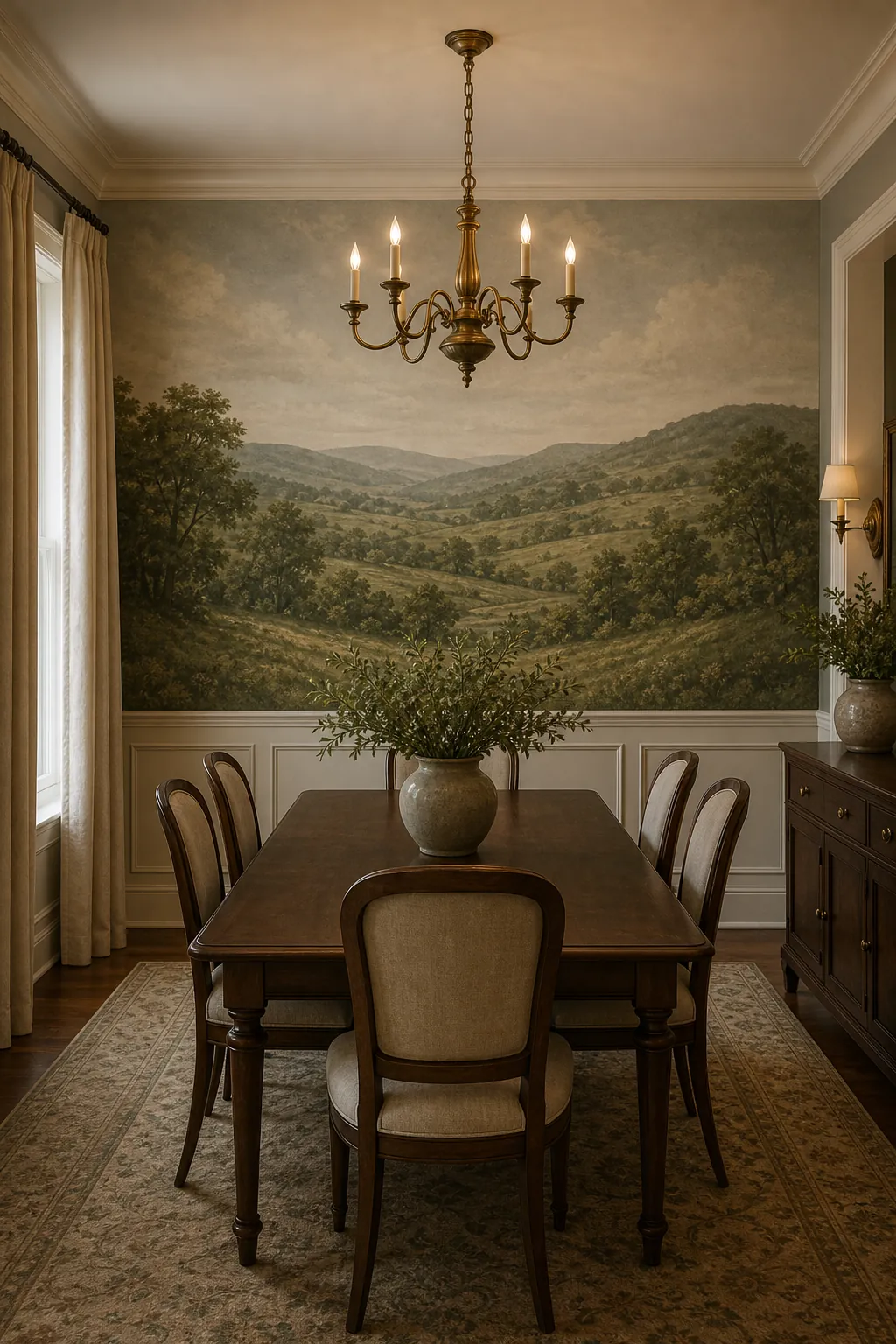
In a more formal dining room, a pastoral wall mural can feel classic rather than trendy. The trick is to balance the romance of the scene with cleaner furniture choices. If the mural is painterly and old-world, avoid adding too many ornate pieces on top of it. Let the scenic wallpaper do the storytelling, then keep the table, chairs, and light fixture refined.
Chair rails and paneling are helpful because they frame the mural. A mural above wainscoting can feel like a long landscape painting, which is ideal if you want softness without full-room wallpaper. This approach also makes installation feel more manageable because the mural covers the most visible zone without wrapping every wall.

Measure Like the Scene Depends on It
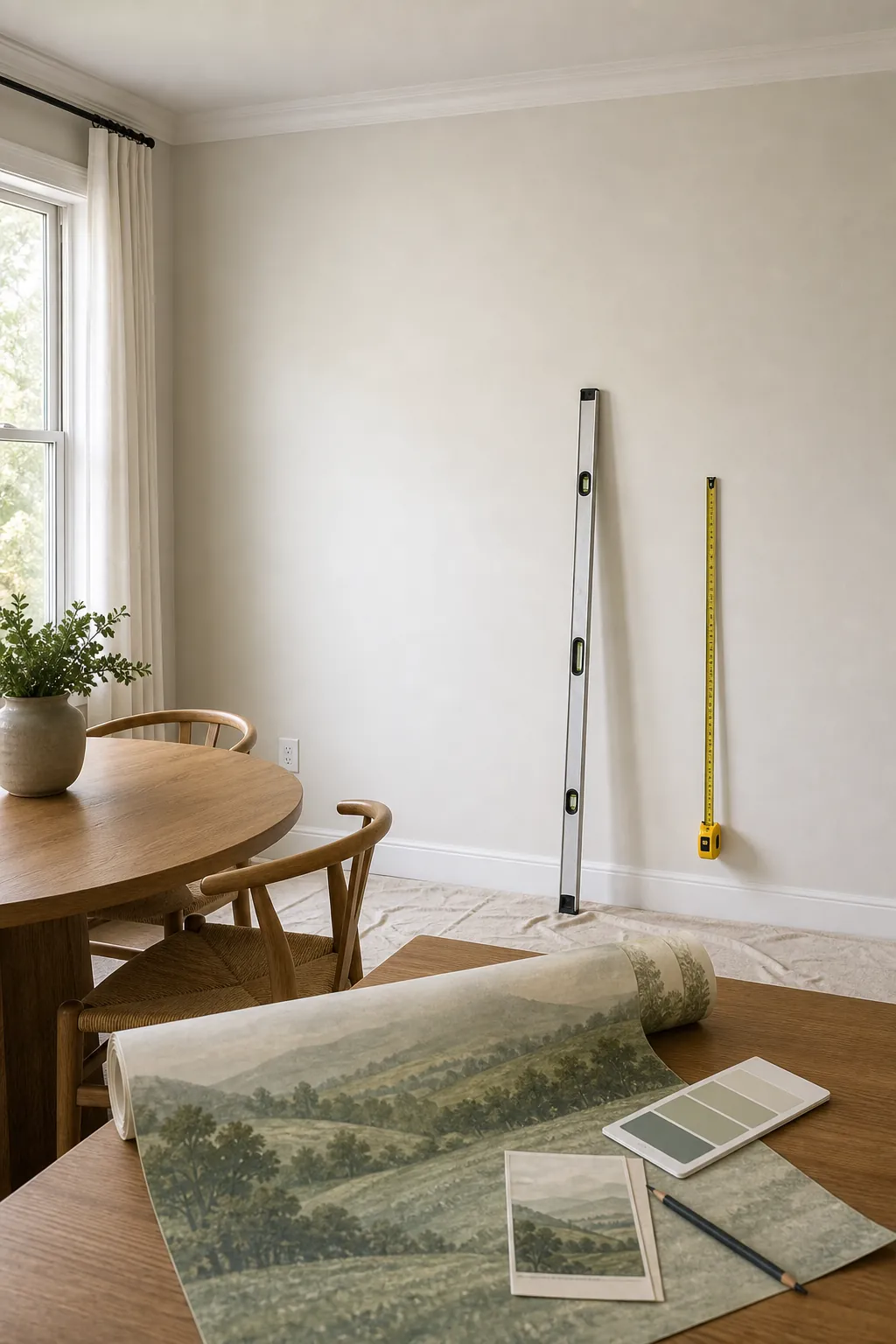
Scenic murals are less forgiving than small repeating wallpaper because the image has a beginning, middle, and end. Measure the full width and height of the wall in more than one place, especially in older homes where walls may not be perfectly square. Note baseboards, crown molding, outlets, switches, vents, and any trim that will interrupt the printed scene.
If the mural is made to fit your wall, add the supplier’s recommended bleed or trimming allowance rather than ordering the exact visible size only. If it comes in fixed panels, check where the panel seams will land. A seam through a quiet hill is usually less noticeable than a seam through a tree, house, or strong vertical element.
Do not treat old wallpaper as a shortcut base unless the surface is smooth, fully adhered, and compatible with the new material. In most dining rooms, removing loose or textured old paper and preparing the wall properly gives a cleaner final scene.

A Quick Checklist Before You Commit
- Can the main wall show the mural without major interruptions?
- Does the horizon line clear the chair backs and tabletop?
- Do the mural colors work with the trim in daylight and evening light?
- Is the scene calm enough to live with during everyday meals?
- Will nearby artwork and furniture let the mural remain the focal point?
- Have you measured the wall in multiple places and checked panel placement?
When those answers are yes, a rolling hills wallpaper mural can give a dining room exactly what it is missing: a soft focal scene, a sense of distance, and a graceful background for the table. It is scenic without being loud, traditional without feeling heavy, and decorative without demanding that the whole room become a theme.