Rainforest Mural Wallpaper Ideas for Natural Wood Dining Rooms
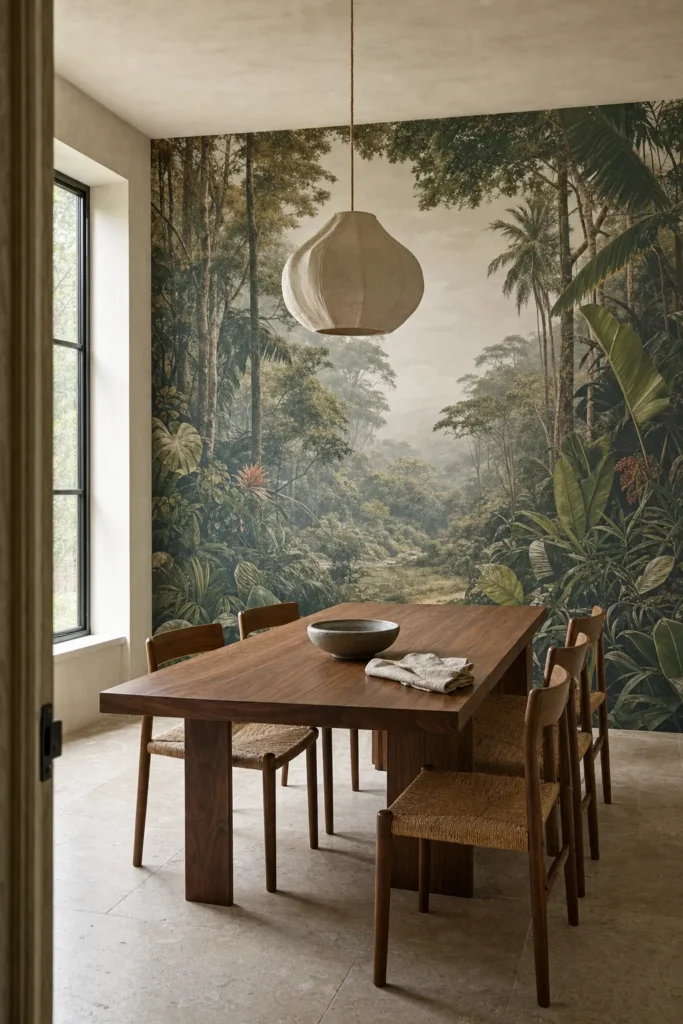
A rainforest mural can make a dining room feel deeper, calmer, and more connected to the outdoors. It can also make the room feel like a themed restaurant if the scale, green tones, and furniture compete. The difference is not how many leaves appear in the design. It is whether the mural and the natural wood furniture read as one composition. Start with the wood you already own, then choose the forest.
Let the wood undertone choose the rainforest palette
Put a wallpaper sample beside the table in the room, not beside a product photo on your phone. Oak, ash, pine, walnut, teak, and reclaimed timber all shift the surrounding greens differently. Honey oak usually looks strongest with olive, fern, moss, and muted blue-green. Pale ash can handle clearer emerald accents, while walnut benefits from misty foliage and small notes of warm brown that connect the wall to the furniture.
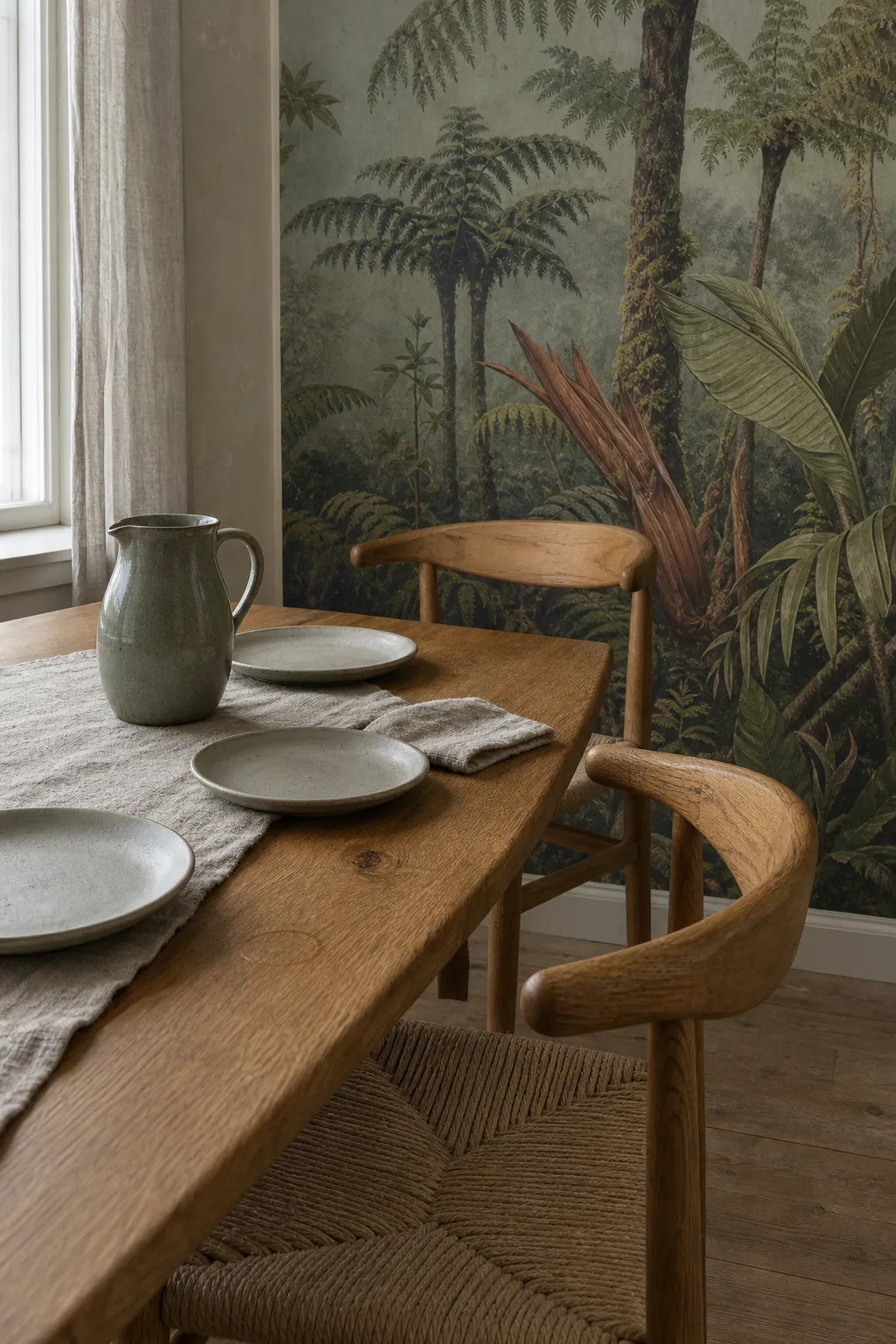

Look for repetition in undertones rather than an exact color match. A russet branch, sandy path, or soft ochre leaf in the image can echo warm wood grain without turning the whole wall brown. If the furniture is already dark and figured, avoid a mural with equal visual density in every inch. The eye needs quieter mist, sky, or distant foliage around that strong grain.
Choose depth, not a flat wall of leaves
The most useful rainforest mural wallpaper for a dining area has foreground, middle ground, and distance. Large leaves at the edges can act like a frame, while a lighter clearing or receding path creates breathing room behind the table. A uniform repeat of similarly sized leaves may be attractive as wallpaper, but it will not create the same sense of space as a true panoramic tropical forest mural.
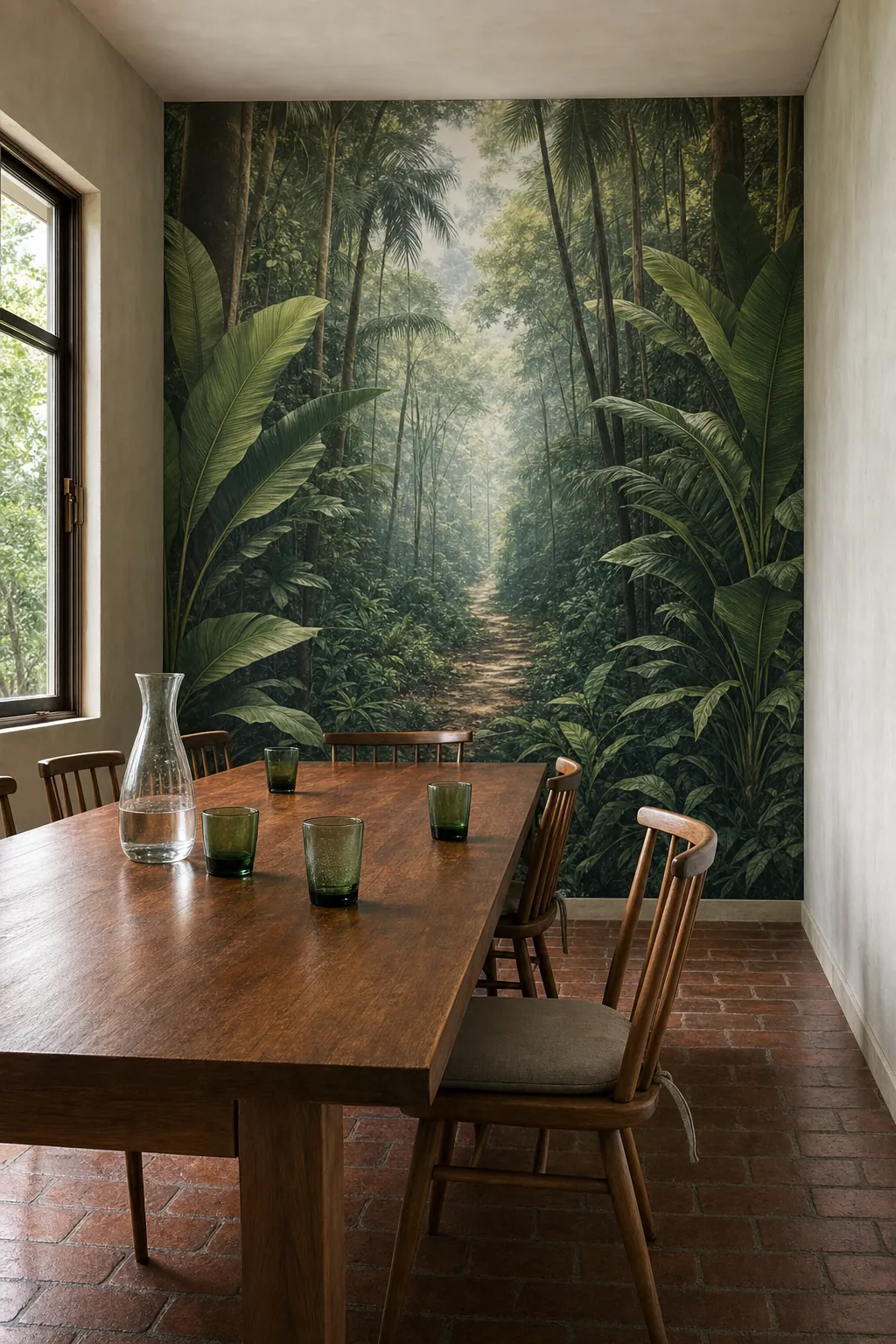

Study the mural at the size it will appear on your wall. The table and chair backs will hide the lower portion, so the key focal detail should sit above the dining surface rather than disappearing behind it. If a design is cropped to your dimensions, ask where the crop falls. Stretching the image to fit is not a harmless shortcut; it changes leaf proportions and can make tree trunks look unnaturally wide.
Use one feature wall when the room already has visual traffic
A dining room rainforest mural does not need to cover every wall to feel immersive. In an open-plan room, a single wall can define the dining zone without fighting kitchen cabinetry, a patterned rug, or artwork visible from the next room. Choose the wall seen on entry or the wall behind the longest side of the table. It should feel deliberate from both standing and seated viewpoints.
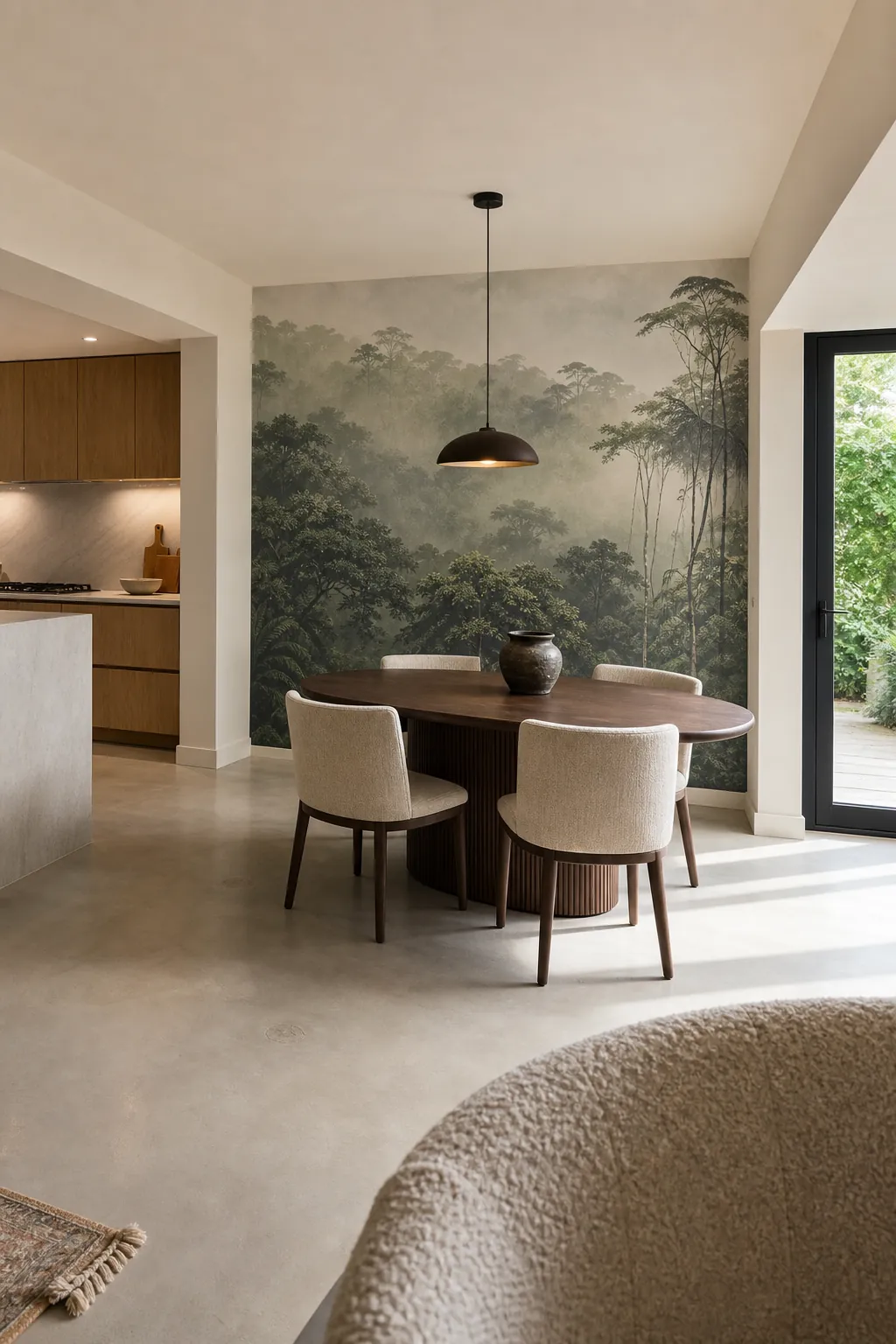

Keep adjacent walls quiet. Pull one low-intensity color from the mural—warm white, pale clay, muted sage, or smoky blue-green—and use it as the supporting paint color. This is more cohesive than adding unrelated green accessories around the room. The mural should be the landscape; the rest of the room should be the frame.
Balance dark foliage with practical dining light
Deep forest imagery absorbs light, especially on the wall farthest from a window. Before ordering a dark green dining room mural, view the sample in morning light and again after sunset. A mural that feels lush at noon can become a nearly black backdrop under one weak ceiling bulb.
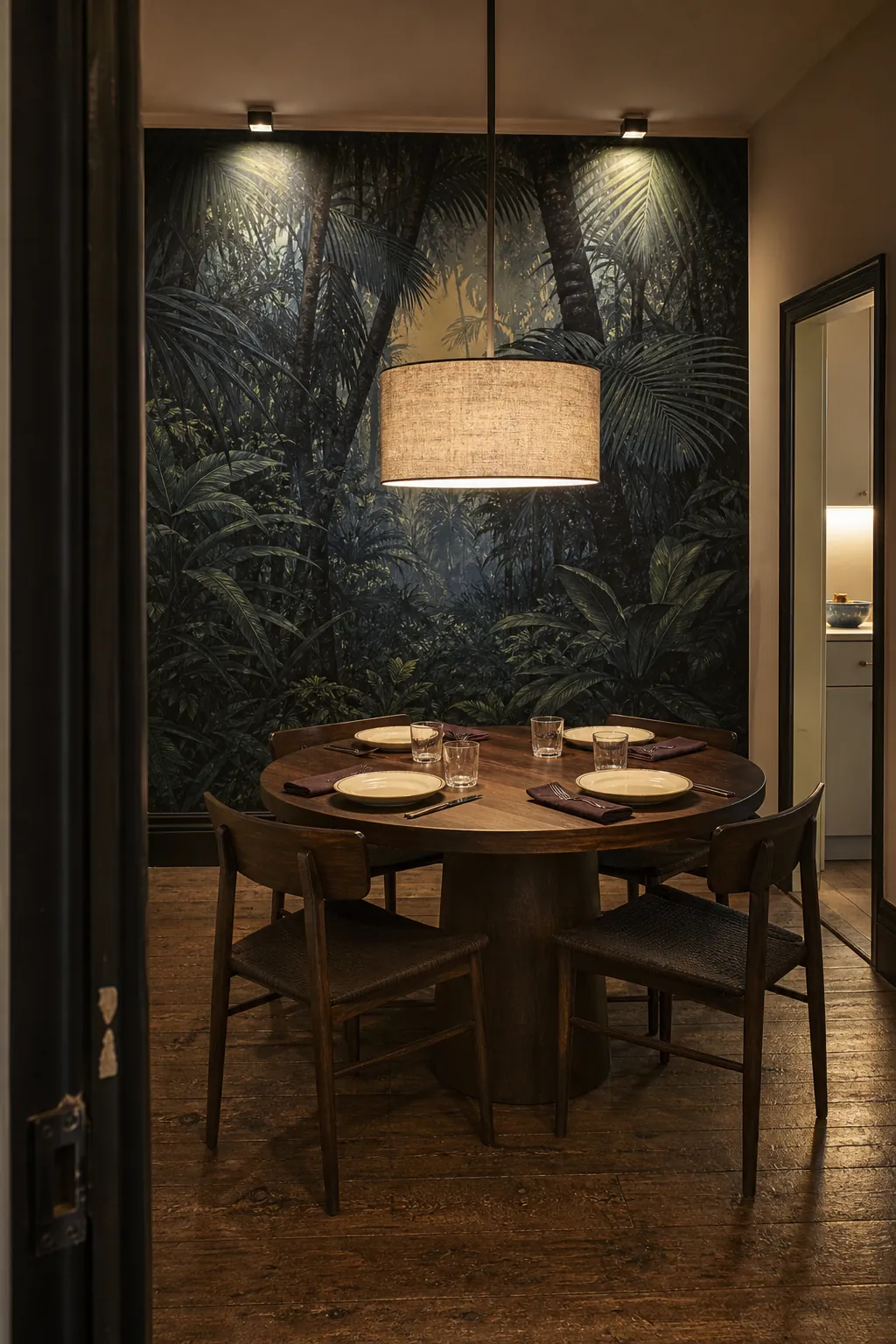

Use a dimmable pendant to illuminate the table and a second layer that grazes or softly washes the mural. Warm-white lamps make timber inviting, but very amber bulbs can turn fresh greens muddy. A neutral-warm source gives better color separation. Avoid placing a bare spotlight close to the wall, where glare can expose seams and flatten the printed image.
Edit the furniture and textiles around the mural
Natural wood already brings color, grain, and movement. Let those qualities do the supporting work. A simple solid-wood table, woven cane seats, plain linen curtains, and one ceramic centerpiece are often enough beside a wood furniture jungle mural. Adding leaf-print upholstery, a botanical rug, several plants, and tropical objects repeats the same message until the room feels staged.
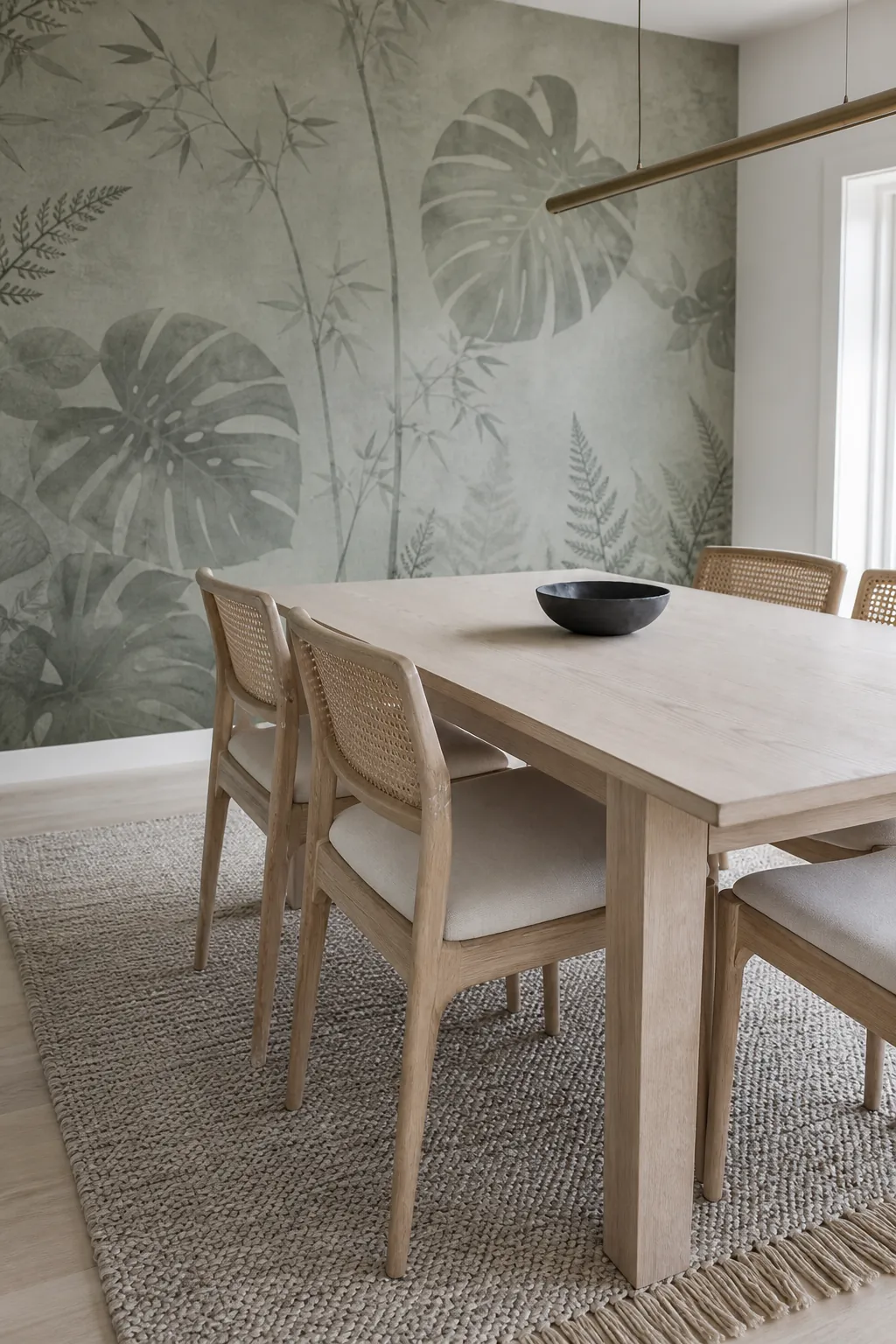

If the chairs have patterned fabric, compare its scale with the mural. A small geometric weave can provide useful contrast; another large botanical pattern usually competes. Blackened metal can sharpen a pale, airy scheme. A little aged brass can warm cooler greens. Keep decorative objects below the main sightline so they do not interrupt the mural’s depth.
Mock up the crop before committing to installation
Measure the full wall at several points because floors and ceilings are not always level. Mark the table height, chair-back height, sideboard footprint, switches, outlets, vents, doors, and windows on a simple elevation. Then place the mural preview over that drawing. This reveals whether a palm trunk lands behind a pendant, a focal animal is cut by a doorway, or the only open clearing disappears behind the furniture.
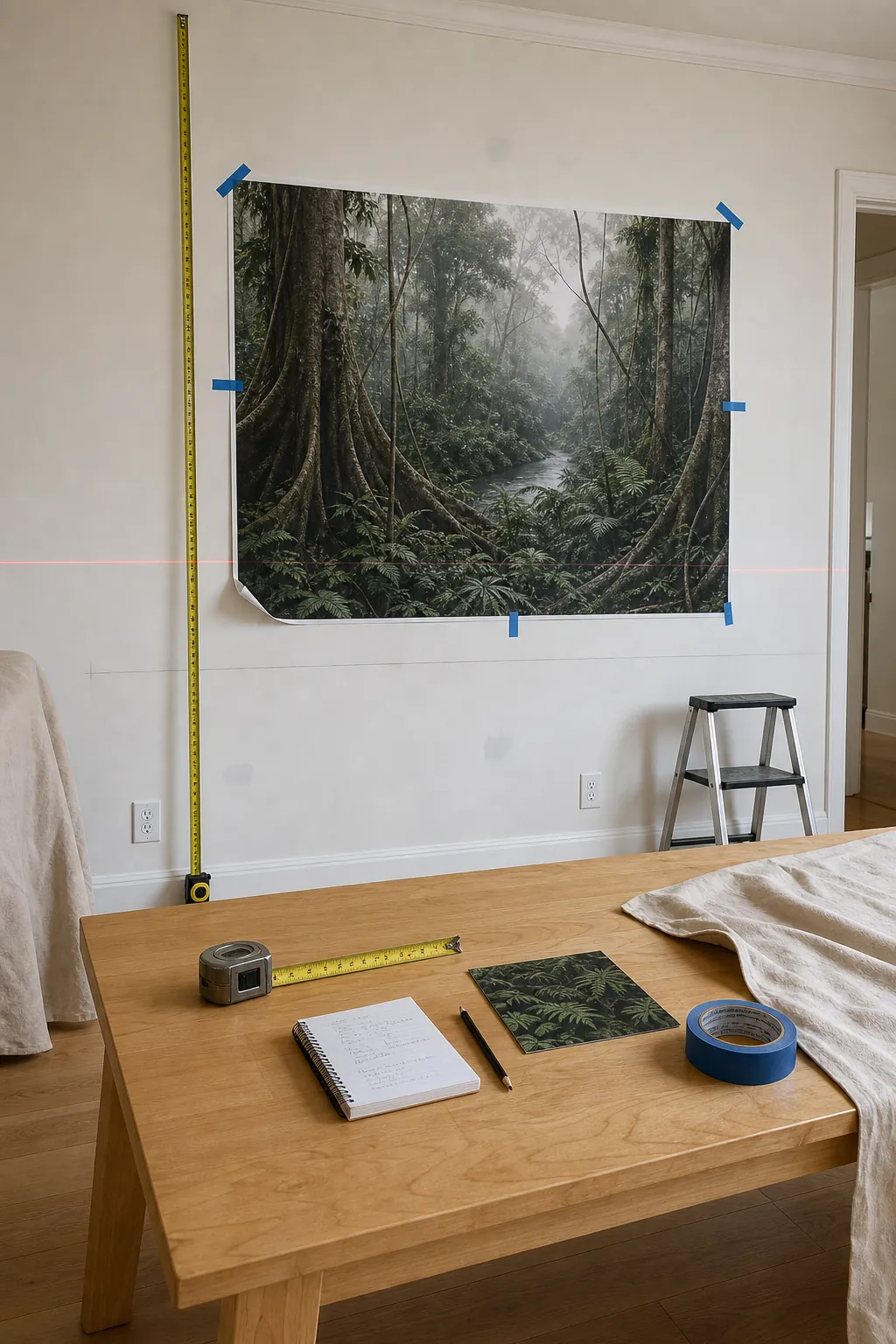

Order a physical sample and tape it vertically to the intended wall for a few days. Check the print finish beside the wood: an overly glossy surface can look artificial next to matte timber, while a soft matte or lightly textured finish tends to integrate more naturally. Confirm whether the product is paste-the-wall, pre-pasted, or peel-and-stick, and prepare the wall for that material. Smooth filling, sanding, cleaning, and priming matter because a mural magnifies bumps and old paint failures.
The safest final test is simple: sit at the table. If the forest has depth, the important details remain visible, and the wood feels warmer rather than busier, the combination is working. A good nature dining room wallpaper does not shout “tropical.” It gives everyday meals a quieter, greener backdrop.