Plaster Effect Mural Wallpaper Ideas for Minimal Homes
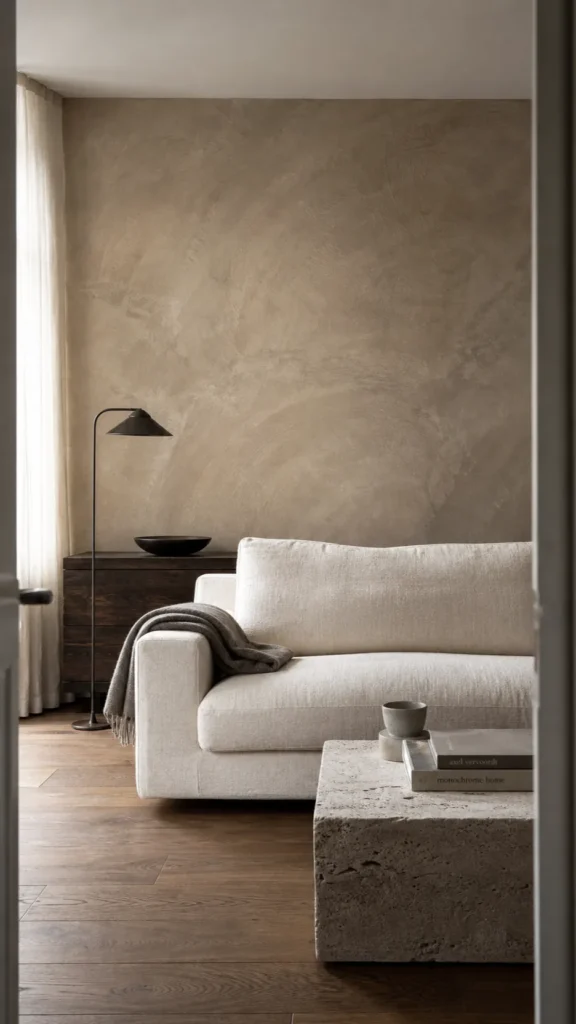
Minimal rooms need fewer things, but they do not need fewer sensations. When the walls, sofa, floor, and curtains all have the same smooth finish, a carefully edited room can feel unfinished rather than calm. Plaster effect mural wallpaper solves that problem by adding tonal movement and the suggestion of hand-worked depth without requiring a wet-plaster or limewash project.
The key word is “suggestion.” This is a printed surface, not real troweled plaster. The most convincing schemes respect that difference. They choose a pattern with believable scale, use a matte finish, prepare the wall carefully, and pair the print with materials whose texture is genuinely physical.
Choose the Kind of Plaster Movement You Want
Plaster-look murals range from quiet limewash clouds to sweeping trowel marks, chalky mineral fields, aged patina, and more graphic microcement effects. Do not choose by color alone. Decide whether the wall should act as a soft background or the room’s primary visual feature.
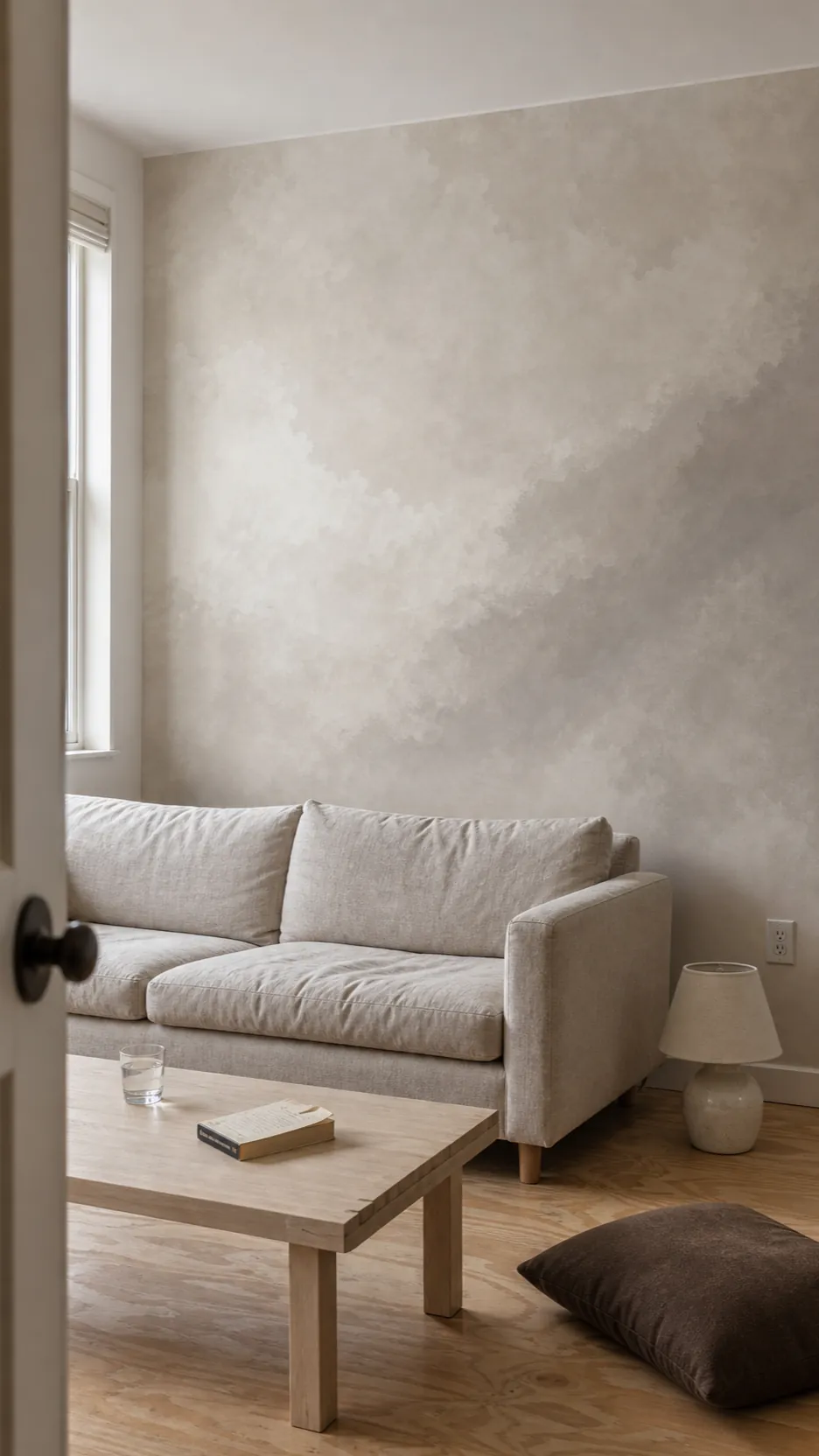

A low-contrast limewash effect wallpaper works well when furniture already has a clear silhouette. Larger trowel sweeps suit a blank wall with fewer objects in front of it. Distressed or cracked-plaster imagery carries more visual history and can compete with delicate furniture, so it needs greater restraint elsewhere.
View the complete mural, not only a small sample. A convincing six-inch patch can reveal an obvious repeat or oversized blotch across a large wall. The tonal rhythm must make sense at room scale.
Use Scale to Change How the Wall Reads
Fine, closely spaced variation reads almost like a solid color from across the room. Broad mineral veining or large cloudy transitions remain visible at a distance and make the wall feel more architectural. Neither is automatically better; the right scale depends on the wall width, viewing distance, and furniture.
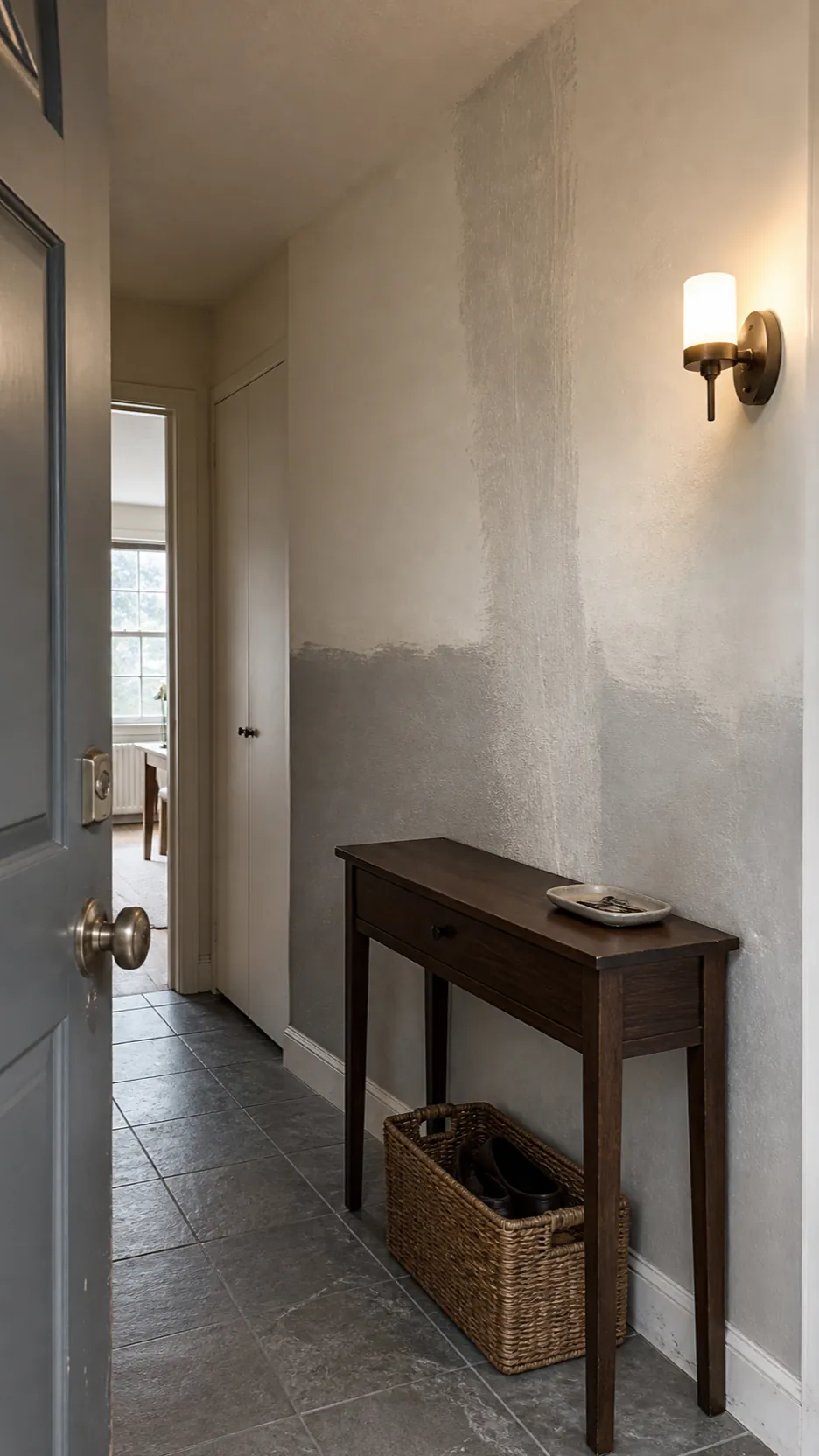

In a narrow entryway, fine detail can become visual noise because the wall is seen at close range. One broad fade from warm gray to chalk can make the passage feel calmer. Across a large living-room wall, the same simple fade may look empty; a wider trowel arc or layered mineral field gives the eye enough movement.
Check where shelves, a headboard, television, or sofa will interrupt the print. The most distinctive mark should remain visible, but it should not appear to balance precariously on top of the furniture. Ask for a crop proof using the exact wall proportions.
Pair Printed Texture With Real Texture
A faux plaster wall mural looks more convincing beside real wood grain, woven linen, honed stone, wool, ceramic, or aged metal. These materials give the room physical depth, so the printed wall does not have to perform every textural role.
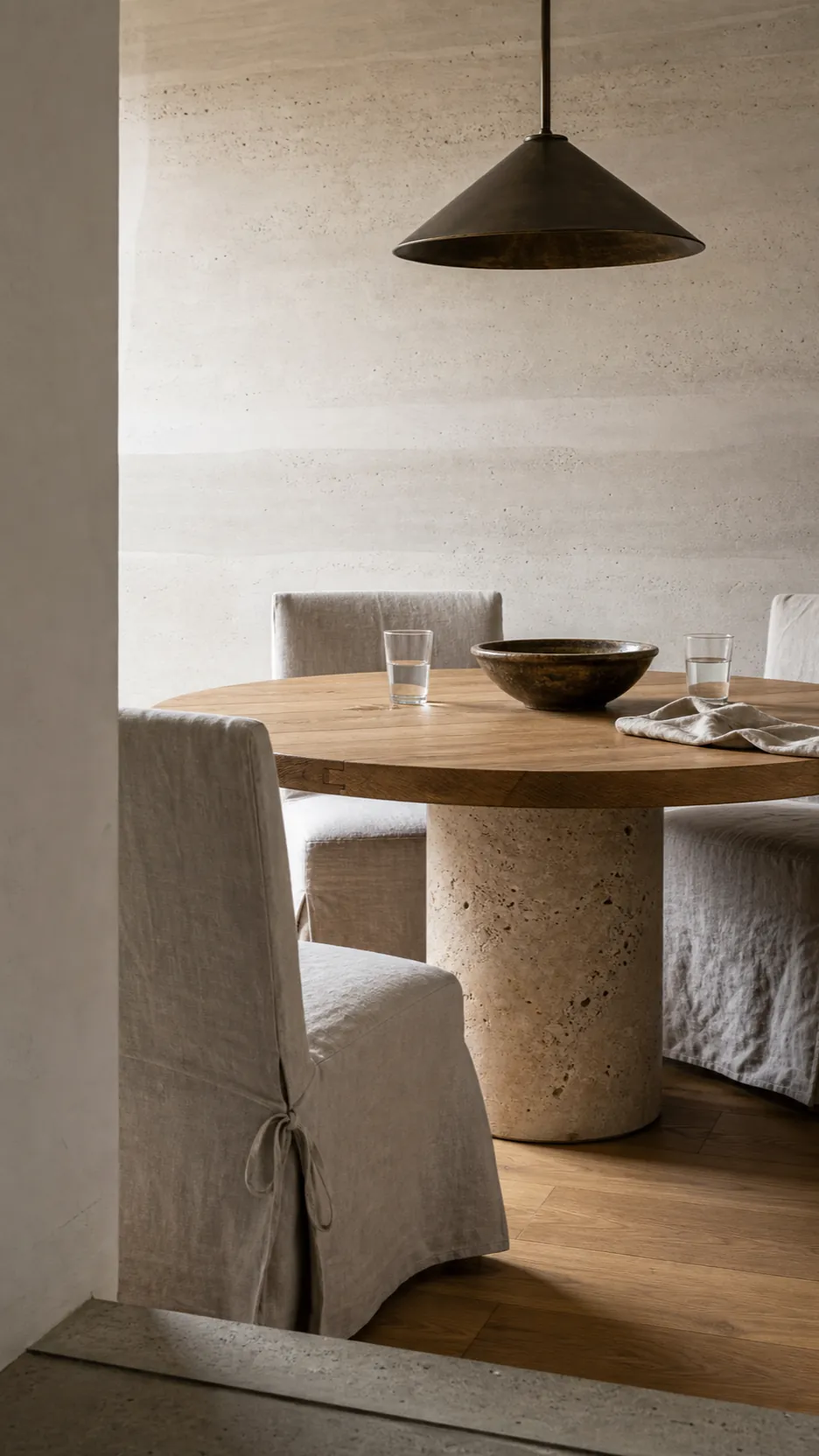

Change the texture while keeping the palette tight. A mushroom plaster print can sit beside a paler oak table, rough ivory linen, and darker bronze light. The eye registers grain, weave, porosity, and patina even when the colors remain neutral.
Avoid filling the room with fake versions of natural materials. Plaster-look wallpaper, imitation concrete furniture, printed marble, and synthetic bouclé together can make the space feel like a set. Let the mural be the illusion; let the nearby materials be honest.
Let the Room’s Light Shape the Undertone
Plaster-effect designs often contain more colors than their name suggests. A “warm white” mural may include gray shadow, pink-beige midtones, and creamy highlights. Natural and artificial light can emphasize one of those layers and suppress the others.
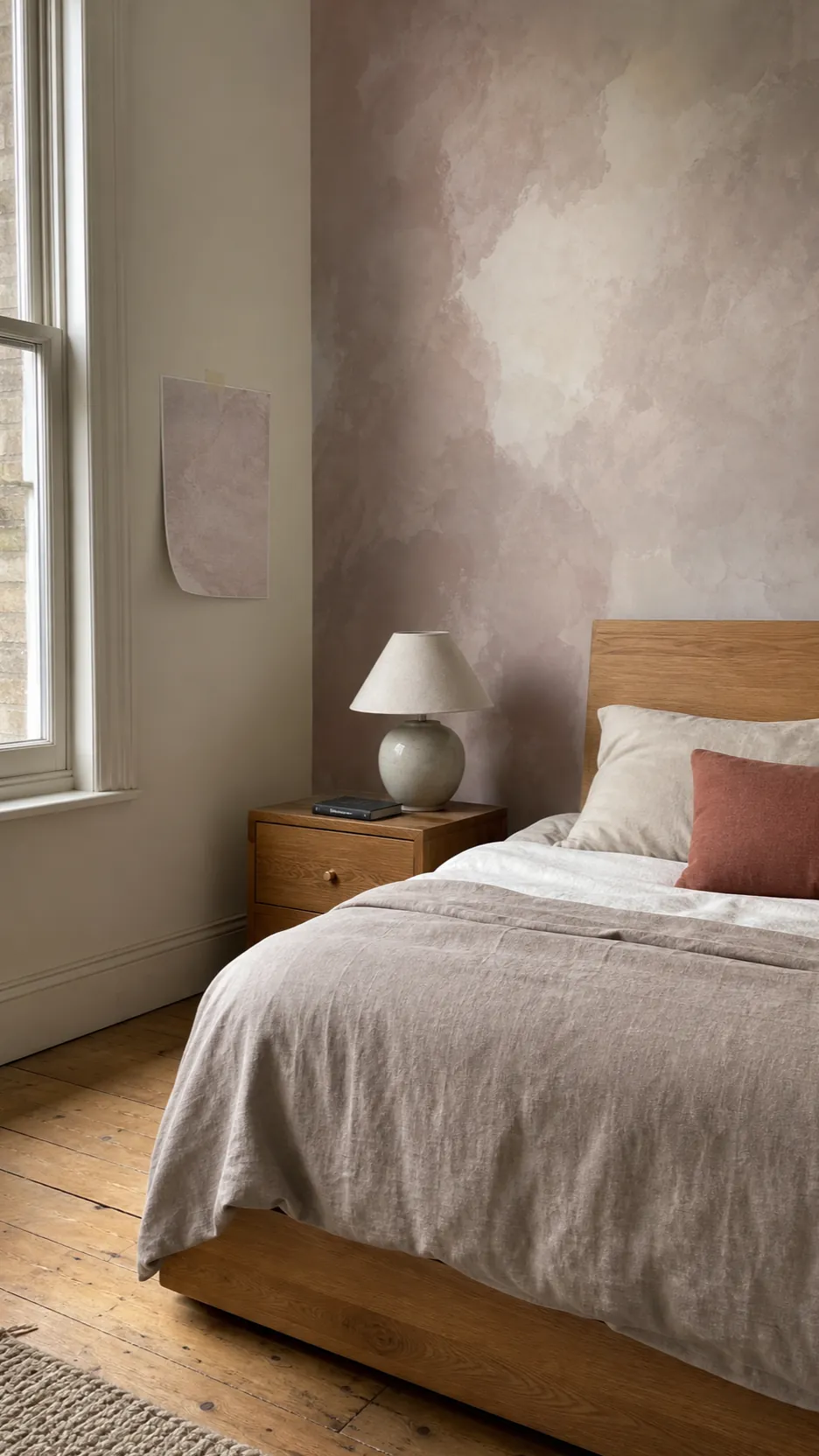

Cool north light can make a greige print feel stony. Warm west light can pull beige or clay forward. Test a physical sample beside the floor, trim, largest textile, and evening lamp. If the darkest printed patch becomes muddy at night, choose a lighter colorway or improve the room’s lower-level lighting.
Matte surfaces support the effect because the printed tonal movement remains visible from different angles. A strong sheen can reveal the wall as a reflective covering and create hotspots. Confirm the finish with a sample rather than relying on a screen image.
Prepare the Real Wall for the Printed One
Plaster-effect wallpaper does not hide a badly textured wall. Ridges, dents, loose paint, dust, and old seams can telegraph through the new surface or interfere with adhesion. Assess the substrate, repair unstable areas, and follow the mural manufacturer’s preparation, primer, paste, curing, and removal guidance.
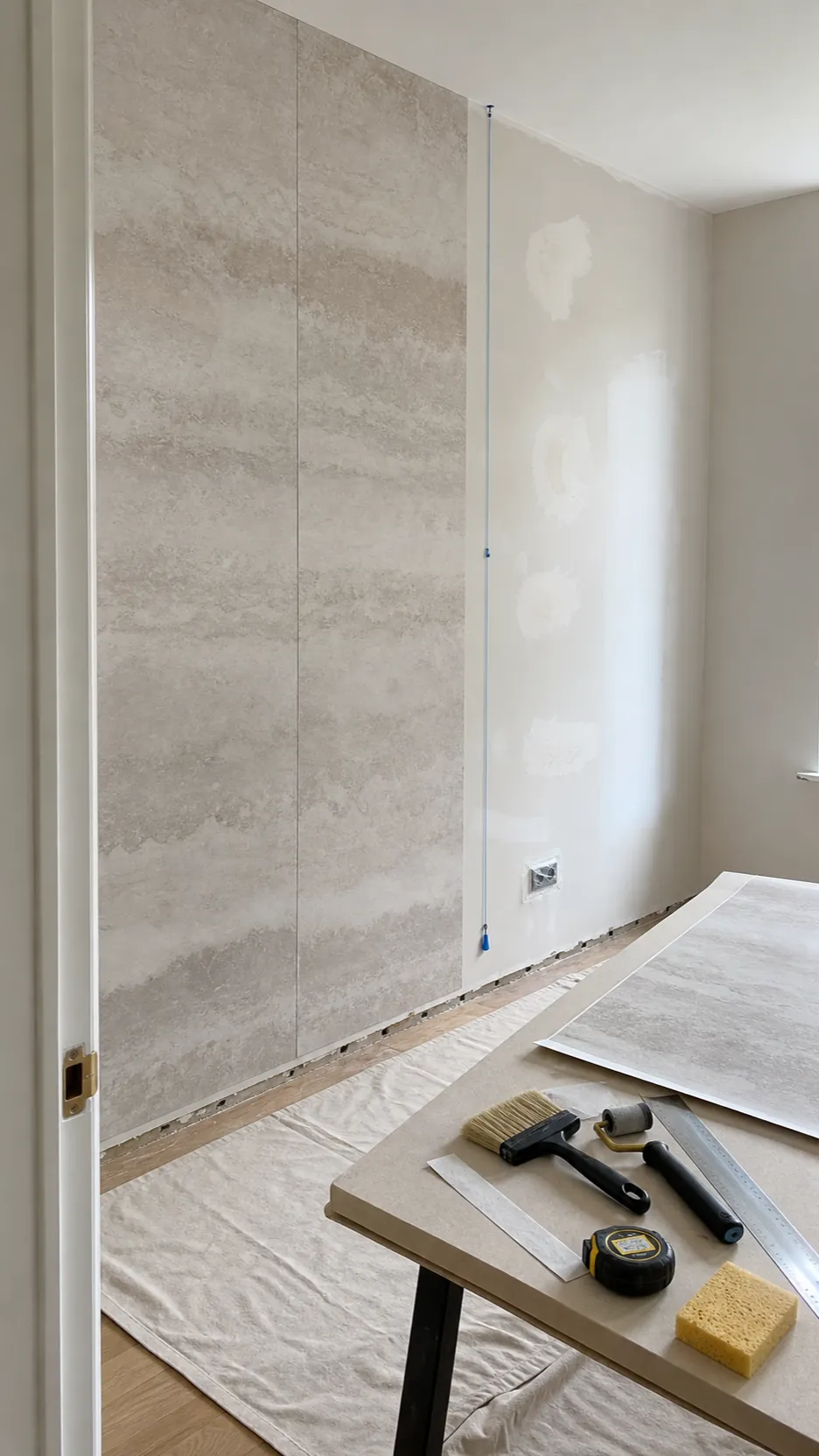

Inspect the panel map before hanging. A seam through a broad, quiet color field may be easier to align than one through a sharp trowel mark. Use the specified joining method and avoid overworking the printed face. Paste residue, stretched edges, and excessive seam pressure are especially visible on restrained murals.
Renters should not assume that “peel and stick” guarantees damage-free removal. Paint quality, wall texture, moisture, adhesive strength, and installation age all matter. Test the exact product on an inconspicuous area and get permission where required. A wall that is already flaky or heavily textured is not a reliable removable-wallpaper surface.
Keep the Styling Quiet but Not Empty
After the mural goes up, remove something before adding something. A plaster-effect wall already creates soft movement. One well-proportioned lamp, a grounded piece of furniture, and a few useful objects often complete the composition more effectively than a row of small decor.
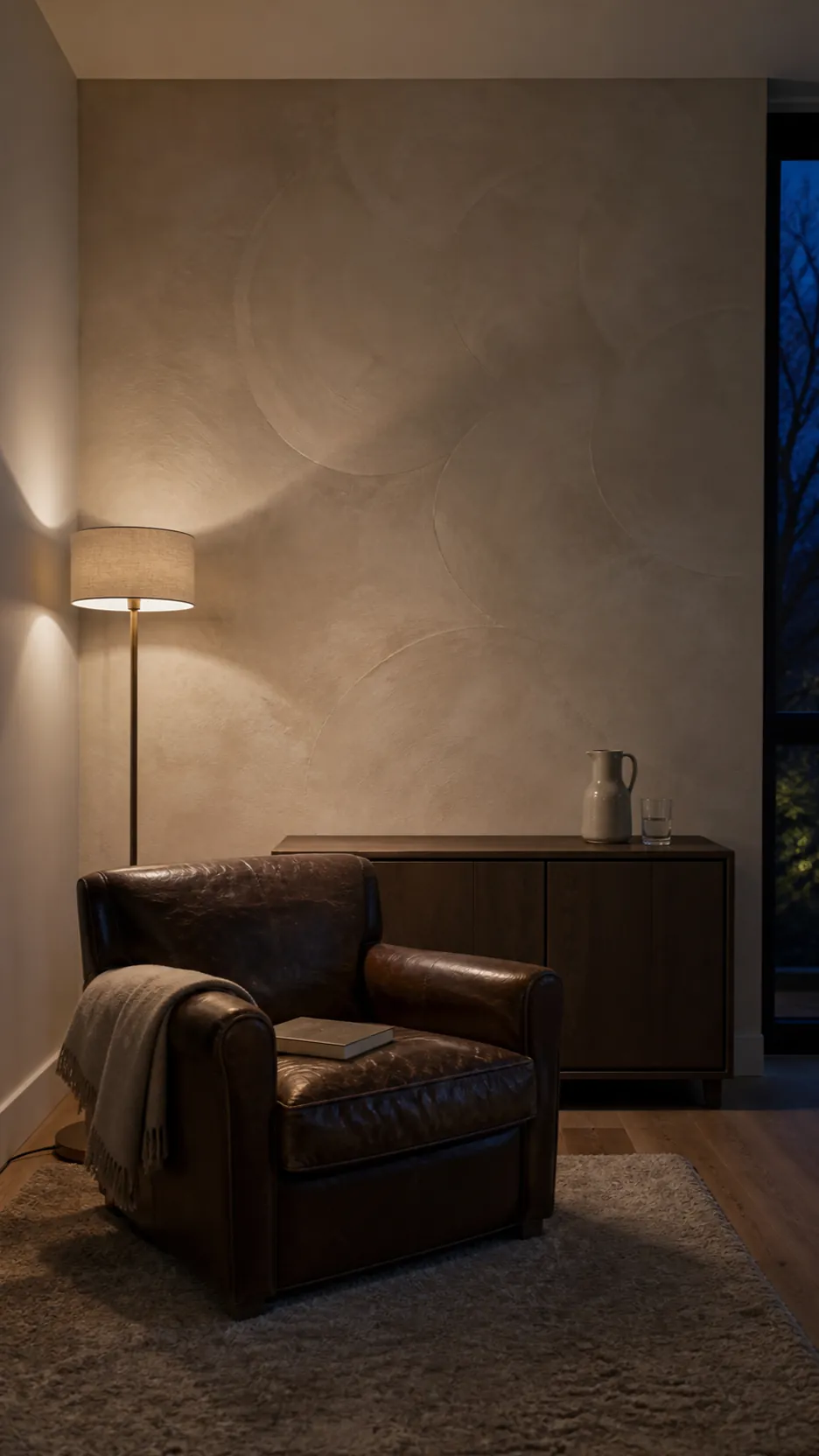

Use one darker note to define the pale surfaces: a smoked-oak cabinet, bronze lamp, charcoal cushion, or dark ceramic bowl. Keep cords, remotes, books, and daily clutter in closed storage so the room stays functional without asking the wall to compete with dozens of outlines.
A successful plaster effect mural wallpaper does not pretend to be something it is not. It uses print to bring controlled depth to a wall, then lets light and real materials complete the experience. The result feels minimal because every visible element has a role—not because the room has been stripped of texture.