Pink Nursery Wallpaper: A Practical Guide to a Calm, Lasting Room
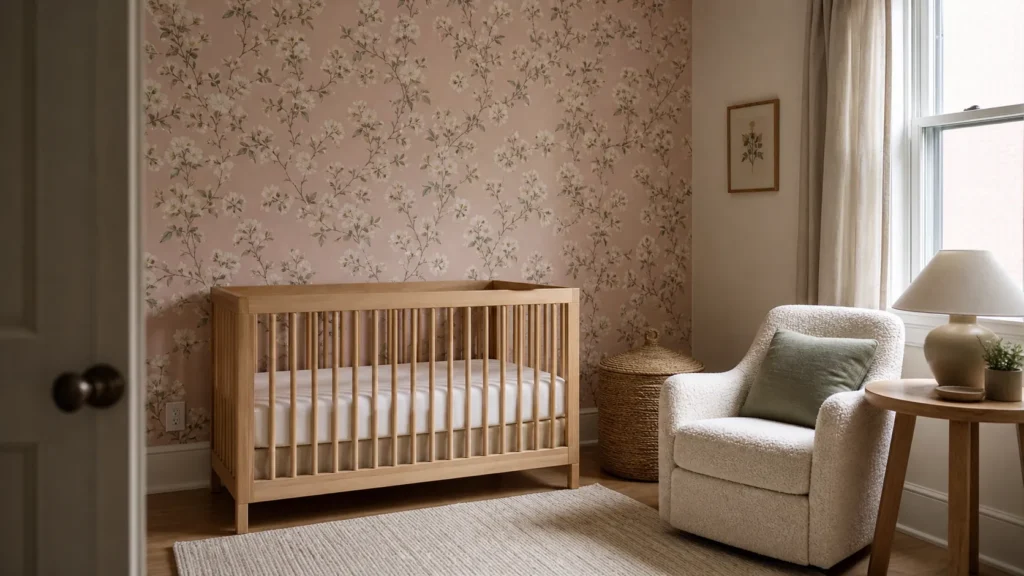
Pink nursery wallpaper can make a small room feel warm and intentional, but the prettiest sample is not automatically the right paper for your wall. The choice has to survive uneven plaster, changing light, furniture rearrangements, and eventually a toddler with opinions. Start by testing the actual material and scale before committing to a full wall.
Choose the mood before the motif
“Pink” spans barely-there shell, peach, rose, mauve, and dusty blush. Begin with the feeling you want at 3 a.m.: airy, cocooning, playful, or storybook. A soft pink nursery tends to feel calmer when the wallpaper leaves breathing room between motifs and carries a warm rather than icy undertone. Dense, high-contrast prints feel energetic even when their palette is pale.
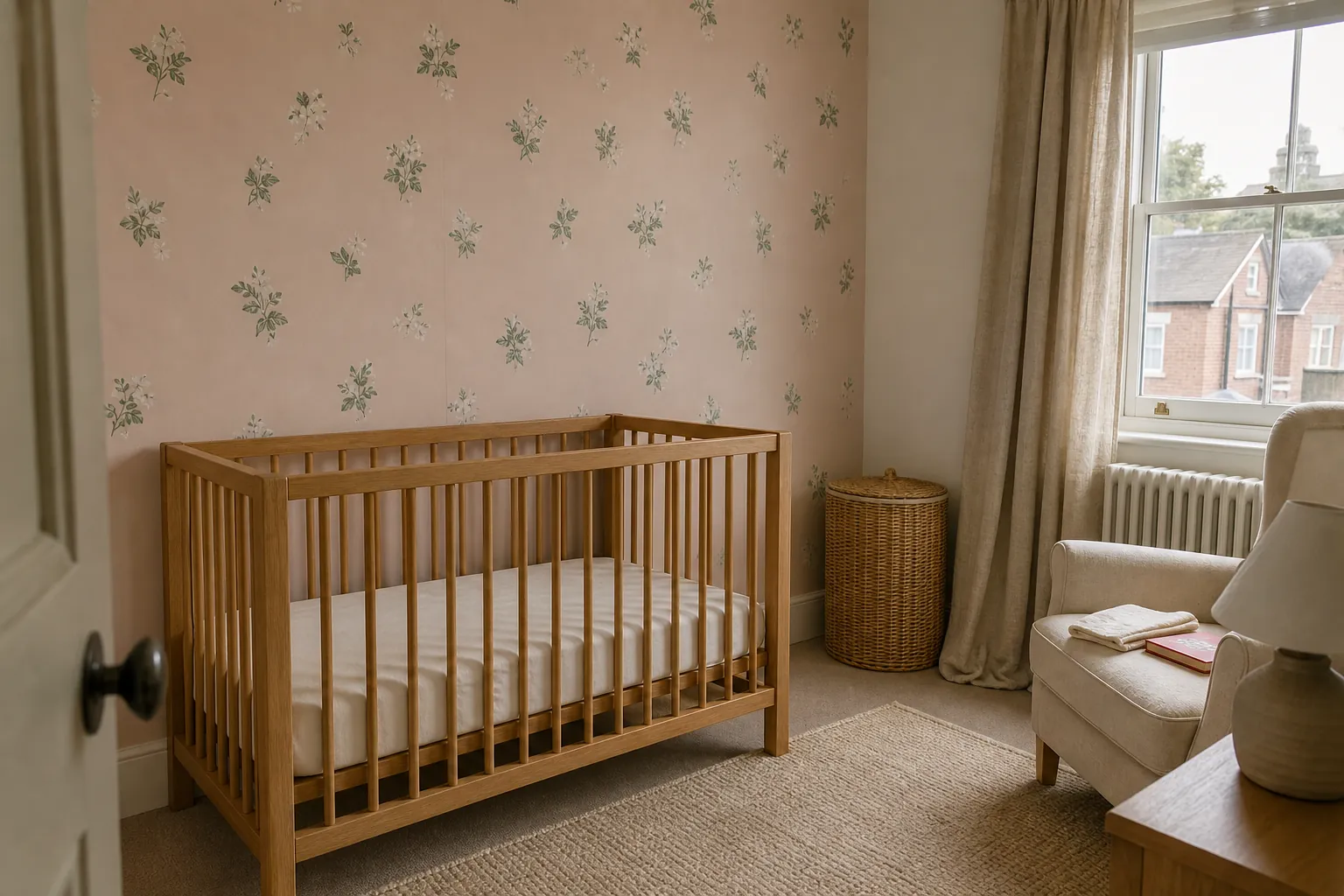

Tape samples vertically where the print will live. Check them in morning daylight, after sunset with the lamp on, and beside the crib finish, rug, and curtains. A blush that looks refined online can turn peach or lavender in the actual room.
Let pattern scale do the visual work
Small motifs create texture from across the room; oversized flowers or sweeping shapes become the architecture. In a compact nursery, a large repeat can feel less busy when the motif has a quiet ground and generous negative space. Compare the repeat measurement with the wall width before buying.
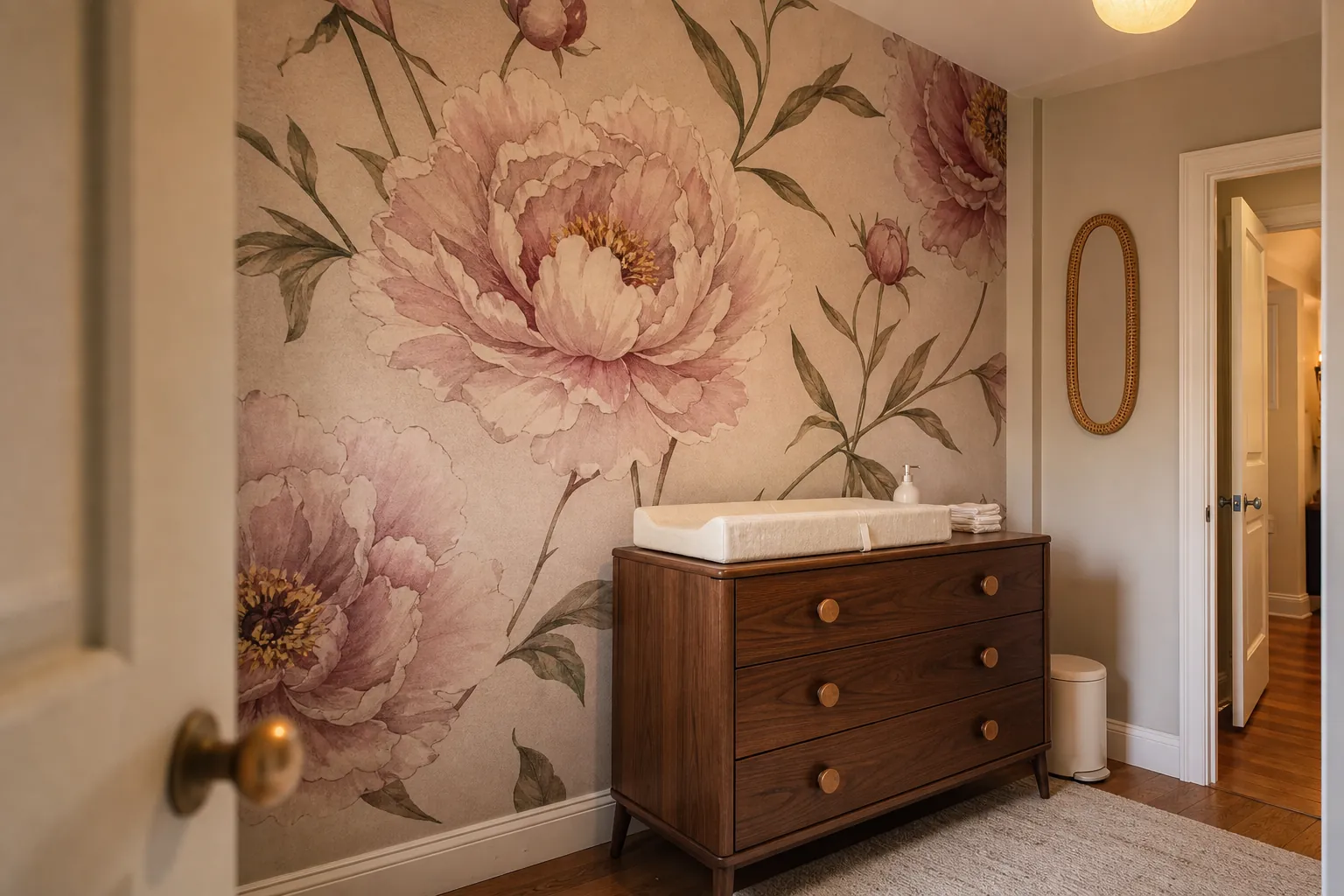

For a floral wallpaper nursery, look at how many blooms will be cropped at corners and furniture lines. Directional patterns create more waste and make seams less forgiving. Loose sprigs, scattered dots, and organic marks are easier for first-time installers because tiny shifts disappear into the design.
Decide whether one wall is enough
A pink accent wall nursery works when one wall has a reason to lead: the surface visible from the doorway, a shallow alcove, or the wall behind a low dresser. Papering every wall creates a softer envelope when the print is low contrast. Avoid choosing the crib wall by habit; layouts change, and a strong wall can work beside the reading chair.
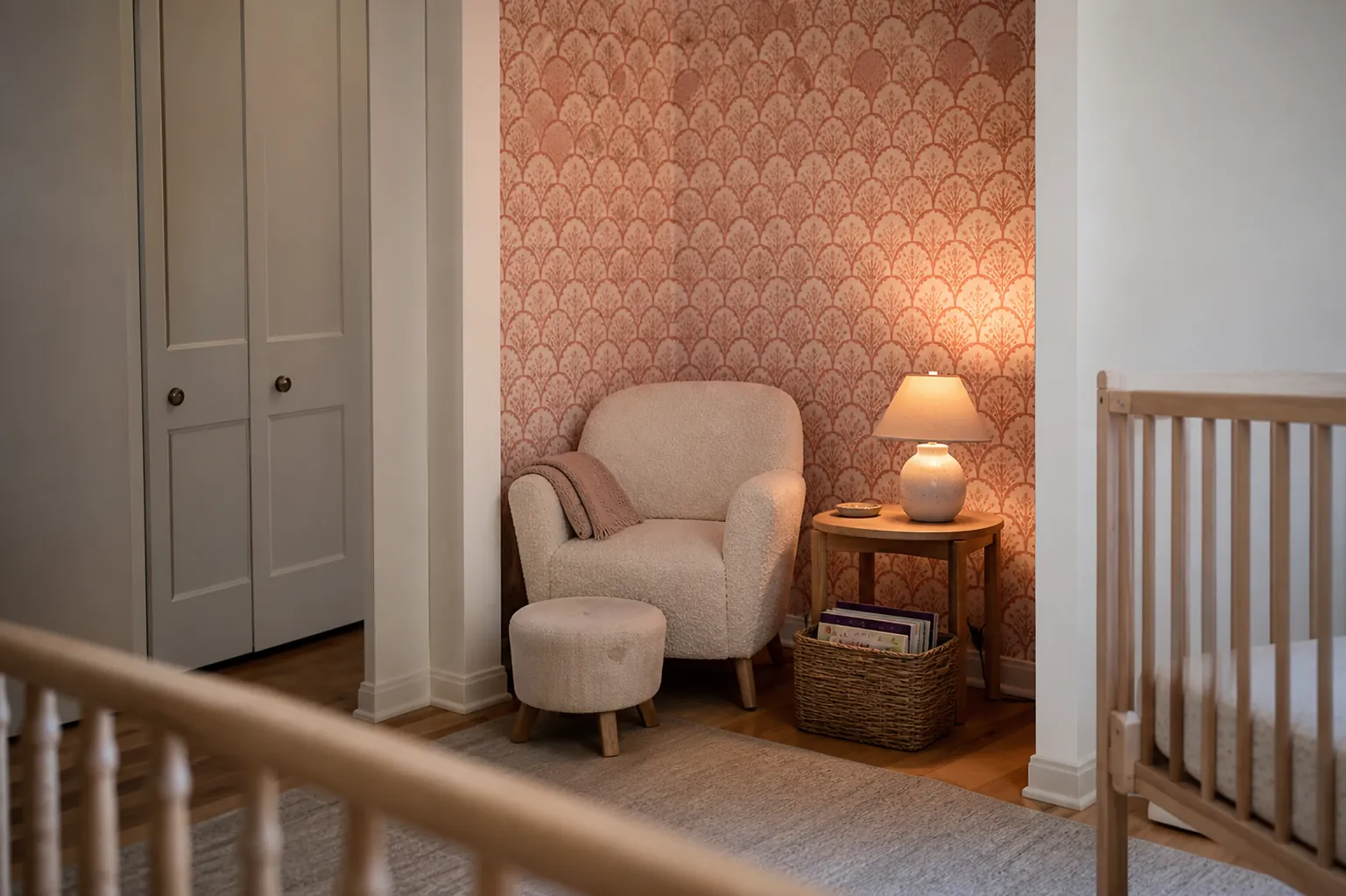

Mark the proposed boundary with painter’s tape and photograph the room from the door. The photo flattens the scene and exposes imbalance. Pay attention to exposed outside corners and where the pattern ends; a clean architectural stopping point looks far more deliberate.
Test the wall, not just the color
Parents report mixed results with peel-and-stick paper on textured walls: some installations hold, while others curl or fall after appearing secure. Adhesion depends on the exact texture, paint finish, curing time, humidity, and adhesive. A sample left in place for several days is more useful than a generic promise.
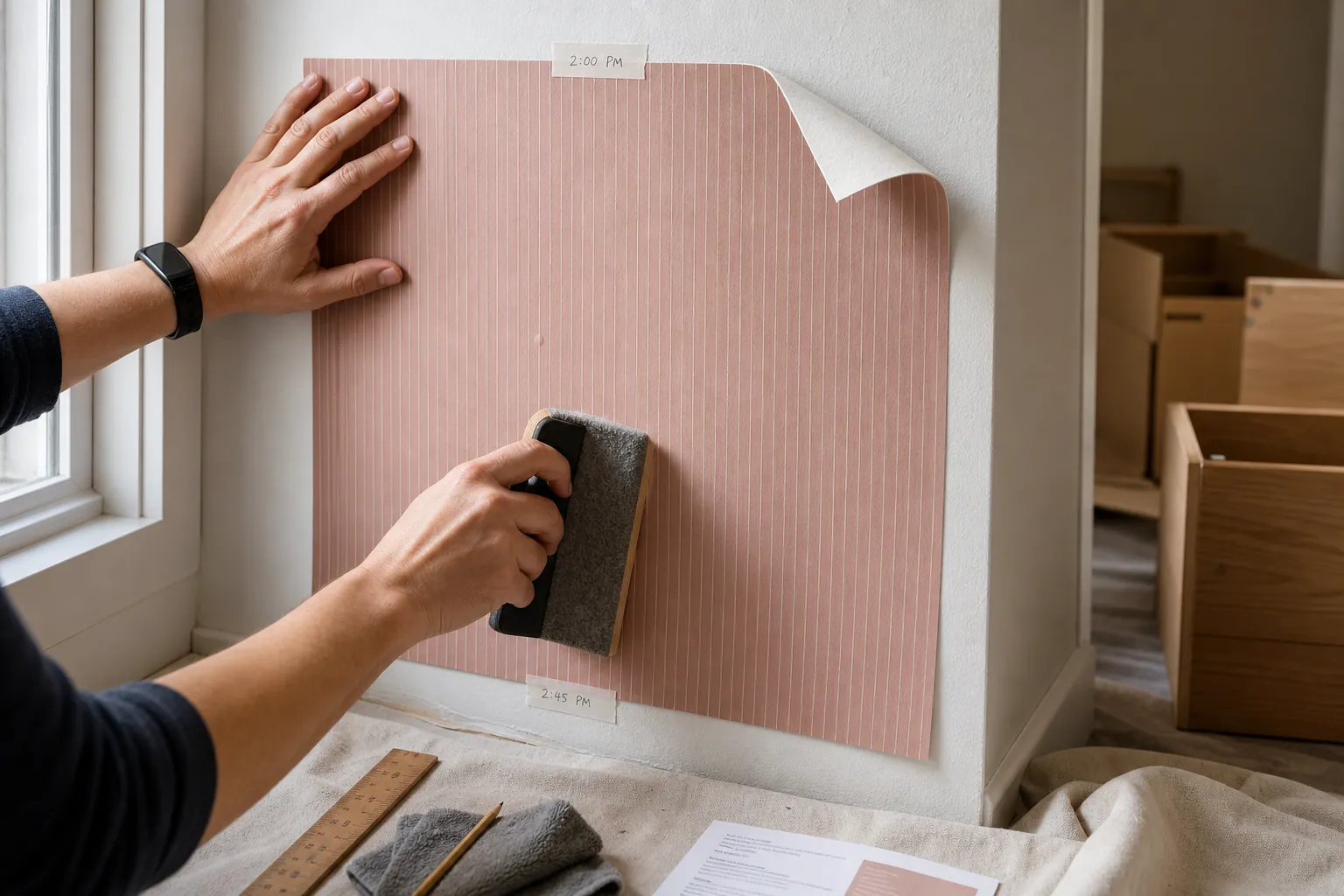

- Confirm the manufacturer allows the product on your paint and texture.
- Clean the wall as directed and let it dry completely.
- Test near an edge, seam, and slightly imperfect area.
- Check whether removal lifts or marks the paint.
- Do not add another adhesive unless the instructions permit it.
If the wall is rough, pasted paper on a properly prepared surface may be more dependable than removable vinyl. Renters should get permission and test removal. Framed wallpaper panels or spaced decals can provide color without gambling on an unsuitable full-wall application.
Build a palette that can grow up
Pink feels less themed when balanced by materials rather than more pink products. Pale oak, walnut, woven cane, cream wool, linen, and aged brass give pink baby wallpaper depth. Sage, burgundy, clay, or muted blue can appear in small accents and prevent the room becoming one-note.
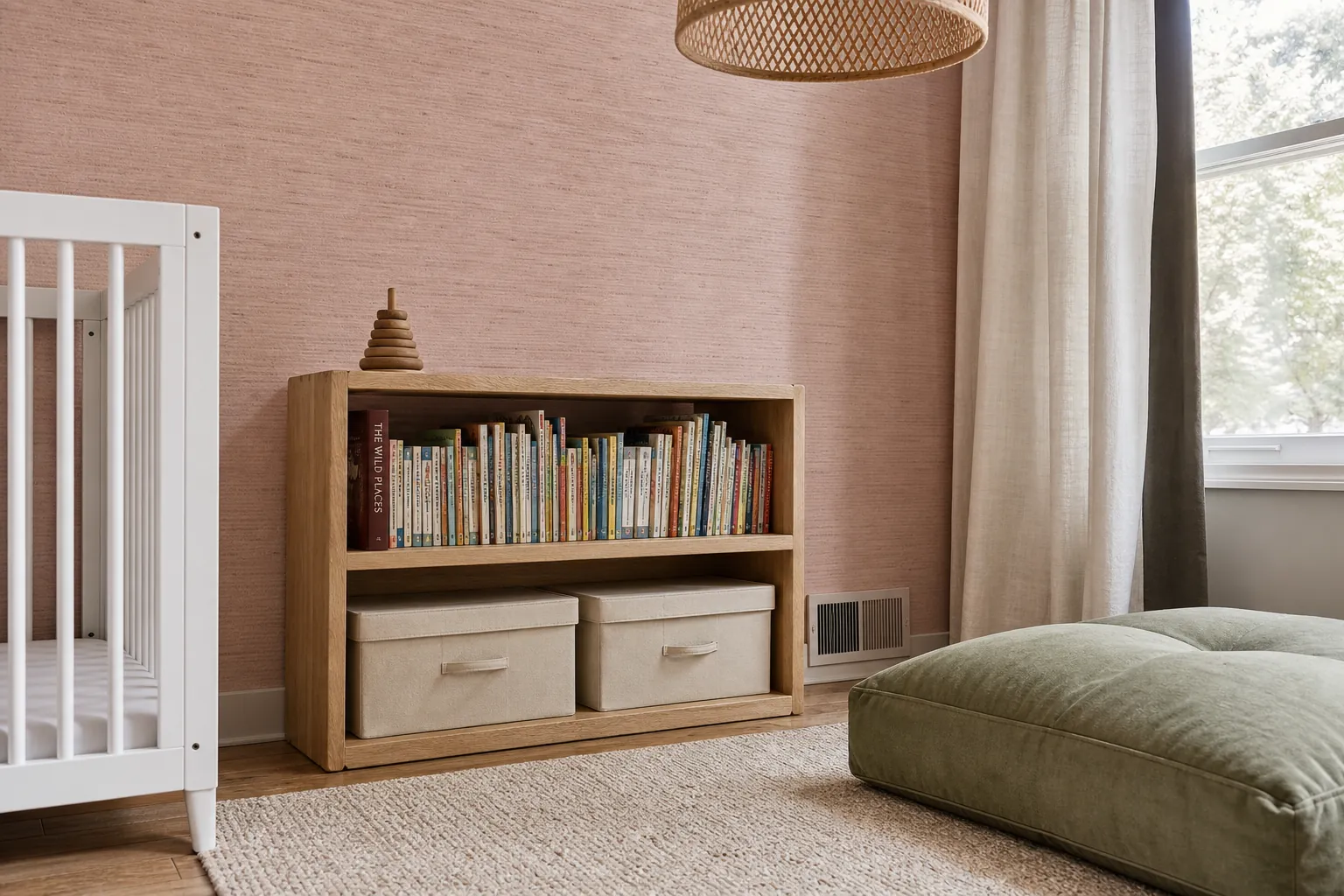

Keep permanent, expensive pieces simple. Let wallpaper carry the personality while bedding, baskets, and books change as the child grows. A pink nursery aesthetic is easier to update when no single motif is repeated on every surface.
Plan installation around real nursery use
Measure the wall in several places, order from one dye lot, and include the seller’s recommended overage. Complex repeats need extra material. Unroll and inspect every panel first. If the room was recently painted, respect both the paint maker’s curing time and the wallpaper maker’s instructions.
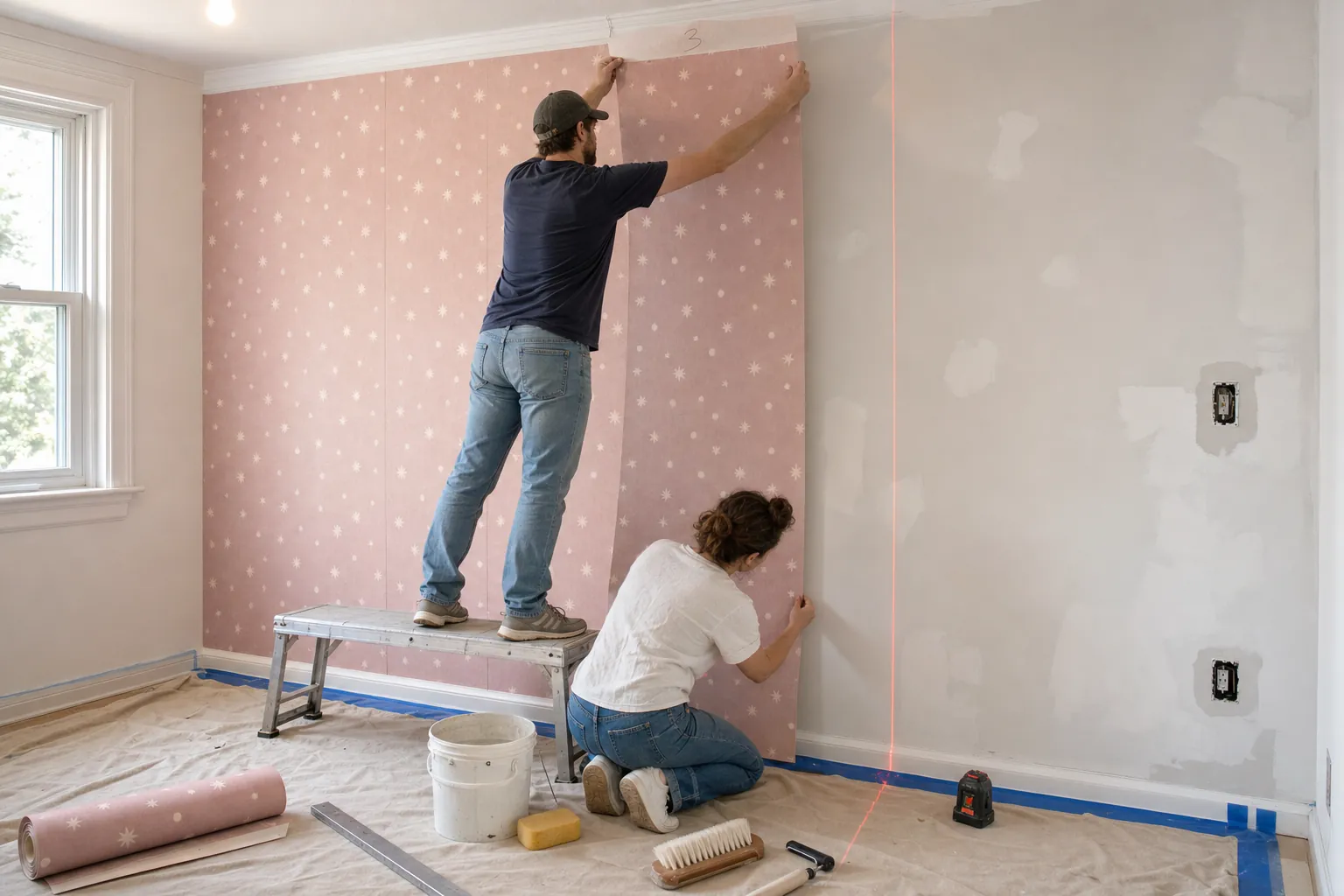

Choose products with clear material and emissions information, follow ventilation guidance, and air the room before use. Keep loose or peeling material away from the sleep space and inspect seams periodically. The goal is not a reveal that lasts an afternoon; it is a calm, practical room that holds up to daily life.
The smartest pink nursery ideas begin with one sample on the actual wall. If the color still looks right at night, the pattern works beside your furniture, and the material passes its adhesion test, you have cleared the decisions most likely to cause regret.