Panoramic Wallpaper Murals Behind a Long Dining Table
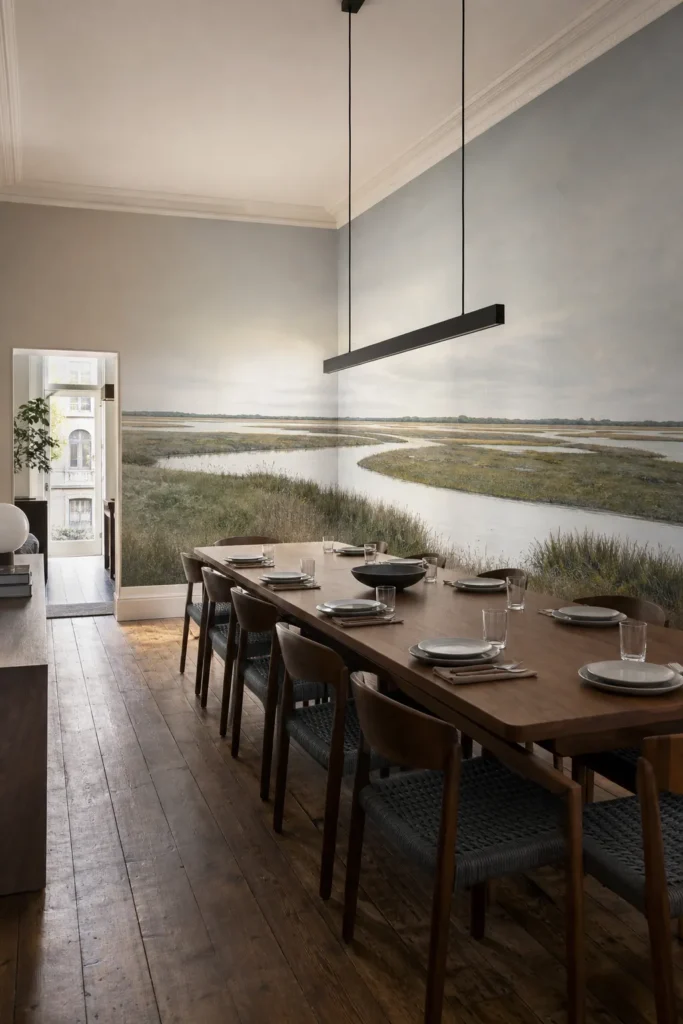
A panoramic mural behind a dining table can make a long wall feel intentional in one move. The format echoes the table, carries the eye across the room, and replaces a scattered arrangement of small art with one continuous idea. Yet the same width that gives a panorama its impact also makes mistakes harder to hide. A poor crop, misplaced horizon, or interrupted focal point can feel wrong from every chair.
The useful question is not simply whether a wide wallpaper mural suits a dining room. It is how the printed scene, the table, and the architecture should share one long axis. That relationship needs to be planned at full scale before a panel is ordered.
Audit the whole wall before choosing the image
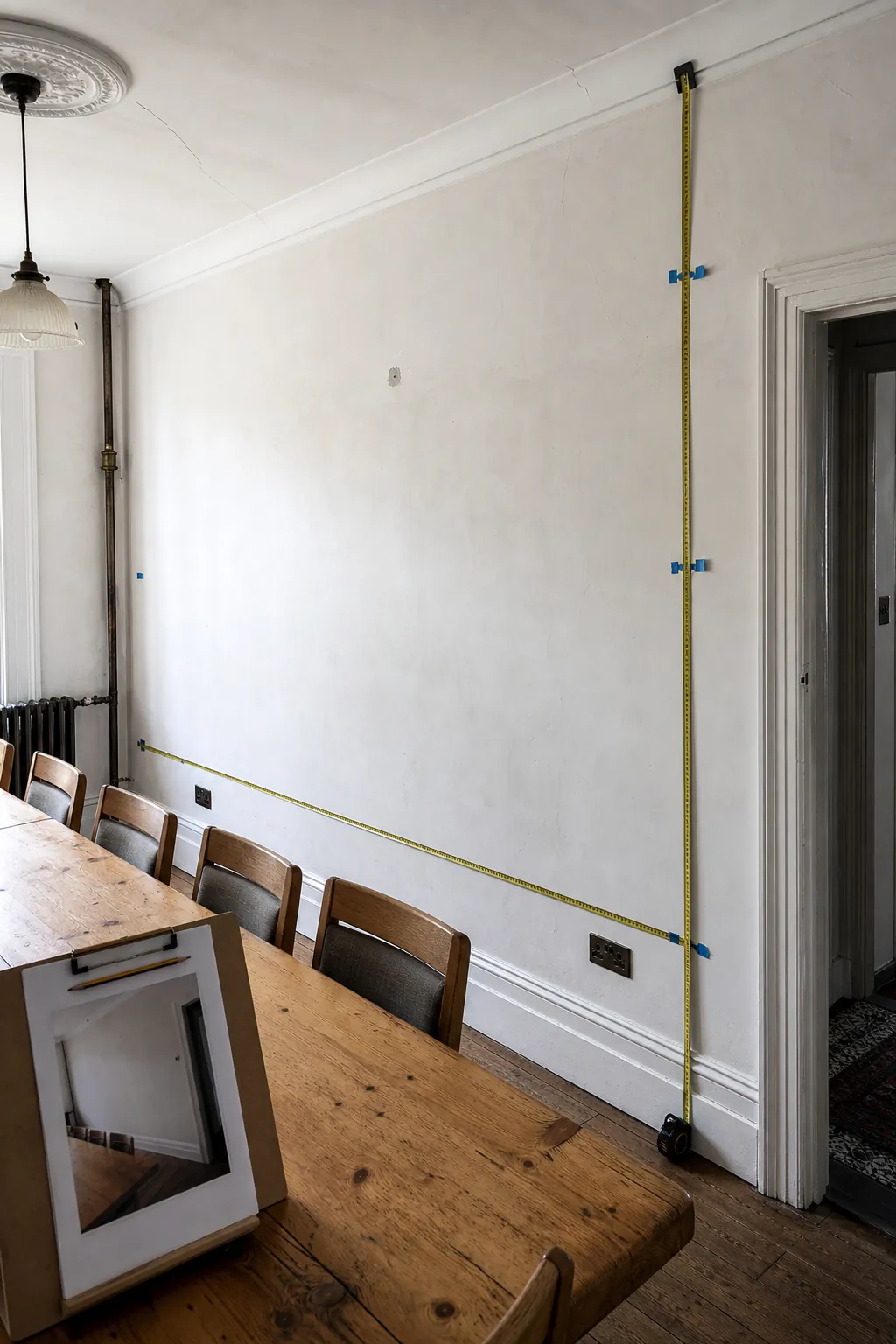
Measure the wall at the top, middle, and bottom; older rooms are rarely perfectly square. Record the ceiling line, skirting, outlets, switches, radiator pipes, vents, door trim, and any sideboard that will remain. A panoramic dining room wallpaper is not a repeating pattern that can shift unnoticed. Every obstruction removes a specific part of the scene.
Photograph the empty wall straight on, then mark the table and chair-back heights on a copy. This reveals whether a farmhouse, tree, face, or other important detail will disappear behind furniture. If the wall is broken by a doorway, choose scenery with a quiet area at that break rather than cutting through the main subject.

Compose the crop for seated eye level
Product previews are usually shown on an empty wall, but diners experience the lower half through chair backs, shoulders, glassware, and flowers. Ask for a proof based on your actual wall ratio. Then place the mural’s most important horizontal line where it remains readable from a chair, not where it looks balanced on a laptop.
A high horizon can make a narrow room feel enclosed because too much dense foreground lands behind the table. A very low horizon may disappear entirely. Often the best crop leaves the lower portion relatively calm, holds a focal landmark just above the chairs, and gives the upper field enough breathing room to prevent visual pressure.

Use the table as a leading line, not a ruler
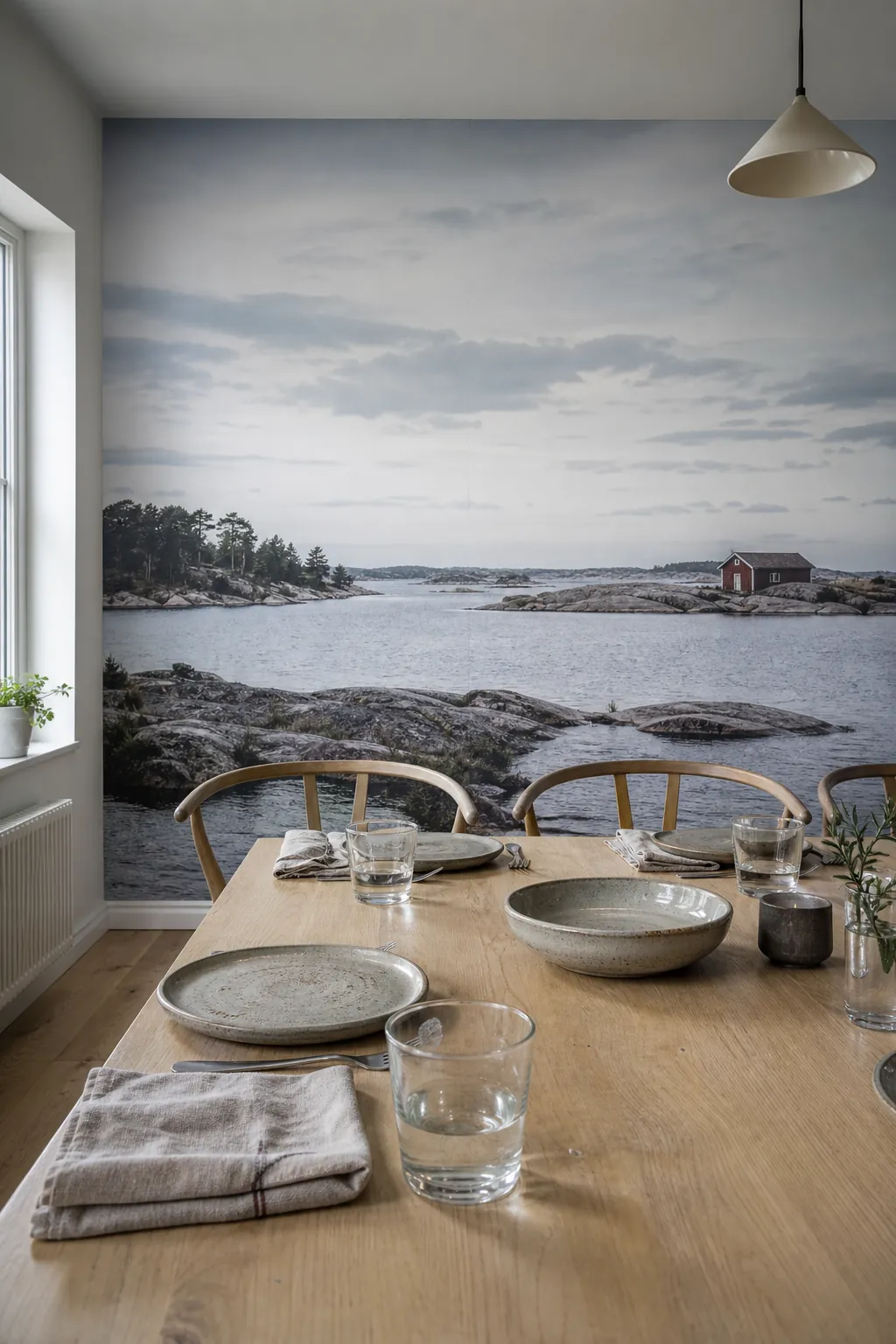
A long table naturally reinforces horizontal scenery, but perfect centering is not always the answer. In a pass-through dining room, the table may shift to protect circulation. In an open plan, the pendant may define the dining zone more strongly than the wall midpoint. Align the composition with the view people actually encounter from the main approach.
Let the table lead toward an off-center landmark, a bend in a path, or a change in tone. That creates movement without making the room feel like a diagram. Center relationships, not every object: the pendant belongs to the usable tabletop, the mural focal area belongs to the dominant sightline, and the table belongs to the room’s circulation.

Decide between edge-to-edge and framed coverage
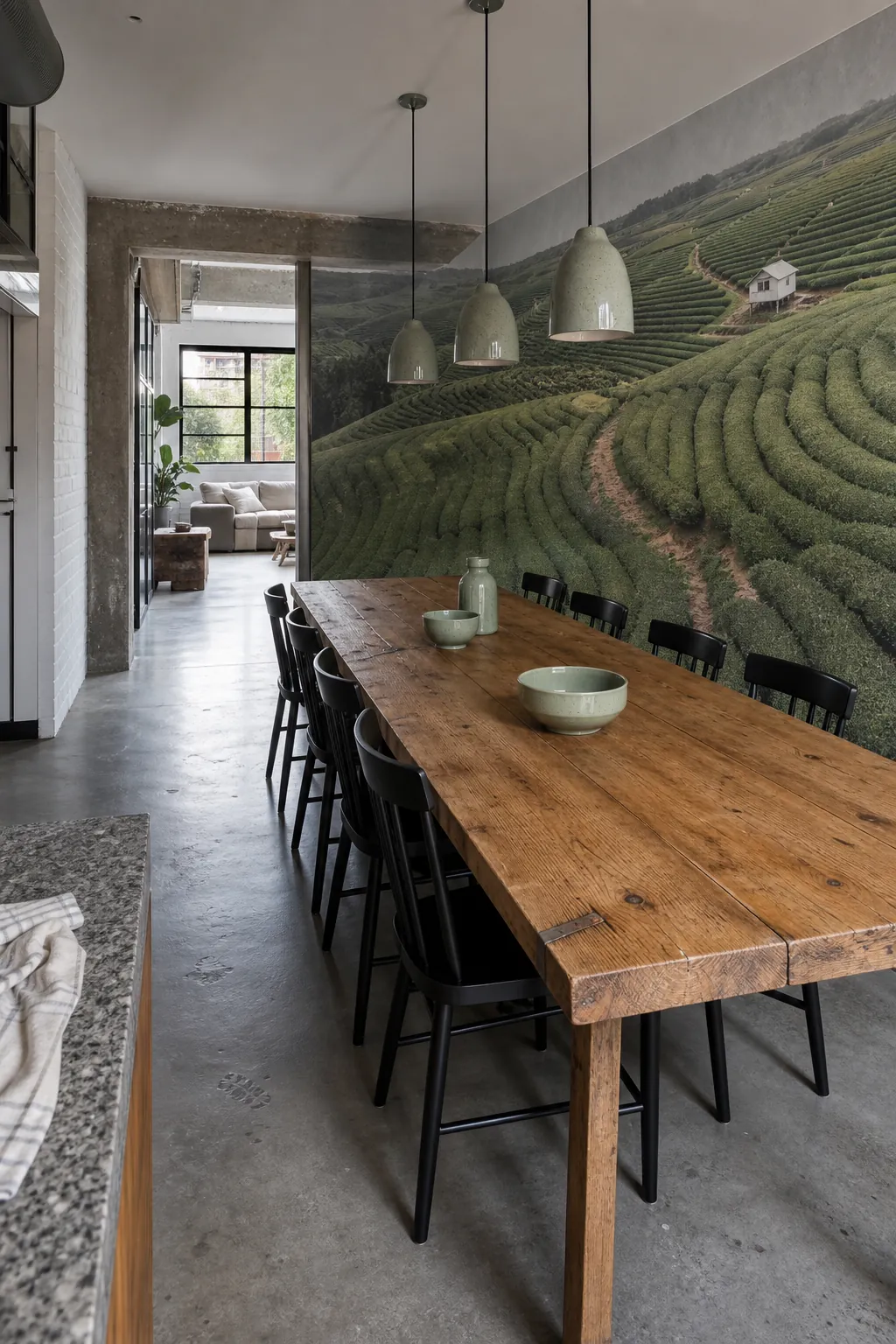
Edge-to-edge coverage feels architectural and is usually best when the wall is uninterrupted. It makes a panorama read as a single environment rather than oversized art. An inset mural can work when the available design is slightly smaller than the wall, when existing panel molding creates a natural boundary, or when a narrow room needs breathing space at the edges.
A framed treatment must look deliberate. Use equal margins, align the inset with permanent architecture, and avoid a sliver of paint at one end. Mock up both options with painter’s tape. If the mural already contains strong internal borders or a dark edge, extra trim may make it feel boxed in.
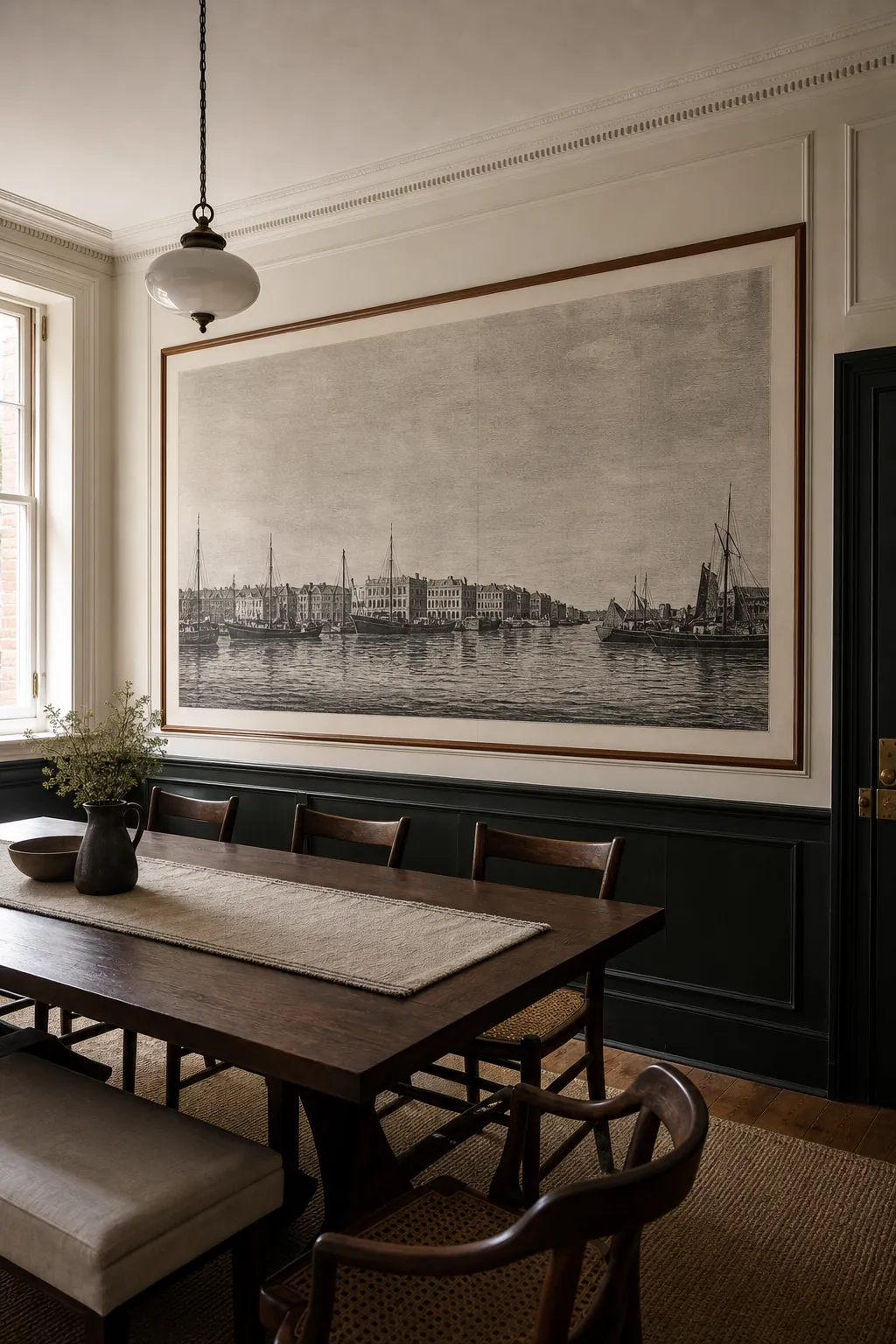

Keep furniture from cutting the panorama apart
A tall cabinet against the mural wall interrupts both the physical paper and the visual story. If storage is essential, choose a low sideboard and ask the crop designer to keep important details above it. Slim chair backs are helpful with detailed lower scenery, while upholstered chairs can sit against a calmer foreground without creating clutter.
- Keep the sideboard lower than the mural’s central action.
- Use one restrained centerpiece instead of a tall arrangement that blocks the horizon.
- Pull secondary colors into chairs and textiles rather than copying the main motif.
- Leave enough chair clearance to prevent repeated contact with the paper.
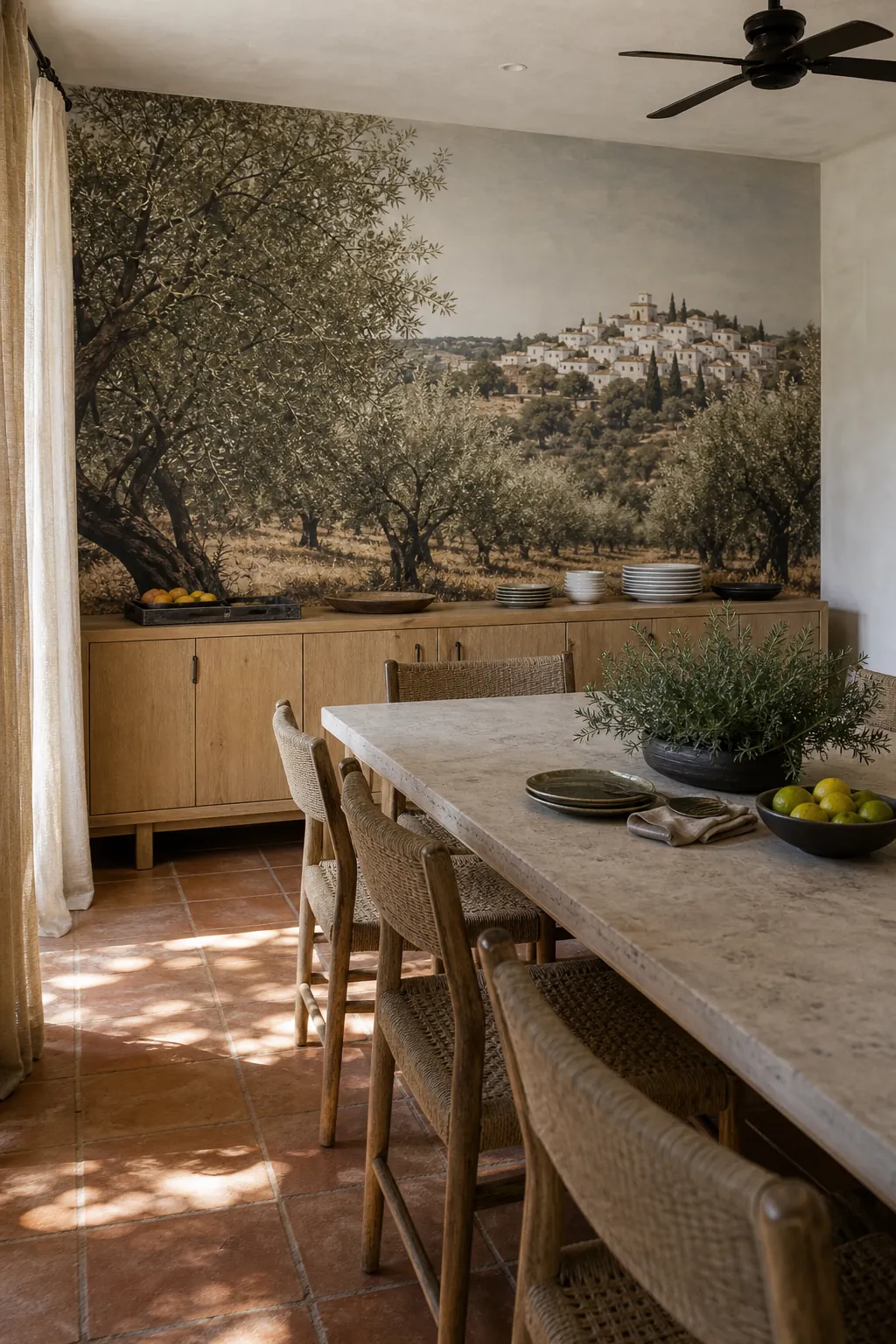

Approve a full-wall proof and panel map
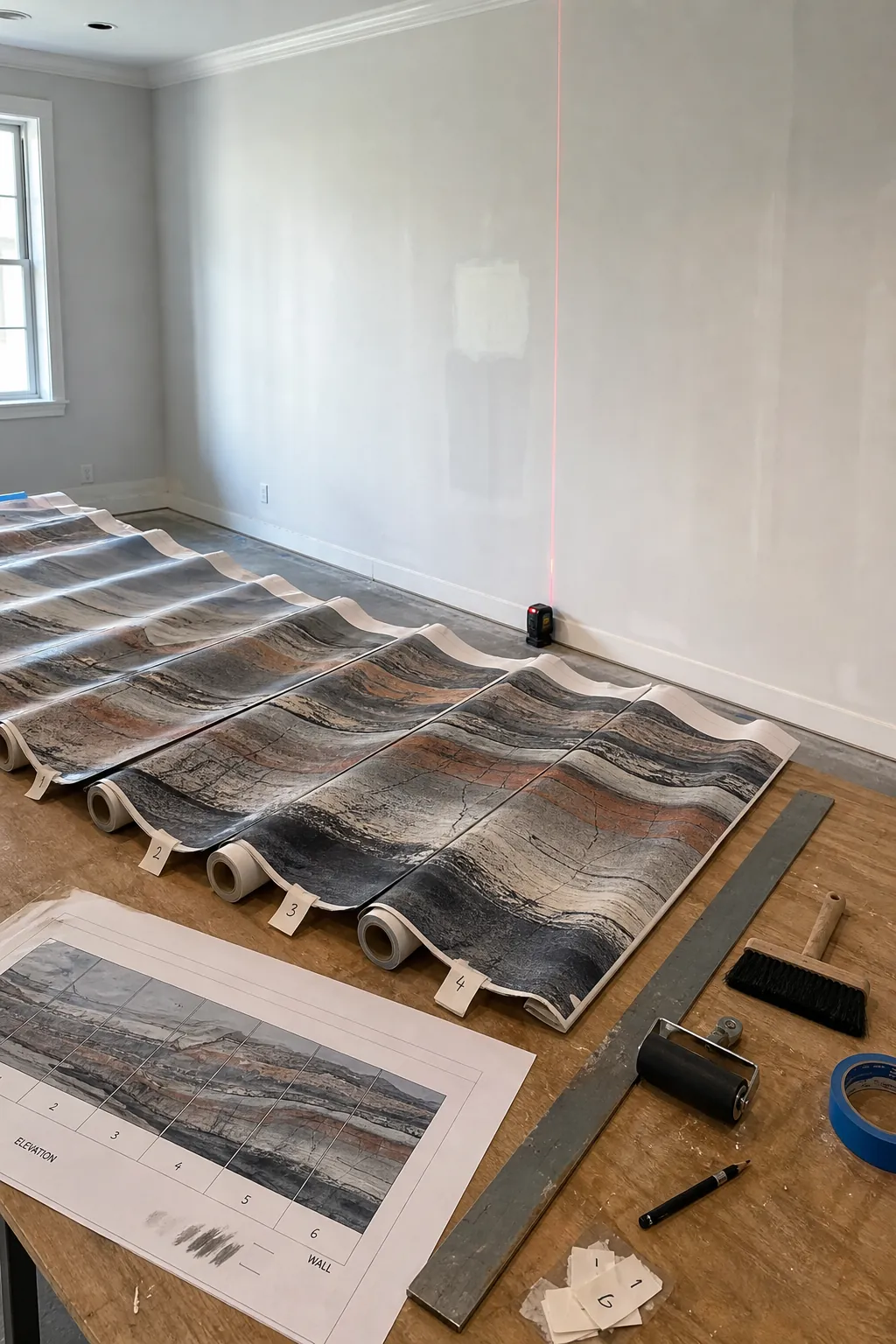
Before production, request a scaled elevation showing the final crop and every panel seam. Check that narrow visual elements—tree trunks, window frames within the image, architectural columns, or faces—do not sit awkwardly on a join. Confirm whether the supplier expects overlap trimming or butt joints and whether the first panel begins from the left, right, or center.
Wall preparation matters most across broad, quiet areas such as sky, water, or mist. Fill cracks, sand repairs, seal stains, and use the recommended primer so differences in porosity do not telegraph through the paper. A professional installer is especially valuable when a long wall is not plumb, because small errors compound across many panels.

Make the panorama belong to the room
A successful scenic mural behind a table does not need matching themed décor. Its scale already provides drama. Let the room answer it with simpler shapes, tactile materials, and a limited palette. The table should still feel like the place where dinner happens, not a prop placed in front of a printed view.
When the architecture is measured, the crop is judged from every seat, and the panel map is approved before printing, a long dining wall mural becomes more than a focal wall. It gives the entire room direction—and it keeps doing so even when the table is cleared.