Ocean Wave Wall Murals for Bathrooms That Need Spa Energy
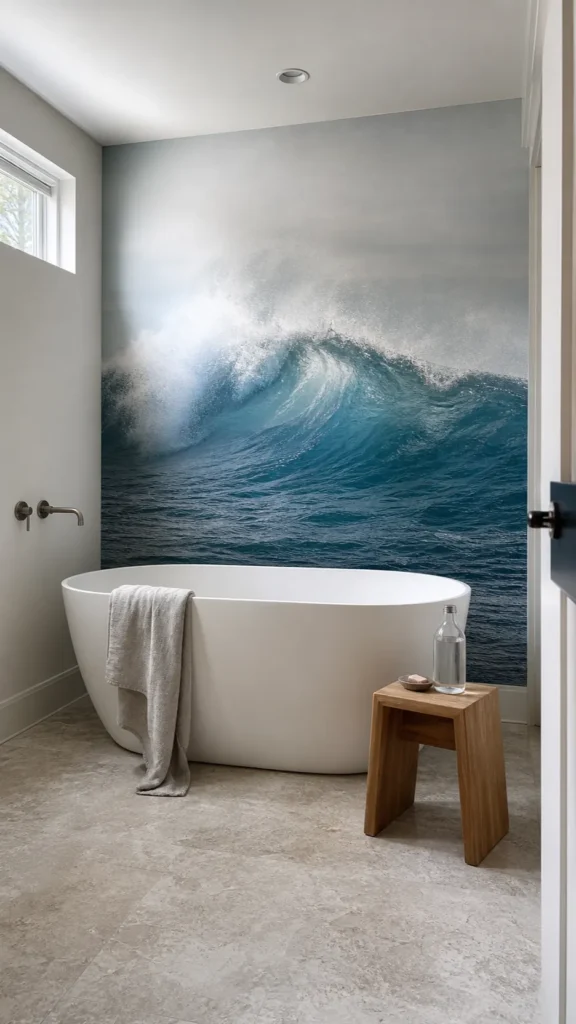
A bathroom can have stone-look tile, fluffy towels, and a candle on the vanity and still feel like a utility room. The missing ingredient is often not another accessory. It is a view. An ocean wave wall mural gives the eye somewhere to travel, replacing visual clutter with horizon, movement, and blue depth. Done well, it creates the exhale people want from a spa bathroom. Done carelessly, it becomes a loud beach theme or starts lifting at the seams.
The difference comes down to three decisions: where the mural sits, how the wave is scaled, and whether the room can manage moisture. Homeowners discussing bathroom wallpaper repeatedly raise the same worries—steam, textured walls, difficult installation, and edges peeling near a shower. Their results vary, but the successful rooms tend to share clean smooth walls, sensible distance from direct spray, and reliable ventilation. That practical foundation should shape the design from the beginning.
Choose a wall that can hold the whole view
The best mural wall is usually the first uninterrupted surface visible from the doorway. In a compact bathroom, that may be the wall behind a freestanding tub or the vanity wall around a simple mirror. In a larger room, it may be the long wall opposite the shower. What matters is that the image can read as one scene instead of being chopped into fragments by tall cabinets, towel rails, and multiple doors.
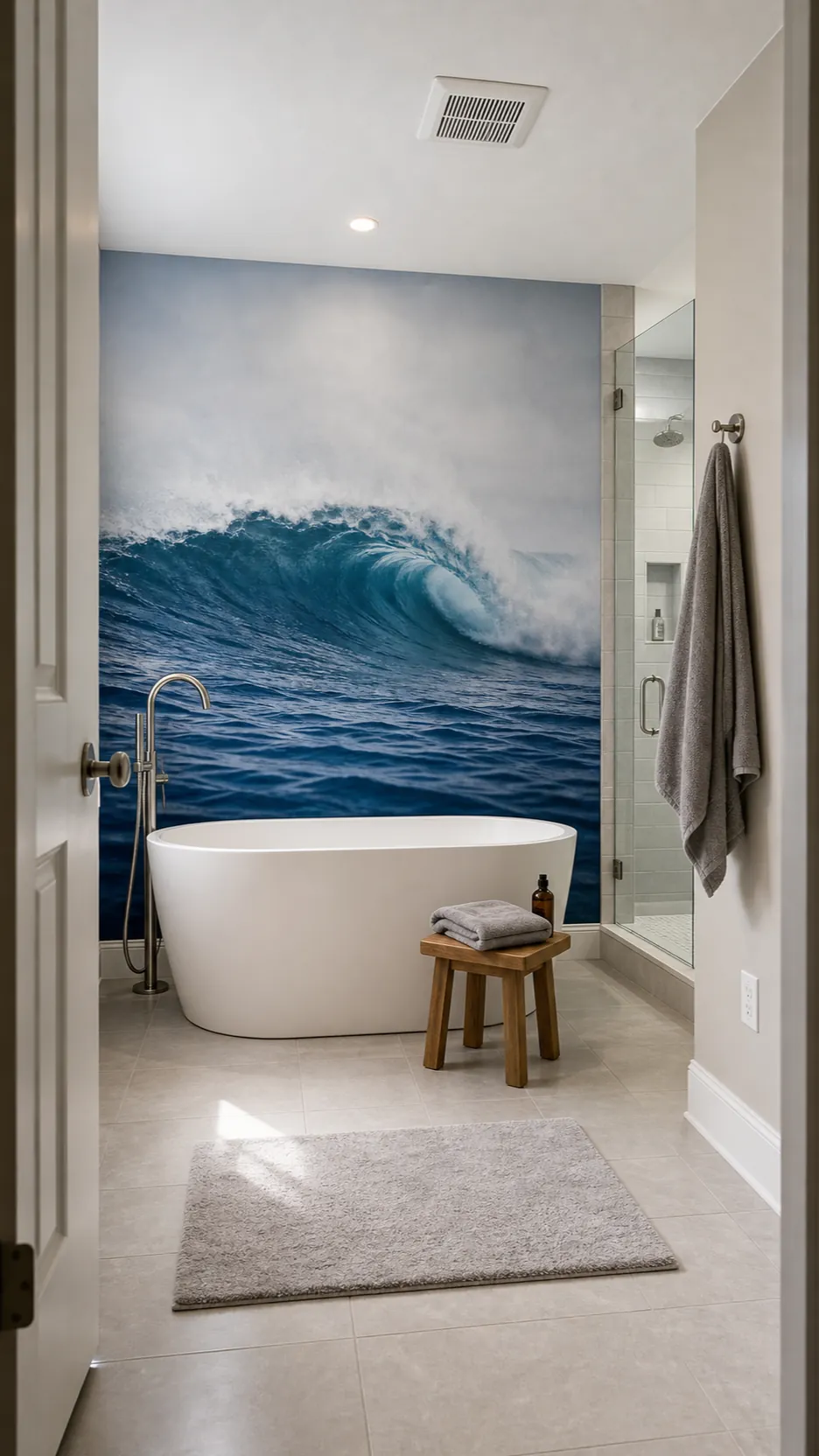

Keep the mural outside direct splash zones unless both the wallcovering and installation system are explicitly rated for that use. A wall opposite the shower can still deliver the full ocean effect without asking adhesive seams to behave like tile grout. Sherwin-Williams similarly advises using bathroom wallpaper where ventilation is strong and notes that sustained humidity can damage traditional paper. The mural is a decorative finish, not a waterproof membrane.
Before ordering, photograph the wall straight on and mark every permanent interruption. A wave crest can disappear behind a mirror; the horizon can collide awkwardly with a vanity backsplash. Custom-sized panels let you position the focal point before printing. If the room is narrow, preserve some quieter water or sky around the main wave so the scene does not press toward the viewer.
Match the wave scale to the room, not the sample
A small online swatch can hide how forceful a breaking wave becomes at wall size. In a powder room, one oversized curl can feel immersive and jewel-box dramatic. In a daily family bathroom, the same composition may feel restless before breakfast. For calm spa energy, look for a broad swell, a low horizon, generous mist, or a crop that emphasizes translucent water rather than white foam.
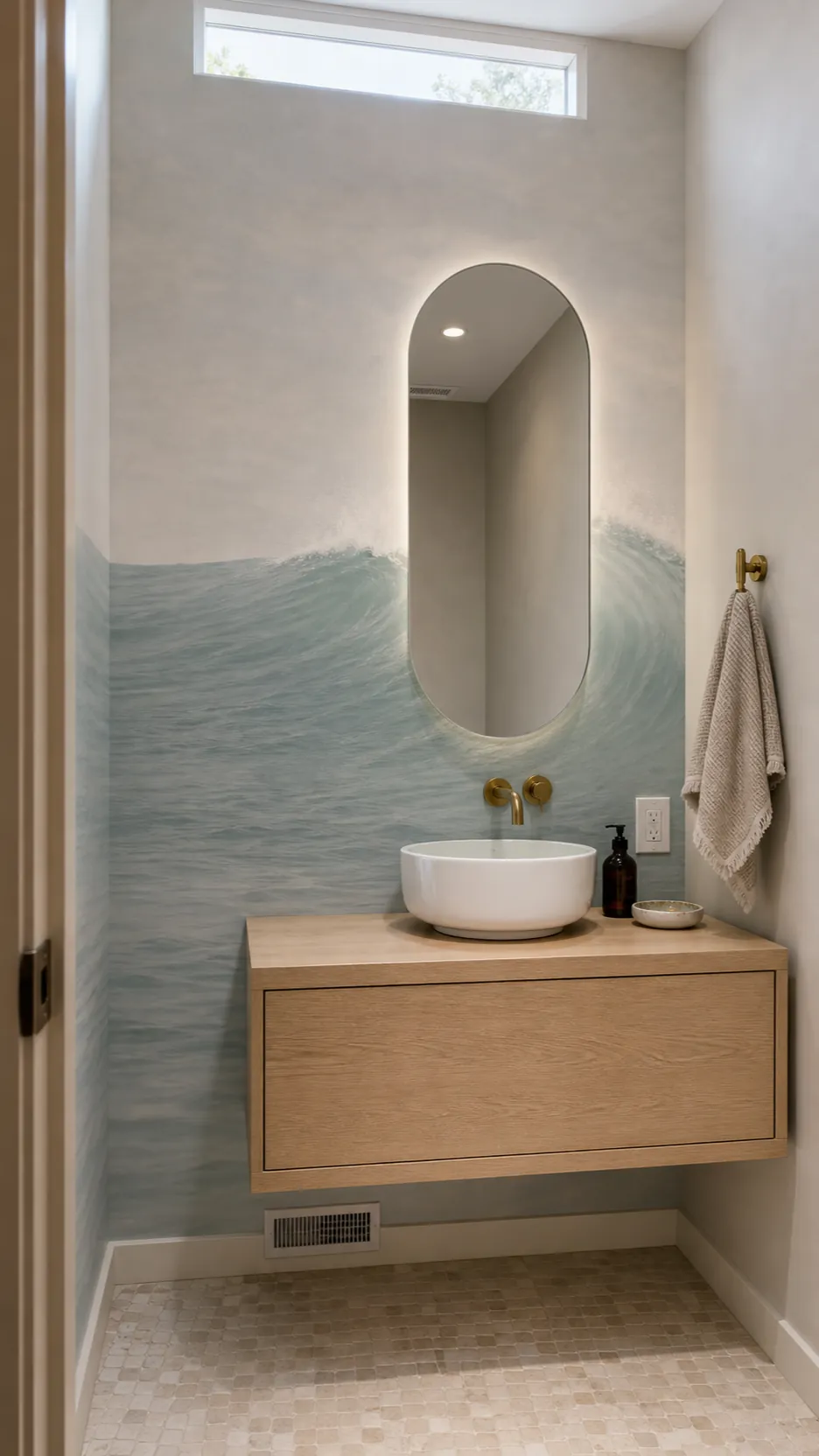

The more compact the room, the simpler the silhouette should be. A single readable wave usually creates more depth than dozens of sharp peaks. Keep the most detailed foam away from corners, because wraps and panel joins break delicate lines. If the bathroom has a low ceiling, a slightly lower horizon leaves open water and haze above it, visually lifting the room. A tall, narrow wall can handle a vertical crop with the wave rising from the lower third.
Print a tiled paper preview at full scale and tape a section to the wall. View it from the doorway, the sink, and the tub. This low-cost check reveals whether the wave reads as soothing motion or a giant graphic. It also lets you test how the image changes under cool task lighting and warm evening light before committing.
Build a mineral palette instead of a nautical theme
The fastest way to make a bathroom ocean mural feel themed is to surround it with anchors, shells, rope, and matching blue accessories. A more convincing spa bathroom borrows from the coast at the material level: salt white, wet slate, pale sand, weathered oak, sea glass, and brushed metal. The mural provides the literal ocean reference; everything else can stay quiet and tactile.
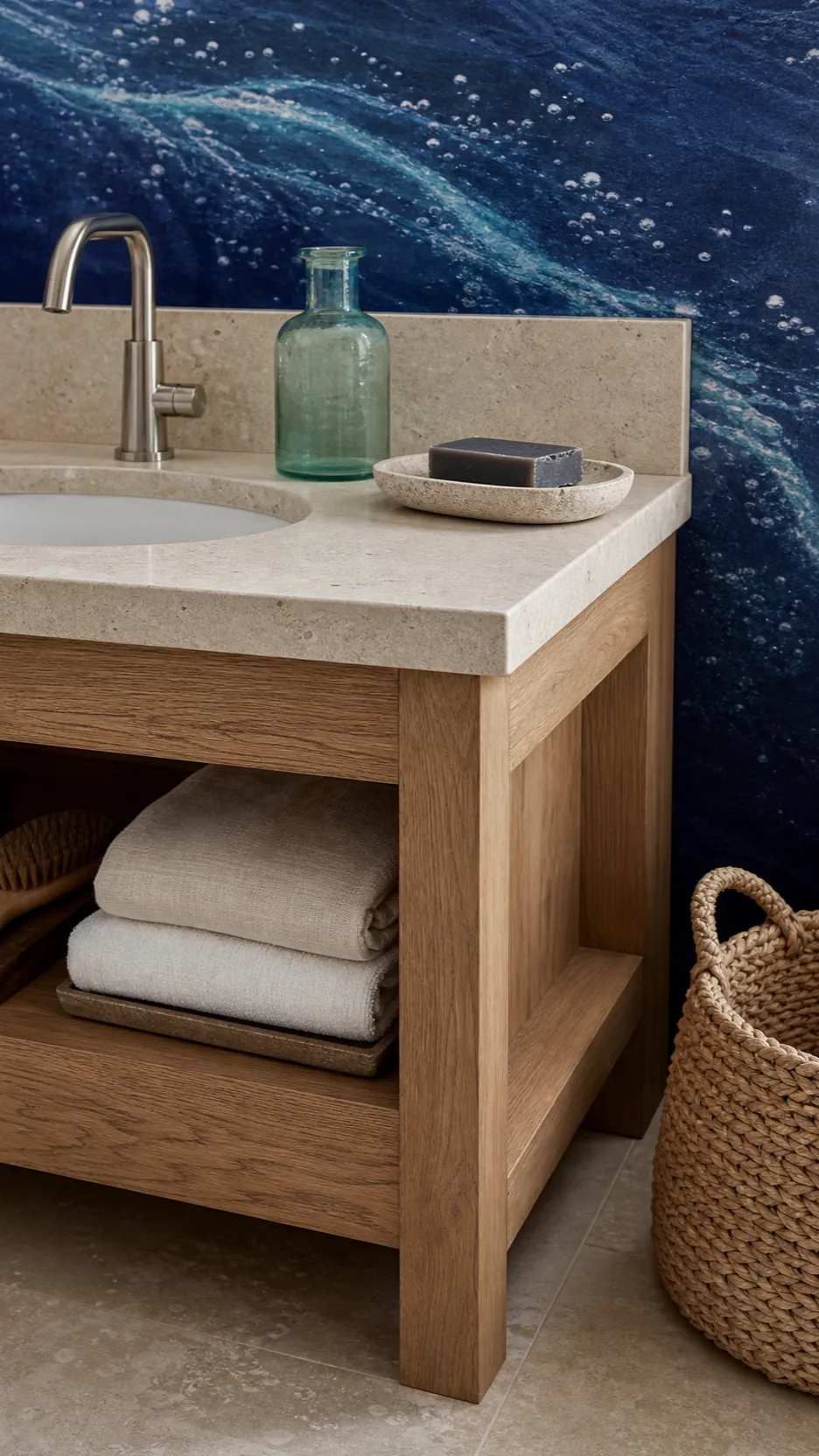

Pull one pale tone and one dark tone from the image. The pale tone can guide wall paint, towels, or the vanity top. The dark tone can appear sparingly in hardware, a stool, or a slim mirror frame. Avoid matching every blue exactly. Natural water contains cyan, grey, green, and deep navy at once; a layered palette feels calmer than a showroom set of identical aqua pieces.
For a warm room, pair a blue water mural wallpaper with ivory plaster, light oak, travertine, and aged brass. For a cooler modern room, use pale grey porcelain, rift-cut ash, white quartz, and brushed nickel. In both cases, let visible grain and honed stone soften the high-definition image. Texture is what turns a printed scene into an atmosphere.
Edit fixtures so the mural stays in charge
A dramatic blue bathroom wall mural already carries contrast, motion, and detail. The fixtures around it should establish rhythm without competing. A simple oval mirror, a floating vanity, one sculptural sconce, and concealed storage are usually enough. If the mural sits behind a tub, choose a tub silhouette with clean edges and keep bottles on a nearby niche or stool rather than lining them across the focal wall.
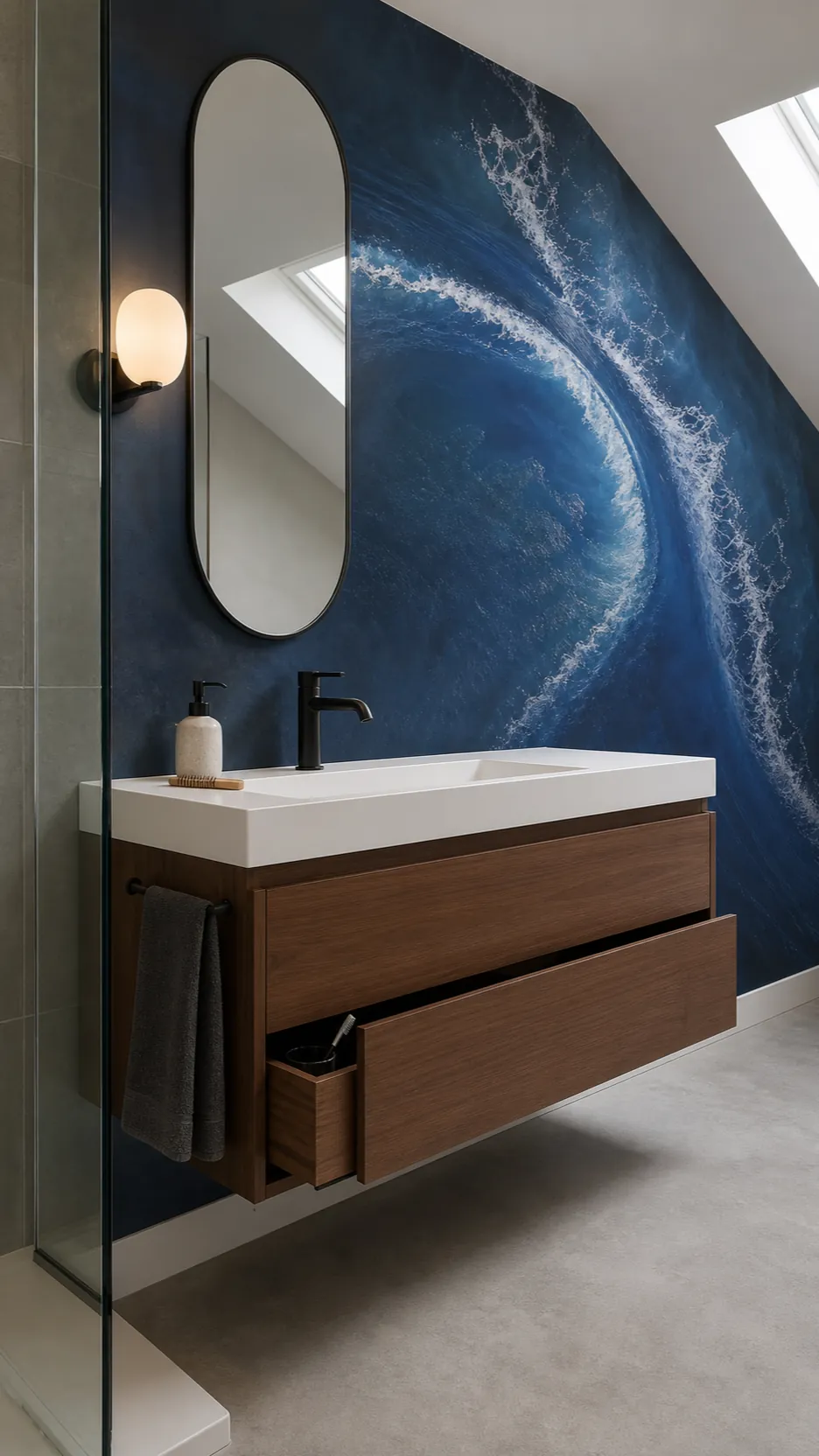

Pay special attention to reflections. A mirror opposite the mural can double the view and make a small bathroom feel deeper, but it can also reflect the busiest band of foam. Test the sightline with the mural proof. Clear shower glass preserves the room’s depth; heavily patterned glass introduces another texture. If privacy glass is essential, choose a restrained reeded or lightly frosted finish.
Every countertop object becomes part of the composition. Use a tray to gather soap and daily skincare, decant only if it genuinely makes the routine easier, and give damp towels a proper rail. Spa energy does not come from pretending nobody uses the room. It comes from making daily use look orderly.
Light the mural like water, not like a poster
Flat overhead light can turn a nuanced wave wallpaper mural into a blue rectangle. Layered light brings back depth. Use good facial light at the mirror, general ceiling light for cleaning, and a softer indirect source for baths at night. Wall washing can be beautiful, but fixtures should sit far enough from the surface to avoid bright scallops that reveal every seam.
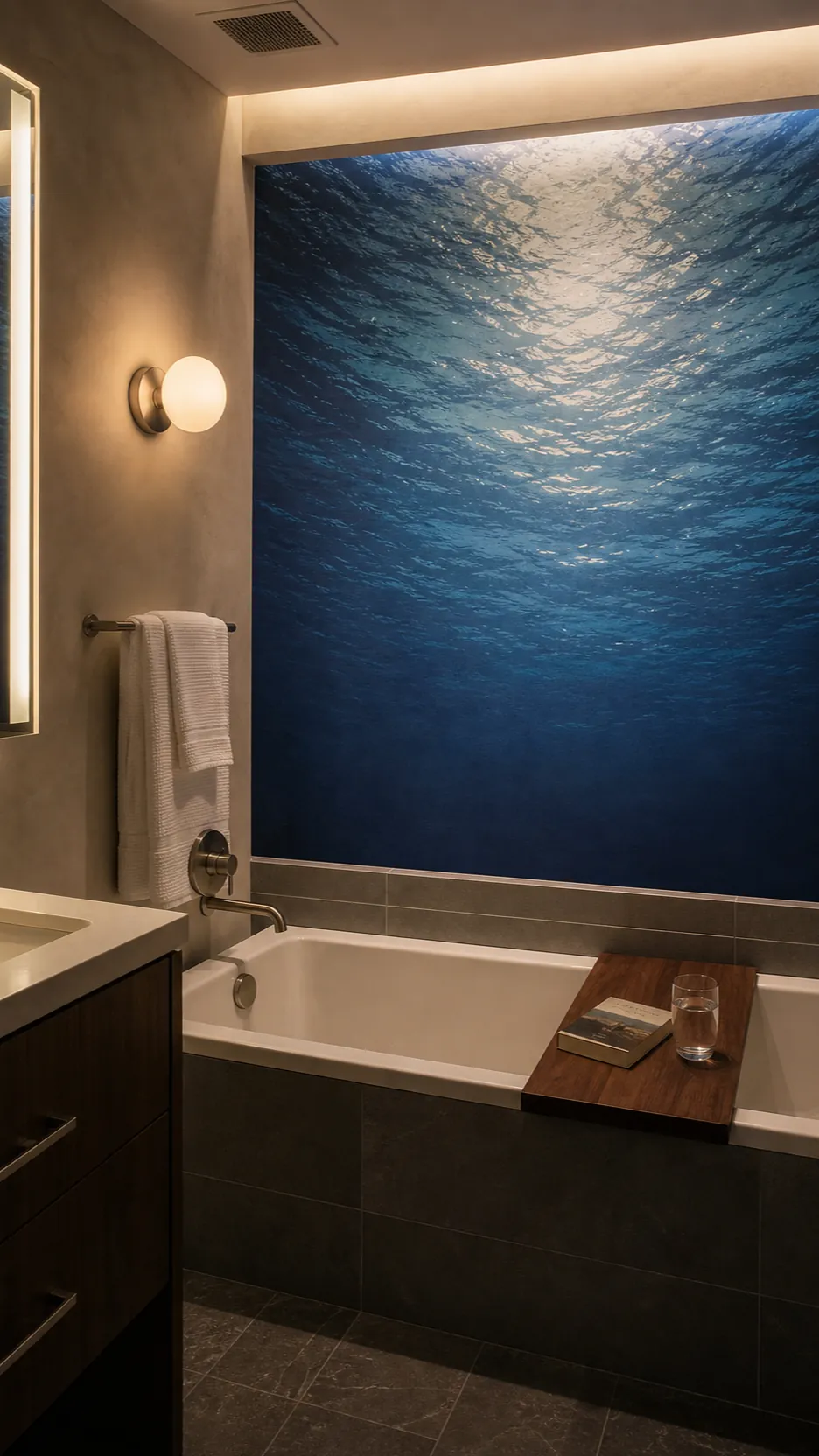

Check the print under the bulbs you will actually use. Very warm lamps can muddy turquoise, while very cool lamps can make white foam look clinical. A neutral task-light setting paired with a warmer dimmed evening layer gives the most flexibility. Matte or low-sheen wallcovering often photographs and reads more naturally because it avoids sharp reflections, but the material still needs to be appropriate for the room’s humidity.
If the bathroom has daylight, watch the wall for a full day. Side light makes panel texture and seams more visible; direct sun may affect color over time. A shaded window or filtered blind can keep the mural’s blues balanced while protecting privacy. The goal is variation that feels like real water, not glare that announces a printed surface.
Treat ventilation and wall prep as part of the design
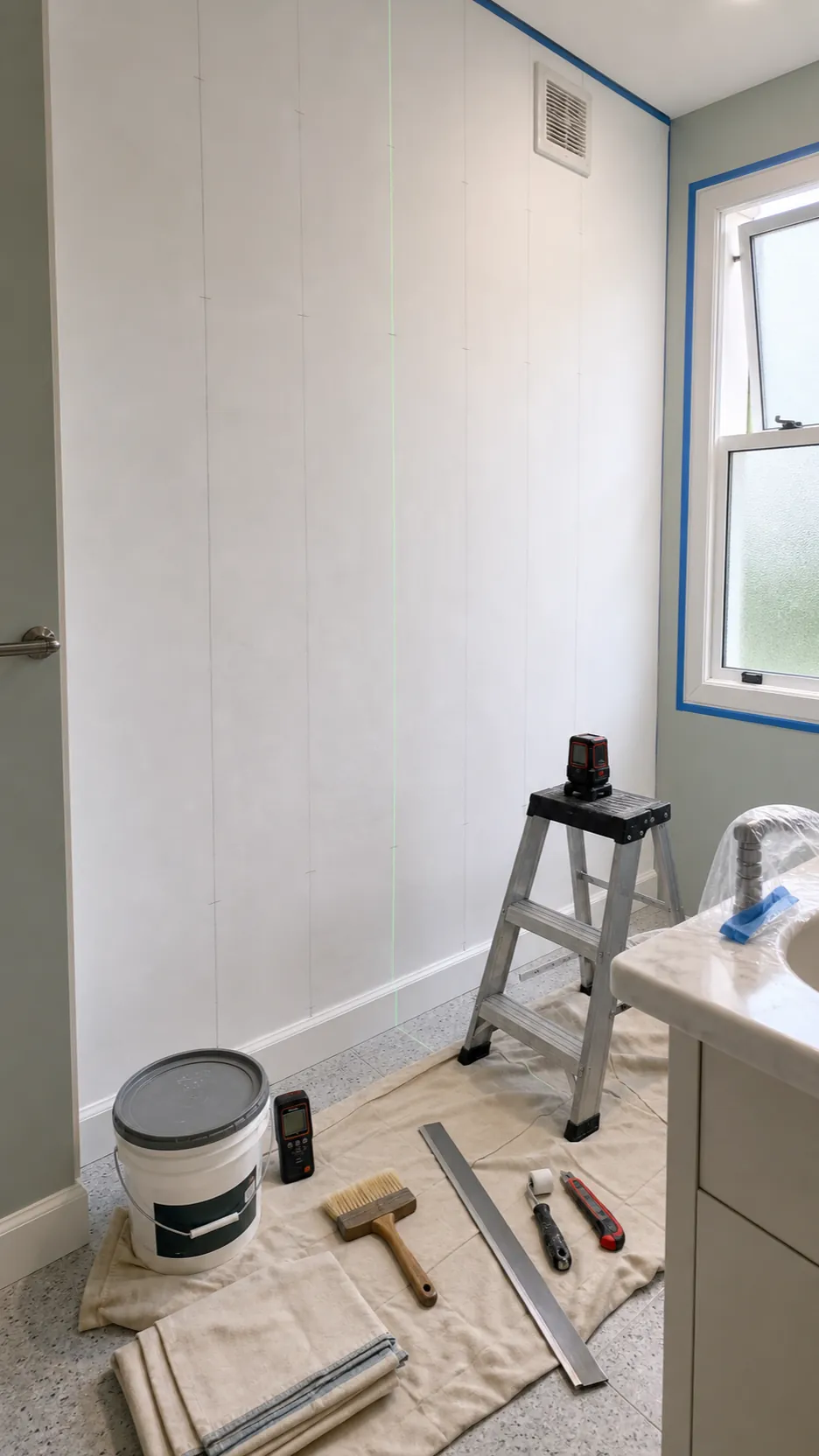
The prettiest ocean wallpaper for a bathroom cannot compensate for a damp wall. Before installation, resolve leaks, staining, mildew, loose paint, and condensation. Confirm that the exhaust fan vents effectively and use it during and after showers. ROMAN Products also emphasizes proper ventilation, wall preparation, and following the wallcovering manufacturer’s instructions in humid rooms.

Ask the mural supplier four direct questions before buying:
- Is this exact substrate approved for a full bathroom, not merely described as washable?
- Which primer and adhesive system does the manufacturer require?
- Can the surface be gently cleaned, and with what products?
- Are edge sealing or a compatible decorator’s varnish recommended for the intended location?
Smoothness matters too. Reddit DIY discussions frequently connect good peel-and-stick results with carefully smoothed walls, while failed installations often involve texture, weak prep, or heavy steam. Do not bridge cracked caulk or apply over flaky paint. Let primer and adhesive cure for the specified time, and avoid steamy showers while the installation dries.
Once installed, wipe splashes promptly, keep seams free of residue, and investigate any lifting rather than pressing it down repeatedly over trapped moisture. A well-planned spa bathroom wallpaper mural should make the room feel calmer every day. That calm begins with a believable ocean view, but it lasts because the wall behind it is dry, smooth, and properly cared for.