Map Wallpaper Murals for Educational, Beautiful Playrooms
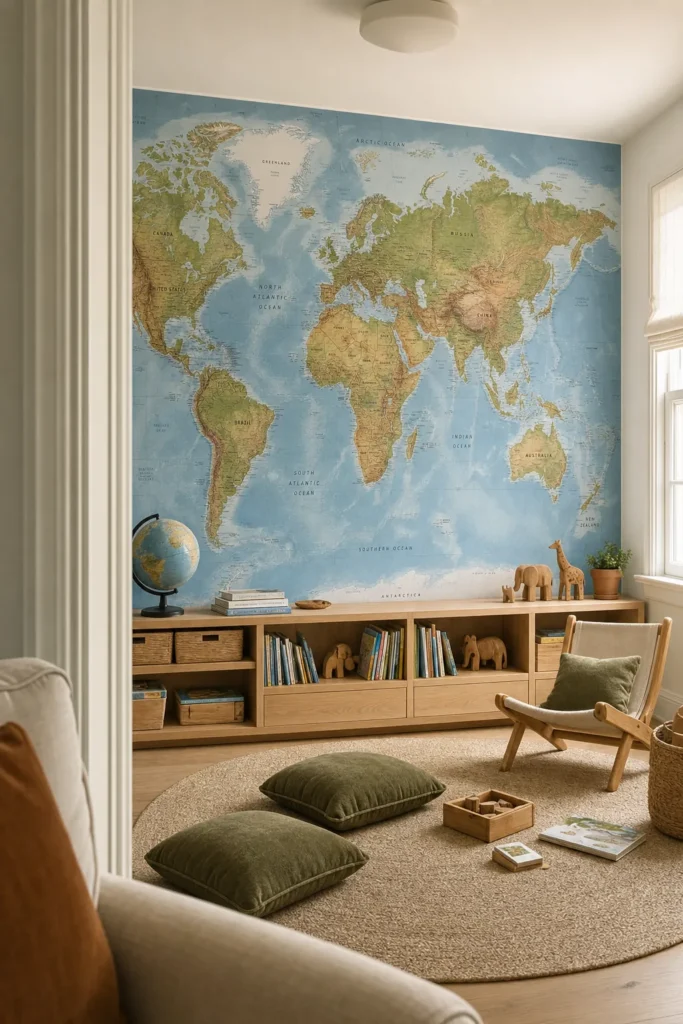
A map can be one of the rare playroom features that becomes more useful as a child grows. At first it is a wall of shapes, colors, oceans, and recognizable animals. Later it becomes the place where the family finds a grandparent’s city, traces a storybook journey, or understands why daytime in one country is nighttime in another.
But “educational” is not enough. A successful map wallpaper mural playroom design also needs accurate geography, readable detail, thoughtful cropping, and colors that can live beside the toys, shelves, and adult spaces around it. The goal is a map children want to approach and a room adults are happy to walk into.
Decide What the Map Should Teach First
No single map teaches everything well. A simple continent map supports toddlers learning large shapes and names. A physical map shows mountains, rivers, deserts, and climate. A political map helps older children locate countries, but its borders and labels can change. An illustrated animal map invites conversation, though the species placement should still be checked rather than accepted as decoration.
Choose one main learning job. If the mural is for a three-year-old, large landmasses and a few identifiable details are more useful than hundreds of tiny labels. If it needs to serve school-age children, readable country names, a legend, an equator, and consistent scale matter. A map becomes educational through repeated use, not through the amount of information squeezed onto it.

Check Accuracy Before Falling for the Colors
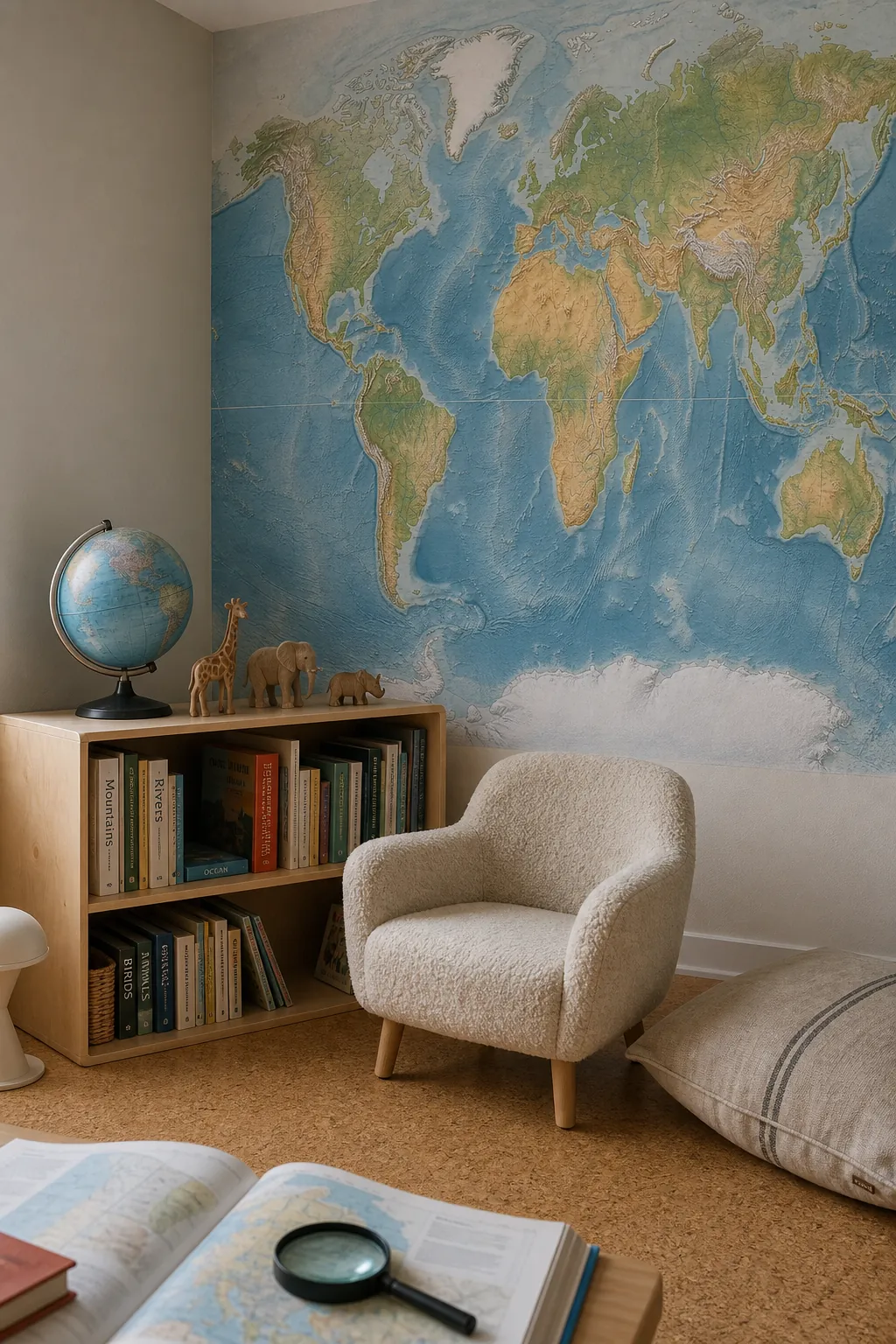
Inspect a large preview, not only a styled room photo. Are landforms recognizable? Is New Zealand present? Are islands reduced beyond usefulness? Does the equator sit where expected? If the design includes animals or landmarks, are they placed in defensible regions? Decorative maps can simplify, but they should not accidentally teach errors.
Also look for the projection—the method used to flatten the globe. Every flat world map distorts something. Some enlarge land near the poles; others alter shape or distance. You do not need a cartography degree to choose well, but the seller should identify the projection or explain the design. Pairing a world map wall mural with a small globe is a simple way to help children understand that the wall is one representation of a round planet.

Make the Map Readable From a Child’s Height
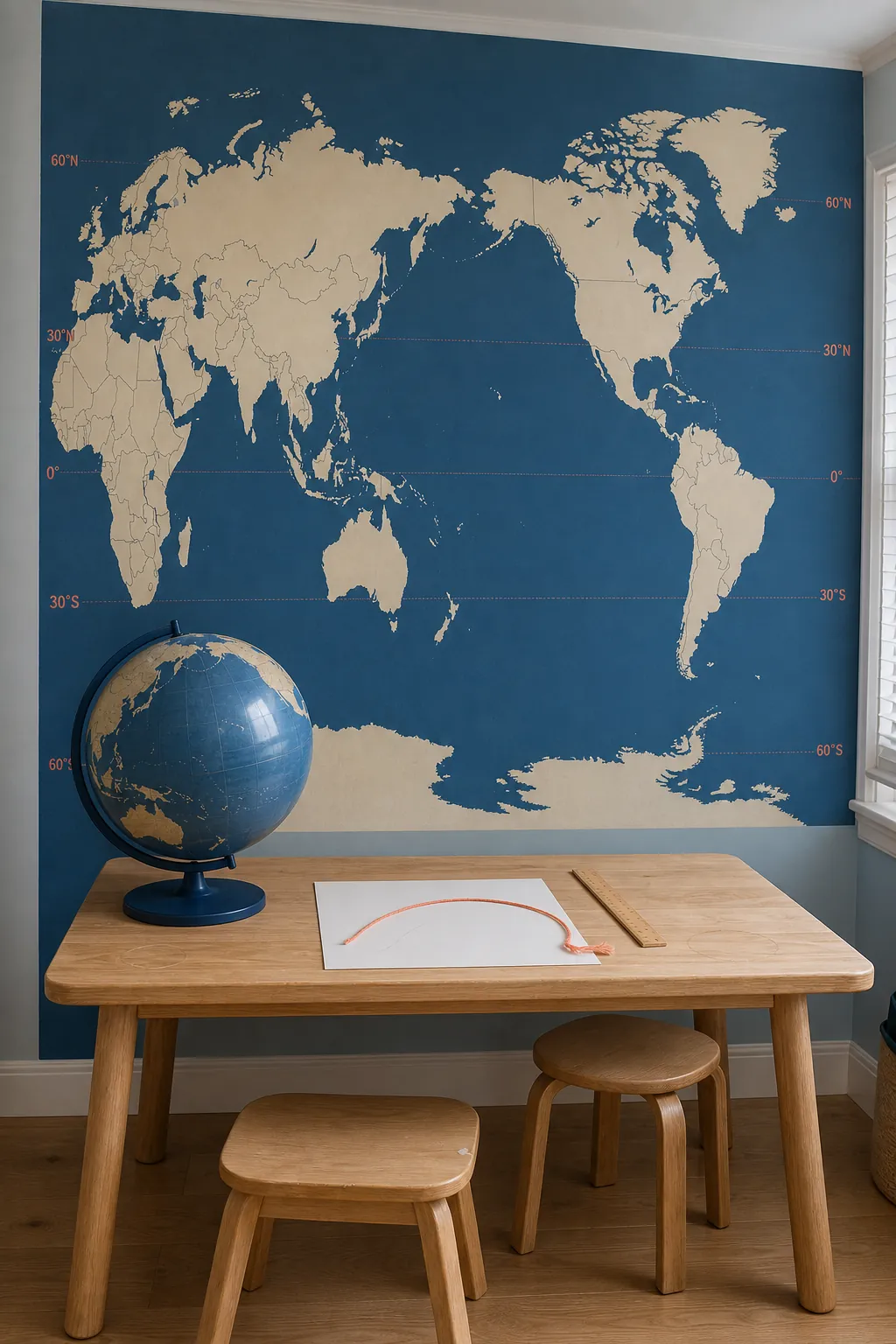
Install the most interactive parts where children can see and point to them. A low bank of closed storage can cover ocean or legend space, but it should not hide continents or important labels. Photograph the empty wall, add the planned furniture dimensions, and ask for a scaled proof before ordering.
Text must be large enough to read after the design is enlarged and printed. Overly ornate lettering may suit a vintage map mural in a study but frustrate a child who is learning letterforms. Look at the map from the doorway and from the floor. The doorway view should feel beautiful; the close view should reward curiosity.

Choose a Palette That Belongs in the Room
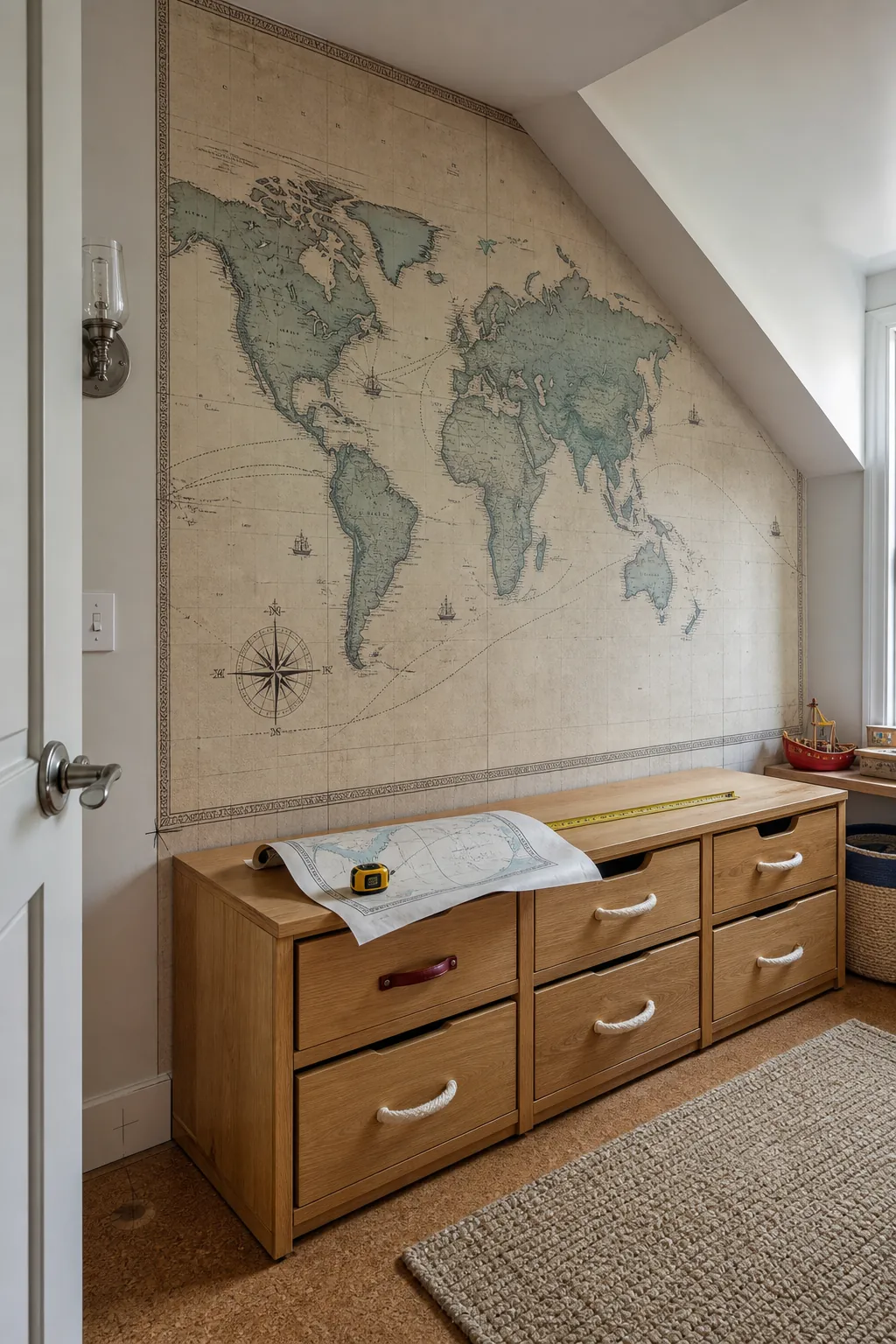
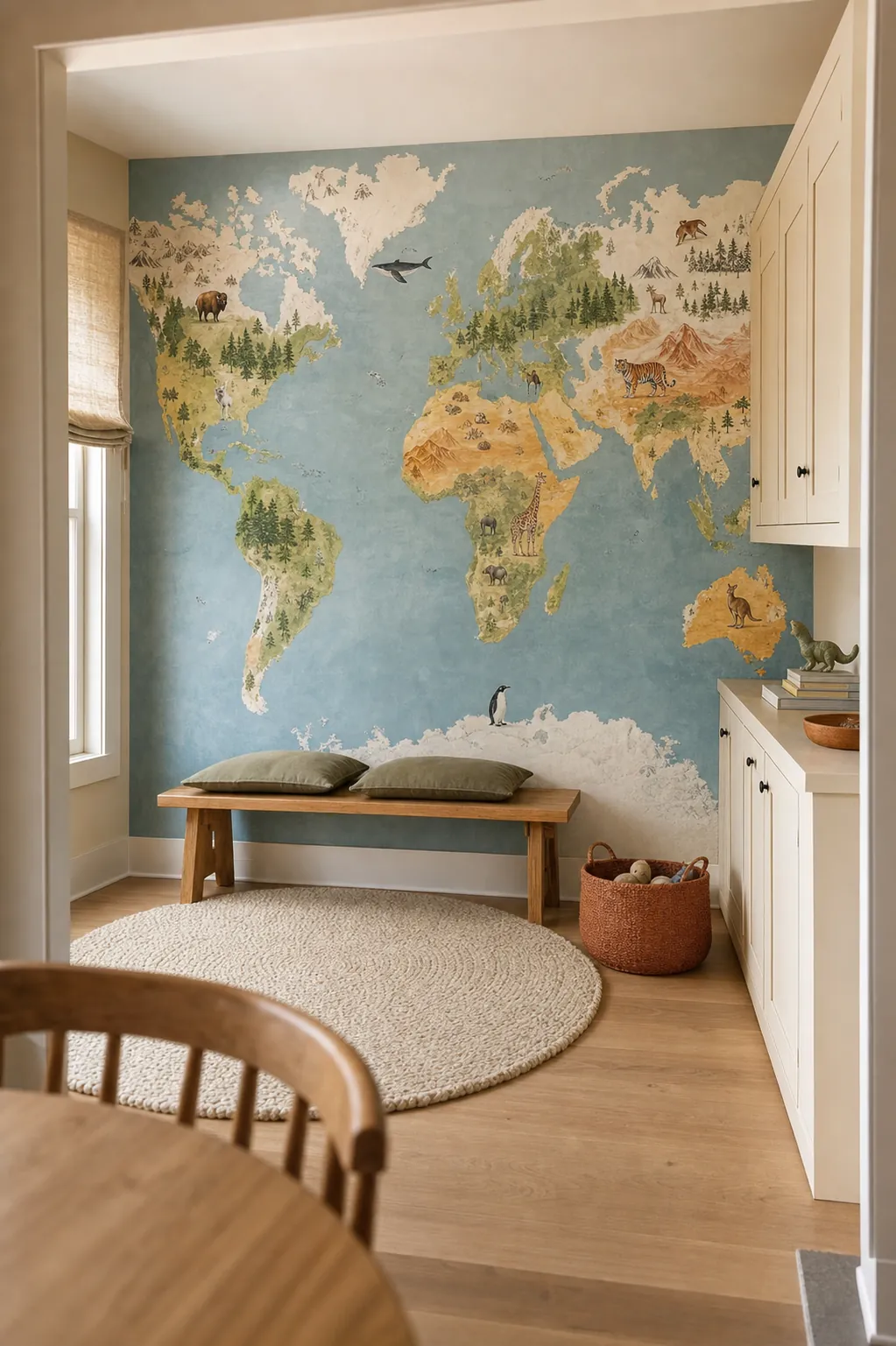
A map does not need primary colors to feel child-friendly. Mineral blue oceans, warm sand, moss, clay, and muted coral can distinguish regions while working with wood furniture and washable neutral textiles. A monochrome map can be elegant, but young children often benefit from stronger land-and-water contrast.
Use the mural as the room’s complex pattern. Keep the rug broad and simple, repeat only two or three map colors in bins or cushions, and leave a section for the child’s own artwork. Closed storage below a detailed map reduces visual noise. Good lighting matters too: glare can erase pale labels, while dim light makes fine details useless.

Turn the Wall Into a Prompt for Play
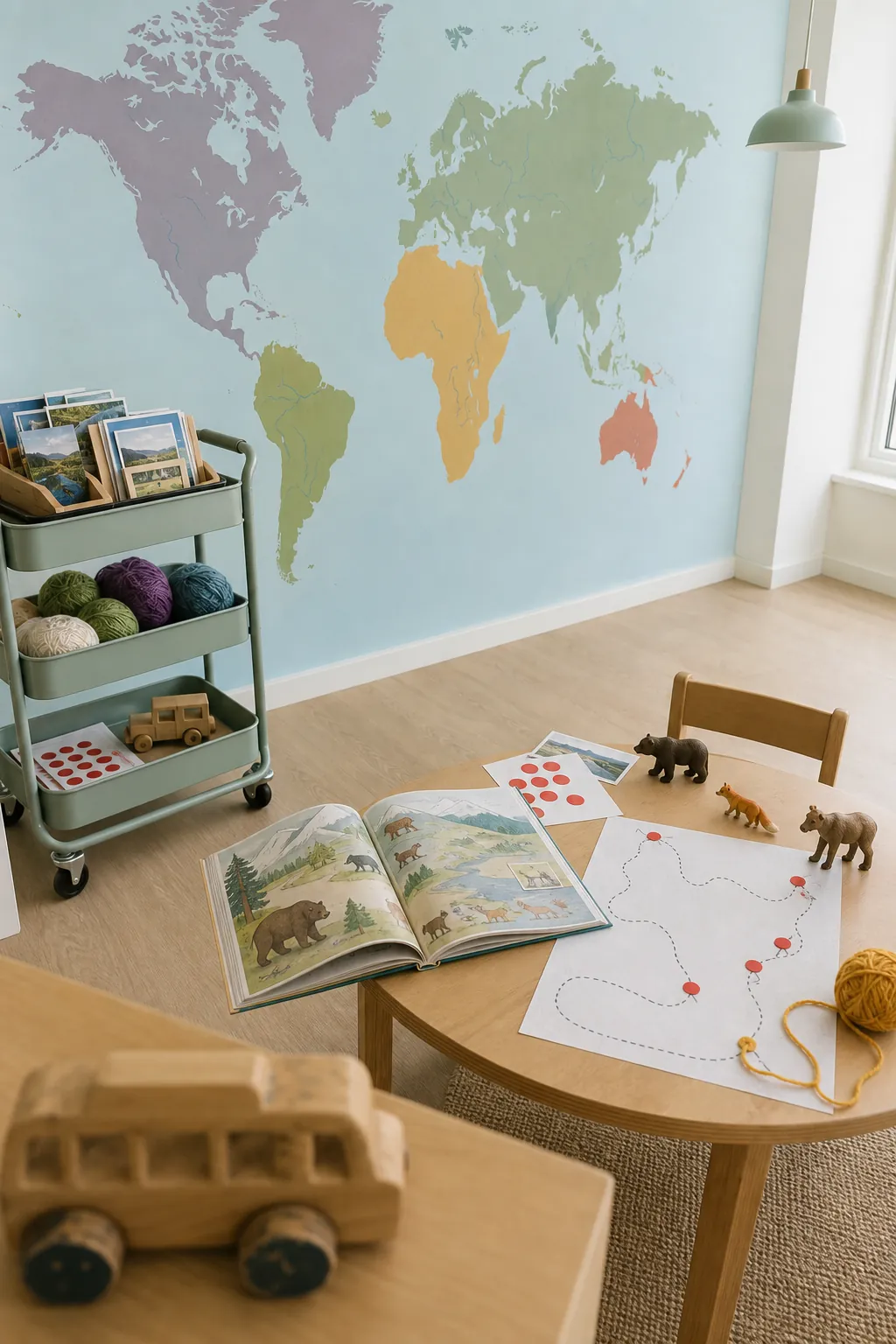
The best educational wall mural is not a worksheet. Keep removable dots, soft yarn, postcards, animal figures, and travel books nearby. A child can mark where a story takes place, connect places family members live, match animals to habitats, or trace an imaginary route. Use removable accessories only if the mural manufacturer says the surface can tolerate them.
- For toddlers: find oceans, continents, colors, and large familiar animals.
- For early readers: match a book setting to the map and notice first letters.
- For older children: compare wall-map distance with a globe and talk about scale.
- For the whole family: add a removable marker after trips or when a place enters conversation.

Choose Material and Detail for Real Use
Playroom walls get touched. A matte wipeable finish reduces glare and handles pointing fingers better than a delicate paper surface. A removable map wallpaper can suit renters, but smooth cured paint and a proper sample test are still essential. Textured walls may prevent clean adhesion and can distort small labels.
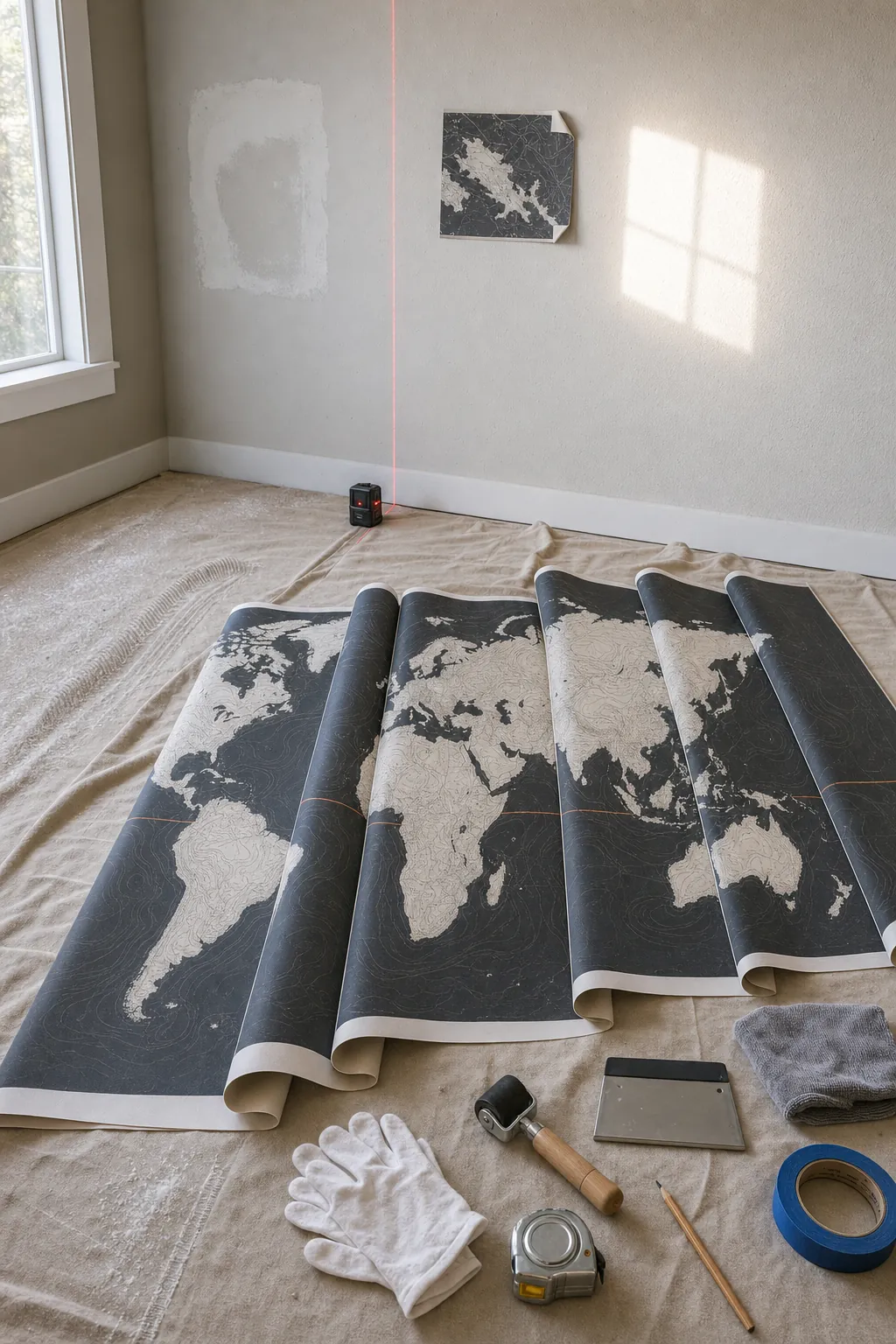
Before installation, unroll the panels in order and inspect every join. A seam through open ocean is forgiving; a seam that shifts a coastline is obvious. Confirm the design will not be stretched simply to fill the wall, and protect important edge details from trimming. If the map uses modern political borders, note the print date and accept that a globe or atlas may become the more current reference later.

Give Curiosity a Beautiful Place to Land
A map mural works when it is accurate enough to trust, simple enough to use, and attractive enough to remain part of the room after the earliest toys move on. Start with the learning purpose, inspect the geography, test label size, and plan the crop around the actual storage and sightlines.
Then let the wall do what maps have always done best: make faraway places feel discussable. A child does not need to memorize every label for the mural to matter. If it repeatedly sparks “Where is that?” and “How would we get there?”, the room is already teaching exactly the right lesson.