Latest Wall Papering Ideas for Living Rooms: 8 Fresh Directions
The latest wall papering ideas for living rooms are not really about chasing the loudest new print. The rooms that feel current use wallpaper to solve a specific problem: flat walls, weak architecture, an awkward TV zone, or a space that lacks warmth. The useful question is not “Which pattern is trending?” but “What job should this wall do?”
That distinction matters because a sample viewed on a phone is not a room. A motif repeats, daylight shifts, lamps warm the colors, and furniture covers part of the design. Use the ideas below as a decision guide, then tape up a large sample and live with it for several days before ordering.
Start With Woven Texture Instead of a Busy Motif
Grasscloth, linen-look paper, and fine textile effects are leading modern living room wallpaper ideas because they add depth without demanding constant attention. They are especially effective in open-plan rooms where a high-contrast repeat might compete with the kitchen, dining area, and television.
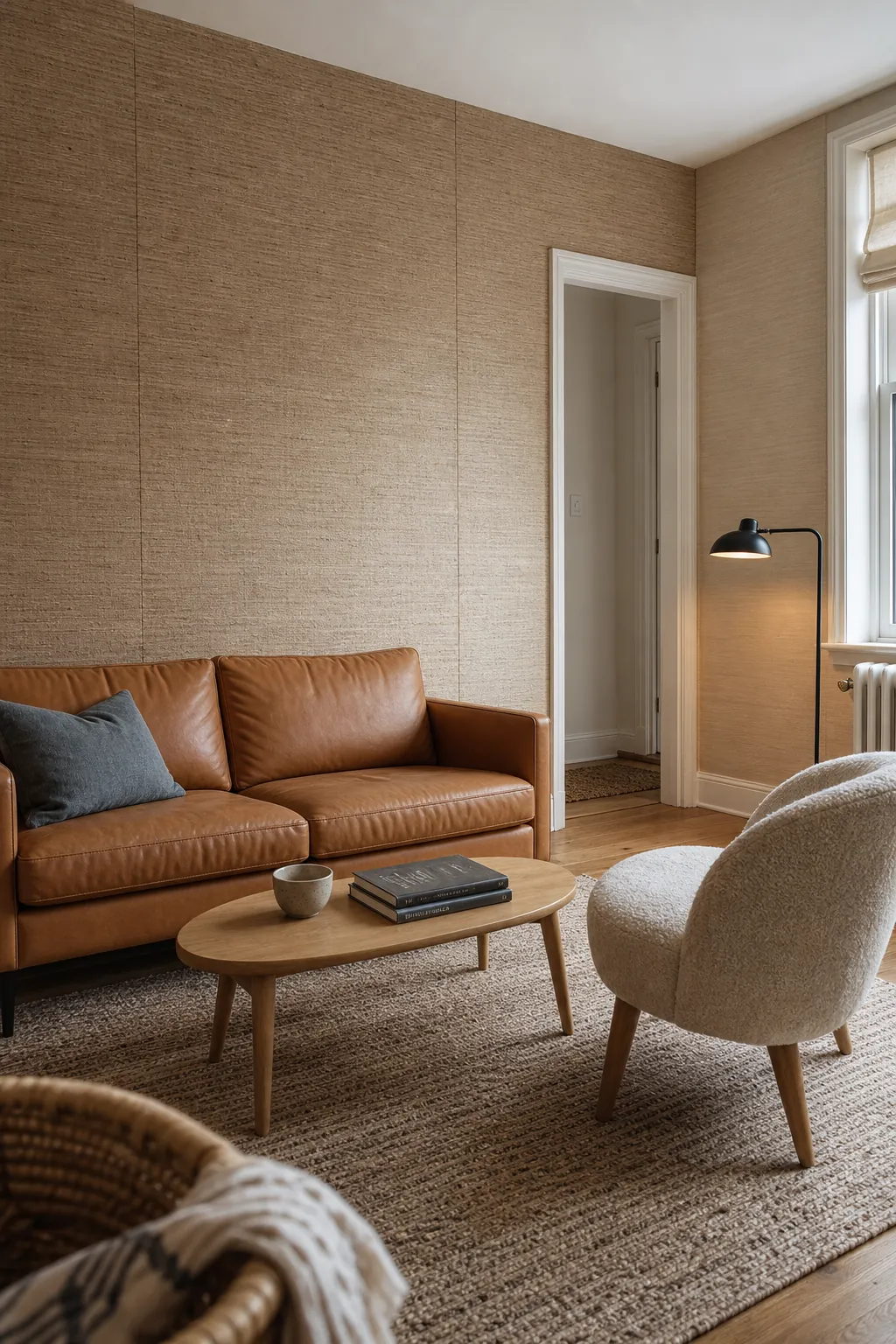

Real grasscloth has visible joins and natural variation; those are features, not defects. If you need wipeability, predictable color, or a lower price, choose a convincing vinyl or nonwoven imitation. Order samples from the actual batch whenever possible, because texture changes the way a color reads more than a flat screen preview suggests.
Use Oversized Botanicals With a Quiet Furniture Plan
Large leaves and loose botanical drawings feel fresher than tiny, tightly packed repeats. Scale is the secret: an oversized motif can look calmer because the eye sees fewer repetitions across the wall. Let one or two colors from the paper reappear in cushions or ceramics, but avoid matching every shade.
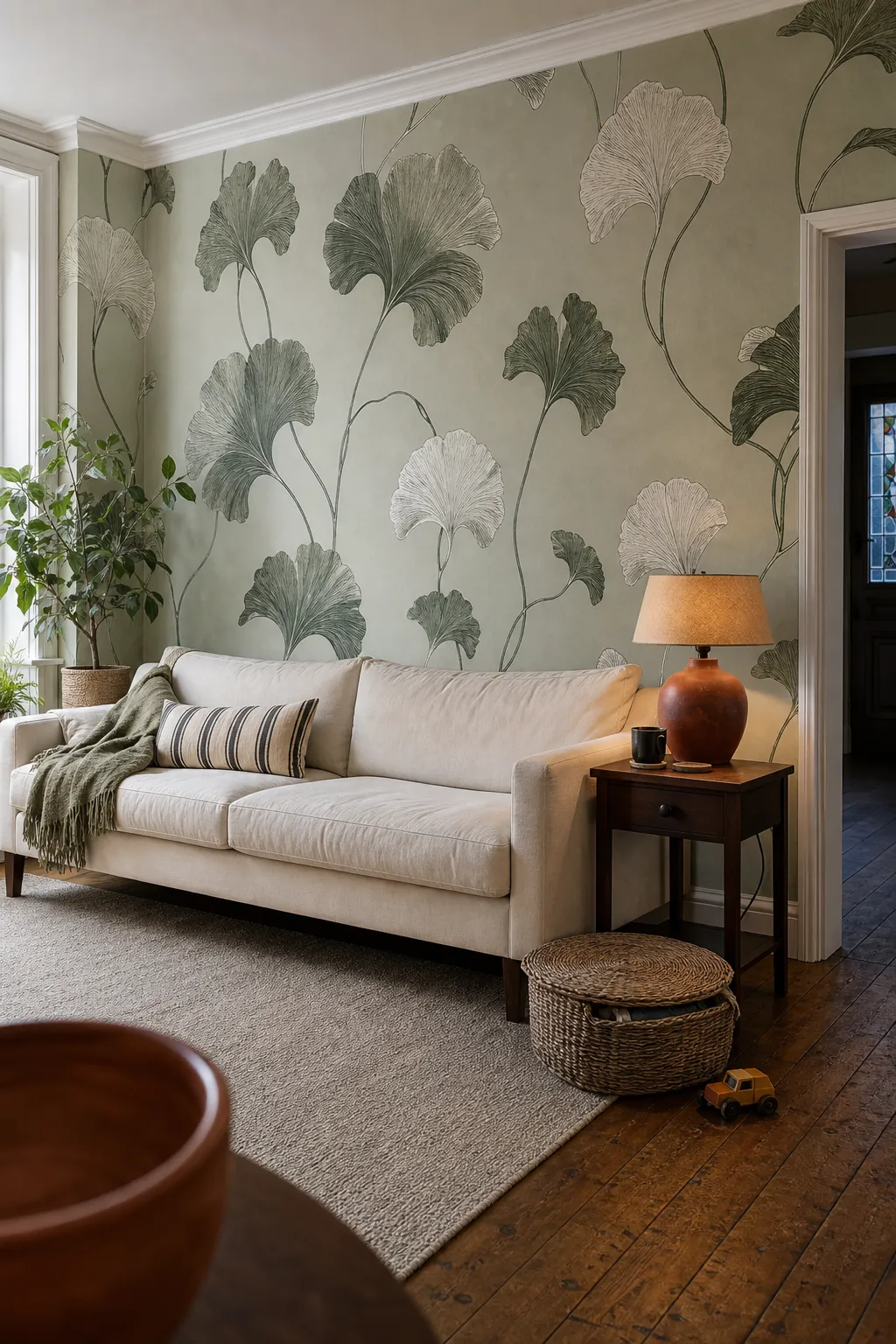

Give the print a pattern budget. If the wallpaper is expressive, keep the largest sofa and rug relatively quiet, then introduce one smaller contrasting pattern. This addresses the most common fear homeowners voice about wallpaper backgrounds in a living room: that the finished space will feel restless rather than layered.
Frame a Mural Around the Room’s Sightline
A mural works best when its focal area is planned around doors, windows, shelves, and the sofa rather than centered mechanically on the wall. Stand at the room entrance and at the main seat. Those are the two views that should make sense. A soft abstract landscape, architectural line work, or enlarged block print can create depth without turning the room into a themed set.
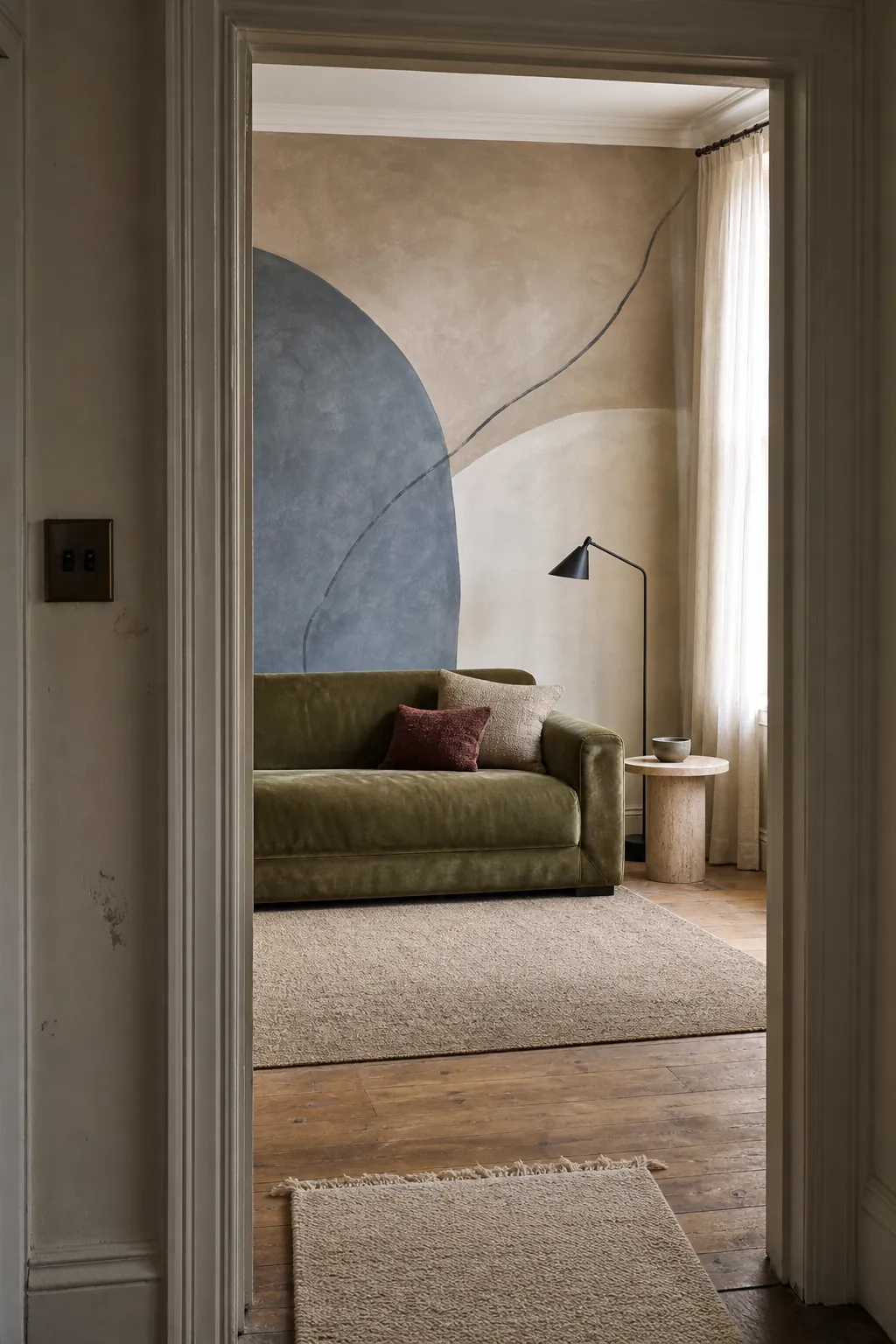

Ask the supplier for the crop diagram and panel dimensions before buying. Mark the full design on the wall with painter’s tape. A beautiful mural can fail simply because its most important detail disappears behind the sofa.
Choose Low-Contrast Geometry for the TV Wall
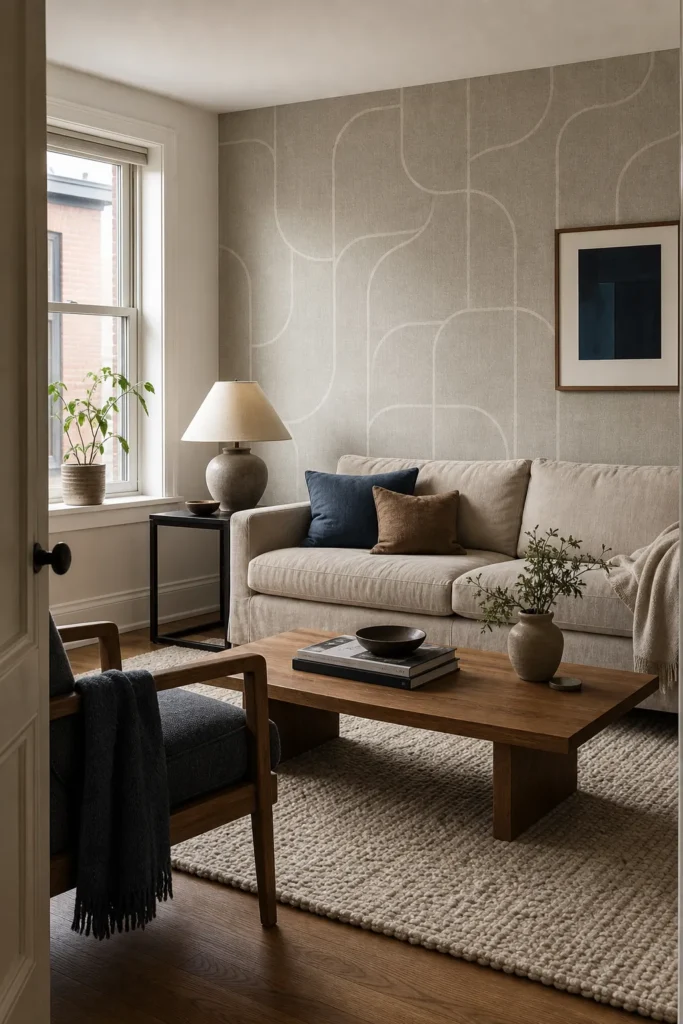
A modern TV unit already creates a large black rectangle and several hard horizontal lines. Wallpaper behind it should support that geometry rather than fight it. Tonal grids, broken stripes, and soft arcs work when the light-dark contrast stays modest and the repeat is larger than the small cables and accessories around the unit.
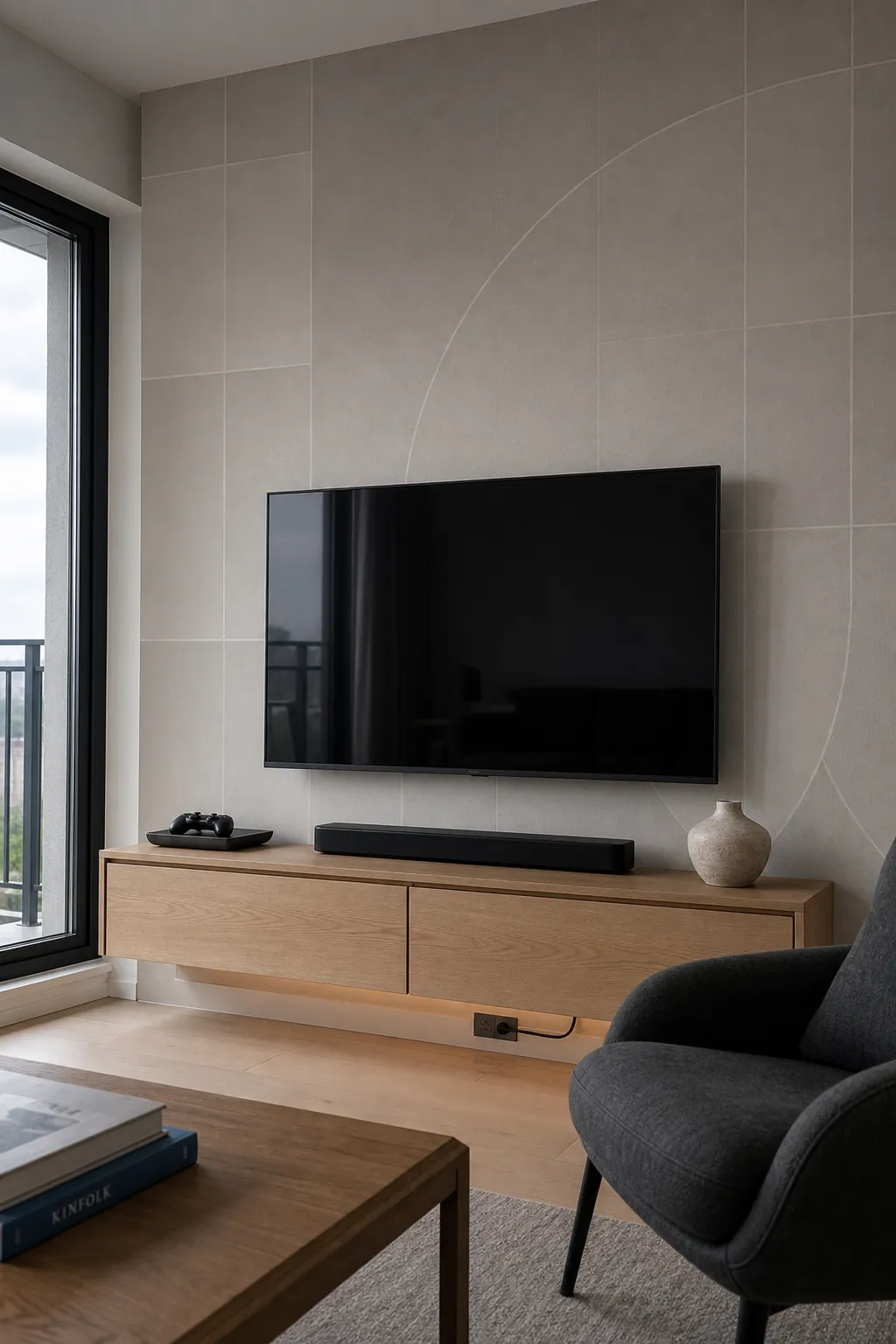

Test the sample with the television both on and off. Glossy paper may reflect windows or lamps, while a very fine high-contrast pattern can shimmer on camera or at a distance. Matte nonwoven paper is usually the safer choice for this zone.
Wrap the Whole Room When the Pattern Is Quiet
The feature wall is not the only answer. In a boxy room with few architectural breaks, one isolated patterned wall can look accidental. A quiet all-over paper—small block print, faded stripe, or plaster effect—often makes the entire room feel more coherent. Continue it around corners so the eye reads one envelope instead of one decorated rectangle.
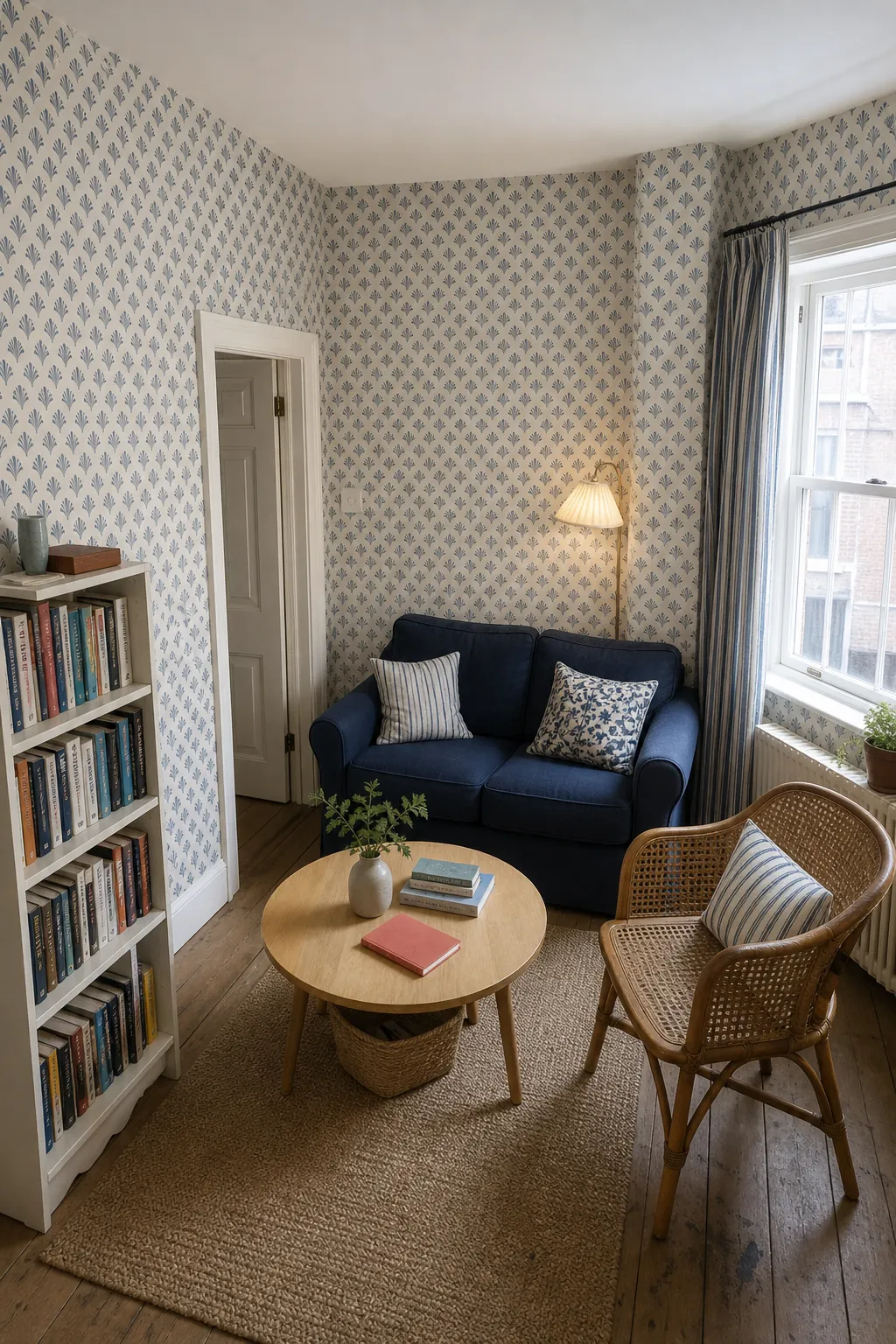

Choose a feature wall instead when the print is dramatic, the budget is tight, or the architecture supplies a natural stopping point such as a chimney breast or built-in recess. The best choice follows the room, not a blanket rule.
Treat the Fifth Wall as a Controlled Accent
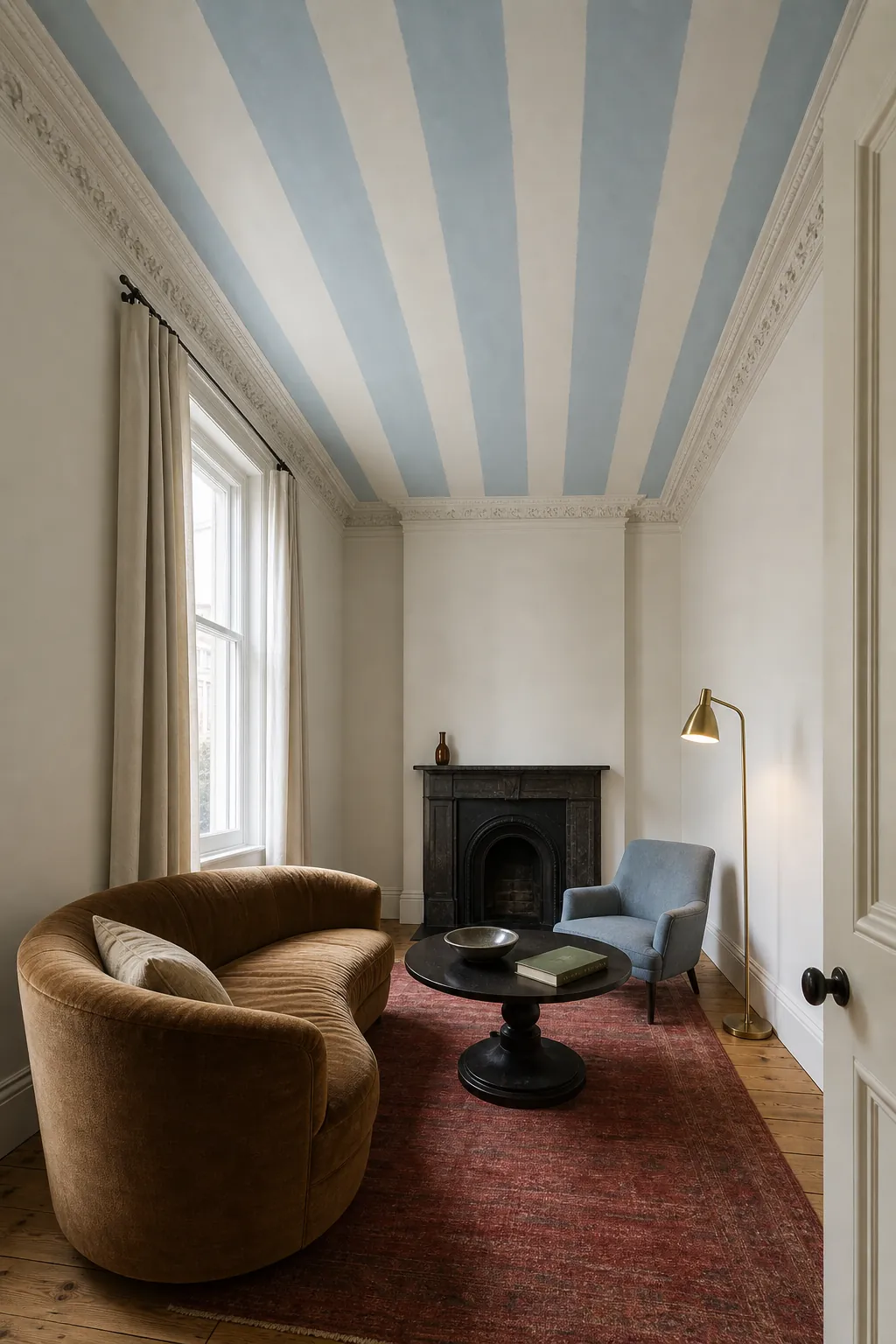
Ceiling wallpaper can make a tall or characterless living room feel intimate, especially when the walls stay plain. Use a low-contrast cloud, stripe, or small heritage motif, and repeat one ceiling color below in the curtains or upholstery. This is a strong move, so avoid combining it with several equally assertive wall patterns.

Make Peel-and-Stick Look Intentional
Removable wallpaper is useful for renters and for testing a bolder direction, but it still needs a smooth, clean, properly cured wall. Buy a sample and leave it up through temperature changes. Check the manufacturer’s surface guidance; some products struggle on textured or freshly painted walls.
Use removable paper inside a built-in, above wall molding, or on a clearly bounded wall. These edges make the treatment feel architectural and reduce the chance that a short run looks like an unfinished compromise.
Run a Full-Room Sample Test Before Ordering
Order the largest sample available—or two repeats—and move it around the room. Look from the doorway, sofa, and dining area in morning light, afternoon light, and lamplight. Place it beside the sofa fabric, rug, floor, curtains, and timber finish. Photographing the combination in grayscale can reveal a contrast clash that color disguises.
- Count visual competitors: rug, curtains, art, cushions, fireplace, and TV unit.
- Check repeat scale: confirm how many motifs will fit across the actual wall.
- Inspect the surface: repair bumps and stains before measuring.
- Order enough at once: include the maker’s recommended allowance and keep batch numbers consistent.
- Decide the stopping points: corners, molding, shelves, and openings should look deliberate.
The latest wallpapers for living rooms succeed when they make the room easier to understand: texture warms it, a mural creates depth, geometry organizes the TV wall, or a quiet repeat ties everything together. Choose the wall’s job first, and the pattern becomes a much simpler decision.