How to Pair Chinoiserie Mural Wallpaper With Modern Furniture
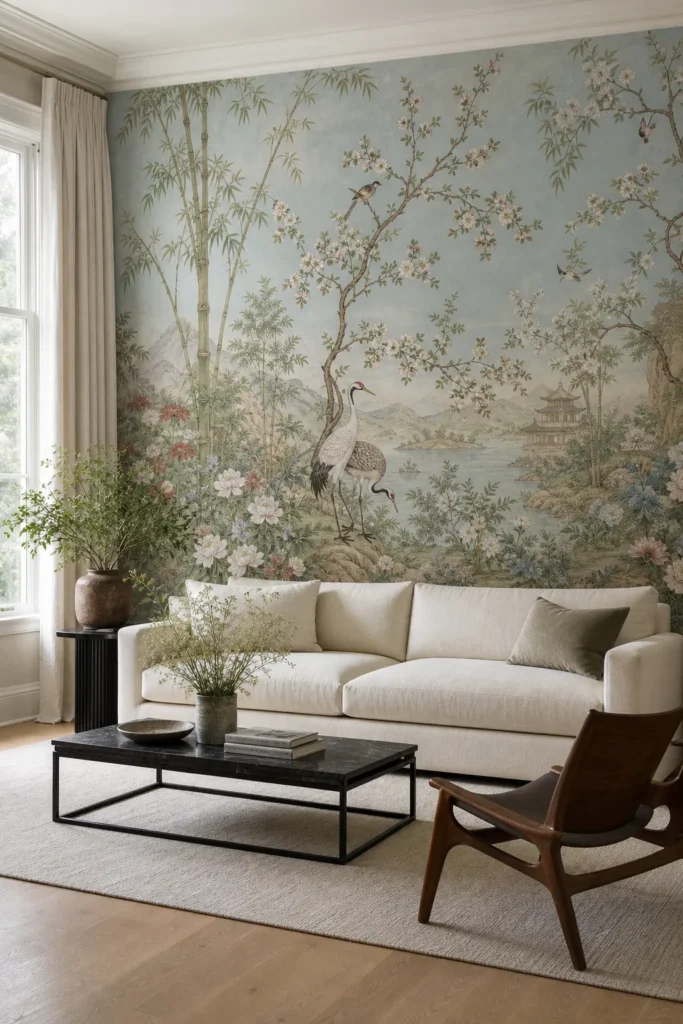
A chinoiserie mural can make a modern room feel layered, collected, and personal, but only when the furniture gives it room to breathe. The mistake is treating the mural and the furniture as equal competitors. Let the mural carry the history, movement, and detail, then let the modern pieces bring the room back to calm.
This is the easiest way to pair a chinoiserie mural with modern furniture: choose one clear decorative lead, repeat only a few colors from the mural, and keep the furniture silhouettes simple enough that the room does not turn into a costume set. The goal is not to hide the traditional mural. The goal is to make it look intentional in a home where people also own clean-lined sofas, quiet tables, sculptural lighting, and practical storage.
Start With the Mural as the Room’s Pattern Lead
Chinoiserie is already doing a lot of visual work. Birds, branches, pagodas, garden scenes, clouds, water, and flowering trees create movement across the wall. If you add a busy rug, several patterned pillows, ornate lamps, and carved furniture at the same time, the eye has nowhere to rest. In a modern traditional wallpaper mural room, the mural should usually be the main pattern, not one of five competing patterns.
Look closely at the mural before buying or moving furniture. Identify the background color, the strongest accent color, and the quietest neutral. Those three colors become the room’s editing tool. A mural with a pale blue ground, mossy leaves, and warm taupe branches may pair beautifully with a cream sofa, smoked oak table, and one deep green velvet chair. A mural with ivory, charcoal, and faded coral may feel more current with black metal lighting, a low linen sectional, and a single terracotta object.
The furniture should not match the mural literally. It should answer the mural’s palette in a cleaner language. This is what keeps scenic mural decor from feeling dated: the mural brings romance; the furniture brings discipline.

Use Modern Silhouettes to Cut Through the Ornament
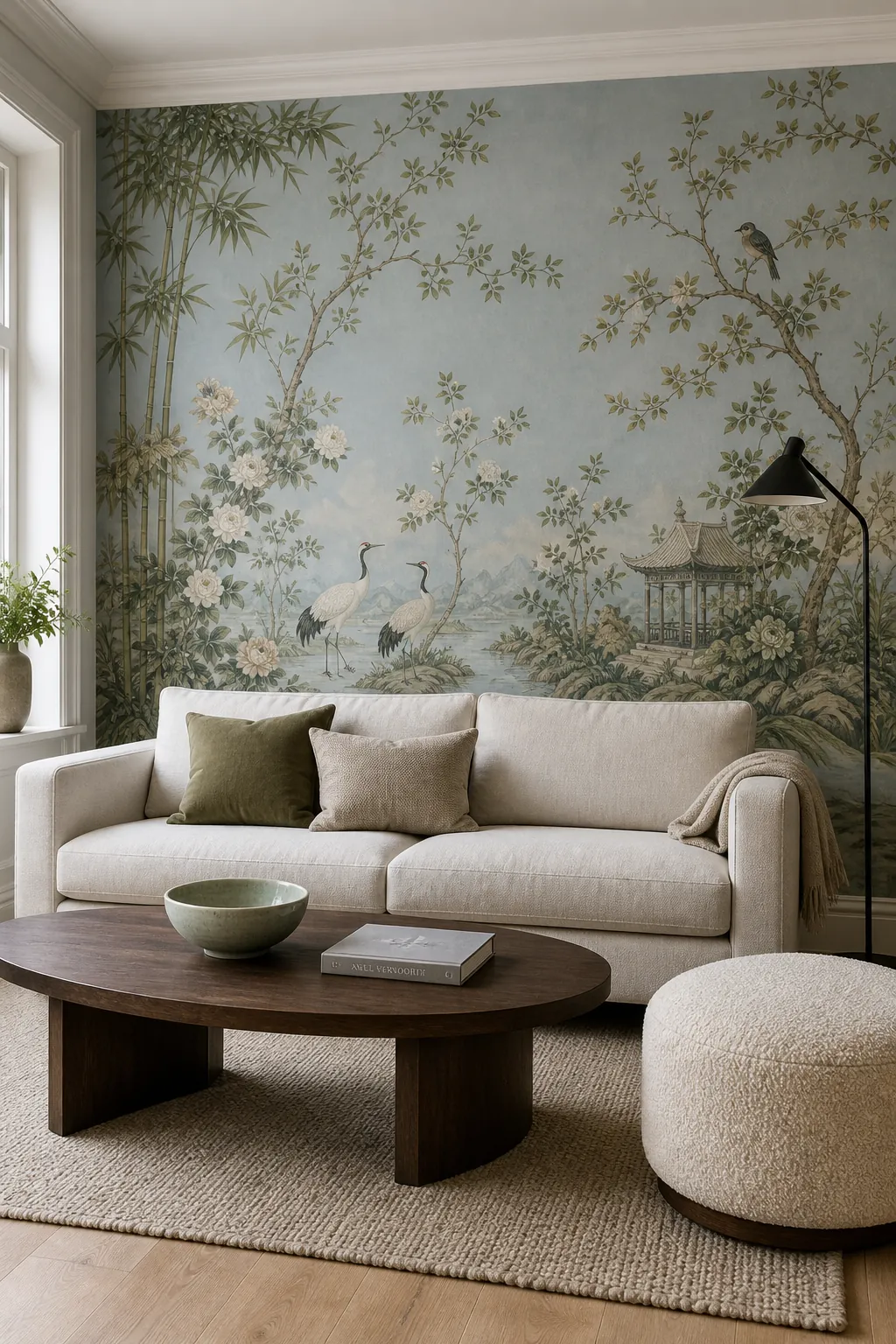
The most reliable furniture shapes are simple: low sofas, waterfall consoles, thin-legged chairs, slab coffee tables, rounded ottomans, and plain-front storage. These pieces do not fight the mural’s curves and brushwork. They give the traditional wall a clean foreground.
If every furniture leg is cabriole, every fabric is floral, and every finish is gilded, the room can quickly read as themed. One antique or vintage piece can be beautiful, but place it beside something more restrained. A lacquered black sideboard under a scenic mural can look sharp with a modern round mirror and simple ceramic lamps. A mid-century lounge chair can soften a formal mural when the upholstery color is pulled from the wall instead of chosen at random.
Scale matters as much as style. Chinoiserie murals often have vertical trees, birds, or landscape scenes that can be visually interrupted by tall furniture. Avoid placing a tall bookcase or cabinet in the most detailed part of the mural unless it is deliberately framing the view. Low furniture lets the scene stay legible, which is especially important when you mix modern furniture with chinoiserie in a smaller room.

Choose One Bridge Material Between Old and New
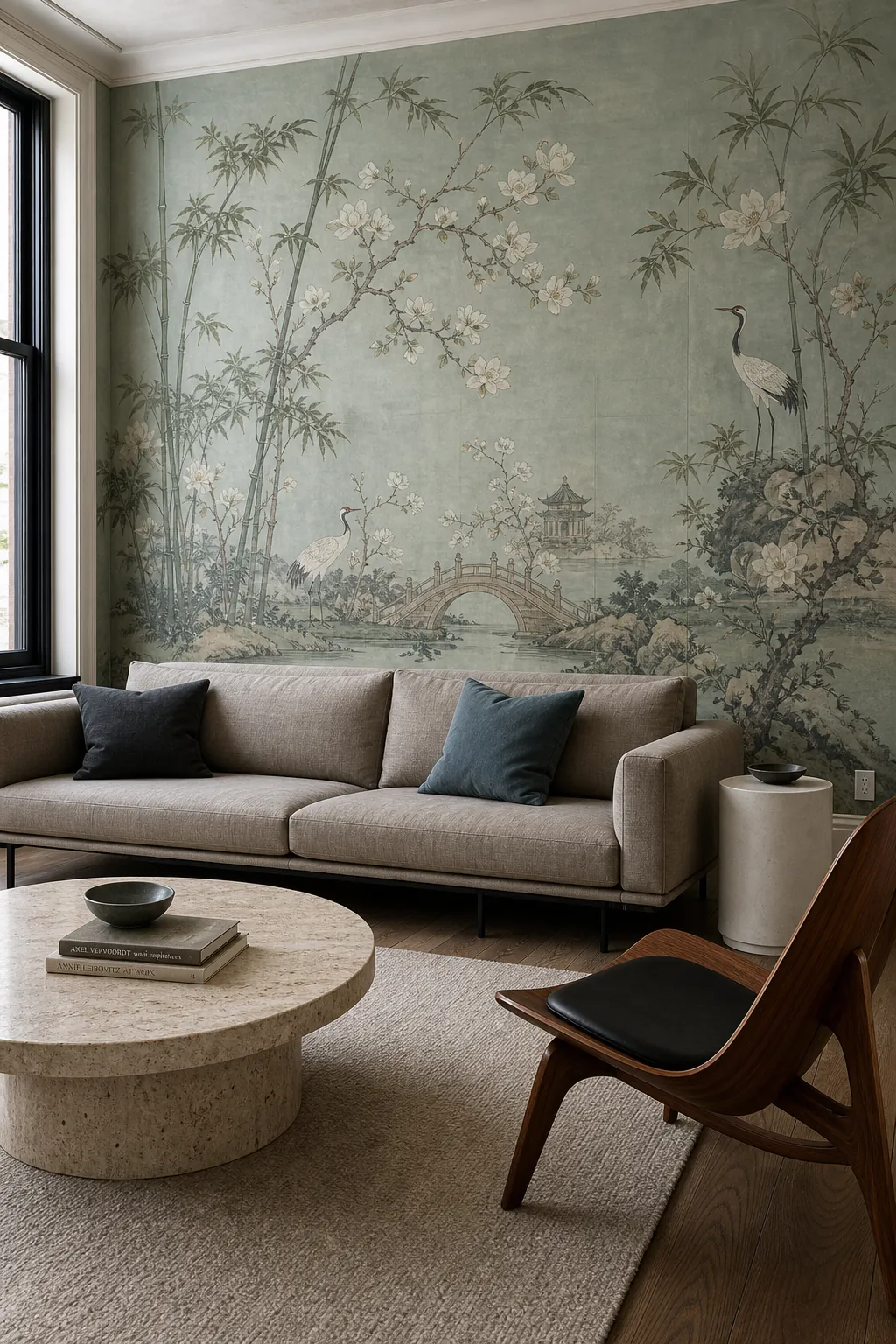
A room feels more coherent when one material acts as the translator between the heritage mural and the contemporary furniture. This does not need to be complicated. Warm wood, blackened metal, unlacquered brass, natural stone, rattan, grasscloth, linen, or a hand-knotted wool rug can all bridge the two moods.
For a crisp modern room, black metal is often the easiest bridge. It outlines the space and keeps delicate mural colors from becoming too sweet. For a softer home, pale oak or walnut can make a classic mural contemporary without making it cold. For a heritage mural modern home, natural stone can be especially useful because it feels permanent and architectural without adding another print.
Repeat the bridge material at least twice. A black picture light and black coffee table base can make a traditional mural modern room feel edited. A walnut dining table and walnut-framed chairs can make a scenic mural feel grounded. Do not scatter five different finishes around the room and expect the mural to unify them; the wall is already the complex element.

Let Trim, Paint, and Negative Space Calm the Wall
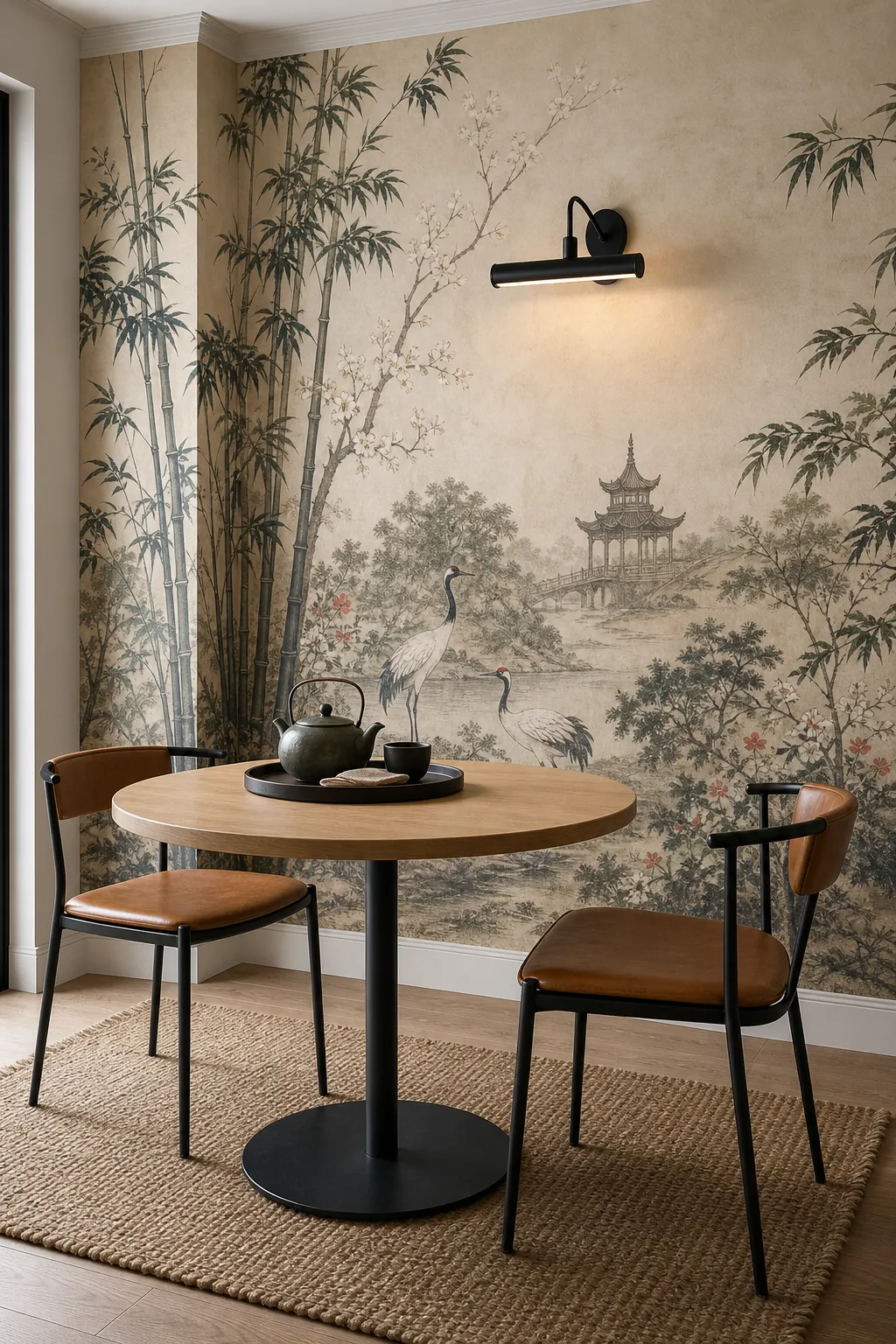
One common hesitation is whether a chinoiserie mural should cover every wall or only one feature wall. The better question is how the room handles edges. If the mural wraps the room, the trim, ceiling, and adjacent doors need to feel deliberate. If the mural is limited to one wall or framed panels, the surrounding paint needs to look chosen, not leftover.
For a full mural room, paint the trim in a color that belongs to the mural: warm white, pale stone, deep green, smoky blue, or soft mushroom. Bright builder white can make the mural look pasted on. For a single-wall application, avoid a harsh contrast unless the design is graphic and modern. A paint color close to the mural ground usually looks more expensive and less choppy.
Negative space is just as important. A clean stretch of sofa upholstery, an unpatterned rug, a plain ceiling, or an empty section of wall can make chinoiserie wallpaper styling feel grown-up. Modern furniture is useful here because its surfaces are usually quieter. The quieter the foreground, the more confidently the mural can stay detailed.
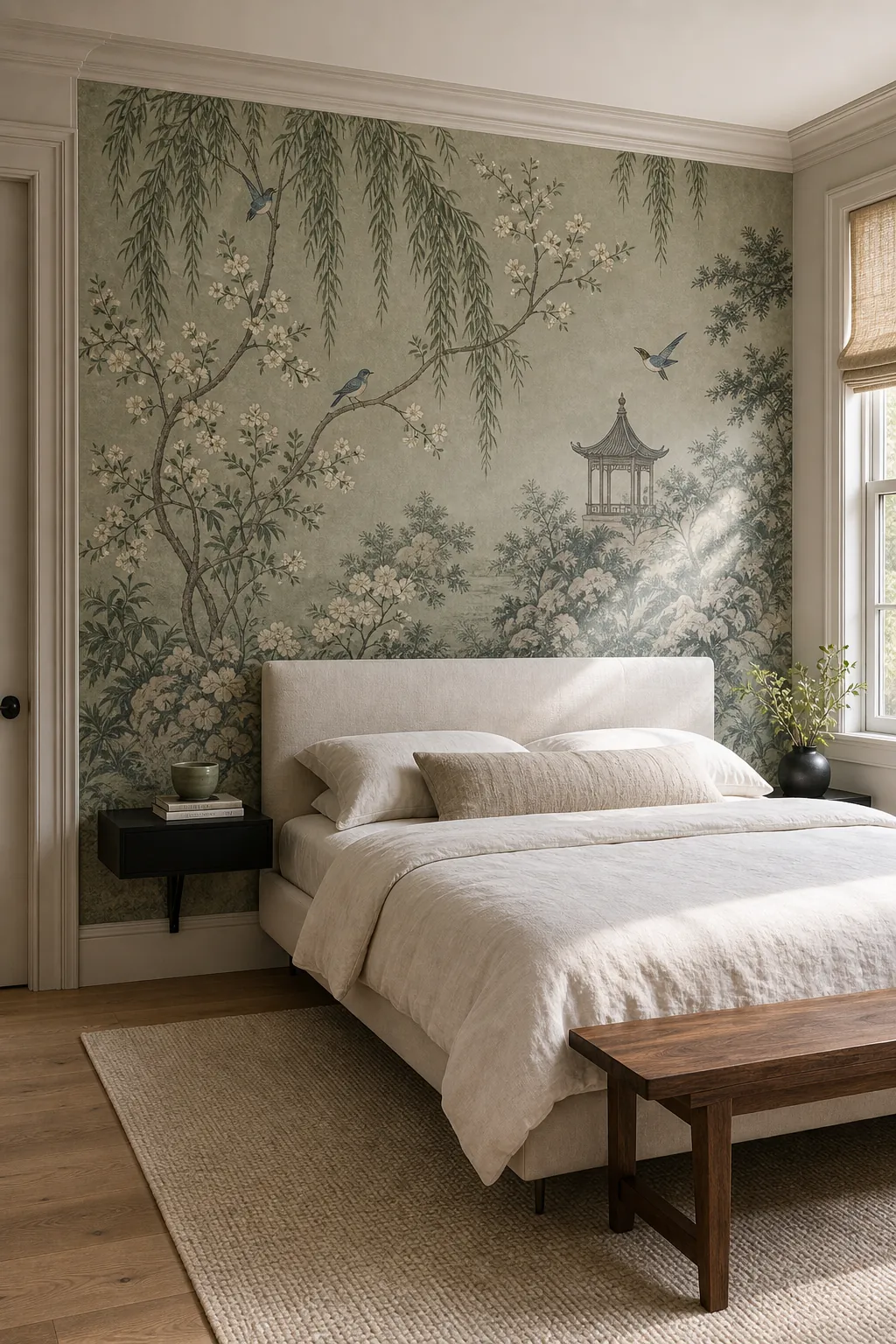

Keep Art, Rugs, and Accessories From Repeating the Same Story
When the wall already has birds, flowers, branches, and a scenic landscape, more floral art is rarely the answer. The easiest companion art is quieter: a black-and-white charcoal line drawing, a large mat around a small abstract wash, a simple mirror, or one sculptural object on a console. The point is to create contrast, not more of the same motif.
Rugs should support the mural without imitating it. A muted wool rug, sisal texture, tonal stripe, faded geometric, or soft vintage rug can work better than a second botanical pattern. Pillows can carry one or two mural colors, but keep the patterns simple. If the mural has a lot of small detail, choose larger-scale textiles. If the mural has broad painterly scenery, a small stripe or check can add structure.
Accessories are where many rooms lose control. Use fewer, larger pieces instead of many small objects. A single oversized ceramic bowl, a sculptural lamp, or a modern glass vase can make classic mural contemporary furniture feel intentional. Too many tiny chinoiserie objects can turn a sophisticated mural into a theme.
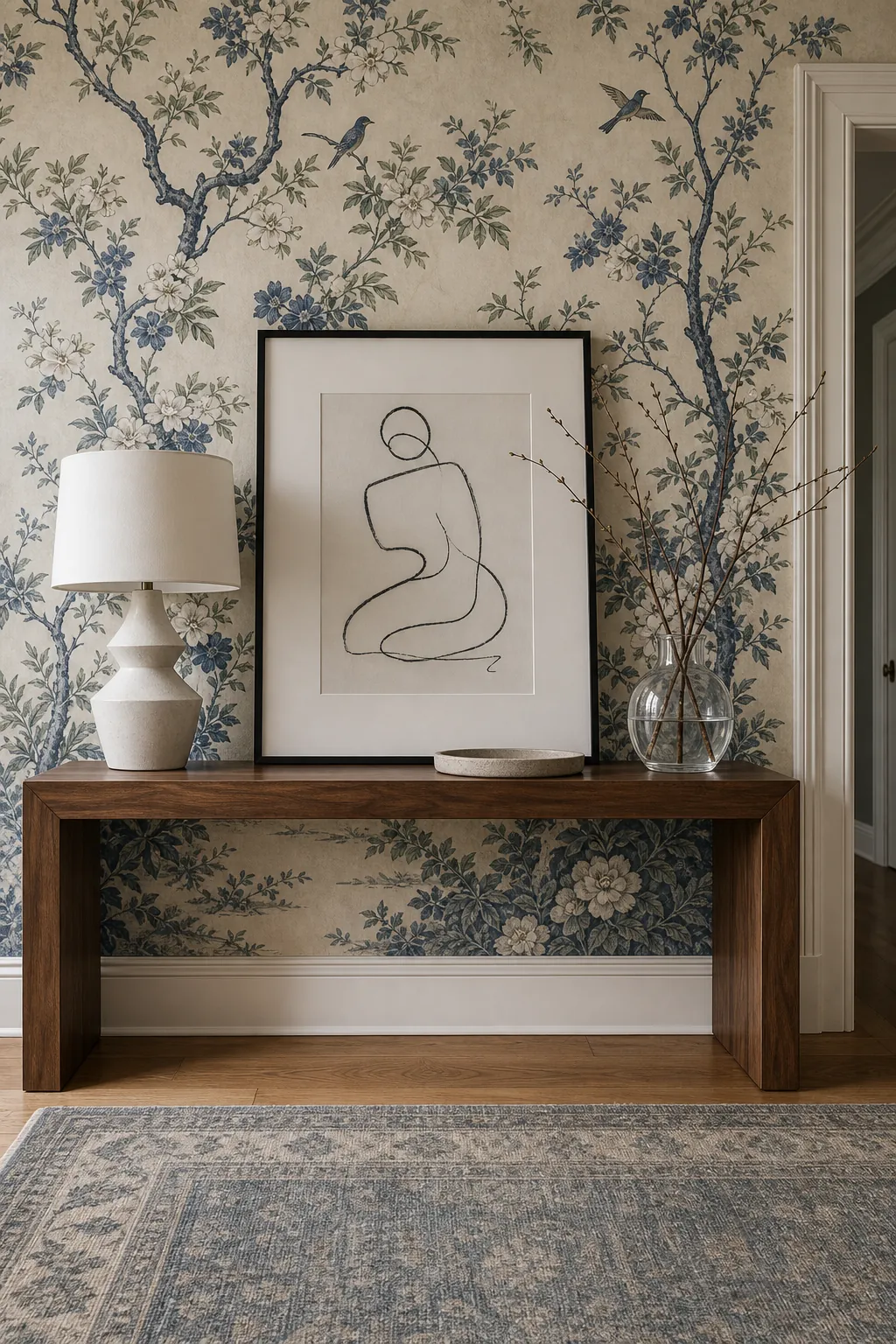

Make the Final Edit Before You Add More
Once the main furniture is in place, stand at the room entrance and ask three questions. Does the mural still read clearly? Does one modern shape anchor the room? Is there enough quiet surface for the eye to rest? If the answer is no, remove something before buying another piece.
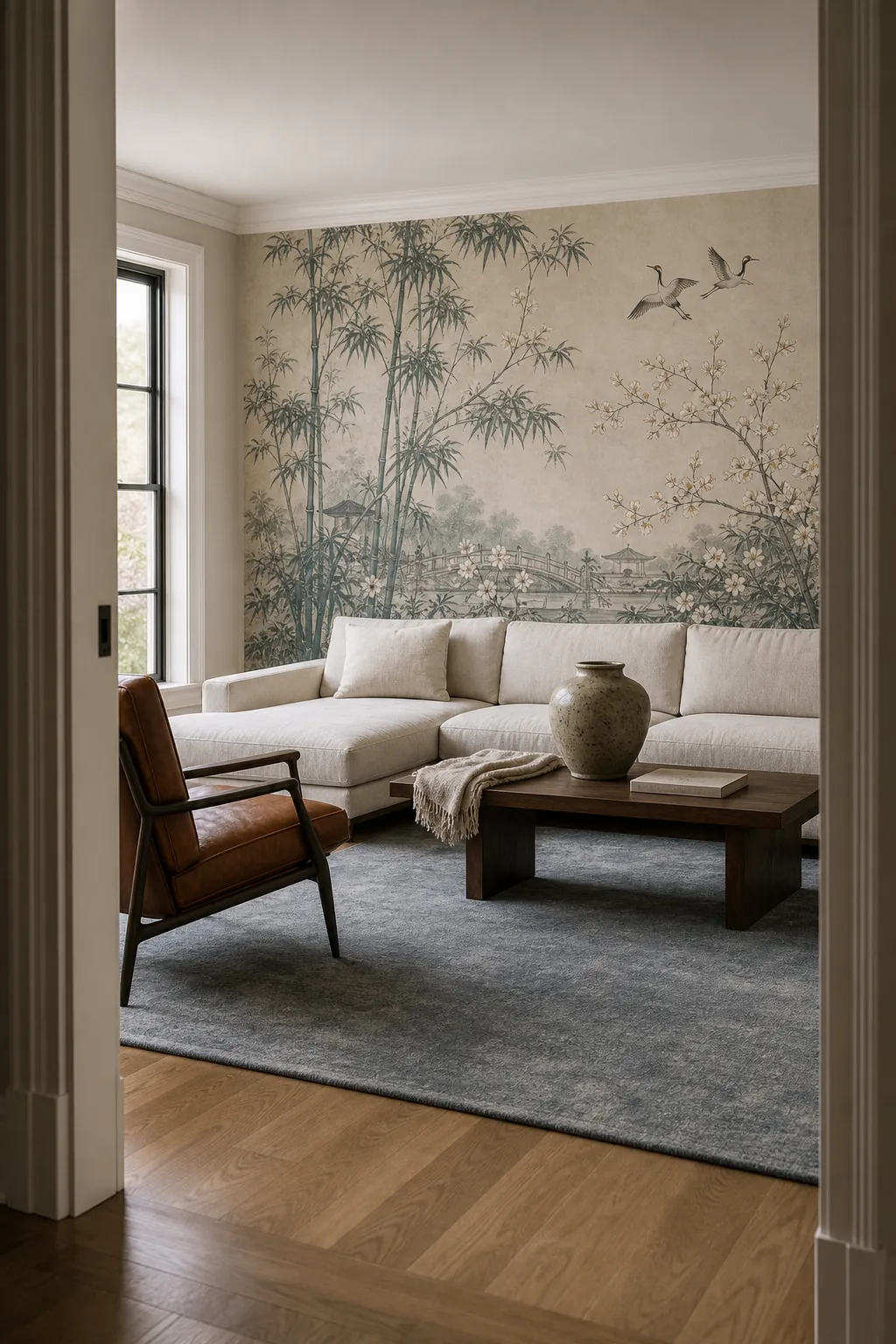

The best rooms with chinoiserie mural modern furniture do not split the difference timidly. They make a confident contrast. The wall can be romantic, scenic, and traditional. The furniture can be clean, comfortable, and current. When color, scale, and materials are edited tightly, the two styles do not cancel each other out. They make the room feel collected instead of decorated all at once.