Heritage Scenic Mural Wallpaper for Homes With Original Trim and Molding
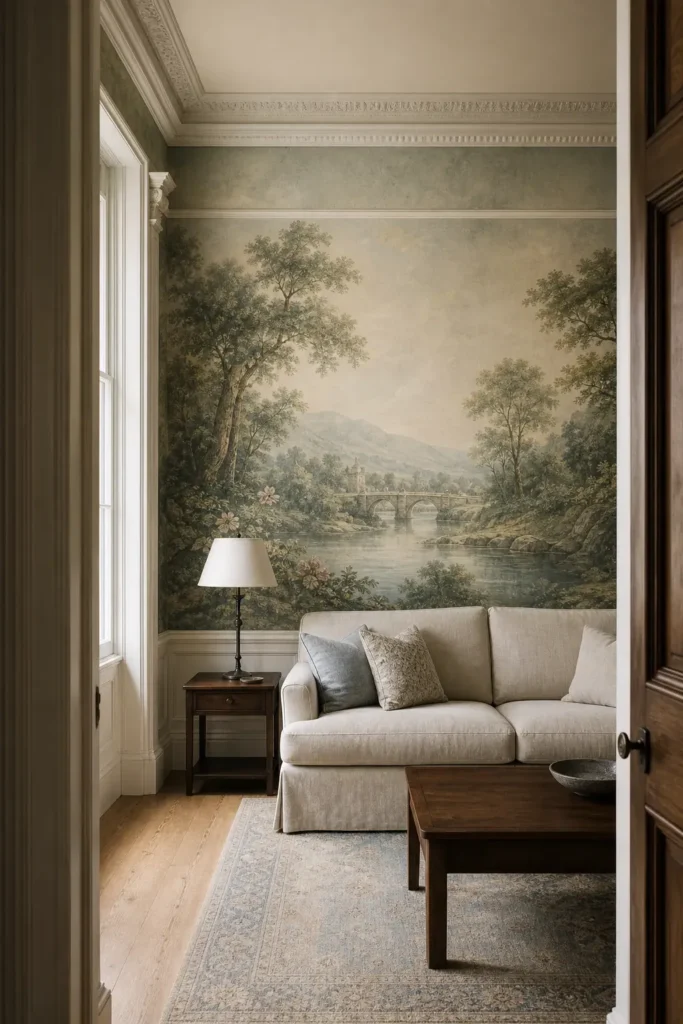
Original trim changes the way a scenic mural should be chosen. In a newer room, the wall can be treated like one uninterrupted canvas. In an older home with crown molding, picture rails, baseboards, door casings, chair rails, and plaster corners, the millwork is already part of the architecture. A good heritage scenic mural wallpaper should make that architecture feel more intentional, not cover it up or fight it.
The strongest rooms start with one rule: respect the trim first. Once the molding lines, panel sizes, and sight lines are understood, the mural can be scaled and placed so the scenery looks built into the house. That is how a mural wallpaper for old house rooms can feel classic without becoming heavy or theatrical.
Map the Trim Before You Choose the Mural
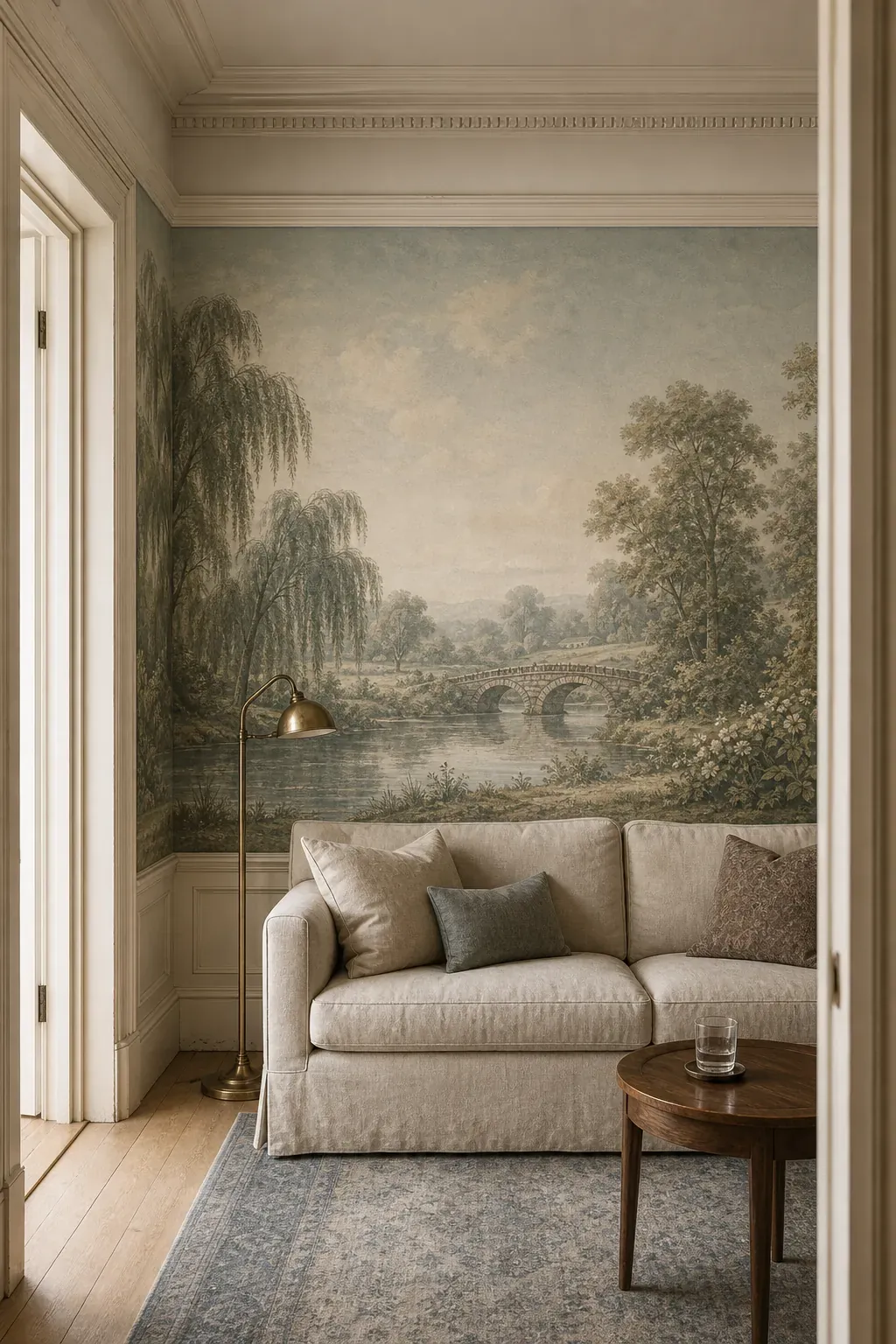
Before falling in love with a scenic pattern, measure the actual wall fields between the trim. A room with tall baseboards and a picture rail may have less uninterrupted wall space than it appears. A dining room with window casing, doorways, and built-in cupboards might need a mural with open sky or water in the areas that will be interrupted.
This is especially important with a classic landscape mural. If the main house, bridge, boat, or tree lands behind a chair rail or disappears into a corner, the room can look accidental. Use the millwork as a frame. The mural should sit inside the architecture like scenery in a panel, not like a poster cut apart by old trim.

Use Picture Molding as a Natural Panel System
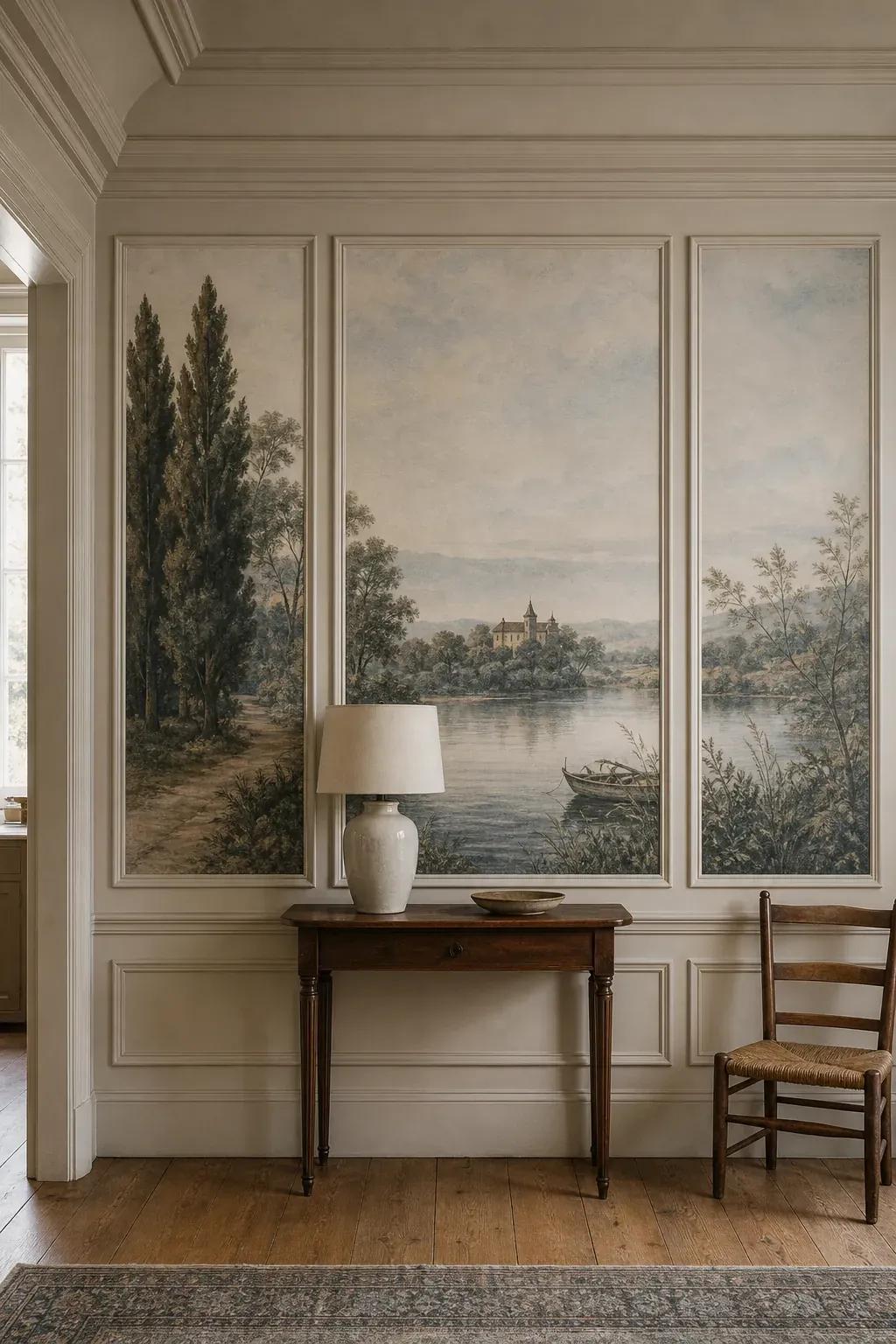
Rooms with picture molding or applied wall frames are ideal for scenic wallpaper panels. Instead of fighting the boxes, treat each panel like a window into the landscape. A riverbank can occupy one panel, a grove of trees another, and a distant building another. The result feels closer to old scenic wallcovering than to a modern feature-wall decal.
The trick is to keep the horizon consistent. If every panel has a different horizon height, the room can feel jumpy. If the horizon lines up gently around the room, the trim makes the mural feel architectural. This is one reason a mural wallpaper with molding often looks better when planned as a set of panels rather than one random crop.

Choose Trim Color From the Mural, Not the Paint Deck
Original trim does not always need to stay bright white. In fact, stark white molding can make a traditional home wall mural look pasted onto the wall. The most natural trim colors usually come from the mural itself: limestone, mushroom, warm ivory, smoke blue, muted green, or a quiet brown-black.
If the home has historic wood trim, the mural should flatter that wood rather than compete with it. A faded river landscape can look beautiful beside aged oak. A misty green woodland mural can make dark walnut feel softer. The goal is not to erase original character. It is to use the mural as a bridge between the house’s architecture and the way the room is used today.

Protect the Best View From Doors, Windows, and Furniture
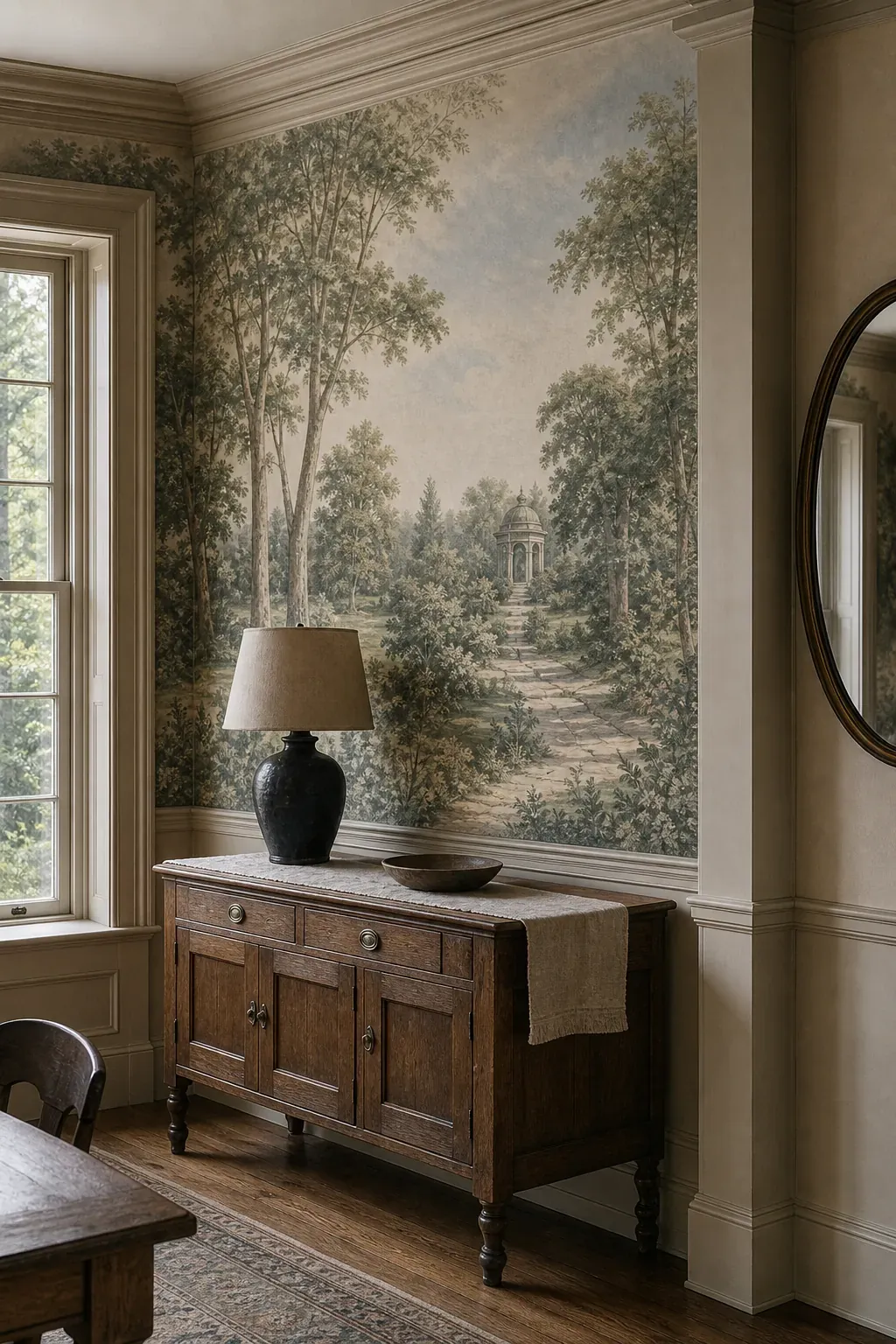
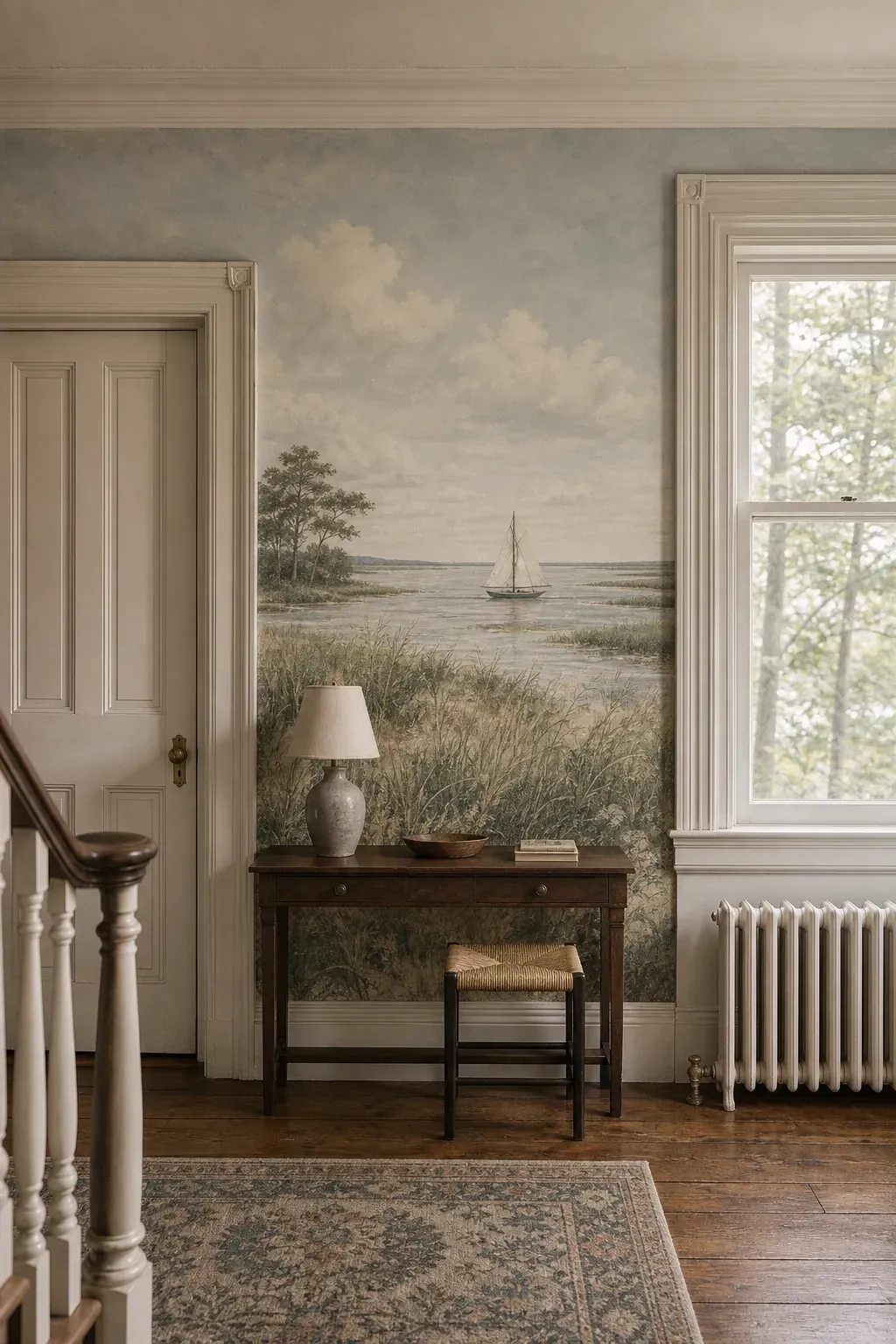
Old houses often have beautiful interruptions: deep window trim, paneled doors, radiators, fireplaces, and built-ins. Those details are part of the charm, but they can cut through a mural if the scene is not placed carefully. Decide which view matters most from the doorway, then protect that part of the mural.
A scenic mural above a console in an entry may need the main tree off-center so a door casing does not split it. A dining room mural may need lower, quieter foliage behind chair backs. A bedroom mural may need open sky behind the headboard. The best historic home wallpaper mural layouts use the house’s quirks as boundaries, not obstacles.

Keep Furniture Quiet Enough for the Millwork and Scene
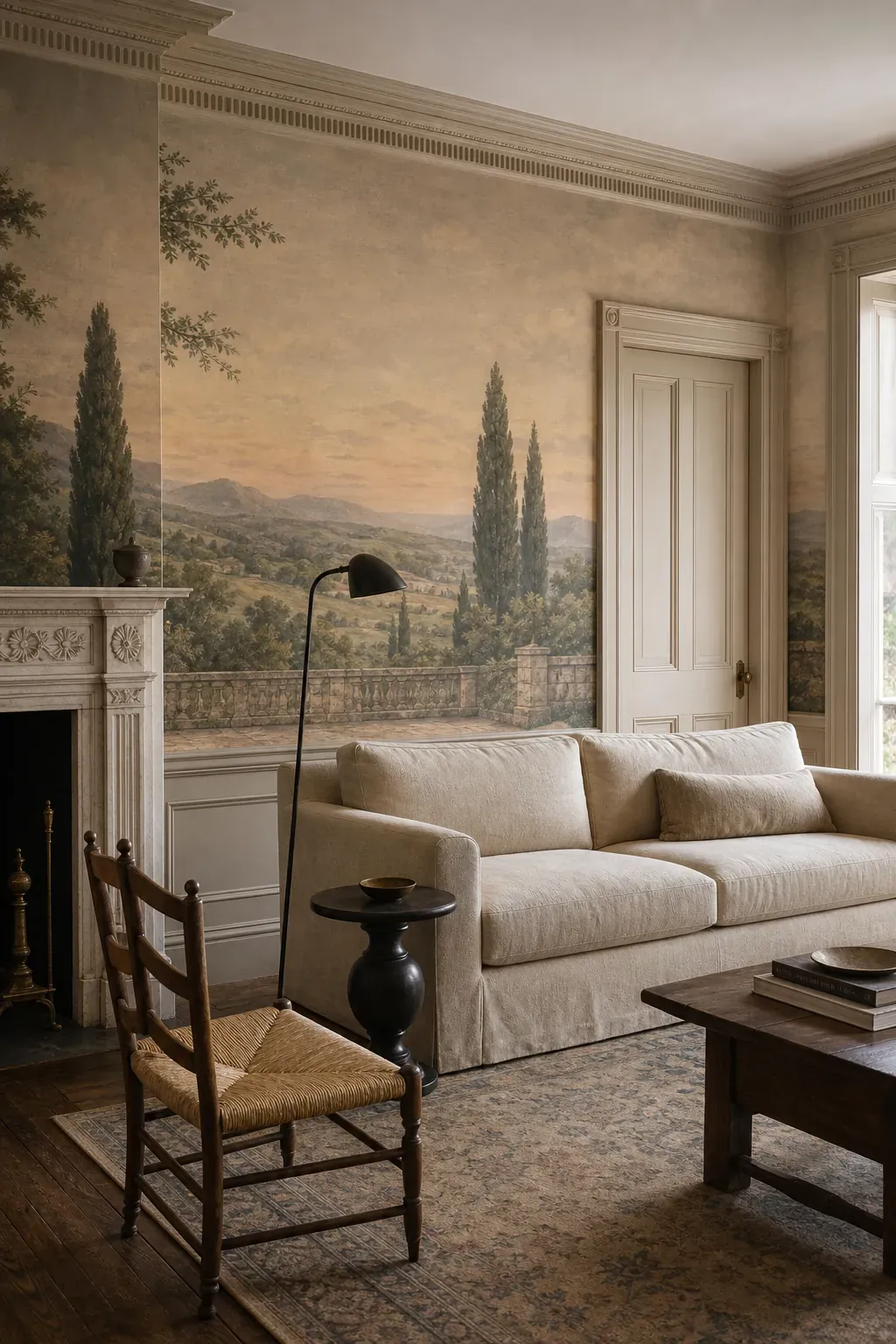
A heritage mural already has architecture, movement, and atmosphere. Original molding adds another layer. Furniture should not add a third loud voice. Clean-lined antiques, tailored modern upholstery, simple lamps, and quiet rugs usually work better than heavily carved furniture beside a scenic wall.
This does not mean the room has to be plain. A dark pedestal table, a linen sofa, a rush-seat chair, or a marble-topped console can look rich without competing. Let the trim define the room, let the wallpaper carry the view, and let the furniture support daily life.

Plan Wall Prep and Installation Around the Old Surfaces
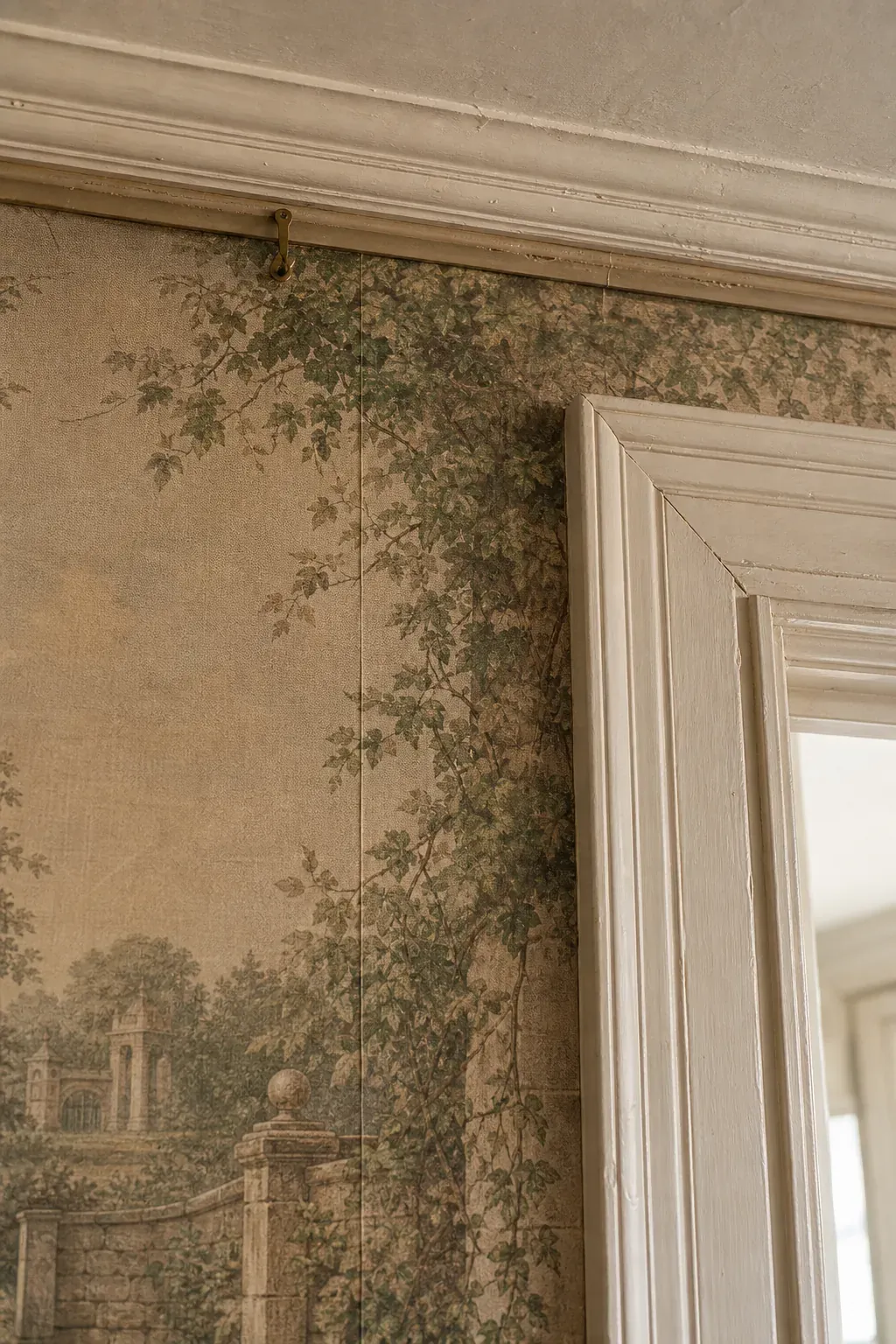
Older homes can have uneven plaster, layers of paint, repaired cracks, and trim that is not perfectly square. That does not rule out a mural, but it does make preparation more important. Smooth the wall, handle moisture or failing paint before installation, and follow the wallpaper maker’s guidance for the correct primer and paste.
Do not treat seams and trimming as afterthoughts. A scenic mural next to original molding is judged up close. The edge where wallpaper meets casing, baseboard, or crown should look deliberate. If the trim is valuable or old, avoid careless cuts and rushed prep. The best rooms look like the mural and molding have always belonged together.

A scenic mural can be one of the most sympathetic updates for an old house when it is chosen with the architecture in mind. Measure the trim, protect the best view, pull colors from the mural, and keep the furnishings disciplined. Then the wallpaper does not feel like a trend placed over history. It feels like another layer of the home’s story.