Dinosaur Landscape Murals for Kids’ Adventure Rooms
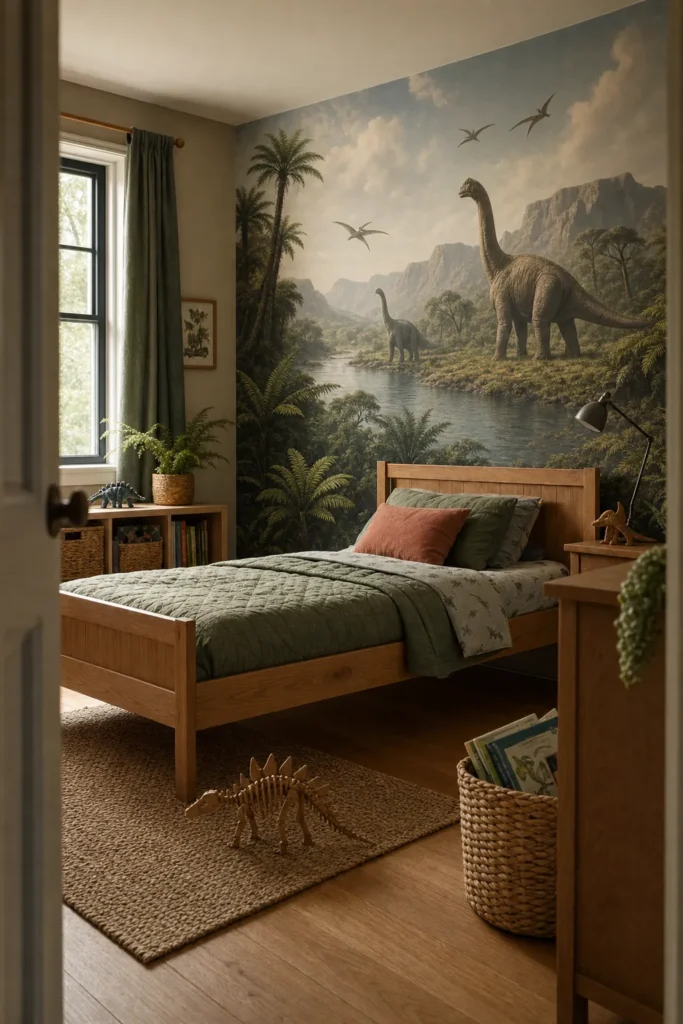
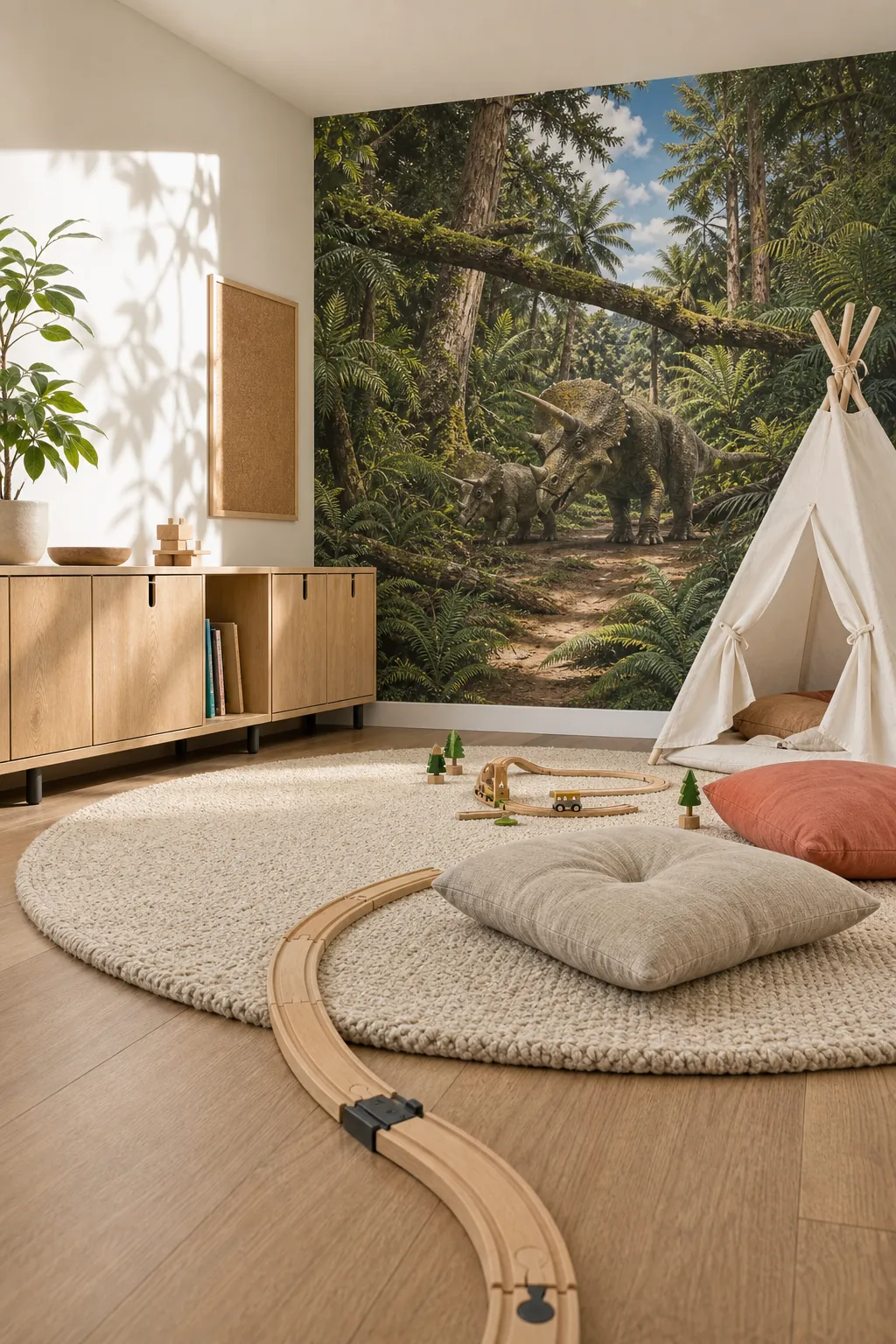
A dinosaur room should feel like a place to explore, not a museum display or a movie poster frozen on the wall. The most successful dinosaur landscape wall mural designs build a whole environment around the animals: layered plants, distant landforms, open sky, and enough quiet space for the child’s bed, books, and daily life.
That landscape approach solves several common worries at once. Dinosaurs can look exciting without being frightening, the scene can hold a child’s attention after the preschool years, and parents can decorate the rest of the room with simple pieces instead of buying a matching dinosaur version of everything.
Start With the Kind of Adventure Your Child Wants
“Dinosaur” is not one visual direction. A quiet watering hole with long-necked herbivores feels very different from a dense jungle or a volcanic canyon. Ask whether your child wants to discover, observe, track, or race through the scene. For children who are sensitive at bedtime, choose broad daylight, calm body language, and animals that are walking or feeding. Save open jaws, direct eye contact, and chase scenes for play spaces rather than the wall beside a pillow.
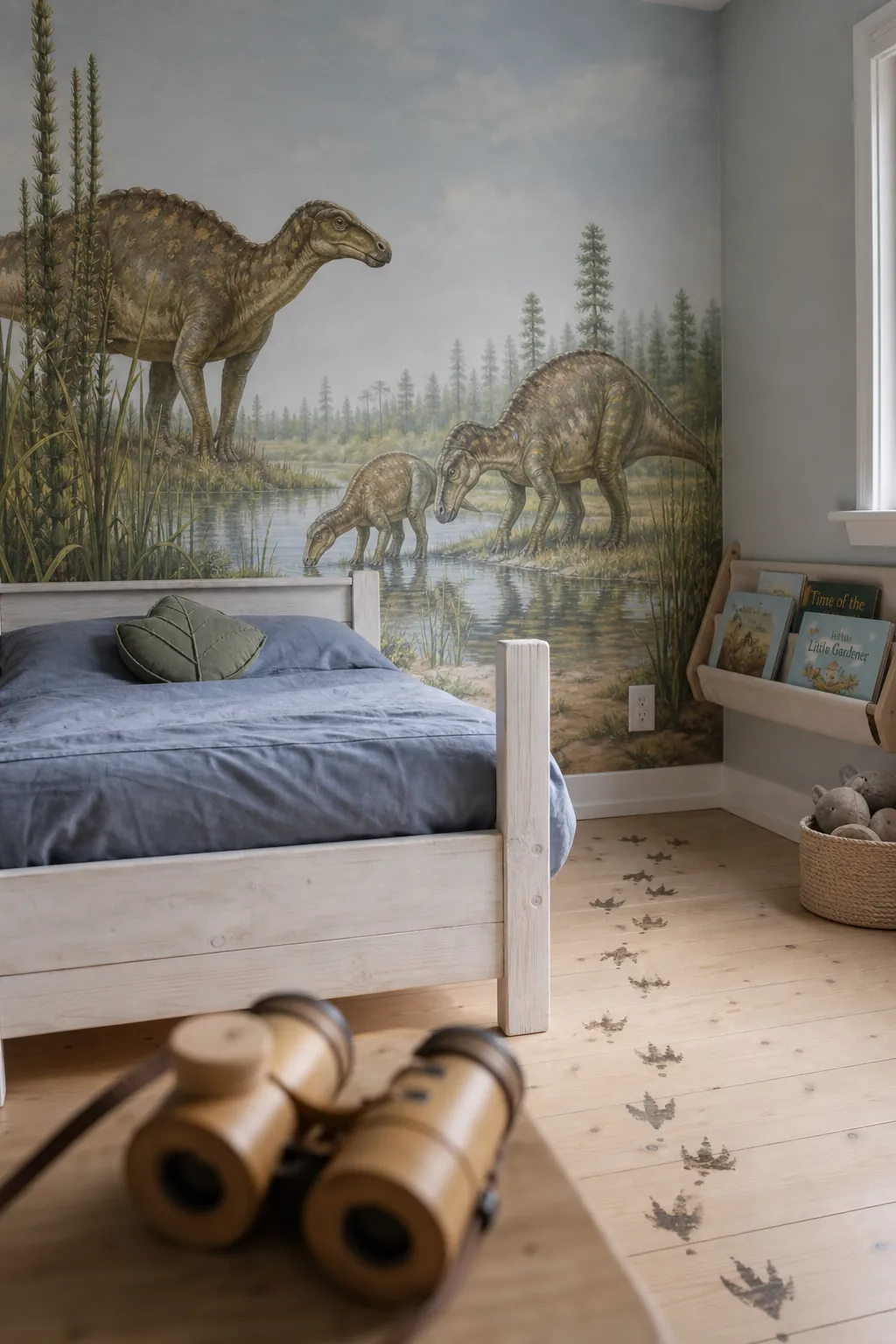
A strong kids adventure mural gives the eye a path to follow. A river can curve into the distance, footprints can cross the foreground, or a flying reptile can guide the gaze toward the ceiling. The room then invites stories without relying on a single aggressive moment.

Choose a Landscape Style That Can Grow Up
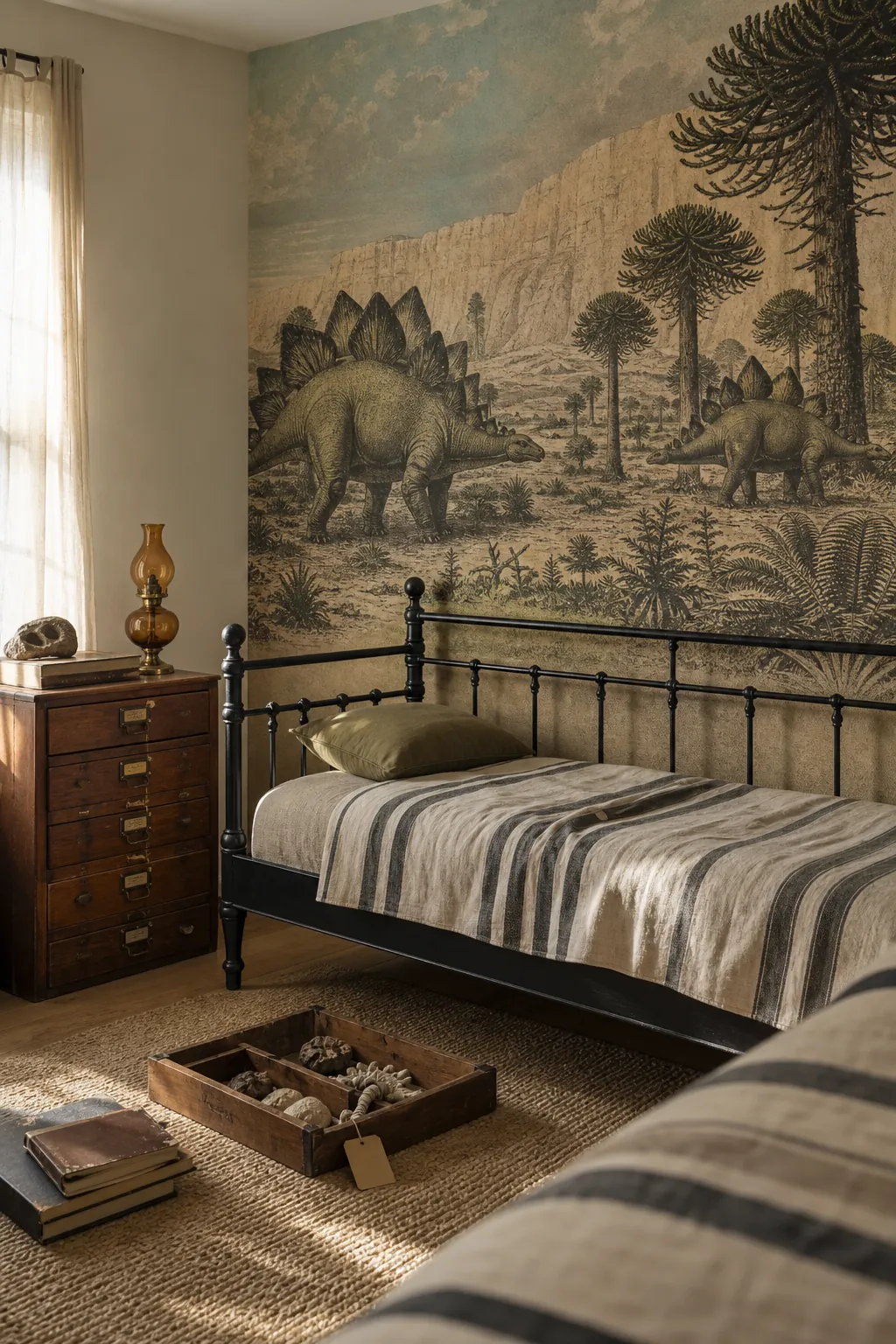
Scientific realism is not the only mature option. Painterly silhouettes, vintage natural-history engraving, and softly textured storybook landscapes can all age well when the palette is controlled. What dates quickly is usually not the dinosaur; it is the combination of bubble lettering, primary colors, cartoon expressions, and accessories repeated across every surface.
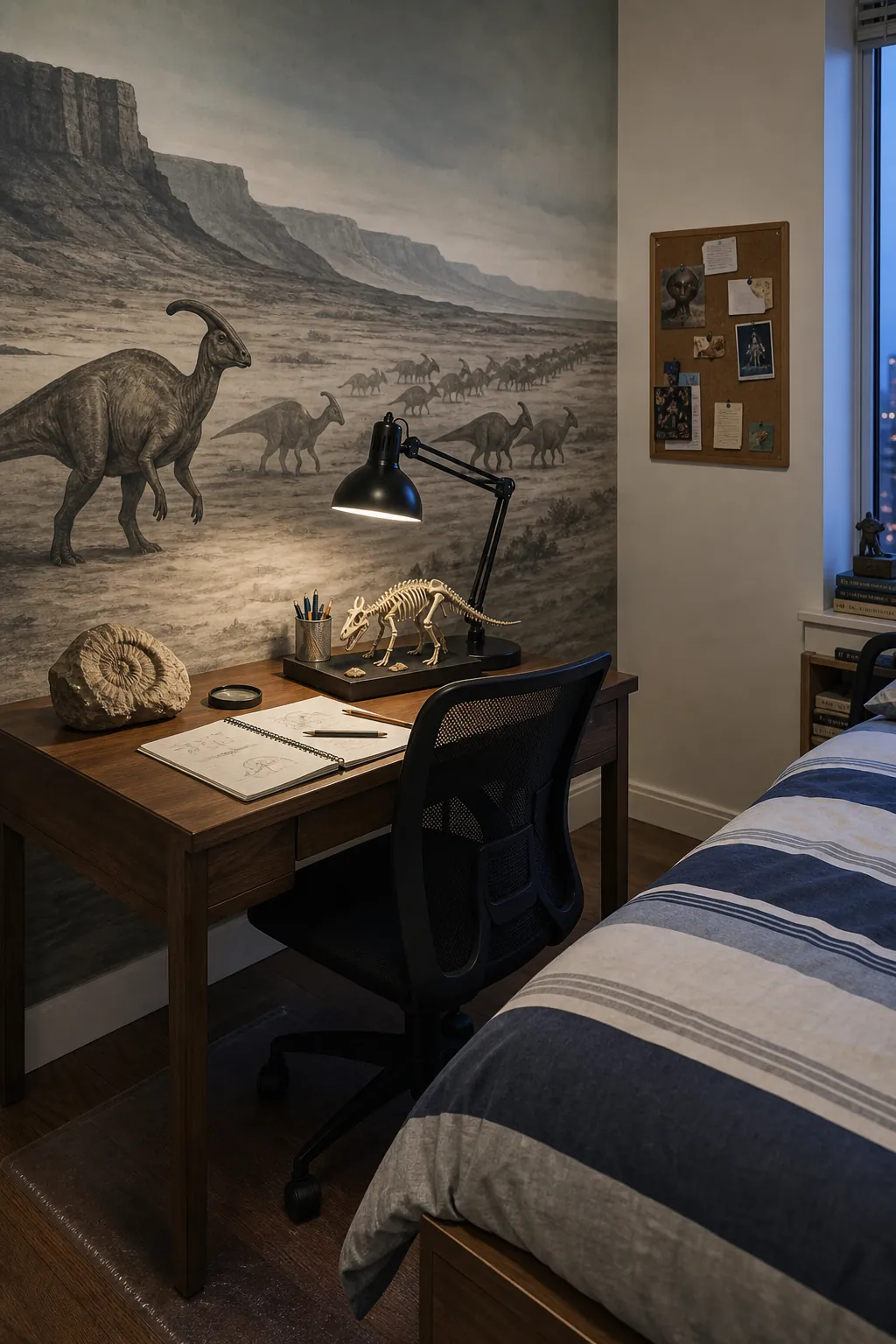
Look for complex greens, mineral blues, clay, ochre, charcoal, and misty neutrals. A prehistoric wall mural with botanical detail can later work with a natural wood desk, striped bedding, field guides, fossils, or travel objects. Let the mural provide the fantasy and let the furniture provide stability.

Crop the Dinosaurs Around Real Furniture
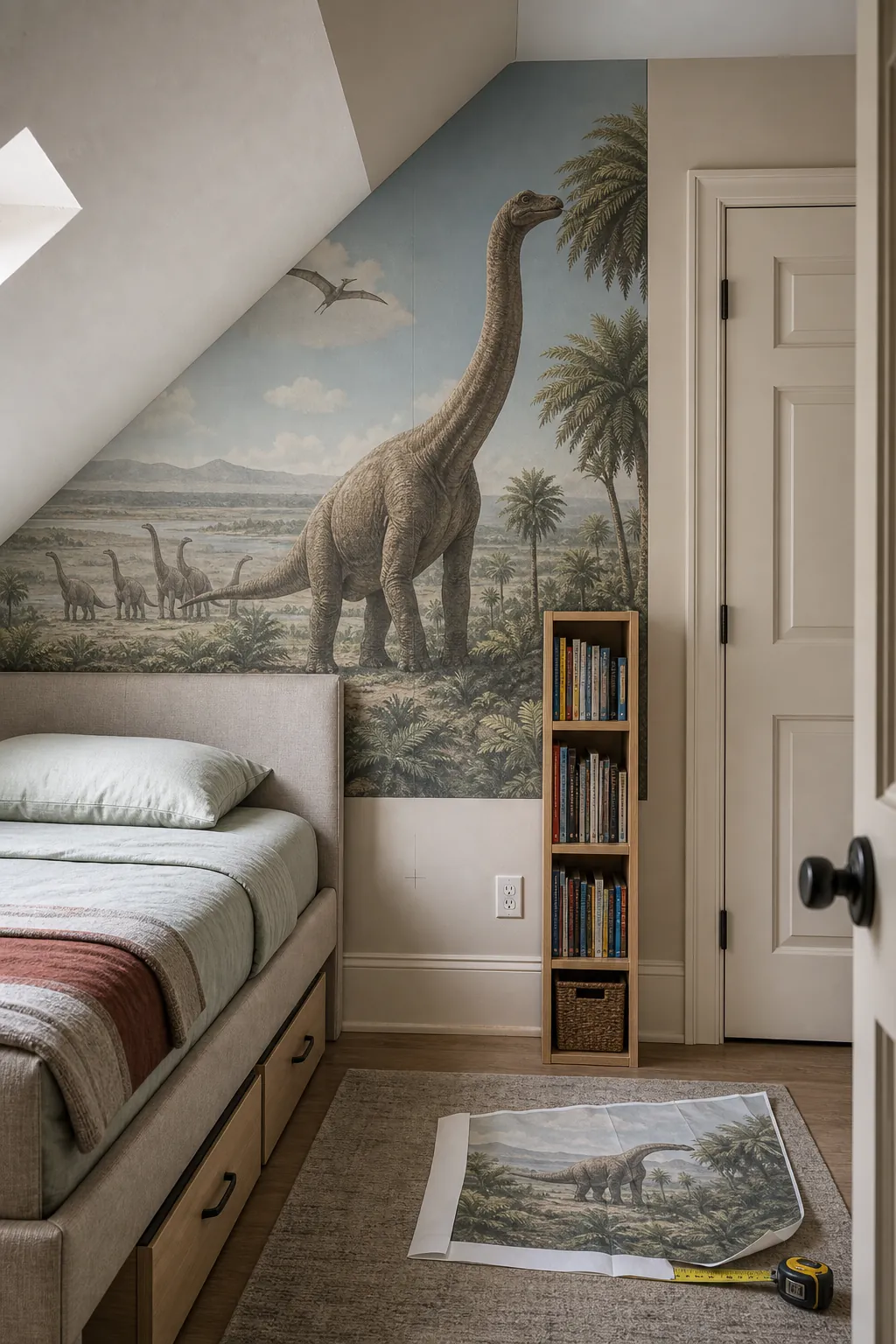
A beautiful image can fail on a real wall when the bed hides the main animal or a wardrobe cuts a dinosaur in half. Measure the uninterrupted wall area, then mark every object that will sit in front of it. Ask for a scaled proof that includes the furniture outline. The focal dinosaur should be visible from the doorway and from the child’s usual viewpoint, not only in the seller’s empty-room mockup.
Use foreground foliage behind lower furniture because it can be partly covered without losing the story. Keep faces and distinctive silhouettes in the upper and middle zones. A tall sauropod works well beside a bookcase; a low herd can stretch above a headboard; a flying pterosaur can animate an awkward sloped ceiling.

Balance Detail With Space to Play
The mural does not need more themed competition. Paint the other walls in a pale tone sampled from its sky or stone, use mostly solid bedding, and keep small toys in closed bins. A simple jute or washable wool rug makes a convincing “terrain” without printing another dinosaur underfoot.
Lighting changes the mood dramatically. Daylight should reveal the scene clearly, a reading lamp should make books inviting, and a low warm night-light should leave the dinosaurs calm rather than casting giant shadows. In a small room, a landscape with a distant horizon can make the wall feel deeper. Dense dark jungle foliage, by contrast, works better in a bright room with enough plain surfaces to balance it.

Pick a Material for the Wall You Actually Have
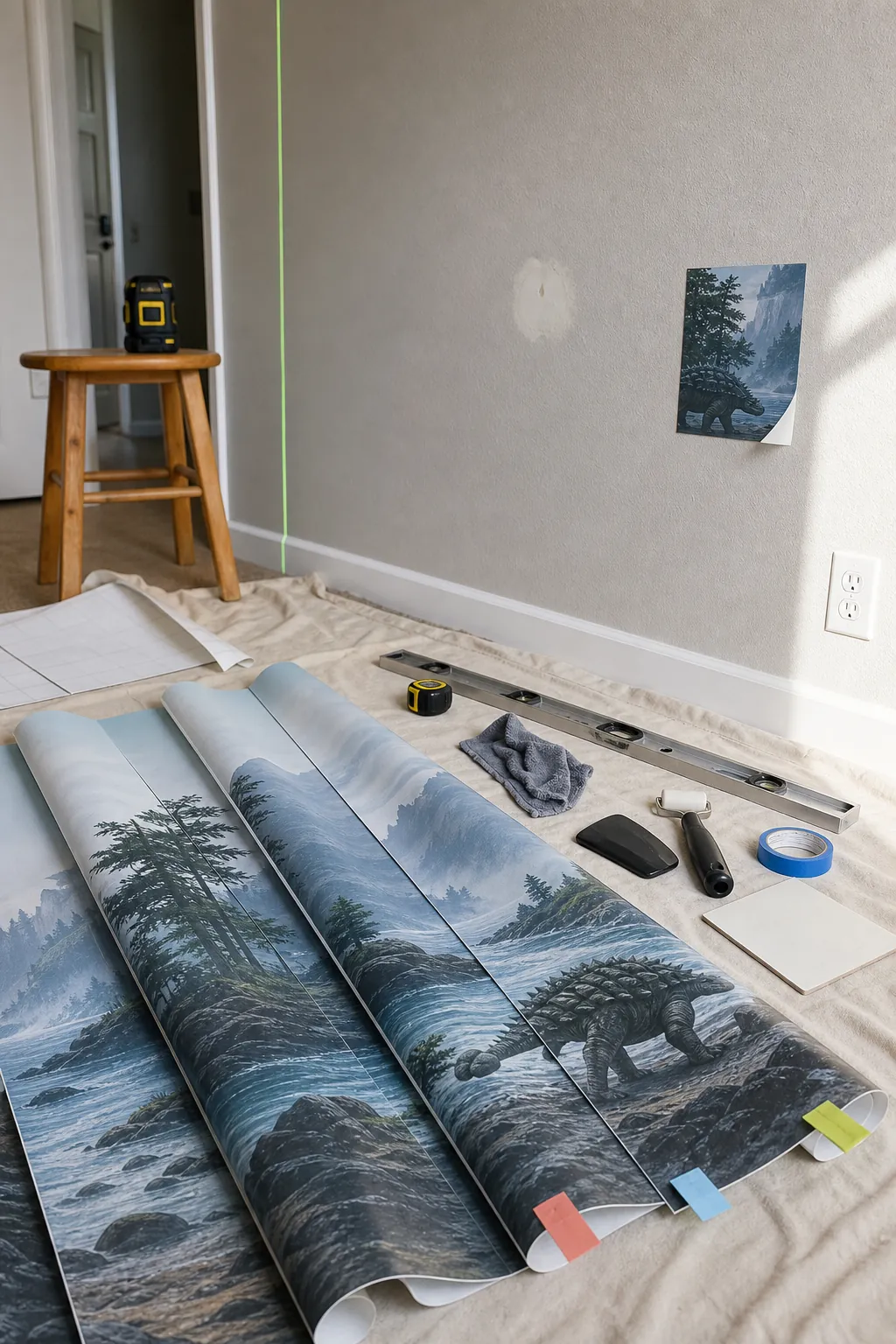
A peel and stick dinosaur mural can be a sensible choice for renters or rapidly changing rooms, but it still needs a smooth, clean wall and fully cured paint. Order a sample and leave it up long enough to experience normal temperature changes. Textured plaster, damp exterior walls, and rooms that become very hot can challenge removable adhesives.
- Check the finish: matte surfaces usually keep an illustrated landscape from reflecting windows and lamps.
- Check panel order: lay the rolls out before installation and confirm that the scene joins correctly.
- Check washability: lower foliage zones will be touched, especially beside beds and toy storage.
- Check removal guidance: removable products still need the manufacturer’s temperature and technique.

Let the Room Evolve Beyond the Theme
For younger children, the mural can sit beside baskets of figures, picture books, and a soft leaf-shaped cushion. As they grow, those pieces can give way to fossil replicas, a reading chair, framed specimens, maps, or a desk. The dinosaur wallpaper mural becomes a backdrop for curiosity rather than proof that the room was decorated at one particular age.
Avoid gendering the design by default. Adventure comes from movement, scale, discovery, and storytelling—not from assigning muddy colors to one child or pastel dinosaurs to another. Choose the landscape your child responds to and the colors that work with the light in the actual room.

Create a Room That Rewards a Closer Look
A compelling dinosaur room is not the one with the most dinosaurs. It is the one where the landscape feels coherent, the animals fit the child’s comfort level, and the image still works after the furniture moves in. Start with the emotional kind of adventure, then solve scale, color, lighting, and material in that order.
When the mural contains paths, layers, and discoveries instead of a single loud spectacle, children can return to it again and again. The wall becomes a setting for play now and a record of a lasting interest later—exactly what an adventure room should be.