Dining Room Landscape Murals That Make Dinner a Destination
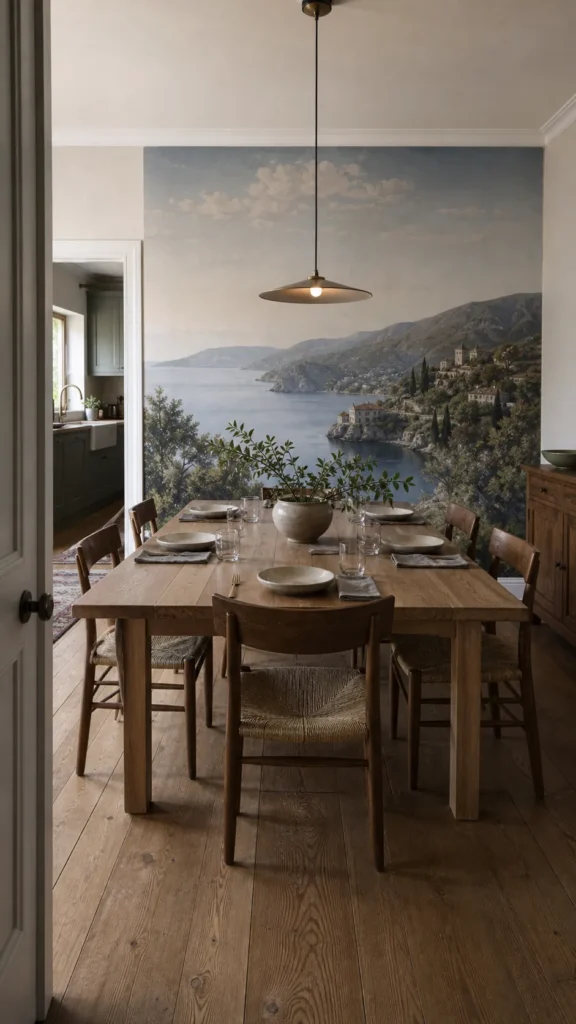
A dining room landscape mural works best when it changes how the room feels, not merely how the wall looks. The right scene can turn an ordinary weeknight table into a place that feels open, atmospheric, and slightly removed from the rest of the house. The catch is that a mural is closer to architecture than framed art: its horizon, scale, palette, and sightlines all affect the experience of sitting down.
The most common worry is that scenic dining room wallpaper will overwhelm the table or become tiring. That usually happens when the mural is chosen as an isolated image. A more reliable approach is to choose the kind of destination you want the meal to evoke, then coordinate the room around that feeling with restraint.
Choose the emotional destination first
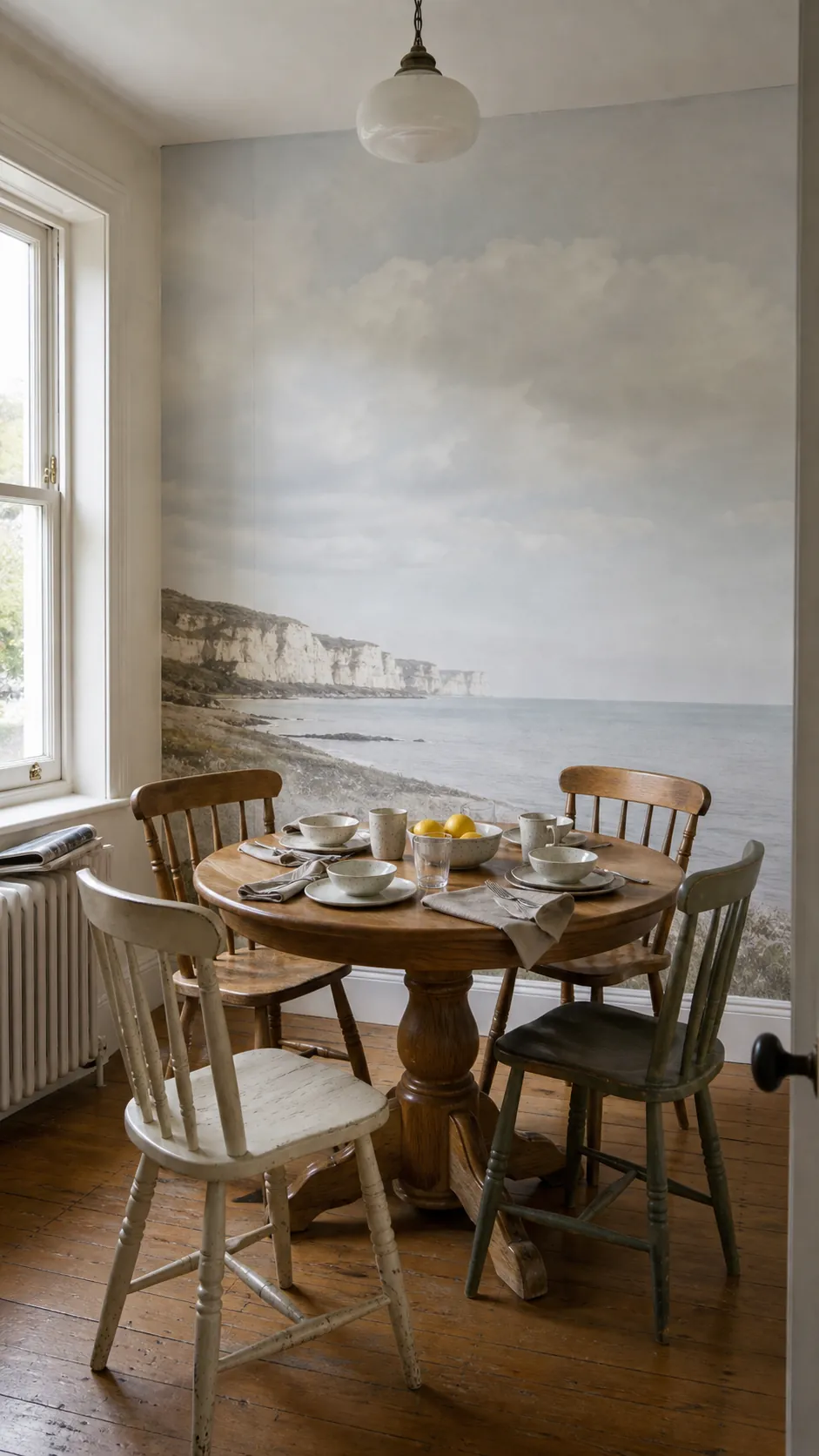
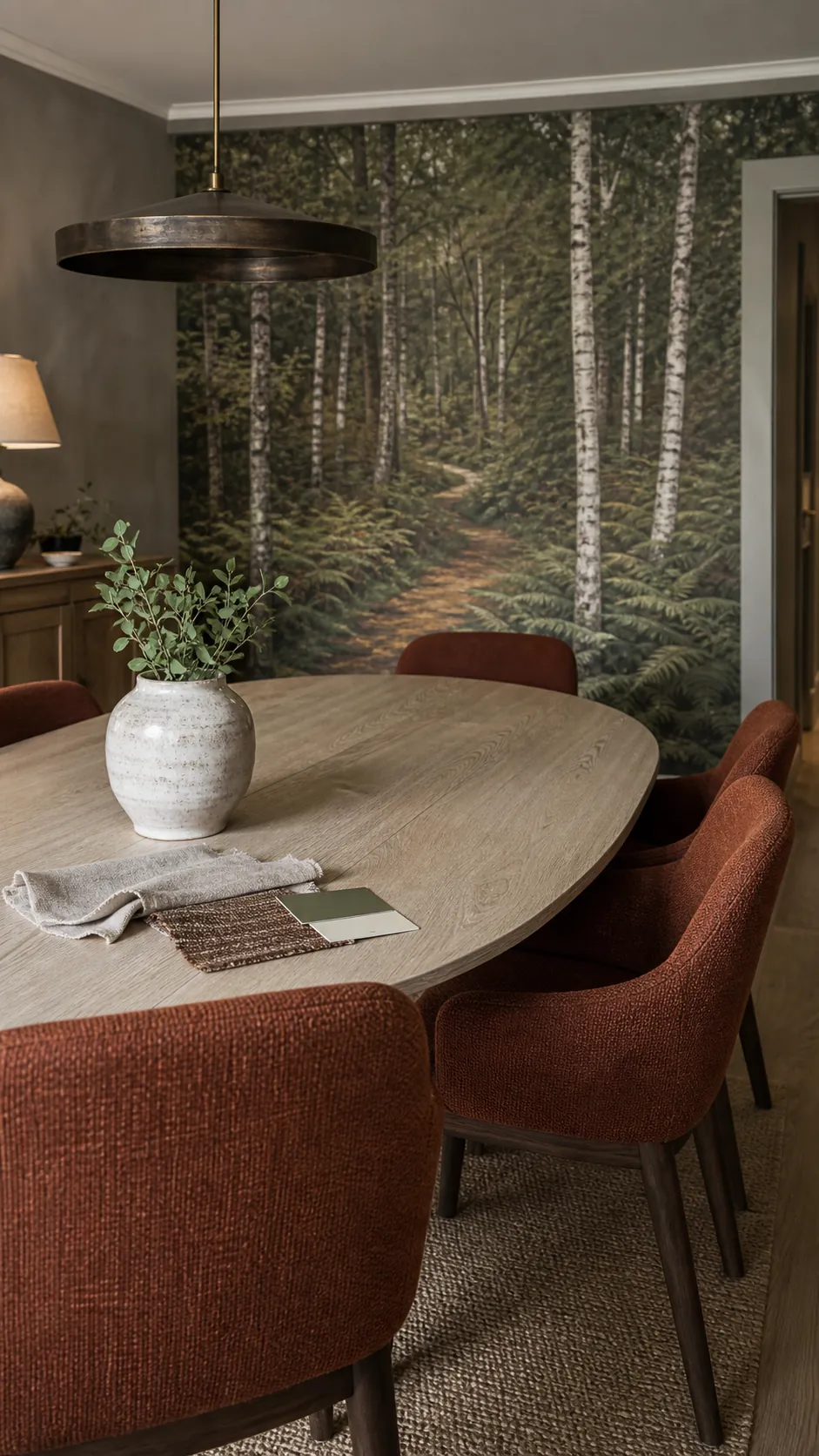
Before comparing colors, decide what the view should do. A pale coastal horizon can make breakfast feel breezy and informal. A misty woodland creates enclosure and works beautifully for long evening meals. Rolling fields suggest ease and familiarity, while a distant architectural landscape can give a formal dining room a sense of occasion.
This is more useful than asking whether a design is simply “pretty.” Think about how you actually use the room. Frequent hosts usually benefit from a scene with depth, calm focal points, and enough visual quiet for faces and food to remain central. A highly detailed mural can still work, but the busiest area should not land directly behind every seated guest.

Let the table establish the mural’s scale
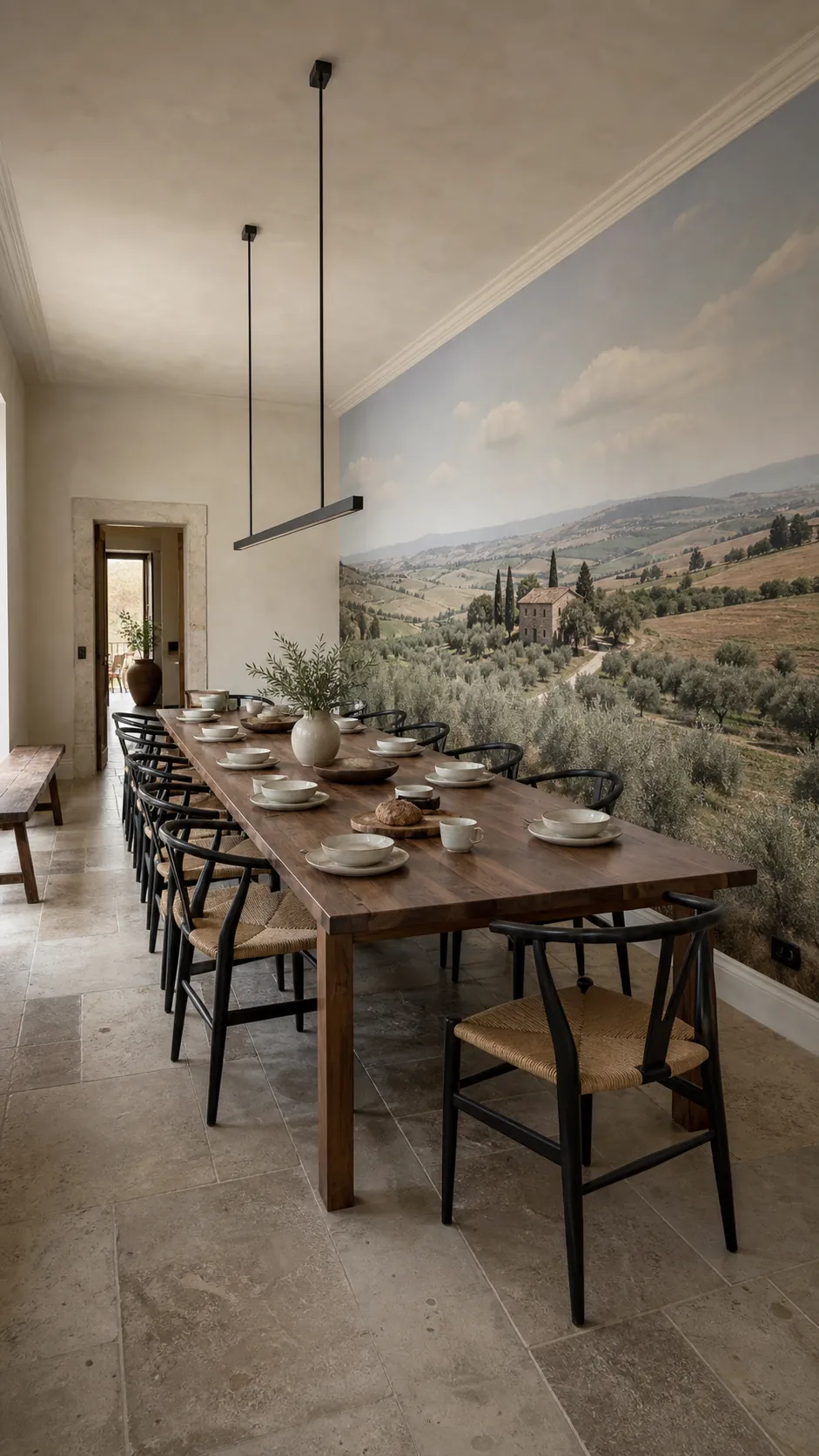
A wallpaper mural behind the table needs to read from seated eye level as well as from the doorway. Use the table as the visual measuring tool. A long rectangular table can hold its own against a broad panorama, while a round table often pairs better with a scene that has one soft focal area rather than a strong horizontal procession.
Measure the full wall, then mark the table, sideboard, switches, vents, and door swing on a simple sketch. Ask the supplier for a crop preview based on those exact dimensions. Do not assume the product thumbnail represents the crop you will receive. The best part of a landscape can disappear behind a sideboard, or a horizon can land awkwardly through the chair backs.
- Keep the principal focal point away from corners, door casings, and tall cabinets.
- Place the horizon where it remains legible above or between seated heads.
- Allow quieter scenery behind visually complex chair silhouettes.
- Order a large sample and view it from the room entrance and every seat.

Build the palette from the mural’s quieter colors
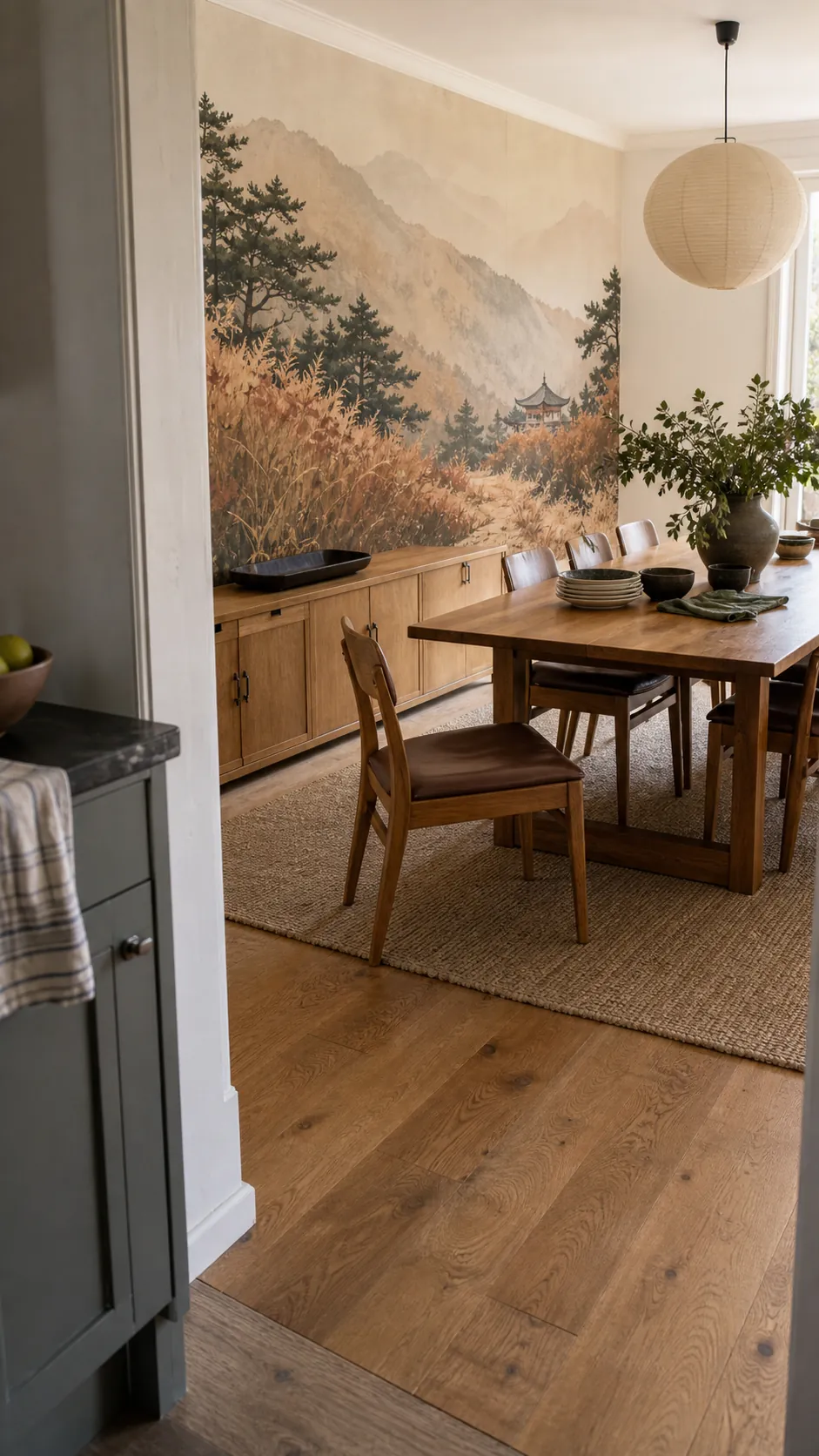
Matching every chair, curtain, and vase to the boldest color in a landscape mural makes the room feel themed. Instead, pull two or three supporting tones from less obvious parts of the image: the gray-green of distant foliage, the warm brown of a path, or the chalky blue in atmospheric haze. Repeat those colors in different materials rather than exact shades.
Wood is especially effective because its grain connects to natural scenery without copying it. Linen, wool, aged metal, and matte ceramics add texture while letting the printed view remain the most descriptive surface. If the mural contains strong contrast, keep the rug and window treatment quieter. If the scene is pale and tonal, one deeper chair color can give the table enough weight.

Light the table and the scenery separately
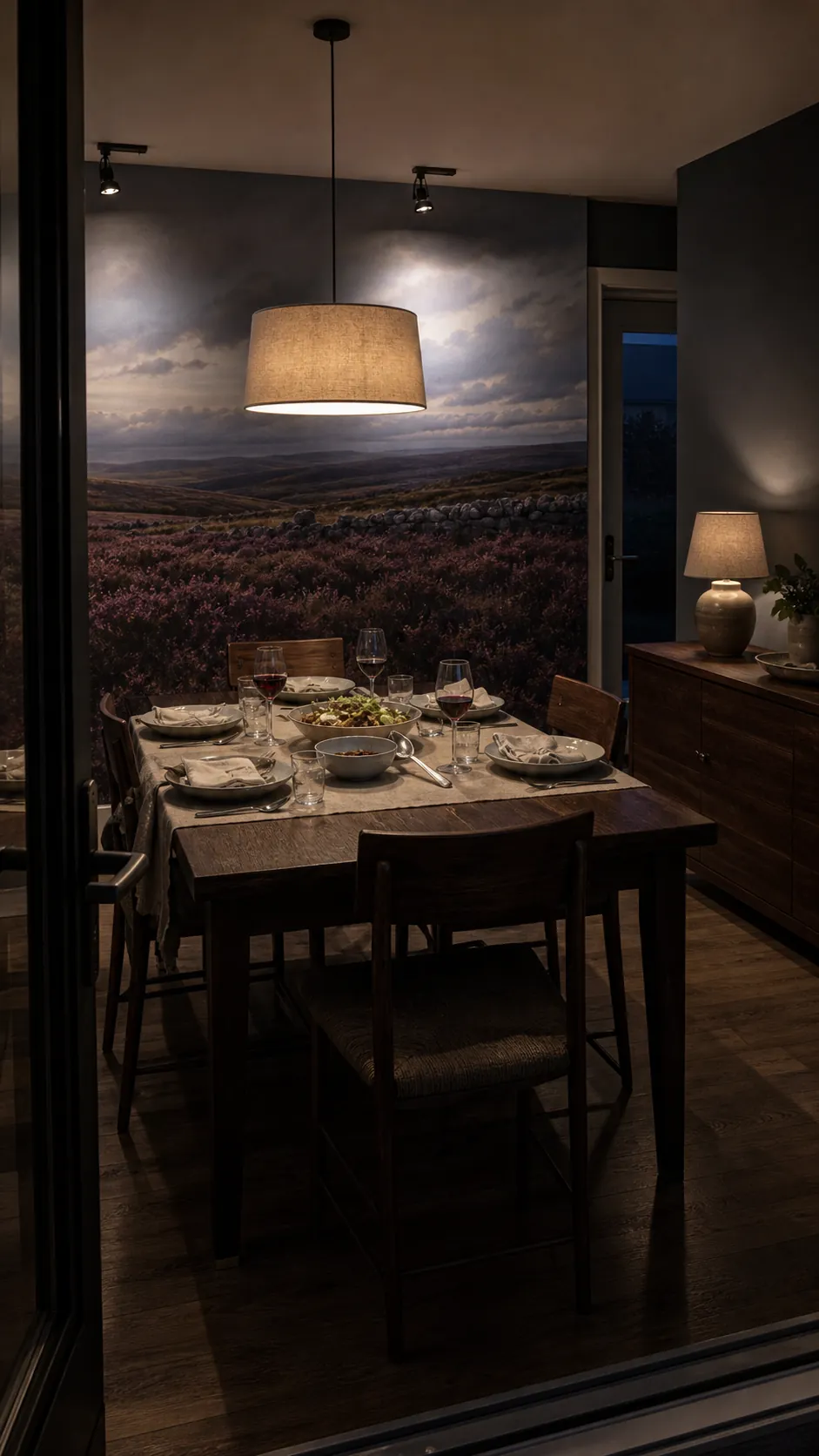
A pendant should make the table inviting; it should not be expected to illuminate the mural evenly. A second, softer layer—such as shaded wall lights on adjacent walls, discreet ceiling spots, or reflected light from a lamp on a sideboard—keeps the scene visible after sunset without flattening it.
Test a sample at the exact time you entertain. Dark greens and blues may become nearly black under a single warm bulb, while glossy areas can catch distracting reflections. A matte finish is usually more forgiving. Position directional light so it grazes rather than blasts the surface, and keep glare out of the eye line of seated guests. The goal is a readable atmosphere, not a brightly lit billboard.

Protect conversation and circulation
A destination dining room still has to work when chairs are pulled out, serving dishes arrive, and people move between the kitchen and table. Leave comfortable clearance around the table and avoid placing a bulky console where it narrows the main route. If a sideboard sits against the mural wall, choose one low enough to preserve the view and simple enough not to compete with it.
Visual comfort matters too. A mural with one obvious center can make only the middle seat feel privileged. Panoramic scenes, gentle paths, layered trees, and wide horizons distribute interest more evenly. Walk around the table before ordering and identify what each diner will see. A host-friendly dining room gives every seat a worthwhile view without making the scenery the only subject of conversation.

Sample the view before committing
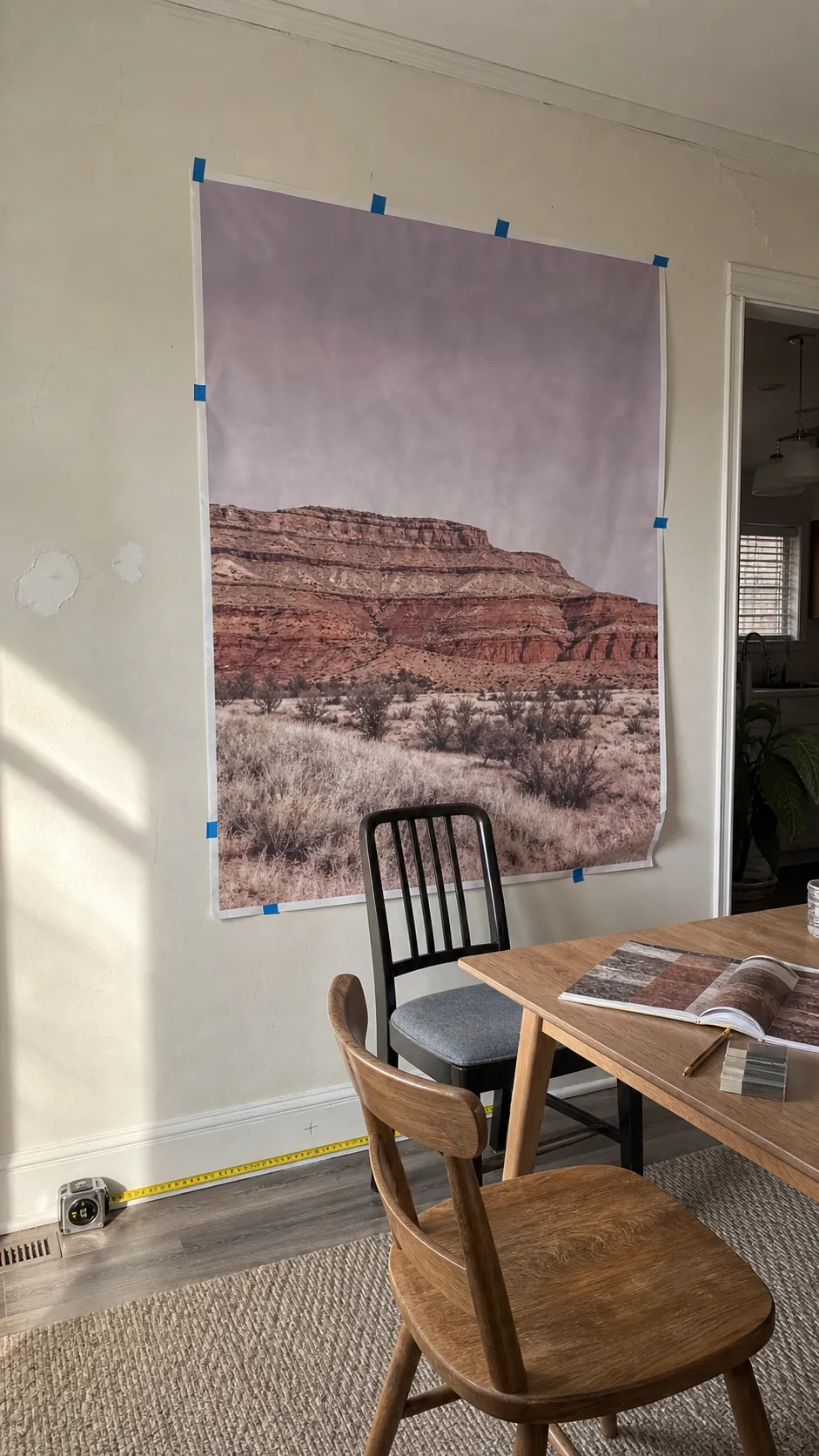
A small swatch confirms color but not scale. Print or request the largest sample available, tape it where the mural’s main detail will sit, and leave it up for several days. Photograph it in morning light, dull daylight, and evening light. Set the table once, pull out the chairs, and check whether the sample fights with plates, flowers, and serving pieces.
For a custom mural, verify the final proof, panel widths, bleed, and trimming instructions. Check the wall for moisture, texture, cracks, and uneven color before installation. Murals make small surface defects more visible, especially across pale skies or calm water. Proper preparation is less exciting than choosing the image, but it is what makes the finished wall feel continuous rather than assembled.

Make the view serve the meal
The strongest destination dining room decor does not feel like a stage set. The mural supplies distance and mood; the table supplies warmth and life. When the crop respects seated sightlines, the palette comes from secondary tones, and the lighting works after dark, the room feels transportive without becoming impractical.
Choose the landscape you would be happy to encounter on an ordinary Tuesday, not only the one that impresses in a product photo. That is the view most likely to make dinner feel like a destination for years rather than a season.