Botanical Line Art Murals for Minimal Homes That Still Need Warmth
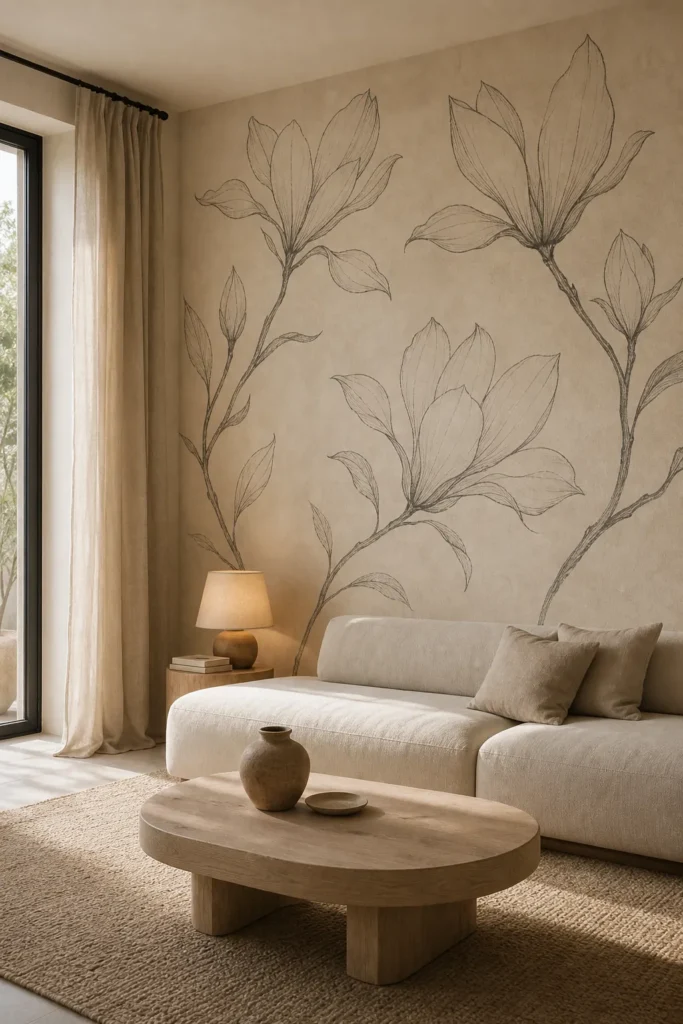
Minimal rooms often fail for a simple reason: they remove too much visual warmth. A botanical line art mural solves that problem quietly. It gives the wall movement, scale, and a human-drawn feeling without filling the room with heavy color or busy pattern.
The goal is not to make a minimal home look decorative. The goal is to keep the room calm while giving the eye something soft to land on. A minimal botanical wall mural works best when the line drawing feels intentional, the background is warm rather than cold, and the furniture around it adds texture instead of clutter.
Minimal Does Not Have to Mean Empty
People often start with white walls, a simple sofa, and pale wood, then wonder why the room feels unfinished. The problem is usually not the lack of furniture. It is the lack of scale. Small prints and tiny accessories cannot warm up a blank wall. A botanical line art mural gives one large, quiet gesture, which is exactly what a minimal room needs.
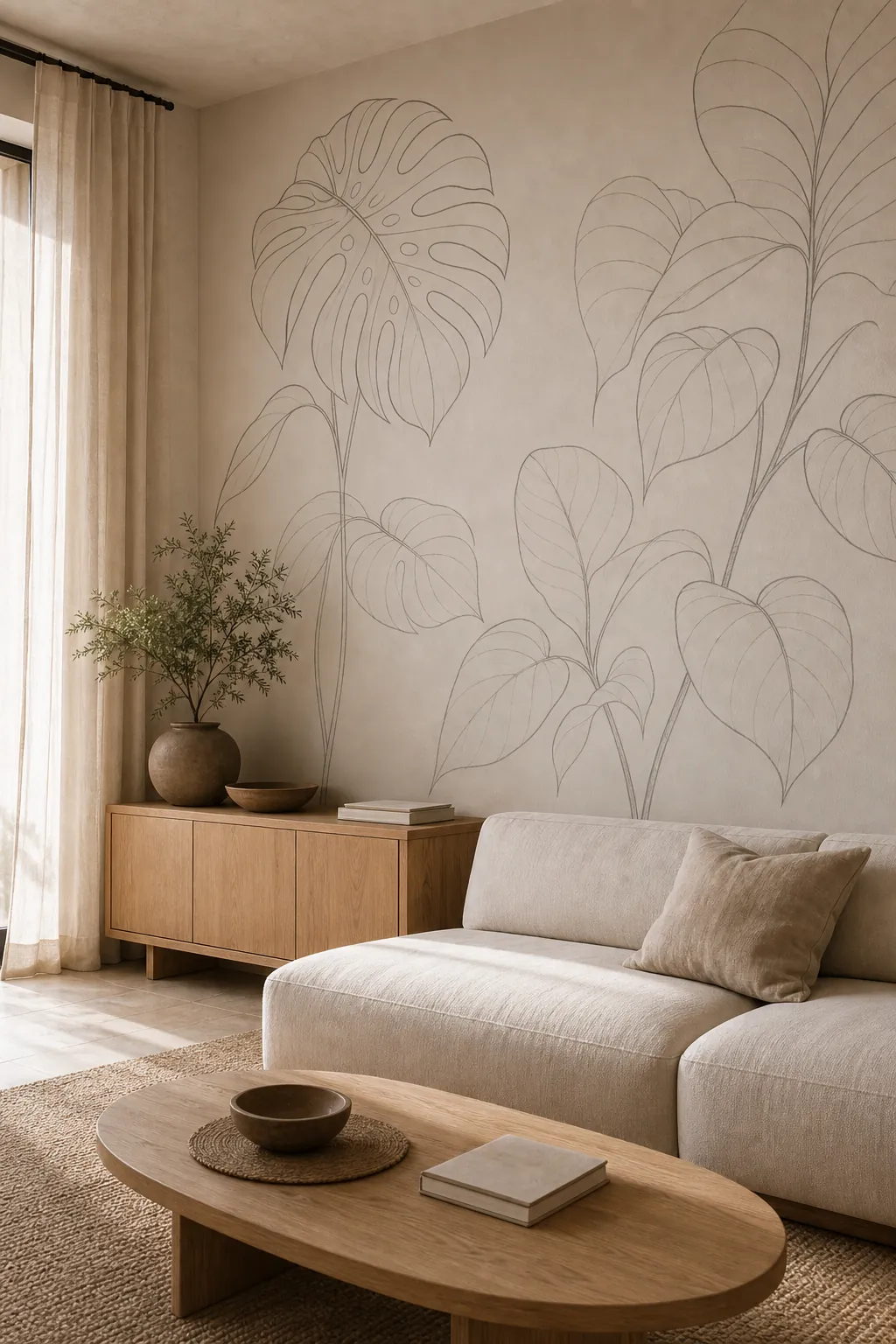

Choose a line drawing wallpaper mural with enough negative space around the stems or leaves. The empty space is what keeps the room minimal. The line work is what keeps it from feeling blank.
Choose Warm White Before Pure White
A neutral plant mural on a bright white ground can look crisp, but it can also feel clinical in a north-facing room. Warm white, chalk, oatmeal, pale clay, mushroom, or limestone backgrounds are easier to live with. They make black or charcoal botanical outline wallpaper feel softer and more architectural.
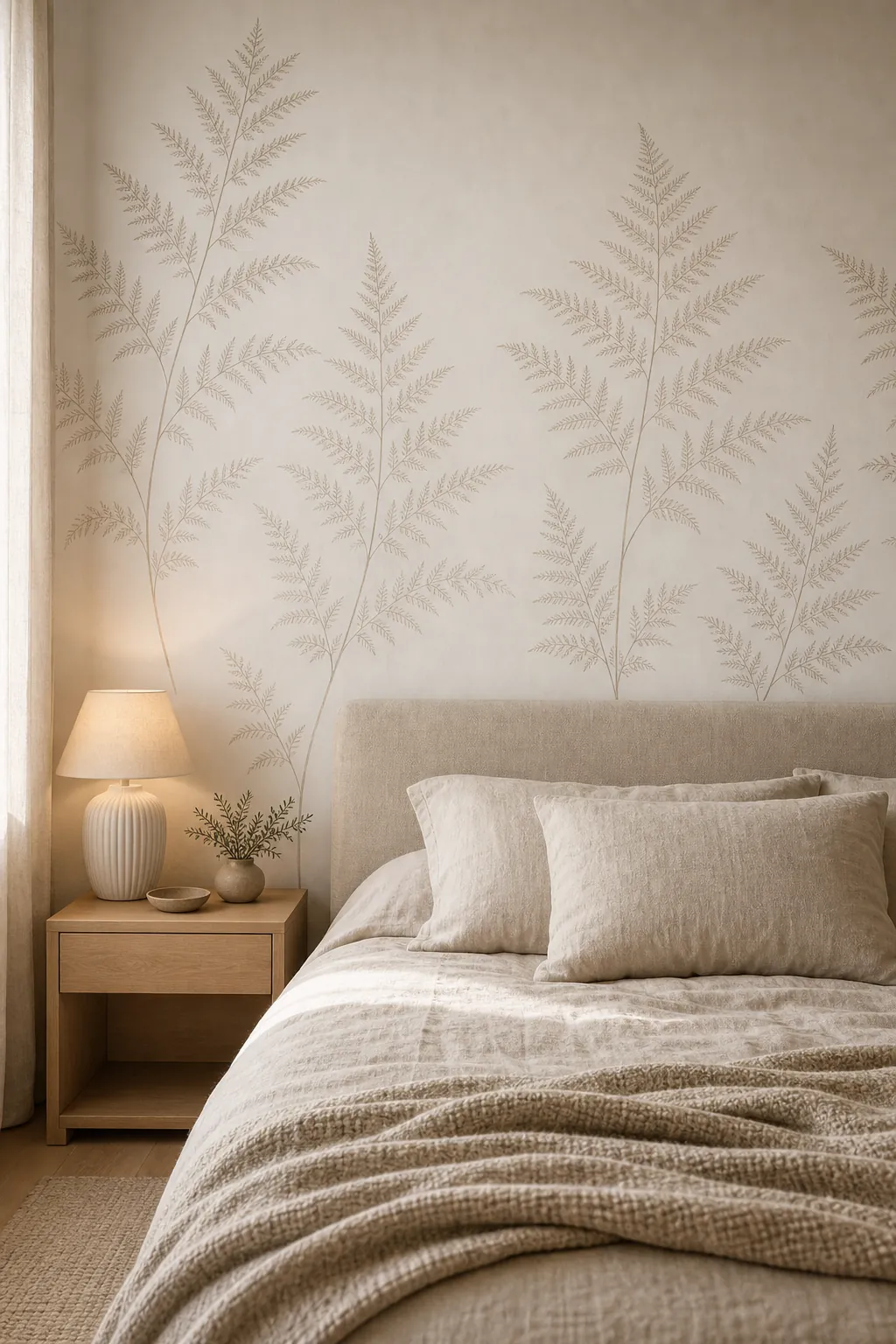

If the room already has cool gray flooring or a gray sofa, a warm minimal wallpaper mural can act as the bridge. Add one or two warmer materials near the wall, such as oak, linen, clay, rattan, or aged brass.
Let the Plant Shape Match the Room
Different botanical forms create different moods. Tall stems make ceilings feel higher. Broad leaves add softness to sharp modern furniture. Fine grasses look calm in bedrooms. A loose wildflower outline feels more casual. A single oversized branch can make a dining room feel composed without becoming formal.
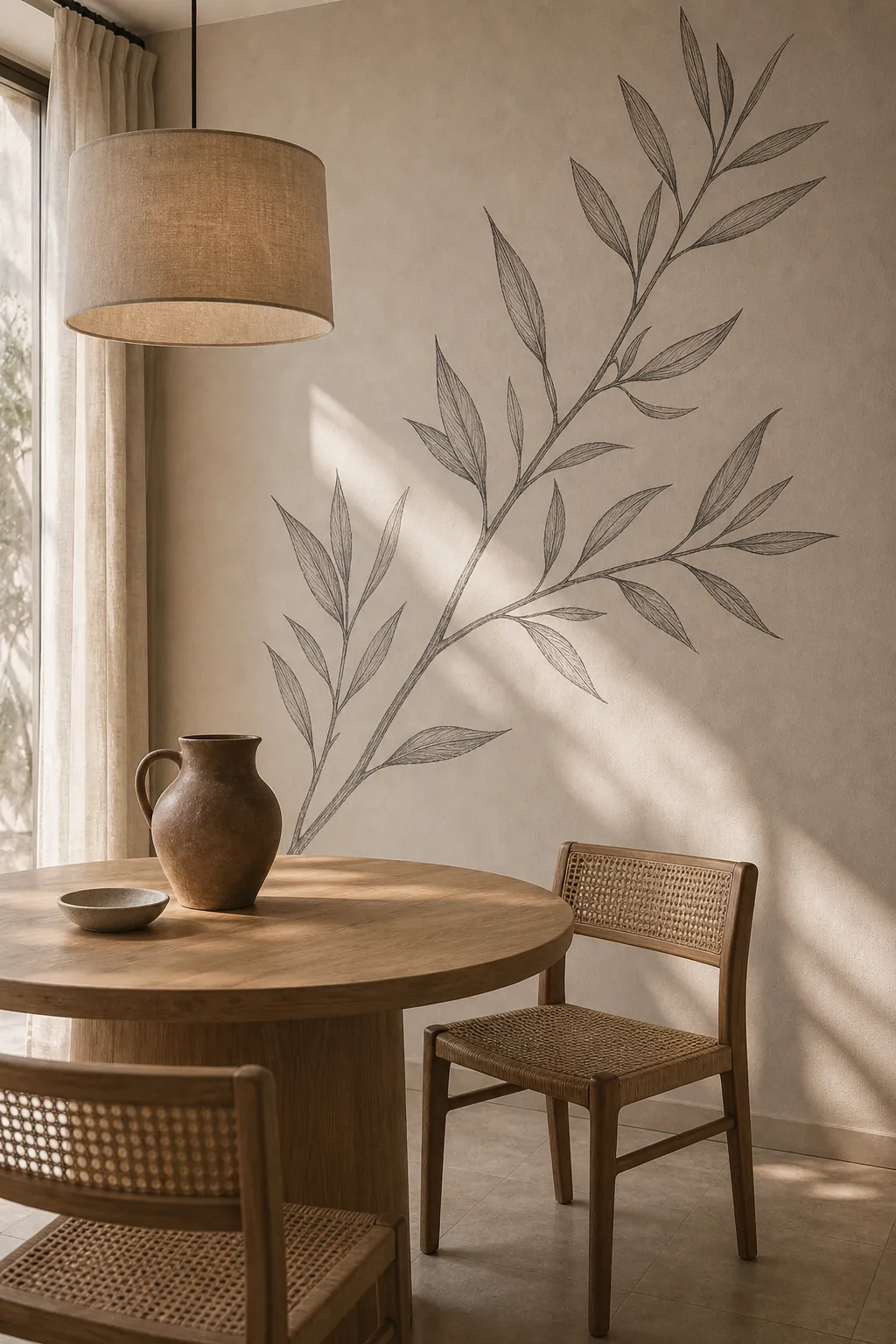

This is where a soft modern mural can do more than paint. It changes the rhythm of the room. A plain wall stops the eye. A botanical line keeps it moving, but gently.
Use Texture Instead of More Pattern
Once the wall has a botanical outline, resist the urge to add more prints. Warmth should come from texture: linen curtains, a wool rug, ribbed glass, open-grain wood, matte ceramic, bouclé, cane, or a woven shade. These materials make a minimalist mural wallpaper feel tactile rather than graphic.
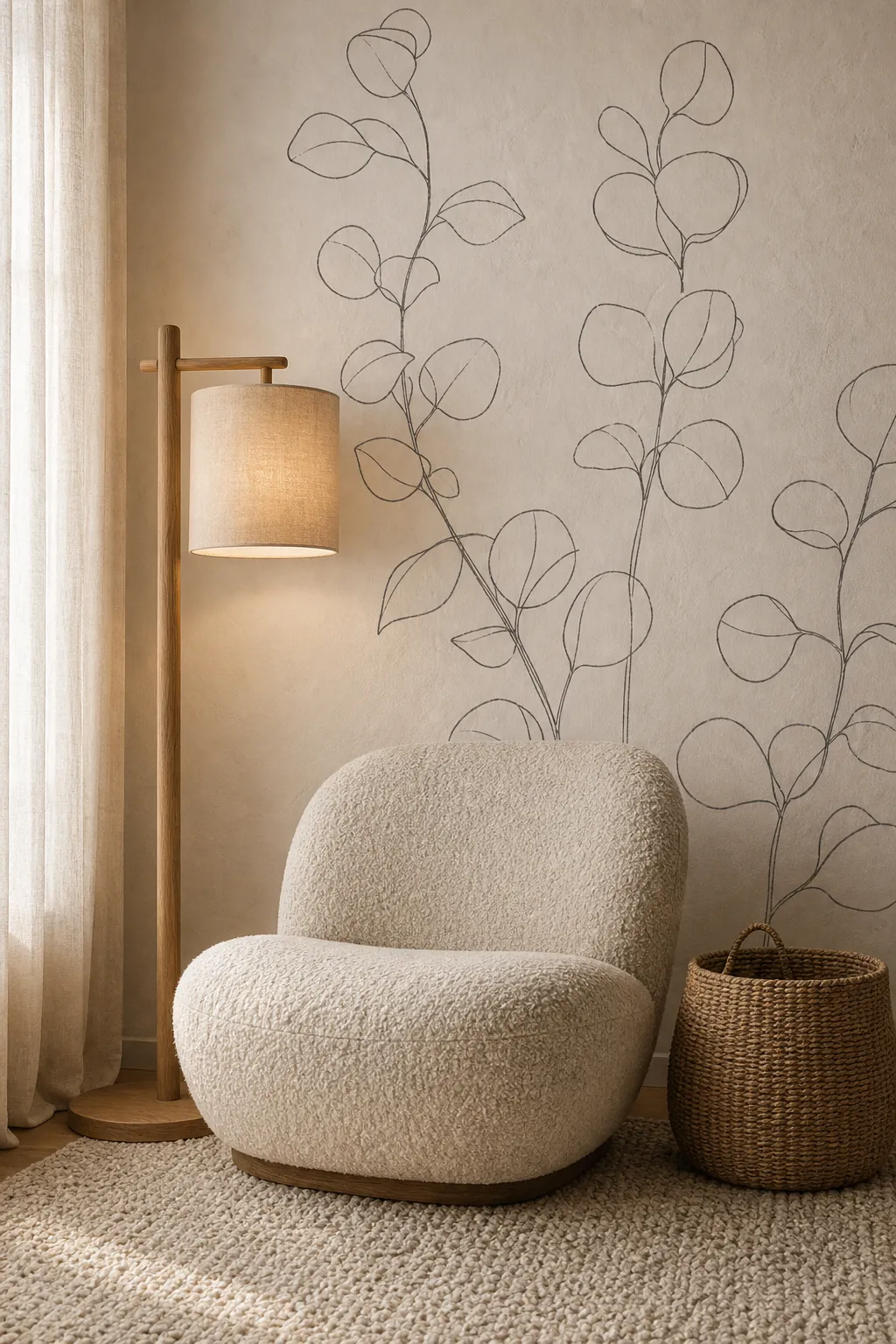

That matters because minimal rooms do not forgive cheap finishes. If everything is flat and smooth, even a beautiful mural can feel like a poster. Matte surfaces and natural fibers make the line drawing settle into the room.
Keep the Color Accent Small
A botanical line art mural does not need a loud palette. One soft accent is enough: muted sage, clay, tobacco, deep olive, or warm black. Use that accent once or twice in the room so the mural feels connected to the furniture.
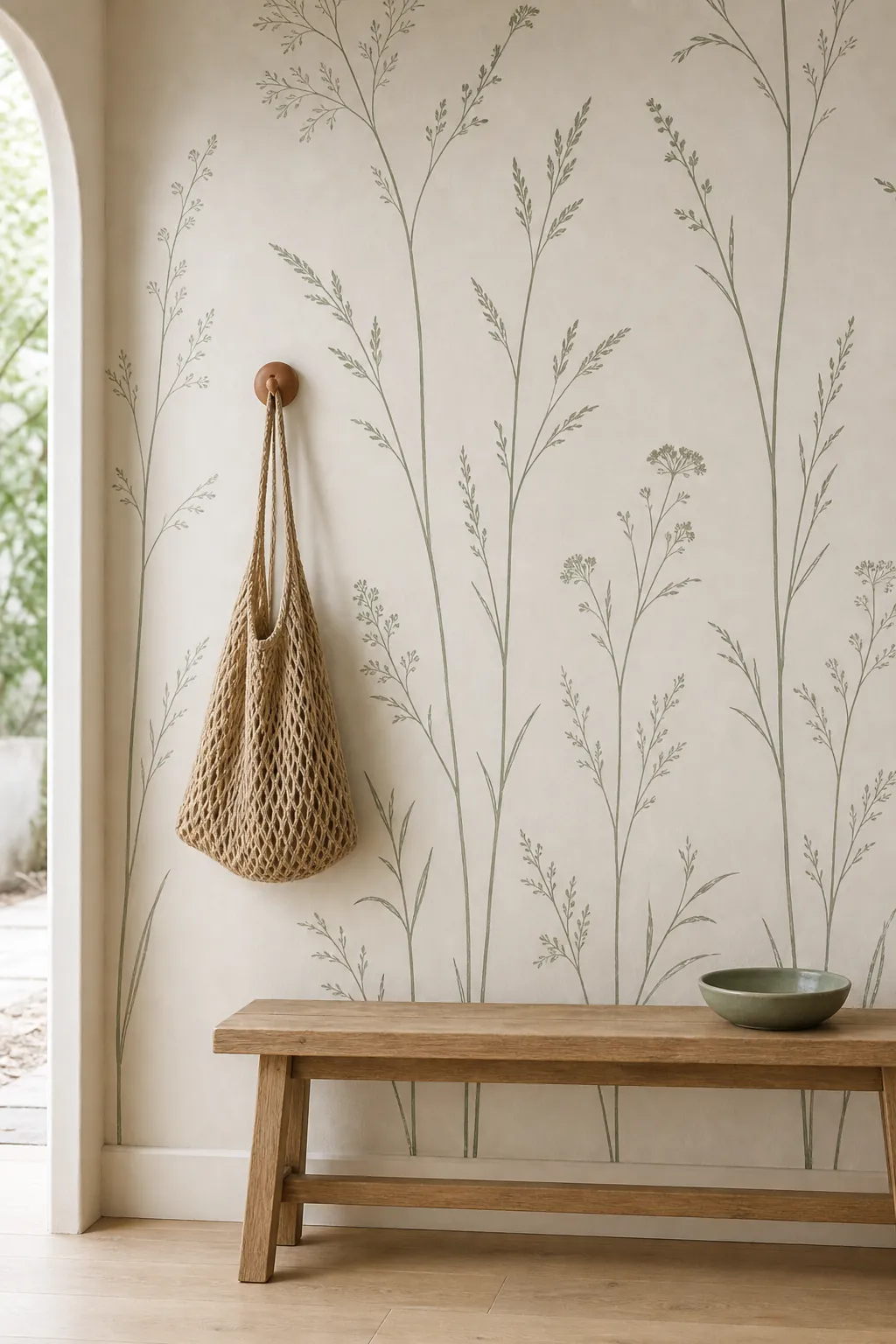

For example, sage line work can connect to a small plant pot. Clay-toned line work can connect to a ceramic lamp. Charcoal line work can connect to slim metal hardware. The connection should be visible but not repeated everywhere.
Make Close Details Feel Hand Drawn
The most convincing botanical line art murals have small irregularities. A stem thickens slightly. A leaf tapers unevenly. The line is clean but not mechanical. Those details are what keep a minimal room from feeling mass-produced.
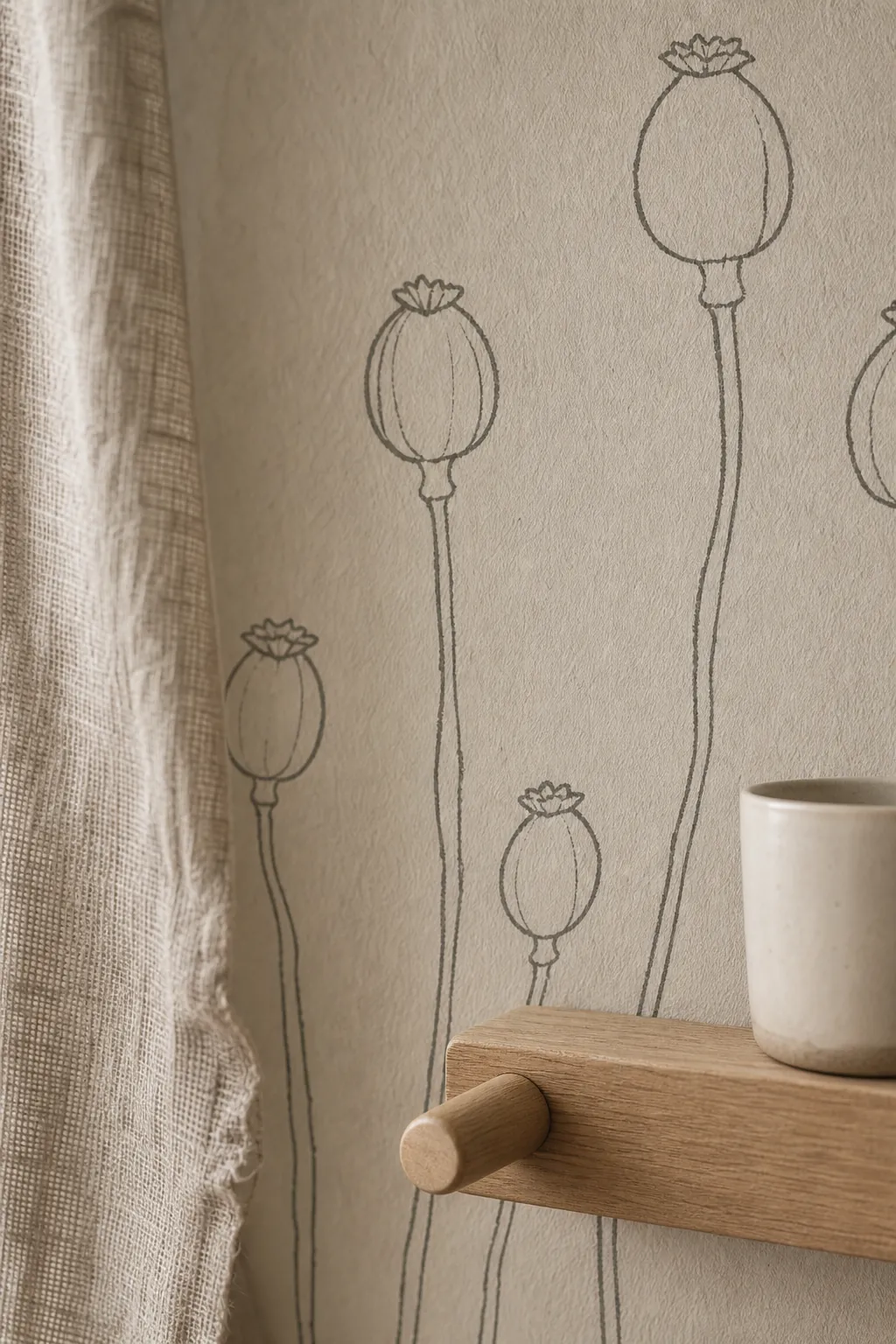

Look for a matte paper finish and a background that has a little depth. The wall can still be simple, but it should not look printed on plastic. In a minimal home, the finish is part of the design.
The Warmest Minimal Rooms Have One Clear Gesture
A botanical line art mural works because it gives a minimal room one confident decision. You do not need a gallery wall, a shelf full of objects, or a complicated color scheme. You need one soft wall, a few honest materials, and enough space for the room to breathe.