Beach Landscape Wallpaper Murals for Calm Guest Bedrooms
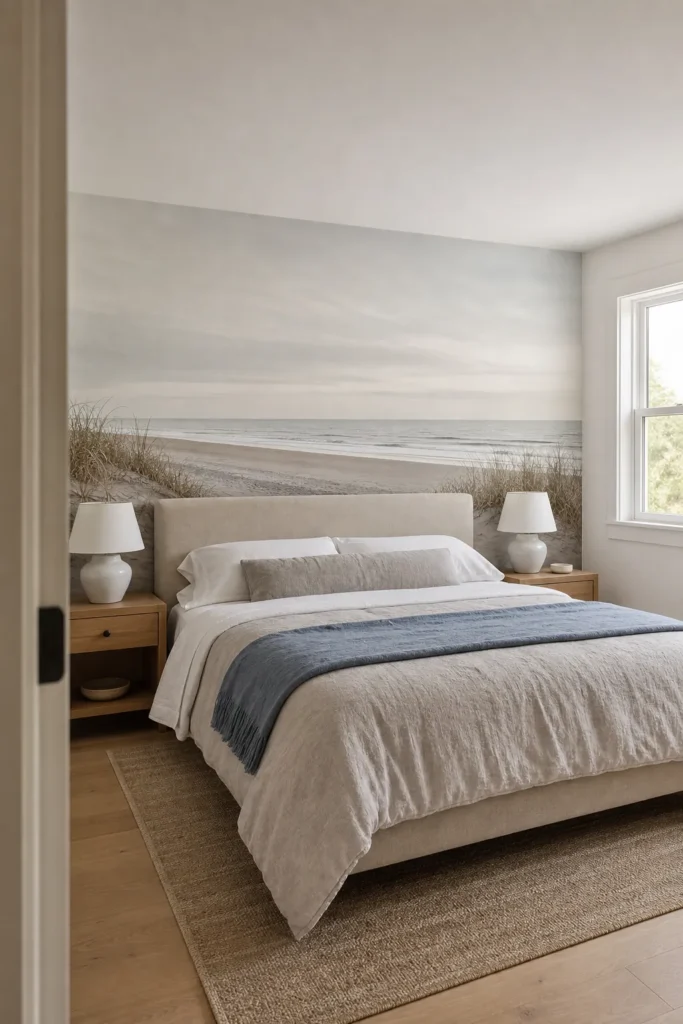
A beach landscape can make a guest bedroom feel open and restorative, but only when the mural supports sleep instead of demanding attention. The most calming designs are not the ones with the most obvious coastal details. They use a steady horizon, soft contrast, believable scale, and enough quiet space around the bed. Choose the view you want guests to wake up to, then build the room around that feeling.
Start with the horizon, not the accessories
The horizon is the strongest line in a beach landscape wallpaper mural. Set too low, it vanishes behind the headboard. Set too high, it can make the ceiling feel lower. For a mural behind the bed, the quiet band of sea and sky should remain visible above pillows while the busiest rocks, grass, or shoreline sit near the lower edges.
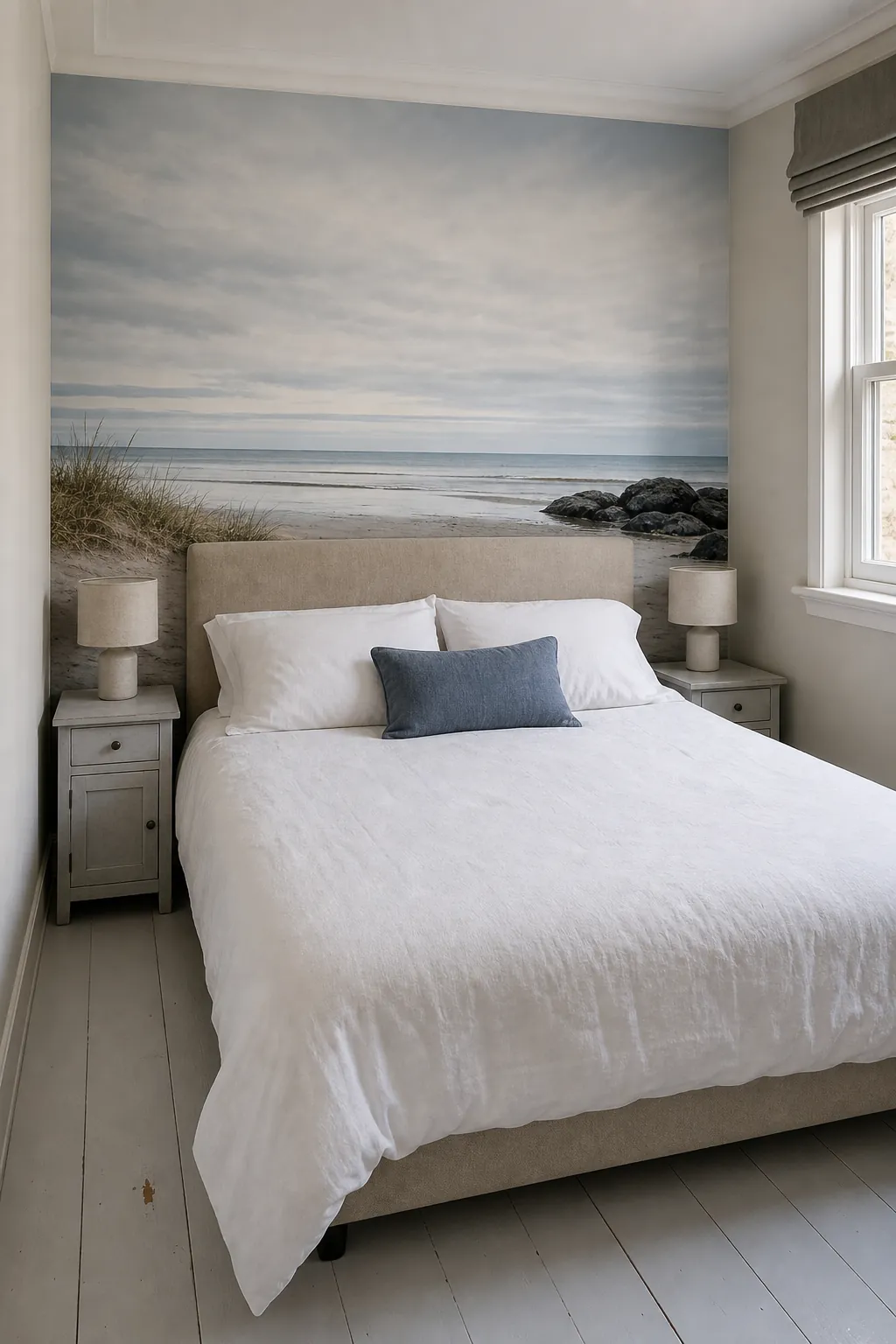

Request a wall-size preview with the bed and nightstands overlaid. A generic crop can put a horizon through the headboard, split a dune at a corner, or center a bright reflection behind a lamp. Custom cropping is useful when it preserves the scene’s proportions. Stretching a photograph to fit the wall is not.
Match the coastline to the room’s light
A north-facing or low-light guest room benefits from pale overcast beaches, silver water, chalk cliffs, or a hazy morning sky. A bright south-facing room can hold deeper blue-gray water and stronger dune shadows. Avoid choosing from a backlit screen alone; an ocean mural wallpaper with delicate blue tones may become gray in a dark room or electric cyan in hard sun.
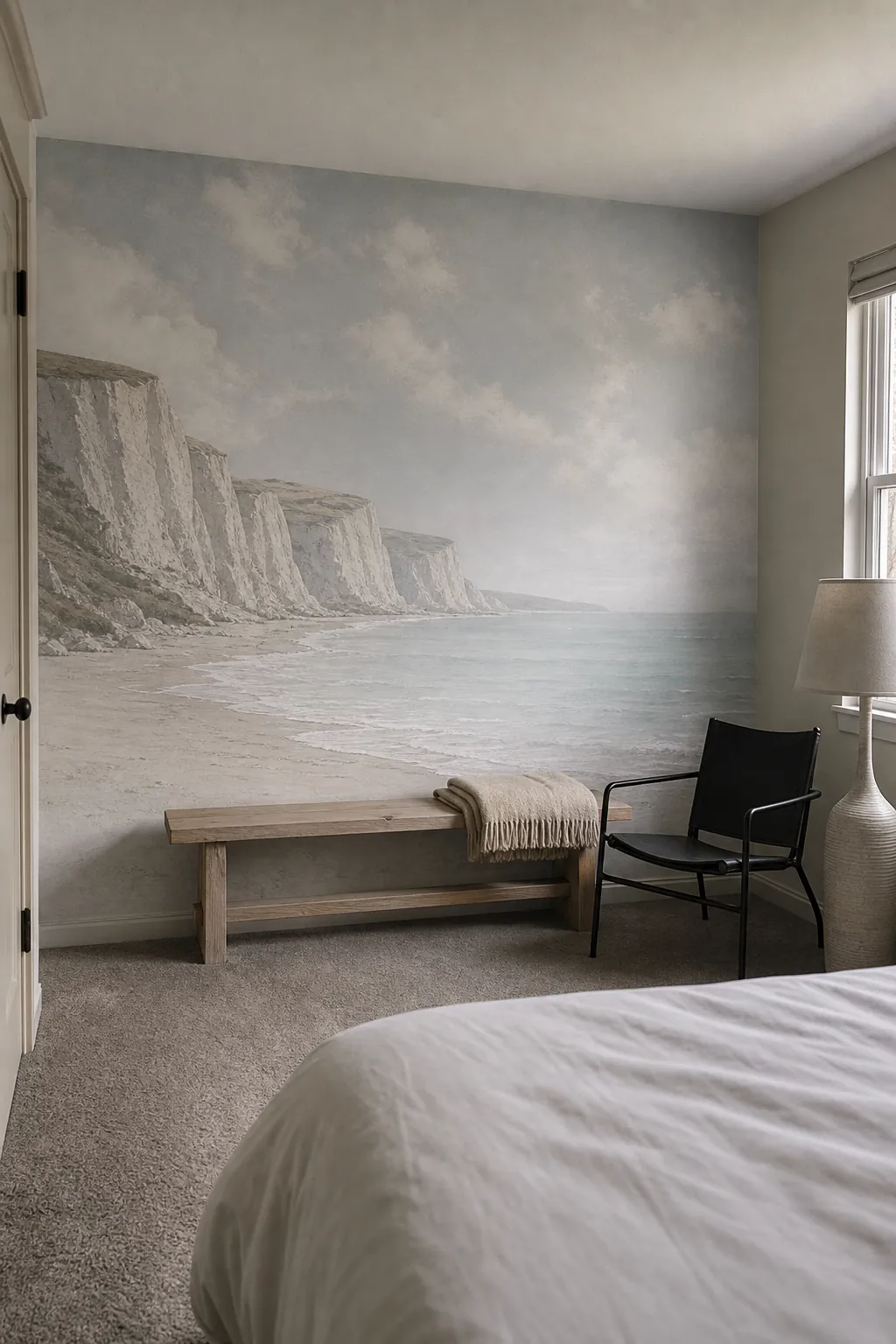

Tape a large sample to the intended wall and check it morning, afternoon, and after dark. Look at adjacent whites as carefully as the blue. Cool sea colors can make a creamy trim look dirty; a sandy sepia print can turn a crisp white room unexpectedly yellow. Pull the supporting paint from a quiet midtone rather than the brightest foam or darkest rock.
Choose one feature wall for an easy guest room
A scenic guest bedroom feature wall usually works best behind the bed or opposite it. Behind the bed, the mural frames the room without confronting guests as they fall asleep. Opposite the bed, it becomes the waking view, but the scene needs more negative space because guests will look directly at it for longer.
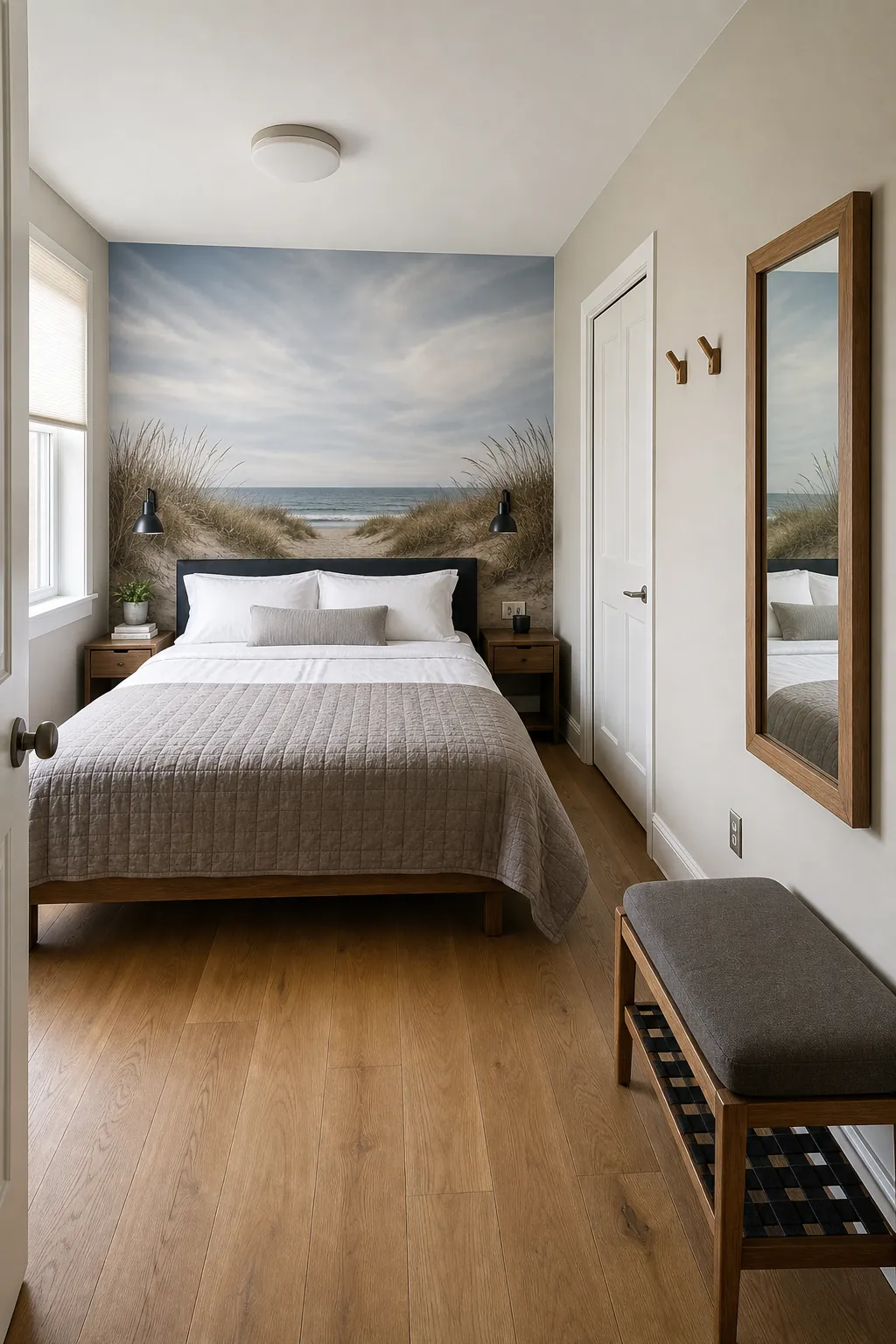

Leave the other walls quiet and functional. Guests need a mirror, hooks, luggage space, a reading light, and an accessible outlet more than extra shells and seaside art. One mural plus useful plain walls feels generous. Repeating boats, rope, coral, and stripes around the room turns a calm landscape into a rental-house theme.
Use bedding to soften the image, not copy it
Plain bedding is not a missed opportunity. It gives the mural room to breathe and makes laundering easier between guests. Choose washed linen, cotton percale, wool, or a small-scale woven texture in stone, flax, fog blue, or muted sea glass. Repeat one or two mural colors at lower intensity; do not reproduce the full beach palette across every pillow.
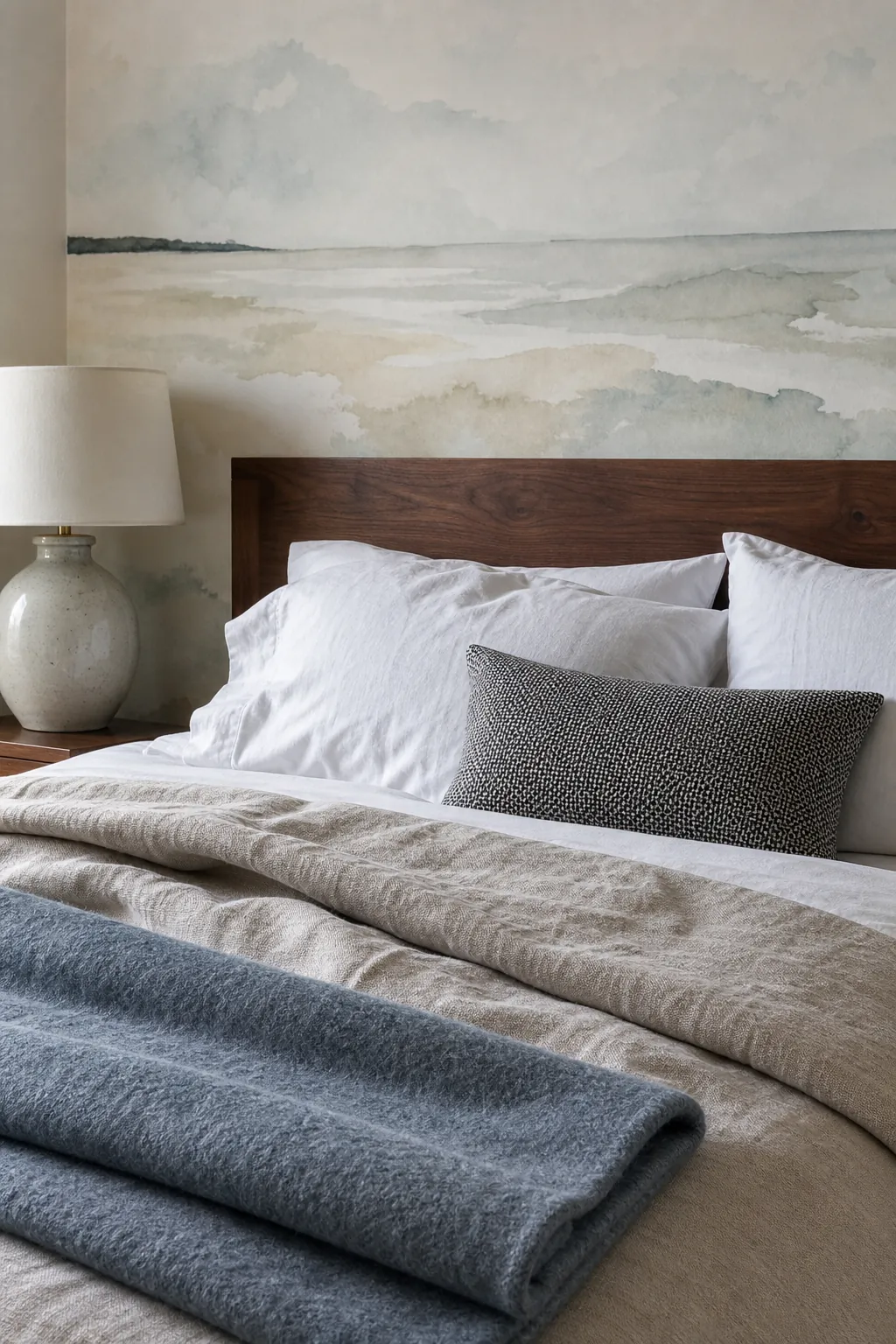

If the mural is photographic, textured solids keep the room from feeling like a printed set. If it is watercolor or painterly, a crisp cotton stripe or small geometric weave can add structure. Keep the largest areas—the duvet, curtains, and rug—restrained. A single contrast cushion or folded throw is enough to connect the wall to the bed.
Design the evening view for real guests
Guest bedrooms are often used at night and rarely have elaborate lighting. Provide a shaded reading lamp on each side when possible and avoid spotlights aimed directly at the mural. A broad, low-level wash preserves the scene; a close beam creates glare, highlights seams, and makes photographic water look artificial.
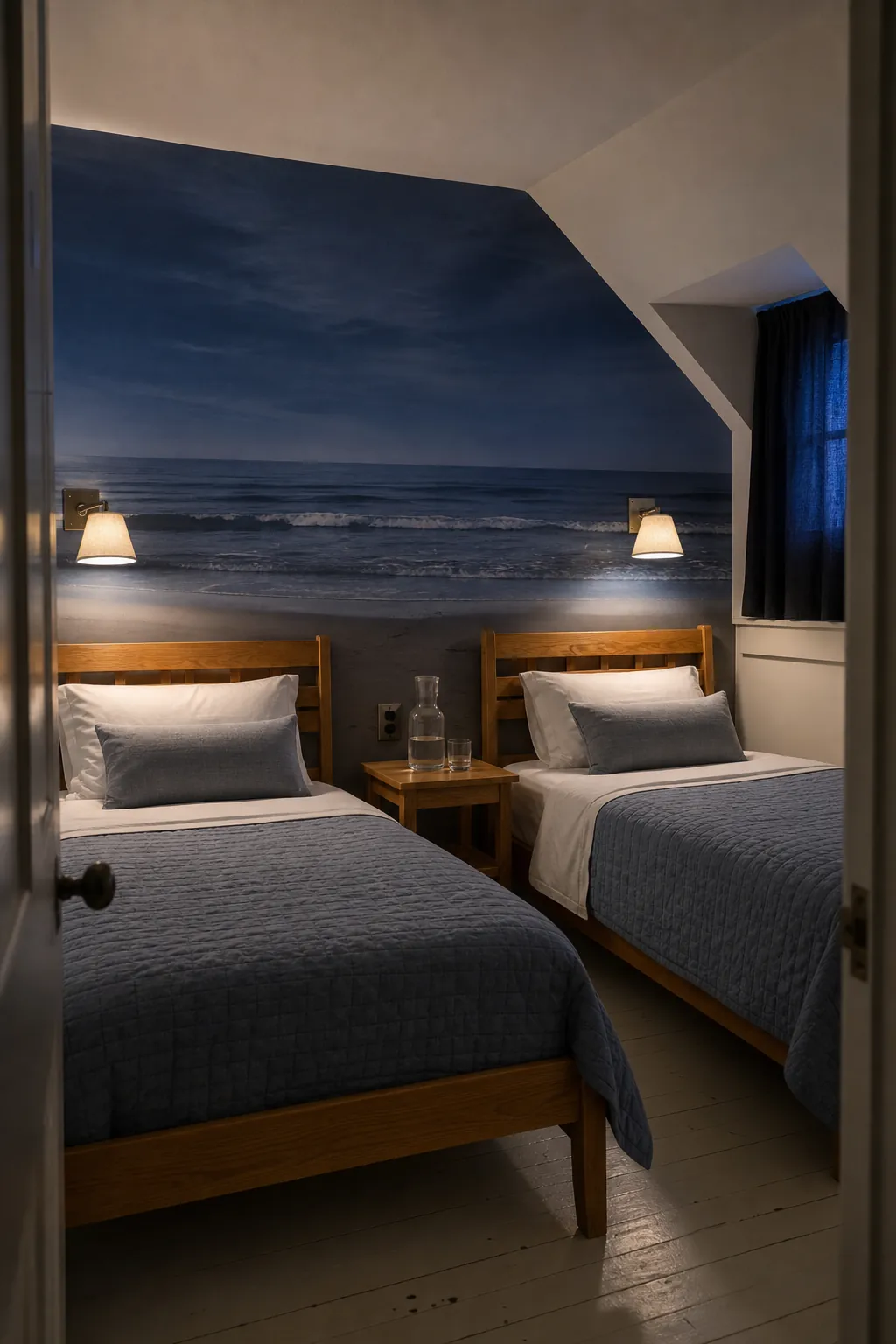

Use warm-neutral bulbs rather than very amber lamps, which muddy blue and green tones. Make blackout possible even if the mural shows a bright horizon; sleep comfort matters more than maintaining a daytime coastal mood. The bedside controls should be obvious enough that a tired guest does not need instructions.
Choose a material that suits occasional use and future change
A guest room may be quiet most weeks, then suddenly handle luggage, children, or a long stay. Ask how the wallcovering resists scuffs and whether it can be gently wiped. Paste-the-wall nonwoven murals often give the installer more time to align a landscape than aggressive peel-and-stick material. Removable products can suit renters, but large panels are still easier with two people.
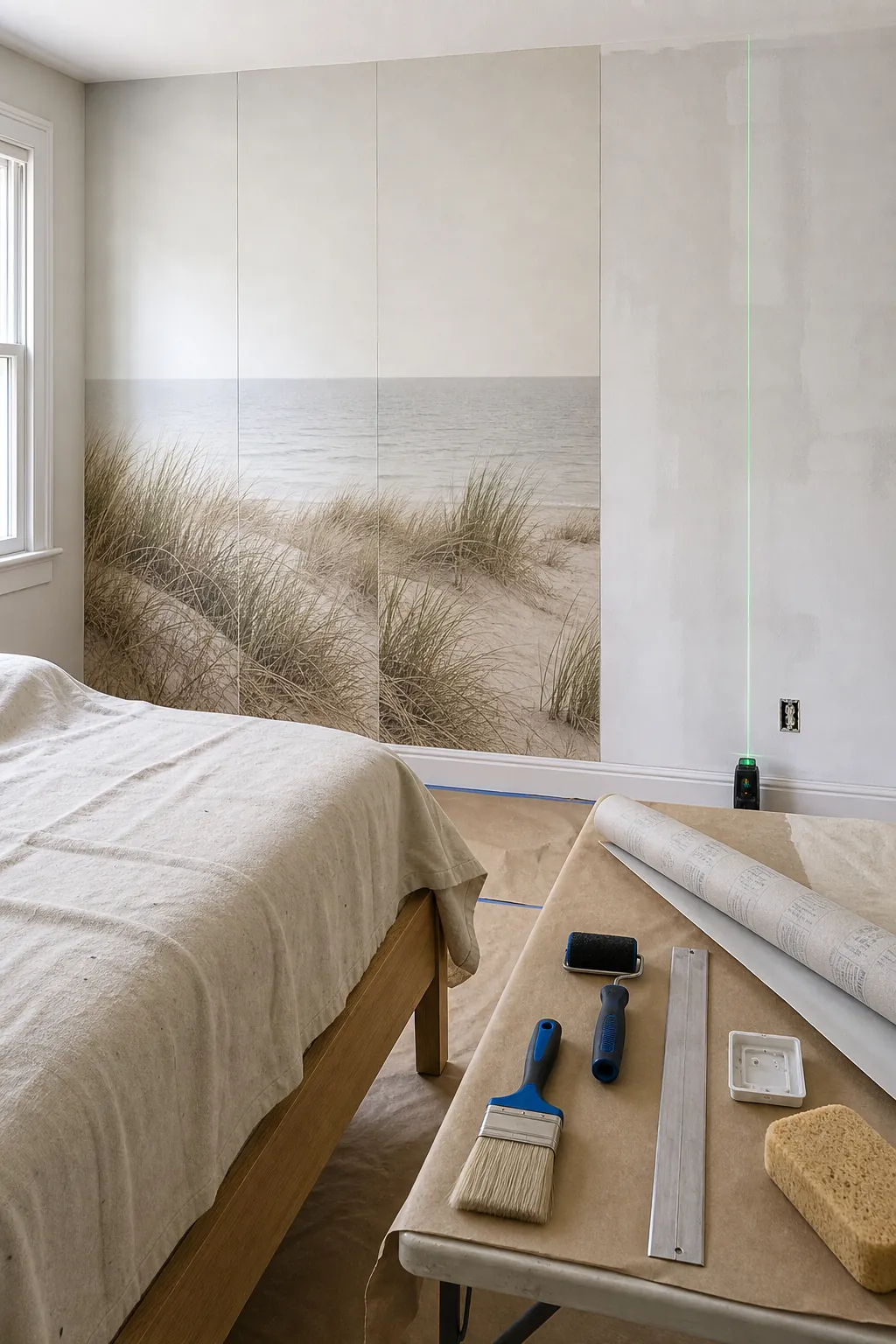

Prepare the wall as carefully as the crop. Fill and sand defects, prime new plaster, remove dust, and confirm the wall is dry. A pale sky exposes bumps and seam shadows more readily than a dense pattern. Keep the order information and one labeled offcut in case a panel is damaged. The calmest coastal guest bedroom mural is the one nobody has to fuss over once visitors arrive.