48 Botanical Wall Mural Ideas for Leafy, Flower-Filled Rooms
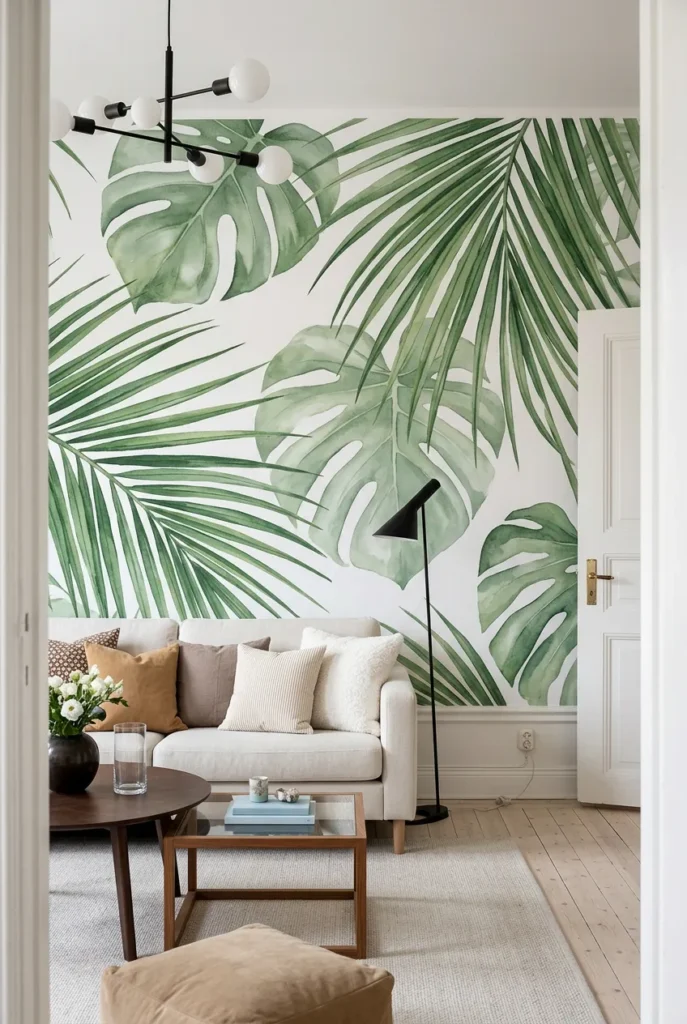
A botanical wall mural can bring bold banana leaves, delicate branches, or garden flowers into a room. These 48 ideas range from soft watercolor designs to colorful tropical scenes, with examples for bedrooms, living rooms, dining nooks, and smaller spaces.
Start with plant scale and color palette. Compare oversized foliage with finer floral details, then look for colors you can repeat in furniture or textiles. Each idea below highlights a specific pairing or placement to help you shape your own room.
Make Banana Leaves the Focal Point Behind the Bed
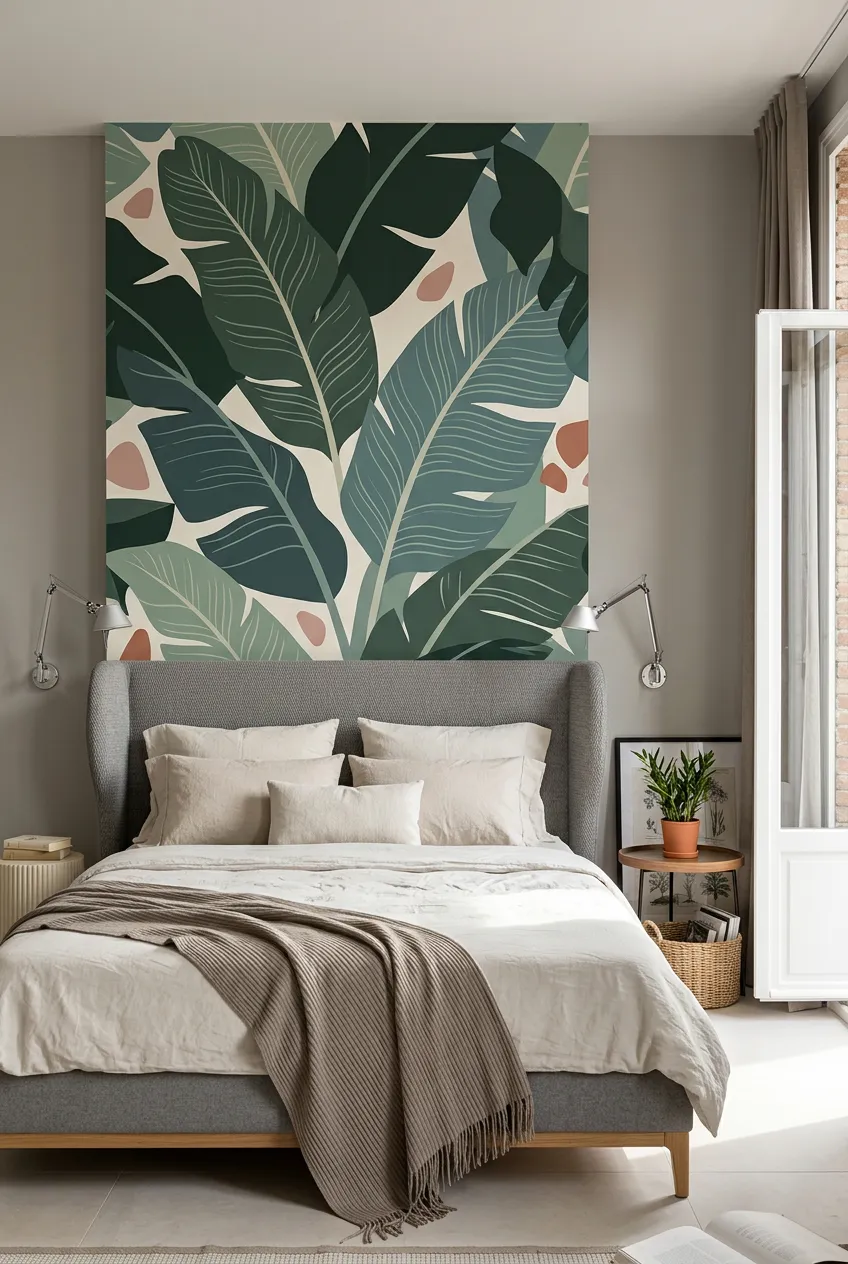

Place a banana leaf mural behind the headboard to give the bed a clear focal point. Large leaves create a strong silhouette, so simple bedding helps their shape stand out.
Choose a low headboard that leaves plenty of the pattern visible. Repeat one green tone in a cushion or throw, then use warm wood and cream fabrics to soften the room.
Soften a Neutral Living Room with Watercolor Branches
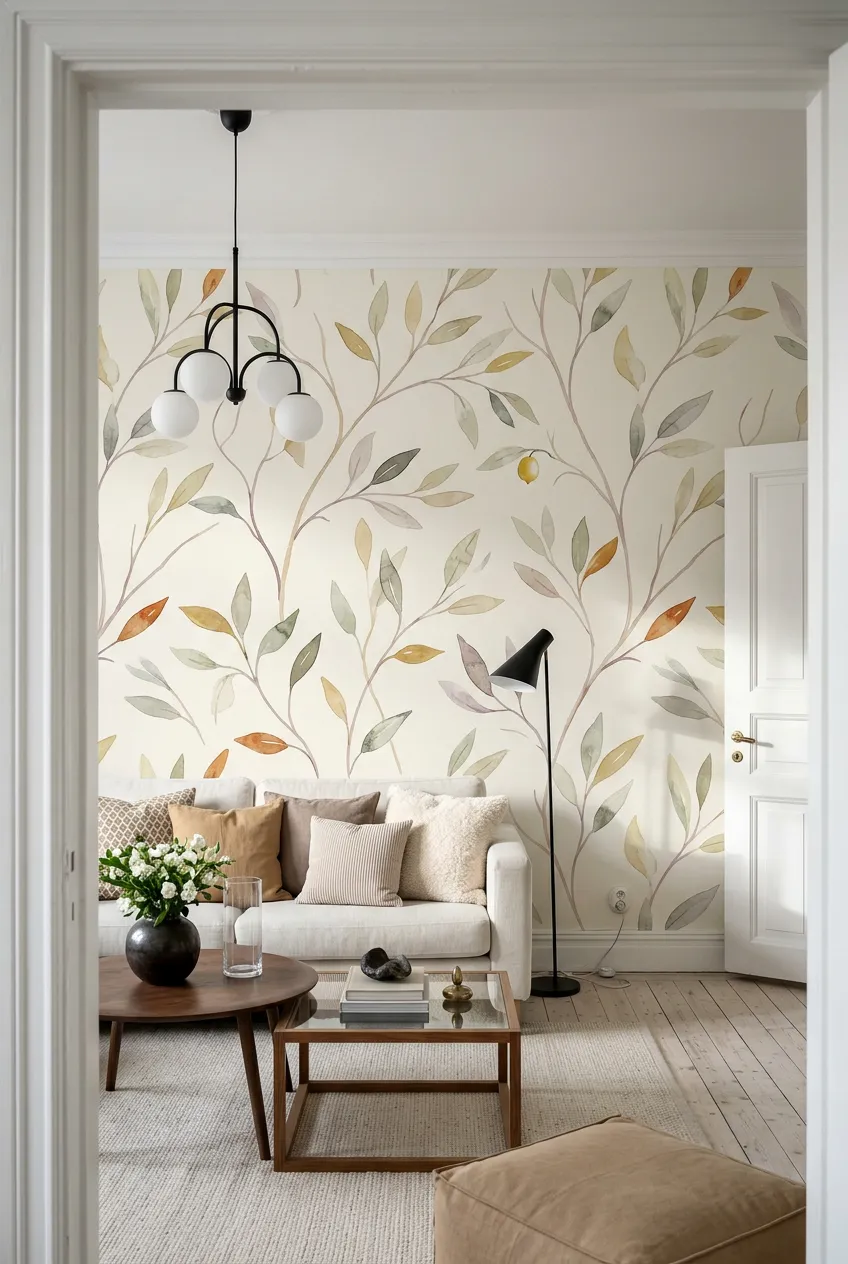

Watercolor branches bring gentle movement to a neutral living room. Look for a design with soft edges and open space so the wall feels light beside a cream or beige sofa.
Add texture through linen curtains, a woven rug, and a ceramic lamp. Keep nearby artwork minimal to let the delicate branches remain easy to see.
Pair Olive Palm Fronds with Soft Neutral Decor
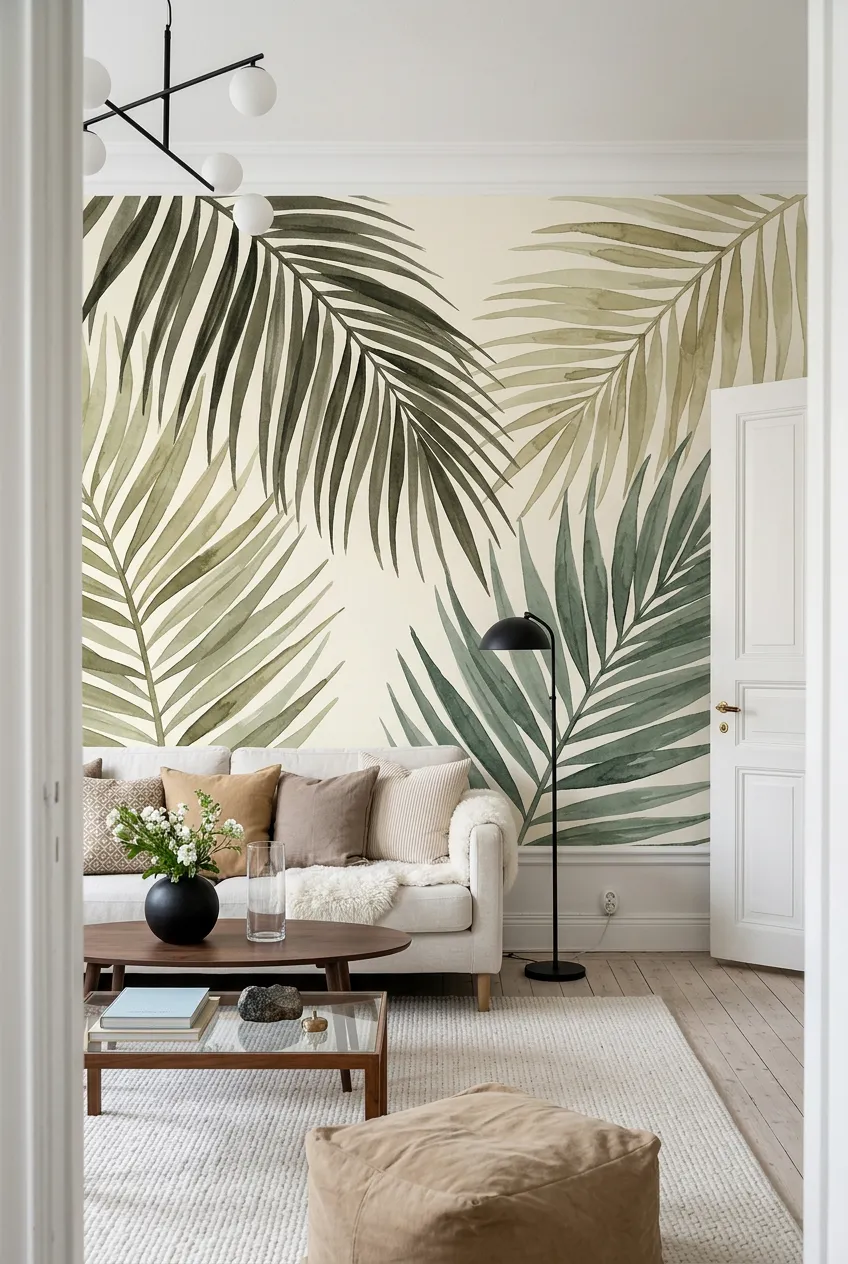

Olive palm fronds introduce greenery in a muted shade that pairs easily with cream, oatmeal, and warm beige. Use warm neutrals around the pattern to keep the palette cohesive.
Balance the long leaf shapes with rounded furniture and soft cushions. A pale wood table or woven basket adds texture without introducing another competing print.
Set an Orange Headboard Against Blush and Sage Florals


An orange headboard gives blush and sage florals a warm, defined center. Choose muted terracotta or burnt orange if you want the upholstery to sit comfortably beside the softer wall colors.
Keep the main bedding ivory, then repeat blush or sage in one small accent. Check fabric and wallpaper samples together in the room, since the orange can look much stronger under warm evening light.
Brighten a Dining Nook with Cobalt Berries and Pink Branches
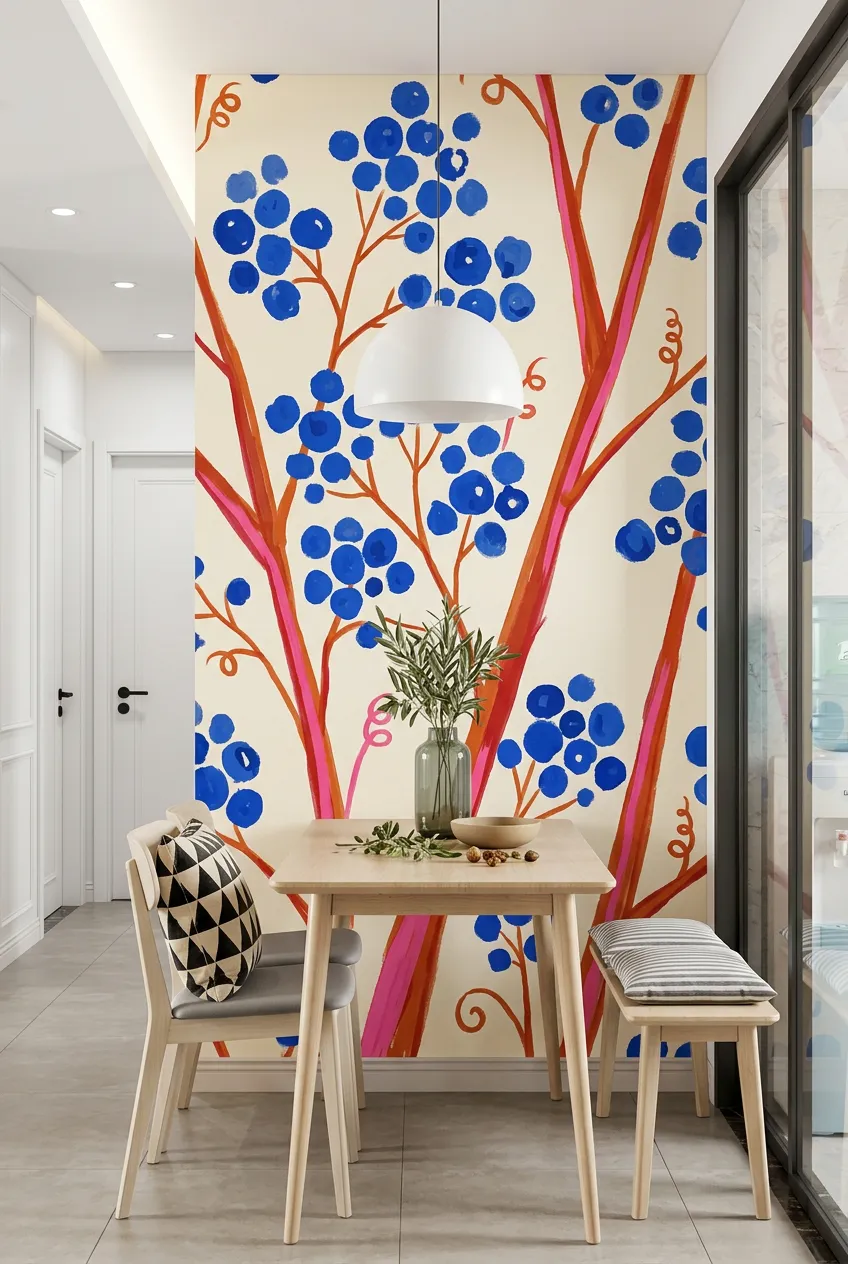

Cobalt berries and pink branches can make a compact dining nook feel lively. Let the blue berry accents supply the strongest contrast, with the pink branches adding a softer layer of color.
Pair the wall with a simple table and chairs so the pattern stays readable. Echo cobalt in a small bowl or seat cushion, and choose plain table linens for everyday use.
Combine Cream Florals with Walnut and Cane Furniture
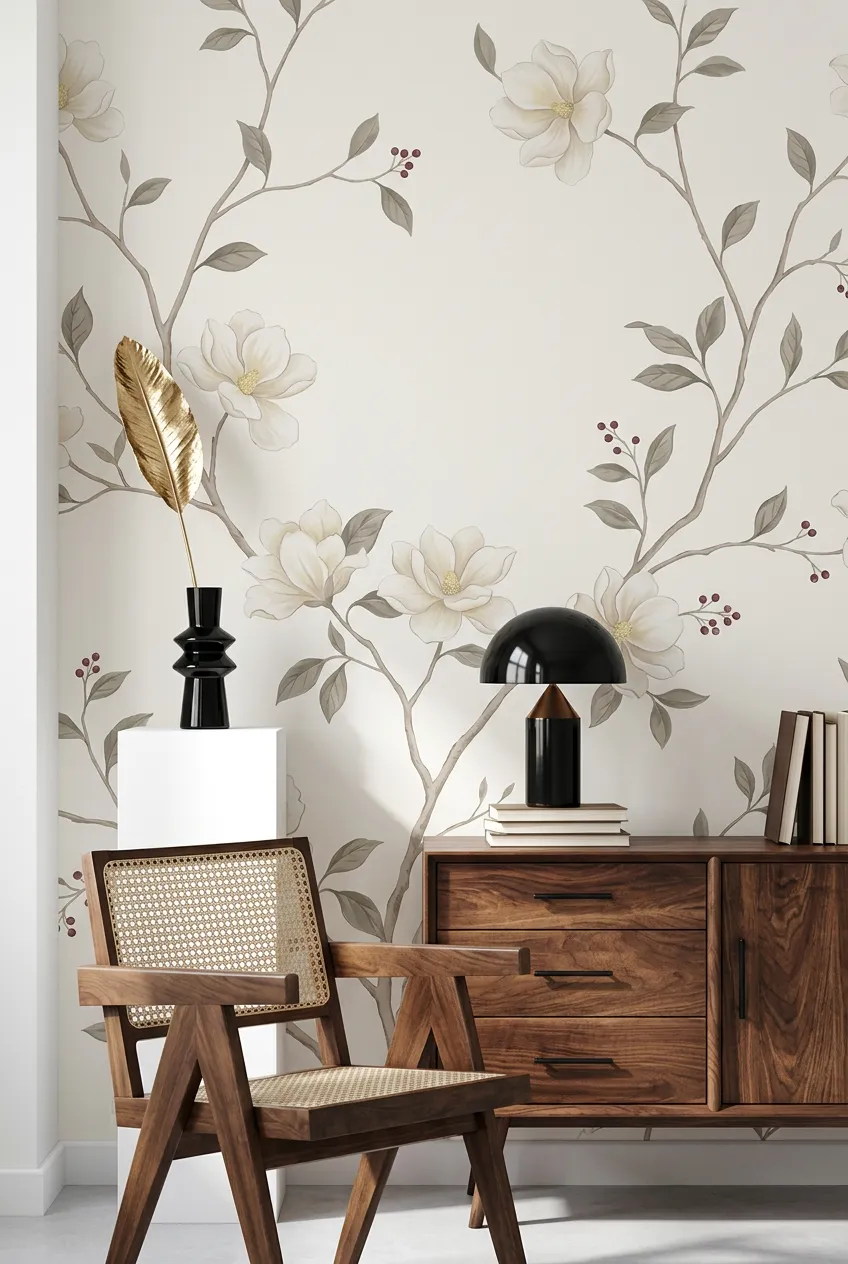

Cream florals create a soft backdrop for the deeper tones of walnut furniture. Cane details bridge the light wall and dark wood while adding an open, woven texture.
Choose warm white upholstery and a restrained mix of accessories. If the floral design is intricate, use larger, simpler objects on nearby surfaces to avoid a crowded effect.
Give a Modern Bedroom a Lush Tropical Backdrop
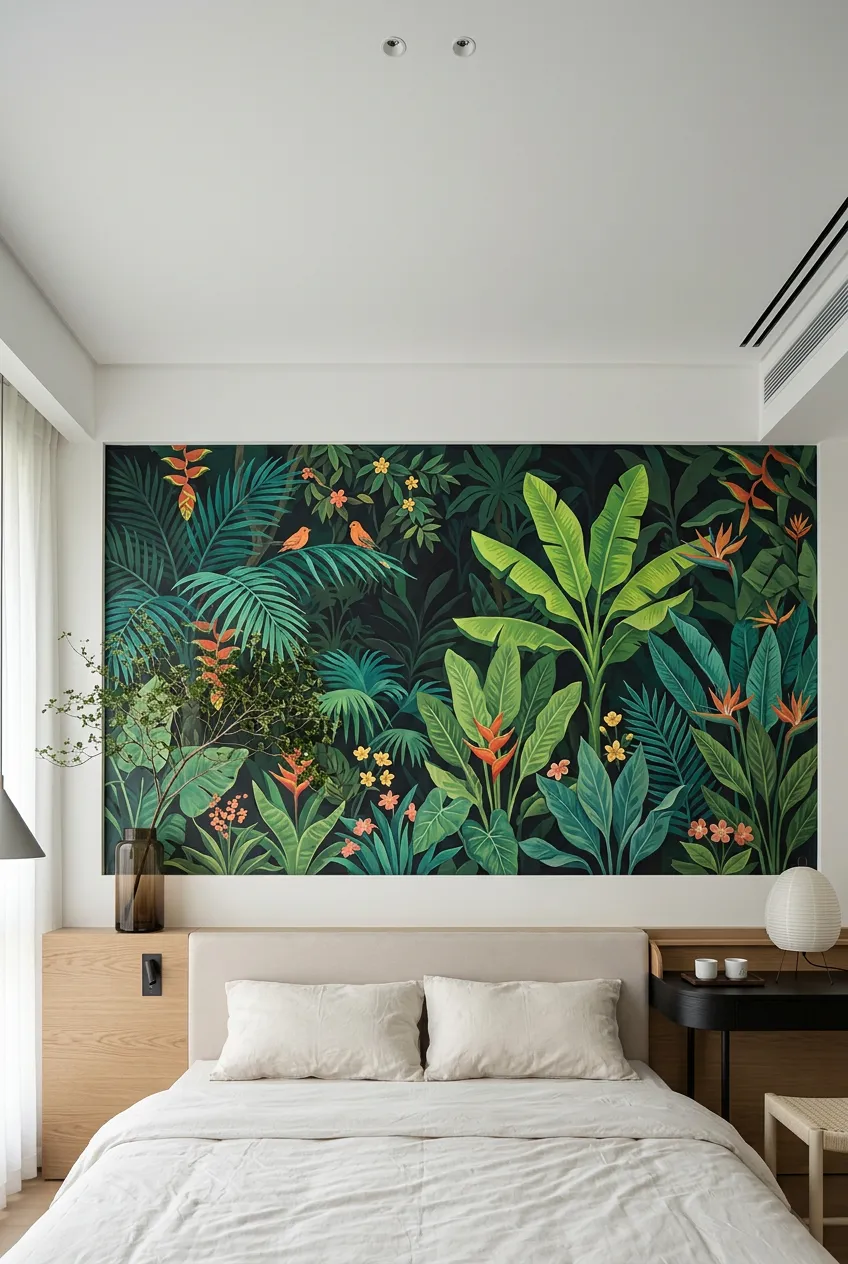

A dense tropical mural brings depth and movement to a bedroom with clean furniture lines. Set it behind a streamlined bed so the foliage becomes the room’s main decorative feature.
Use solid bedding and compact bedside lamps to balance the layered leaves. Before choosing the mural layout, check that the headboard will not hide the most distinctive part of the design.
Use Oversized Painterly Flowers for a Colorful Bedroom Wall
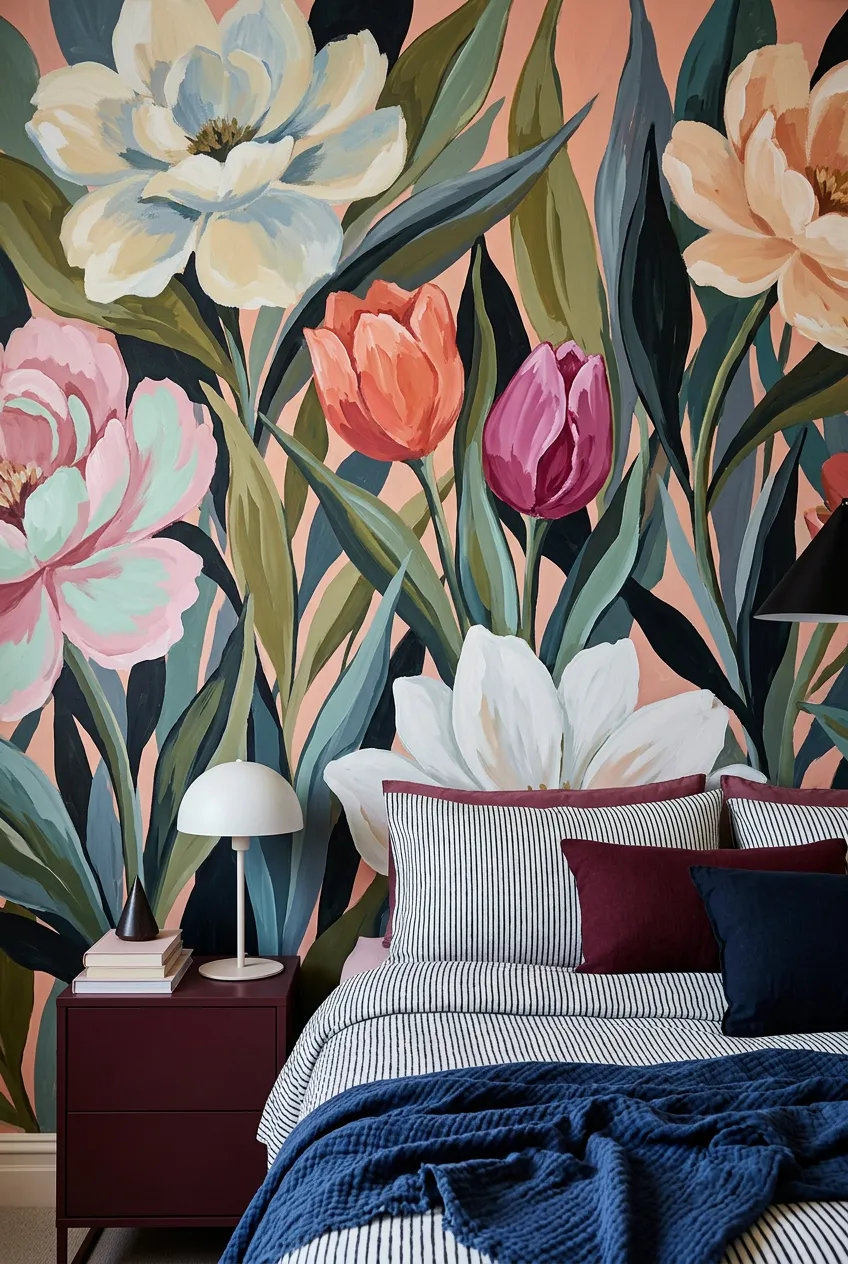

Oversized painterly flowers give a bedroom the character of a large artwork. Choose a design with visible brushwork and a few dominant colors to make the bold scale easier to coordinate.
Pull one quieter shade from the petals into the bedding. Keep curtains and bedside furniture simple, and preview the mural at wall size to see where the largest blooms will fall.
Ground a Boho Entryway with Black and Gray Palm Leaves
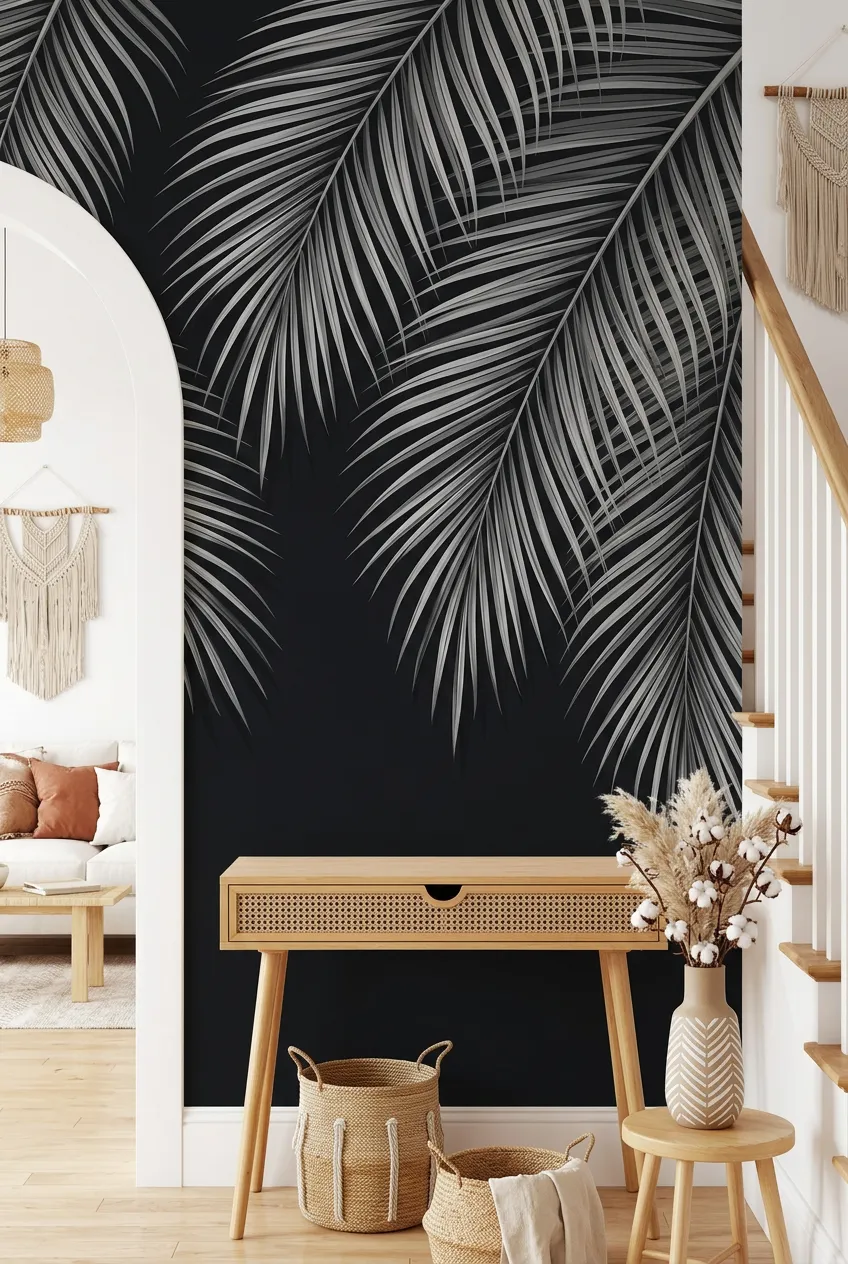

Black and gray palm leaves give a boho entryway a defined backdrop. The monochrome pattern works well with natural textures such as a woven basket, a jute runner, or a wood console.
Keep practical pieces grouped neatly so keys, bags, and shoes do not compete with the wall. A plain-framed mirror adds function while giving the eye a break from the foliage.
Layer Palm and Monstera Motifs on a Living Room Wall
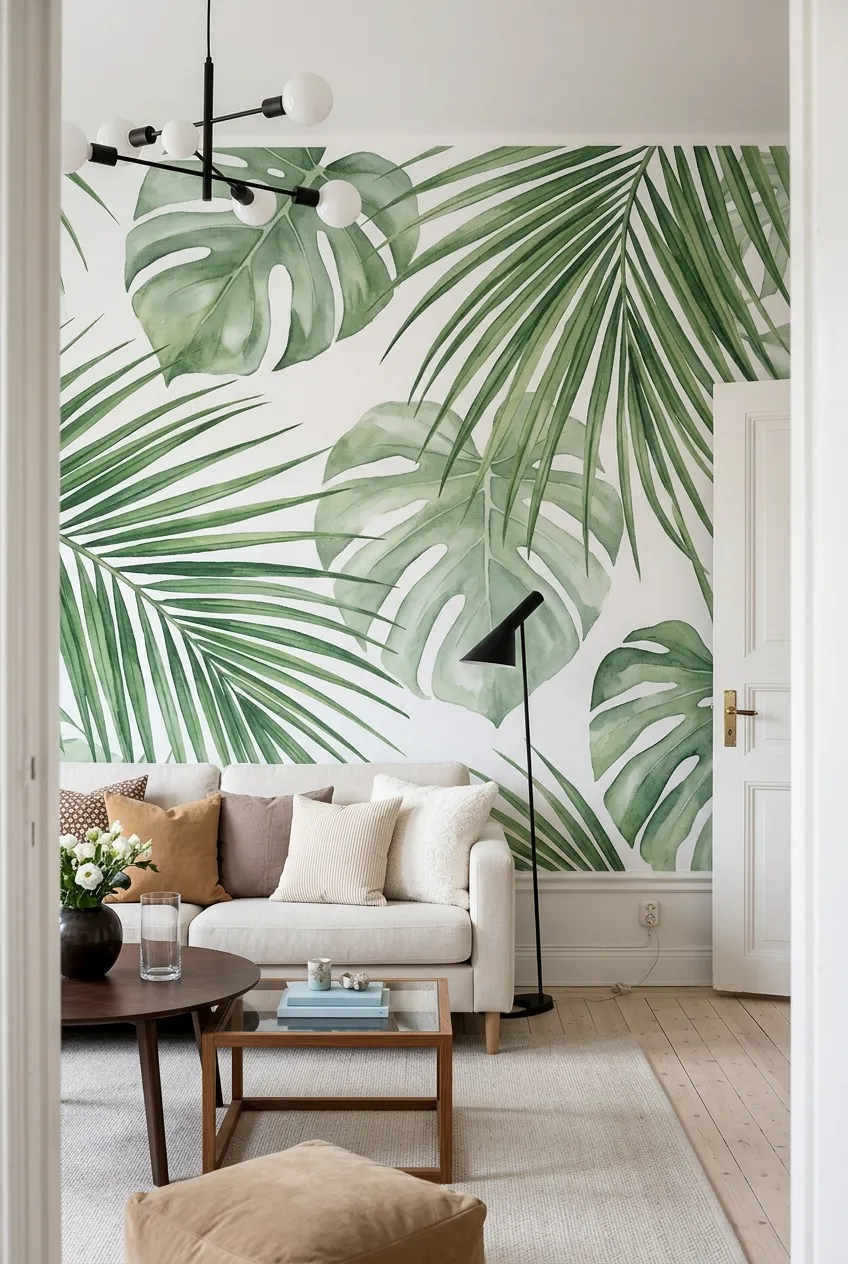

Palm fronds and monstera leaves create contrast through their different shapes. Look for variation in leaf size so the slender fronds and broad, split leaves remain distinct within the design.
Use the wall behind a solid-colored sofa to give the layered pattern a clear setting. Limit additional botanical prints to one small accent, allowing texture to provide the rest of the room’s detail.
Define a Dining Nook with Colorful Abstract Botanicals
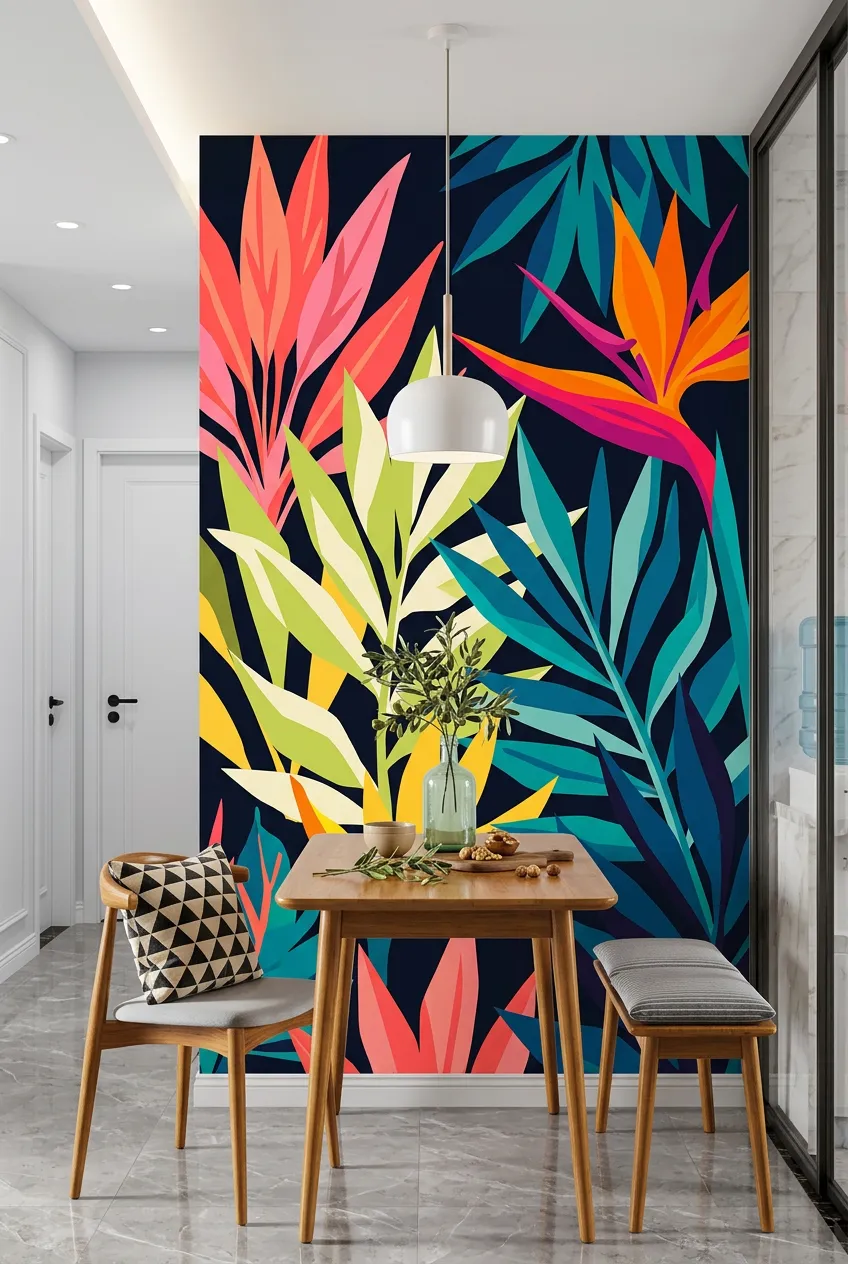

Colorful abstract botanicals can mark a dining nook as its own area within a larger room. Apply the design to one clearly bounded wall to give the table a distinct backdrop.
Choose a chair color from the pattern and keep the table finish simple. A plain pendant centered over the table helps tie the furniture and wall treatment into one composition.
Keep a Tropical Bedroom Calm with Neutral Foliage
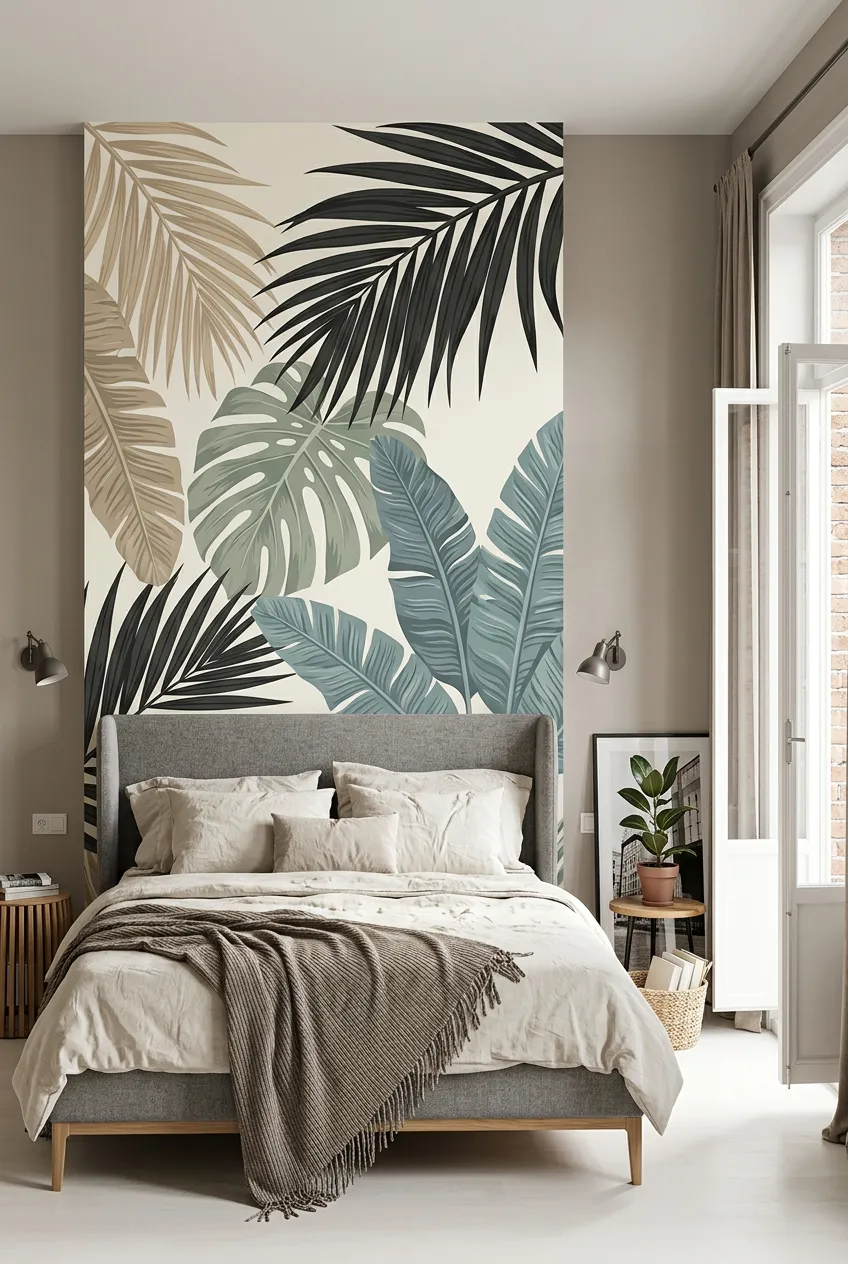

Tropical foliage in sand, taupe, and soft gray brings leaf shapes into a bedroom with little color contrast. Choose a low-contrast design to keep dense foliage from feeling too busy.
Layer cream bedding with textured throws and pale wood furniture. Use lamps with fabric shades for soft evening light that complements the gentle palette.
Warm Up Sage Leaf Motifs with Wood Bedroom Furniture
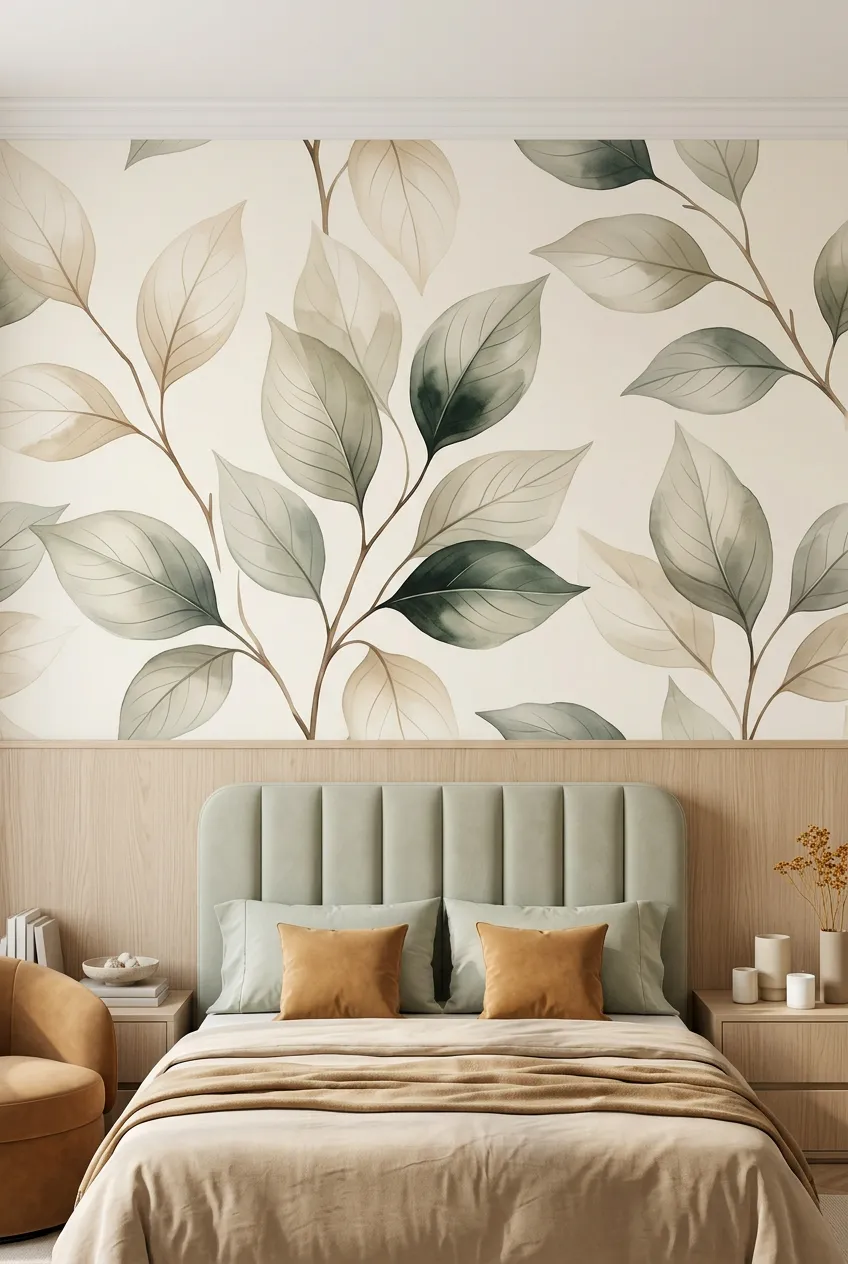

Sage leaf motifs pair naturally with the warmth of wood bedroom furniture. Oak, walnut, or another warm finish can give the cool green backdrop a warmer balance.
Keep the main wood pieces similar in tone, then add ivory bedding for a lighter layer. If the wallpaper has fine leaf details, choose a headboard with a simple profile so both materials remain easy to appreciate.
Echo a Lush Floral Mural with a Green Sofa
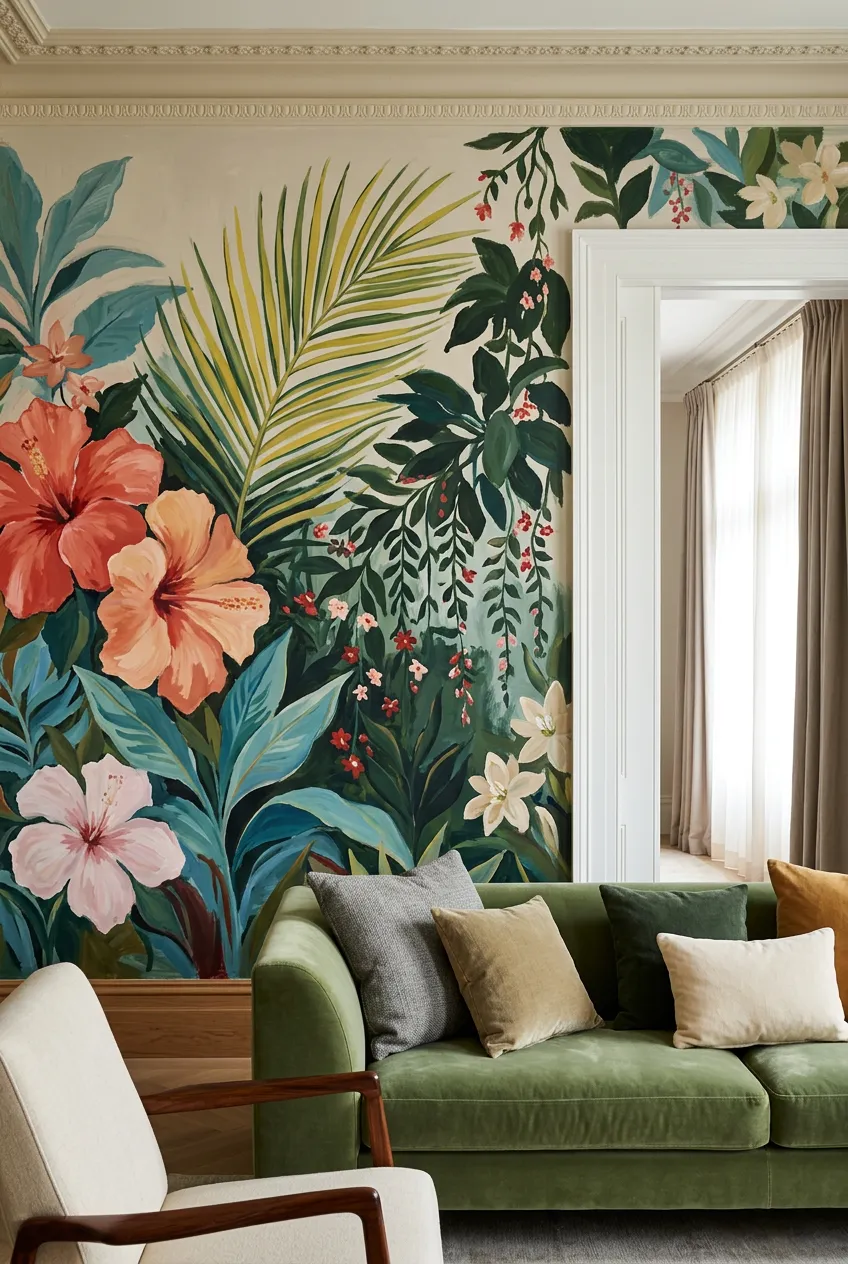

A green sofa connects a lush floral mural to the furniture below it. Choose upholstery that echoes one foliage shade, allowing the flowers to introduce the brighter accents.
Test a fabric sample beside the mural before committing to the color. Finish with a plain rug and a few cushions in muted petal tones to carry the palette through the seating area.
Add Teal Foliage and Orange Flowers to a White Living Room
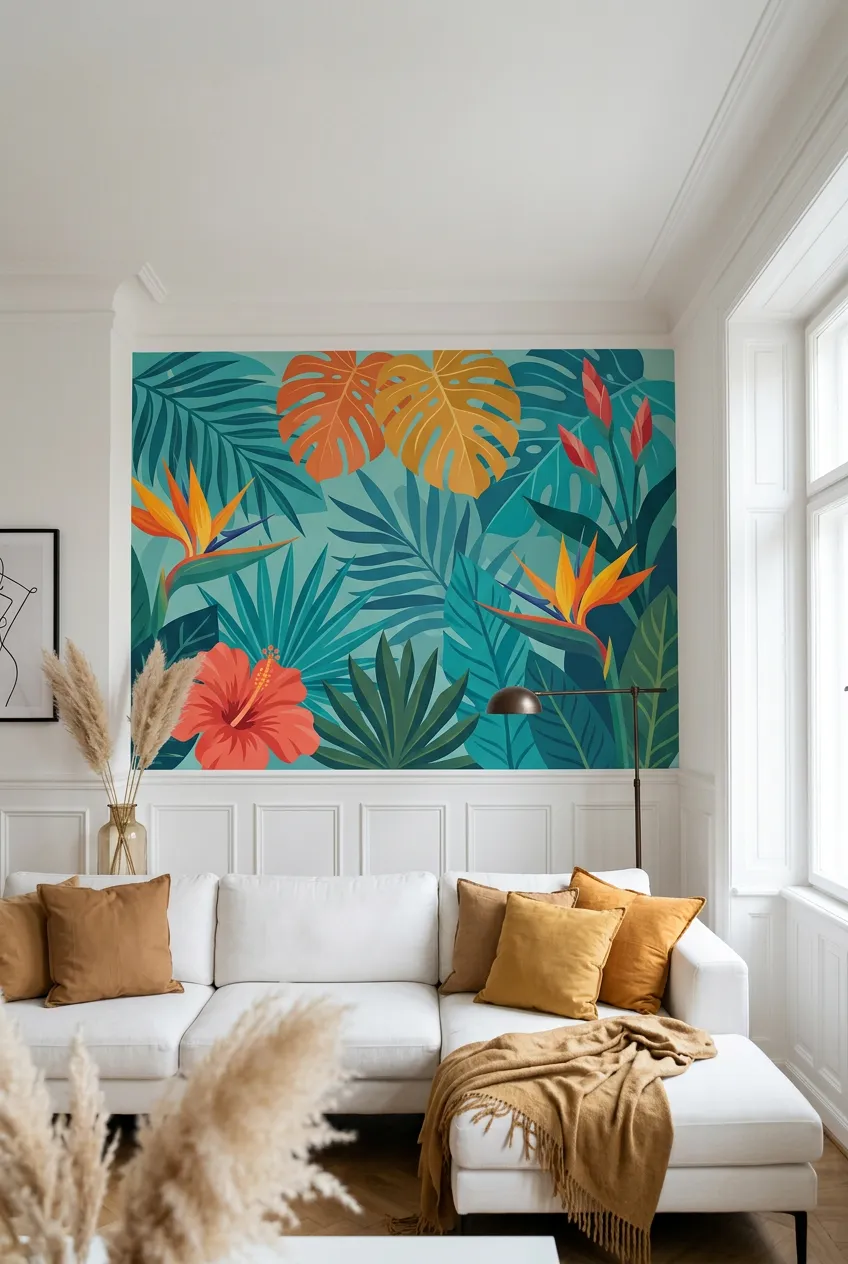

Teal foliage and orange flowers give a white living room a vivid focal point. The cool teal and warm orange create a strong color contrast, while white furniture and walls give the pattern room to stand out.
Repeat each accent sparingly, such as a teal cushion and a small orange vase. Keep larger accessories neutral so the botanical wall remains the main source of color.
Bring Colorful Florals into a Neutral Boho Bedroom
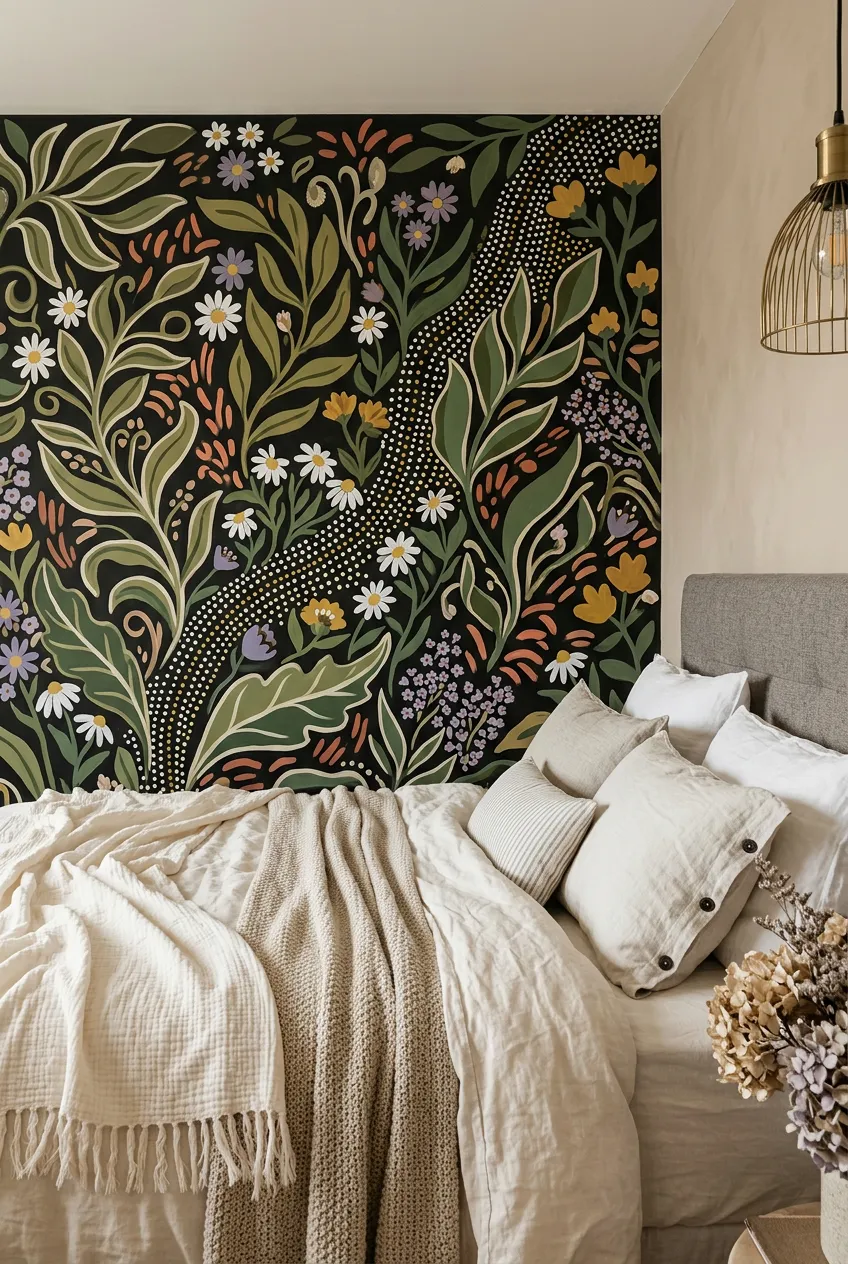

Colorful florals give a neutral boho bedroom a focal point while letting its relaxed textures stay in view. Set the pattern against cream bedding, pale wood, and woven accents so the flowers bring most of the color.
For a cohesive finish, repeat one floral shade in a cushion or throw. Keep other patterns subtle to give the floral design room to stand out.
Pair Sage and Gold Florals with a Modern Dining Setting
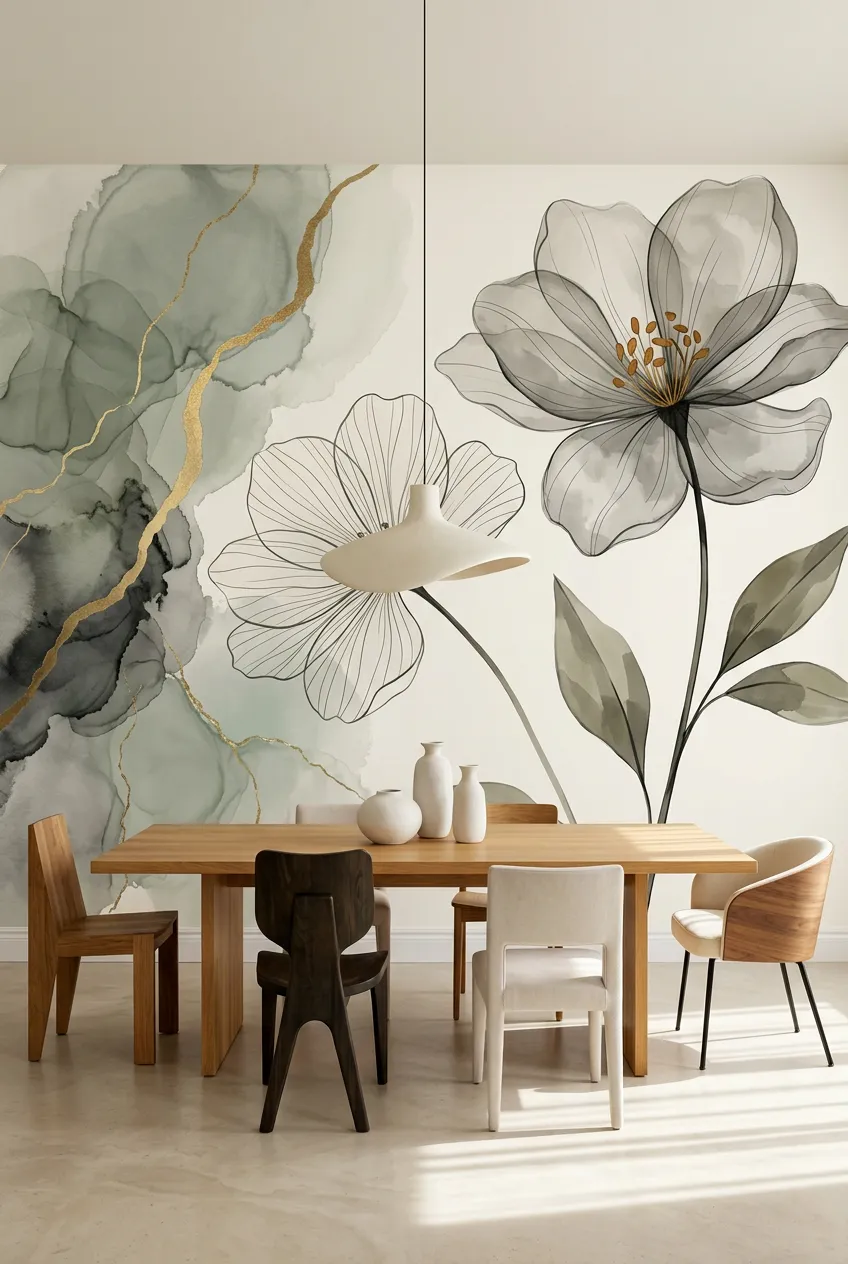

Sage and gold florals soften the straight lines of a modern dining setting. Let the botanical pattern provide movement behind a simple table and chairs with slim profiles.
Use small touches of gold in a pendant or candleholder to connect the furnishings to the wall. Plain tableware keeps the arrangement balanced, especially when the floral pattern is large.
Add Soft Abstract Flowers to a Neutral Bedroom
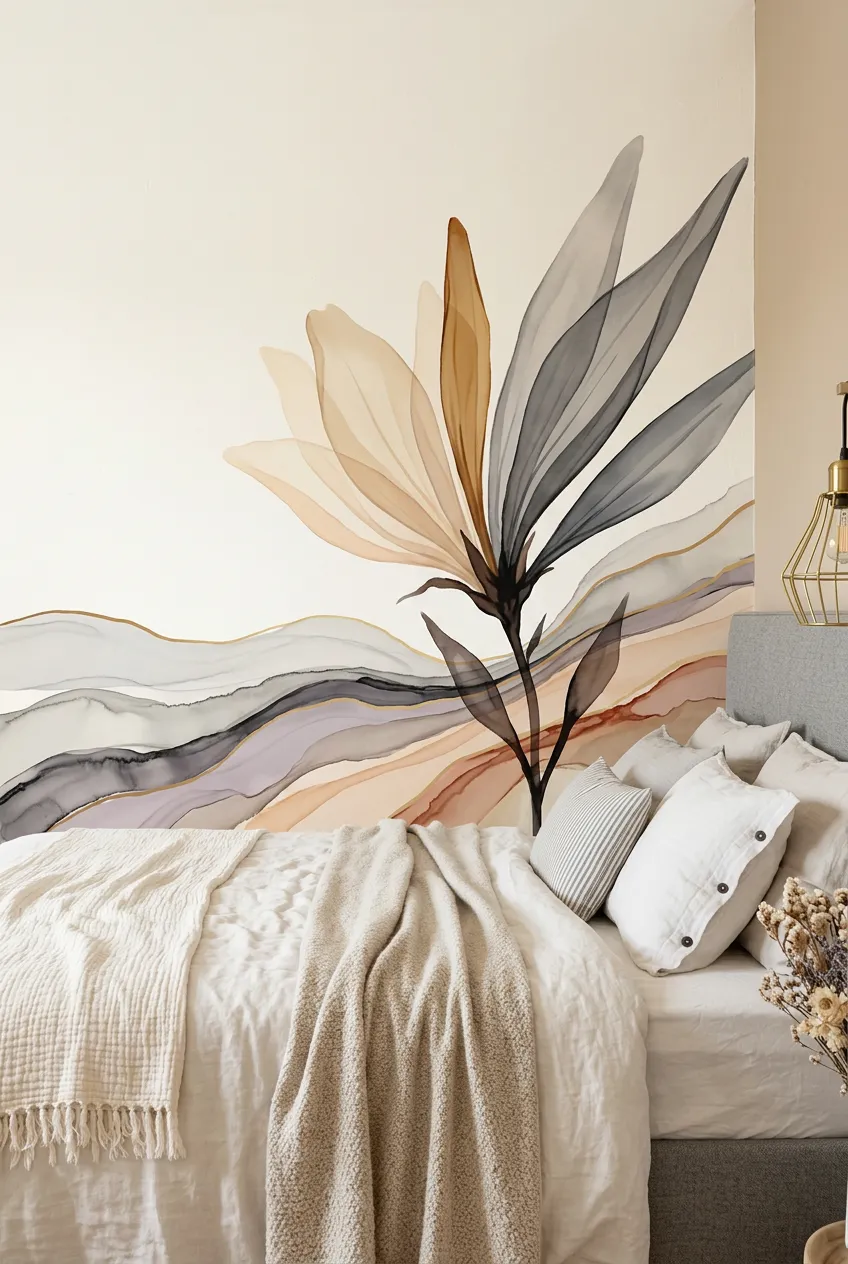

Soft abstract flowers add shape and gentle color to a neutral bedroom. Loose petals work well with simple bedding because they introduce movement without requiring a mix of busy prints.
Choose low-contrast colors for a restful effect, and carry one shade into the bed linen. A plain headboard gives the floral shapes a clear edge to sit above.
Create a Calm Living Room Backdrop with Oversized Sage Leaves
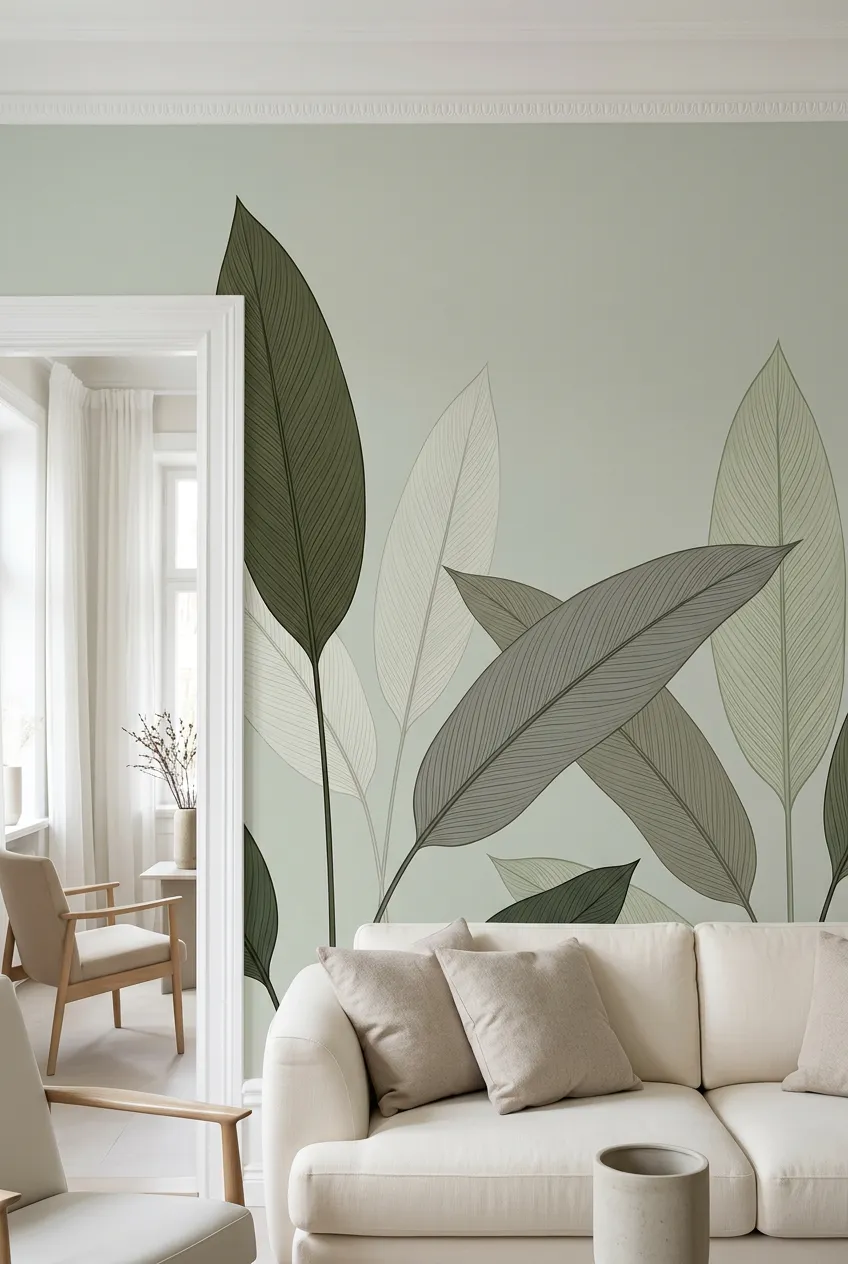

Oversized sage leaves bring a broad, flowing pattern to a living room. A design with space between the leaves can establish a focal wall while keeping the overall effect quiet.
Pair the greenery with oatmeal upholstery and light wood. Leave some wall space clear of shelves and artwork so the leaf shapes remain easy to read.
Frame a Home Office Desk Nook with Oversized Daisies
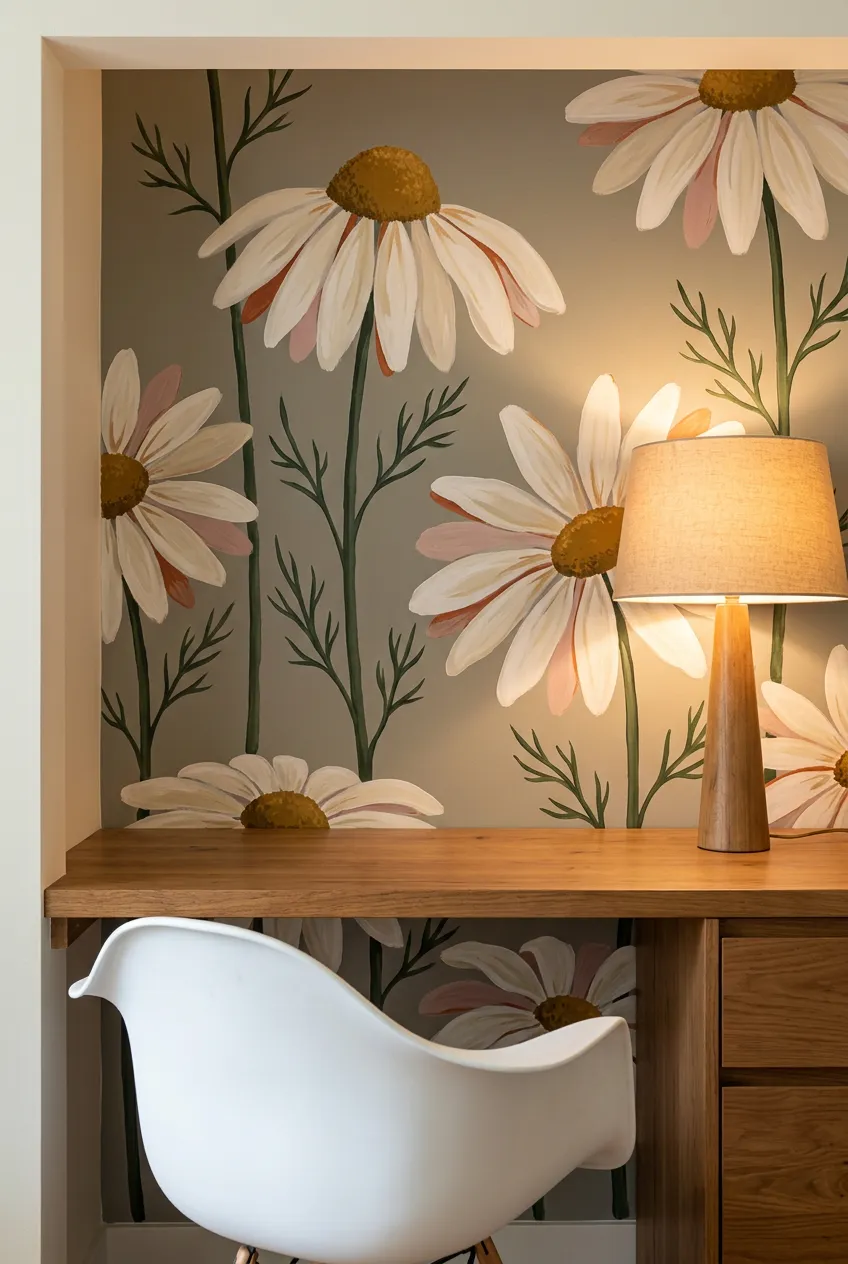

Oversized daisies can define a desk nook within a larger room. Position the blooms around the desk area so their petals frame the workspace, with some flowers visible above the monitor.
Keep desk accessories simple and leave breathing room around the main blooms. A compact task lamp adds useful light without covering much of the design.
Balance Coral Flowers with a Brown Velvet Sofa
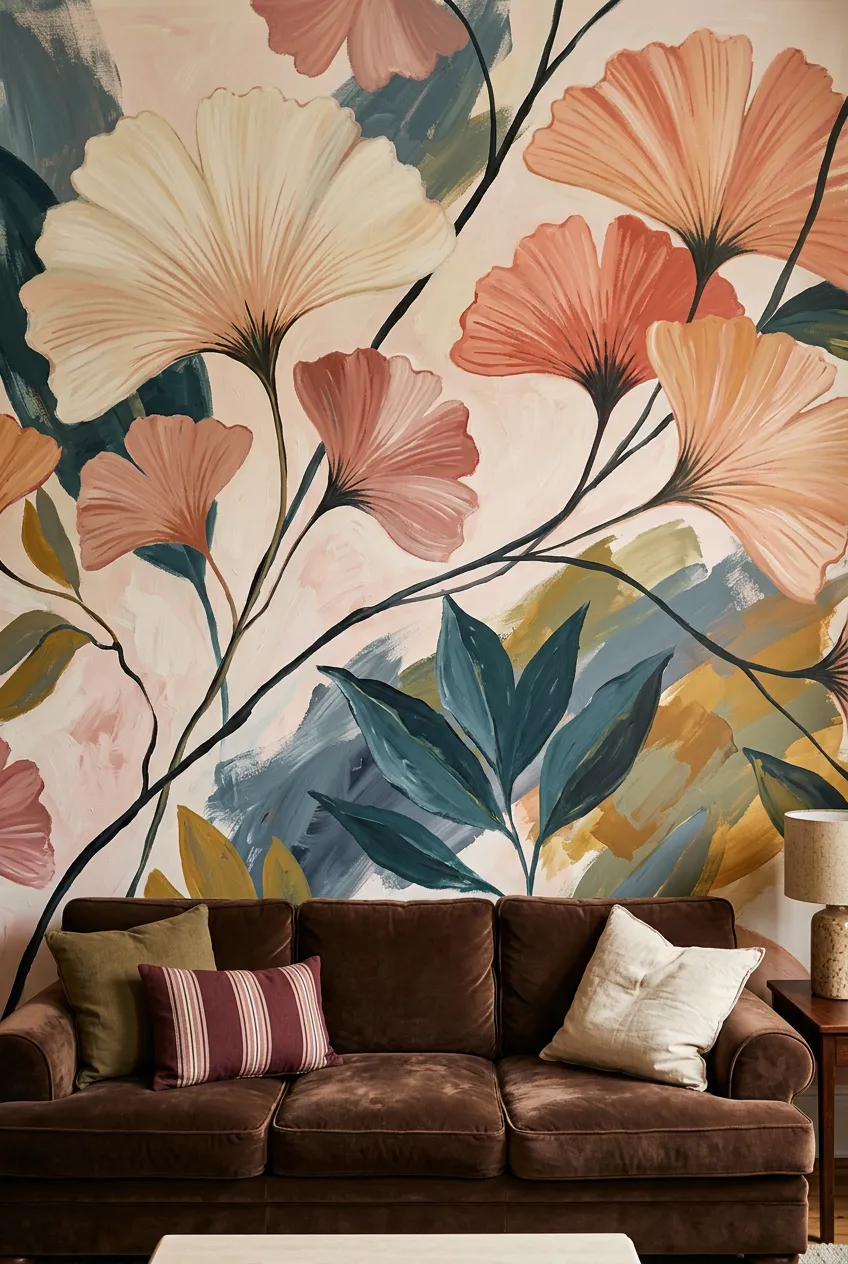

Coral flowers bring brightness to the deep, warm tone of a brown velvet sofa. The upholstery gives the arrangement visual weight, while the floral shapes add a lighter, more playful element.
Introduce a pale neutral buffer through cushions or a rug to separate the rich colors. A small coral accent on the sofa can connect the two without making every accessory match.
Introduce Teal Palm Leaves to a Scandinavian Living Room


Teal palm leaves add a distinct color accent to a Scandinavian living room. Pale timber, simple seating, and light textiles give the sweeping fronds a restrained setting.
Treat the wall as the main color feature and repeat teal sparingly in a cushion or ceramic piece. Keep nearby surfaces lightly styled so the room retains its open feel.
Accent a Narrow Sage Wall with Flowers and a Gold Moon
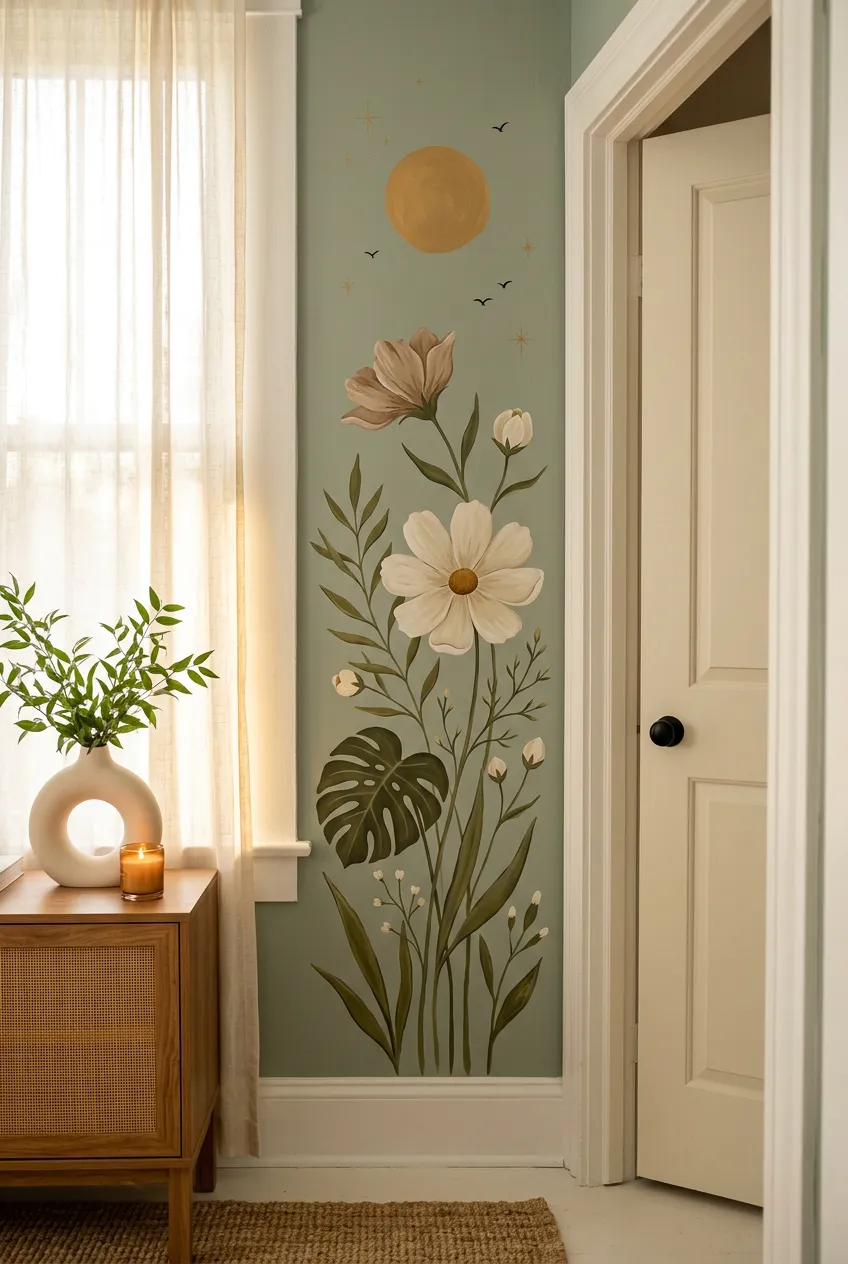

A narrow sage wall offers space for a vertical arrangement of flowers and a gold moon. Let the flowers guide the eye upward, with the moon acting as a clear focal point.
Keep the composition within the wall’s proportions, leaving a visible margin at each side. This helps the design feel intentional instead of squeezed into a leftover space.
Connect Modern Leaf Shapes with Earthy Living Room Colors
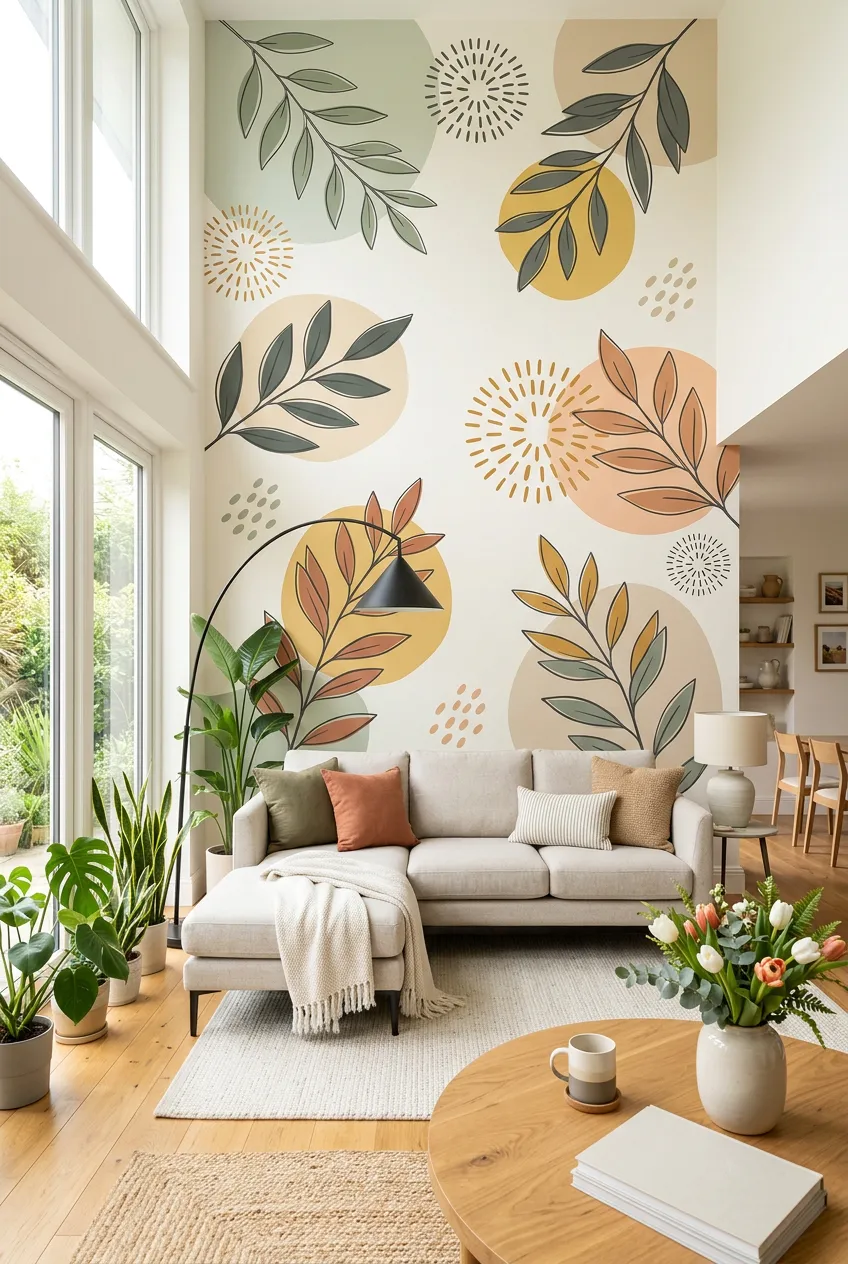

Modern leaf shapes sit comfortably alongside clay, sand, olive, and warm brown. Their simplified outlines add structure to an earthy palette without introducing another detailed pattern.
Build the connection through shared color undertones: choose leaf colors that echo the warmth or muted quality of the furnishings. Mix linen, wood, and textured upholstery to add variety.
Pair Meadow Flowers with a Wooden Slat Lamp


Meadow flowers and a wooden slat lamp bring two different kinds of line into a room. Slender stems create loose movement, while the lamp’s repeated slats add a more ordered shape.
Position the lamp so its silhouette does not hide the main flowers. Warm light can complement the wood, though the shade’s shadows may also affect how the wall pattern looks after dark.
Repeat Sage Accents Beneath a Green Monstera Mural
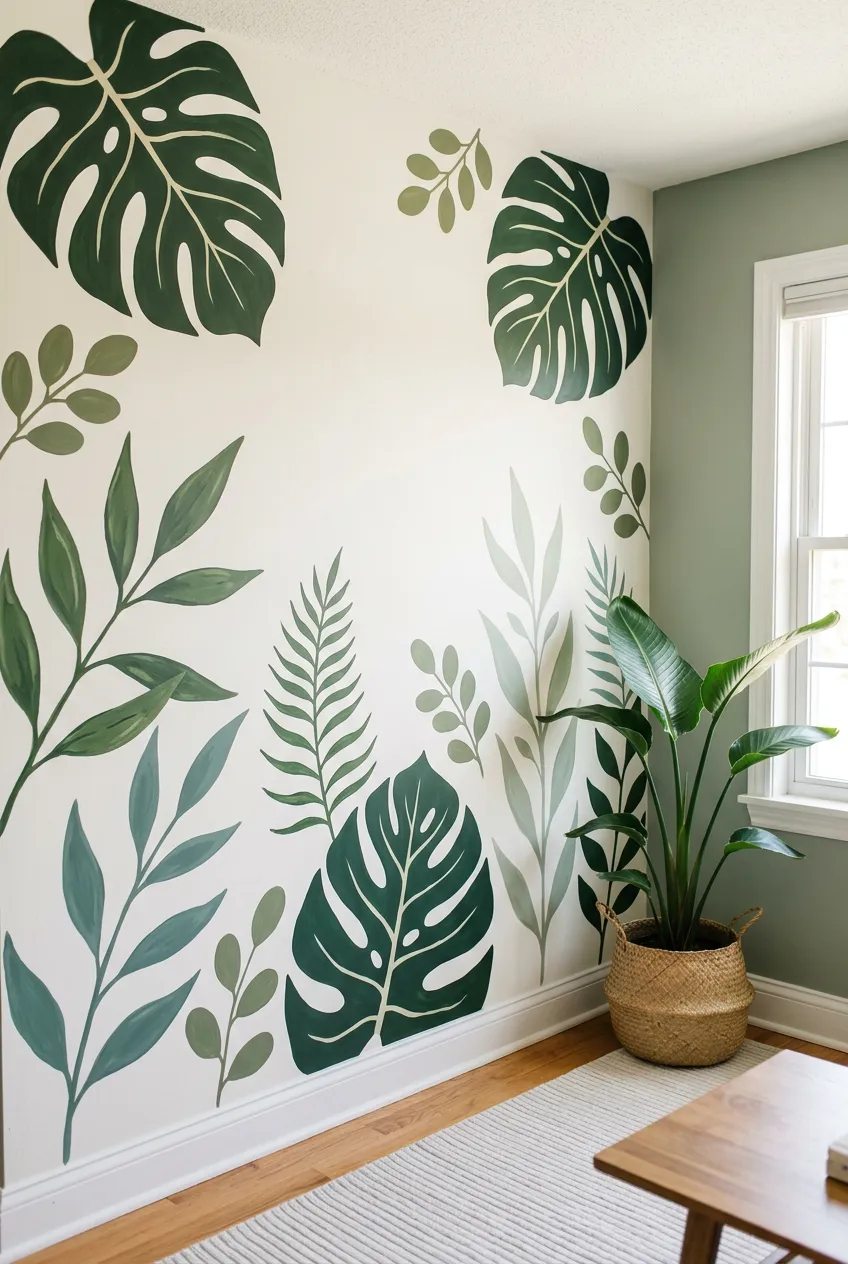

A green monstera mural creates a strong botanical focal point. Sage accents beneath it carry the green into the furnishings in a softer form, helping connect the wall and seating area.
Try two small sage accents, such as a cushion and a throw, with neutral pieces between them. The colors can share an undertone without matching every leaf exactly.
Give a Neutral Dining Nook a Gentle Olive Branch Backdrop
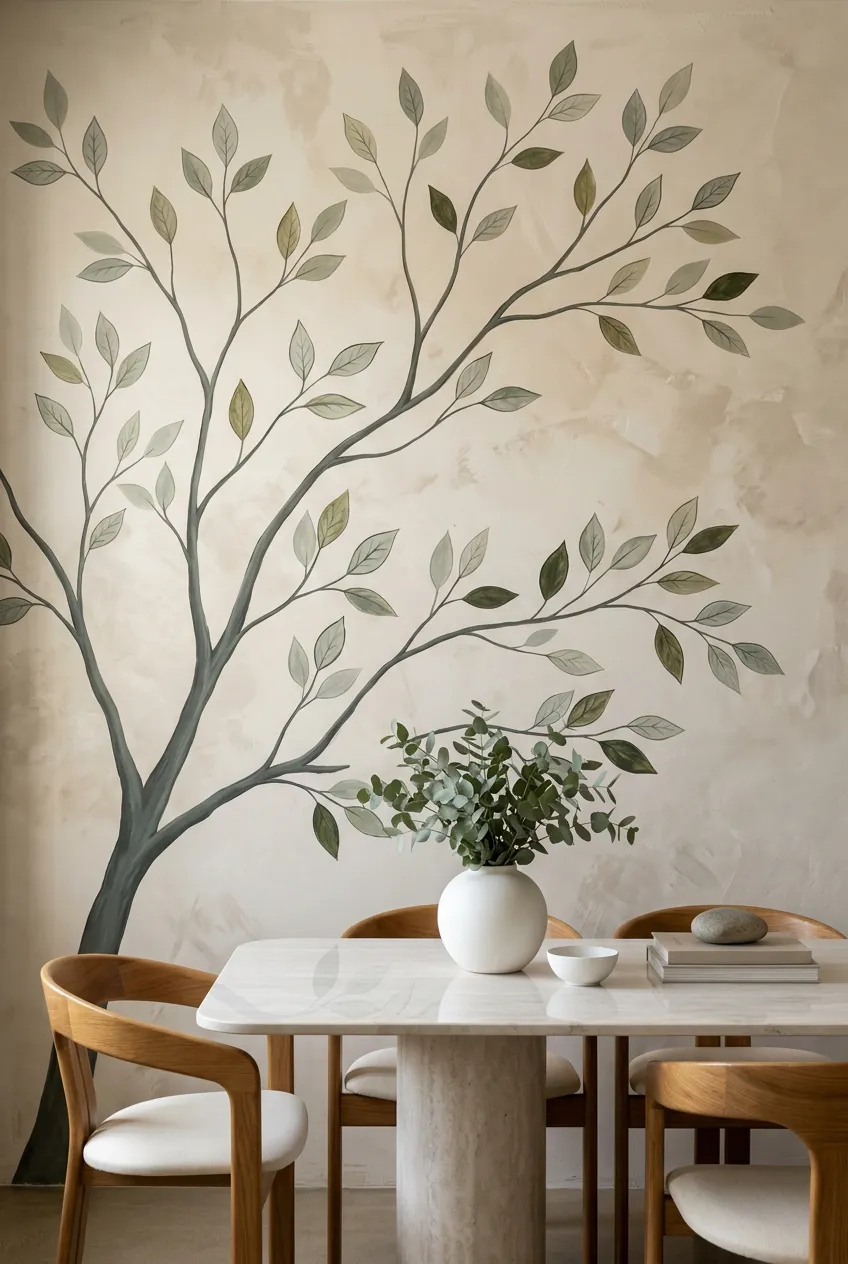

Olive branches add fine lines and muted green to a neutral dining nook. An airy arrangement suits a compact eating area, where the table and chairs already occupy much of the view.
Pair the branches with light wood and plain seat cushions. Keep the tabletop styling low so the botanical backdrop remains visible across the table.
Enliven a Reading Nook with Red Heliconia and Tropical Leaves
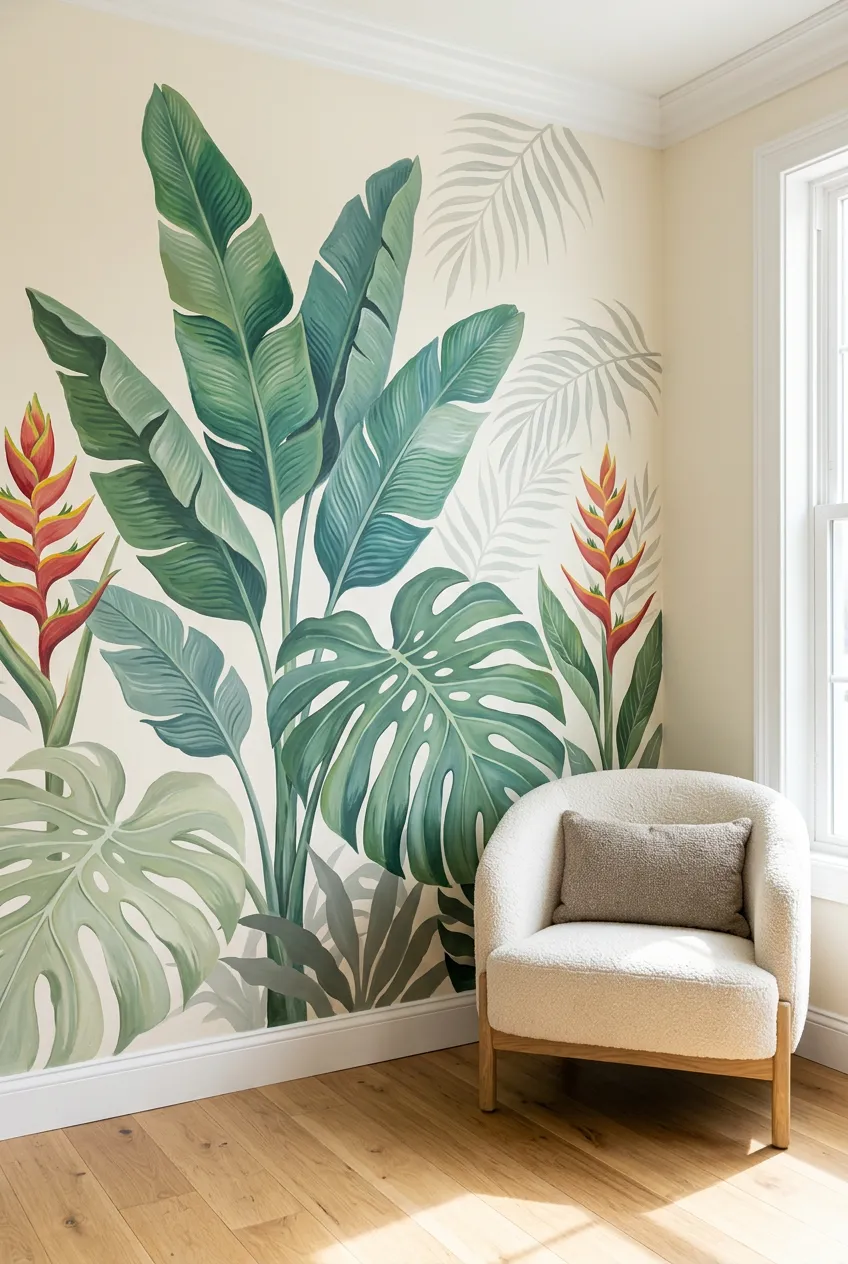

Red heliconia gives a reading nook a vivid focal point among tropical leaves. Place the floral design where it can be seen above or beside the chair, allowing the nook to feel framed by greenery.
Choose quiet upholstery in cream, tan, or a muted green to balance the red. An adjustable reading lamp keeps the space practical without adding another large decorative feature.
Welcome Color into a White Entryway with Bird-of-Paradise Flowers


Bird-of-paradise flowers bring pointed petals and lively color to a white entryway. The light background gives their distinctive shapes clear definition, creating a focal point near the entrance.
Use a slim console or small shelf to leave the design visible and preserve the walkway. Keep everyday items in a tray or basket so keys and mail do not compete with the flowers.
Add Depth to a Hallway with Dark Teal Leaves and Gold Dots
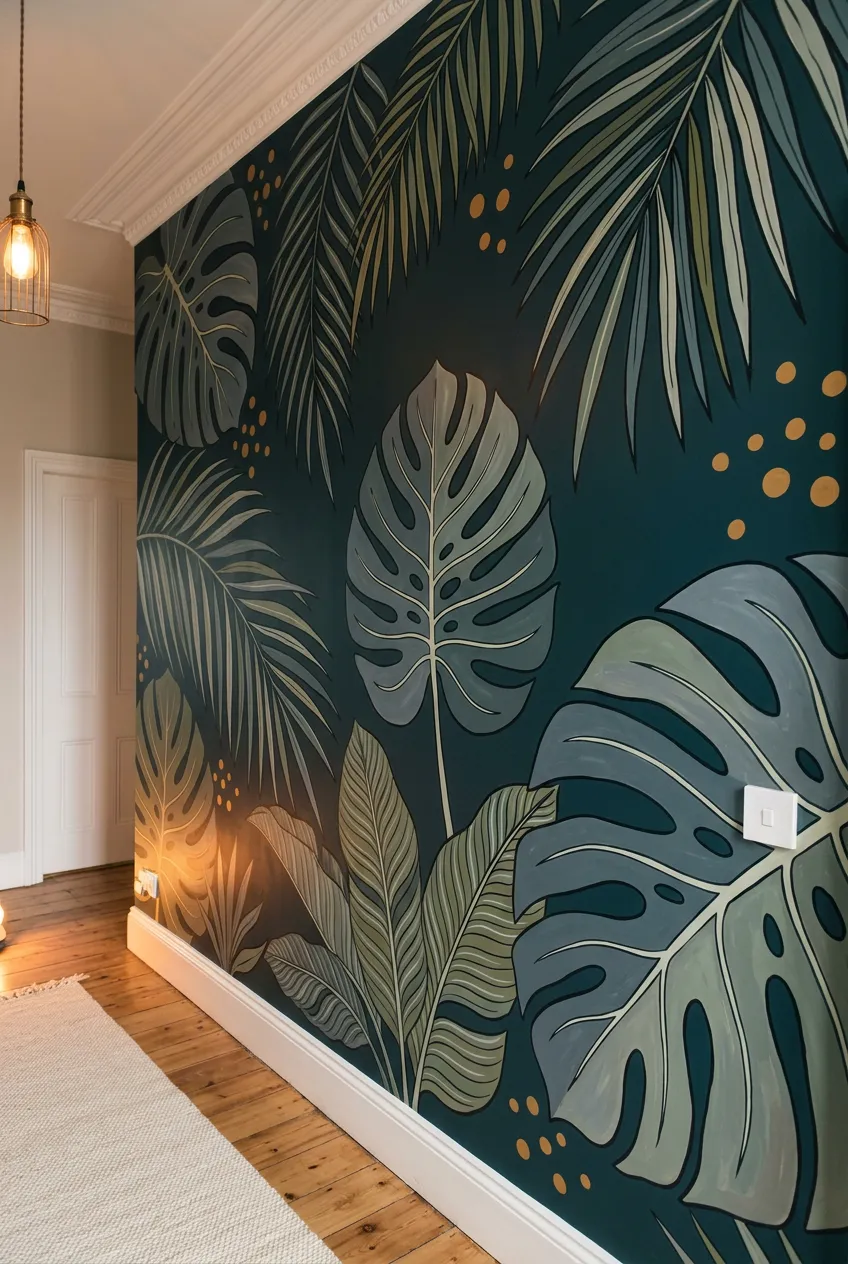

Dark teal leaves create a sense of depth through contrast, while gold dots add smaller points of interest. A staggered arrangement can lead the eye along the hallway and break up a long stretch of wall.
Balance the rich color with light surrounding surfaces and adequate lighting. Space the gold dots loosely so they support the leaf pattern without making a narrow hallway feel visually crowded.
Highlight an Arched Alcove with Monstera Leaves
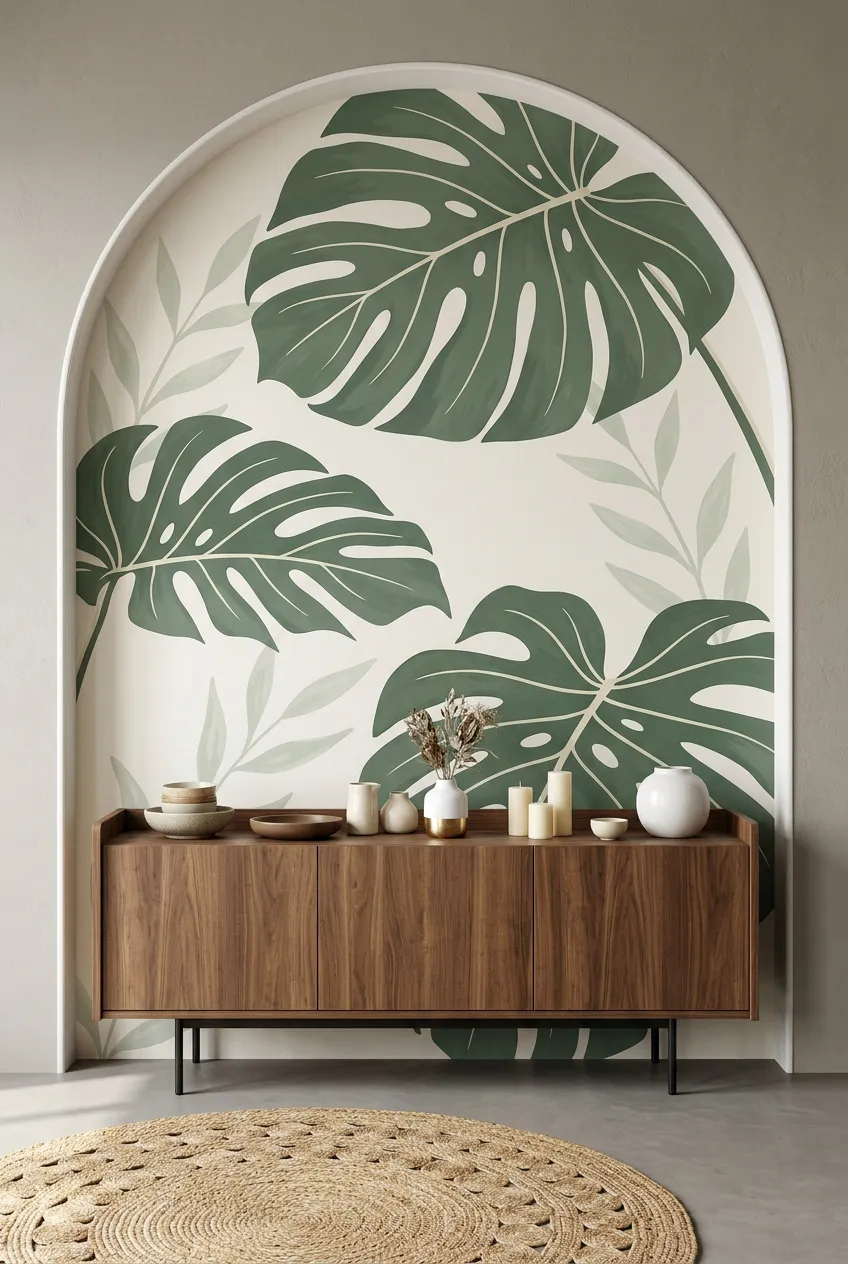

Use a monstera leaf pattern inside an arched alcove to emphasize its curved outline. The broad, split leaves give the recess a clear focal point, especially when the surrounding walls stay simple.
Choose a leaf scale that leaves several complete shapes visible within the arch. A slim shelf or a single ceramic vase can finish the space without hiding the pattern.
Match Folk-Art Flowers with Warm Orange Living Room Accents


Pair stylized folk-art flowers with burnt orange cushions, a terracotta throw, or a rust-colored chair. Repeat one orange tone from the flowers to connect the wall design with the seating area.
Keep larger pieces in cream, warm beige, or natural wood so the floral shapes remain easy to read. Small accents can carry the richer color without making every surface compete.
Create a Pastel Garden Backdrop for a Cottage Bedroom
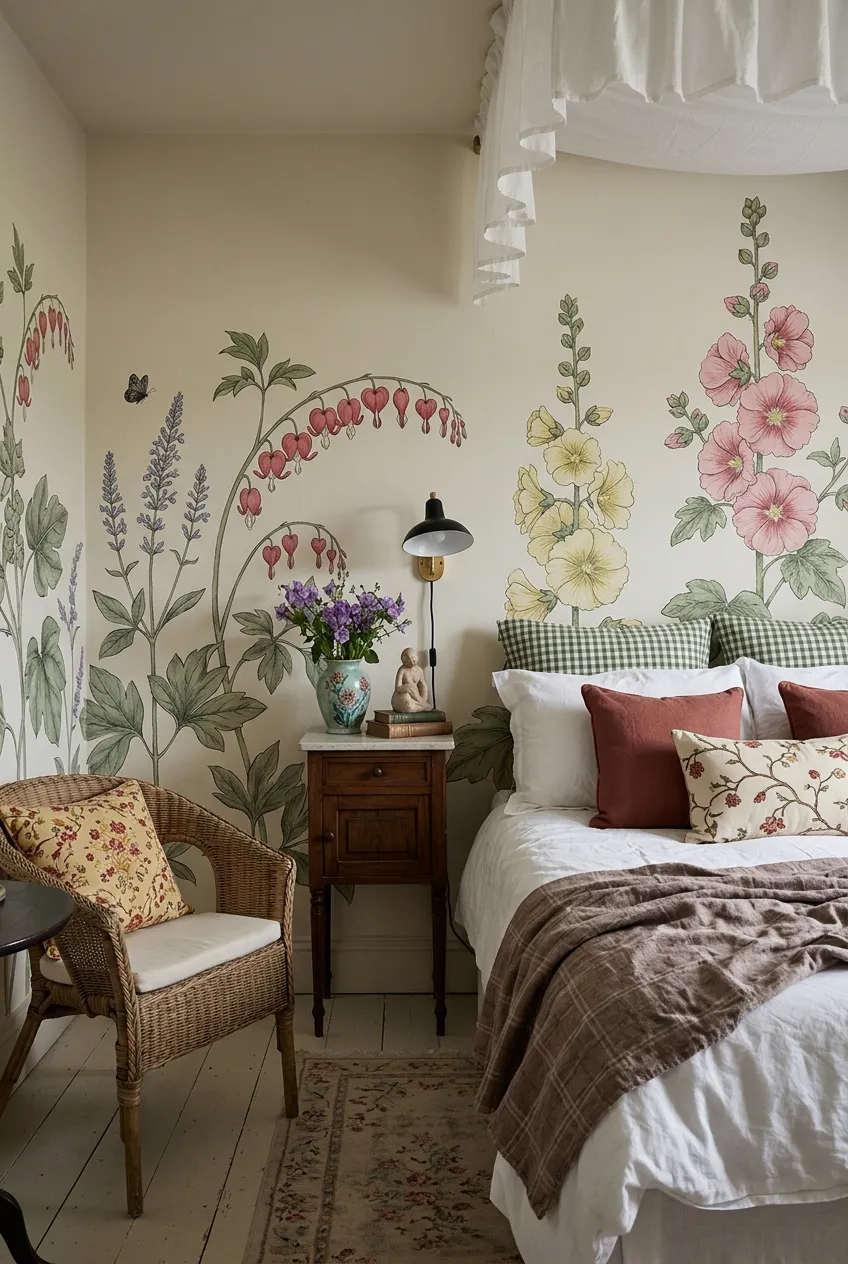

A garden pattern in pale pink, soft blue, and muted green can give a cottage bedroom a gentle sense of color. Place it behind the bed to make the headboard wall the focal point.
Pair the flowers with cotton bedding, a quilt, and painted wood furniture. Keep additional prints small and restrained so the garden backdrop has room to stand out.
Give a Sewing Corner Storybook Charm with Plants and Animal Motifs
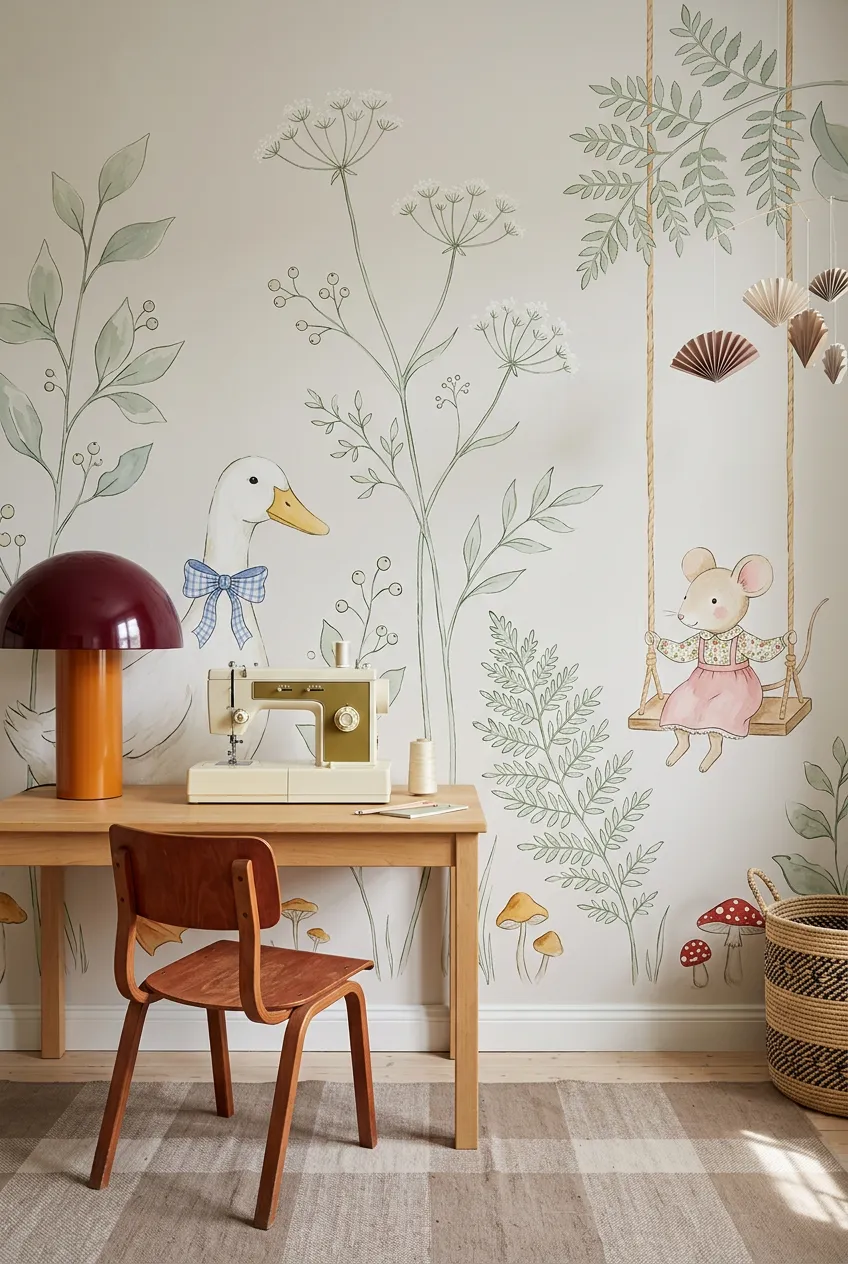

Plants and animal motifs can turn a sewing corner into a cheerful place to work. Choose a pattern with space between the illustrations so its details remain distinct around shelves and supplies.
Use plain storage boxes for fabric scraps and thread, then add a wooden stool or woven basket for warmth. Aim a task lamp at the sewing surface to keep practical lighting separate from the decorative backdrop.
Choose Neutral Watercolor Flowers for a Subtle Botanical Wall
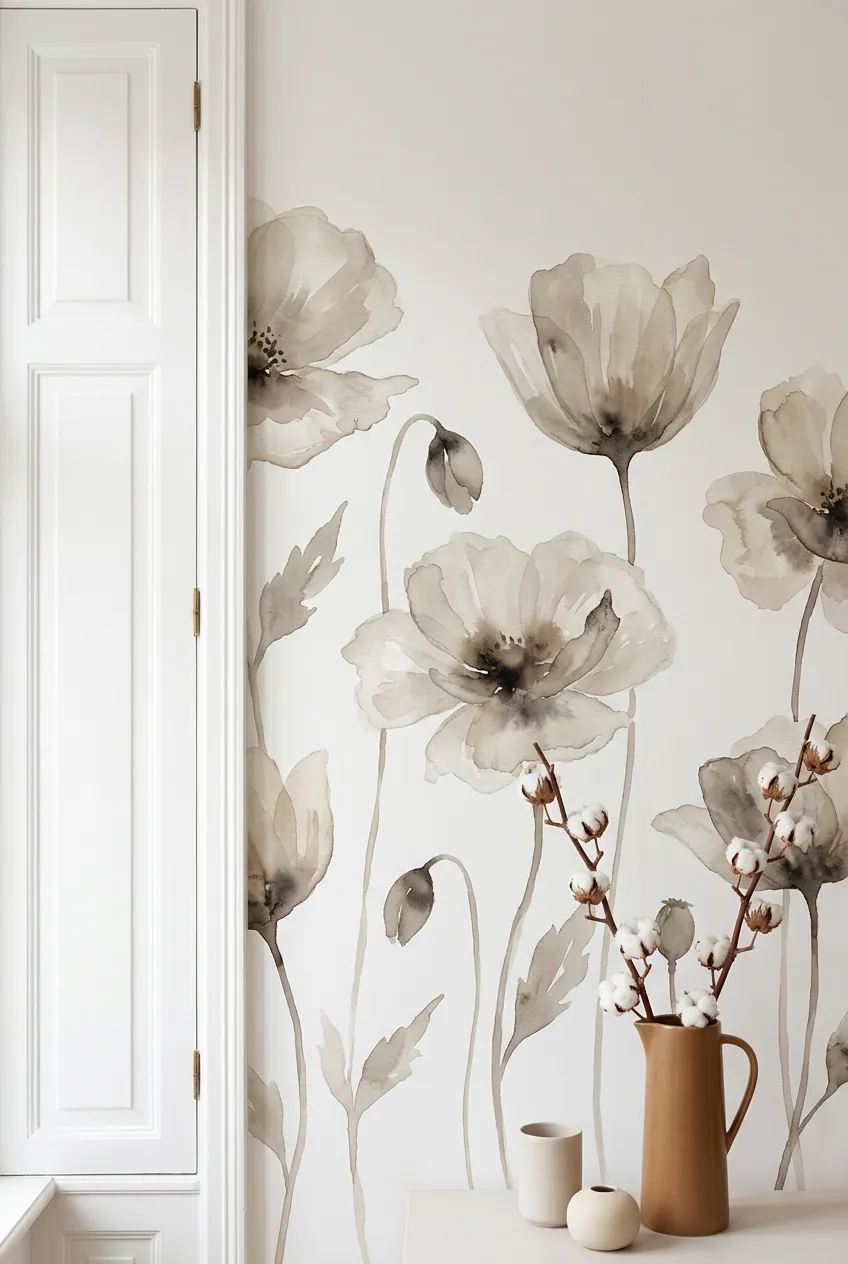

Watercolor flowers in ivory, taupe, and warm gray introduce botanical detail with little color contrast. Soft edges and pale washes help the pattern feel gentle across a larger wall.
Pair the design with linen, matte ceramics, and light wood for variation in texture. Test a sample beside your upholstery, since a neutral floral can look warmer or cooler depending on nearby finishes.
Set a Cream Sofa Against Soft Green Watercolor Leaves
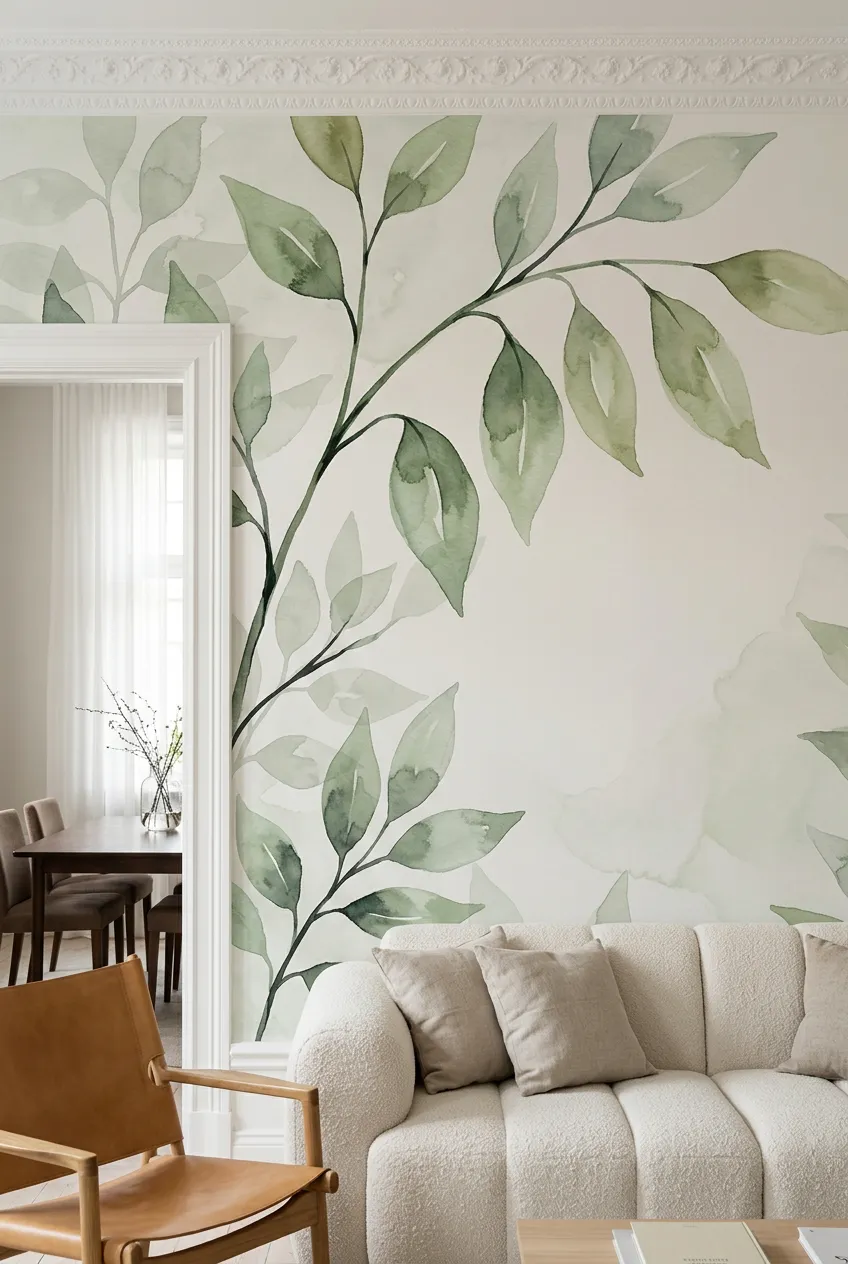

A cream sofa gives soft green watercolor leaves a calm foreground. Choose a botanical design with a light background to keep the seating area feeling open and the leaf shapes visible.
Echo the green in one or two cushions, then add a wood side table for warmth. A plain rug helps balance the movement of the leaves without introducing another busy pattern.
Blend Neutral Tropical Motifs with Scandinavian Decor
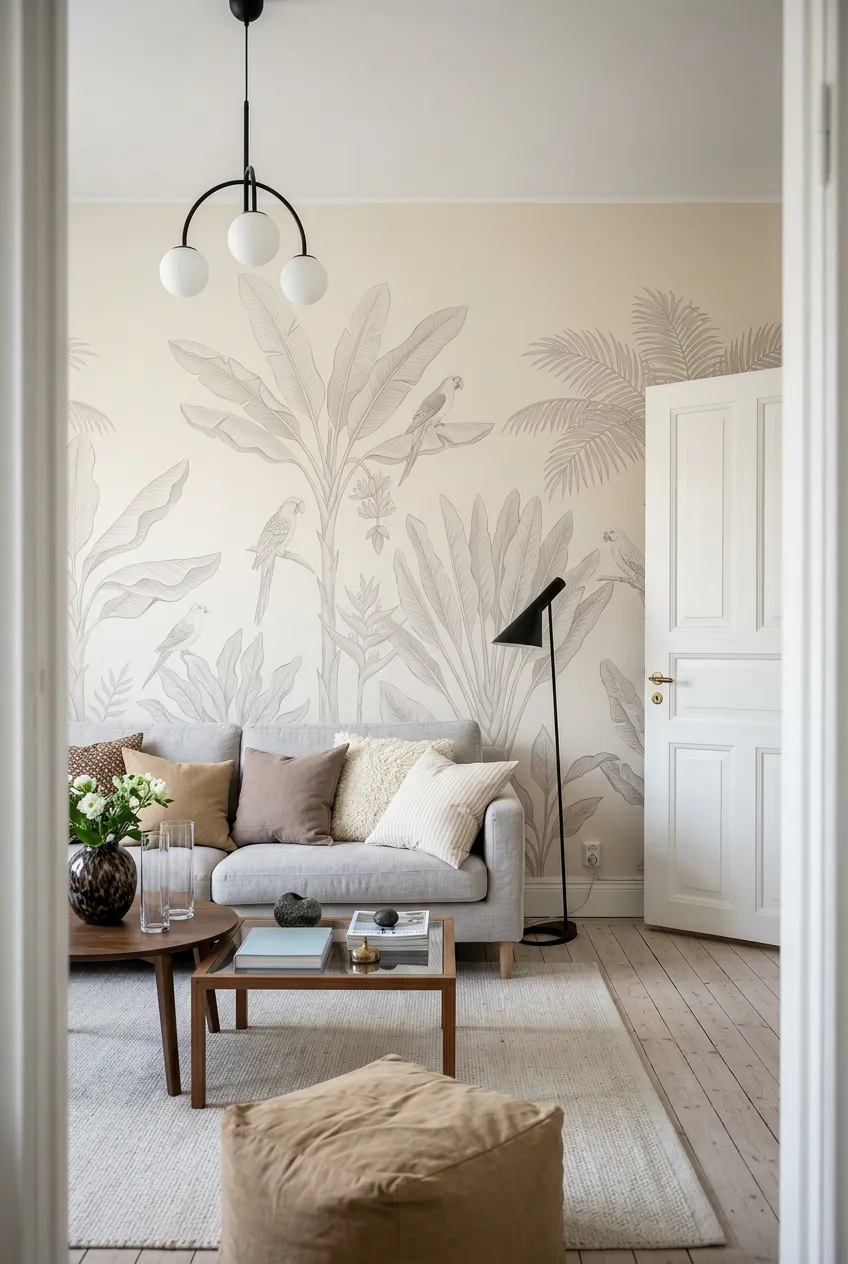

Tropical leaves in sand, stone, and muted gray can fit comfortably with Scandinavian decor. Look for simple shapes and generous spacing that complement furniture with clean lines.
Combine the pattern with pale wood, off-white upholstery, and a few dark accents. Keep accessories limited so the leaf silhouettes add interest without crowding the room.
Explore Botanical Shapes Through Earthy Watercolor Abstraction
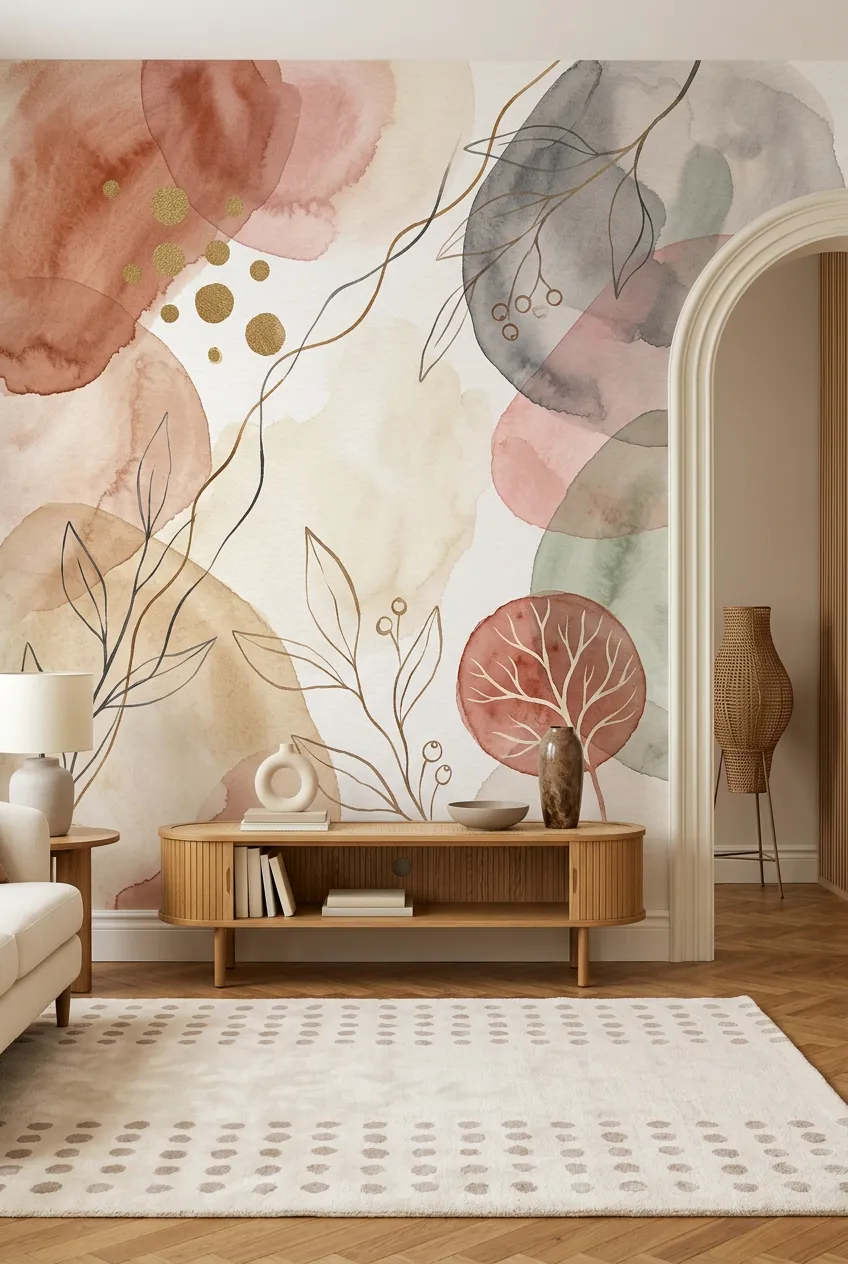

Abstract botanical shapes suggest leaves and stems without relying on precise outlines. An earthy palette of clay, olive, and ochre gives the loose watercolor forms a shared direction.
Use simple furniture silhouettes beside the pattern so the overlapping washes remain the focus. Pull one quieter shade into a cushion or rug rather than repeating every color in the design.
Build a Lush Bedroom Focal Wall with Tropical Palm Leaves
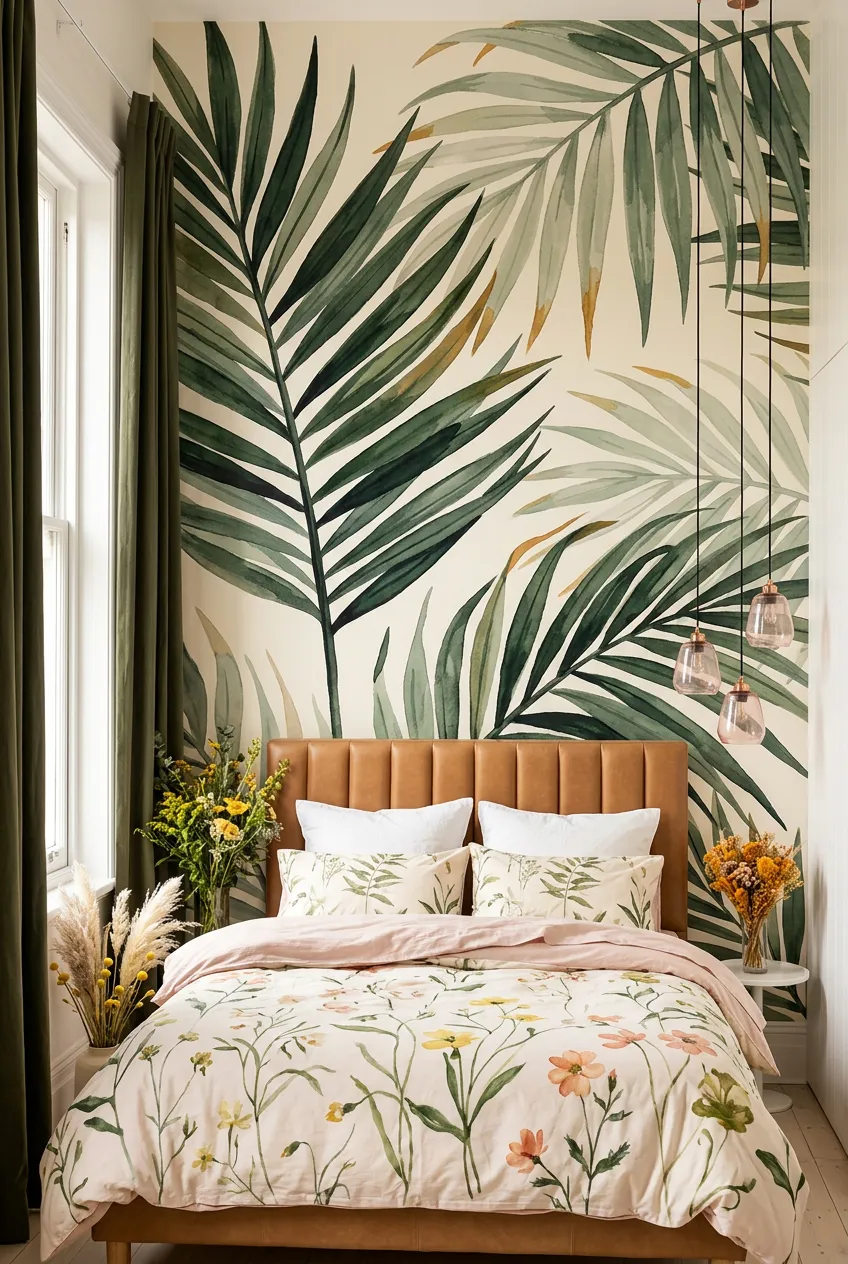

Place a palm leaf design behind the bed to give the room a lush focal wall. Large fronds suit this position because their shapes can remain visible above and beside the headboard.
Balance dense foliage with plain bedding and a headboard in wood or a solid fabric. Before installation, check where the main fronds will fall so the bed does not conceal the strongest part of the composition.
Combine Teal Leaves and Gold Details in the Living Room
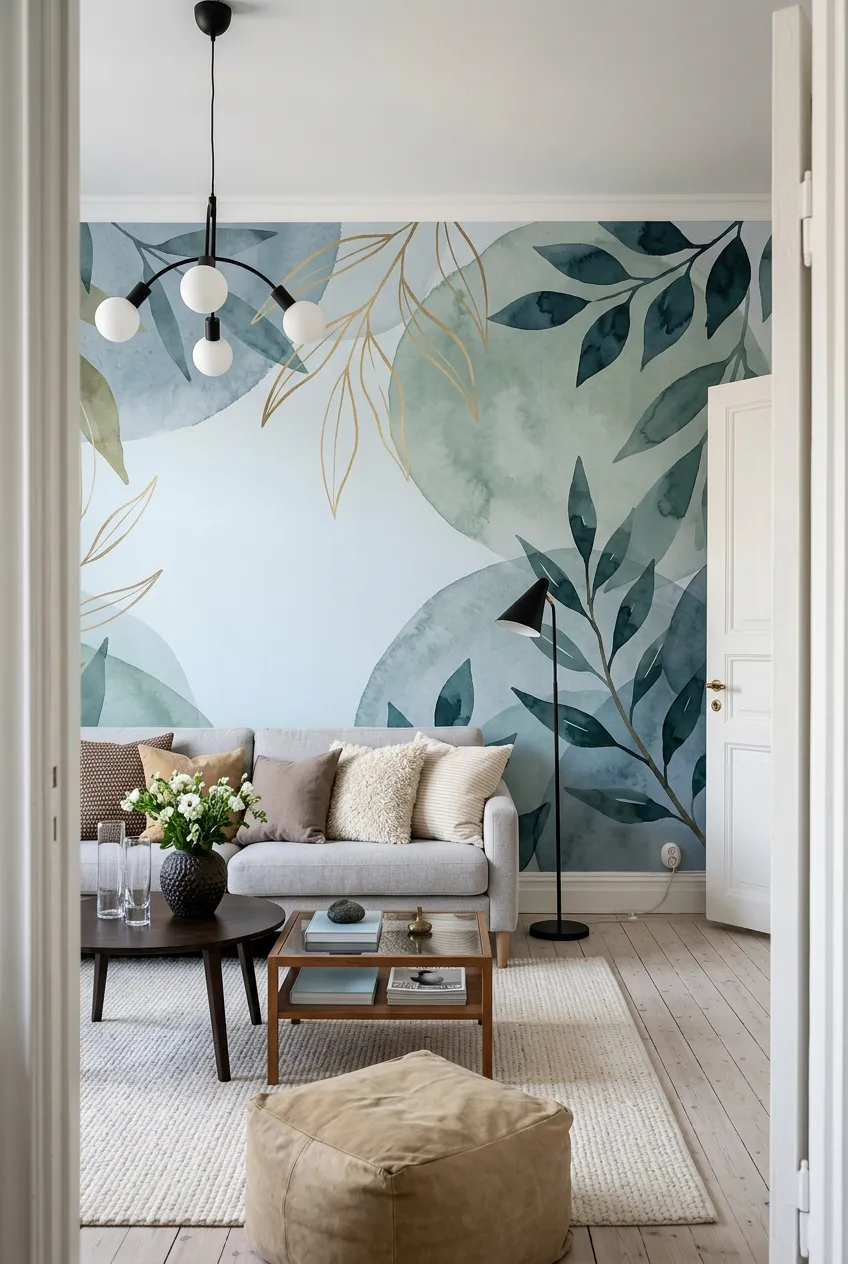

Teal leaves bring depth to a living room, while gold details add a warm accent. Keep gold touches selective by repeating them in a lamp, a narrow frame, or a small side table.
Choose cream or light beige seating to offset the saturated foliage. If the wall design includes metallic areas, view a sample under your evening lighting to judge how strongly they reflect.
Bring Earthy Watercolor Leaves and Gold Details into a Living Space
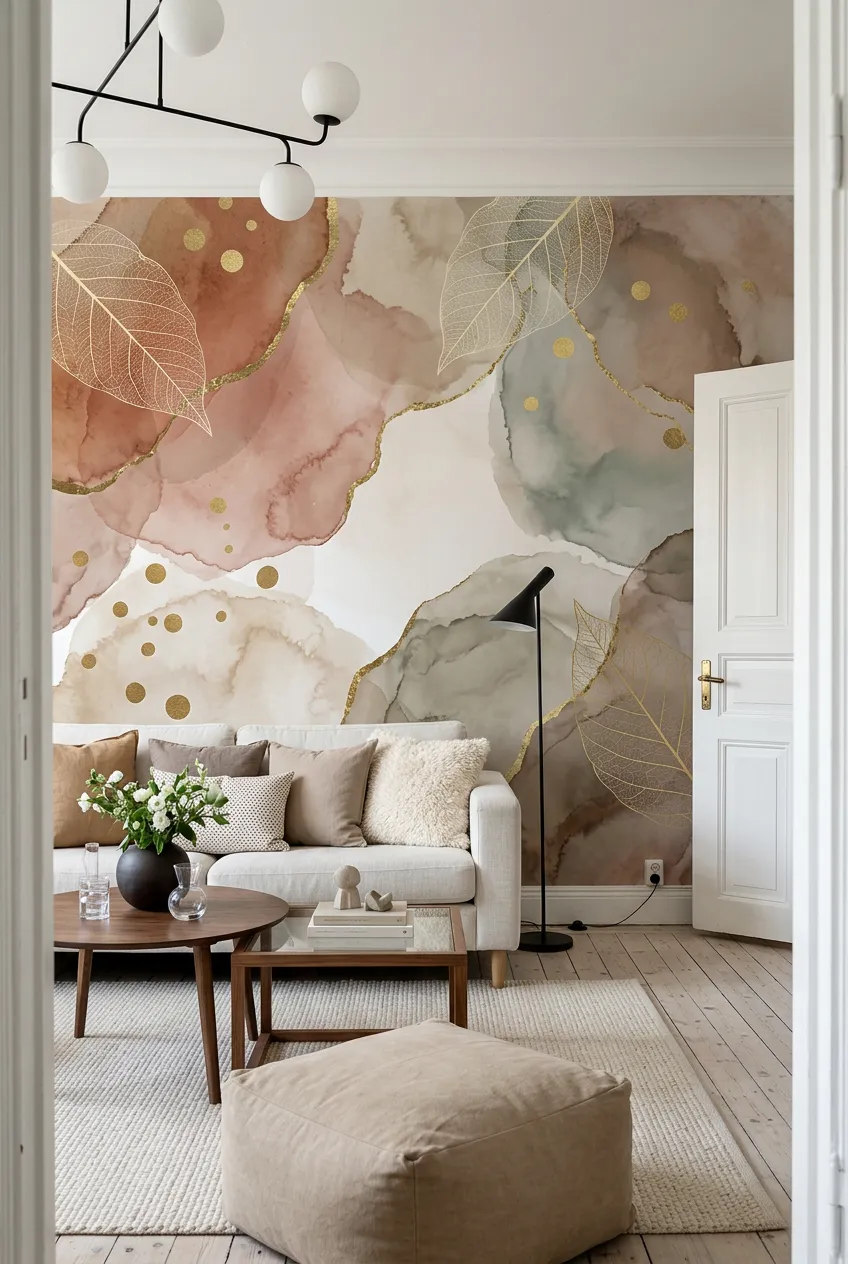

Watercolor leaves in brown, muted olive, and clay give a living space a warm botanical palette. Gold details can follow the stems or leaf outlines, adding a fine accent within the soft washes.
Pair the design with textured upholstery and warm wood furniture. Choose a few brushed brass accessories to echo the gold while keeping the room's overall finish understated.
Soften a Dining Room with Watercolor Flowers
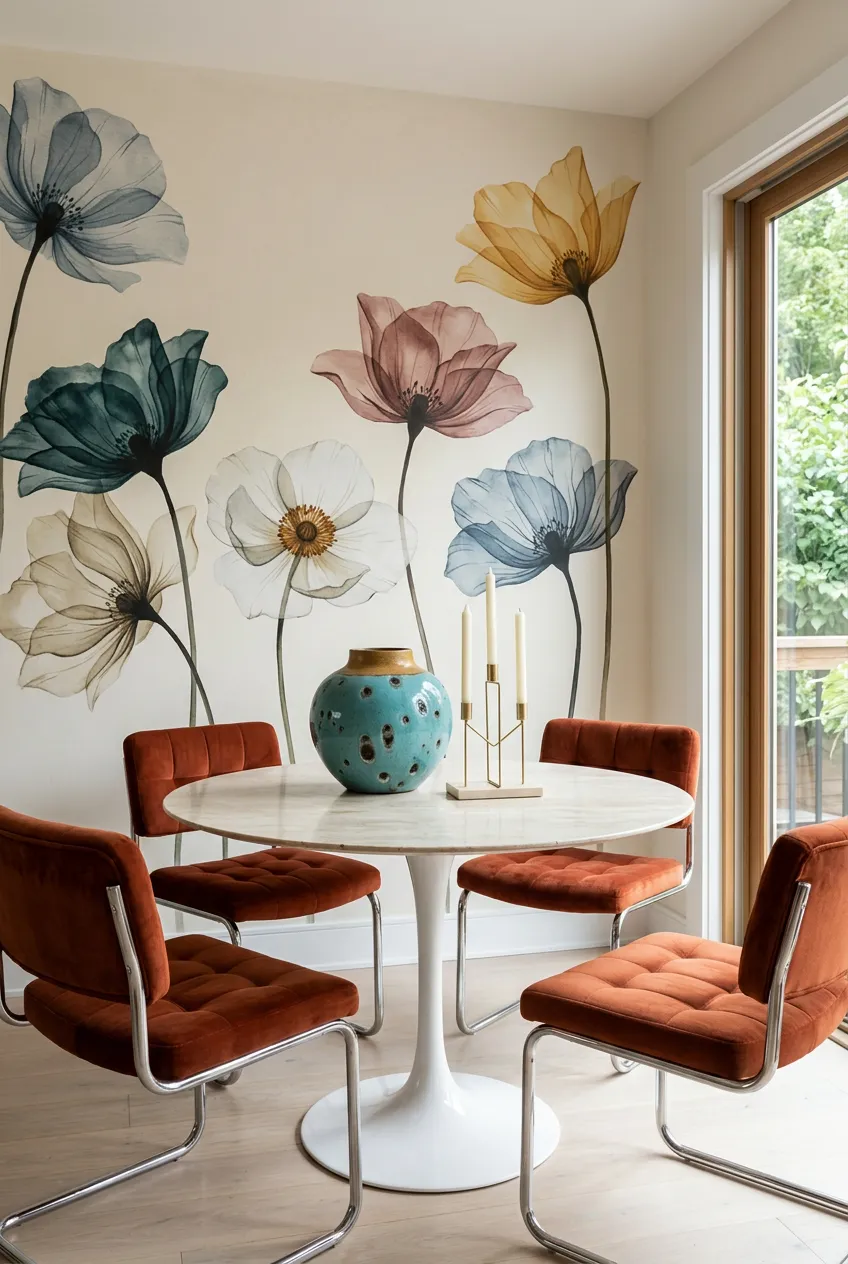

Watercolor flowers can soften the straight lines of a dining table, chairs, and sideboard. Choose gently blended colors that work with the wood and upholstery already in the room.
Use a plain tablecloth or runner to give the floral backdrop a clear setting. Position the design's main flower clusters where they remain visible above the sideboard and around seated guests.
Make Bold Tropical Flowers the Bedroom's Main Color Feature
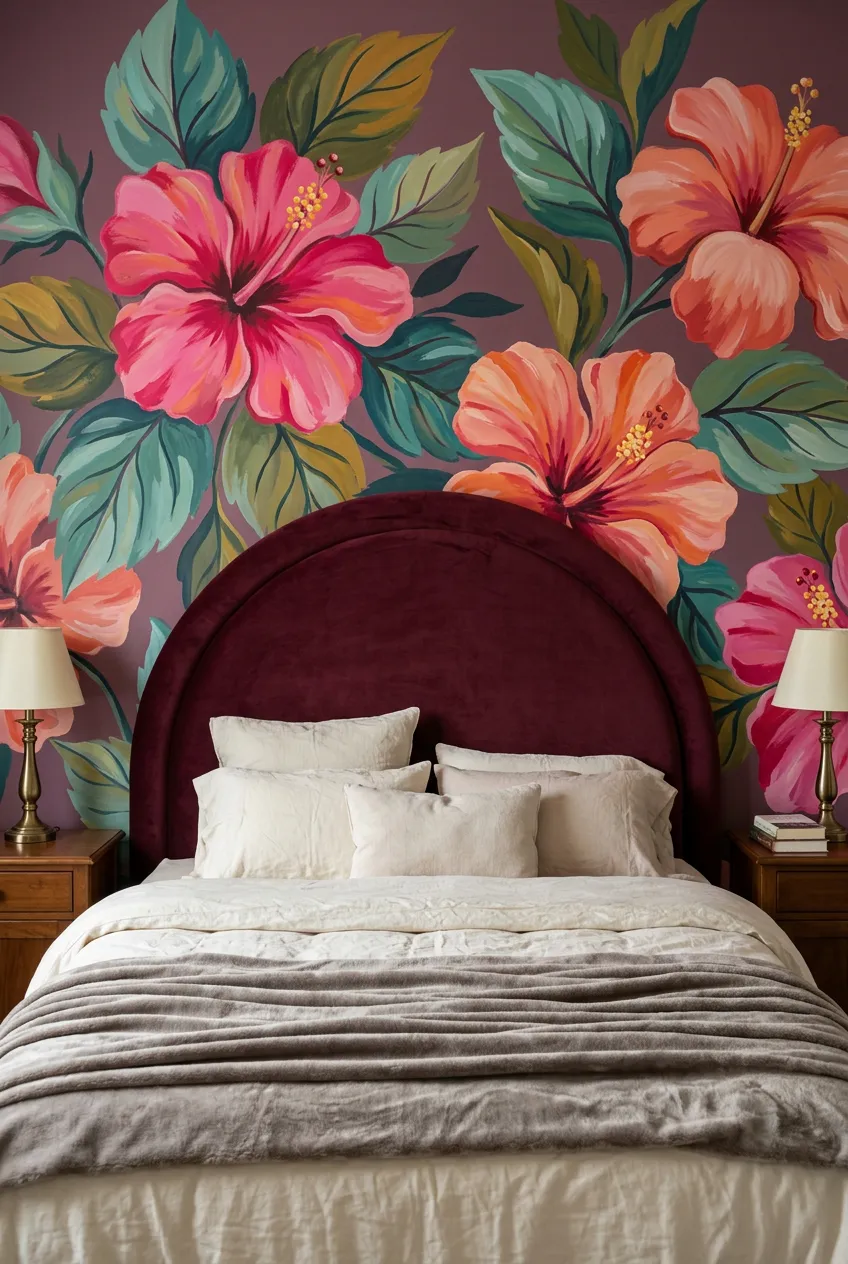

Let oversized tropical flowers establish the bedroom's palette. Choose one dominant floral wall, then use mostly solid colors on the bed to keep the blooms clearly in focus.
Repeat a single petal or leaf color in a throw or cushion. A simple headboard and quiet curtains help balance the strong pattern, especially in a smaller bedroom.
Frame a Vintage Floral Mural with Classic Wall Molding
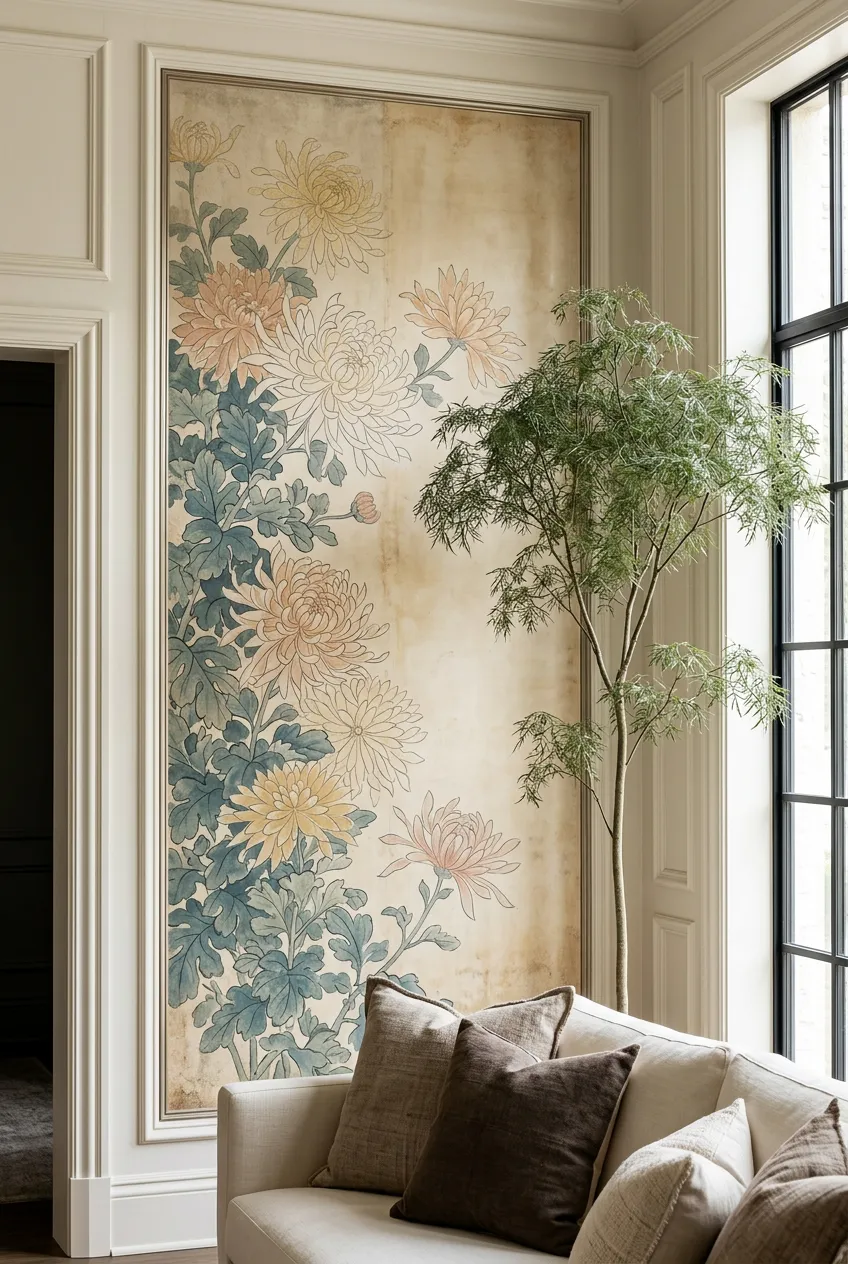

Classic wall molding gives a vintage floral mural a defined border and the presence of a large artwork. Plan the frame around the composition so the trim does not cut through the main flowers.
Paint the molding to match the surrounding wall for a subtle edge, or use a slightly deeper tone for more definition. Leave enough space around the mural for the border to feel intentional.
Pair Blush Pink and Green Tropical Motifs in a Powder Room
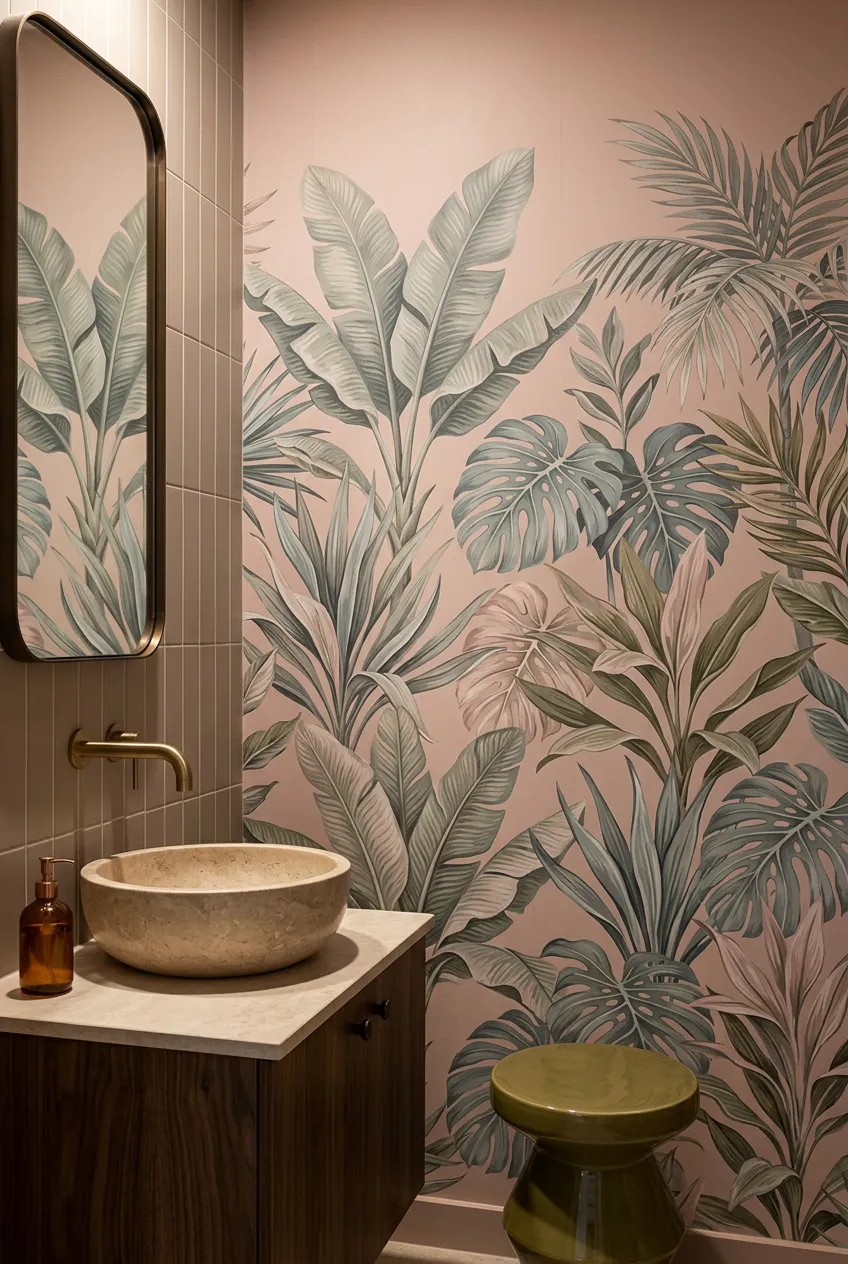

Blush pink gives green tropical motifs a warm background in a powder room. Balance leafy detail with simple fixtures, such as a plain basin and a mirror with a slim frame.
Repeat the pink or green in a hand towel and keep countertop accessories minimal. Choose a wallcovering suited to the room's conditions, and protect areas that receive direct splashes.
Carry Blush Flowers and Sage Tones Across a Bedroom
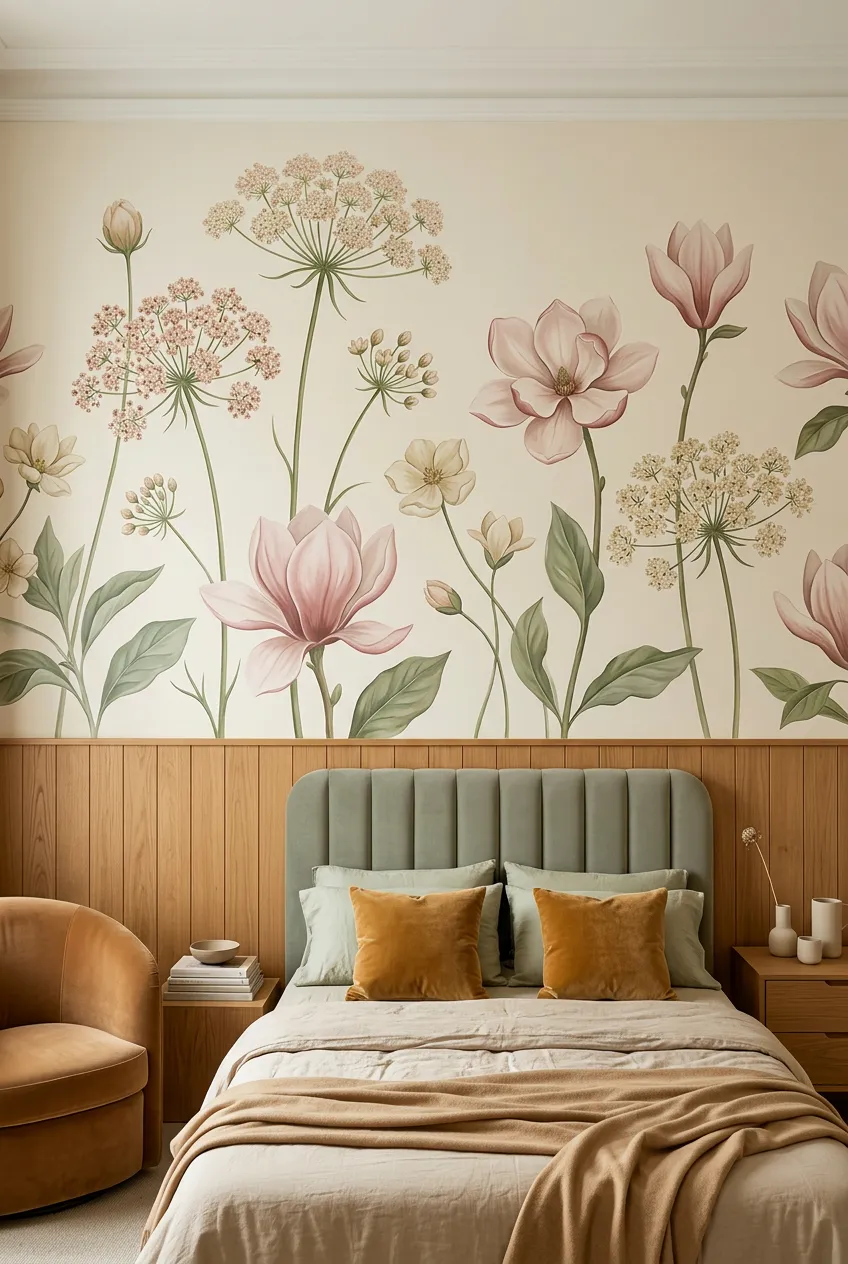

Build a restful bedroom palette around blush flowers and sage tones. Echo the pink petals in a cushion or throw, then bring sage into the bedding or curtains to connect the floral pattern with the rest of the room.
Keep larger surfaces simple so the flowers have room to stand out. Cream linens and pale wood can soften the combination, while a small floral accent across the room repeats the theme without adding another large pattern.
Warm a Dining Nook with Gold Blossom Motifs
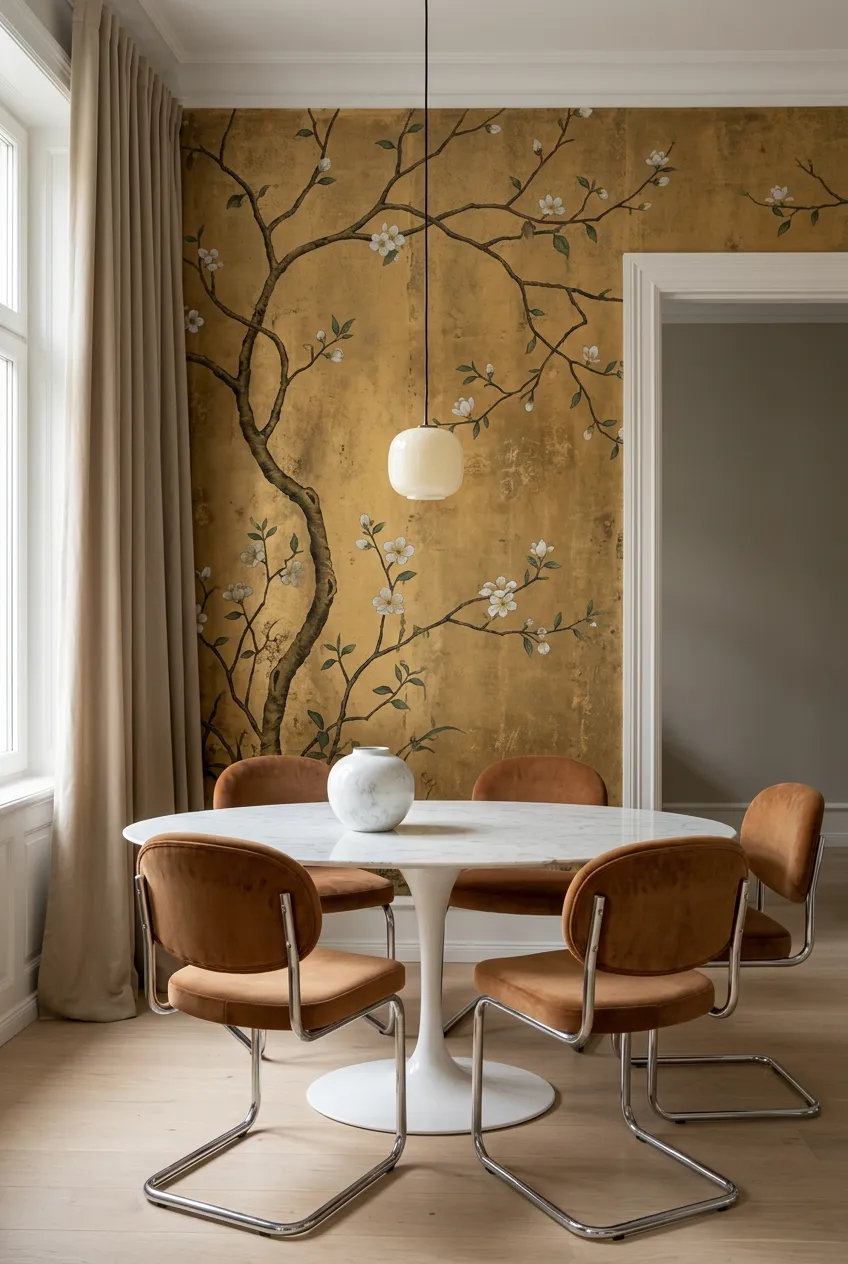

Use gold blossom motifs to give a dining nook a warm focal point. Pair the pattern with cream upholstery and a wood table so the seating area feels welcoming without competing with the flowers.
Repeat the gold sparingly in a pendant light or picture frame. If the blossom pattern has a metallic finish, choose soft, diffused lighting to bring out its sheen without creating harsh glare.
Anchor Colorful Tropical Leaves with a Brown Velvet Sofa
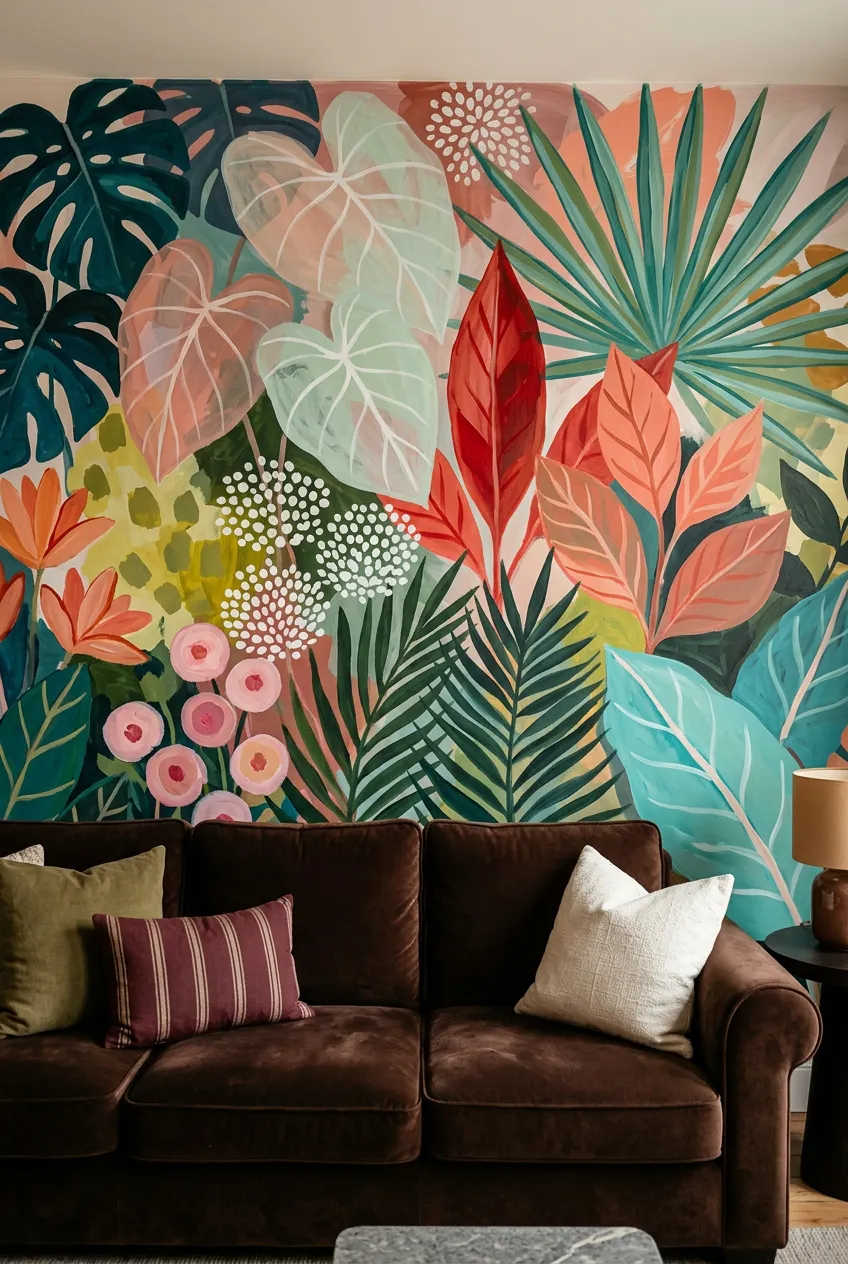

A brown velvet sofa gives colorful tropical leaves a steady visual anchor. Its earthy tone balances vivid greens, pinks, or yellows, while the velvet adds texture alongside the bold pattern.
Choose one or two leaf colors for cushions, then keep the rug and nearby furniture relatively quiet. Leave some plain wall or floor space around the patterned area so the room feels lively without becoming crowded.