How to Clean Walls: Easy Tips That Won’t Damage Paint
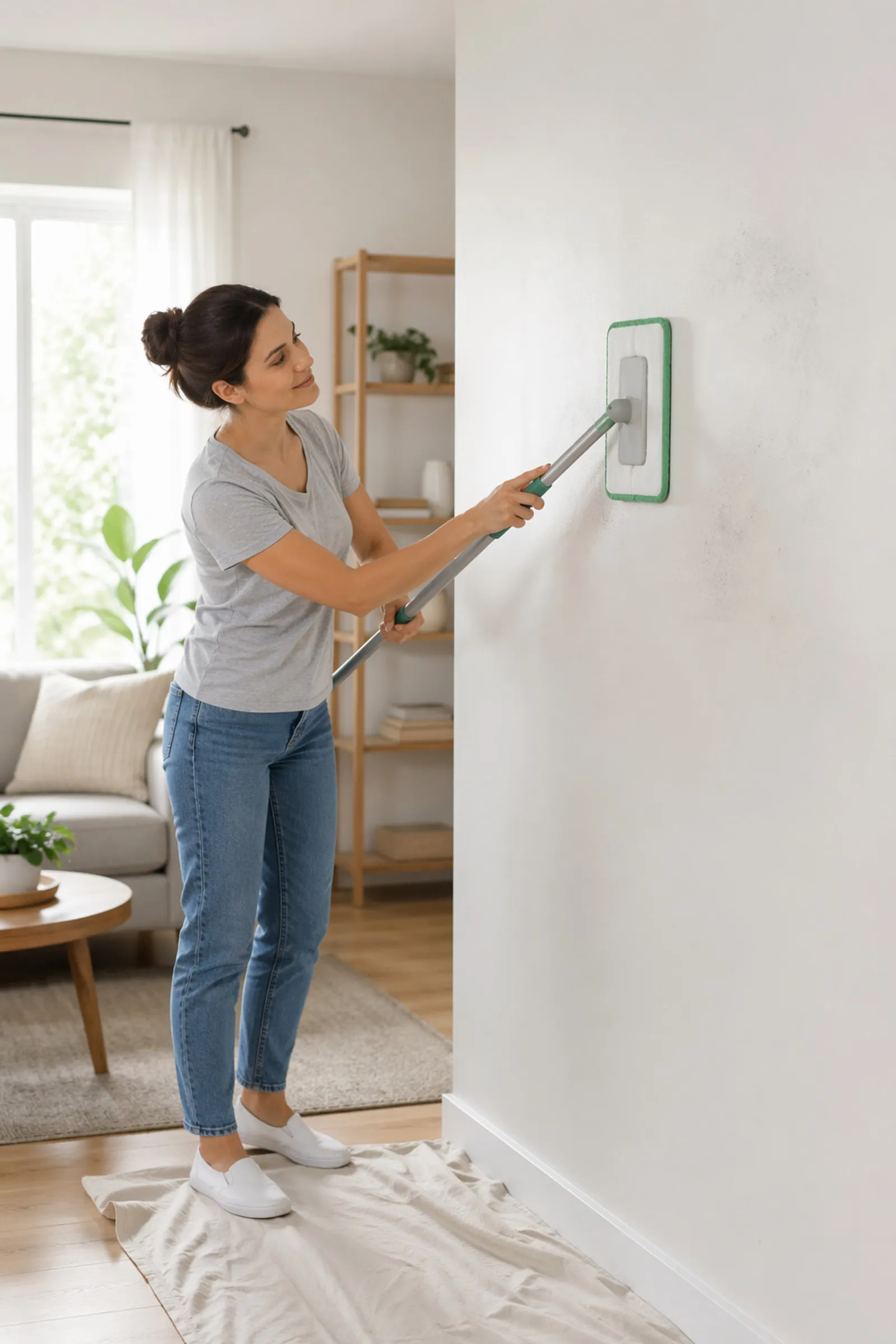
If you searched for how to clean walls easy tips, you probably do not want a deep-cleaning project that eats the whole afternoon. You want the fingerprints gone, the dust off the wall, the mystery smudge handled, and the paint still looking the same when you are done.
The easiest way to clean painted walls is also the safest: dust first, wash with a barely damp microfiber cloth or sponge, use mild dish soap only where plain water is not enough, rinse lightly, and dry as you go. Most wall damage happens when people skip the test spot, scrub too hard, or soak the paint.
This guide gives you the practical version: what to use, what to avoid, how to clean walls without removing paint, and how to get walls ready before wallpaper, wall murals, or a fresh coat of paint.
The Quick Wall-Cleaning Method
For most painted walls, start here.
- Dust the wall from top to bottom with a dry microfiber mop, duster, or clean cloth.
- Mix a few drops of mild dish soap into a bucket of warm water.
- Dip a soft sponge or microfiber cloth, then wring it out until it is damp, not dripping.
- Test the solution on a hidden spot near a baseboard, behind furniture, or inside a closet.
- Wipe in small sections using gentle pressure.
- Rinse each section with a second cloth dampened with clean water.
- Dry with a towel so streaks and water marks do not settle in.
That is the best way to clean walls when the goal is normal household dirt: fingerprints, dust, light food splatter, hallway marks, and everyday smudges.
What You Need to Clean Walls
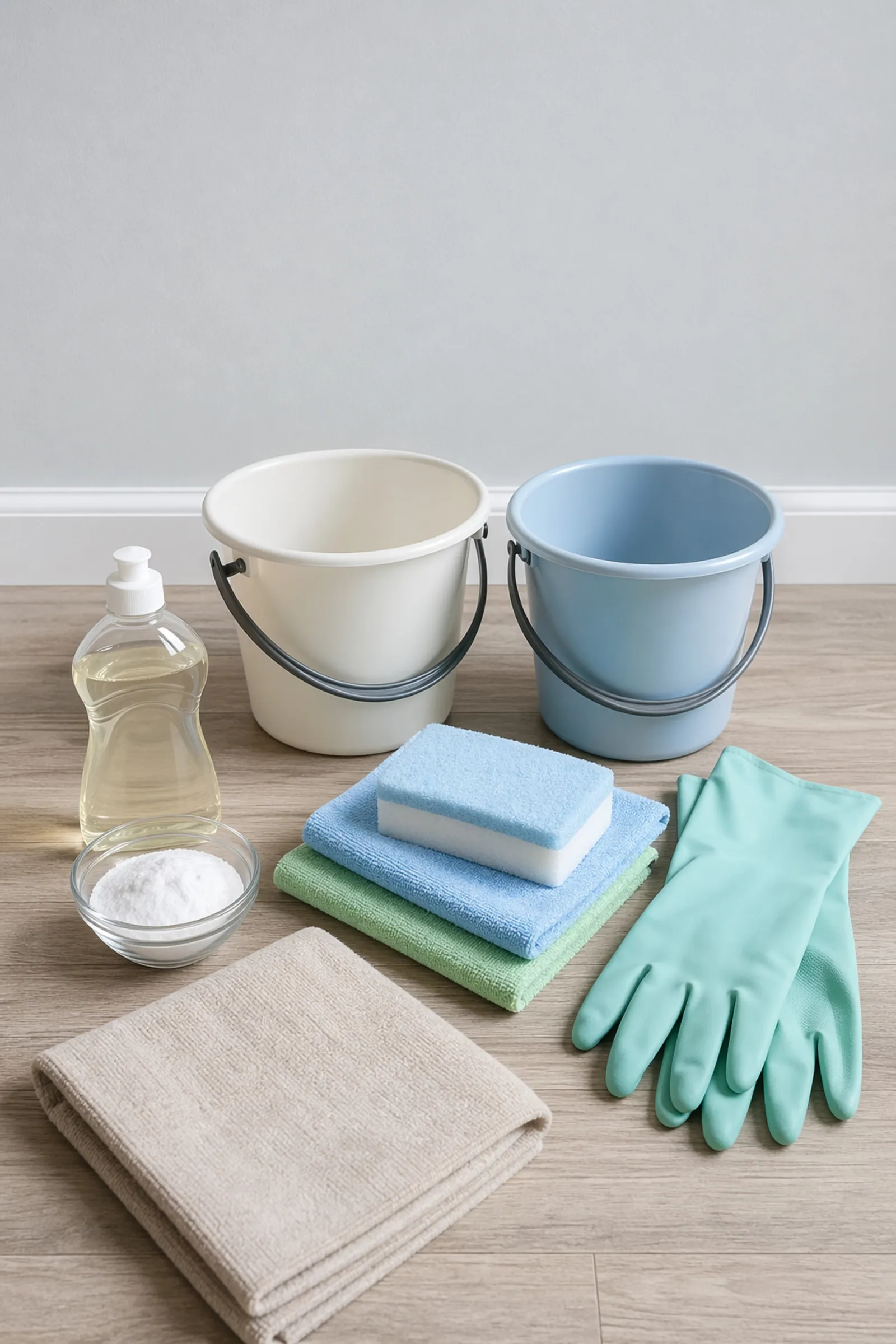
You do not need a harsh wall cleaner for routine cleaning. In fact, strong cleaners can dull paint, leave residue, or make touch-ups look uneven later.
Use these basics:
- Microfiber cloths or a microfiber wall mop
- Soft non-abrasive sponge
- Two buckets: one for soapy water, one for rinse water
- Mild dish soap
- Clean towels
- Rubber gloves
- Drop cloth or old towel for the floor
- Optional: baking soda for a very gentle spot paste
Avoid abrasive scrub pads, ammonia-heavy cleaners, bleach on painted walls, soaking wet sponges, and steam cleaners unless your paint or wall covering specifically says it can handle them.
Dust First, Even If the Wall Looks Clean
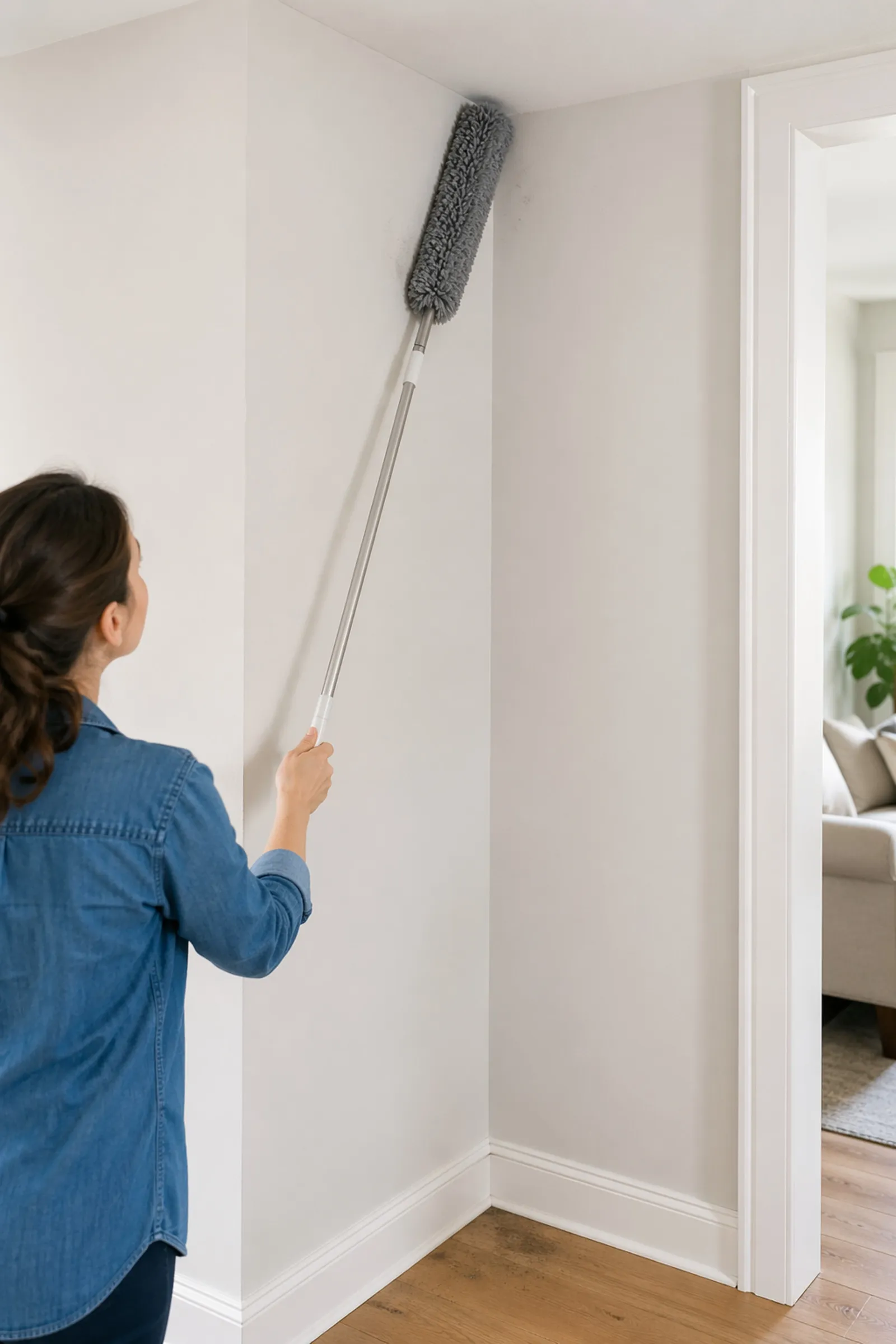
Dust turns into gray streaks when it meets water. That is why clean walls often look worse after the first wipe. The wall was not stained – the dust just got dragged downward.
Start at the top of the wall and work down. Pay attention to corners, ceiling lines, baseboards, vents, and the wall behind furniture. A microfiber mop is useful because it lets you clean tall walls without climbing and keeps pressure even.
If you are cleaning walls before painting, wallpaper, or a peel-and-stick wall mural, do not skip this step. Dust and invisible film can keep paint or adhesive from bonding cleanly.
Always Test Before You Wash the Whole Wall
Paint finish matters. Flat and matte paint can show burnish marks if you rub too hard. Eggshell and satin usually tolerate gentle washing better. Semi-gloss and gloss paint are the easiest to wipe, which is why they are common in kitchens, bathrooms, and trim.
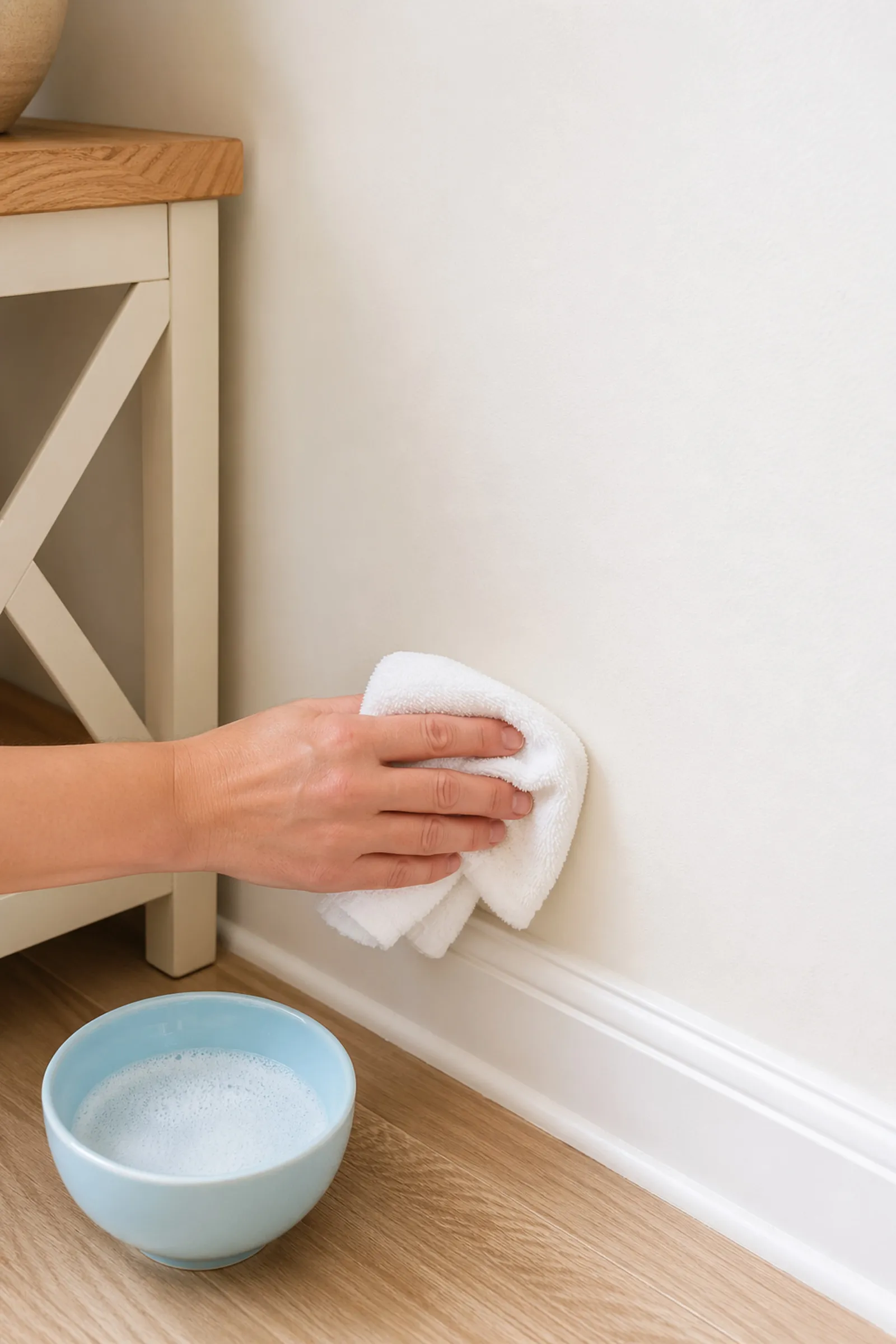
Before cleaning a visible area, test your wall cleaning solution somewhere hidden. Let the test spot dry. If the color lifts onto the cloth, the surface looks shiny, or the paint feels softened, stop and use only dry dusting or call the paint manufacturer for guidance.
Newly painted walls need extra patience. Many paint brands recommend waiting until paint has cured before washing. If the wall was painted recently, do not scrub it just because it feels dry to the touch.
Clean Fingerprints, Door Marks, and Scuffs Gently
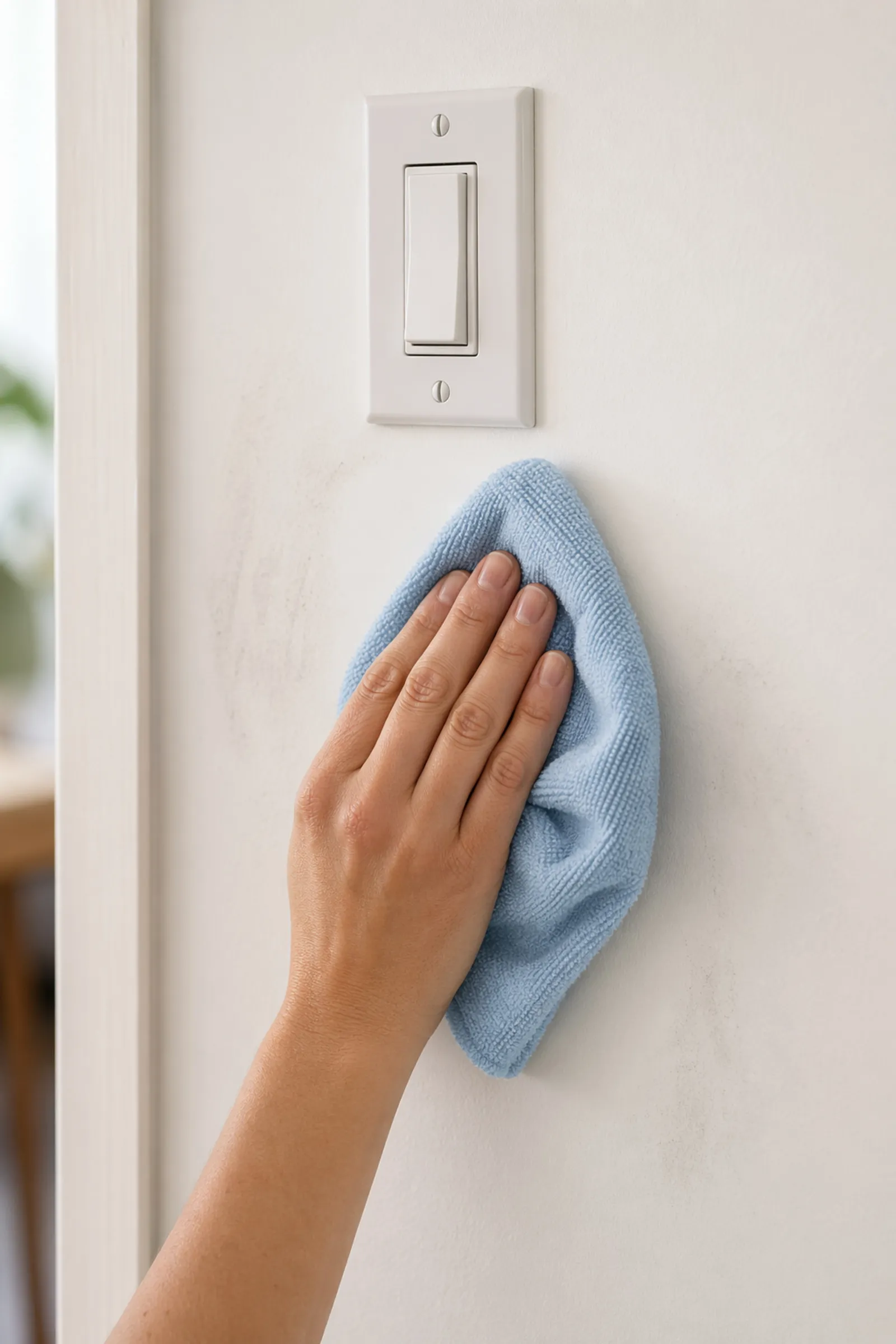
The areas around light switches, door frames, stairways, and kids’ rooms usually need the most attention. Use the least aggressive method first:
- For fingerprints: wipe with a damp microfiber cloth.
- For stubborn fingerprints: add a drop of dish soap to warm water.
- For scuff marks: rub lightly with a damp cloth in small circles.
- For pencil marks: use a clean art eraser first, then wipe.
- For crayon marks: try mild soapy water, then a tiny amount of baking soda paste only after a test spot.
A melamine sponge can remove scuff marks from walls, but use it carefully. It works like a very fine abrasive. On flat paint, dark paint, or low-sheen walls, it can leave a shiny patch that is more noticeable than the original mark.
How to Clean Kitchen Grease Off Walls
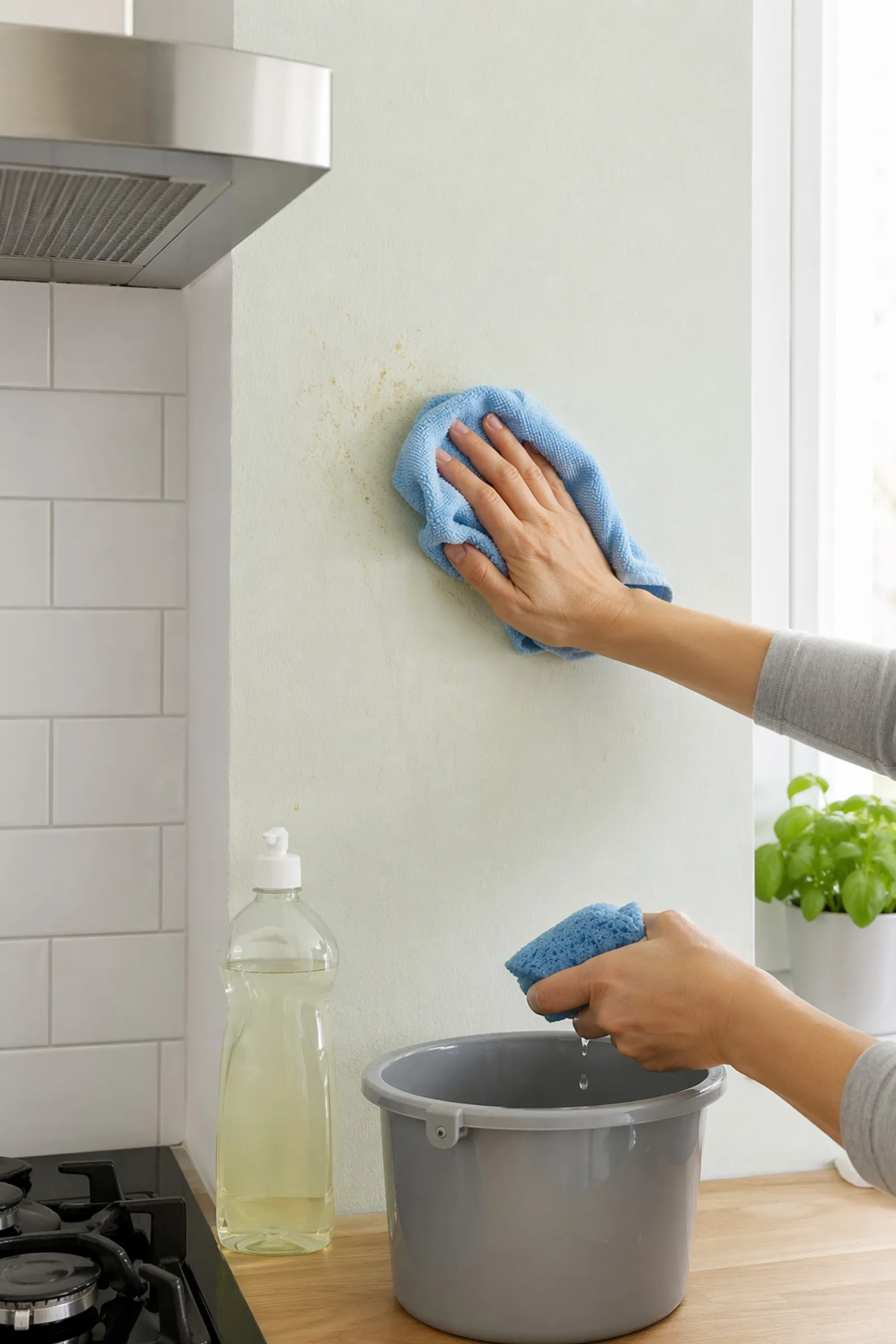
Kitchen walls collect a thin film of cooking grease, even when they do not look dirty. Plain water may smear it around. Start with this simple wall cleaning solution:
- 1 quart warm water
- 2 or 3 drops mild dish soap
- A soft sponge or microfiber cloth
Wring the sponge well, clean a small area, then rinse with a separate damp cloth. Dry right away. Repeat if needed instead of making the first pass wetter.
Do not use a degreaser made for ovens or heavy-duty surfaces unless the label says it is safe for painted walls. Strong degreasers can leave dull patches, especially on lower-sheen paint.
Should You Clean Walls With Vinegar?
Vinegar is a popular cleaning search term, but it is not always the best cleaner for painted walls. It can help cut mild residue on some durable finishes, but acidic cleaners may dull certain paints or affect old, chalky, or low-sheen surfaces.
If you want to clean walls with vinegar, keep it weak: mix 1 part white vinegar with at least 4 parts water, test first, and rinse with clean water afterward. For most everyday wall cleaning, mild dish soap is the safer first choice.
How to Clean White Walls Without Making Streaks
White walls show everything: dust, fingerprints, gray wipe marks, and uneven drying. The fix is not stronger cleaner. The fix is cleaner water and lighter passes.
Use two buckets. Wash with the soapy bucket, rinse with the clean-water bucket, and replace rinse water as soon as it turns cloudy. Work in vertical sections and dry each section before moving on. If you leave a wet edge, you may see streaks when the wall dries.
Dry the Wall Before You Judge the Result
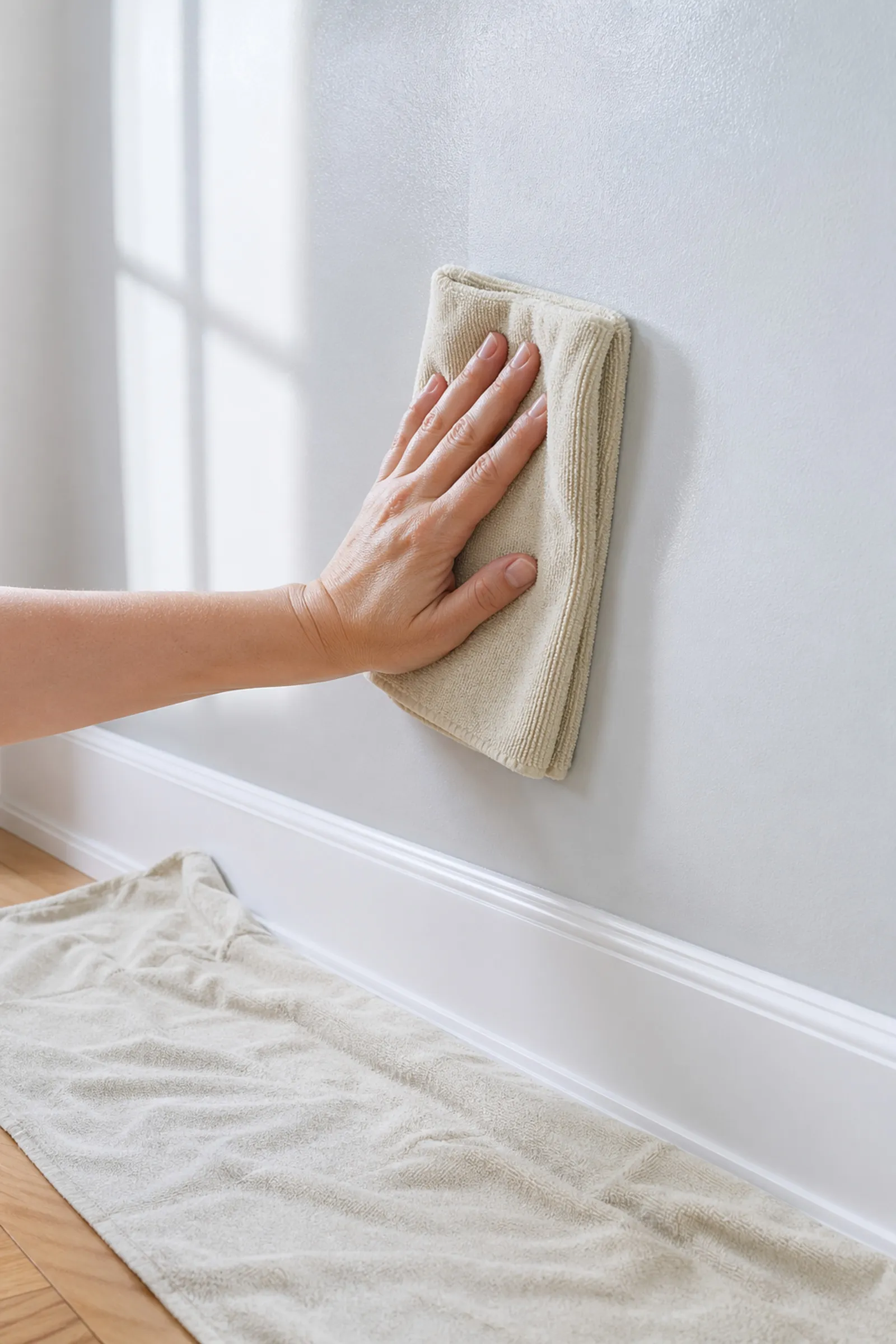
Wet paint can look blotchy while it dries. Before you decide a stain is still there, let the area dry fully. If the mark remains, repeat the gentle method one more time.
If a stain has soaked into the paint, cleaning may not remove it. Smoke, water stains, marker, old grease, and mildew can require primer and repainting. Scrubbing harder usually just damages the finish.
Cleaning Walls Before Wallpaper, Murals, or Paint
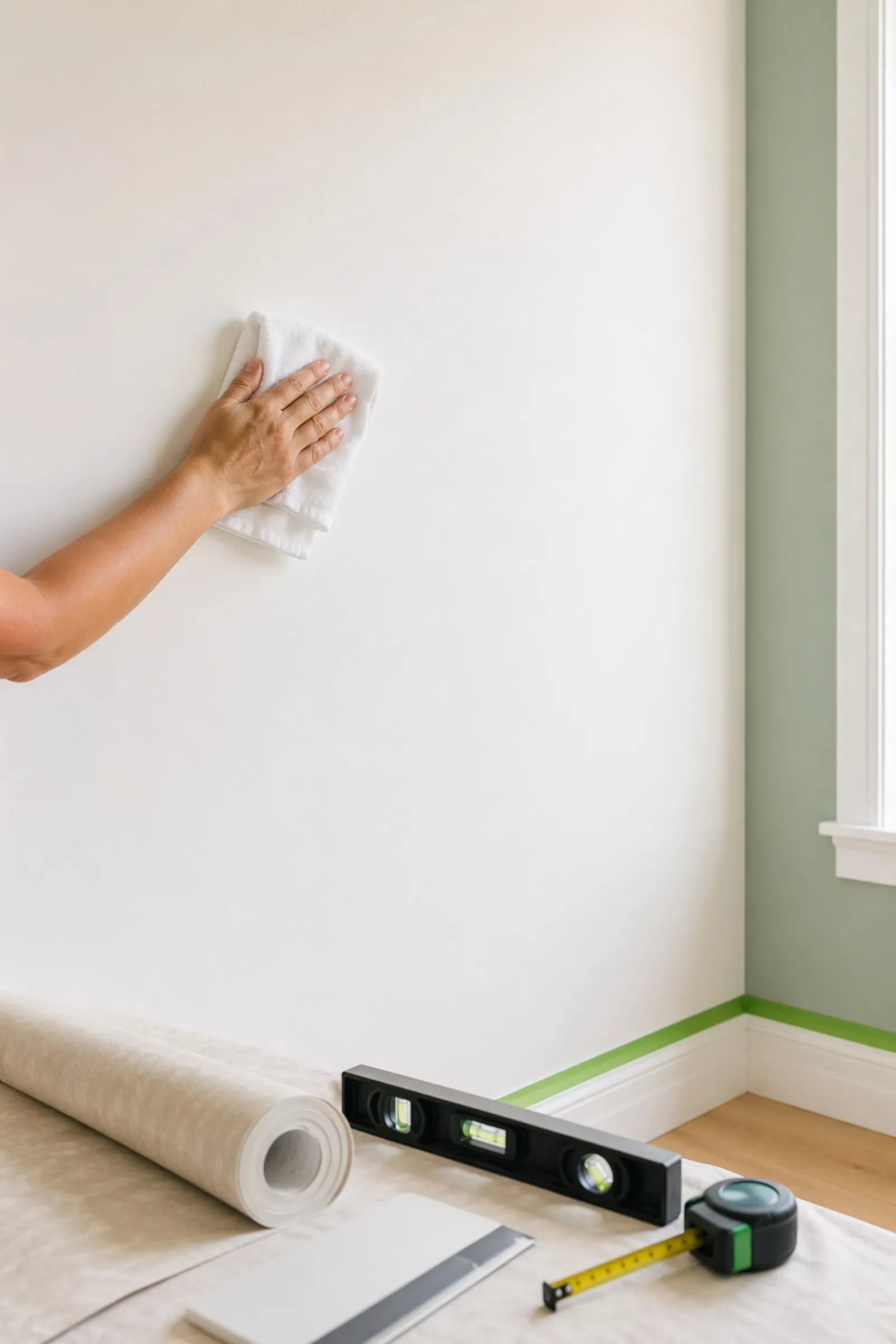
If you are preparing walls for wallpaper, a wall mural, peel-and-stick wallpaper, or paint, the wall has to be more than visibly clean. It needs to be dry, smooth, and free of residue.
Use this prep sequence:
- Dust the wall from ceiling line to baseboard.
- Wash greasy or high-touch areas with mild soapy water.
- Rinse with clean water so no soap film remains.
- Let the wall dry completely.
- Patch holes, sand rough spots, and wipe away sanding dust.
- Check that the surface is smooth before installing wallpaper or painting.
Do not apply wallpaper or a mural over a damp wall. Moisture and soap residue can weaken adhesion and create bubbles. If the room is humid, give the wall more drying time.
Easy Wall Stain Guide
| Wall problem | Best first move | What to avoid |
|---|---|---|
| Dusty wall | Dry microfiber mop from top to bottom | Washing before dusting |
| Fingerprints | Damp microfiber cloth | Hard scrubbing |
| Light scuffs | Mild soapy water and soft cloth | Abrasive pads on flat paint |
| Kitchen grease | A few drops of dish soap in warm water | Oven degreaser or soaking the wall |
| Crayon | Mild soap, then tested baking soda paste | Solvents without a test spot |
| Mildew spots | Fix moisture source, then use a cleaner safe for the surface | Painting over active mildew |
| Unknown stain | Test a hidden area, clean gently, dry, reassess | Jumping straight to bleach |
Mistakes That Make Walls Harder to Clean
The fastest way to ruin a painted wall is to treat it like tile. Painted drywall is not built for heavy soaking or aggressive scrubbing.
Avoid these common mistakes:
- Using a dripping sponge
- Spraying cleaner directly onto the wall
- Scrubbing one small spot until it turns shiny
- Using a magic eraser on flat paint without testing
- Forgetting to rinse soap residue
- Letting dirty rinse water touch the wall again
- Cleaning newly painted walls too soon
If you clean gently and dry as you go, most walls look fresher in under an hour.
FAQ
What is the easiest way to clean walls?
The easiest way to clean walls is to dust first, then wipe with a barely damp microfiber cloth. Use mild dish soap only for smudges, grease, or fingerprints. Rinse lightly and dry with a towel.
How do you clean walls without removing paint?
Use a soft cloth, mild cleaner, and light pressure. Test a hidden area first. Avoid soaking the wall, abrasive pads, strong cleaners, and repeated scrubbing in one spot.
Can I use a mop to clean walls?
Yes. A clean microfiber flat mop is one of the easiest wall cleaning tools for large areas. Use it dry for dusting and barely damp for washing. Do not use a dirty floor mop on walls.
What is the best homemade wall cleaning solution?
For most painted walls, mix a few drops of mild dish soap into a bucket of warm water. That is enough for everyday dirt and safer than strong homemade mixes.
How often should walls be cleaned?
Dust walls every few months, or more often near vents and high-traffic areas. Wash visible smudges as needed. Kitchens, hallways, kids’ rooms, and entryways usually need cleaning more often than bedrooms.
Do I need to clean walls before wallpaper?
Yes. Clean walls before wallpaper, wall murals, or peel-and-stick wallpaper. Dust, grease, and soap residue can weaken adhesion. Wash gently, rinse, and let the wall dry completely before installation.
The Simple Rule
Clean walls do not come from stronger chemicals. They come from the right order: dust, test, wash lightly, rinse, dry. Keep the wall as dry as possible, and you will remove the marks without making a new problem in the paint.