Moody Forest Murals for Dining Rooms With Candlelight and Brass
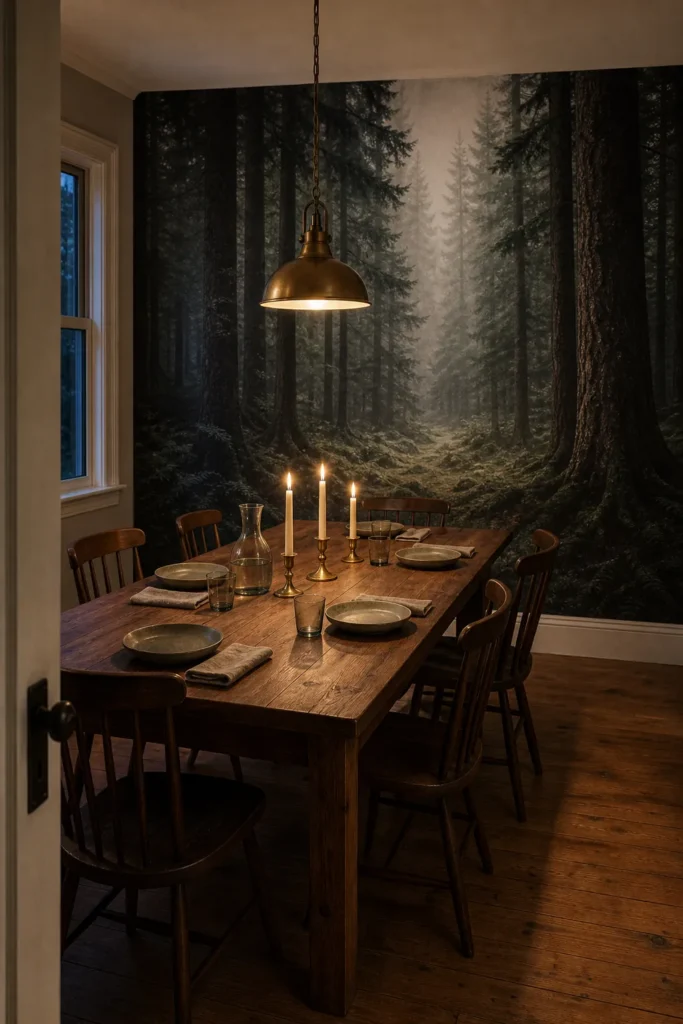
A forest mural can make dinner feel like an event before the first plate arrives. The risk is that the same wall can become a dark backdrop with no detail once evening falls. A successful moody forest mural is designed for two rooms at once: the dining room you see in daylight and the one revealed by lamps and candlelight.
The aim is not maximum darkness. It is controlled depth: distinct foreground trunks, a softer middle distance, small passages of sky or mist, and warm metal that catches light in precise places. When those layers are planned around the table, a dark dining room mural feels atmospheric rather than theatrical.
Choose a forest with visible depth after sunset
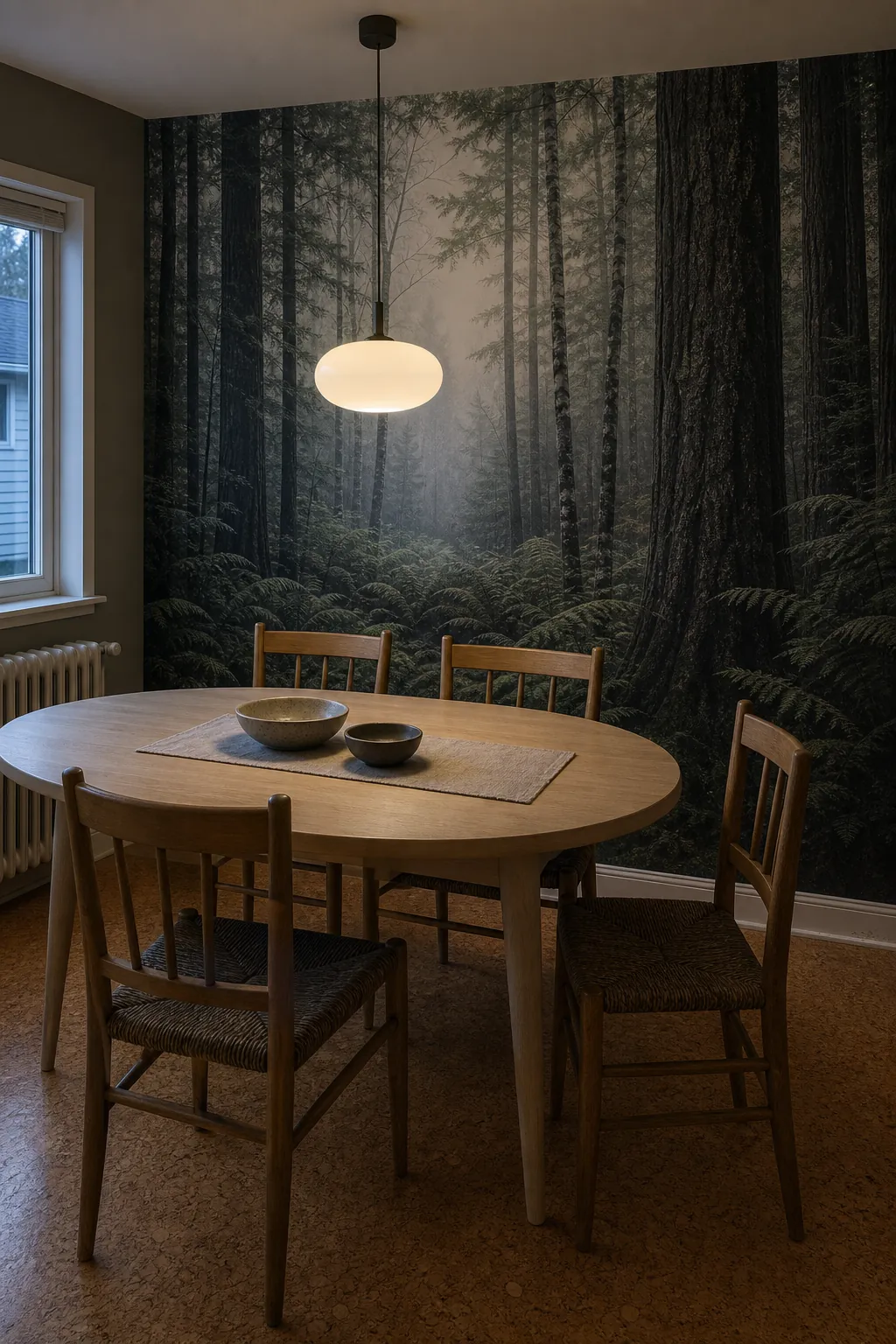

Look for at least three value zones. Dark foreground branches give the image weight; mid-tone trunks establish distance; a muted clearing, fog bank, or pale sky prevents the scene from closing up. A mural made almost entirely of green-black detail may look rich online but turn into a flat rectangle under low light.
View a large sample from the far side of the room, then dim the lights. If you can still read the route through the scene, the wall will keep its dimension at dinner. Avoid forests with hundreds of equally sharp leaves. A few clear forms create more atmosphere than uniform detail everywhere.
Place the crop around seated sightlines
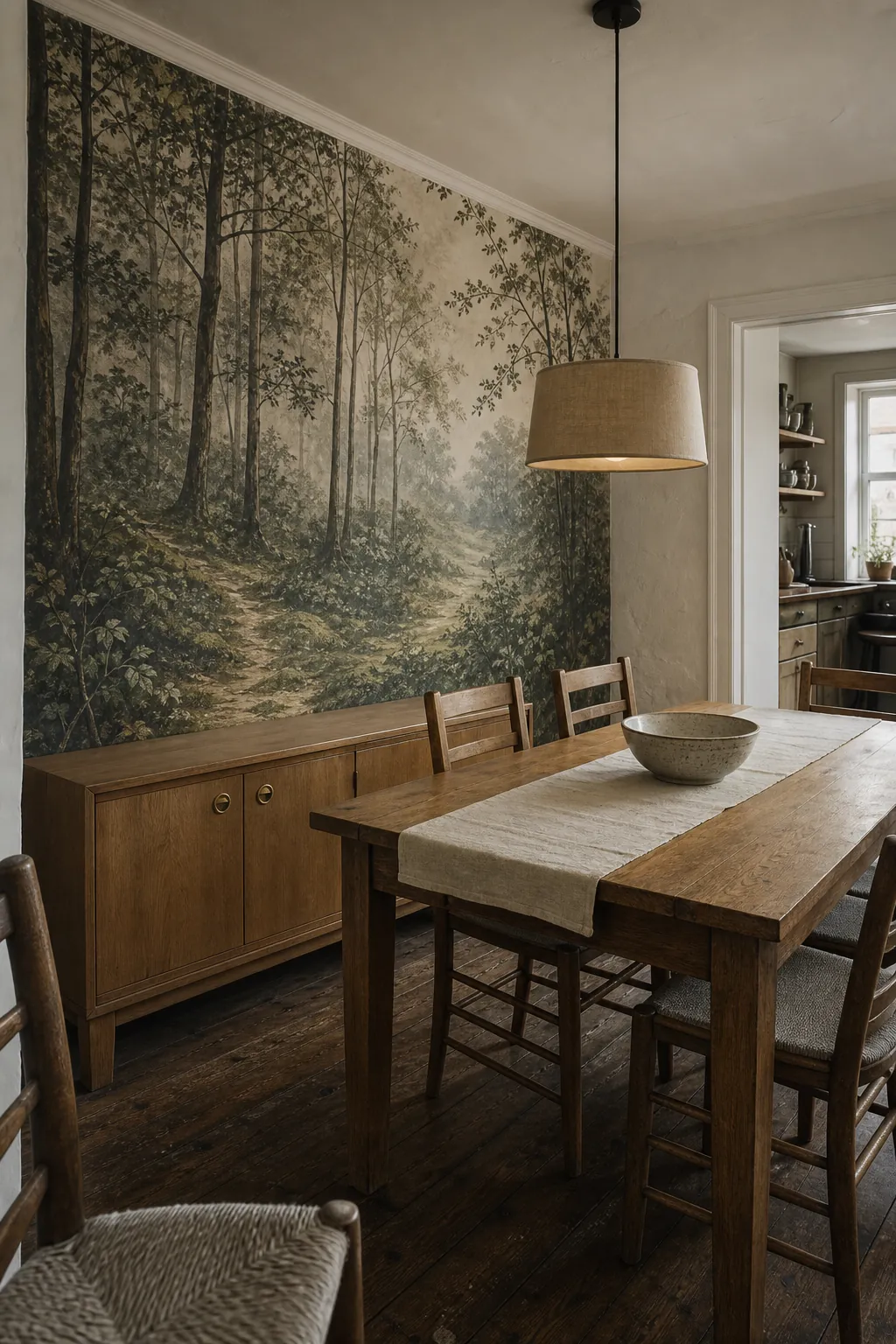

A dining mural is seen across a table, between chairs, and from seated height. Mark the tabletop, chair backs, sideboard, switches, and sconces on the manufacturer’s proof. Keep the main path or clearing visible above the table, and avoid placing a dominant tree directly behind a pendant where the two shapes merge.
Custom sizing matters with a forest wallpaper dining room because enlarging or trimming can change the story. A beautiful low foreground may disappear behind furniture. A tall canopy may be lost on an eight-foot wall. Ask for the exact crop, including bleed, and judge it at the proportions of the real wall.
Use brass as a light-catching accent
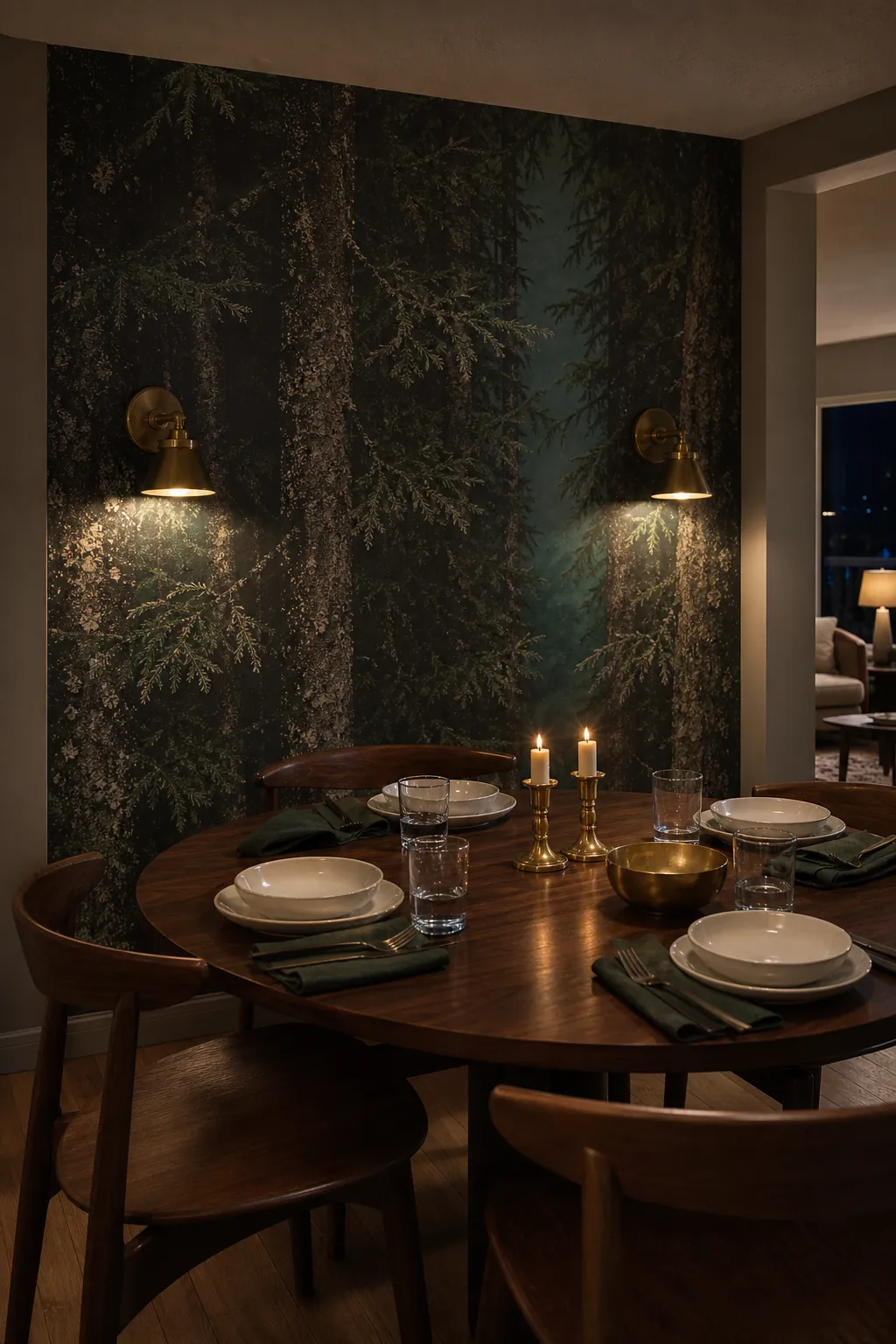

Brass works because it introduces small warm highlights against cool foliage. It stops working when every object is metallic. Choose one dominant brass family—aged, unlacquered, satin, or antique—and repeat it in two or three places such as sconces, candlesticks, and a narrow pendant detail.
Allow patina and slight variation. Perfectly bright gold can make a subtle scenic wall feel like a themed restaurant. Aged brass has darker low points, so it belongs naturally beside bark, walnut, linen, and pottery. Blackened steel or dark bronze can handle the larger structural pieces while brass supplies the glow.
Layer candlelight with safe electric light
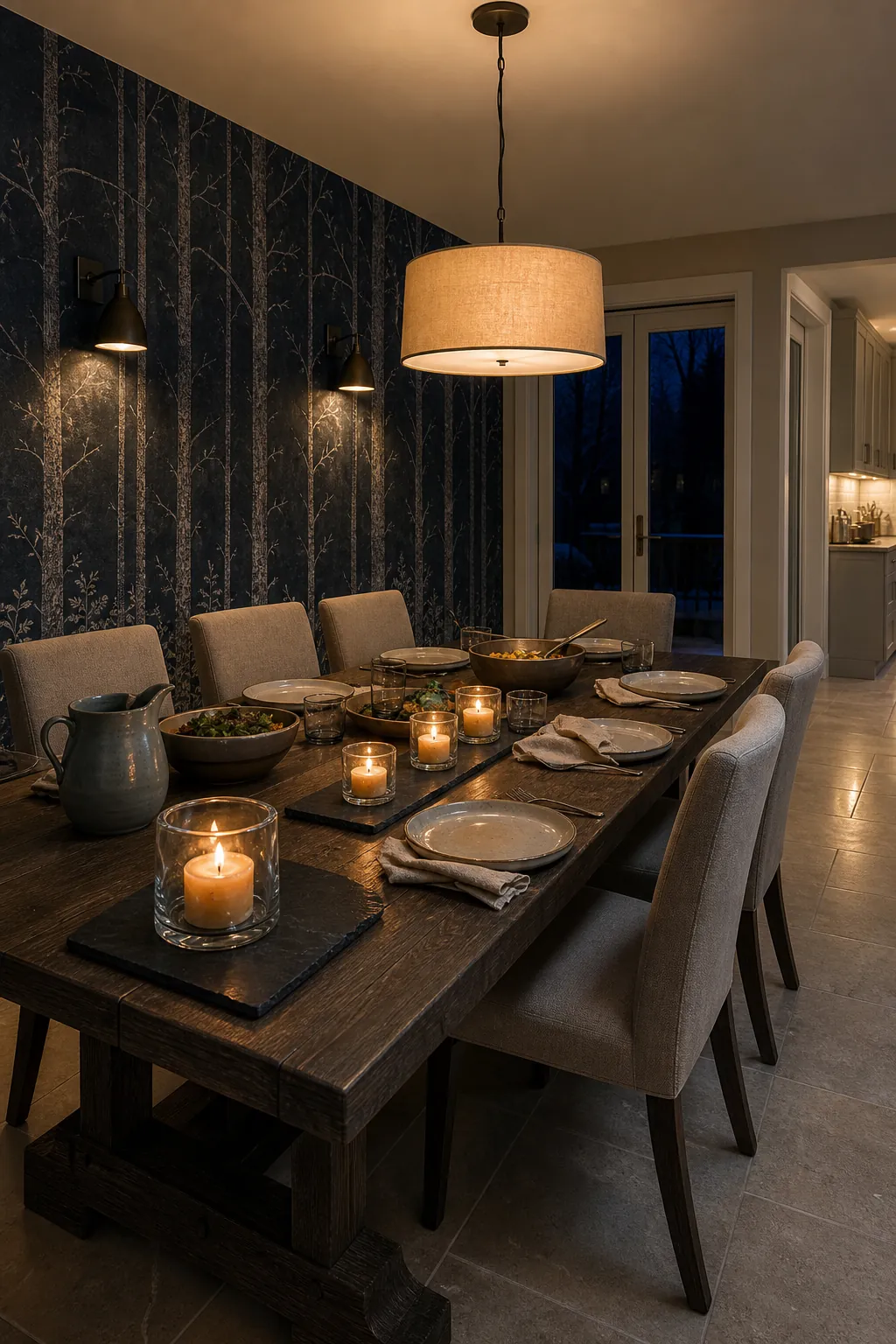

Candles are an accent, not the room’s lighting plan. Use dimmable shaded sconces, a pendant with controlled downward light, or a lamp on the sideboard to make faces, food, and the floor easy to see. Then add low candles where sleeves, greenery, curtains, and passing guests cannot reach them.
Keep real flames well away from the mural, paper, and wall-mounted foliage, and never leave them unattended. Flameless candles are the safer choice for long dinners or homes with children and pets. Whichever you use, select a warm color that does not turn the candlelight dining room wallpaper muddy yellow.
Balance the scene with quiet table textures
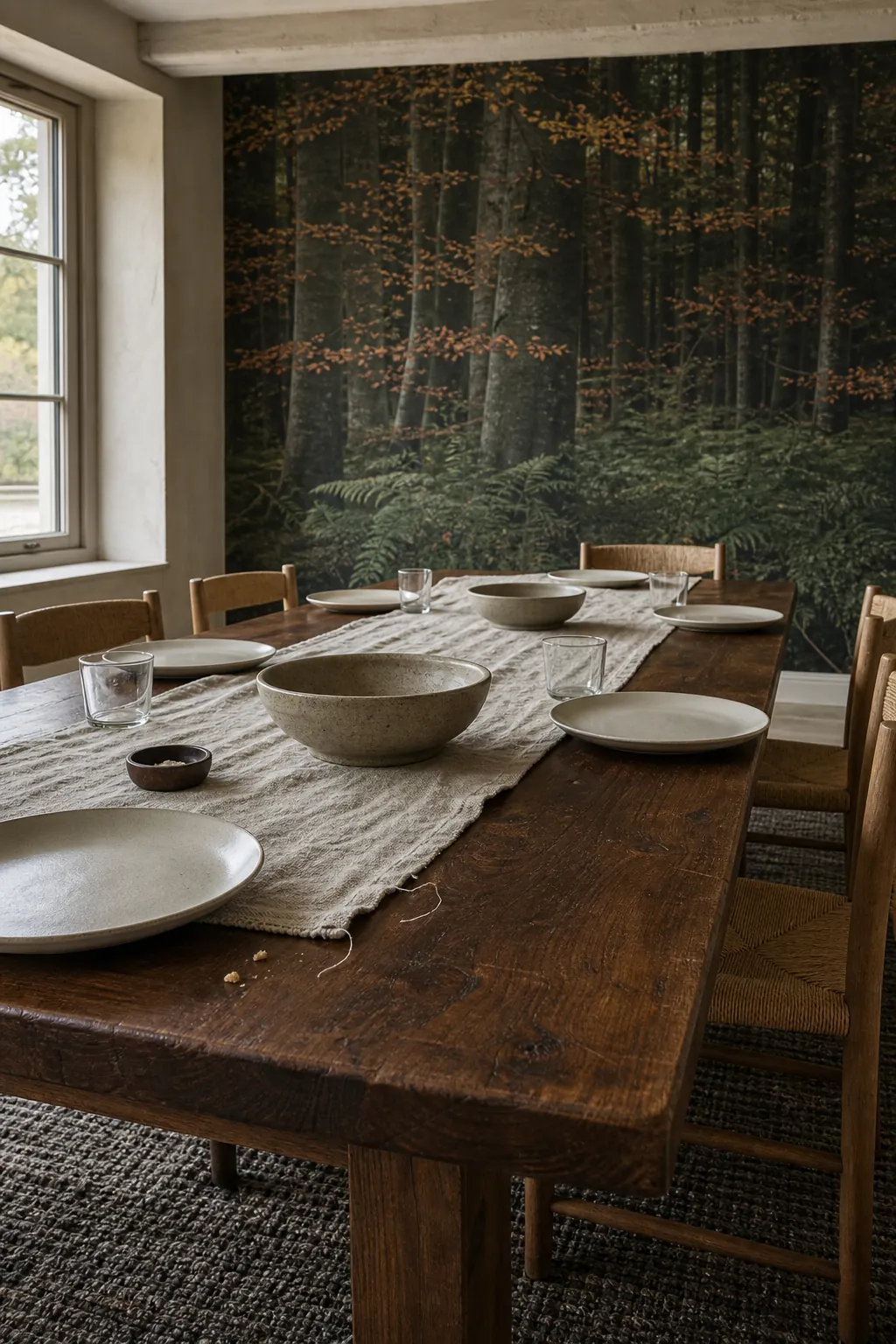

The mural already supplies leaves, branches, and motion. Let the table introduce calm through solid materials: walnut or oak, plain linen, matte ceramic, clear glass, and perhaps one low arrangement. Repeating the forest with botanical plates, leaf-print curtains, and a patterned rug usually weakens the composition rather than enriching it.
A narrow palette helps food remain the visual focus. Cream napkins, smoke-gray ceramics, clear glass, and dark wood let a green black mural wallpaper feel deep without making the whole setting monochrome. Texture should be visible at arm’s length, while the wall carries imagery across the room.
Prepare the wall for pale mist and dark seams
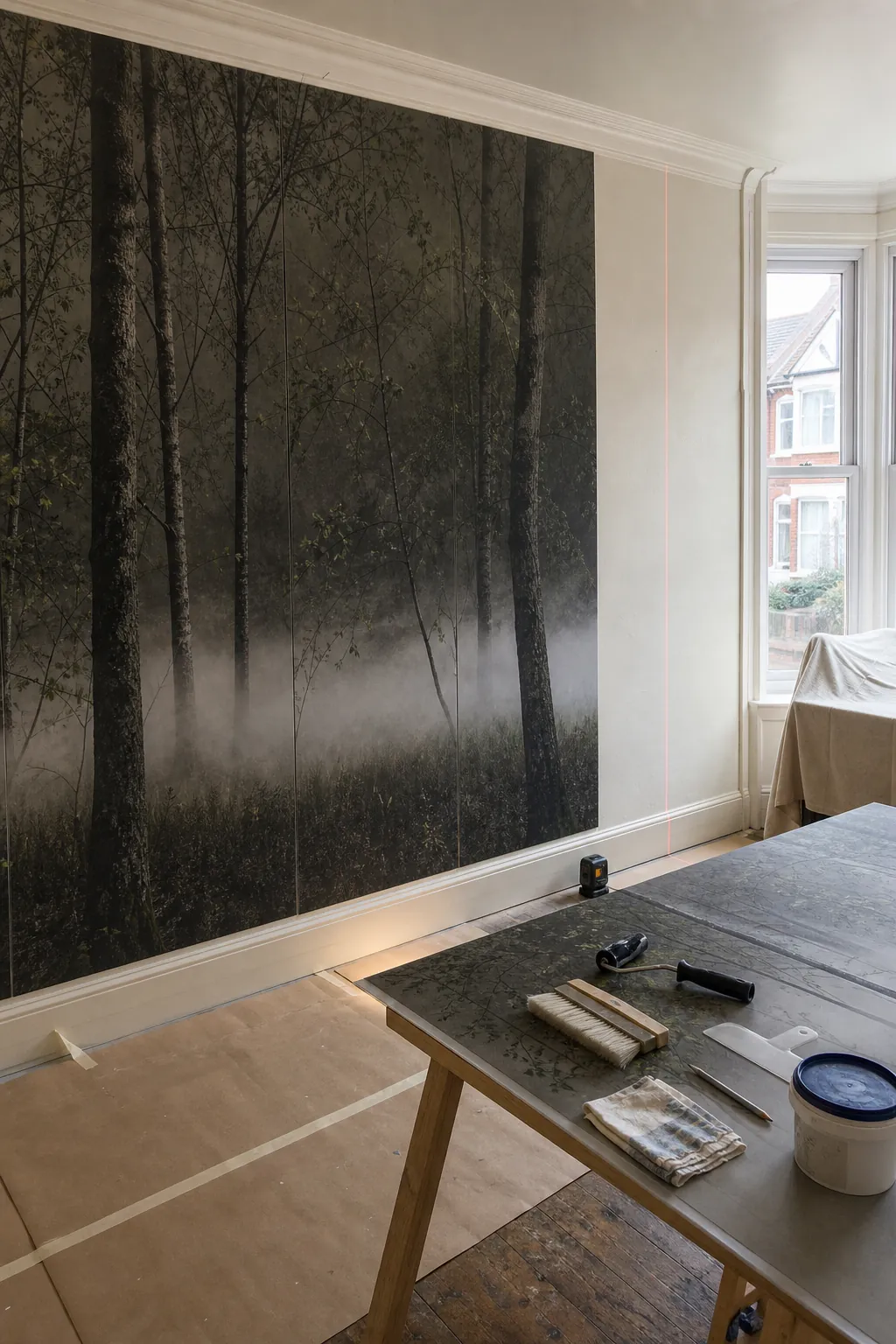

A scenic gradient exposes installation errors. Pale fog can reveal an unprimed patch, while a narrow light line between dark panels becomes obvious at night. Repair, sand, clean, and prime the wall according to the product requirements. Lay every numbered panel out and confirm the full image before adhesive touches the wall.
Start from a true plumb line, not a corner. Follow the maker’s instructions for butt seams or overlap-and-trim installation, and keep paste off the printed face. High walls, uneven plaster, expensive custom murals, and complex crops are sensible reasons to hire an experienced installer.
Test the dining room in both of its lives
Tape the largest sample behind the table and live with it through breakfast and dinner. During the day, check whether greens turn blue or flat beside your paint. At night, use the exact bulbs, shades, and candle type you plan to keep. Photograph the sample from the doorway and each regular seat; a crop that works standing up may feel blocked once everyone sits down.
Measure the wall carefully, include the maker’s stated allowance, and verify washability, fire guidance, paste, primer, and removal requirements. In dining rooms, the material should tolerate the ordinary moisture and marks that come with serving food, but cleaning methods vary widely between products.
The strongest room does not look like a forest-themed set. It feels as though the architecture opens into a darker distance, while brass, linen, wood, and candlelight remain firmly in the human foreground. That contrast is what turns a mural into atmosphere.