Beige Landscape Murals for Bedrooms With Linen Bedding
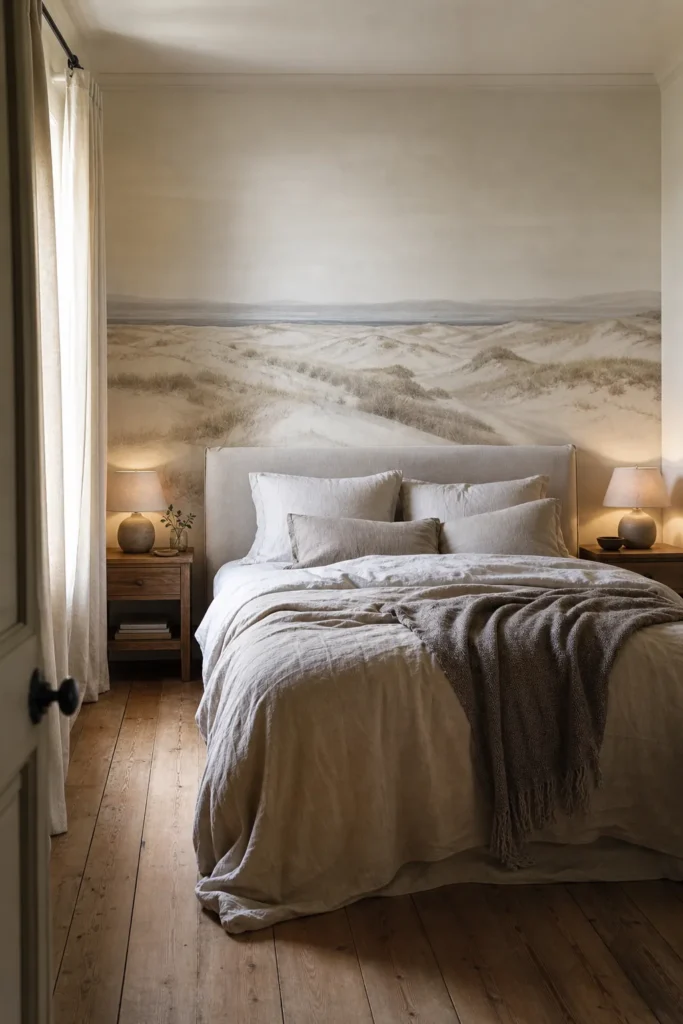
A beige bedroom can feel deeply restful—or strangely unfinished. The difference is rarely the amount of beige. It is the range of light, texture, and visual depth inside the palette. A beige landscape mural gives the eye somewhere to travel, while rumpled linen bedding keeps the room grounded in something touchable and real.
The most convincing rooms do not match the mural to the duvet exactly. They build a quiet relationship between them: a warm horizon echoed by flax linen, a smoky ridge balanced by mushroom cushions, or pale sky tones lifted by an ivory sheet. This guide shows how to create that balance without making the bedroom feel flat, busy, or overly staged.
Choose a Landscape With Breathing Room
Start with the landscape’s composition, not just its color. Behind a bed, an open horizon, soft valley, distant tree line, or low-contrast coastal plain usually gives the headboard enough visual space. A mural packed with dark branches or sharp detail directly behind the pillows can make even a pale room feel restless.
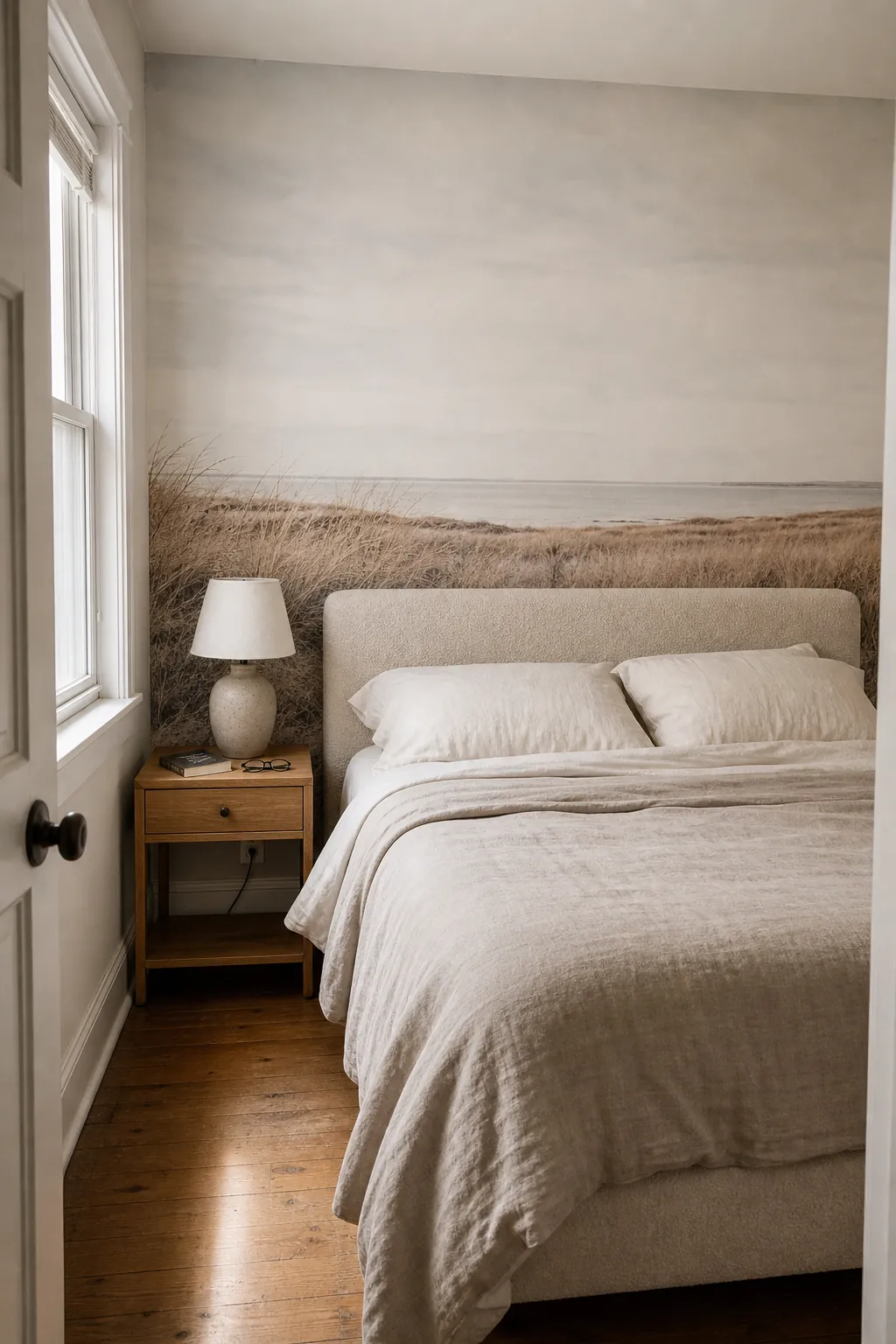

Look at the mural from across the room and imagine the bed covering its lower third. The important feature should remain visible above the headboard, but it should not appear to sit on top of it. The bed and mural need a clear hierarchy: the mural creates atmosphere; the bed remains the physical anchor.
For a small bedroom, choose distant scenery with fine tonal transitions rather than a close, oversized subject. The suggestion of depth can visually extend the wall. In a larger room, broader landforms and slightly stronger contrast can hold their own without overwhelming the furniture.
Match Undertones Instead of Exact Shades
“Beige” can lean pink, yellow, gray, green, or brown. That undertone matters more than finding an identical color. Put a rosy oat duvet against a green-gray mural and both may look wrong, even if each looked neutral on its own. A warm neutral mural works most naturally with flax, oatmeal, cream, camel, clay, and softened white linen.
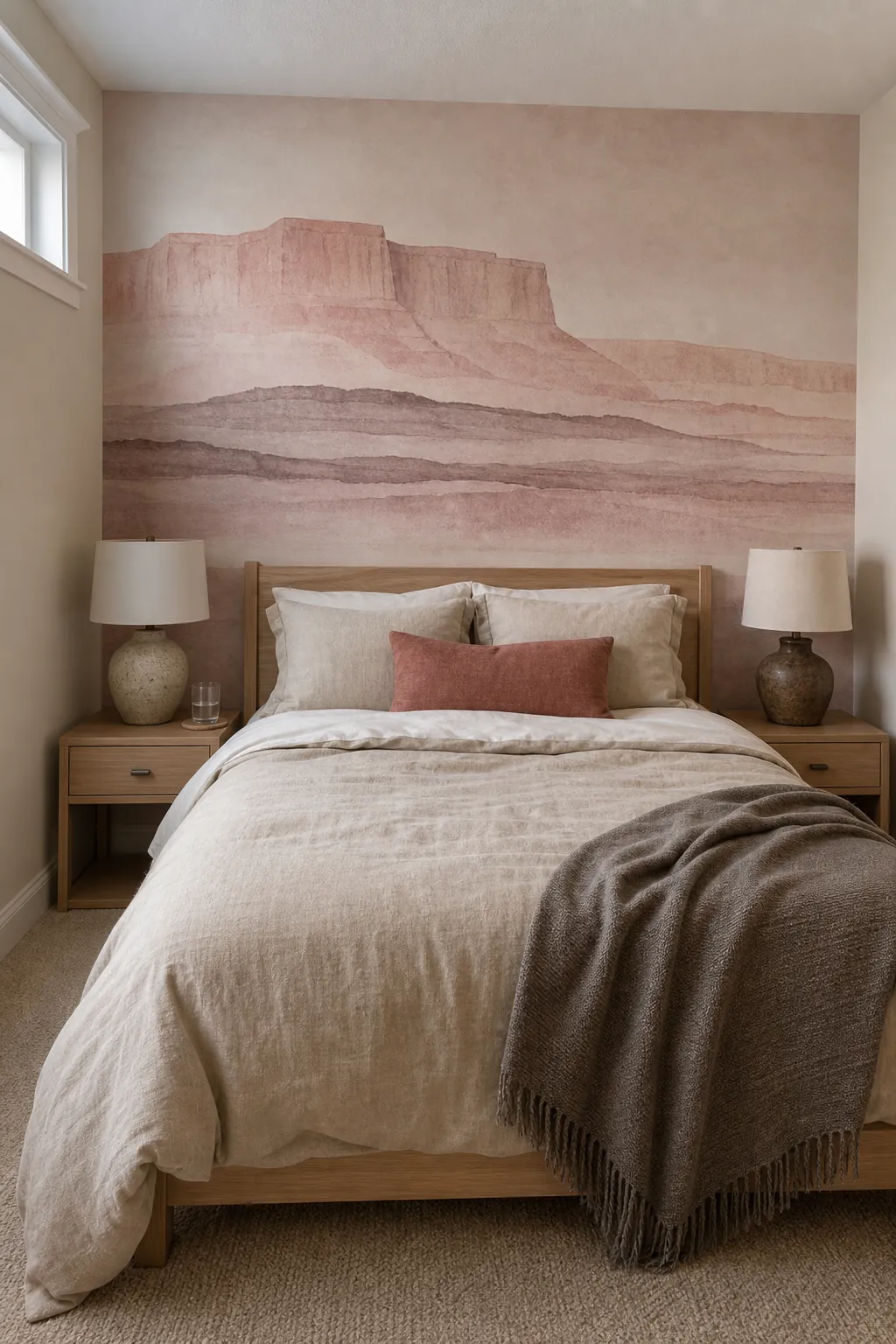

Test samples in the bedroom at morning, afternoon, and night. Linen absorbs and scatters light across its weave, so a duvet can look cooler in shadow and more golden beside a lamp. The same shift happens across a printed mural. Choose the pairing that remains harmonious in the light you use most, not the one that looks perfect for five minutes at noon.
If the two undertones almost work but feel slightly disconnected, add one bridging textile. A taupe lumbar cushion can connect greige hills to warm flax bedding; a soft ivory throw can lift both a creamy mural and a darker oatmeal duvet. One bridge is more effective than scattering five unrelated beige accessories around the room.
Use Linen Texture to Keep Beige From Feeling Flat
Real linen is valuable in a neutral bedroom because its irregular slubs, softened creases, and matte surface create contrast without introducing a loud pattern. Pair a washed linen duvet with smoother cotton sheets, a chunky wool throw, or a tightly woven bench. The colors can stay restrained while the surfaces do the decorating.
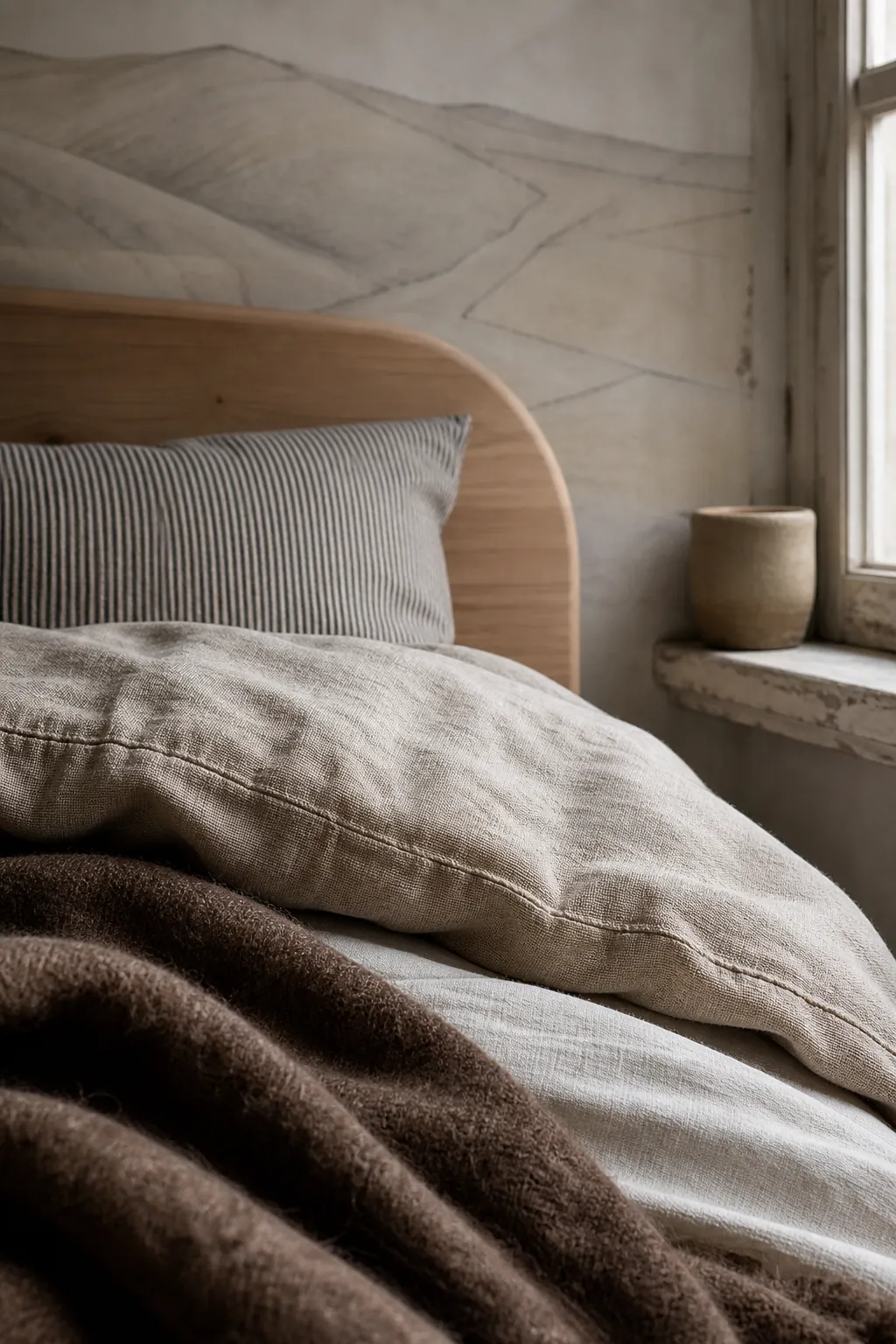

A useful rule is to vary texture more than color. Let the mural provide soft visual movement, the duvet provide broad folds, and smaller textiles provide tighter grain. When everything has the same smooth finish, the room reads like a digital rendering. When every surface is heavily textured, the calm disappears.
Keep most bedding solid if the landscape contains visible brushwork, fog, layered hills, or tree silhouettes. A narrow stripe or tiny check can work on one cushion, but competing botanical or scenic prints usually weaken the mural’s role. Give the eye one story and several textures.
Place the Bed Before You Crop the Mural
A beautiful file can become an awkward wall if the crop ignores the furniture. Measure the full wall, the headboard height, bedside furniture, switches, windows, and any sloped ceiling. Mark those dimensions on a photo or paper sketch before ordering. The goal is to protect the mural’s focal area from the objects that will permanently sit in front of it.
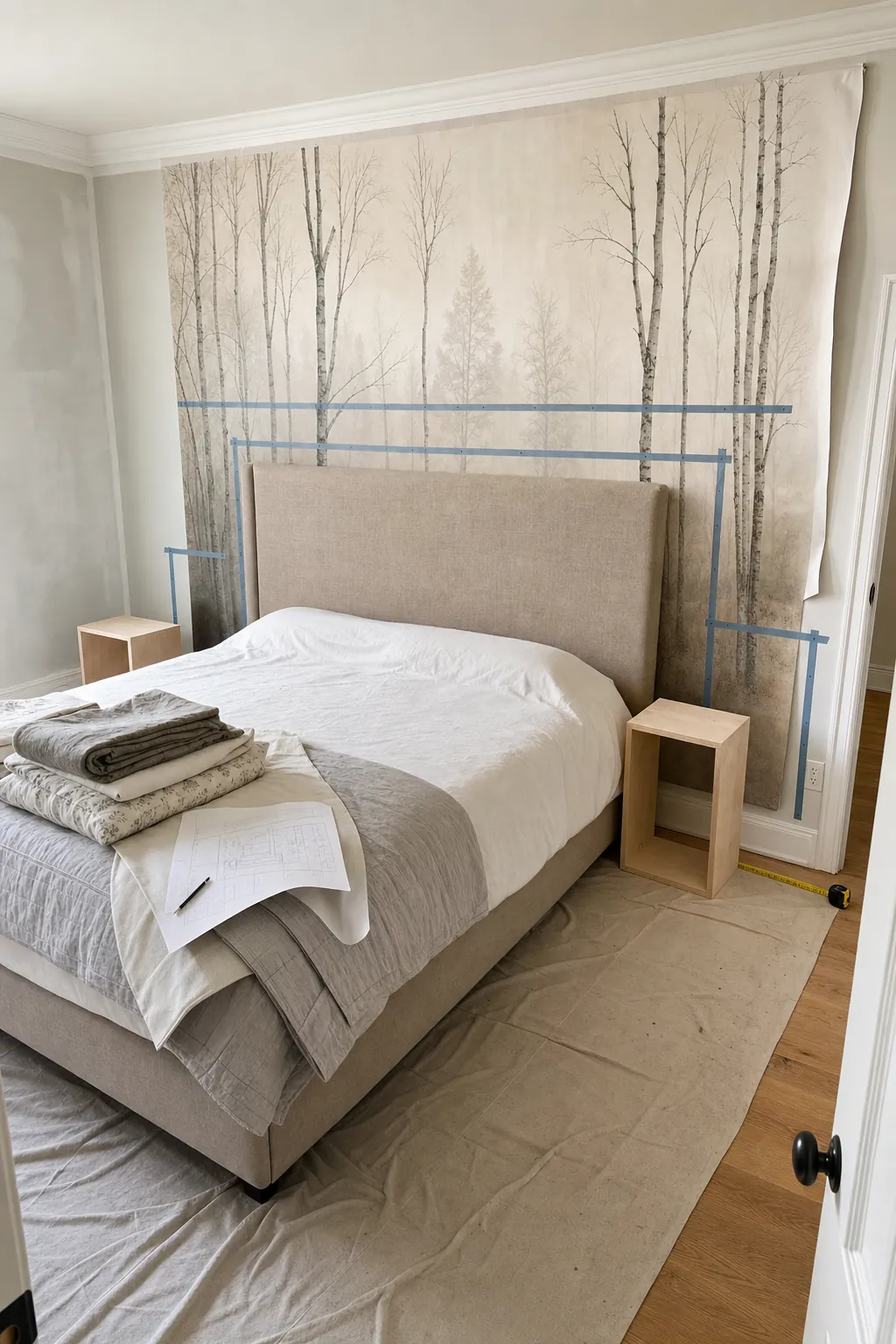

Centering is not always the answer. If a door removes part of the wall, shifting the main ridge or tree cluster toward the bed may create a more balanced finished view. Ask for a crop preview using your exact wall proportions. If the design is supplied in panels, confirm where the panel joins will fall in relation to the headboard edges.
Visible seams, bubbles, and raised wall defects are especially noticeable in quiet, low-contrast murals because there is no busy pattern to disguise them. Smooth the wall, repair damage, remove dust, follow the material’s curing guidance, and use the recommended installation method. For an expensive mural or a difficult wall, professional hanging can protect both the image and the finish.
Build Contrast With Wood, Stone, and One Dark Note
A calm beige wall mural does not require an entirely pale room. In fact, a small amount of darker material often makes the neutral layers feel intentional. Walnut or smoked oak bedside tables, an aged bronze lamp, a charcoal cushion, or a deep brown bed frame can outline the softer elements without turning the bedroom moody.
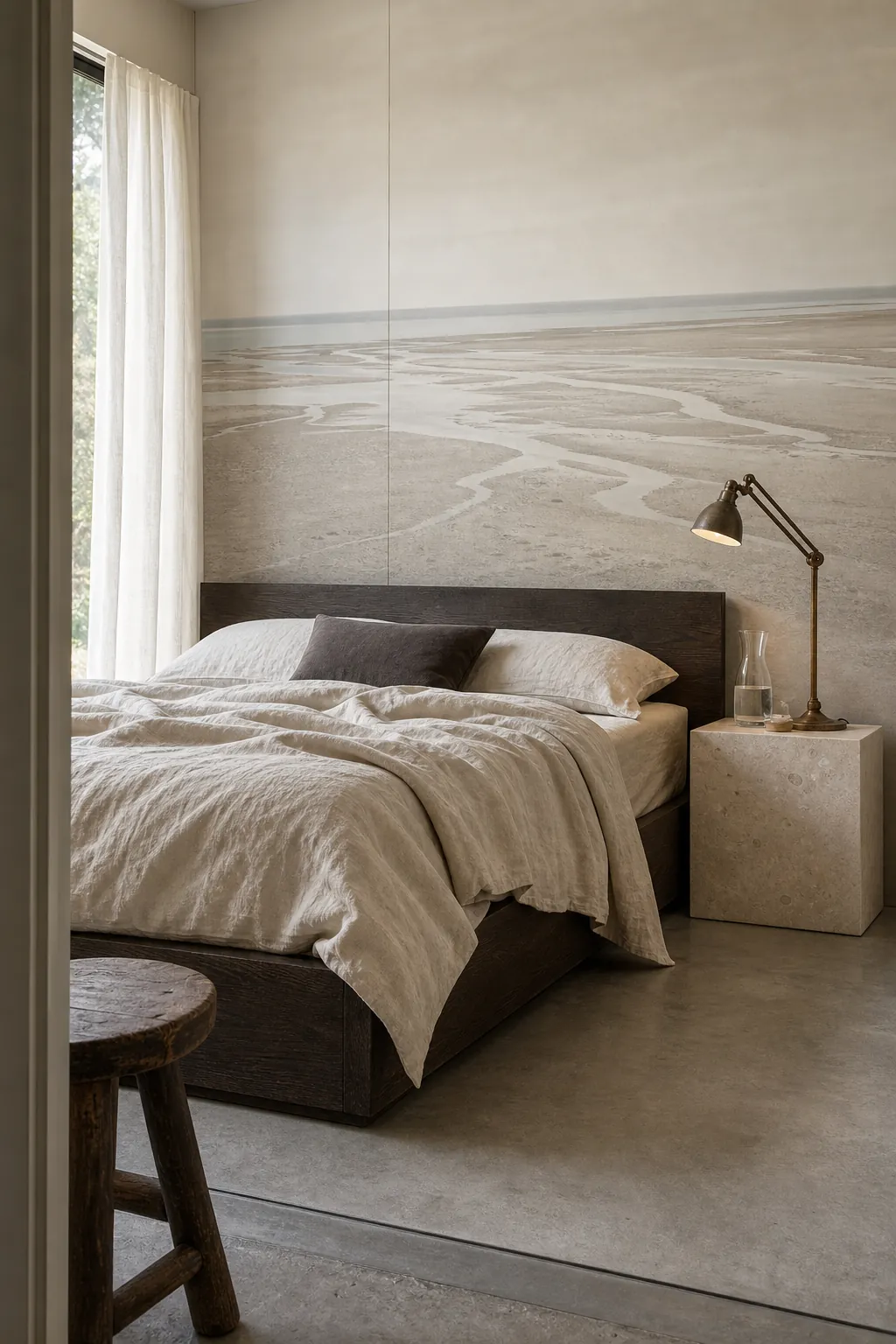

Choose materials that already belong to the landscape’s visual world. Pale oak suits sandy plains and misty dunes; weathered timber works with rustic hills; honed limestone echoes chalky cliffs; dark bronze can repeat a fine branch or distant ridge. These links should be subtle. The room feels cohesive because materials share a character, not because every color is duplicated.
Limit the strongest contrast to one or two places. If the bed frame, lamps, curtains, rug, and cushions all turn dark, the mural stops feeling soft. A single dark line near the bed and one echo elsewhere are usually enough to give the composition structure.
Let Evening Light Decide the Final Mood
A bedroom is experienced most often in the softer hours, so judge the finished scheme after sunset as carefully as you judge it in daylight. Warm bedside lamps can bring out sand and flax tones, while very cool bulbs may flatten cream into gray. A shaded lamp placed slightly forward of the mural creates gentle raking light across linen folds without producing distracting glare on the wall.
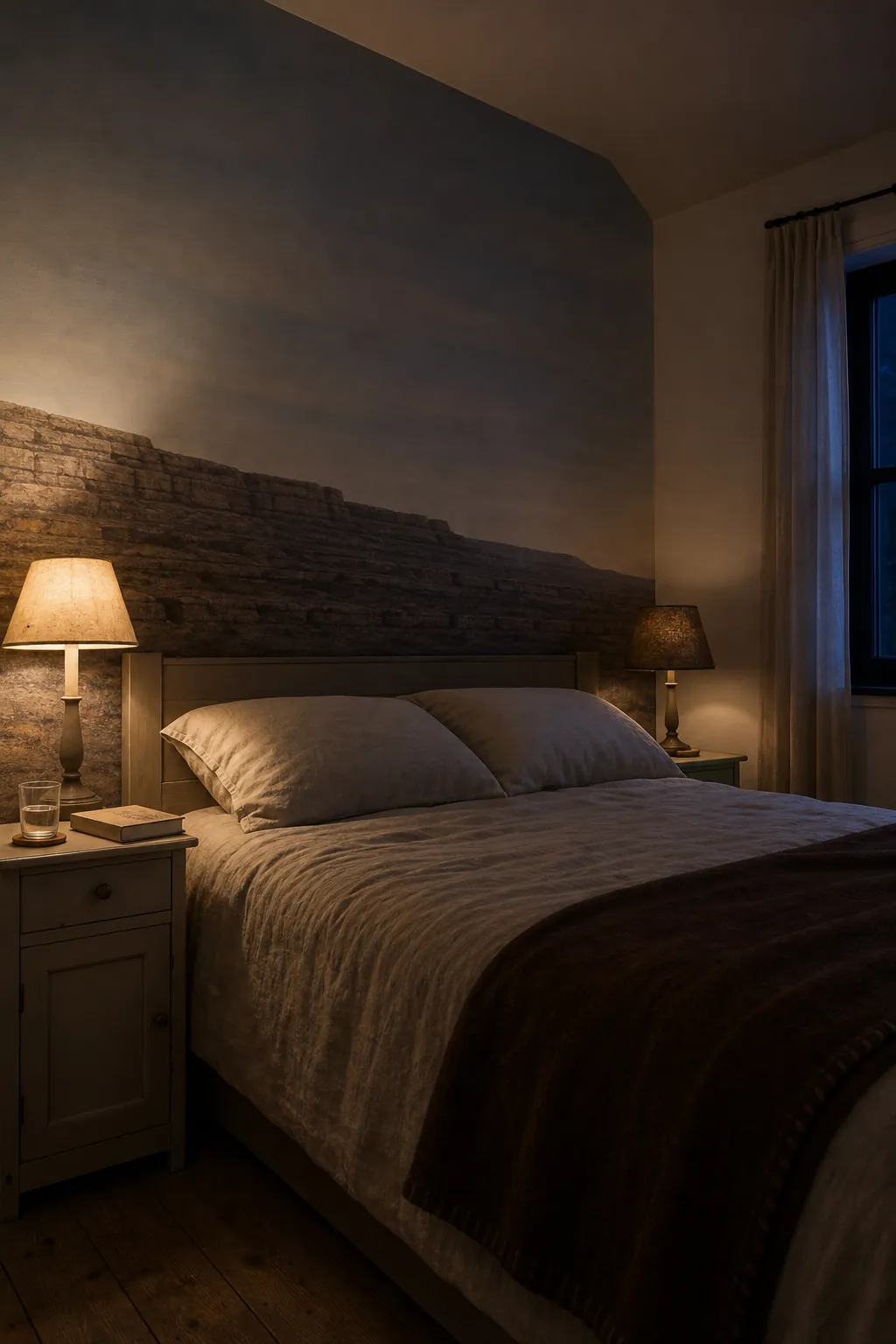

Keep the ceiling light for practical tasks and create a lower layer for winding down. Two small lamps do not have to match perfectly, but their color temperature should agree. If the mural has a matte, softly printed finish, the evening light will reveal tonal depth rather than a shiny hotspot.
The finished room should feel calm from the doorway and interesting from the bed. When the horizon sits comfortably above the headboard, the linen introduces honest texture, and a few natural materials add contrast, beige stops being a default. It becomes a deliberate atmosphere—quiet enough for sleep, but layered enough to feel lived in.