Dark Wall Papering Ideas for a Moody, Livable Living Room
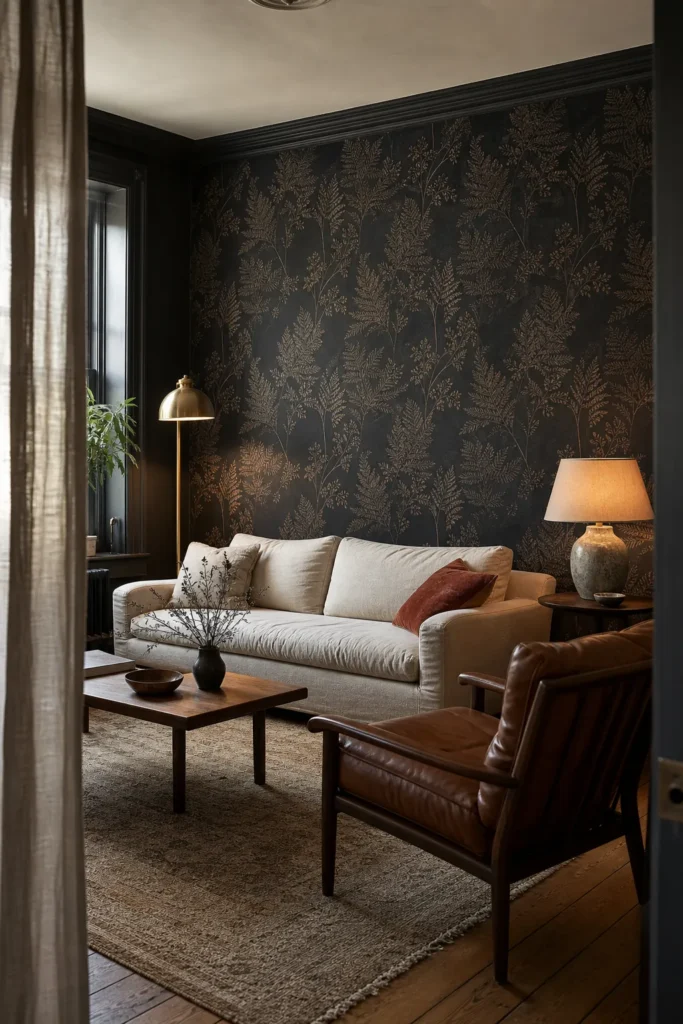
Dark wallpaper does not automatically make a living room gloomy. A flat lighting plan, an untested undertone, and too many equally dark surfaces do. The strongest dark wall papering ideas treat the paper as one part of a contrast system: deep walls, readable furniture silhouettes, lighter floor or textiles, and several pools of light.
The goal is not to imitate a moody photograph at noon. It is to build a room that still works on a gray afternoon and after sunset. Start by testing the actual paper, then decide how much wall it should occupy.
Test the Undertone in Every Lighting Condition
Charcoal can lean blue, brown, green, or purple. Navy can look almost black at night and unexpectedly bright in direct sun. Tape a large sample near the window and move it into the darkest corner for several evenings. View it with the ceiling light off and the lamps you actually use switched on. If the pattern disappears or the ground turns muddy, the room needs a different paper or a better lighting plan.
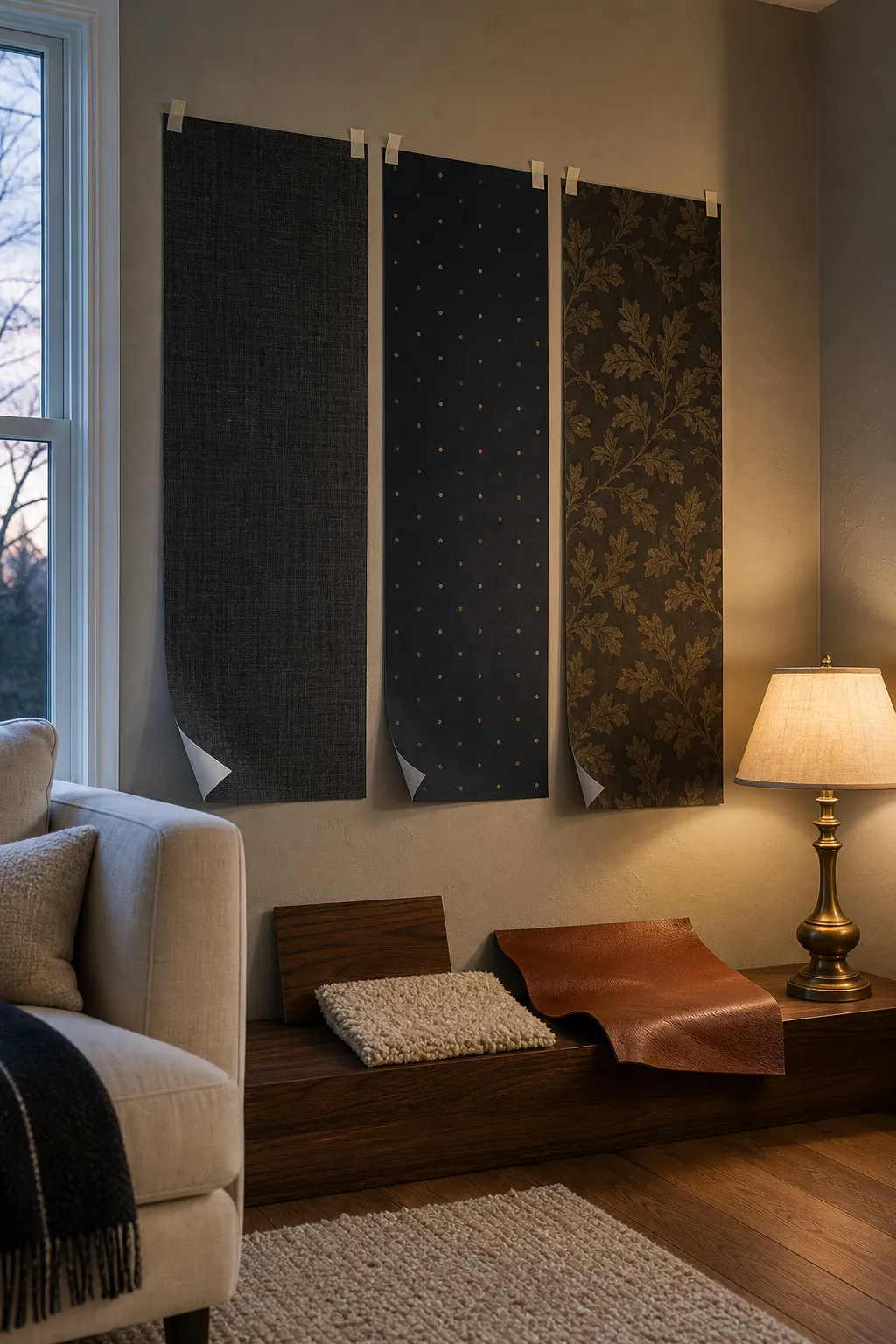

Small samples hide both undertone and repeat. Order enough to see one complete motif and compare it with the sofa, flooring, and curtain. A warm north-facing room often benefits from charcoal with brown or olive notes; a bright south-facing space can support cooler ink blue or graphite.
Use Dark Texture When You Want Calm, Not Pattern
Dark textured wallpaper is the easiest all-wall option because it adds depth without introducing another busy repeat. A charcoal grasscloth effect, linen weave, or mineral texture changes subtly as light moves across it. Real natural grasscloth has visible panel variation and can be less forgiving of stains; printed non-woven alternatives offer a more even, maintainable finish.
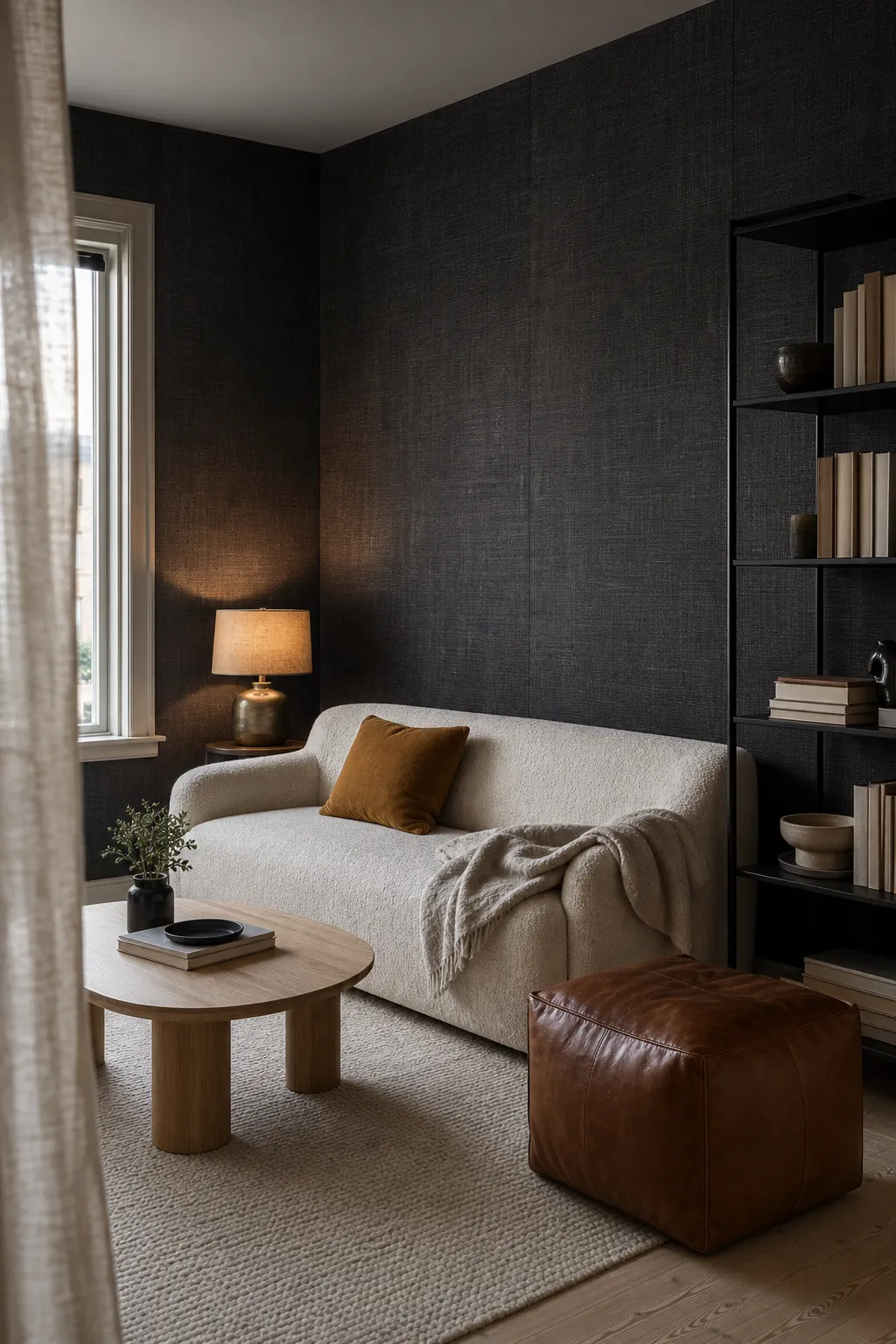

Let the texture be the wall décor instead of layering a crowded gallery over it. Pale upholstery, a cream rug, and oak or walnut furniture keep edges readable. One reflective note—aged brass, glazed ceramic, or a low-sheen printed thread—can catch lamplight without making the room glitter.
Anchor the Room With One Dark Botanical Wall
A dark accent wall living room is a sensible choice when daylight is limited or the floor and furniture are already deep-toned. Pick the least interrupted wall, usually behind the sofa or a console, so the motif is not cut apart by several doors and windows. A medium-to-large botanical repeat reads more clearly than tiny high-contrast leaves on a large wall.
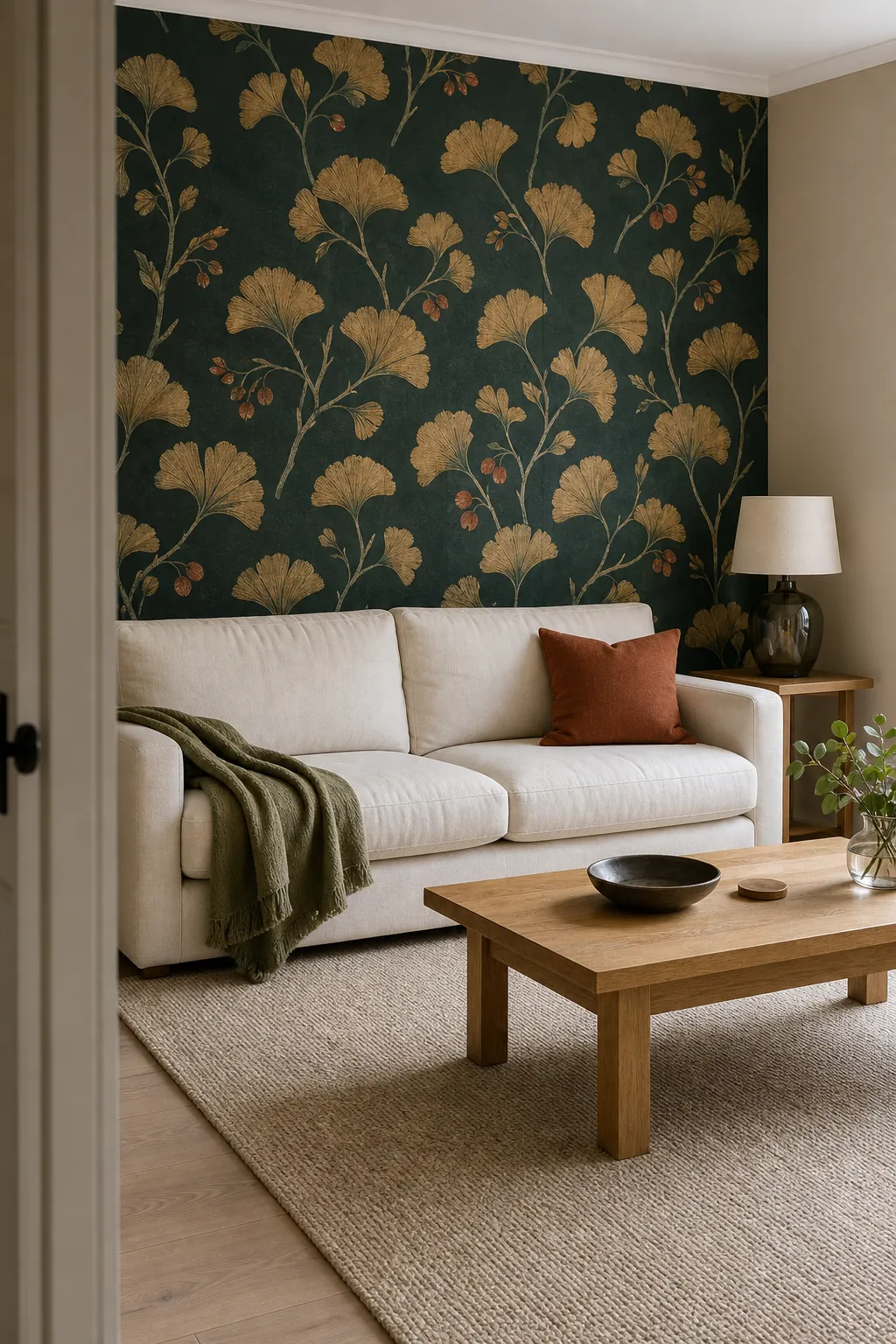

Pull adjacent paint from the wallpaper’s lightest background detail rather than defaulting to brilliant white. That softens the transition while preserving contrast. Repeat one wallpaper color in a cushion or rug, but keep other upholstery mostly solid so the wall remains the focal point.
Choose Low-Contrast Geometry for a Modern Sitting Room
Modern living room wallpaper works best when the geometry can be read at normal seating distance. Tone-on-tone navy arcs, graphite pinstripes, or soft black grids provide structure without producing a visual vibration. Micro-patterns with bright white lines can shimmer under LEDs and compete with a television.
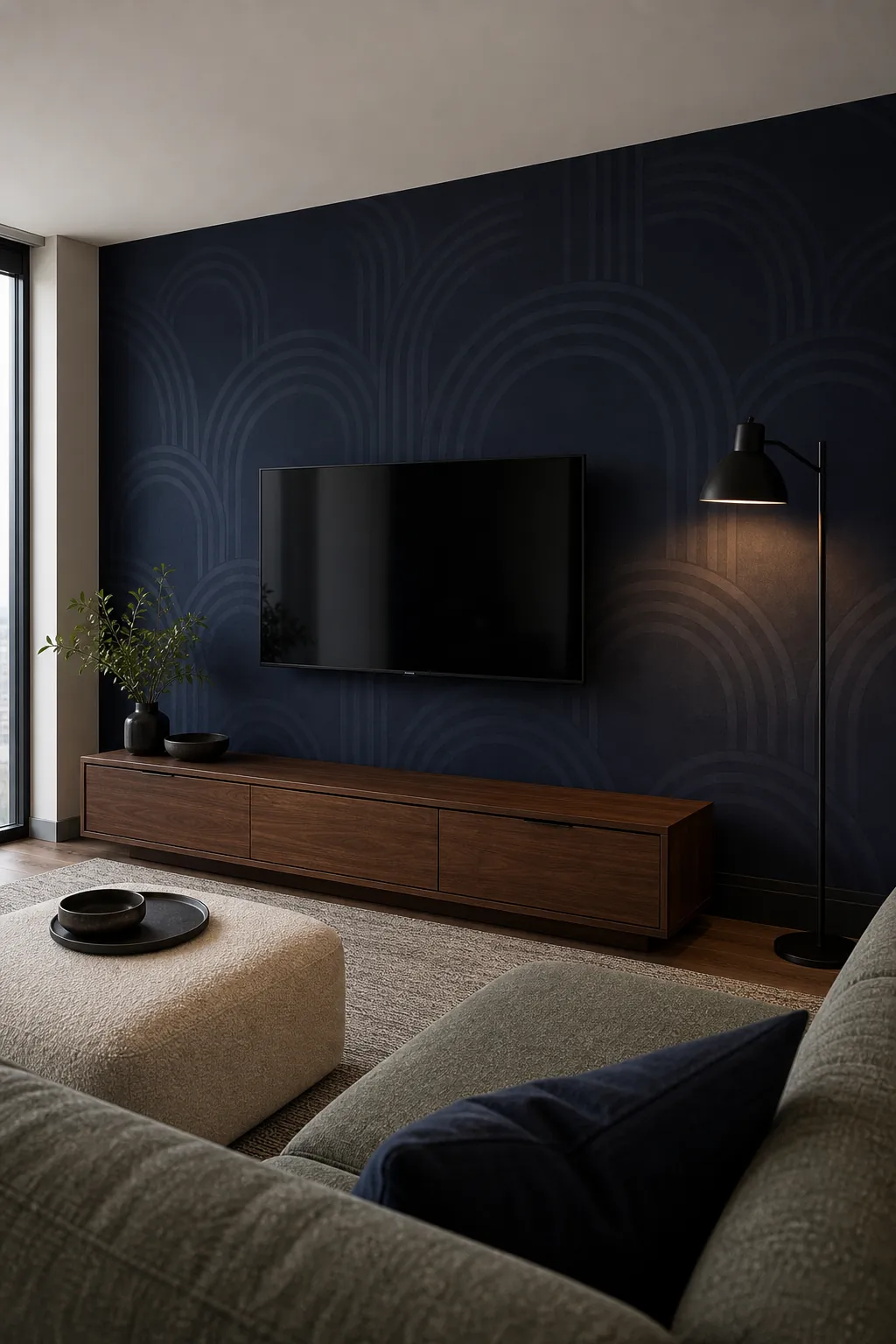

On a media wall, select a quiet repeat with low reflectivity, then place lamps to the side rather than opposite the screen. Concealed cables and a simple console matter more than extra wall accessories. The wallpaper should reduce the visual dominance of the television, not turn its background into another display.
Give a Farmhouse Room a Deeper, Less Predictable Print
A farmhouse living room does not need gray shiplap or a slogan sign. A deep indigo block print, brown-black vine, or charcoal ticking stripe brings pattern while respecting wood beams, aged leather, and simple joinery. Choose an imperfect printed line instead of a photorealistic faux material.
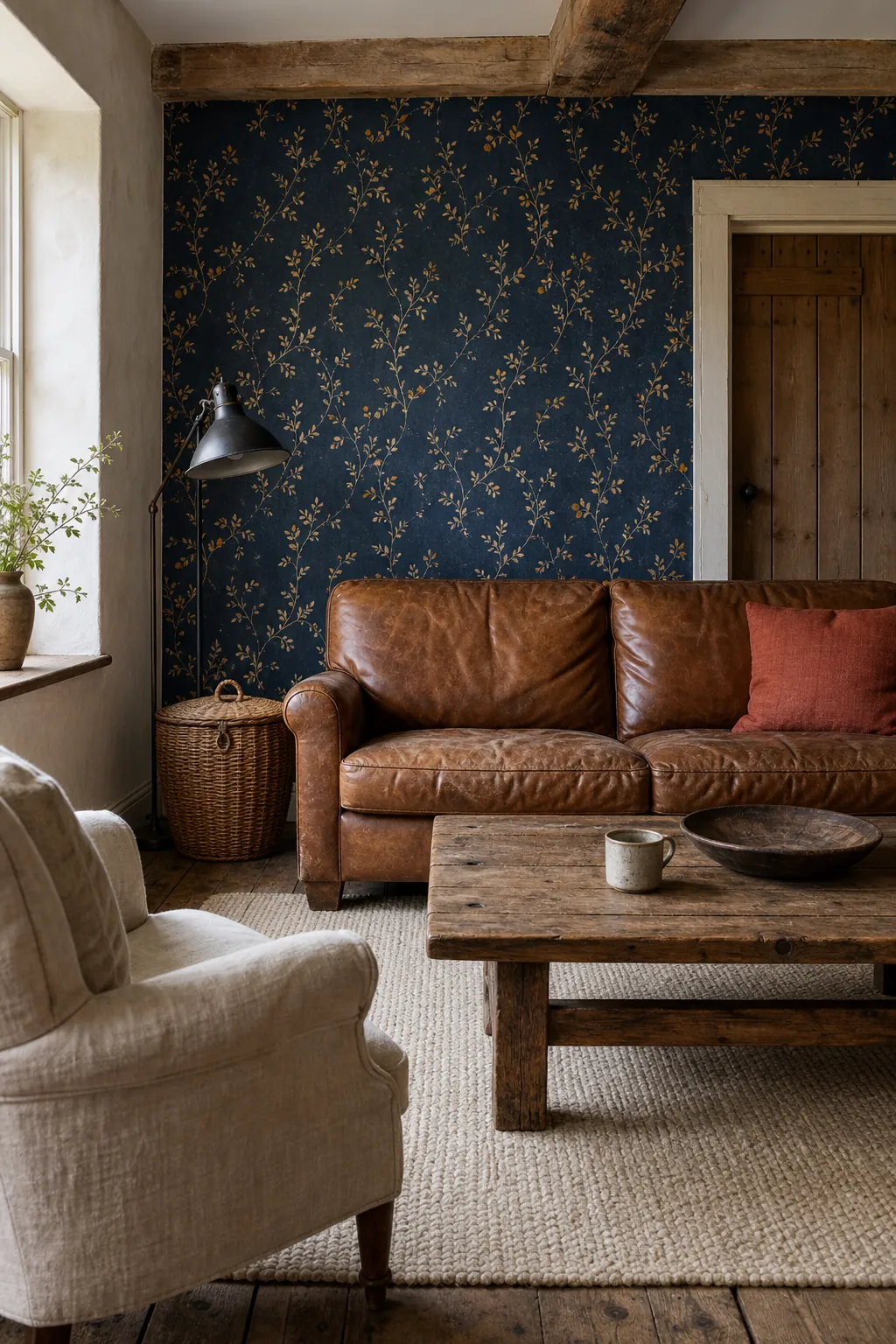

Keep the rest of the palette honest: flax linen, warm oak, brown leather, blackened metal, and one faded red or ochre accent. If the ceiling is low or beams are visually heavy, paper one main wall and keep the upper plane lighter. The room will still feel enveloping without losing its structure.
Layer Light Across the Wallpaper, Not Just From Above
A single central pendant leaves dark walls flat and corners unreadable. Use light at different heights: a shaded floor lamp beside the sofa, a table lamp near a textured wall, and a directed reading light where tasks happen. The objective is not maximum brightness; it is a sequence of gentle pools that reveal the paper’s color and surface.
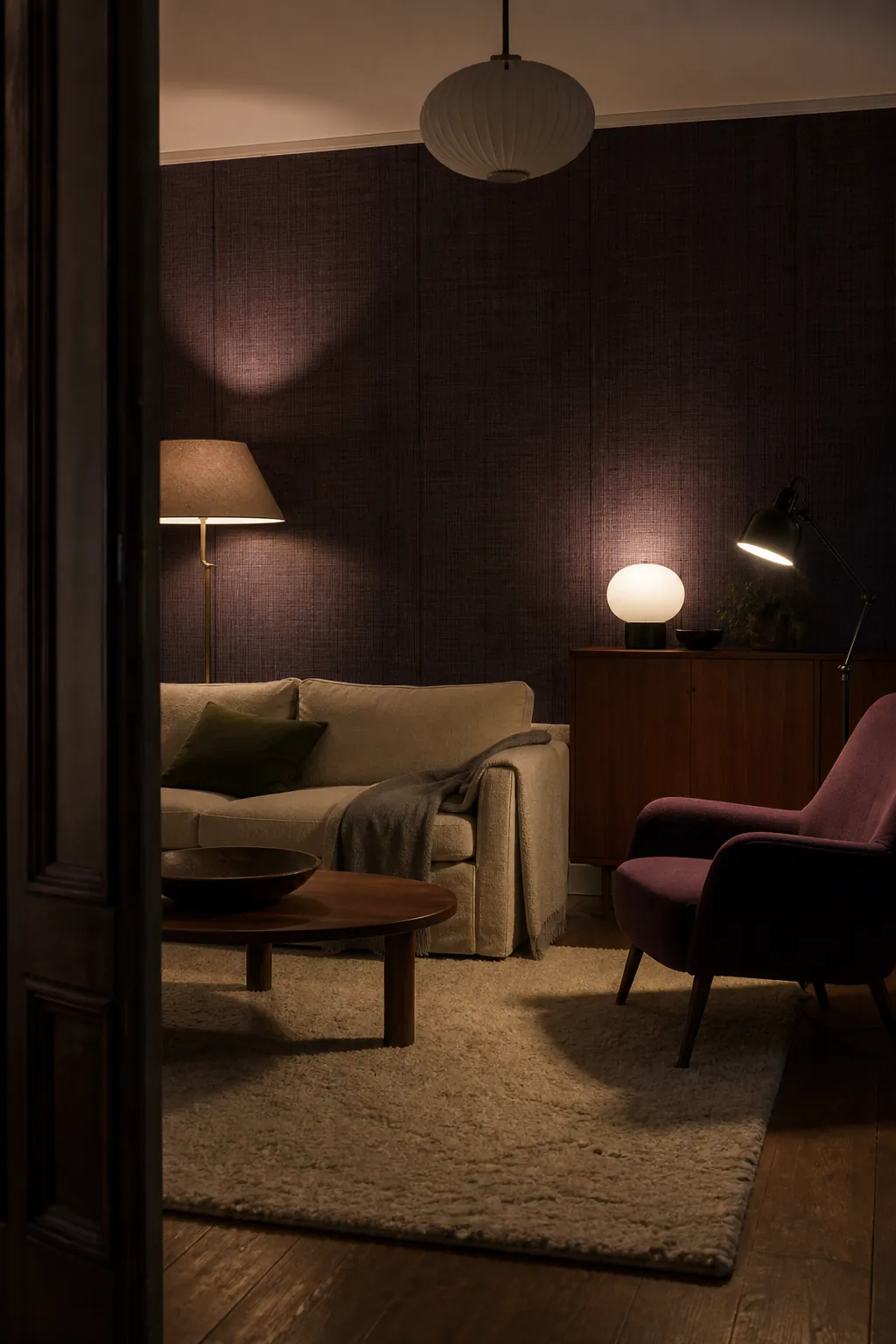

Keep color temperatures reasonably consistent and avoid placing every source at eye level. A subtle wallpaper sheen can return a little light, but highly reflective paper shows seams and glare. Matte texture is richer when a lamp grazes it from the side.
A moody living room succeeds when the darkest wall still has readable detail and the seating still feels welcoming. Test the sample, reserve light surfaces for contrast, and design the evening lighting before buying every accessory. Darkness should create depth, not erase the room.