Half Wall Papering Ideas for a Better-Proportioned Living Room
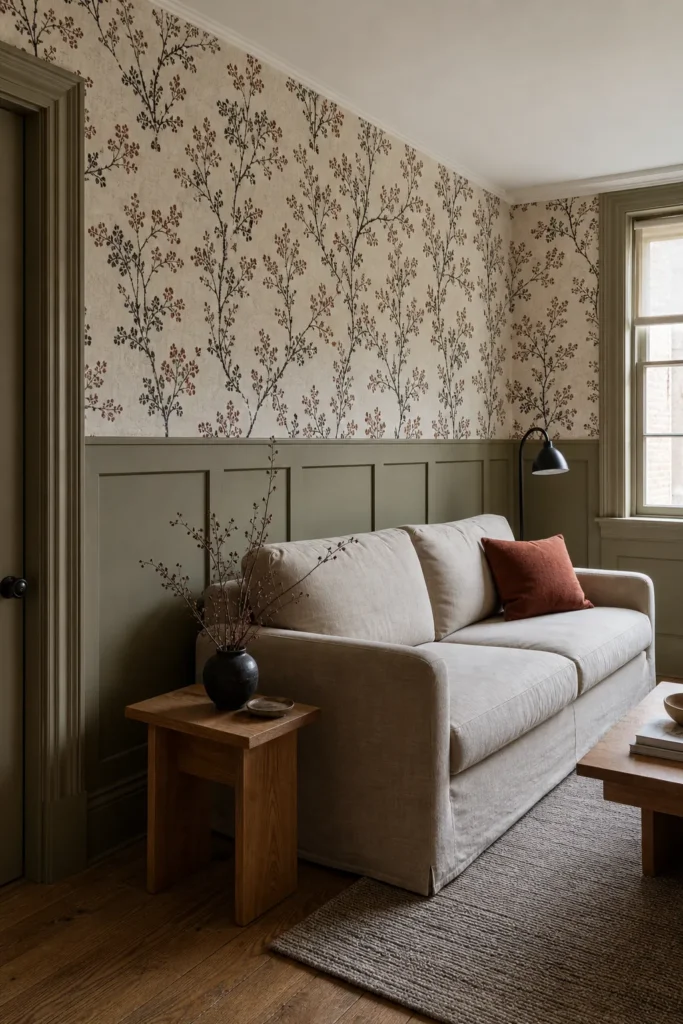
Half wall papering ideas work when the horizontal break solves a room problem: too much pattern, vulnerable lower walls, low ceilings, or a limited decorating budget. They fail when the wall is divided at an arbitrary halfway point and the trim cuts through the sofa, radiator, or window sill. The height is an architectural decision before it is a color decision.
For a living room, the most useful starting point is usually the lower third—not a literal 50/50 split. From there, decide whether wallpaper belongs above the line for lift and protection, below it for a concentrated band of pattern, or inside panel-like sections for a renter-friendly treatment.
Map the Break Against the Whole Room
Mark several possible heights with low-tack tape around the room, then stand at the doorway and at the main seat. A traditional chair-rail zone is often roughly 32 to 36 inches from the floor, but the correct line should also relate to the window sill, fireplace, console, and sofa back. If the proposed rail narrowly misses one of those features, adjust it deliberately rather than leaving an awkward near-alignment.
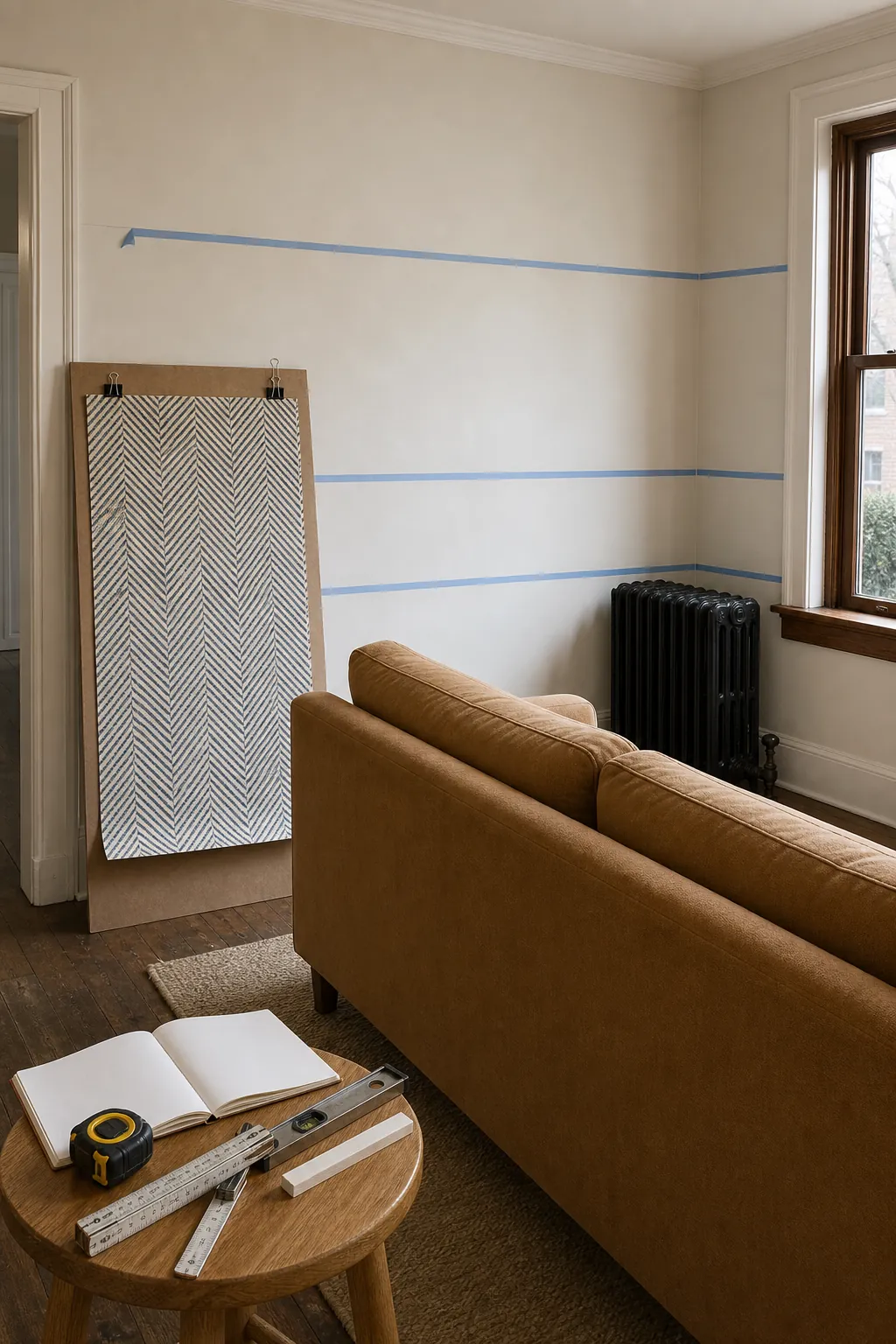

A precise half-and-half wall can make an eight-foot ceiling feel lower because it creates two equal horizontal slabs. A lower-third division gives the upper field more height and lets a wallpaper pattern breathe. In a tall room, a higher rail can feel intentional, but it should connect to existing architecture rather than float between everything else.
Put Wallpaper Above Paneling for an Architectural Look
Wallpaper above painted paneling is the most forgiving formula for busy living rooms. The durable lower treatment handles chair backs, pets, and scuffs, while the upper pattern draws the eye upward. Choose a wallpaper color from the same family as the panel paint, then let one smaller accent color repeat in a cushion or lampshade.
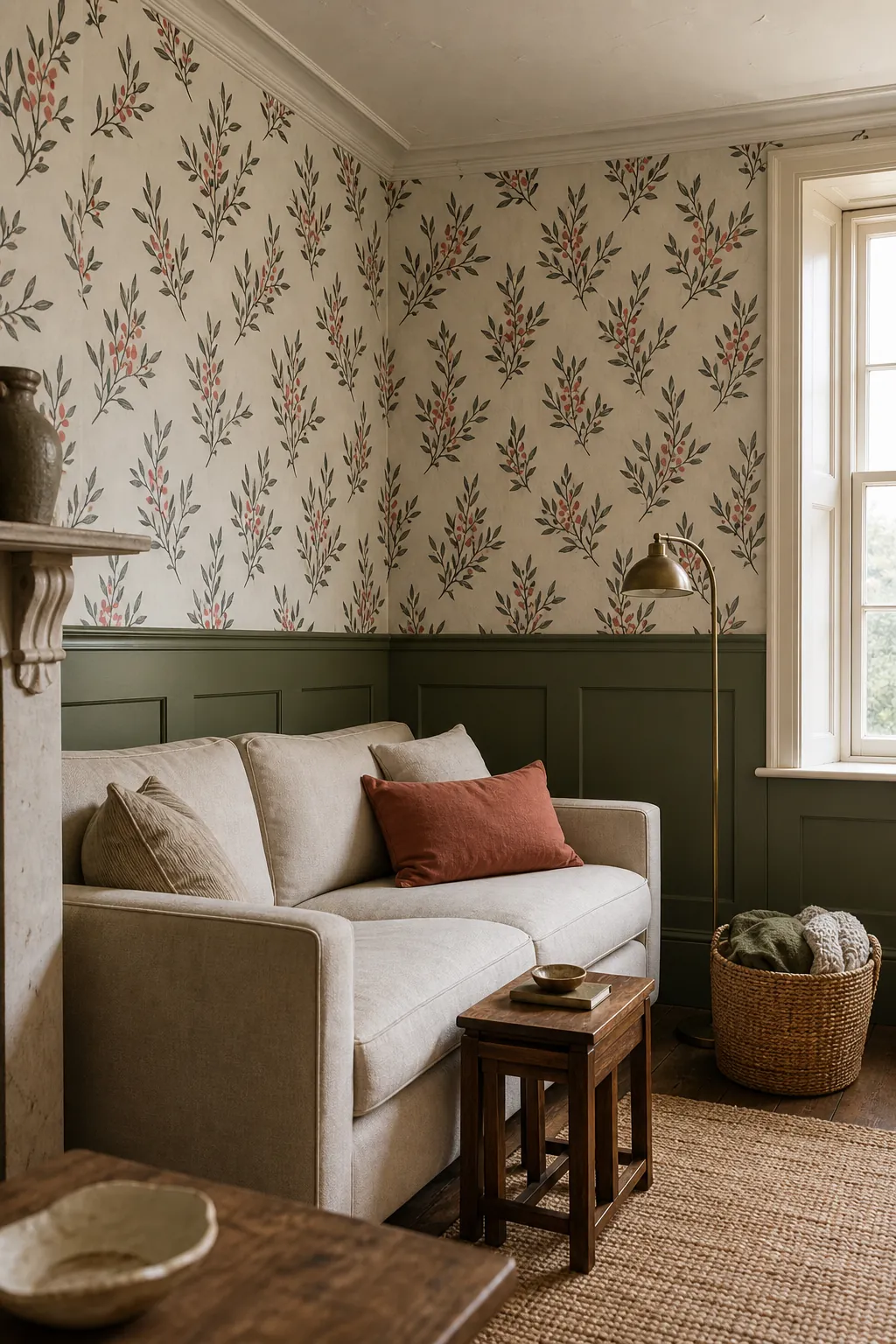

Keep the cap molding proportional to the baseboard and the panel spacing consistent through corners. If the room already has simple contemporary trim, flat panel molding or beadboard will usually sit more naturally than elaborate raised panels. The wallpaper provides enough decoration; the joinery does not need to compete with it.
Try Wallpaper on the Bottom Half for a Modern Band
Wallpaper on the bottom half of the wall creates a concentrated pattern band and leaves the upper room visually quiet. It suits small geometrics, stripes, and sturdy wipeable papers, especially behind a console or in a reading zone. Because furniture will hide part of the design, choose a repeat that still reads in fragments rather than a mural that needs one uninterrupted view.
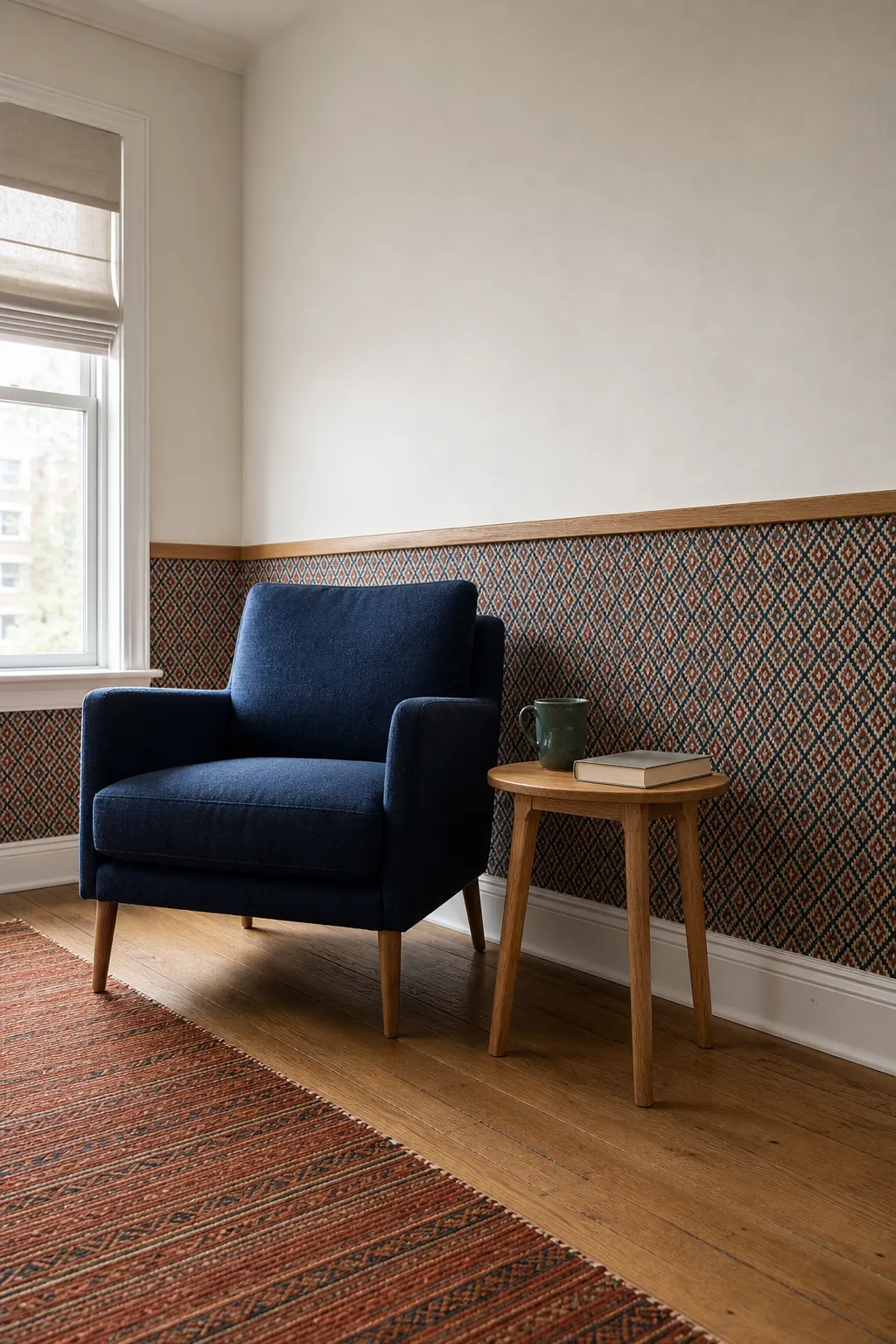

This placement needs realistic maintenance. A paper near the floor will meet vacuum heads, shoes, children’s hands, and pet fur. Put a sample through a gentle wipe test and check whether the manufacturer rates it for the expected use. In a high-traffic room, a painted or paneled lower third remains the safer long-term choice.
Use a Painted Line When Molding Would Feel Forced
A 1990s or minimalist room does not need faux heritage trim to justify half wallpaper half paint. A crisp painted transition can feel cleaner, particularly with an abstract or linear paper. Prepare the surface carefully, establish a level line across every wall, and place the wallpaper edge where furniture does not repeatedly rub it.
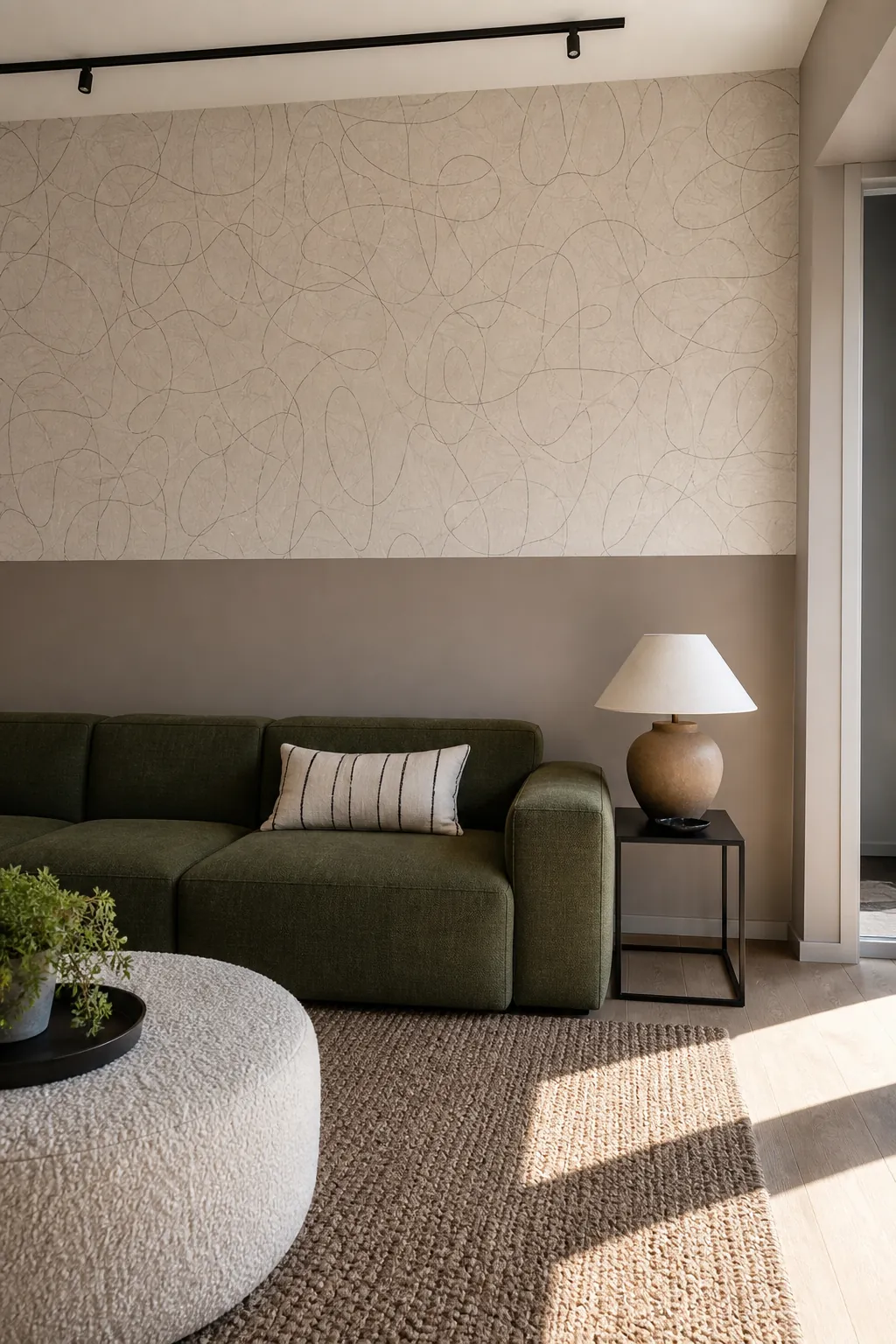

For a cohesive result, pull the lower paint from the wallpaper’s background or darkest quiet note rather than selecting an unrelated contrast. Continue that color onto the skirting only if the room can support a grounded, color-blocked look. Otherwise, keep skirting consistent with doors and window trim.
Frame Removable Wallpaper Instead of Covering Every Wall
Renters and commitment-shy decorators can create the rhythm of half wall design with removable wallpaper panels above a painted lower section. Rather than trusting a large adhesive sheet on unknown paint, mount paper to thin removable boards or place it within existing molding bays. Test adhesives first: “peel-and-stick” describes the product, not a guarantee about the wall beneath it.
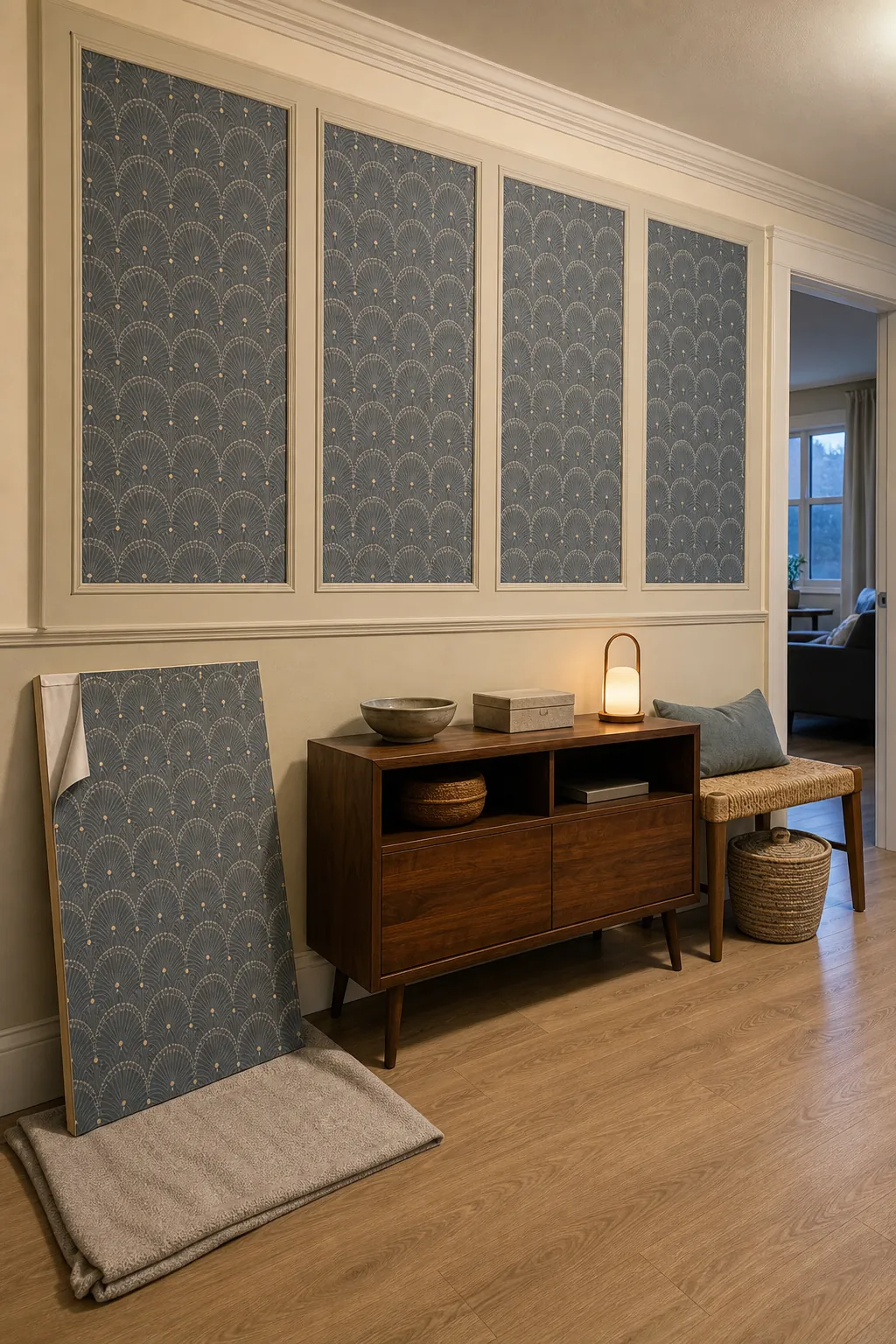

Repeat panel widths based on the wall’s real dimensions instead of forcing equal rectangles around outlets and corners. A slightly wider central bay behind a console can look intentional, while skinny leftover strips at the edge look accidental. Save offcuts and document the paint color for eventual repairs.
Resolve Doors, Corners, and Radiators Before Hanging
The strongest half wall accent ideas stay consistent when they meet awkward architecture. Decide whether the rail dies into the door casing, passes beneath a window sill, or steps around a fireplace. Dry-plan paper widths so a conspicuous motif is not sliced into a thin strip beside a corner. Where walls are visibly uneven, a slightly deeper cap molding can hide a less-than-perfect paper edge.
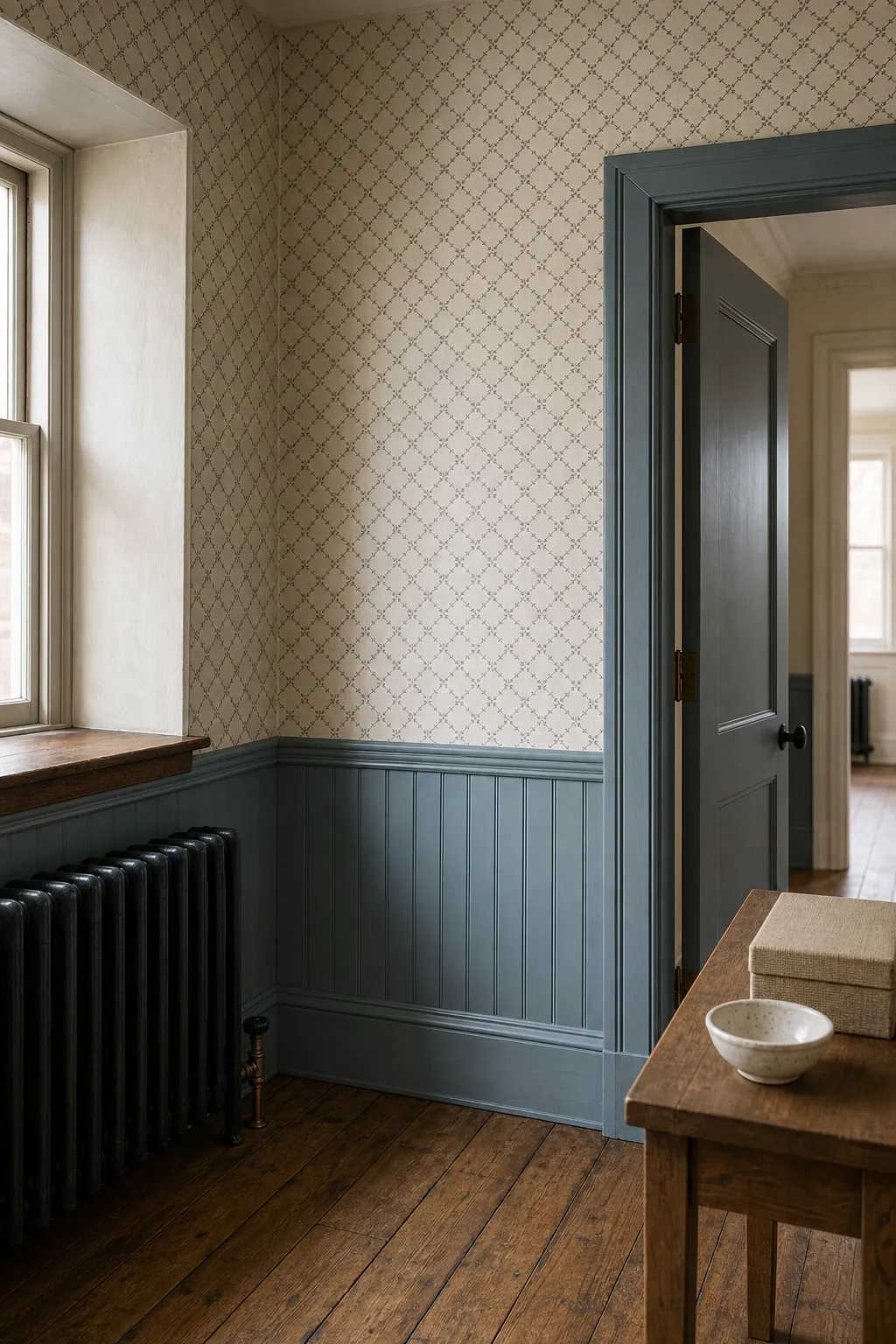

Photograph each wall straight on, mark every fixed element, and draw the break line before buying paper or trim. Then calculate pattern repeat and order a little extra from the same batch. These unglamorous measurements decide whether a half wall design reads as architecture or as a decorating shortcut.
The best living room inspiration is not a single formula. It is a clear relationship among the wall line, furniture, trim, and daily wear. Once those four agree, even a small amount of wallpaper can make the whole room feel considered.