How to Style a Beach Mural Without Seashell Clutter
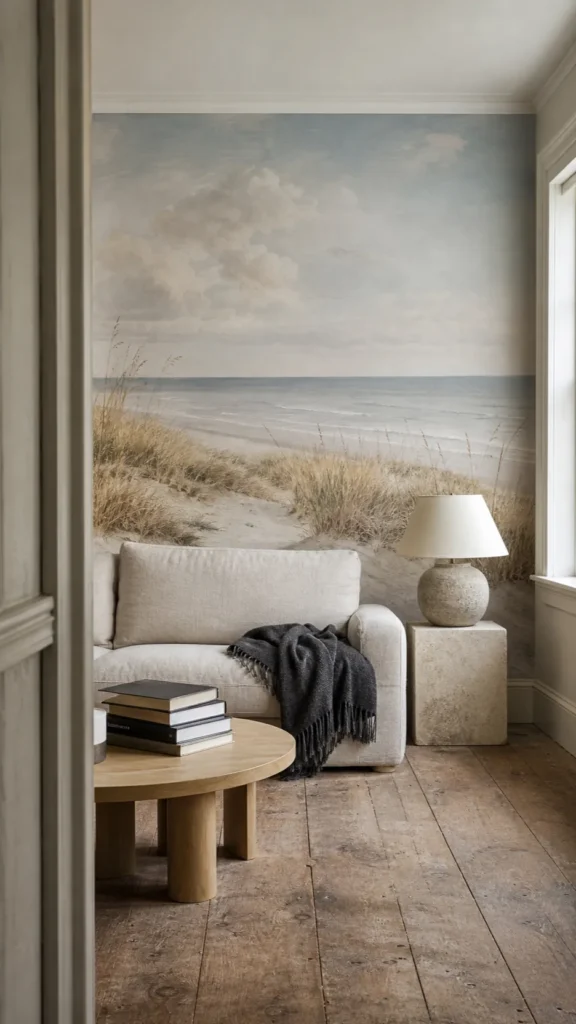
A beach mural already gives a room the ocean, horizon, sand, and atmosphere. Add shell bowls, rope lamps, anchor cushions, and driftwood signs, and the room stops feeling coastal. It starts explaining itself. The most convincing coastal rooms are not short of references; they are disciplined about where those references appear.
The useful rule is simple: let the mural be literal and let everything else be sensory. Furniture can feel relaxed. Fabrics can feel sun-washed. Wood can look salt-softened. Light can move across the room like it does near water. None of those choices needs a shell attached to it.
Treat the Mural as the Entire Theme
A full-wall ocean scene carries more visual information than a framed print. It has a horizon, weather, scale, movement, and a strong color field. Think of it as the room’s view rather than one decoration among many. Once installed, remove other objects that repeat its message: lighthouse models, coral sculptures, fish prints, nautical flags, and words such as “beach” or “relax.”
This does not make the room plain. It gives the eye somewhere to land. Reddit design discussions often circle the same frustration: people want a coastal feeling but dislike the store-bought symbols that make it feel staged. A mural solves that problem only if you allow it to be the single representational coastal element.

Borrow the Quiet Colors, Not Every Blue
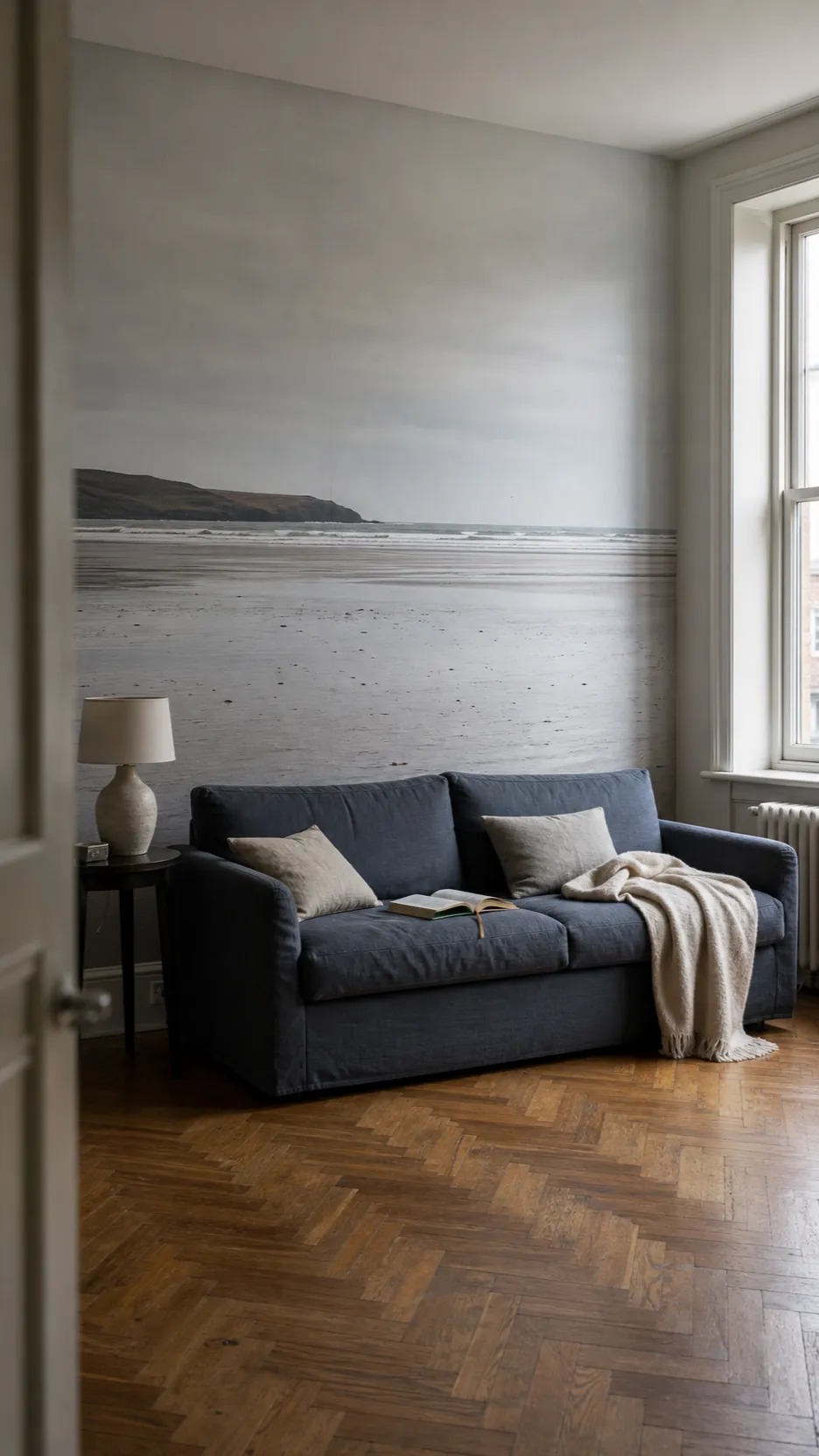
Trying to match the ocean blue exactly usually makes a beach wallpaper living room feel flat. Pull colors from the mural’s less obvious areas instead: cloud gray, dune tan, wet-stone green, faded coral, or the brown-black line of a distant pier. Assign each color a specific role. A pale neutral can cover the largest upholstery; a darker note can anchor one table; the warm accent can appear in a single cushion or lamp.
Keep the room’s fixed surfaces quieter than the image. Warm white, putty, mushroom, and pale mineral gray usually connect to coastal wallpaper styling more gracefully than brilliant white and navy. If the mural is already saturated, let the furnishings step back. If it is misty and low contrast, one deeper rust, olive, or charcoal note can keep the room from dissolving into beige.

Choose Furniture by Shape and Weight
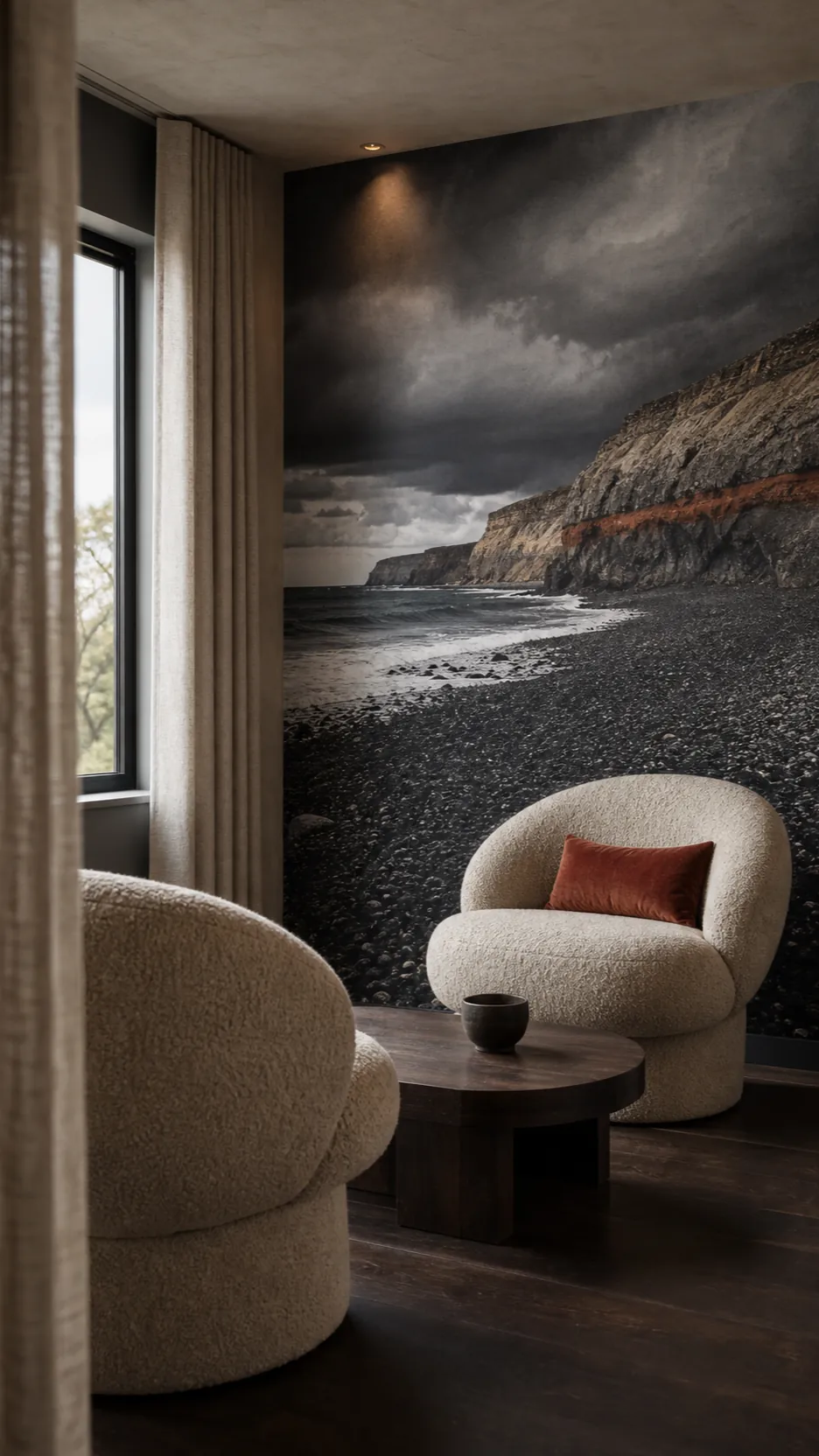
Coastal does not require a white slipcovered sofa, but it does benefit from furniture that feels easy to move around and comfortable to use. Low backs preserve the mural horizon. Open legs leave more floor visible. Rounded corners echo water-worn forms without announcing the metaphor. A massive dark sectional placed against a delicate shoreline can make the whole composition feel top-heavy.
Before buying anything, photograph the wall and mark where the mural’s focal points will fall. Keep the largest boat, wave, or headland out from behind tall furniture. In a small room, one generous chair is often better than three undersized coastal pieces. Scale is what makes restraint feel intentional rather than unfinished.

Use Texture to Suggest the Shore
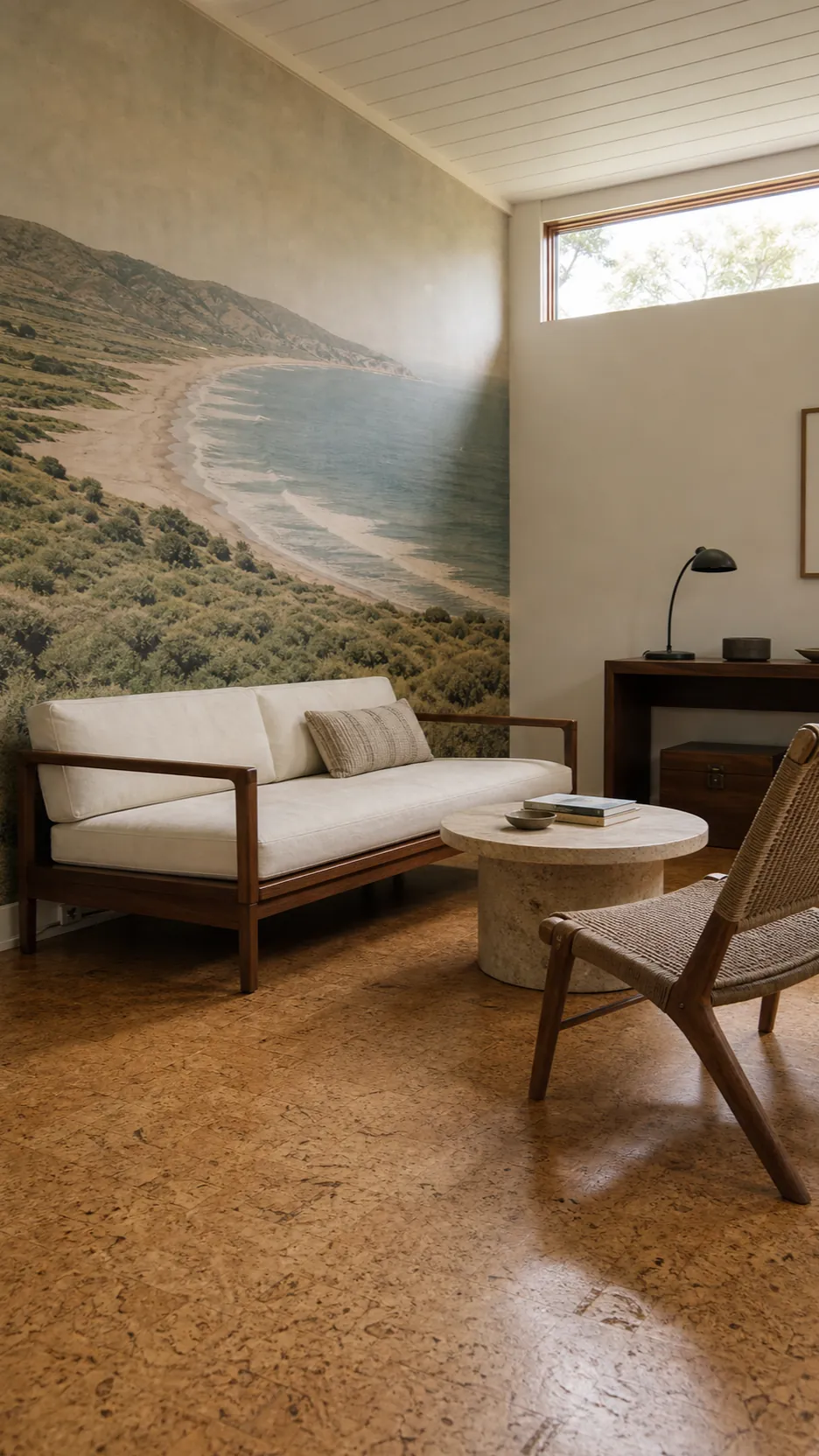
The coast is tactile before it is decorative. Think of washed fabric, rough stone, weathered timber, woven grass, frosted glass, and dense wool. Those materials make a coastal room mural feel grounded because they share the landscape’s irregularity. They also age better than novelty accessories.
Limit the material story to three or four strong textures. A linen duvet, wool bedside rug, cane bench, and oak table already create enough variation. Avoid piling jute, rattan, rope, wicker, raffia, and macramé into the same room simply because they are “natural.” Repetition without contrast becomes another kind of clutter.
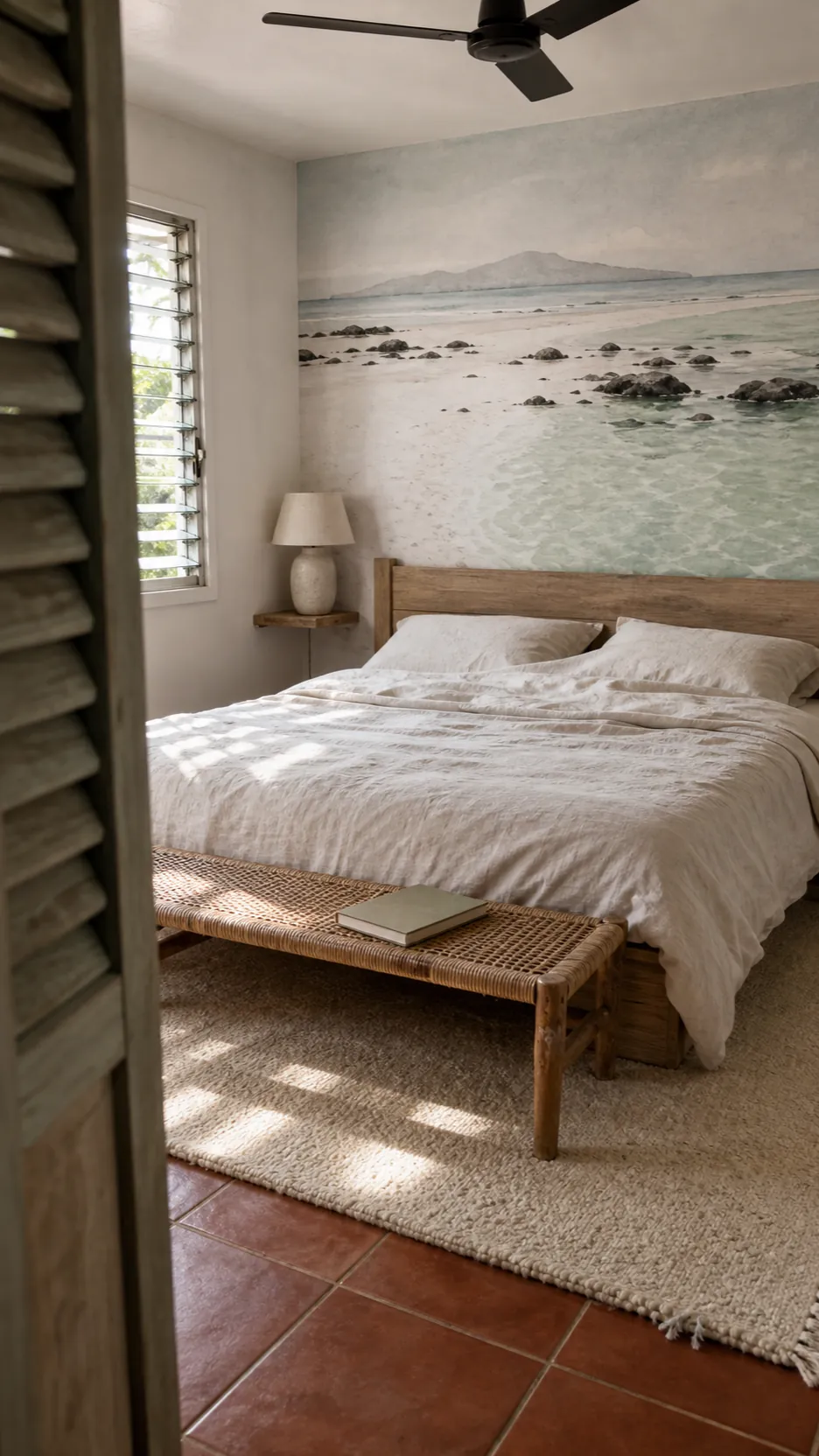

Light the Room Like a Landscape
A mural looks most believable when daylight can move across its paper surface. Keep window treatments simple and mount them wide enough that open curtains do not cover the glass. At night, use several low sources instead of one bright ceiling fixture. A shaded lamp, a discreet picture-wash sconce aimed at the wall, and candle-height light across a dining table produce depth without turning the mural into a stage backdrop.
Choose bulbs with consistent color temperature and check how they affect the printed pigments. Cool blue murals can become harsh under very white light; warm light can muddy pale sand into yellow. Test one bulb after sunset before replacing the whole room. Good ocean mural styling should feel different through the day, but it should never look fluorescent or orange.
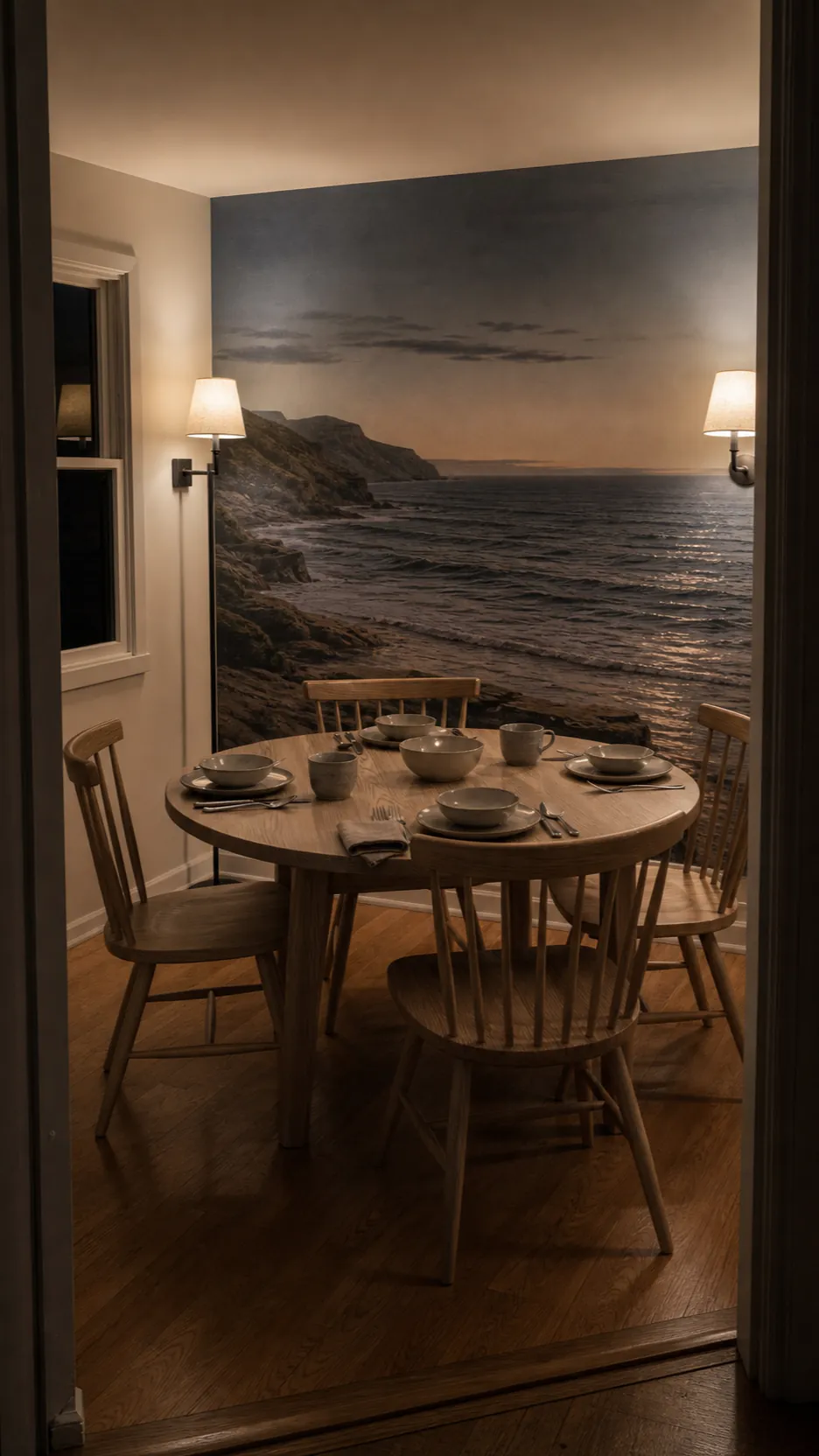

Protect Negative Space
Empty space is doing real work in a minimal coastal mural room. It separates the printed landscape from daily objects, keeps sightlines open, and allows large furniture to feel calm. Do not fill every corner because the room seems incomplete in the first week. Live with the mural long enough to see which surfaces genuinely need a lamp, a tray, or storage.
This matters most in entries, narrow bedrooms, and rental living rooms. A clear section of floor, an unfilled tabletop, or a plain adjacent wall can be more effective than another coastal accessory. If you need storage, choose one closed cabinet or lidded basket rather than a display shelf full of small objects.
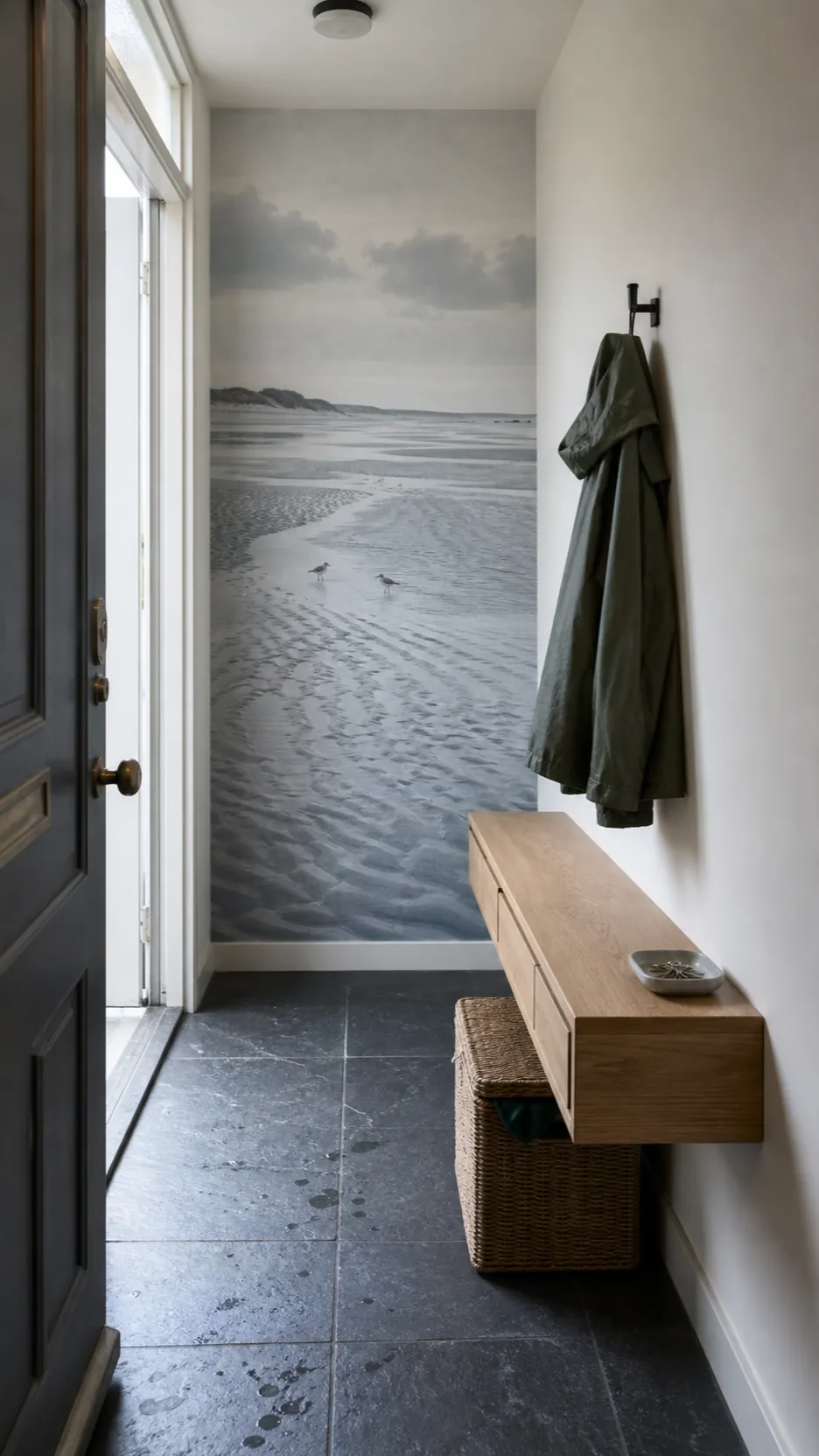

Edit with the Other-Room Test
When you are unsure about an accessory, ask whether it could work in a non-coastal room. A hand-thrown lamp, old wooden stool, linen cushion, black-and-white photograph, or stone bowl probably could. A net-wrapped bottle, shell wreath, or sign shaped like a flip-flop probably could not. The test is not a law, but it exposes objects whose only job is announcing the theme.
Keep personal things that matter, including shells you collected yourself, but display them as a collection rather than scattering them as filler. One shallow archival drawer or a small cabinet gives meaningful objects context. For a beach mural without shells, leave them out entirely and let books, plants suited to the room’s light, pottery, and useful textiles carry the human detail.
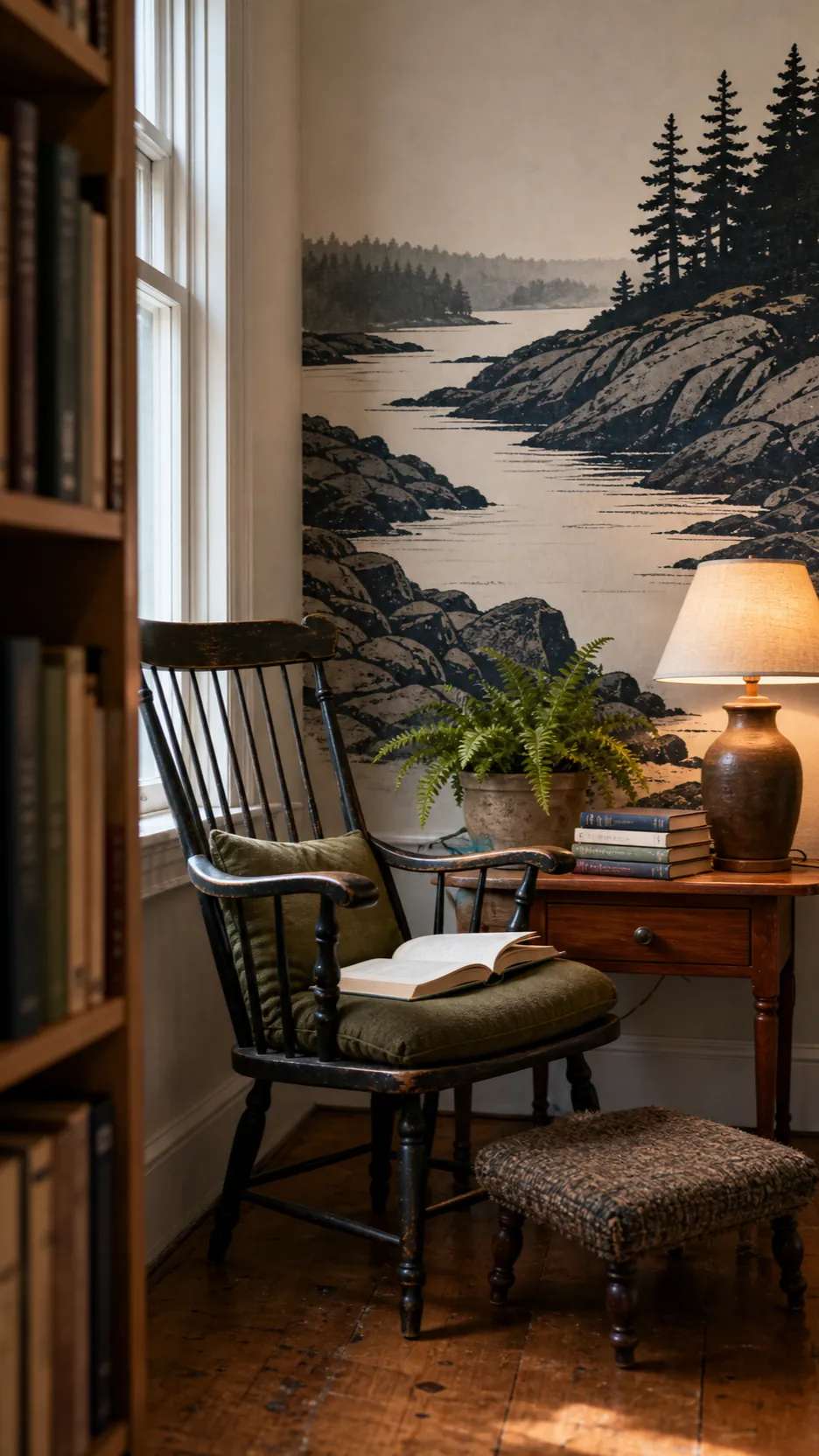

The room does not need more proof that it is coastal. The mural has already made the case. Give it light, useful furniture, tactile materials, and enough space to breathe, and the result will feel connected to the shore without looking as if the gift shop moved in.