How to Choose a Sophisticated Tropical Mural (Not Kitschy)
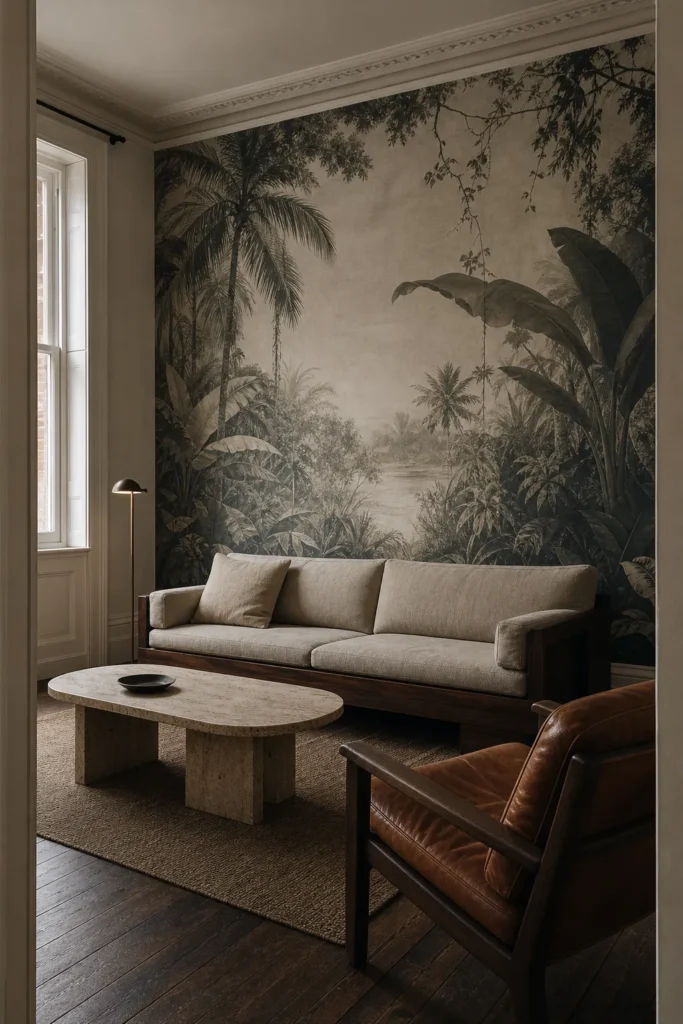
A tropical mural starts looking like a theme park when every decision repeats the same message: giant leaves, bright green, rattan, parrots, bamboo, and “island” accessories all shouting at once. A sophisticated room does something different. It treats the mural as art and lets architecture, materials, and negative space do the editing. The goal is not less personality. It is fewer literal clues.
Choose an art direction before choosing a leaf
“Tropical” describes subject matter, not a finished style. A mural can resemble a historic botanical engraving, a soft watercolor, a grainy monochrome photograph, a modern cut-paper composition, or an atmospheric landscape. Decide which visual language belongs with the room before comparing palm varieties. This single choice eliminates most designs that feel too literal.
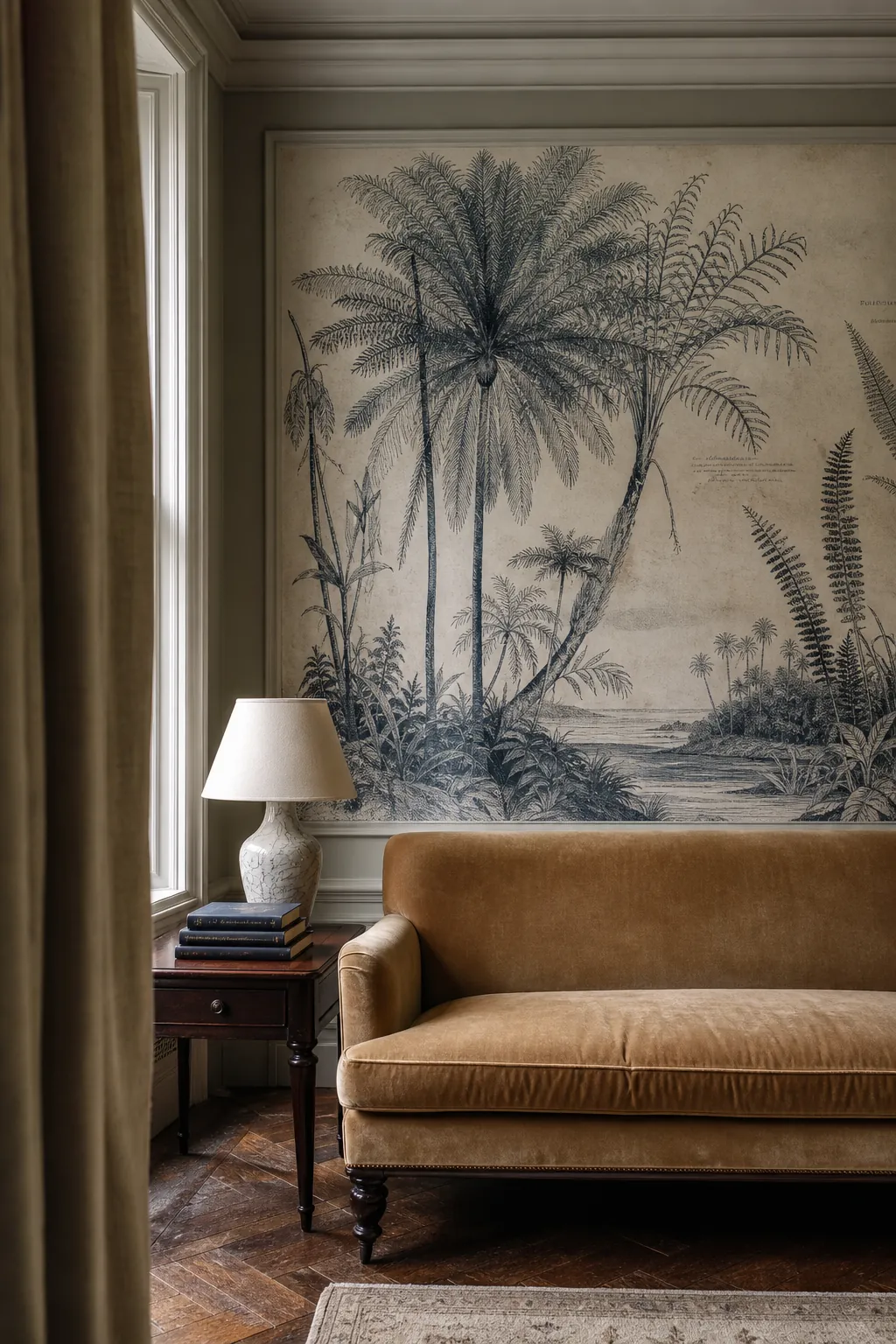

For a traditional room, engraved palms in charcoal, sepia, or faded indigo often feel more natural than photographic foliage. A modern interior can take large abstracted leaf shapes with strong negative space. A room built around plaster, stone, and aged timber suits an atmospheric forest with softened edges. Choose the medium that matches the architecture; the motif comes second.
Control contrast instead of banning color
A muted tropical wall mural is not automatically beige. Sophistication comes from a controlled contrast range. A dark design can layer ink, bottle green, aubergine, and tobacco without neon highlights. A lighter design can use chalk, eucalyptus, blue-gray, and clay with one sharper note. What dates quickly is the combination of highly saturated green, bright turquoise, hot pink, and hard black outlines in equal amounts.
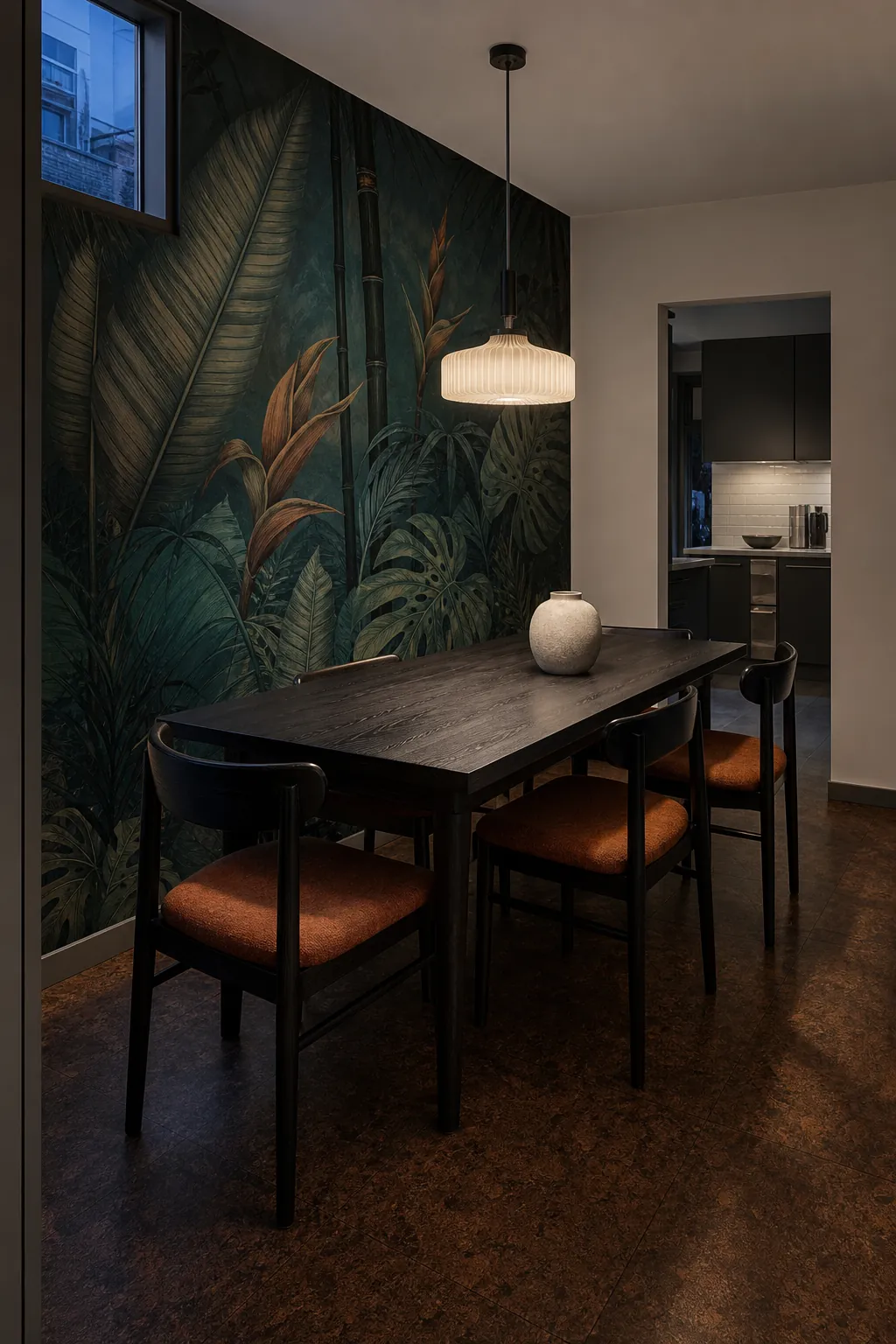

Ask for a sample large enough to show several tones, then view it beside the floor, upholstery, and woodwork at night as well as in daylight. If every green collapses into the same black patch after sunset, the room will lose depth. If one acid color keeps jumping forward, decide whether it is a useful accent or a distraction you will spend years trying to match.
Use scale to create calm, not spectacle
Small, tightly repeated motifs generate constant visual movement. Large-scale foliage can actually feel quieter when forms have breathing room and a few calm areas. The best sophisticated tropical mural usually has a clear hierarchy: one or two dominant shapes, secondary detail, and open ground. Avoid making every square foot a focal point.
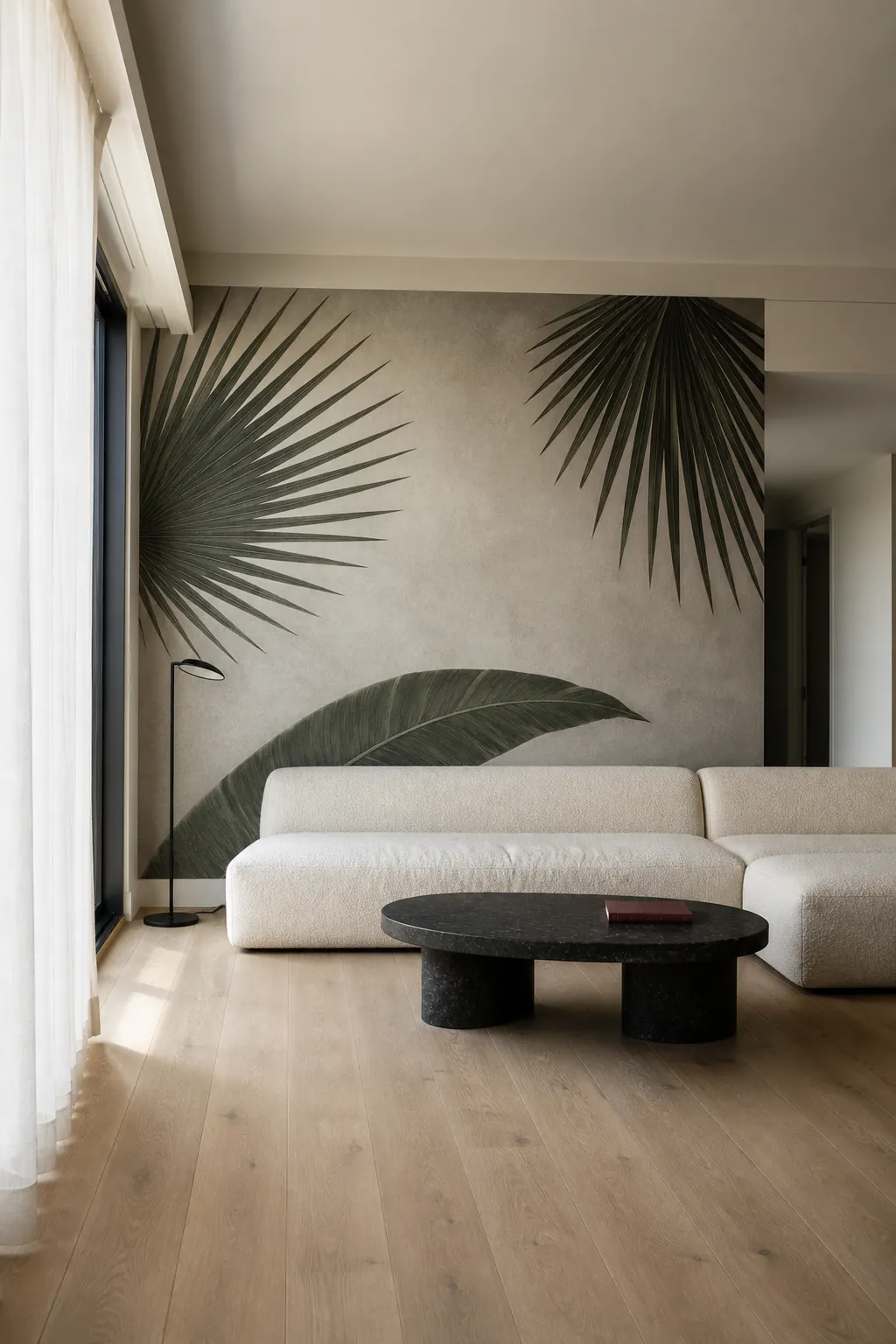

Preview the mural at wall size, with doors and furniture drawn over it. A palm that looks elegant on a laptop may become a giant stripe once cropped behind a sofa. The focal detail should sit where the room can use it, not behind a headboard or shelving. A custom crop is valuable only when it preserves proportions; stretching an image destroys the restraint you paid for.
Pair the mural with materials, not souvenirs
The fastest route to a themed room is to echo tropical imagery with novelty objects. Skip the carved pineapple, parrot cushion, leaf rug, and faux bamboo lamp. Instead, repeat the mural’s physical mood: linen, dark oak, honed stone, patinated brass, leather, wool, or handmade ceramic. These materials support grown-up tropical decor without acting out a vacation story.
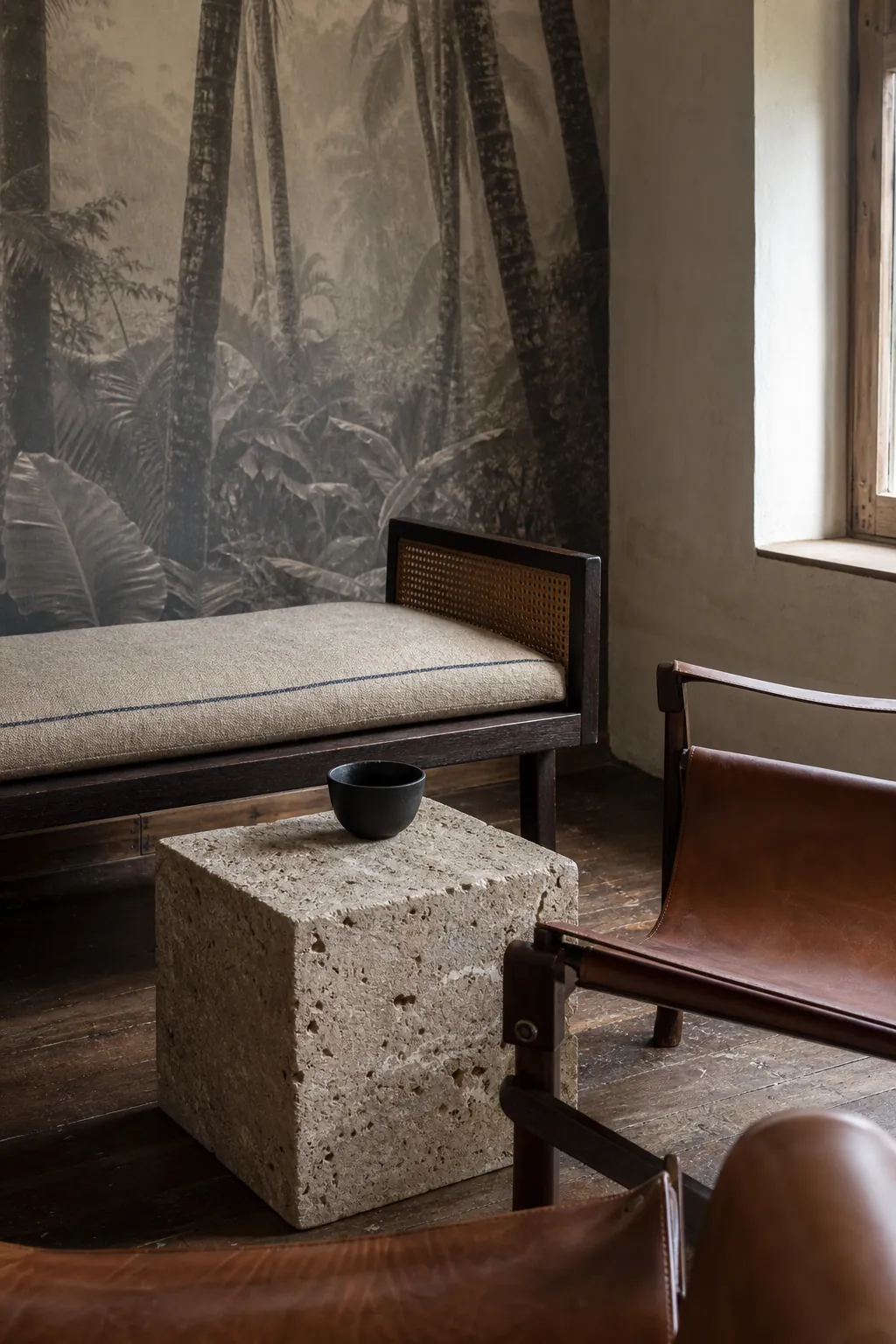

Rattan is not forbidden, but repetition makes it costume-like. One woven chair or cane cabinet front adds texture; a matching suite, basket pendant, palm planter, and jute everything feels like a display set. Mix refined and rough surfaces so the room has tension. Smooth stone beside open-grain wood is more convincing than five objects chosen because they all look “tropical.”
Edit the wall around it and test the evening view
Treat the mural as the room’s main artwork. Do not hang a gallery wall across it or place another botanical print opposite simply to make the scheme match. Pull one subdued color onto adjacent walls and leave enough blank surface for the eye to reset. In open-plan spaces, one mural wall is usually stronger than spreading related patterns into every zone.
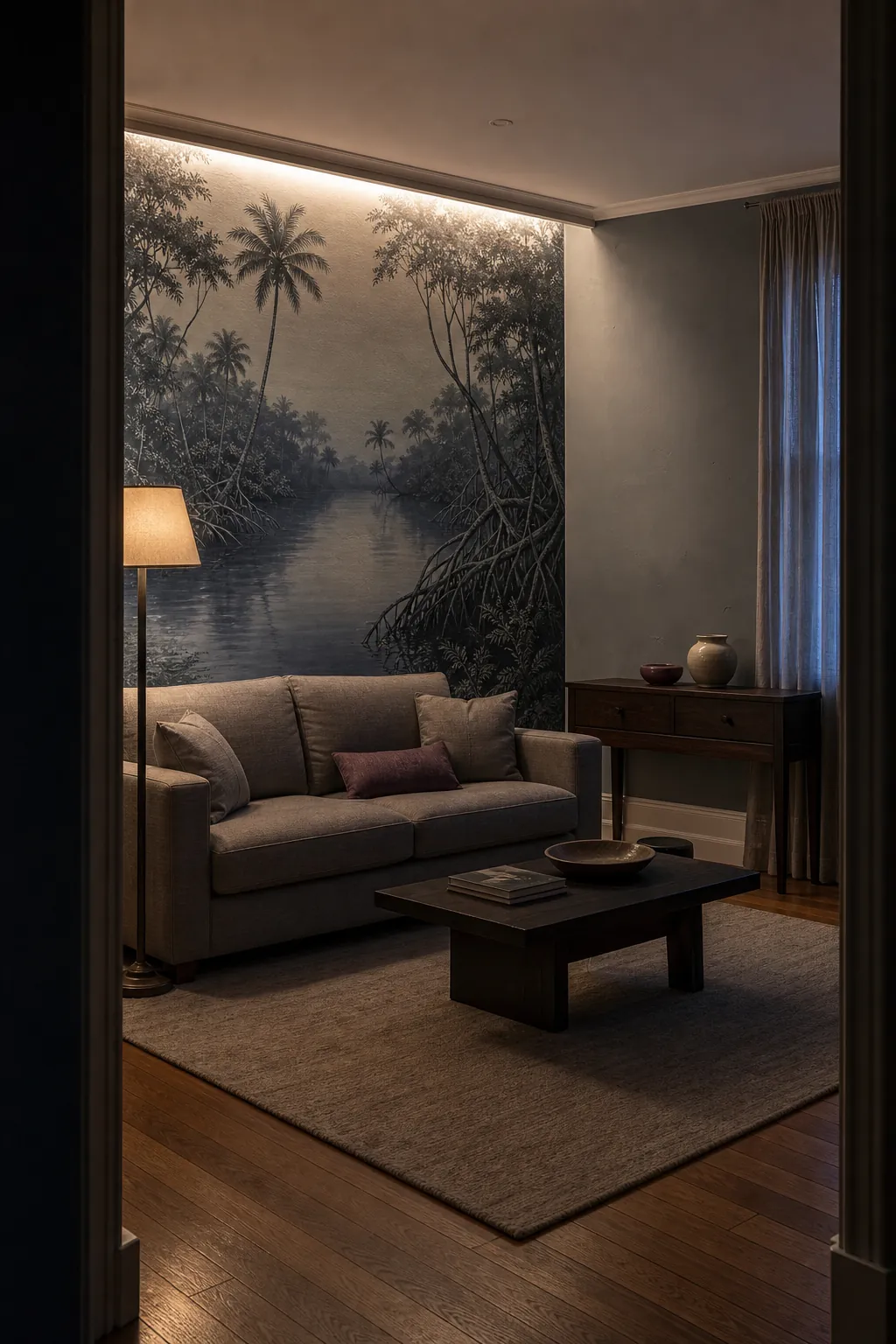

Finally, light the room for the mural you chose. A gentle wall wash preserves tonal detail; a close spotlight exposes seams and creates shiny patches. Use dimmable, warm-neutral lamps rather than an amber glow that turns greens muddy. Then remove one themed accessory from the room. If nothing feels missing, remove another. The result should suggest a tropical climate through atmosphere and material—not announce it through props.
Run the three-distance sample test
A sophisticated design must work as a surface, not only as an online image. Order the largest sample available and judge it from three positions: close enough to see print quality, from the main seat in the room, and from the doorway. Up close, check whether blacks are rich rather than muddy and whether photographic details remain natural. From the seat, look for one clear focal hierarchy. From the doorway, make sure the mural belongs to the adjoining spaces.
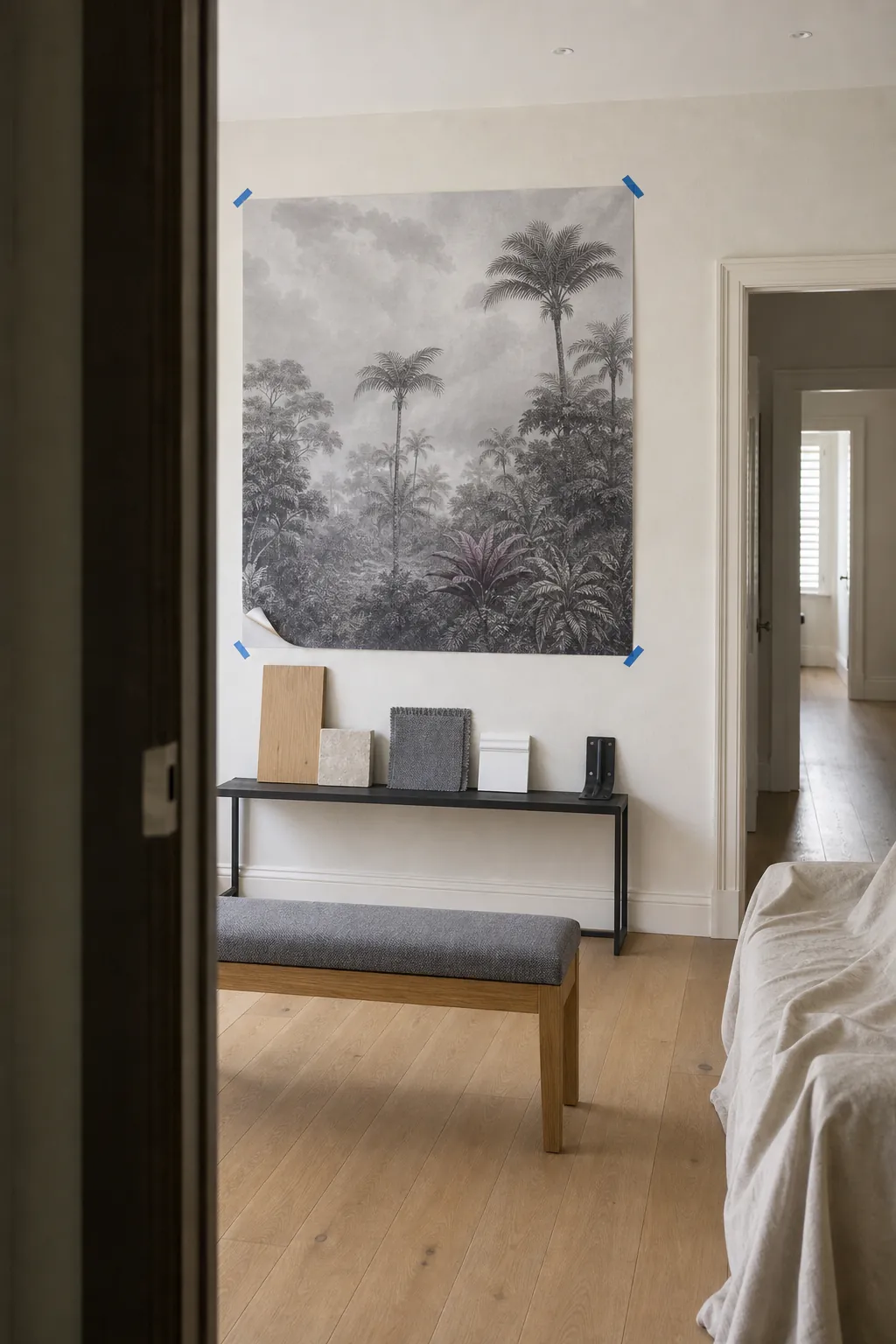

Move the sample beside every fixed finish it will meet: flooring, trim, countertop, fireplace stone, and large upholstery. A mural can be beautiful alone and still make an existing gray look purple or a warm white look dirty. Photograph the sample only as a memory aid; the final judgment should happen with your eyes in the actual room. If the design needs a filter, perfect sunshine, and a pile of matching props to look right, keep looking.