6 Wall Mural Ideas That Make Any Room Feel Intentional
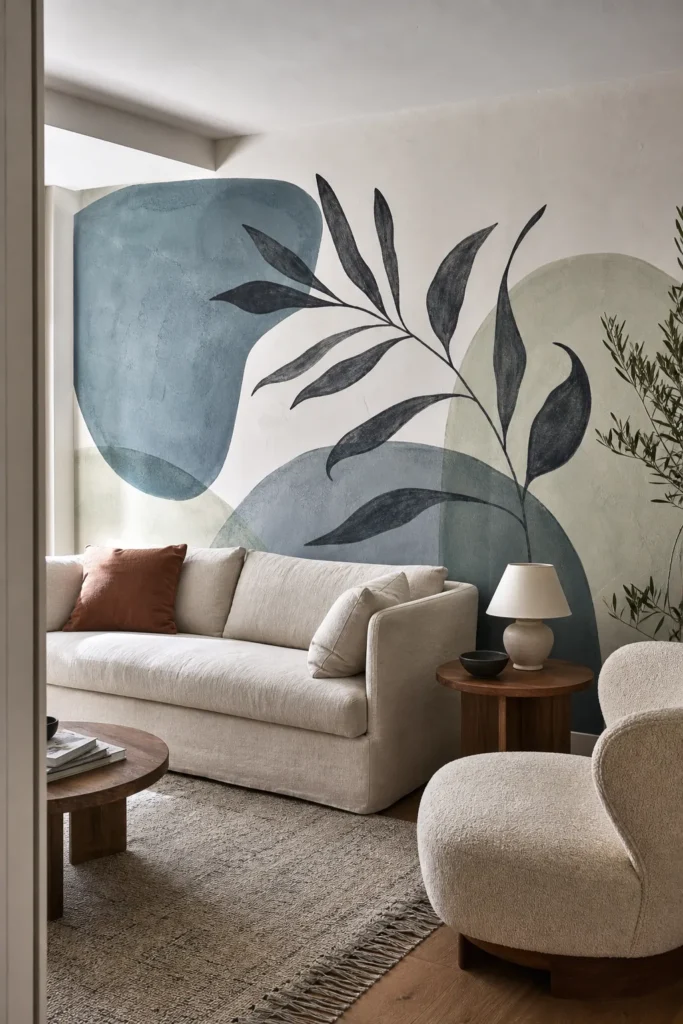
A wall mural can rescue a blank room, but the best ones do more than fill space. They give the eye a destination, make awkward proportions feel intentional, and establish a mood before another accessory enters the room. The mistake is choosing an image first and asking where it fits later. Start with the wall’s job: anchor furniture, create depth, soften architecture, or bring energy to a quiet zone.
These wall mural ideas are designed around that decision. Each one suits a different room, commitment level, and visual appetite, from easy mural ideas you can paint in a weekend to immersive interior murals that command the entire space.
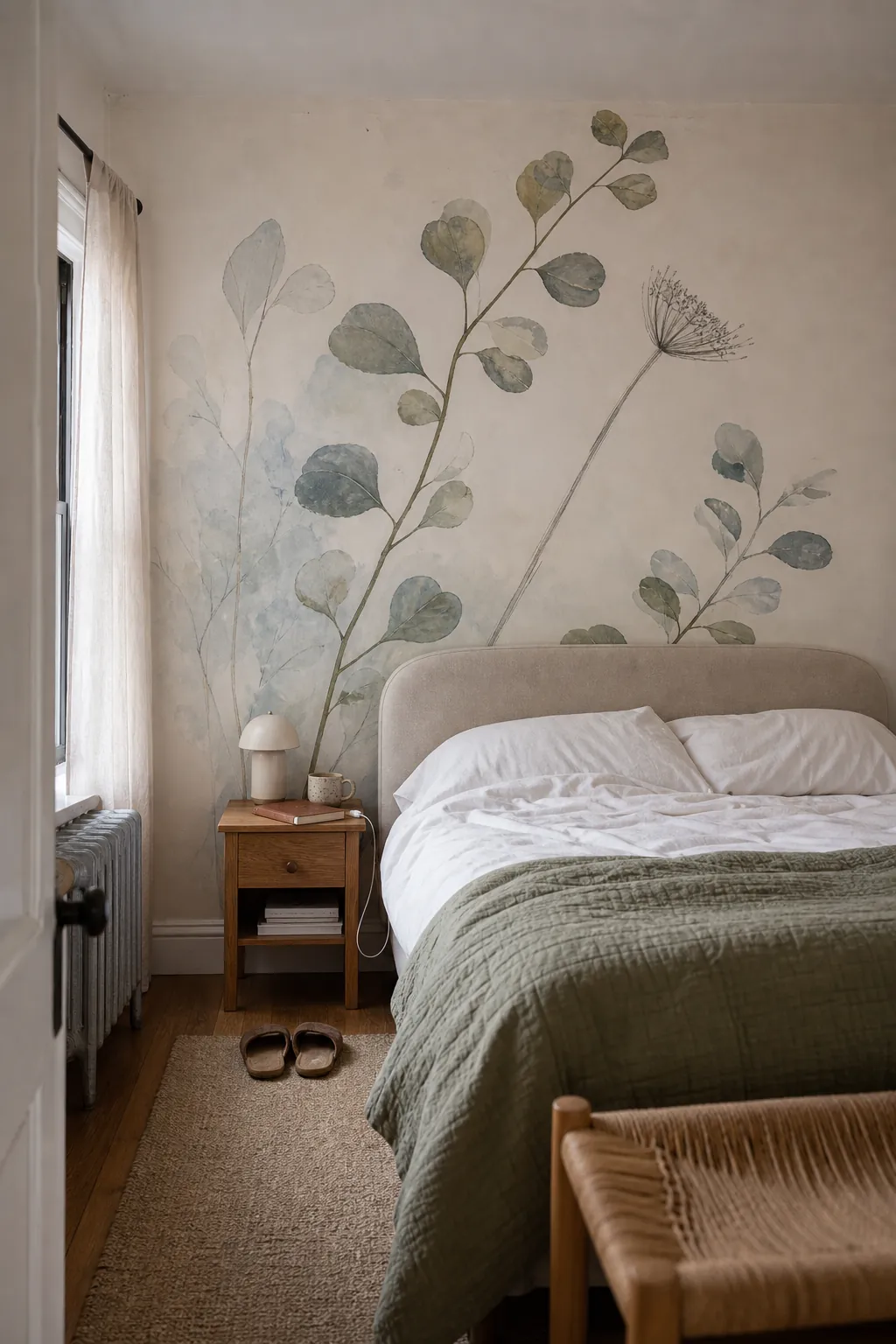
A Soft Botanical Mural Behind the Bed
Bedroom mural ideas work best when they lower the visual volume rather than demand attention. Try oversized leaves, loose stems, or a faded garden study in mineral green, dusty blue, and warm off-white. Keep the strongest detail near the headboard and let the edges dissolve into the wall color. That creates a focal point without making the bed look trapped inside a picture frame.
For a small bedroom, choose fewer, larger shapes instead of a dense repeat. Large-scale motifs often feel calmer because the eye has room to rest. Pull one muted shade from the mural into a throw or bedside lamp, but resist matching everything; slight variation makes wall murals painted in bedrooms feel collected rather than themed.

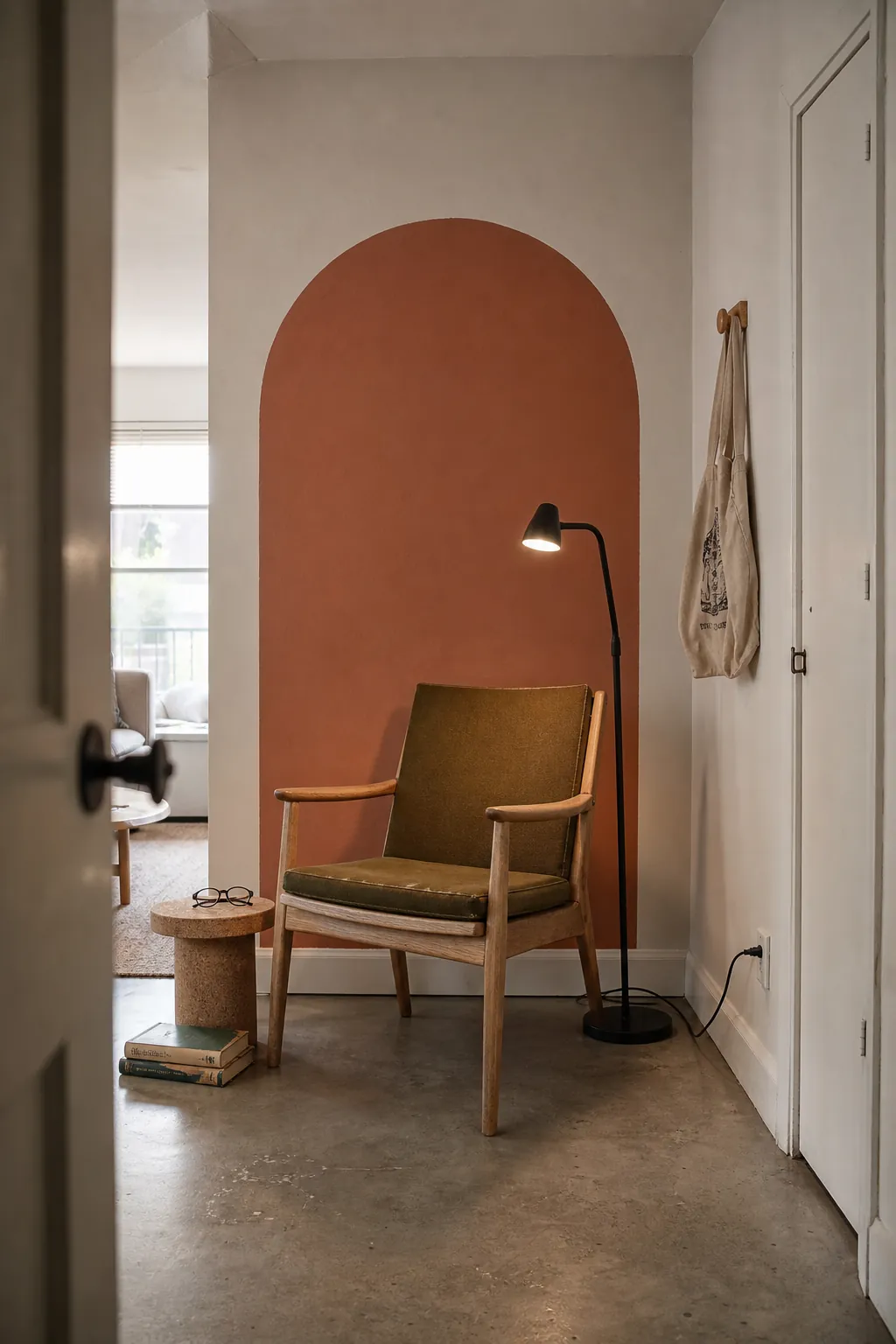
An Architectural Arch That Frames a Reading Corner
Not every mural needs a detailed scene. A painted arch, block, or stepped silhouette can give a chair and floor lamp the architectural backing they lack. This is one of the easiest simple wall murals because the shape can be mapped with string, a pencil, and painter’s tape, while the rounded top can be drawn from a pin-and-string compass.
Let the shape extend a little beyond the furniture instead of squeezing tightly around it. The extra margin makes the arrangement look permanent even if the chair moves. Choose a color with enough contrast to register in daylight, then repeat it only once elsewhere. The mural should create the zone; the furniture should make that zone useful.

A Color-Block Landscape for the Living Room
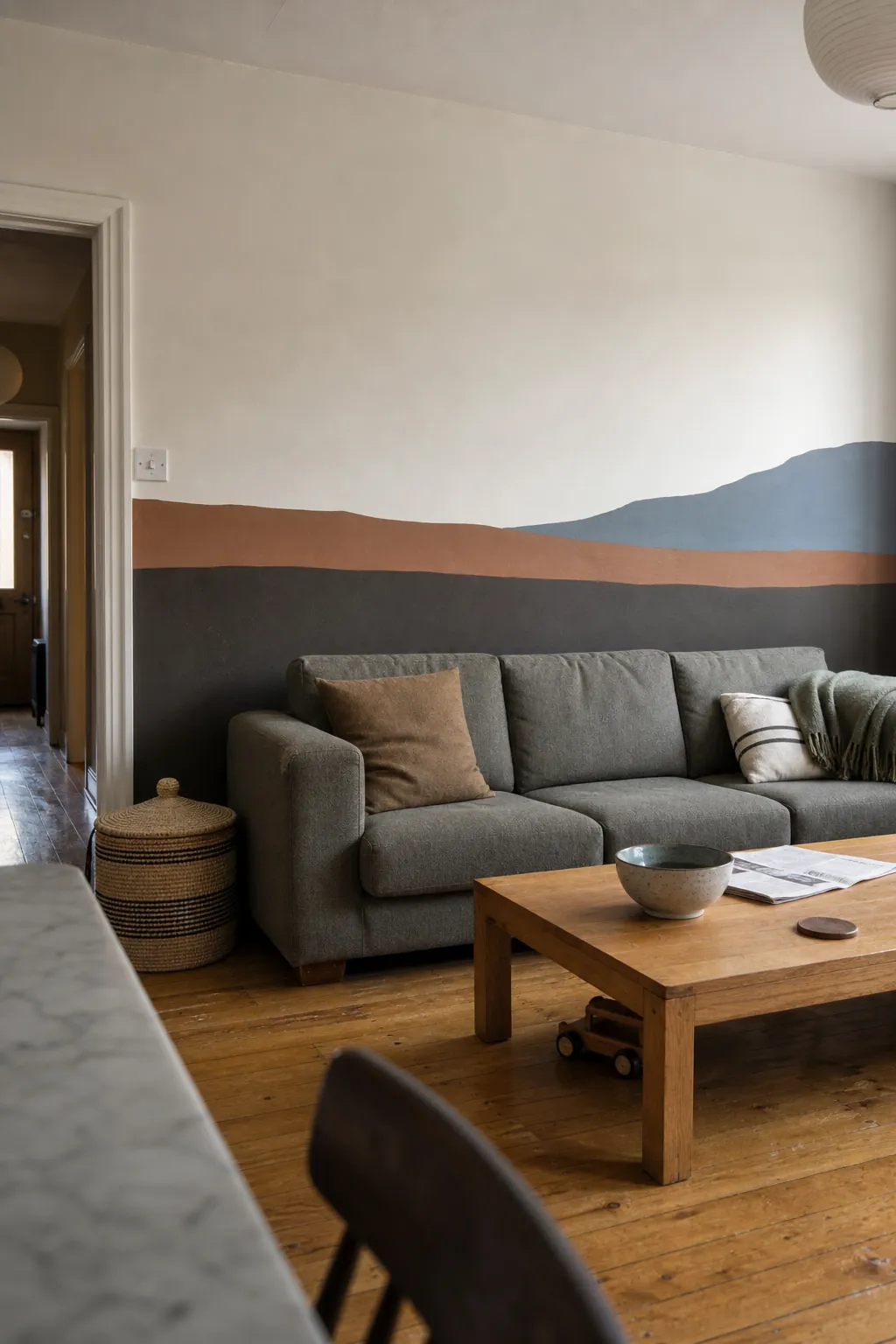
If you love landscape murals but worry about a literal mountain photograph dating the room, reduce the view to broad bands: a low horizon, a distant ridge, and one sweeping foreground curve. The result reads as scenery from across the room and as abstract color up close. It is a smart compromise between cool wall murals and a flexible living-room backdrop.
Place the horizon above the sofa back rather than cutting directly through it. Keep the darkest band low so the furniture feels grounded, and reserve the lightest tone for the upper third to preserve brightness. Before painting, tape paper samples at several heights and view them from the doorway, the sofa, and the adjoining room. A mural has to work from the route through the room, not only from a straight-on photo.

A Playful Hand-Drawn Mural for a Child’s Room
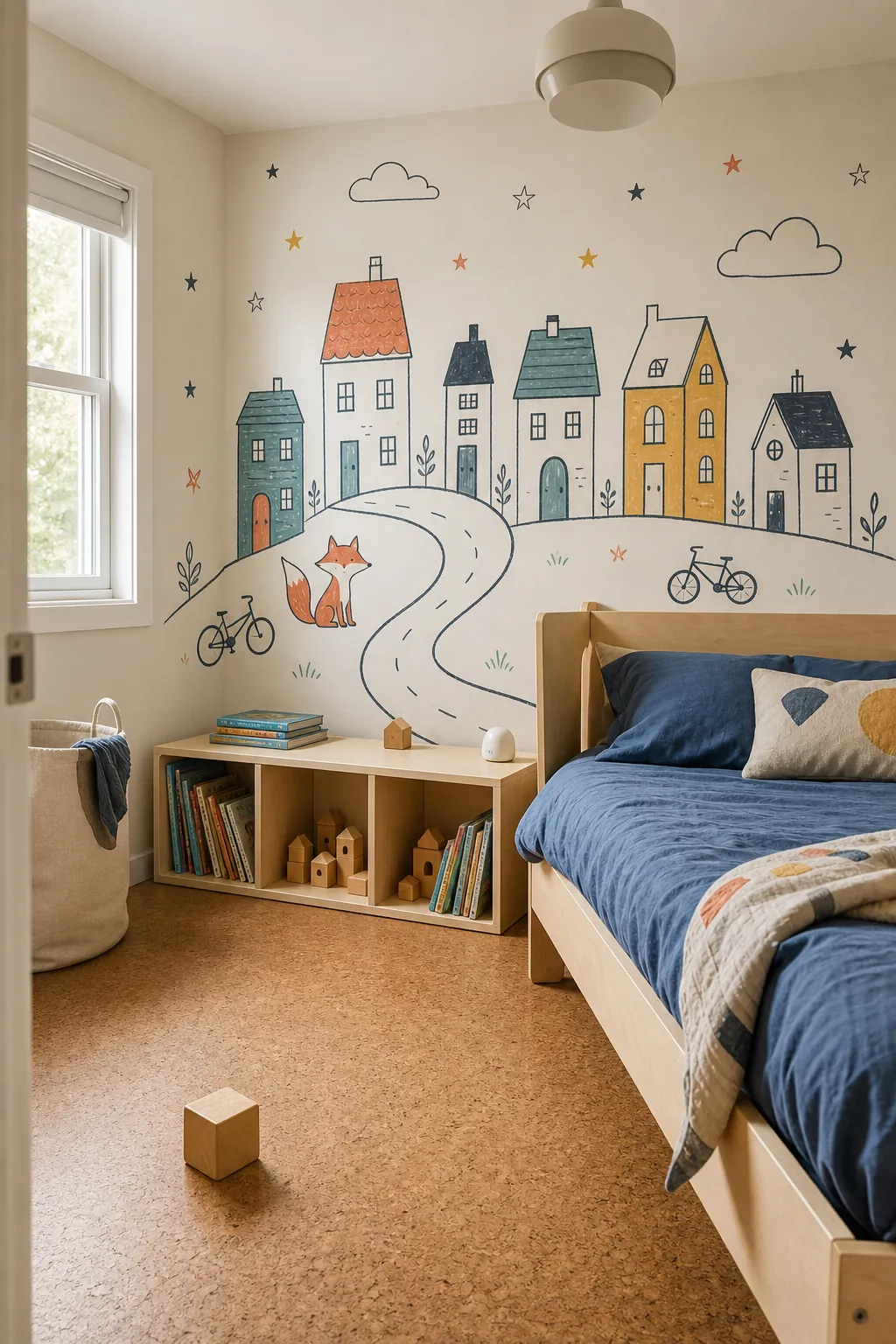
A child’s mural does not need cartoon characters or a fixed theme. Loose houses, tiny stars, winding roads, friendly animals, or an invented neighborhood can grow with the room because the drawing feels imaginative rather than branded. Use a limited palette of three or four colors and leave plenty of the original wall visible so toys, books, and bedding do not create visual overload.
Concentrate interactive details at a child’s eye level, then use lighter marks higher up. Scuffs are inevitable, so save labeled paint jars for repairs and avoid delicate detail behind frequently moved furniture. For renters, draw the same concept on removable mural panels or pre-painted wallpaper liner. Reversibility is not a compromise when it lets the room change with the child.

A Tonal Geometric Mural for a Home Office
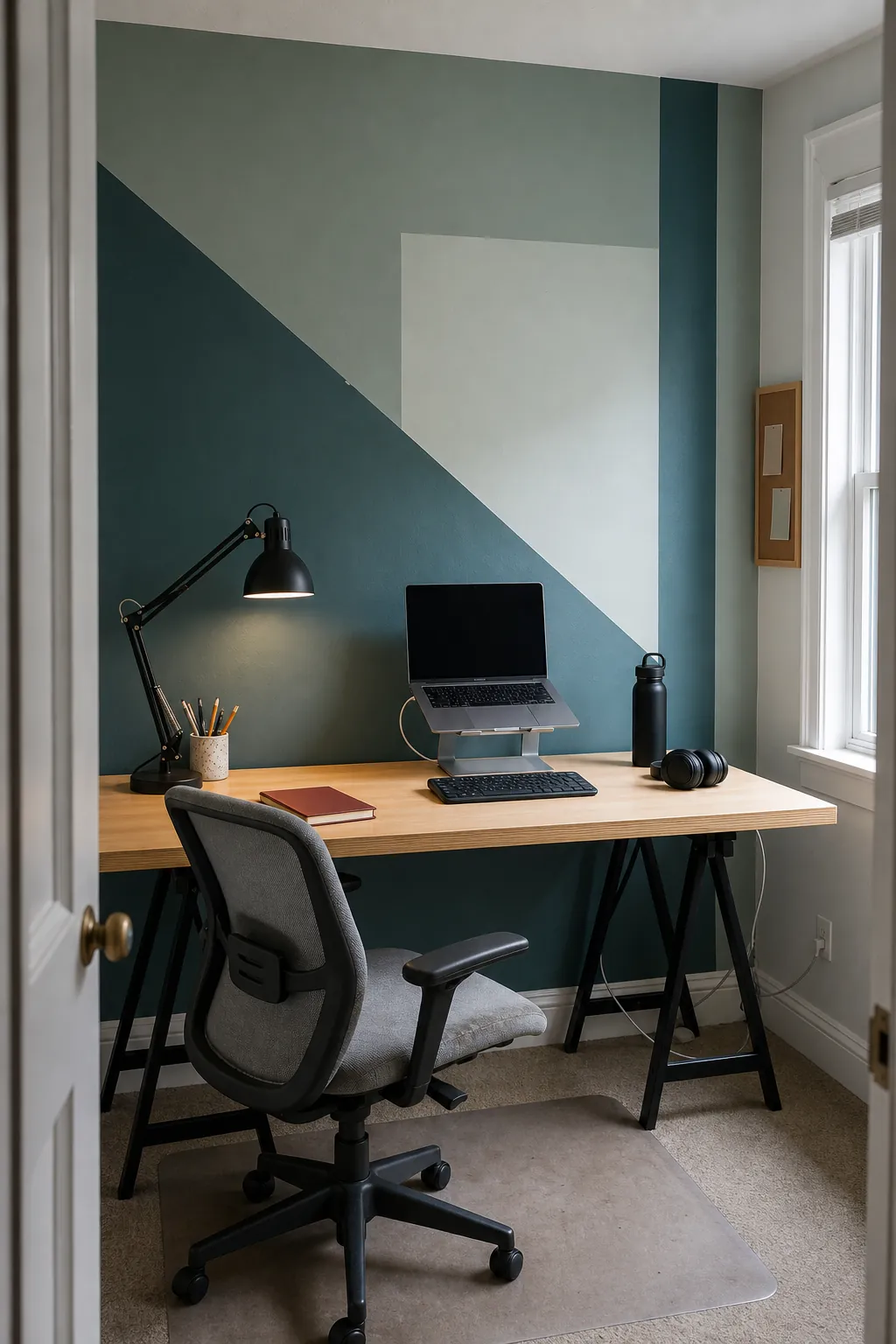
Video-call backgrounds reward order. A tonal geometric mural—overlapping rectangles, one diagonal, or a restrained grid—adds identity without creating a distracting scene behind your head. Select neighboring shades from the same color family and vary their values enough that the design survives both morning light and a laptop camera.
Use the desk edge, shelving, or window trim as a datum line so the geometry relates to the architecture. Avoid centering every shape behind the chair; an offset composition feels more natural and leaves open wall for a pinboard or task light. This is also a forgiving DIY option: matte paint and crisp tape lines can produce a polished result without advanced drawing skill.

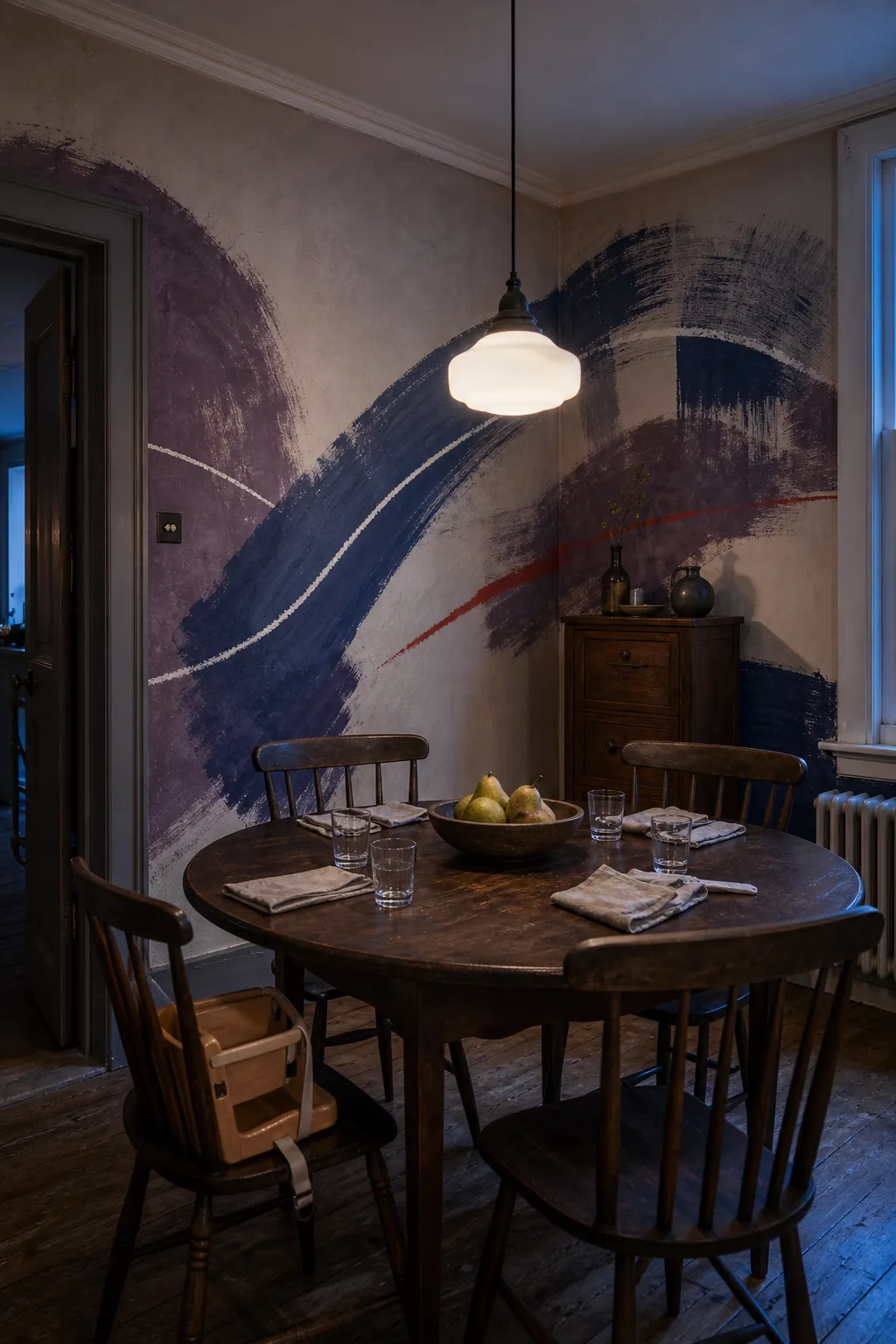
An Immersive Dining-Room Mural That Wraps a Corner
A dining room can carry more drama because it is used in focused intervals. Instead of stopping a mural at an arbitrary corner, let a painterly branch, abstract brush field, or graphic line travel onto the adjacent wall. The wrap makes the design feel integrated with the room and avoids the familiar accent-wall problem of looking like one isolated rectangle.
Keep the densest detail away from door casings and switches, where it will look chopped up. Test the palette beside the table finish at night as well as during the day; dining rooms often live under warm artificial light. If the idea still feels risky, paint the design on heavyweight removable panels first. A strong mural is not the biggest image you can fit—it is the one whose scale, wall, and room all tell the same story.