6 Garden Wall Mural Ideas That Work With Real Plants
A garden wall mural can turn a bare boundary into the most memorable view in the yard, but outdoor paint has to solve problems that indoor murals never meet. Sunlight bleaches weak pigments, damp pushes paint away from masonry, and a beautiful composition can disappear behind summer growth. The wall condition and the planting plan matter as much as the picture.
Before choosing among these backyard mural ideas, inspect the surface for active cracks, flaking coatings, algae, and moisture. Repair the cause rather than painting over it; retaining walls with drainage problems need professional attention. Use products rated for your substrate and climate, follow their curing times, and test colors in full sun and shade. Once the wall is sound, these six approaches can make the artwork and garden feel designed together.
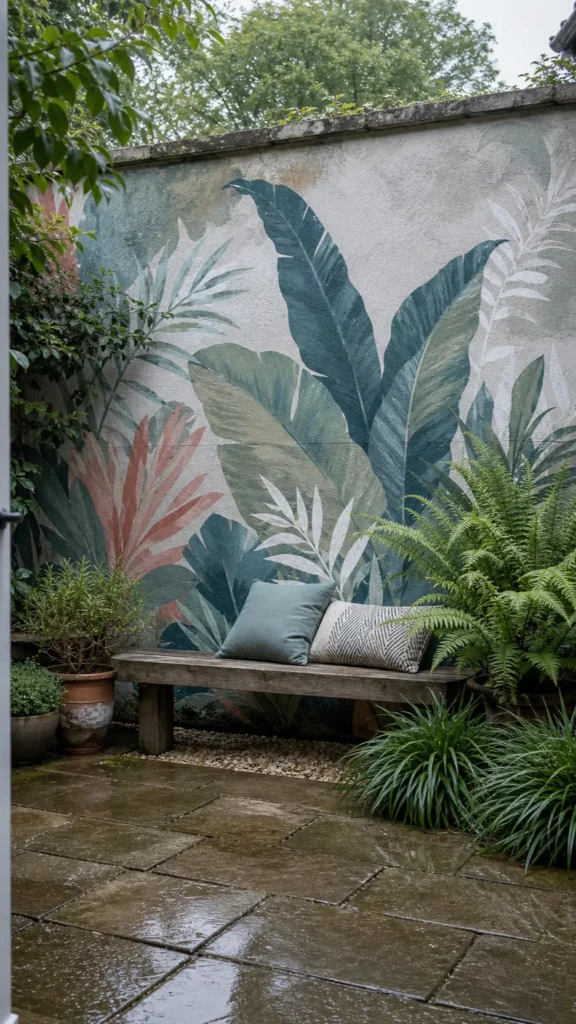
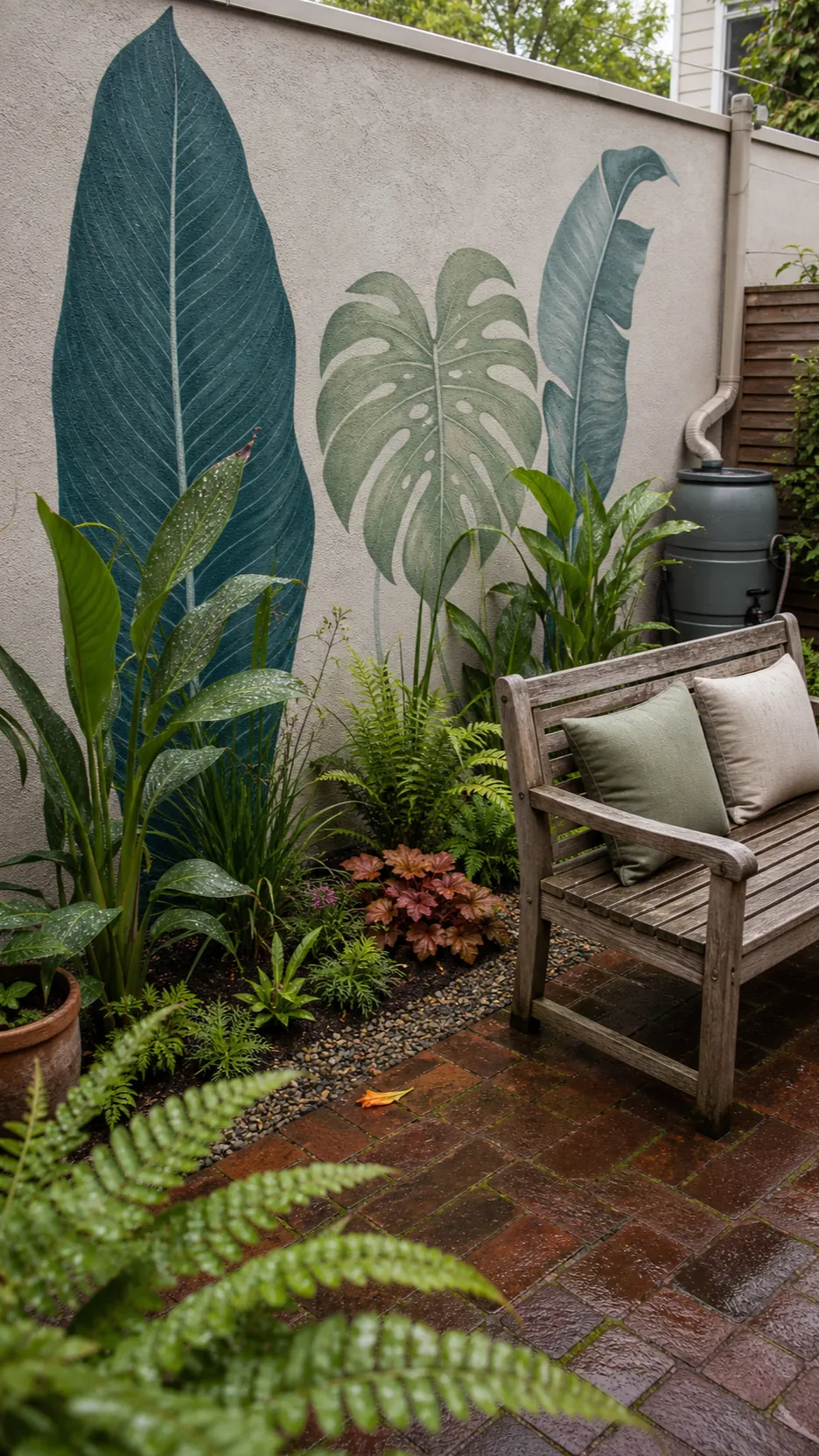
Oversized Leaves That Continue the Planting
A plant mural wall feels convincing when it borrows shapes from what already grows nearby. Enlarge two or three recognizable leaves—banana, canna, fern, or nasturtium—rather than painting a dense generic jungle. Let real foliage overlap the lower edge so the boundary between painted and living plants becomes intentionally ambiguous.
Keep the painted background close to the wall’s existing value and reserve the strongest contrast for one focal leaf. This prevents the mural from shouting when the garden is sparse in winter. Think of the plants as the foreground layer and the wall as permanent depth. Leave access around irrigation lines and avoid planting aggressive climbers directly against fresh paint.

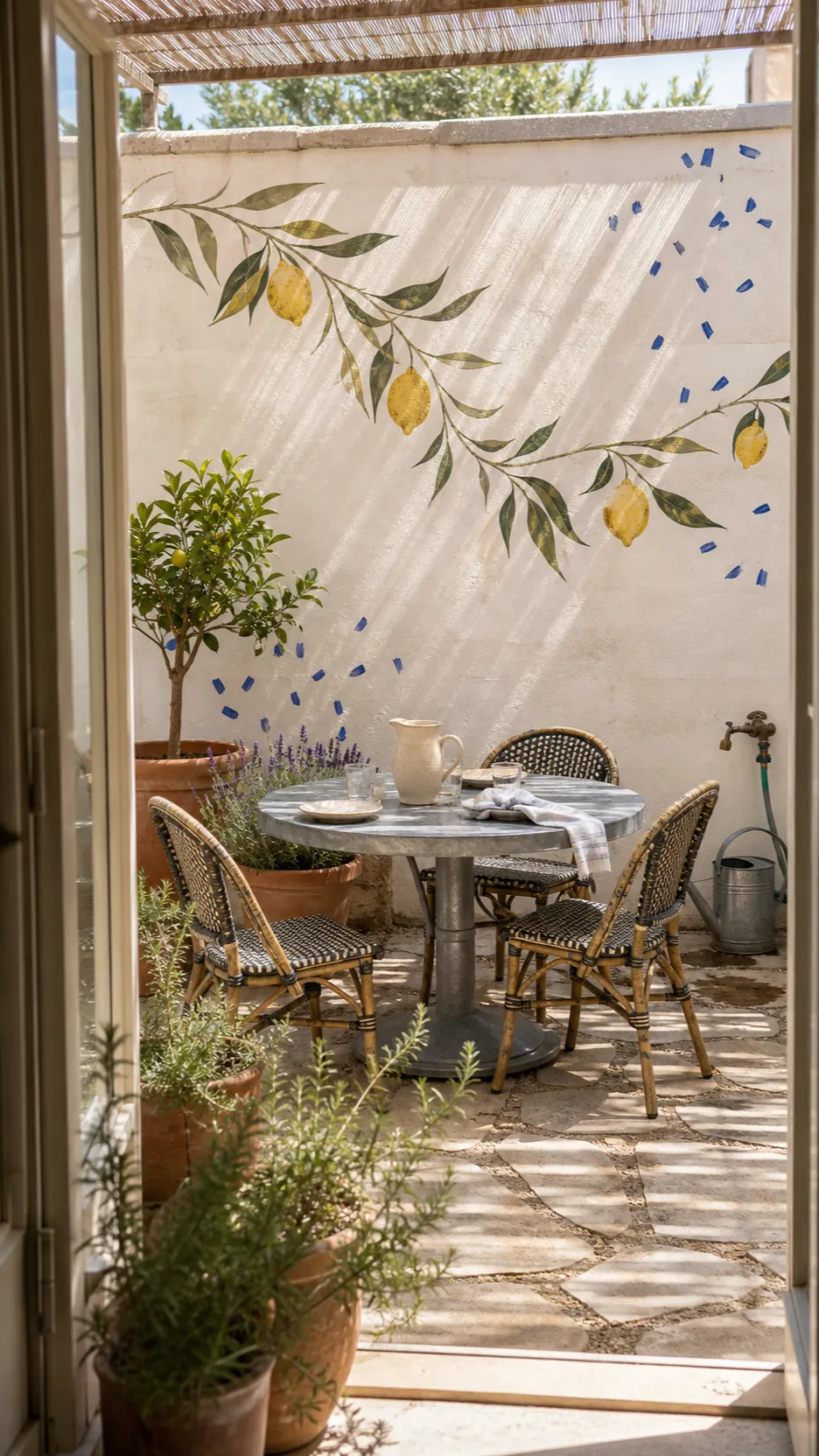
A Mediterranean Citrus Wall for a Sunny Patio
For a wall that receives hard afternoon sun, lean into the brightness with loose citrus branches, cobalt accents, and chalky plaster tones. A few lemons and leaves can animate an outdoor dining zone without turning it into a themed restaurant. Place the strongest branch where it frames the table from the main doorway, not directly behind chair backs.
Very bright yellows and reds are often vulnerable to visible fading, so discuss lightfast exterior pigments with the paint supplier or mural artist. Photograph and label your final mixes for later touch-ups. Terracotta pots and silver-leaved herbs can repeat the palette without matching it exactly.

Sunset Color Bands That Warm a Concrete Courtyard
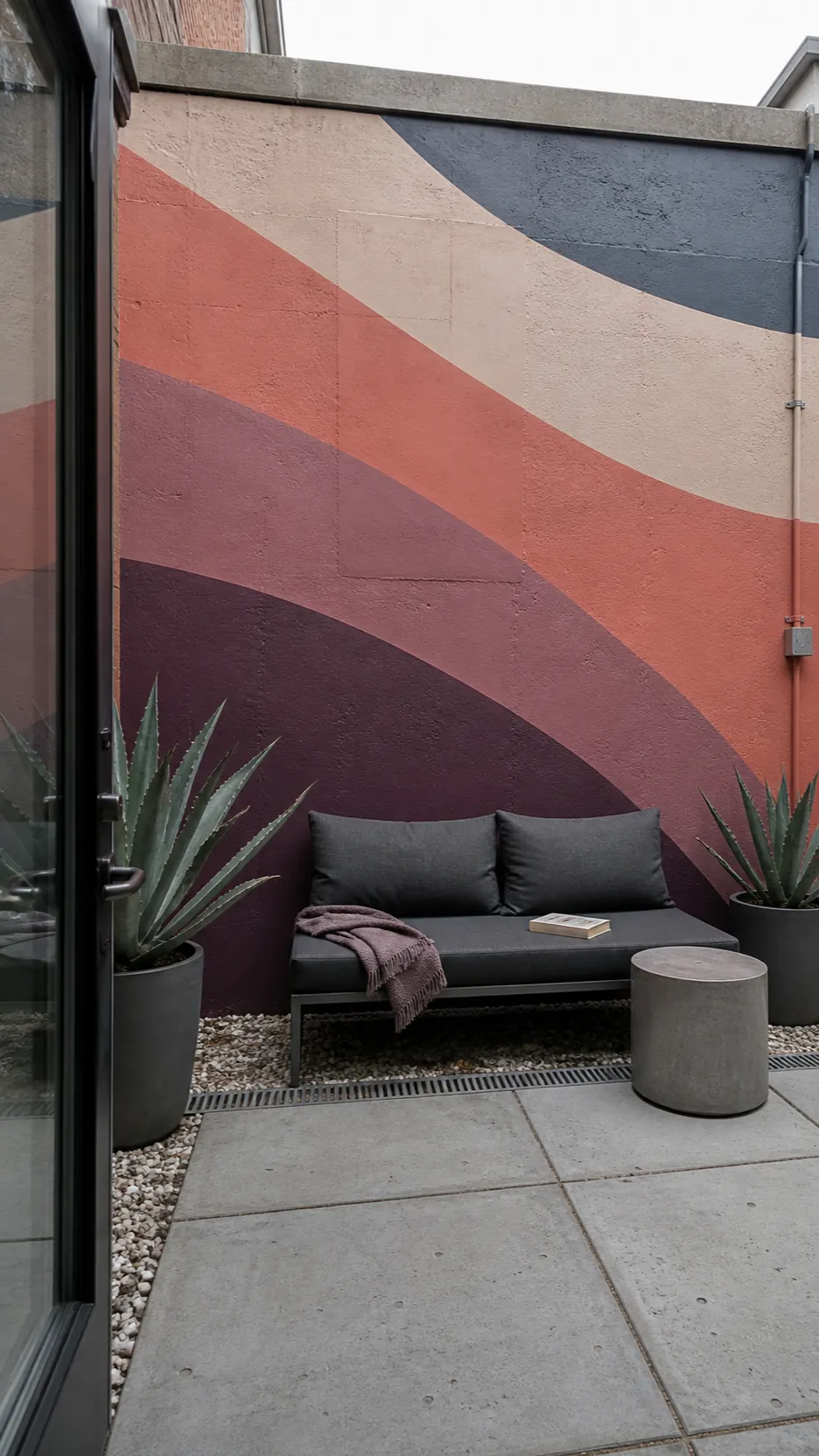
Not every nature mural needs literal plants. Broad curved bands in clay, muted coral, dusky mauve, and deep plum can suggest sunset light while disguising patched concrete. The simplified shapes are also easier to maintain than intricate linework because a repair can be blended inside one large color field.
Map the design around wall joints, outlets, drains, and coping instead of pretending those features do not exist. A low dark band visually connects paving to the wall, while lighter upper color keeps a compact courtyard open. Repeat one mural tone in seat cushions or planters and let the remaining furniture stay quiet.

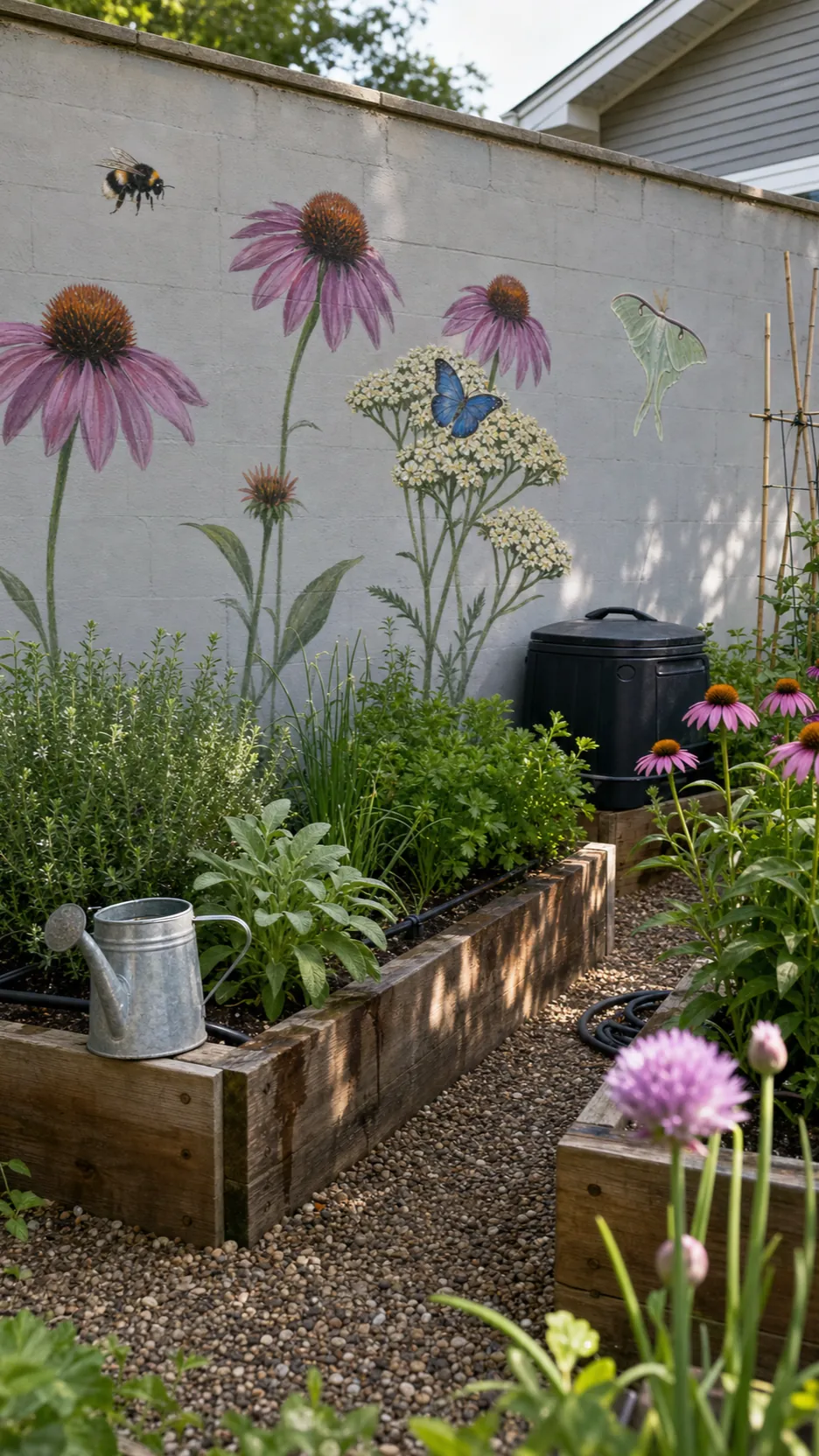
A Pollinator Mural Beside the Herb Beds
A hand-painted wall mural can become a close-up field guide without adding labels. Choose local flowers and a small number of recognizable visitors, such as one bee, a moth, and a butterfly, then enlarge them enough to read from the patio. Keep the composition airy so real stems moving in front do not create clutter.
This idea works especially well beside raised herbs or a kitchen garden, where the subject connects to how the space is used. Avoid copying an artist’s illustration; work from your own photographs or properly licensed references. Specific local species give a botanical wall mural more character than a generic floral pattern.

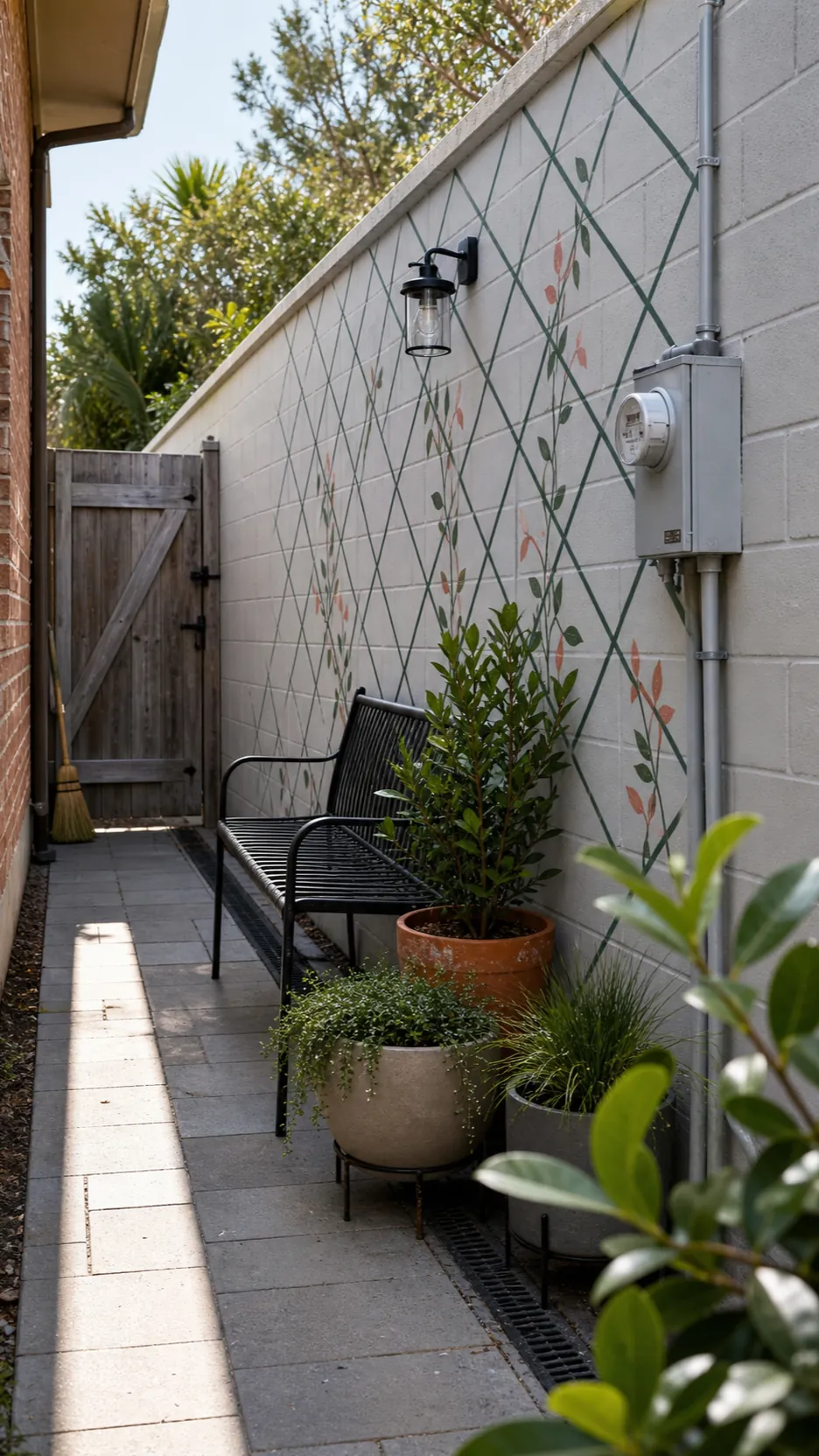
A Graphic Trellis That Needs No Pruning
Where real vines would threaten mortar, block a path, or demand constant trimming, paint the rhythm of a trellis instead. A diagonal lattice with sparse climbing stems gives a narrow side yard height and movement while keeping the wall accessible. It can also bridge awkwardly spaced doors, meters, or utility boxes more gracefully than a centered picture.
Use the masonry courses as measuring guides, but allow the painted stems to be looser than the geometric support. Place container plants at the base rather than against the whole wall so air can circulate and maintenance remains possible. The contrast between exact lattice and organic line is what keeps this exterior mural lively.

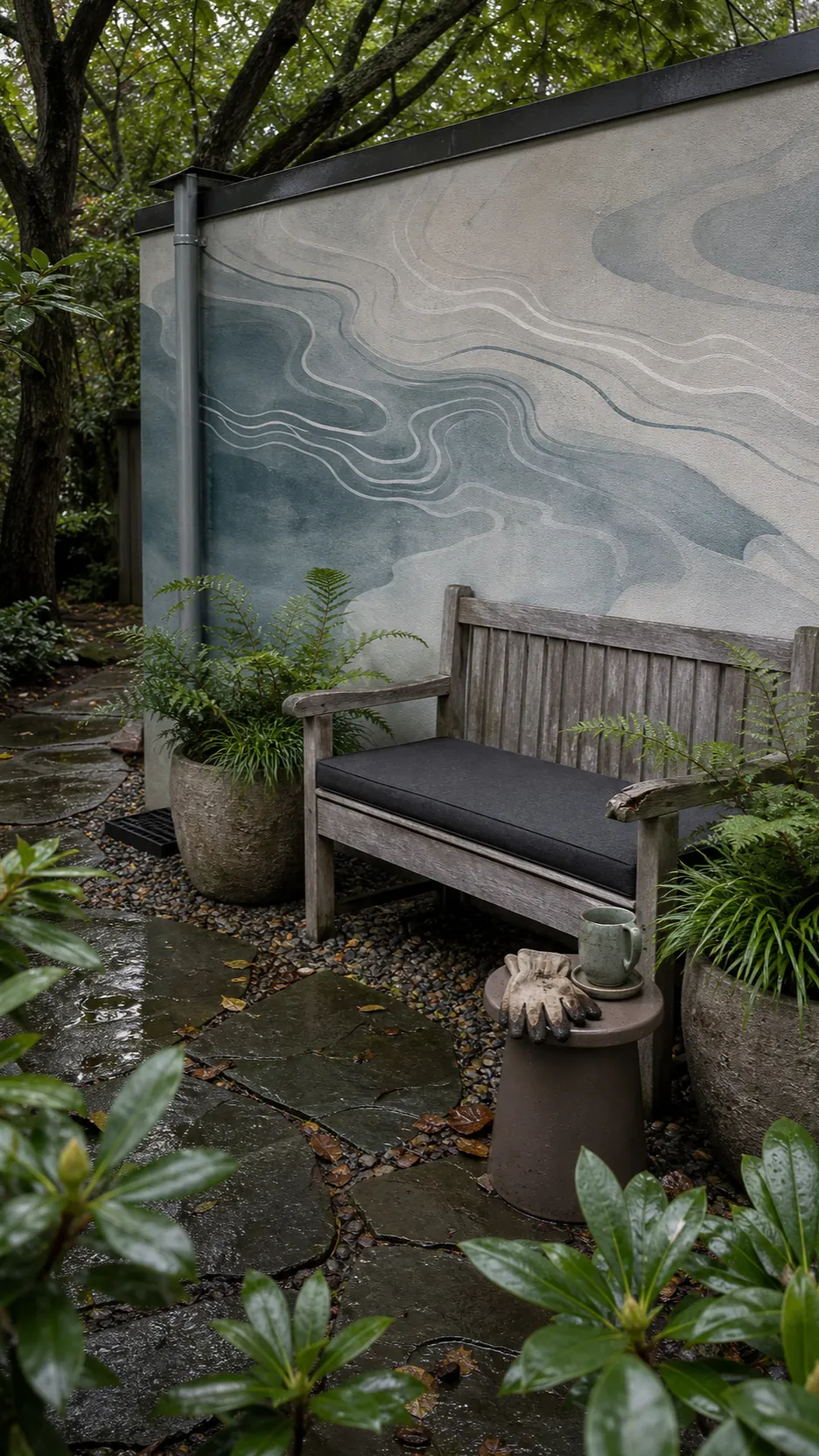
A Quiet Water-Ripple Mural by the Seating Nook
In a shaded corner, overlapping ripple lines and soft blue-green washes can suggest water without painting a literal pond. The low-contrast movement works behind a bench because it supports conversation rather than competing with it. Use a small number of broad ripples, varied spacing, and a matte mineral-like finish that relates to stone and weathered wood.
Keep the lowest paint clear of persistent splashback and soil, and maintain a gravel or paved strip so irrigation does not constantly wet the surface. Ask whether the protective coating recommended for your paint system changes sheen or color before applying it across the finished artwork. A discreet dated color map stored indoors will make future repairs easier. The best outdoor wall murals are designed to weather, be cleaned, and be touched up—not treated as permanent on day one.