45 Geometric Mural Ideas for Bold, Modern Feature Walls
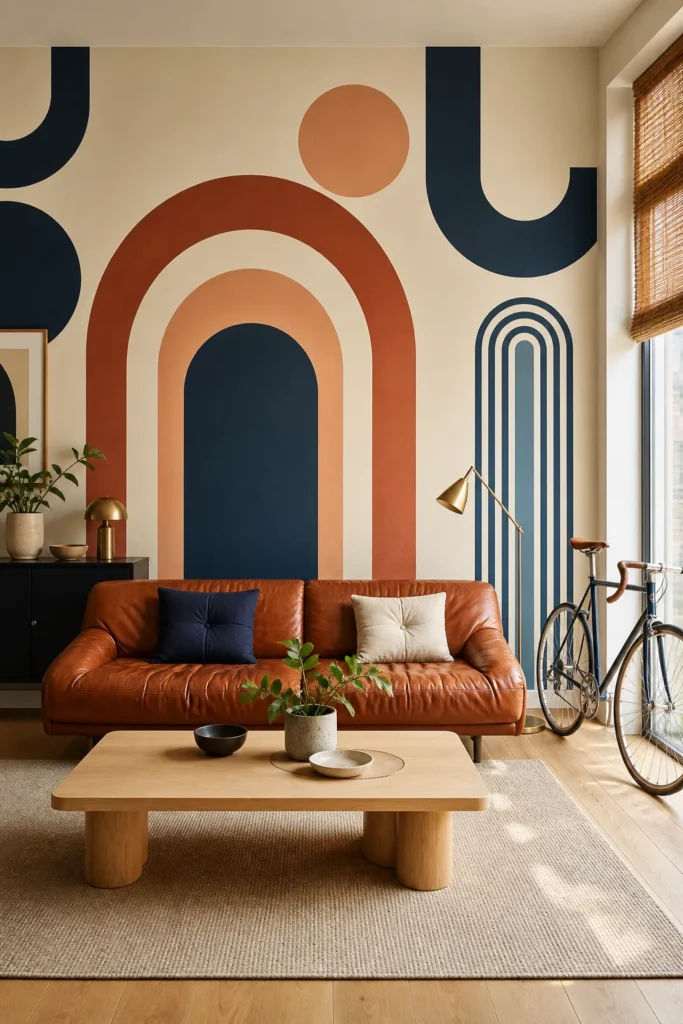
A geometric mural can turn a plain wall into an architectural focal point using arches, angles, curves, and carefully placed color. These 45 ideas range from quiet Scandinavian compositions to energetic Bauhaus, Cubist, and Memphis-inspired designs.
Consider the room’s scale, natural light, and existing furnishings before choosing a pattern. Muted shapes create a calmer backdrop, while saturated colors, metallic details, and sharp contrasts deliver greater drama.
Create a Soft Reading Corner With Layered Neutral Arches
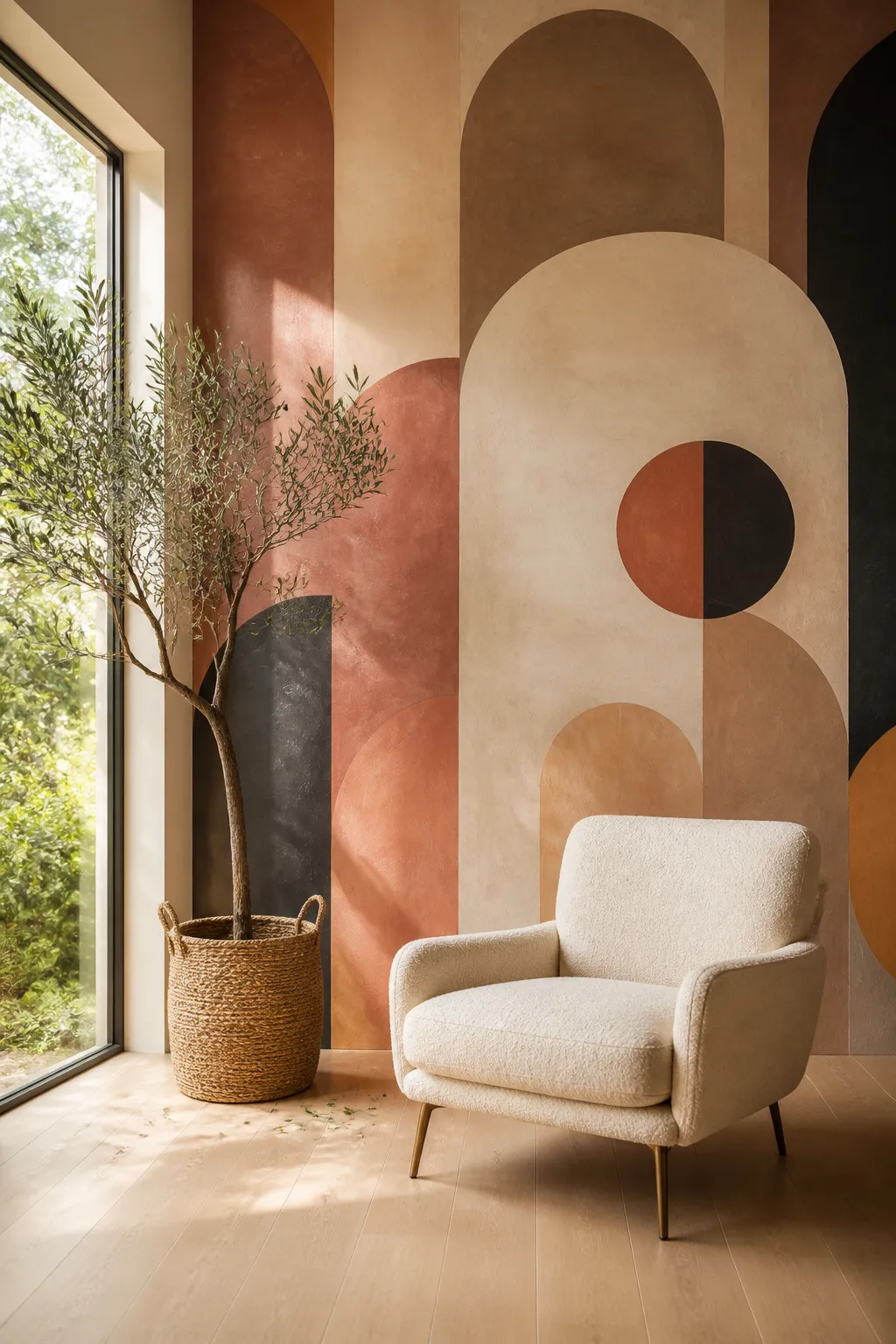

Layer overlapping arches in cream, sand, and warm taupe to give a quiet reading corner soft architectural depth. Rounded forms create interest without disturbing the restful mood.
Pair the mural with a comfortable chair, tactile cushions, and warm lighting. Natural wood and woven accents will reinforce the calm, cocooning effect.
Energize the Living Room With Retro Color Blocks
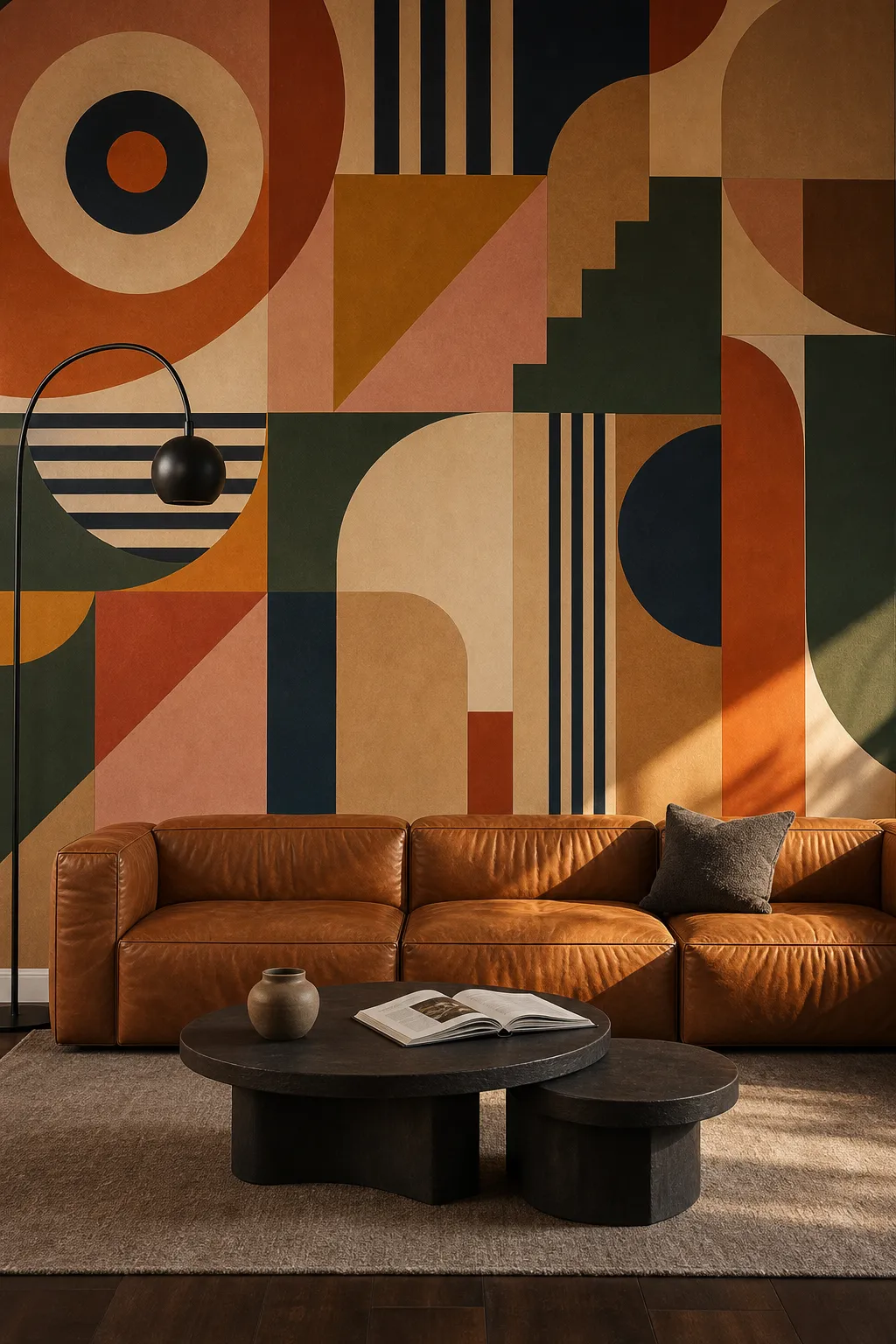

Use chunky blocks of mustard, rust, teal, and coral to bring retro energy into the living room. A few rounded edges will keep the composition lively rather than rigid.
Let the wall supply most of the color, then echo one or two shades through cushions or ceramics. Simple furniture prevents the room from feeling visually crowded.
Pair Navy Geometry With Fine Gold Art Deco Lines
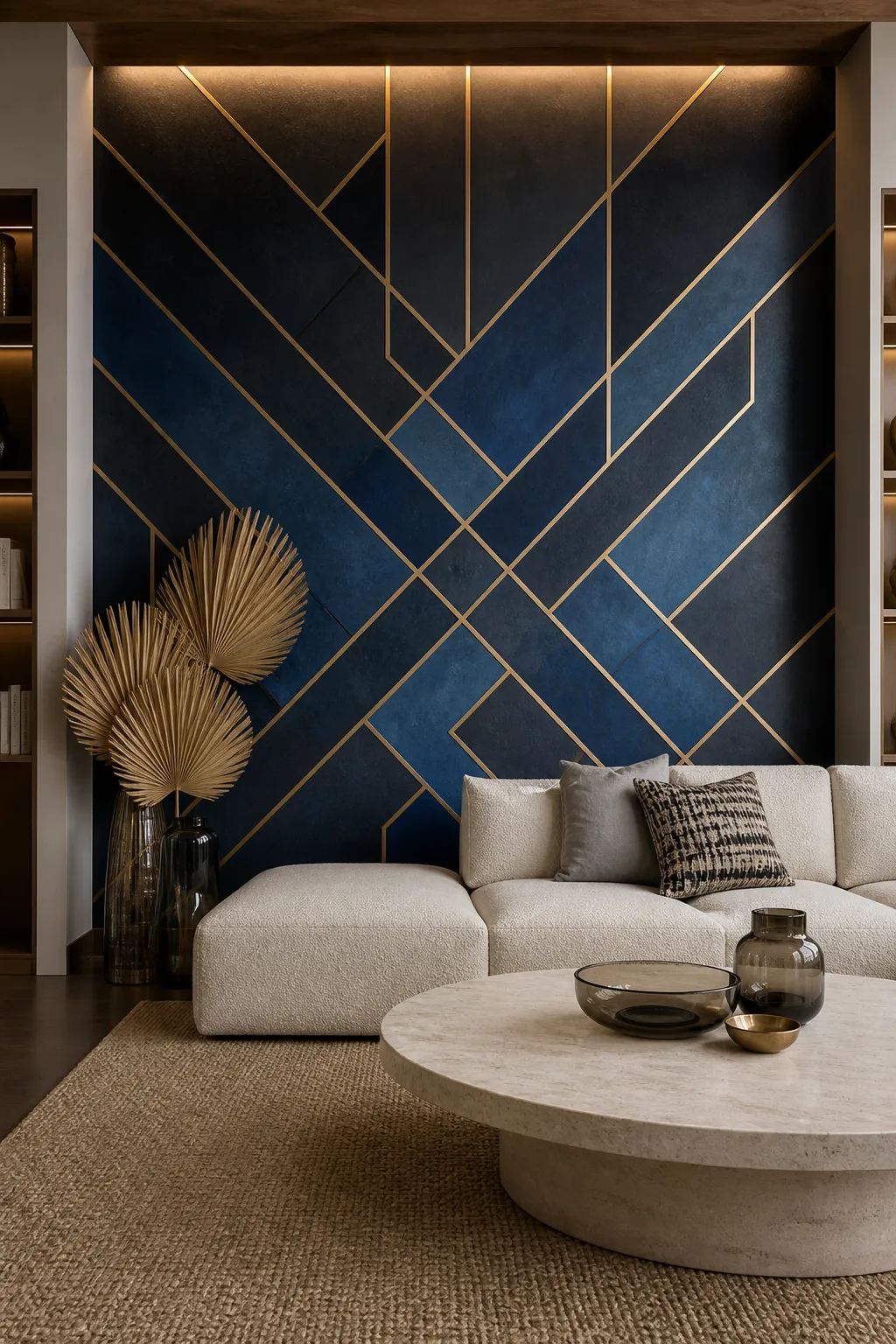

Deep navy shapes create a sophisticated foundation, while fine metallic lines introduce Art Deco elegance. Use symmetry and repeated angles to make the design feel polished and intentional.
Warm brass lighting or gold-framed accessories can extend the motif beyond the wall. Keep surrounding finishes restrained so the delicate linework remains visible.
Soften Geometric Arches With Muted Botanical Details
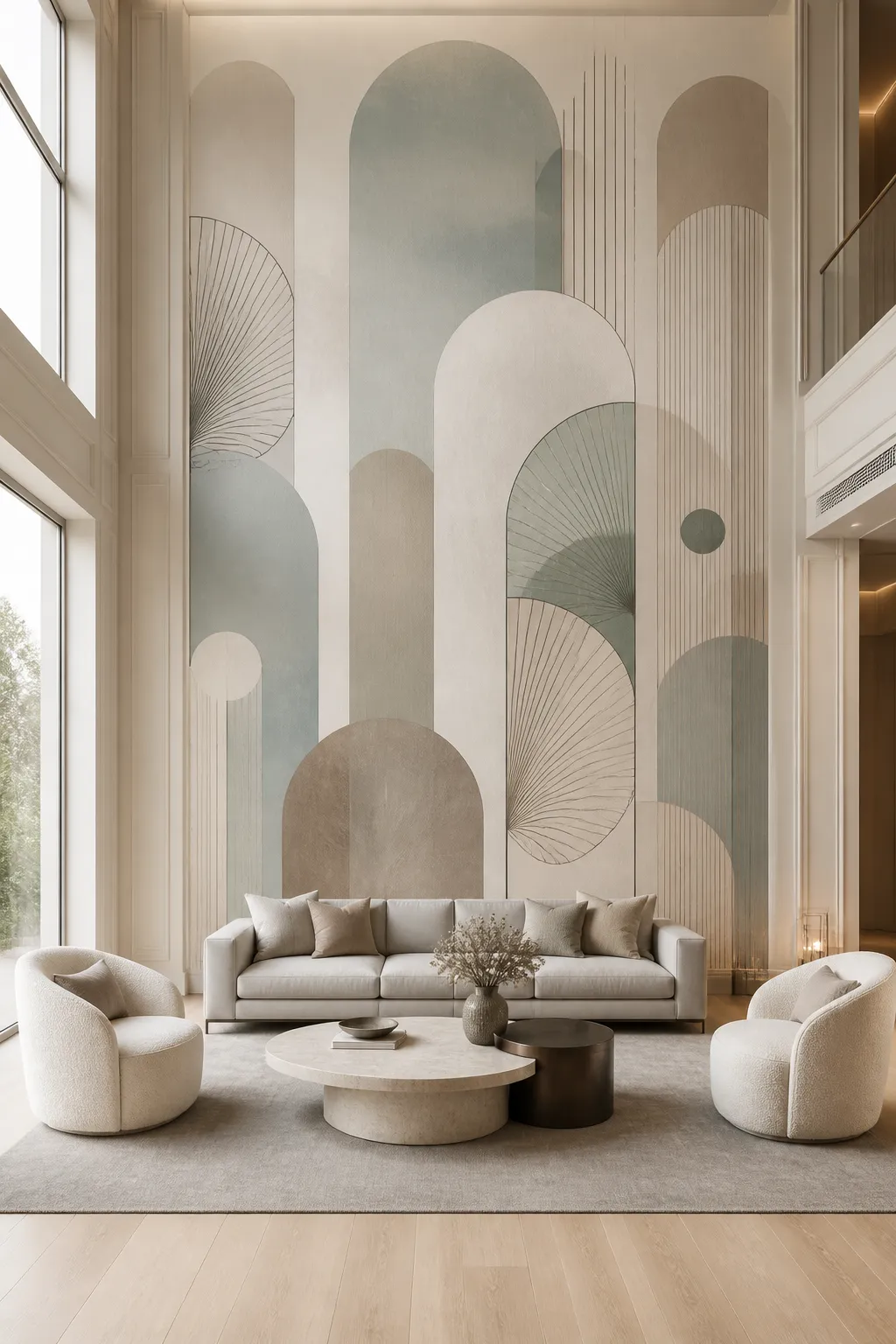

Combine structured arches with slender leaves and stems to balance order with organic softness. Dusty green, clay, blush, and cream make the contrast feel gentle.
Choose botanical details with plenty of breathing room rather than dense foliage. Linen, pale timber, and understated pottery will complement the mural’s relaxed character.
Make a Console Wall Glow With Kaleidoscope Color
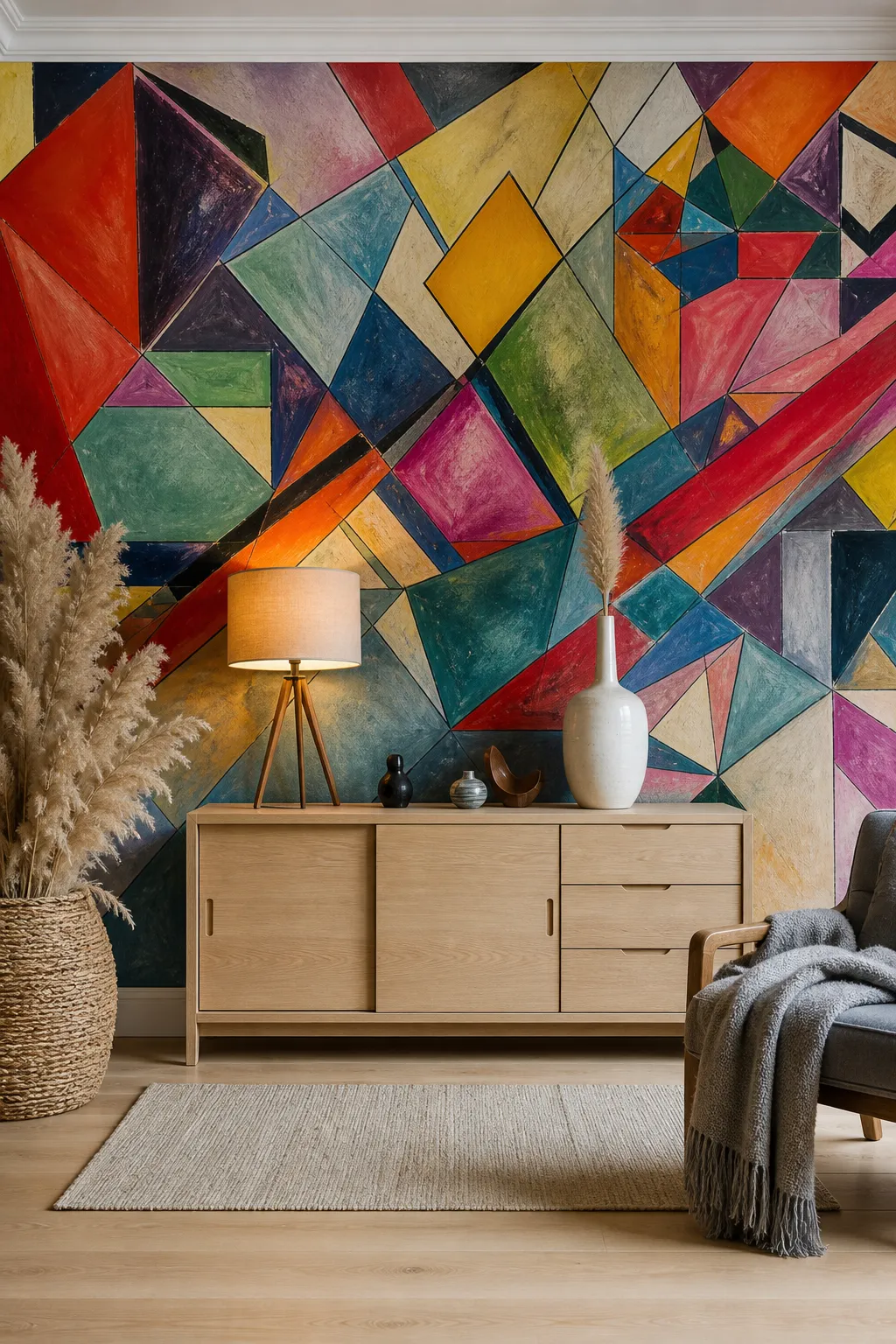

Arrange jewel-toned facets around a console to create a kaleidoscope focal point. Strategic gradients and overlapping translucent colors can suggest light passing through glass.
Center the strongest part of the pattern above the furniture for a composed look. A streamlined console and minimal accessories allow the luminous wall to command attention.
Bring Cubist Color to a Creative Reading Nook
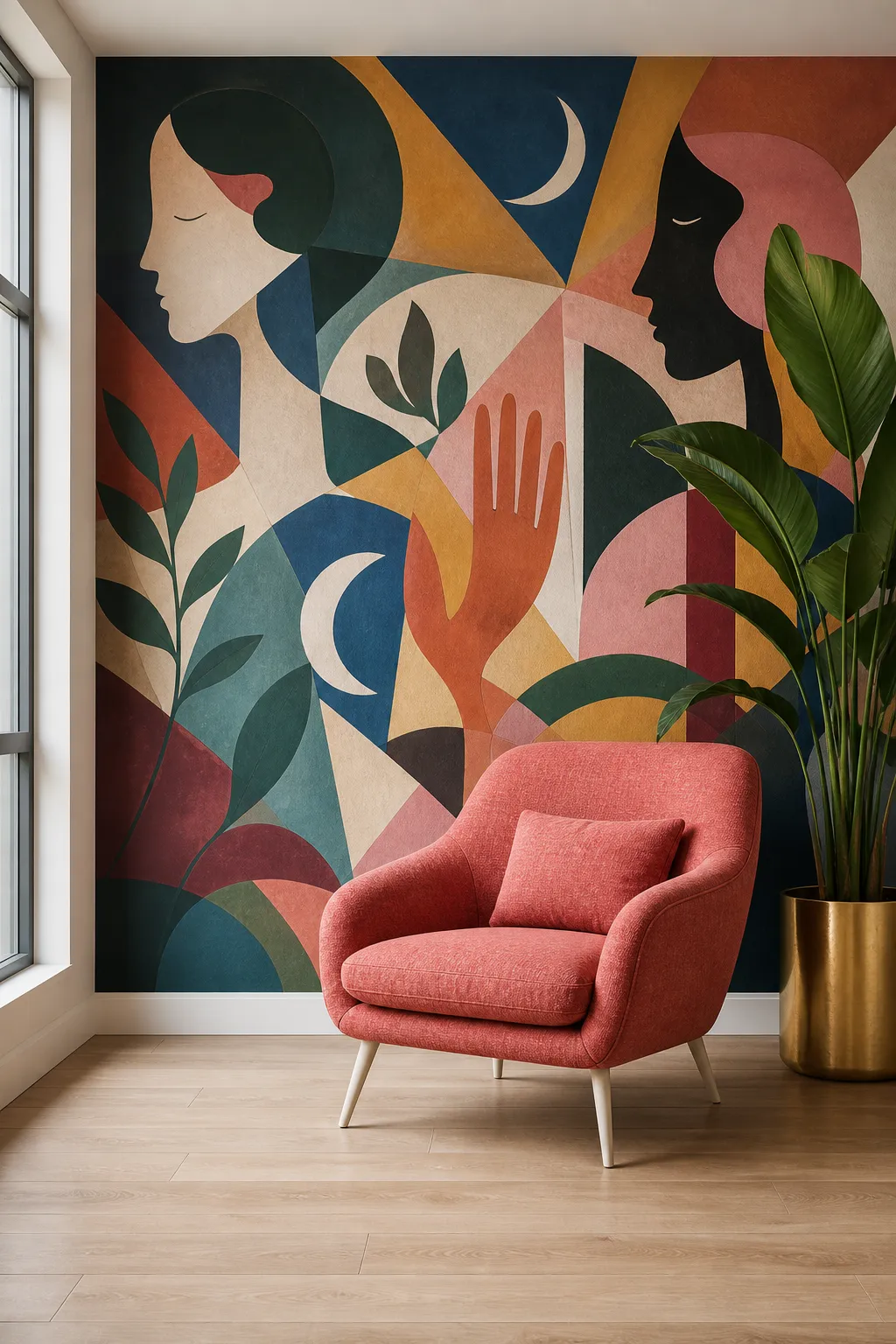

Build the mural from fragmented faces, books, and angular shapes in a playful Cubist arrangement. Contrasting colors give the nook creative momentum while connecting it to art and storytelling.
Balance the sharp geometry with a rounded chair, soft rug, and focused reading lamp. Pulling one mural color into the upholstery helps the nook feel cohesive.
Give a Modern Restaurant an Artful Abstract Backdrop
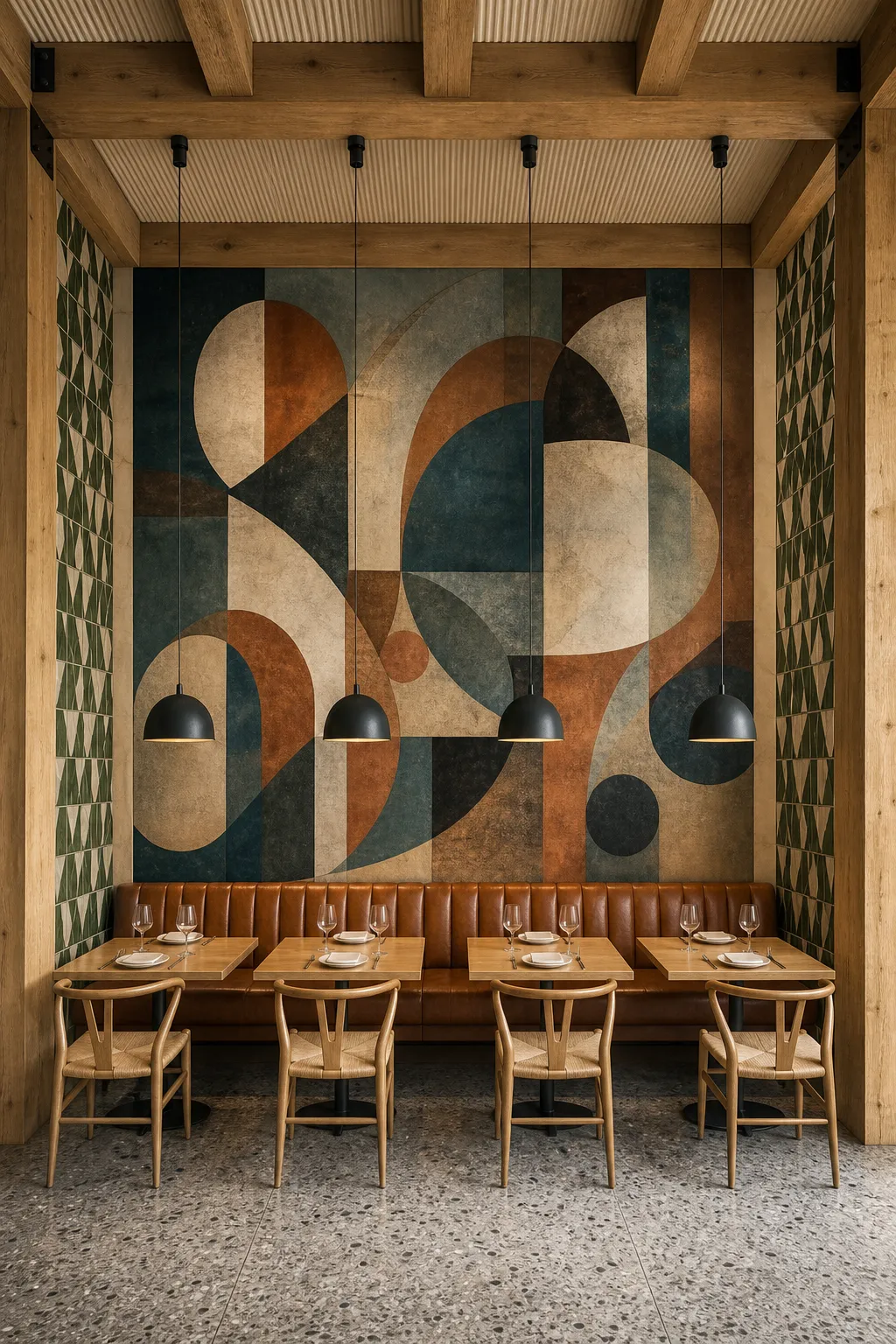

An oversized abstract mural can define the dining room and give guests a memorable visual anchor. Choose confident shapes and a controlled palette for gallery-like impact.
Position the composition where it frames tables without competing with signage or lighting. Durable finishes and colors that flatter the restaurant’s materials will keep the backdrop practical and inviting.
Build a Joyful Maximalist Living Room With Layered Shapes
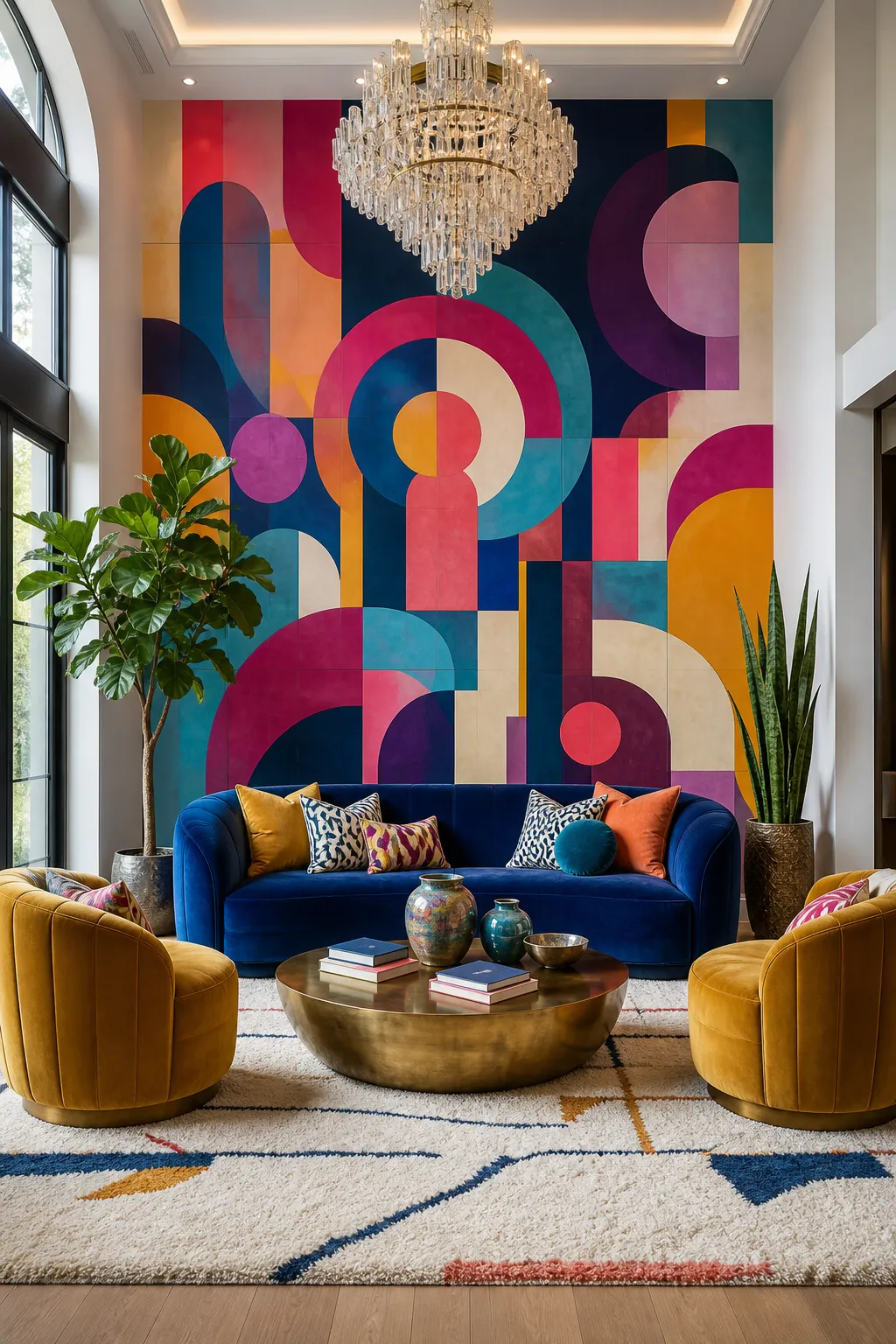

Overlap circles, arches, waves, and angular forms to create a living room full of movement. Repeating a few key colors gives the maximalist mix an underlying rhythm.
Continue selected shapes through rugs, cushions, and sculptural furniture, but vary their scale. Small areas of neutral space will help the bold layers remain readable.
Welcome Guests With a Pastel Triangle Entryway Mural
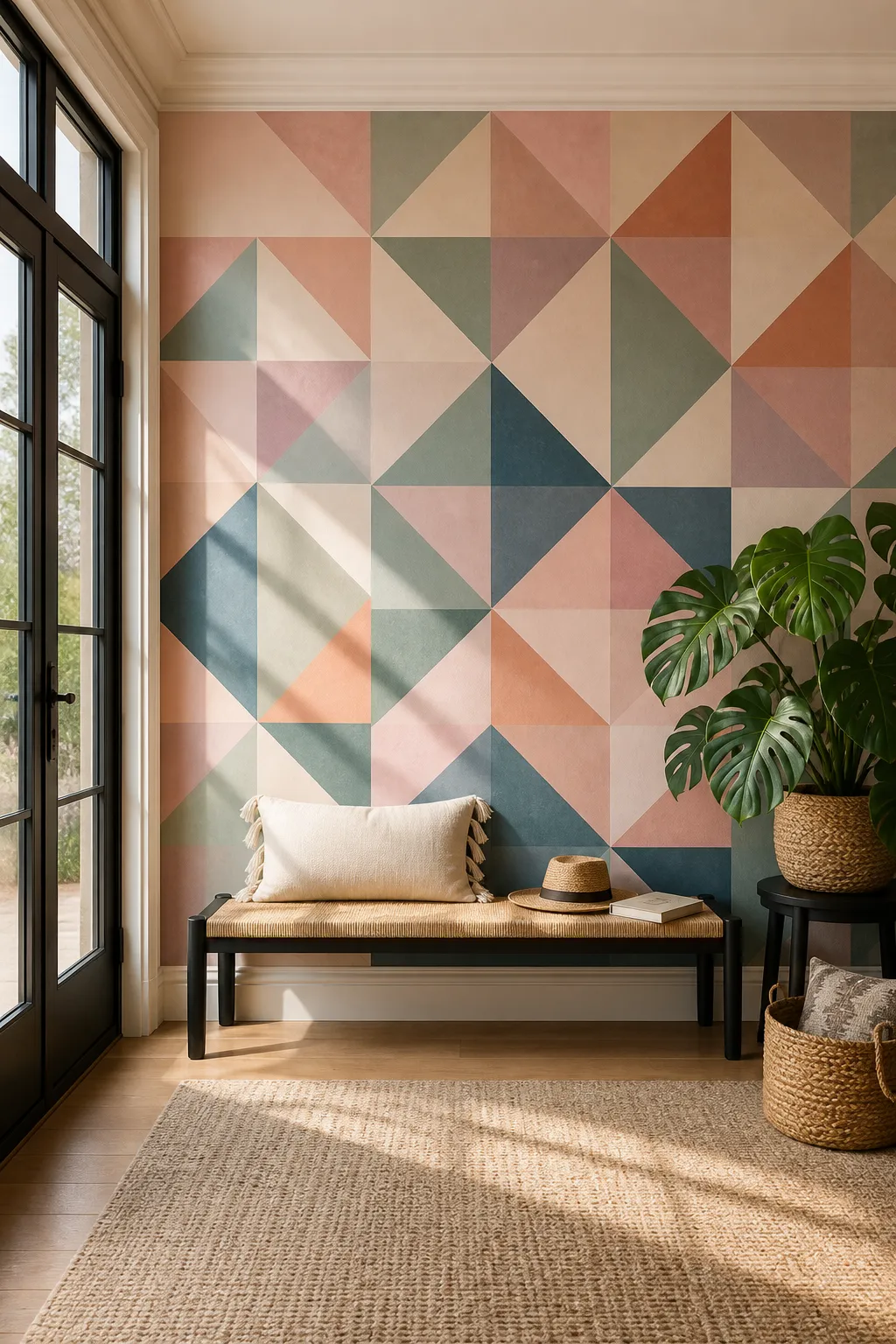

A pattern of blush, mint, lavender, and pale yellow triangles makes an entryway feel cheerful and approachable. The crisp geometry adds playful structure without overwhelming a compact space.
Keep the lower wall practical and pair the mural with a slim bench or console. Light wood and simple hooks support the soft palette while preserving an uncluttered arrival zone.
Keep a Scandinavian Living Room Calm With Simple Triangles
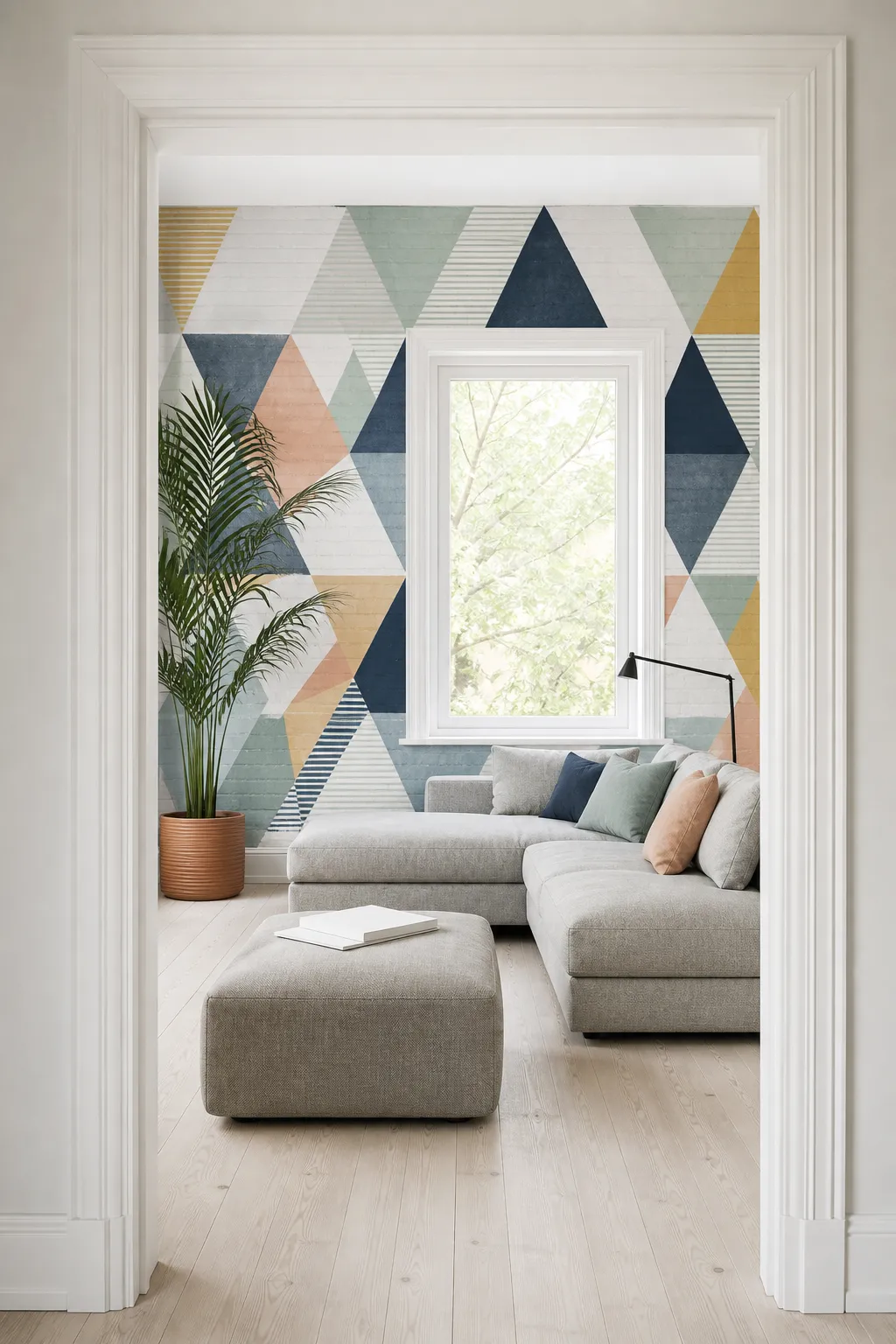

Use widely spaced triangles in off-white, pale gray, and muted beige for quiet geometric interest. A limited palette suits the clean, airy character of Scandinavian interiors.
Pair the design with light timber, soft textiles, and furniture featuring uncomplicated lines. Asymmetrical placement can add personality while maintaining the room’s restful balance.
Anchor a Mid-Century Living Room With Graphic Geometry
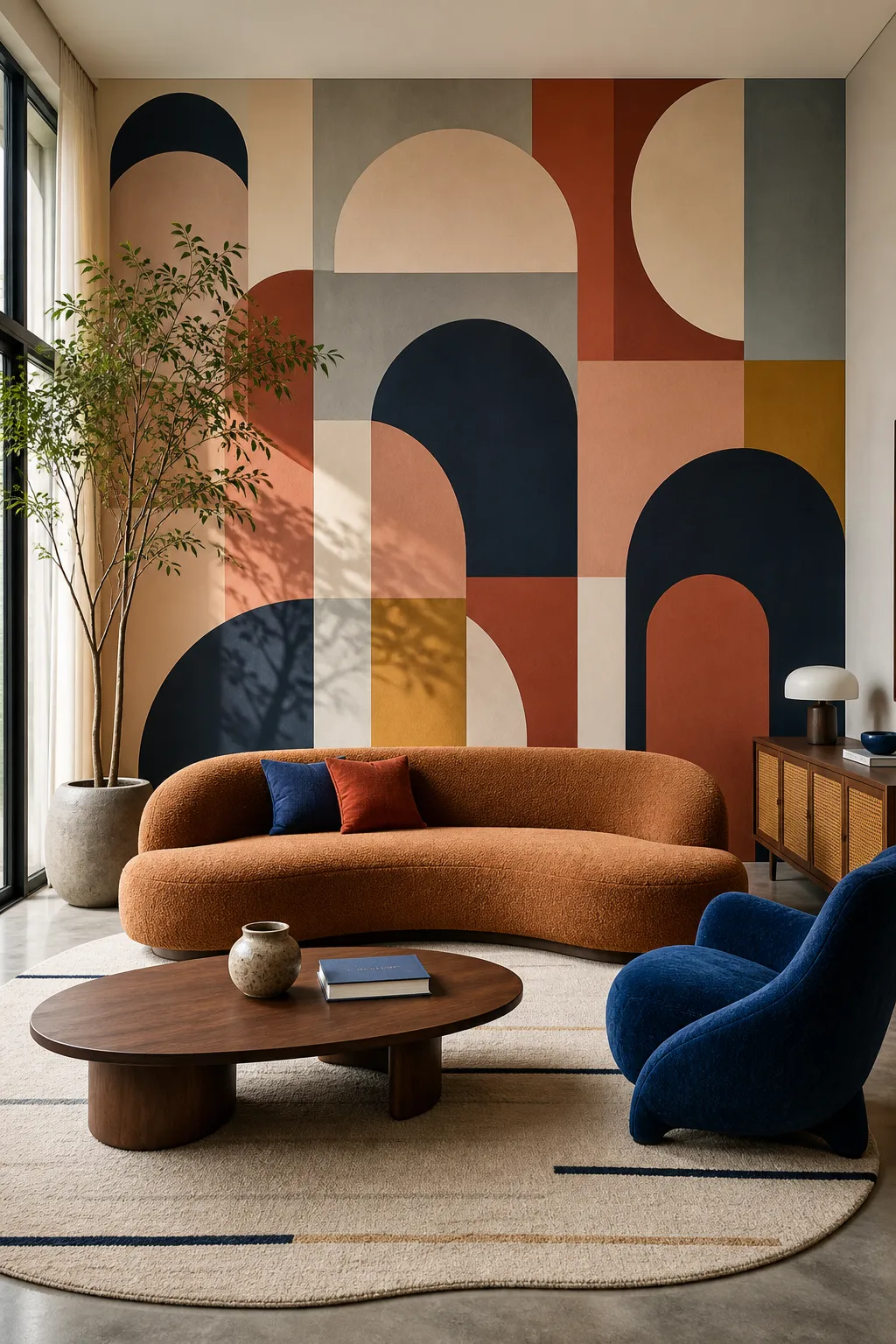

Create an anchor wall with circles, boomerangs, and strong bands in ochre, olive, rust, and black. These era-inspired forms deliver mid-century character at an architectural scale.
Walnut furniture and tapered legs naturally complement the palette. Leave enough open wall around the composition so each graphic element retains its punch.
Add Striped Geometric Impact to an Industrial Lobby
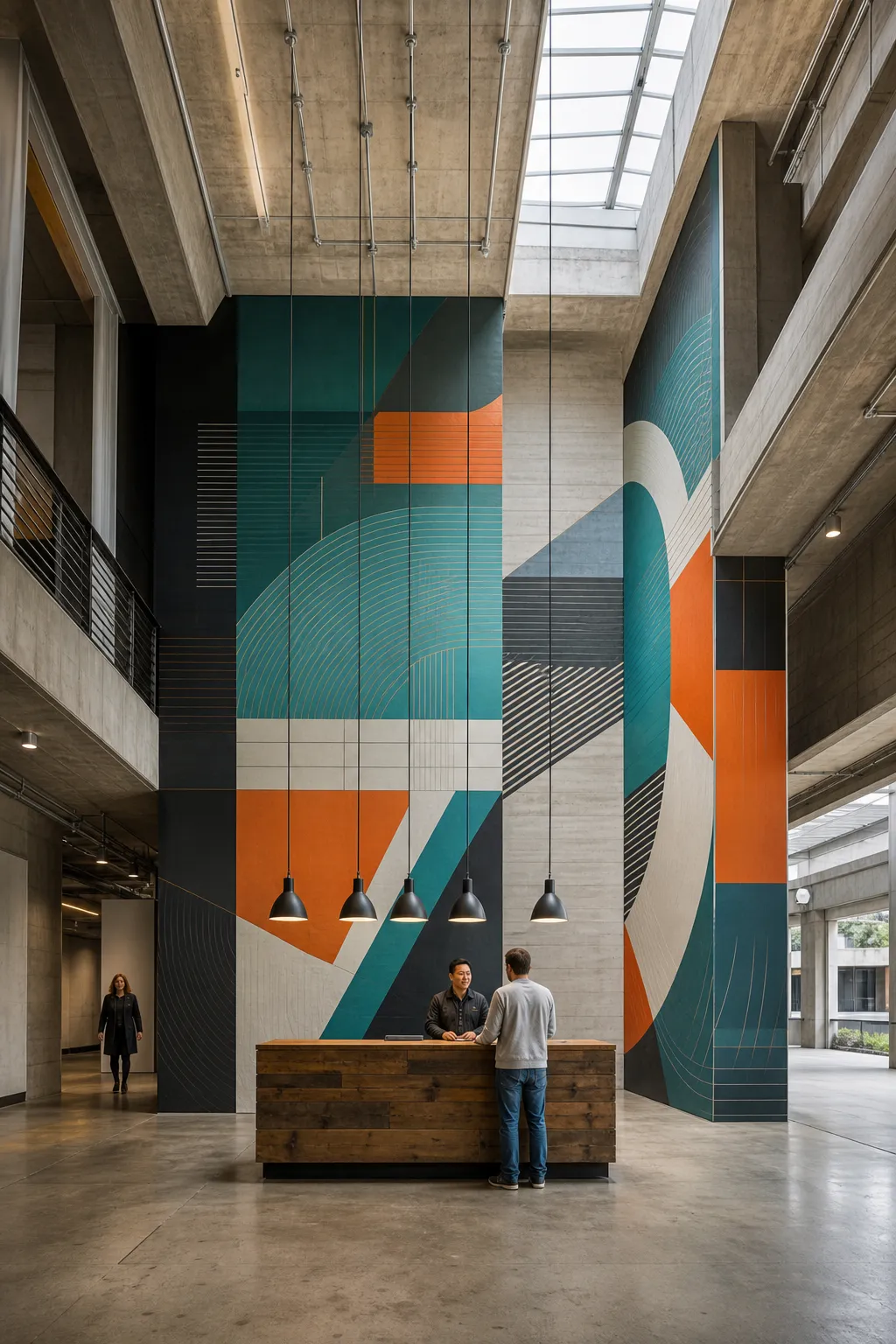

Broad diagonal stripes can animate concrete, brick, and metal surfaces with high-contrast movement. Charcoal, white, and one vivid accent color preserve the lobby’s industrial edge.
Align key lines with reception desks, doorways, or lighting tracks to integrate the mural with the architecture. Matte finishes will reduce glare across a large commercial wall.
Turn Prismatic Color Into an Abstract Statement Wall
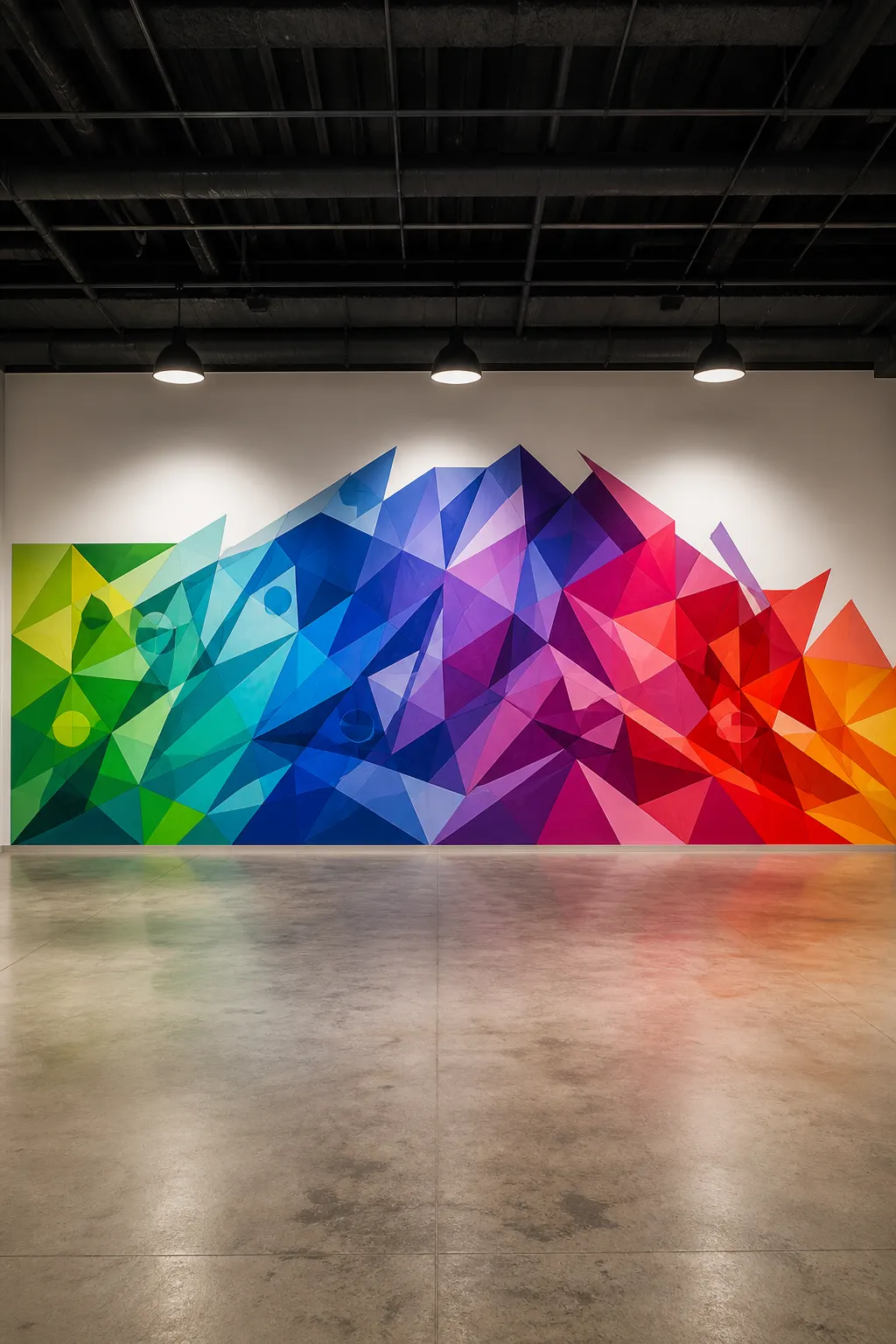

Layer sharp facets and luminous gradients to mimic light splitting through a prism. Concentrated color intersections create an electric focal point with a sense of depth.
Use the design on one prominent wall and keep adjacent surfaces relatively quiet. Neutral furnishings will make the spectrum appear brighter and more dimensional.
Create a Focused Meeting Room With Blue Geometric Forms
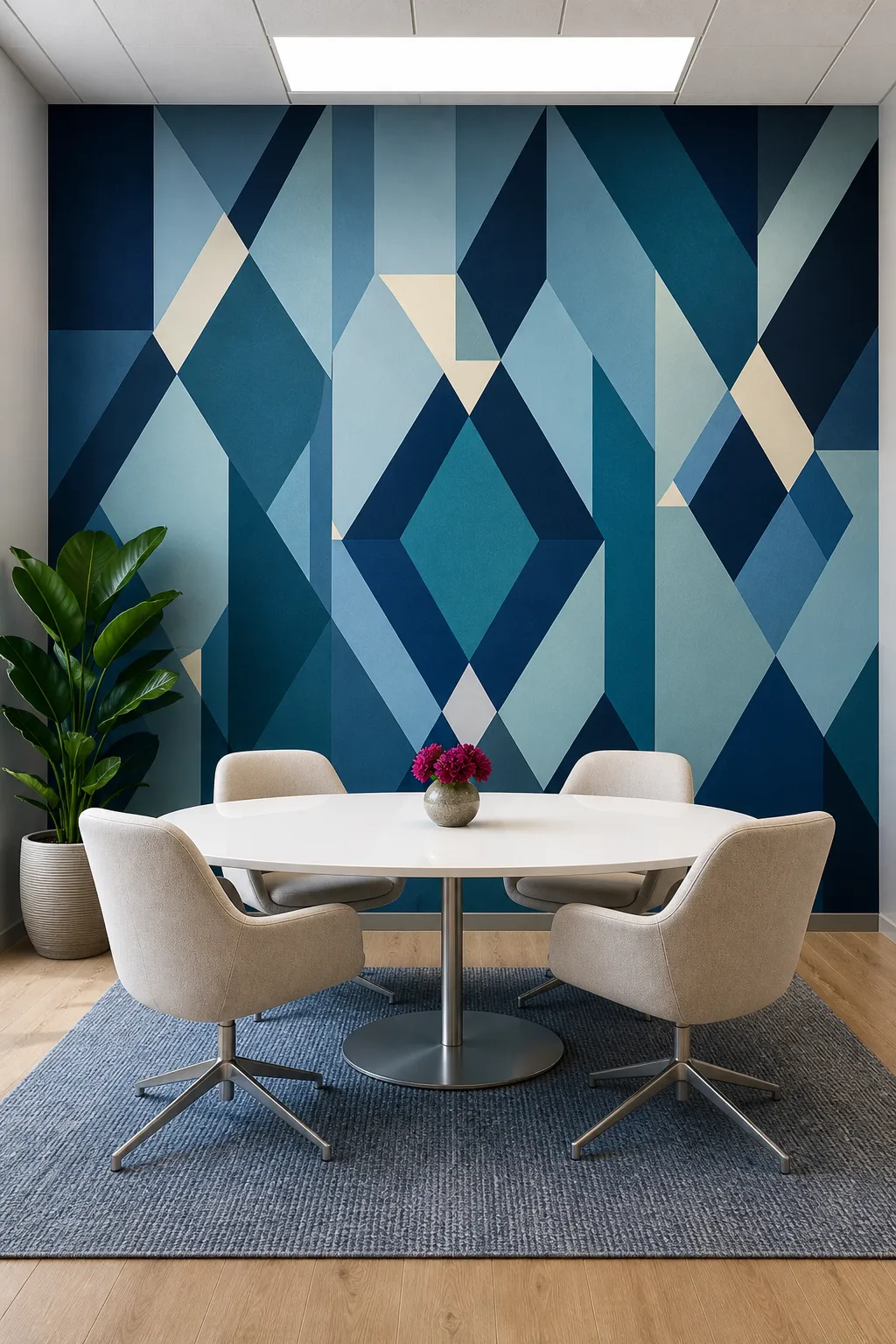

Arrange geometric forms in navy, cobalt, slate, and soft blue to establish a clear, composed atmosphere. Tonal variation adds focused visual depth without introducing distracting color clashes.
Place the strongest forms behind the presentation area or main sightline. Pale furniture, clean lighting, and acoustic materials will support a professional, comfortable workspace.
Spark Ideas With a Playful Creative Office Mural
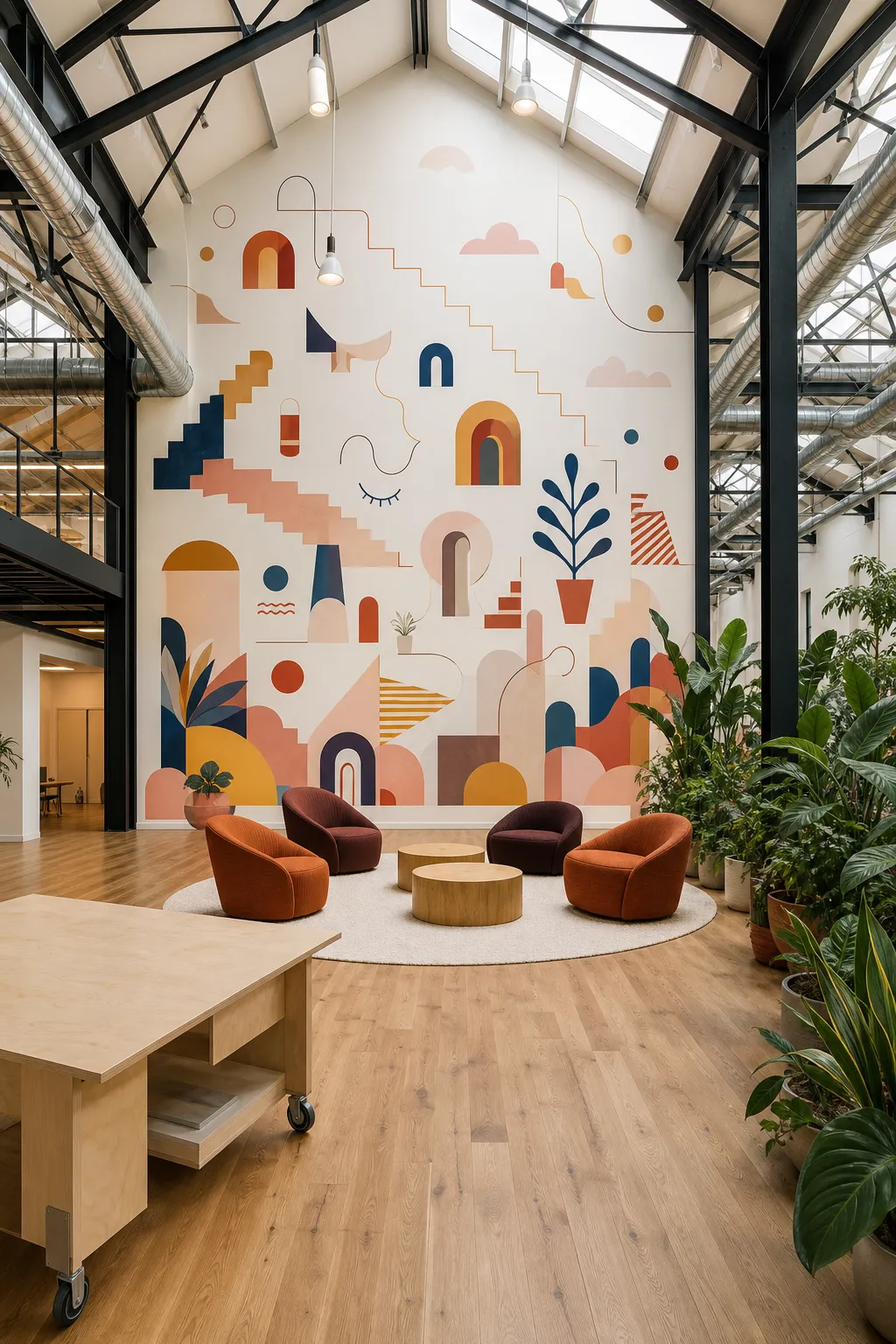

Mix energetic squiggles, circles, grids, and unexpected color combinations to encourage playful thinking. A varied composition can make shared work areas feel less formal and more expressive.
Connect the mural to the office by repeating select colors in seating, pinboards, or storage. Keep important screens and work surfaces visually clear to balance inspiration with usability.
Brighten a Modern Office With Sunlit Blocks of Color
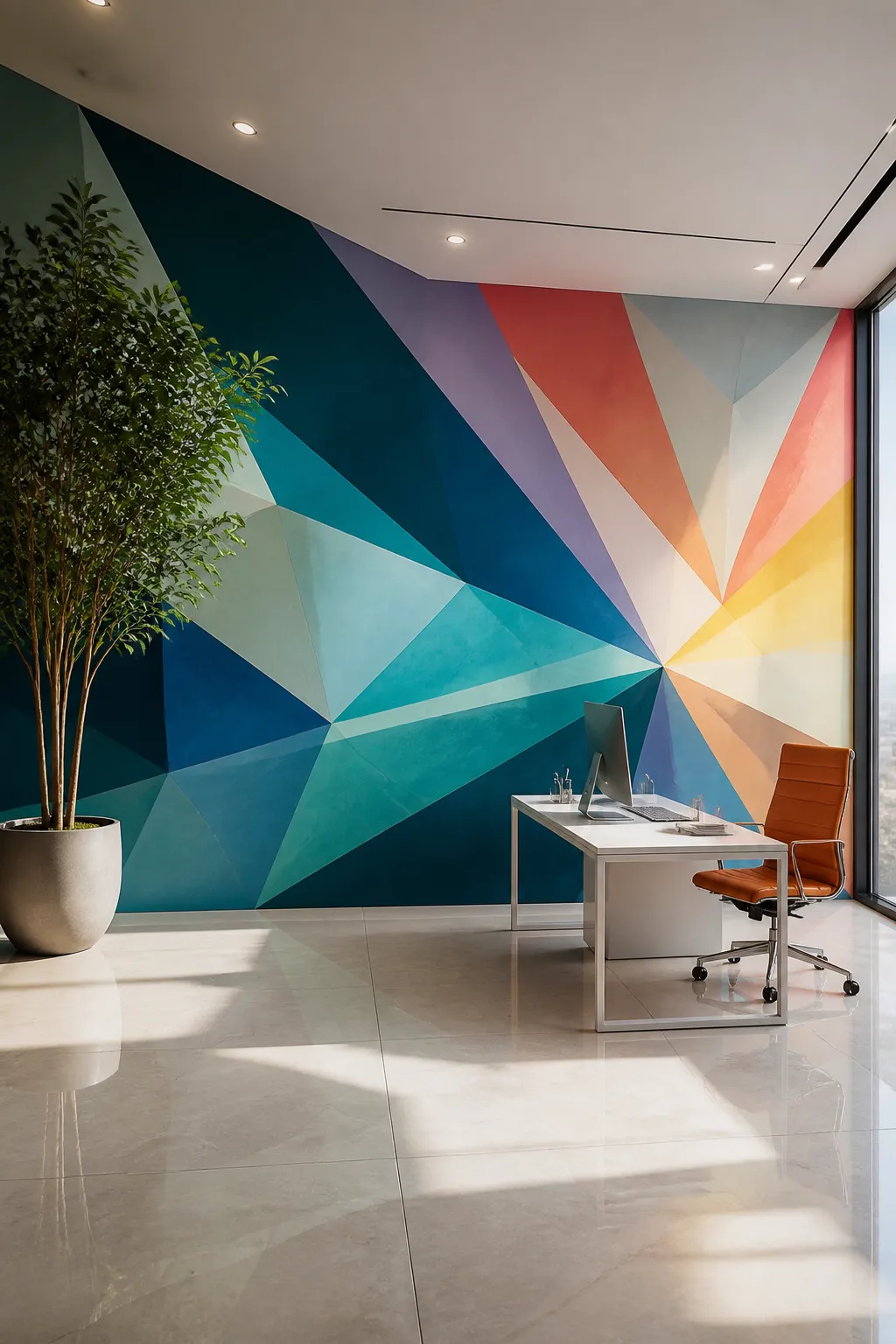

A mural built from yellow, coral, blue, and blush blocks gives a streamlined workspace an immediate lift. Sun-washed color works especially well beside large windows, where natural light makes every shape feel more vibrant.
Keep desks, chairs, and storage visually quiet so the artwork remains the focal point. Repeating one mural color in a small accessory creates a polished sense of cohesion.
Make a Corporate Lobby Feel Lively With Abstract Color
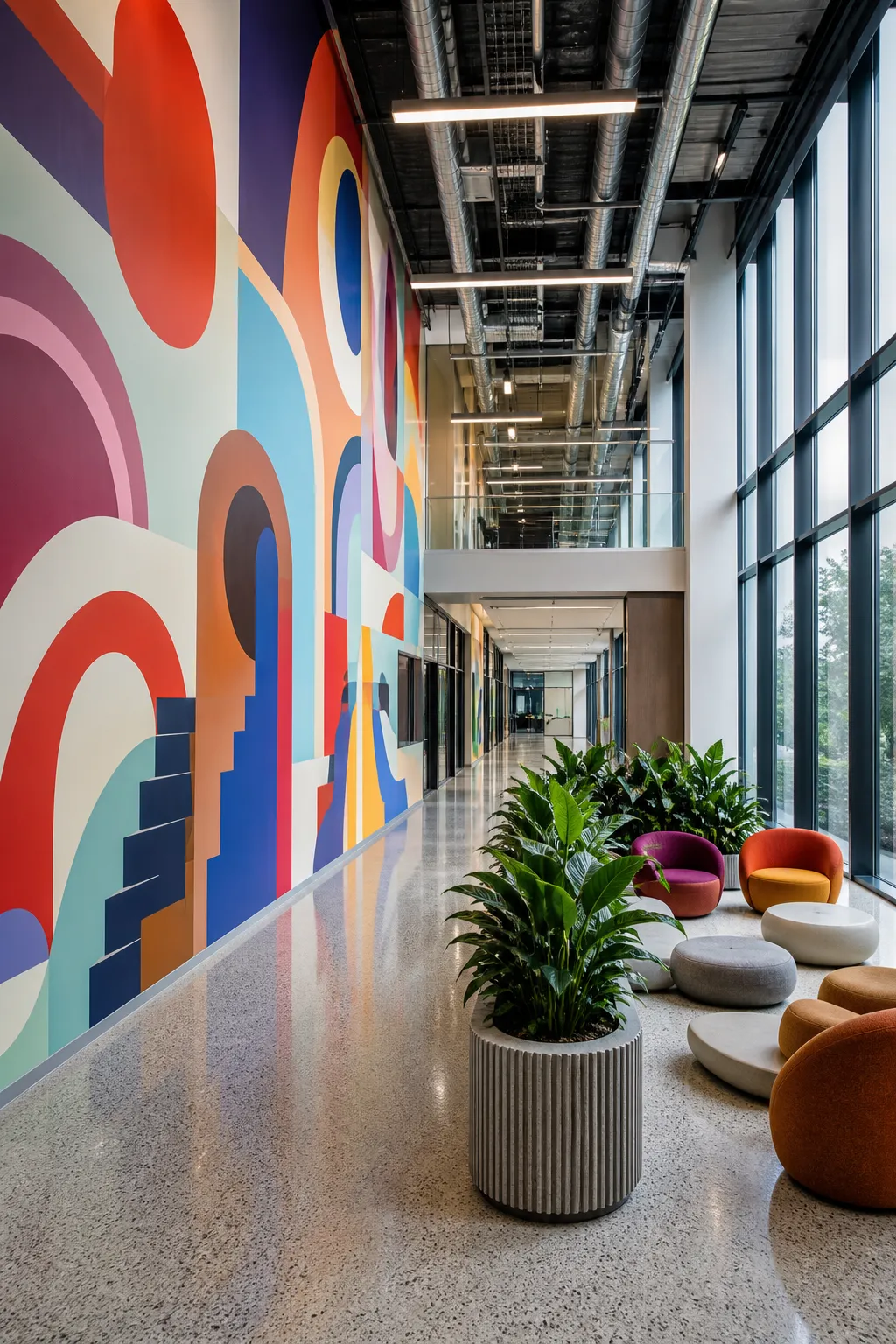

Turn a formal reception area into a memorable destination with overlapping shapes and energetic color. A large abstract mural softens the corporate atmosphere without sacrificing a professional finish.
Choose streamlined seating and a restrained rug to balance the artwork’s movement. Colors drawn from the company palette can also create a subtle brand connection.
Scale Geometric City Forms for a Monumental Atrium
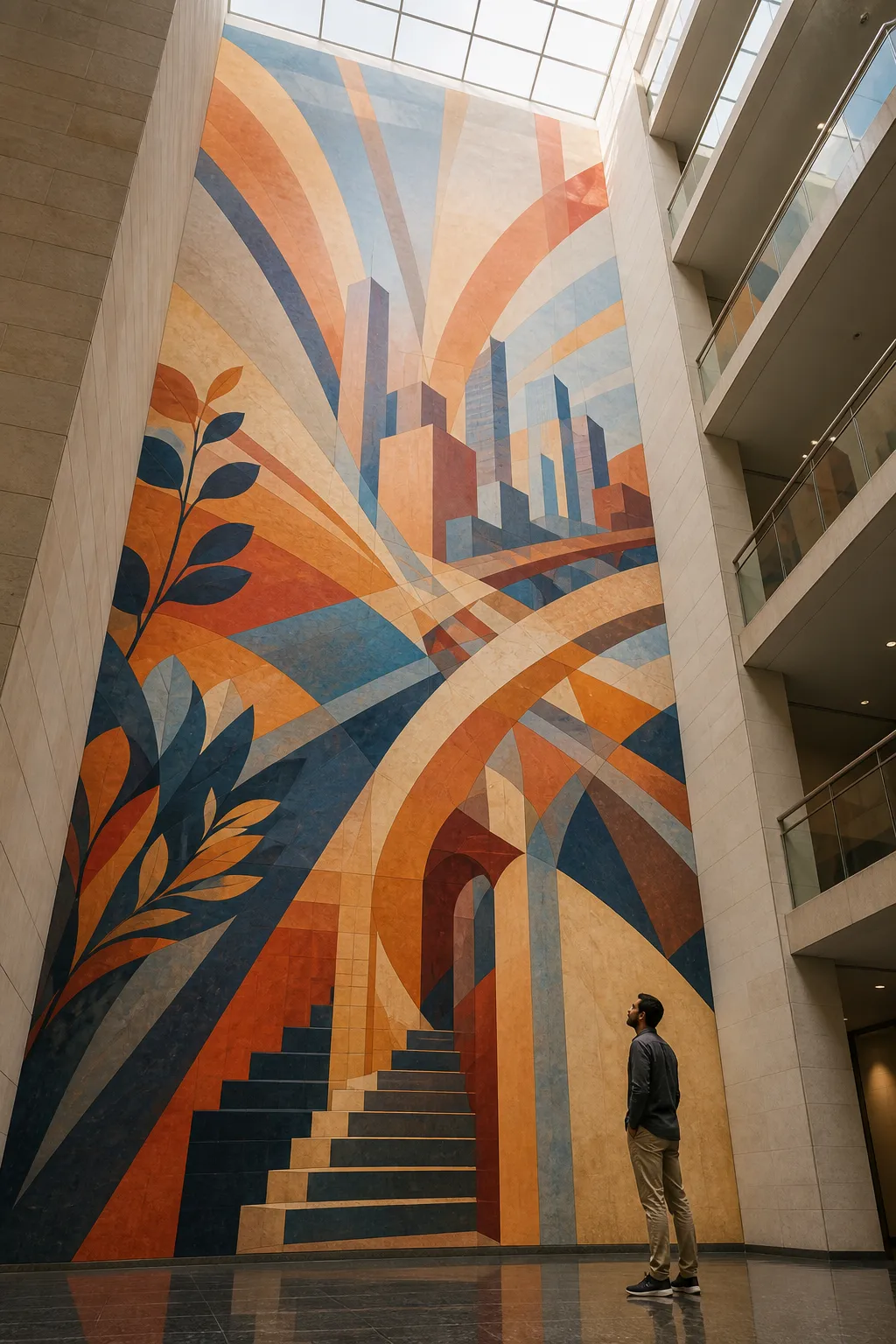

In a soaring atrium, small patterns can disappear, so enlarge architectural forms until they suit the room’s proportions. Stacked rectangles, arches, and stepped silhouettes create a cityscape effect that draws attention upward.
Let the composition span multiple stories or wrap around a prominent wall for maximum impact. A limited but high-contrast palette keeps the monumental scale clear rather than chaotic.
Shape a Moody Lounge With Deep Blue Geometry
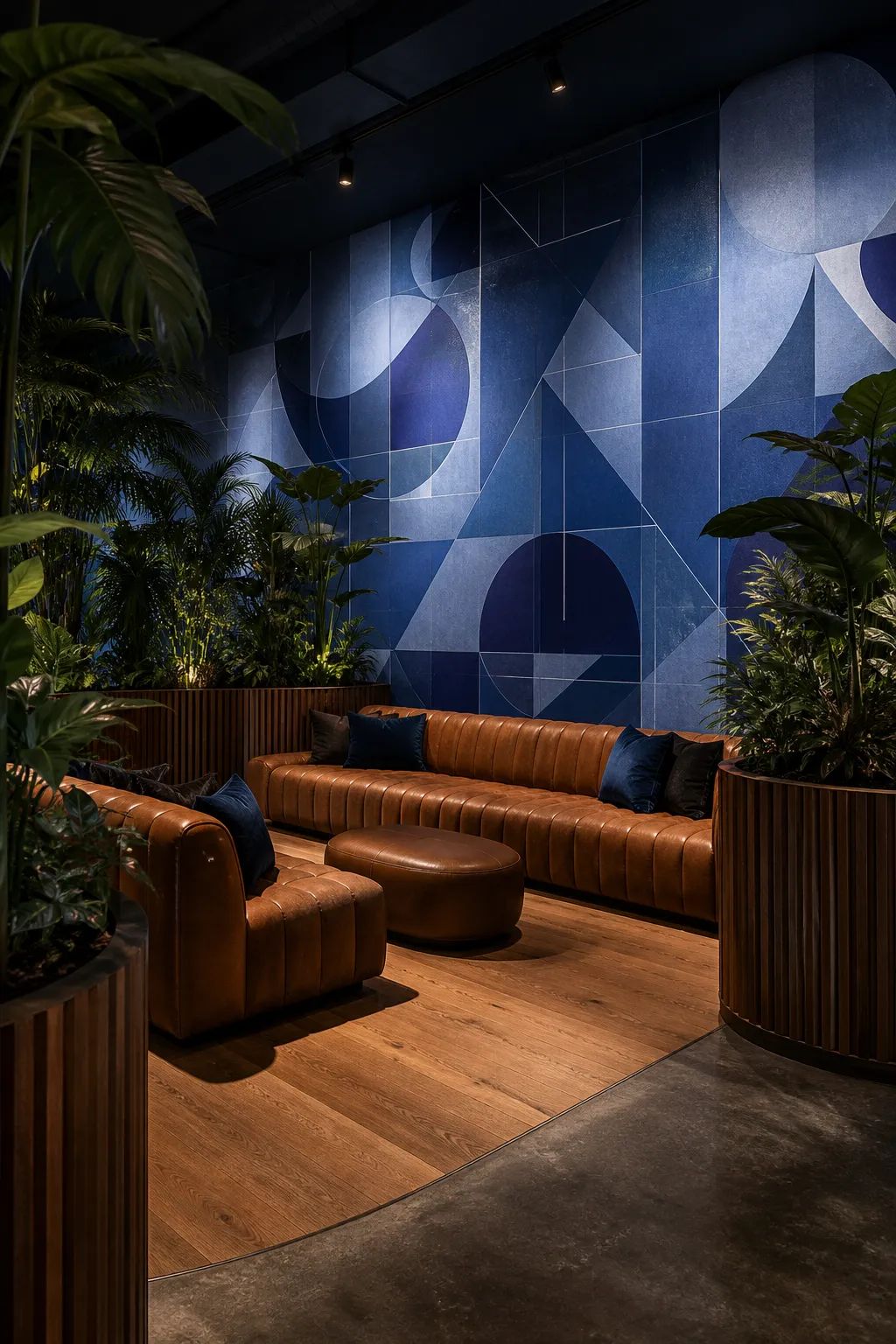

Layer navy, cobalt, and slate shapes to give a lounge a cocooning sense of depth. Tonal blue geometry adds visual interest while preserving the calm atmosphere expected in a space designed for conversation or rest.
Warm lighting, walnut furniture, and soft upholstery prevent the palette from feeling cold. Add a restrained touch of brass or cream for elegant contrast.
Frame a Retro Modern Office With Rounded Arches
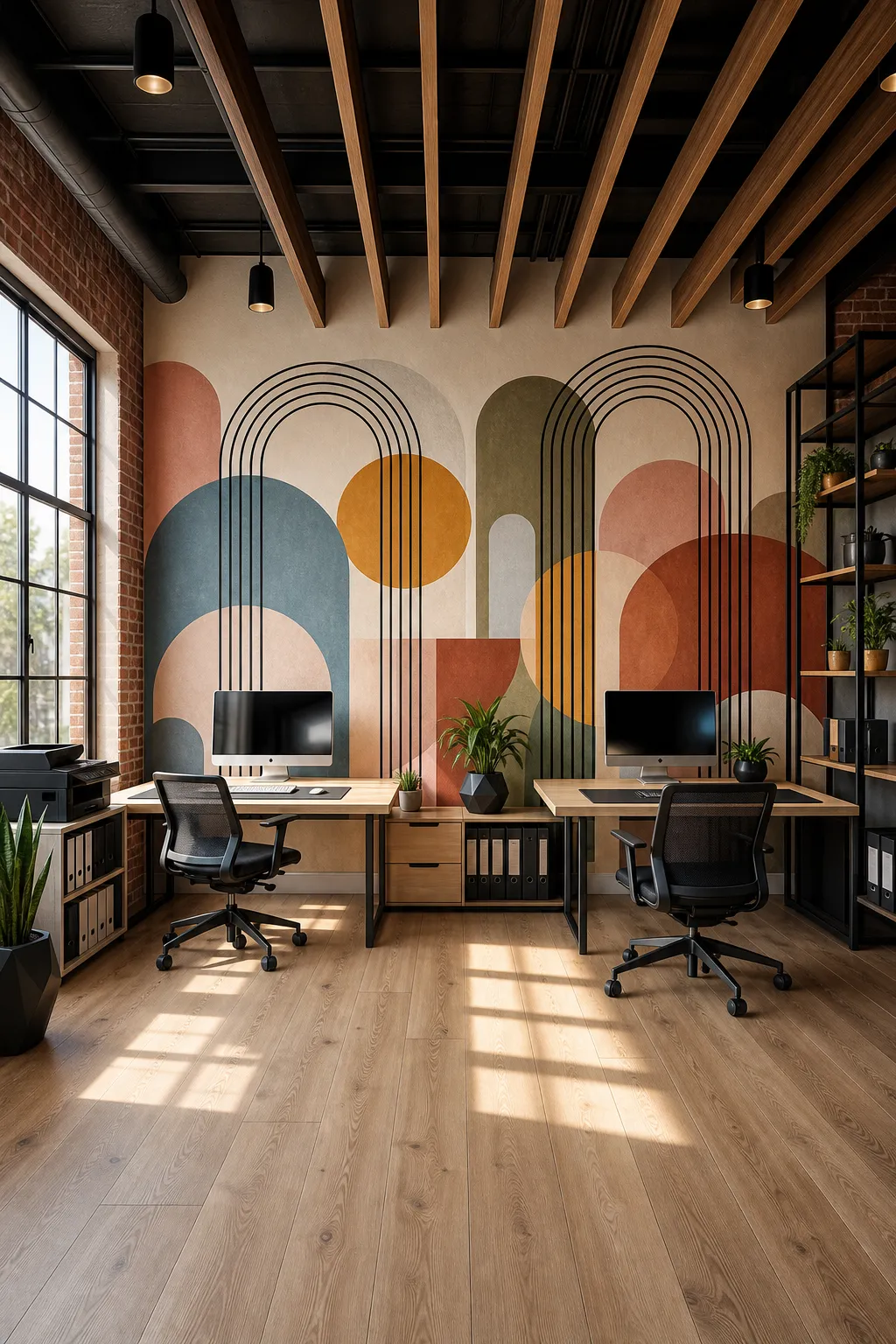

Rounded arches bring a friendly rhythm to the straight lines of desks, shelves, and windows. Use terracotta, ochre, teal, and cream to create a retro-modern backdrop with warmth and personality.
Position the largest curve behind a desk or meeting table so it acts like a visual frame. Simple furniture and globe lighting reinforce the mid-century character without making the room feel themed.
Lead the Eye Down a Hallway With Abstract Mountains
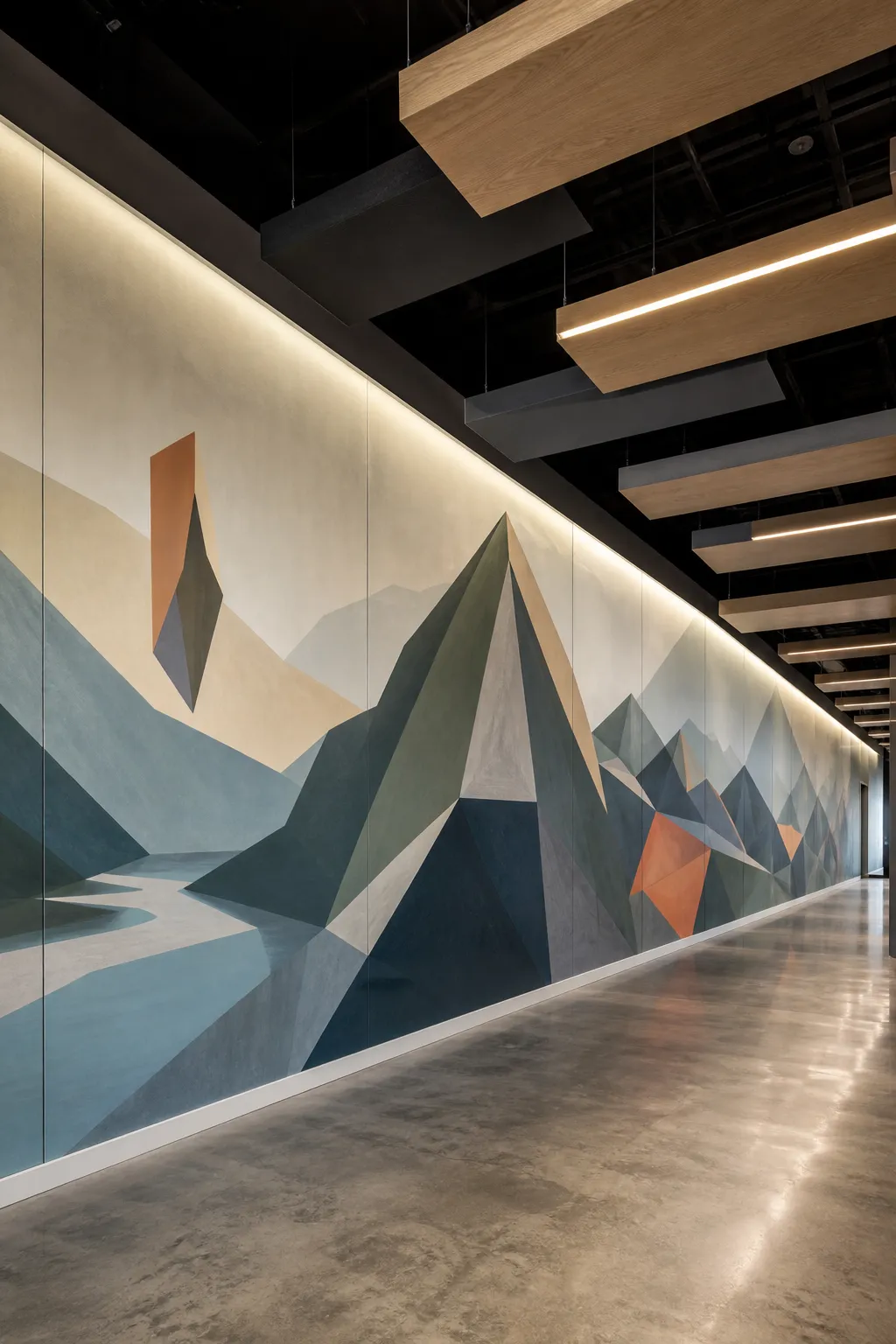

Transform a transitional hallway with layered peaks that rise and fall along its length. Directional mountain forms naturally pull the gaze forward and make the journey through the corridor feel more dynamic.
Use darker shades near the base and lighter tones above to suggest distance. Keeping the ceiling and flooring understated allows the scenic geometry to remain crisp and legible.
Refresh an Office Nook With Colorful Triangle Patterns
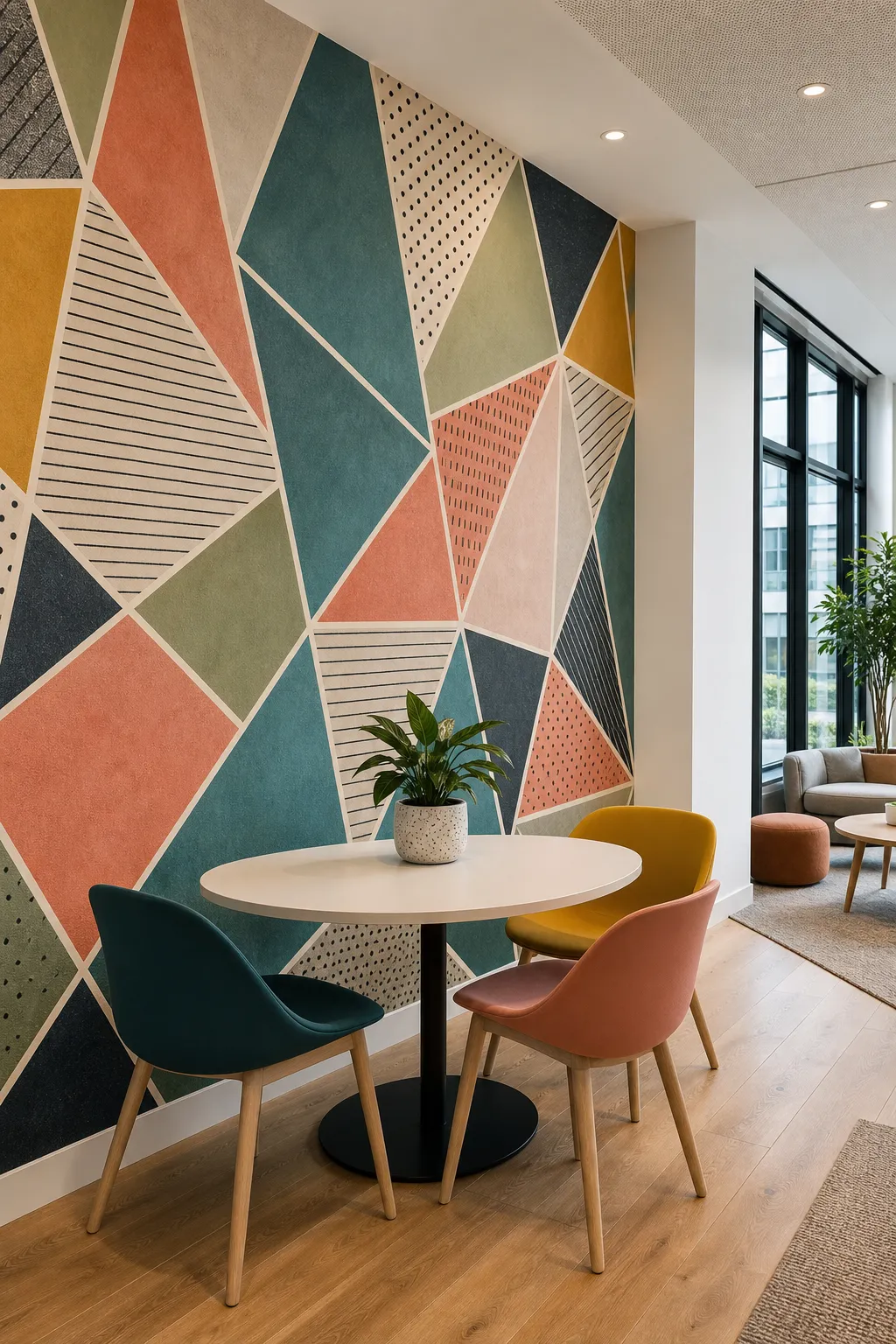

A compact work nook is an ideal place to experiment with bright triangles and playful repetition. Small-scale pattern introduces energy without demanding an entire feature wall.
Limit the design to three or four coordinated colors, then echo one shade in the chair or desk accessories. This simple connection gives the corner a purposeful, finished look.
Channel Bauhaus Style in a Bold Reading Lounge
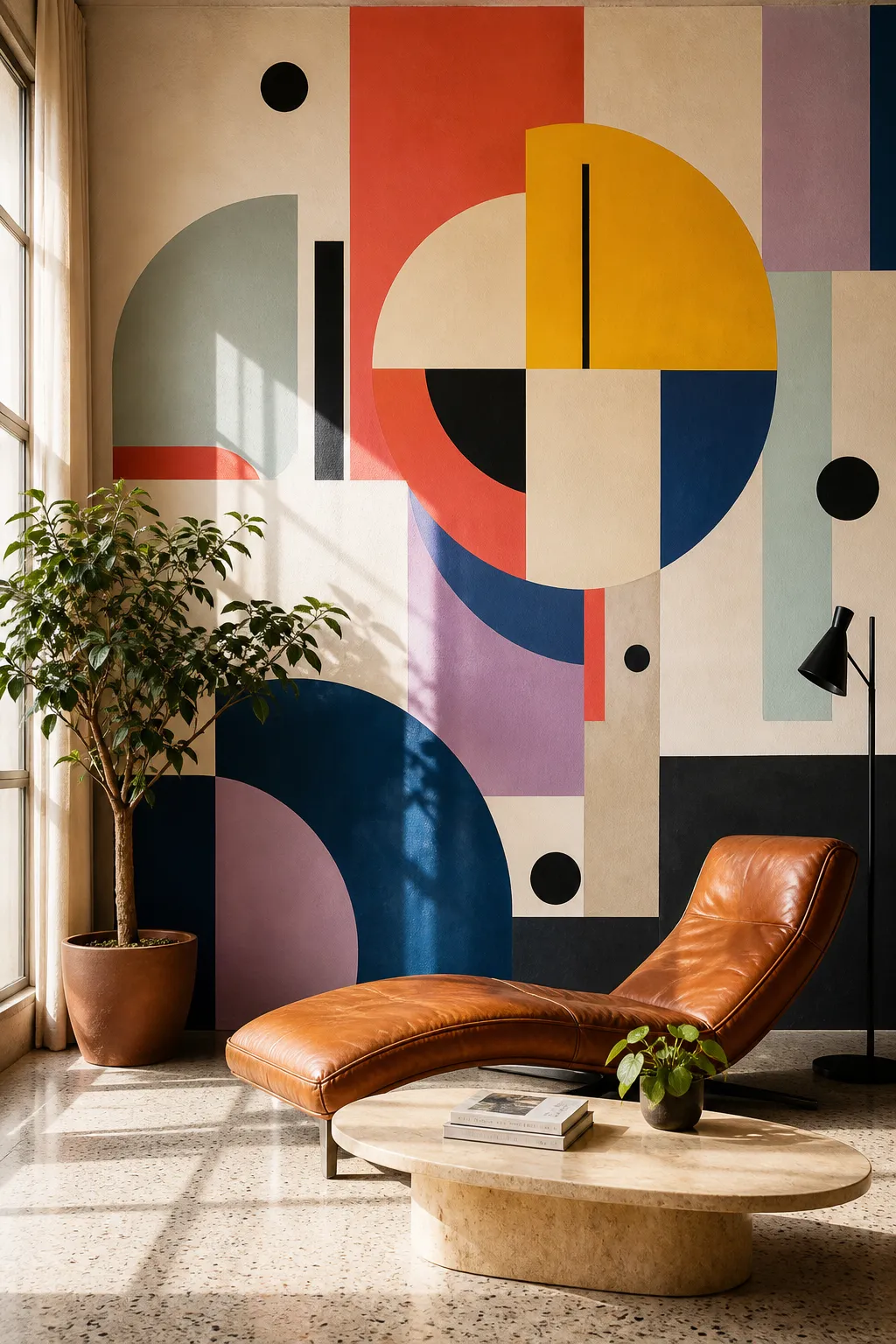

Combine circles, bars, grids, and primary colors to capture the expressive logic of Bauhaus design. A graphic feature wall gives a reading lounge intellectual energy while still feeling playful and inviting.
Pair the mural with low-profile seating, a sculptural lamp, and open space around each furnishing. Black accents provide visual structure and help the brighter shapes stand out.
Add Optical Depth With Prismatic Cube Patterns
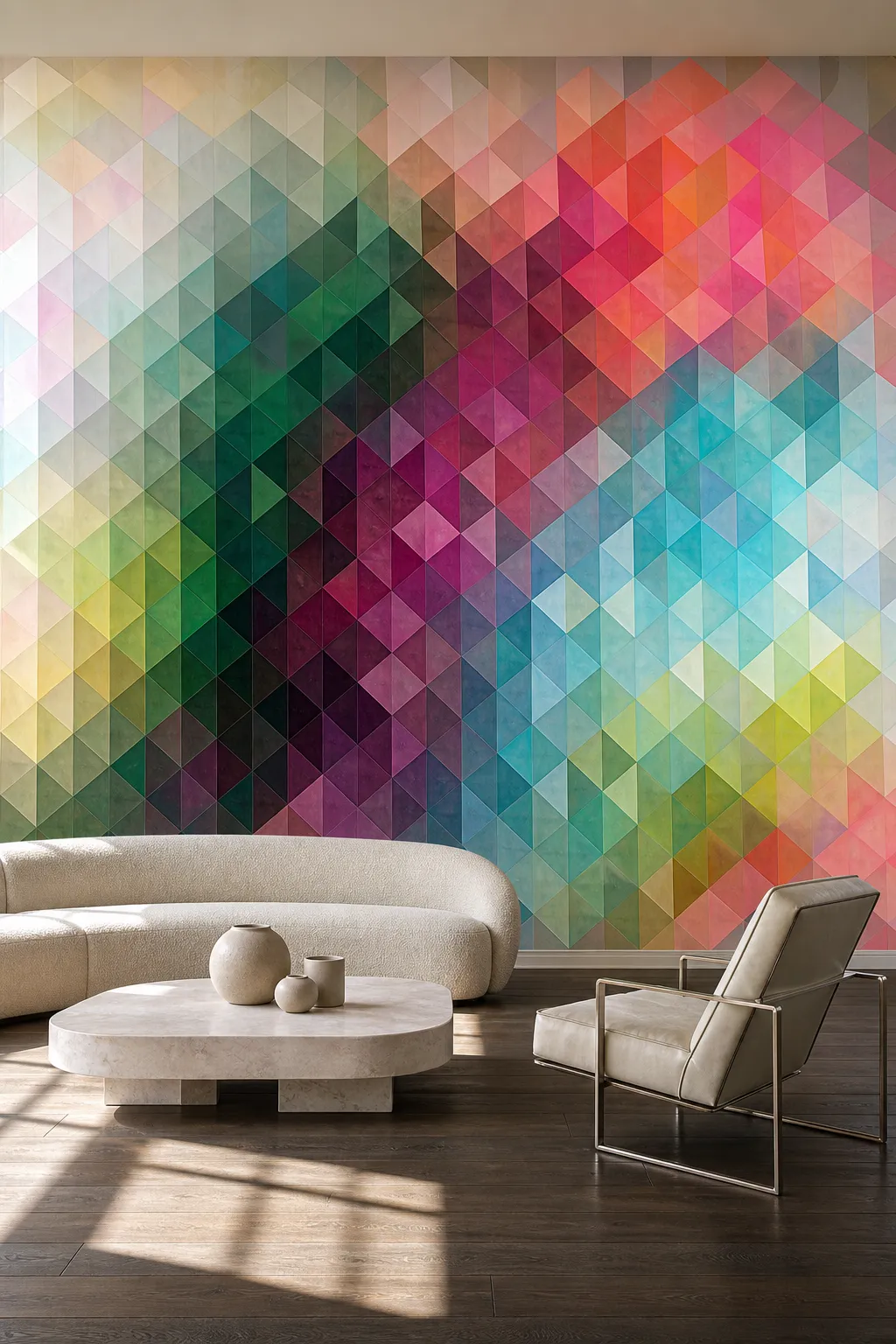

Arrange diamonds and angled planes into repeating cubes for a wall that appears to shift between flat and dimensional. Prismatic color changes strengthen the illusion and reward a closer look.
Use the pattern on one uninterrupted surface where its repetition can read clearly. Neutral furnishings keep the room balanced while allowing the three-dimensional effect to command attention.
Blend Ocean Life and Geometry in a Creative Corridor
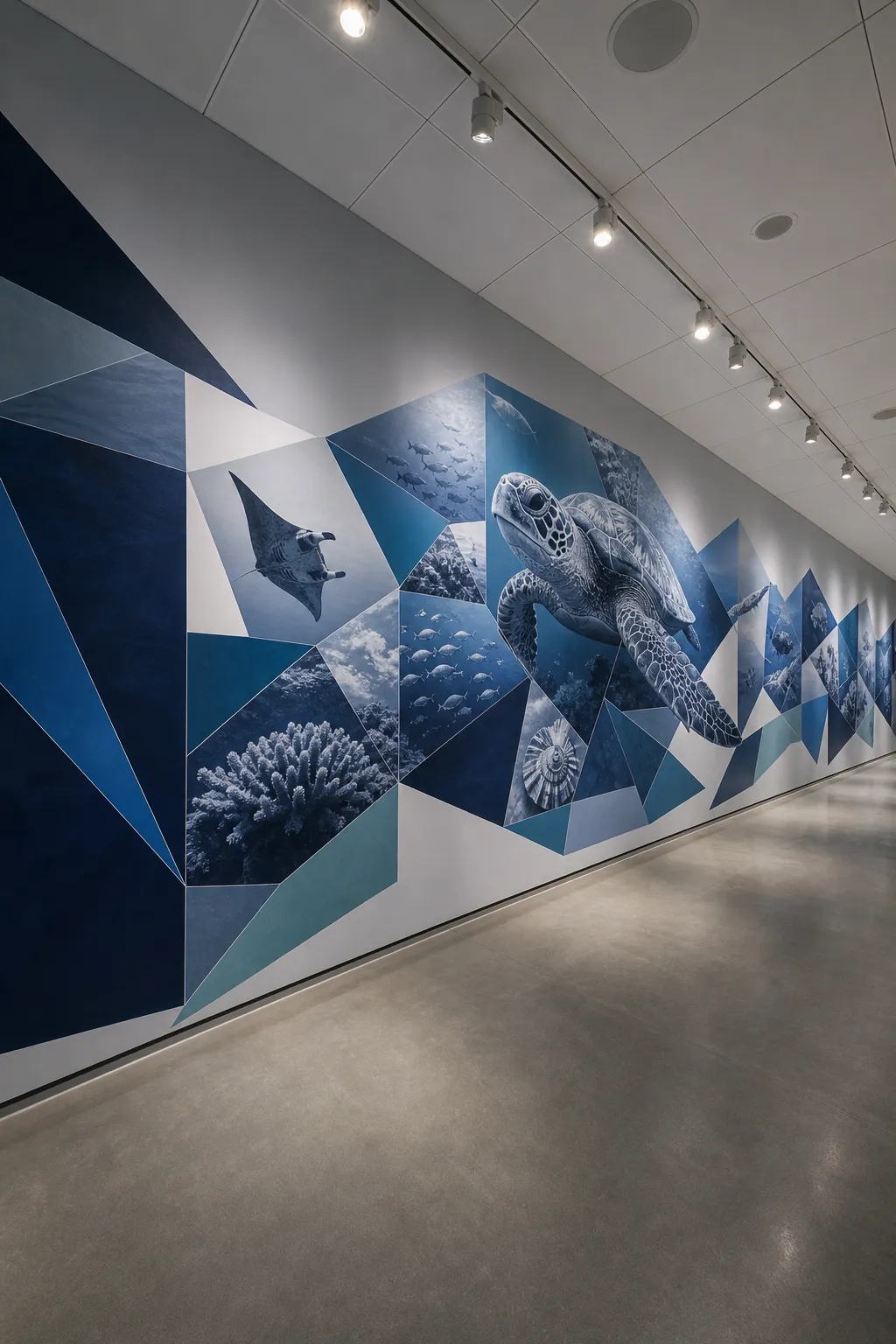

Mix stylized fish, waves, coral, and bubbles with circles, triangles, and sweeping lines for an imaginative underwater scene. Geometric ocean motifs bring narrative and movement to an otherwise functional corridor.
Build the palette around marine blues and greens, then add coral or yellow highlights for warmth. Repeated shapes help the illustrative elements form a unified visual journey.
Freshen an Office Lobby With Organic Green Shapes
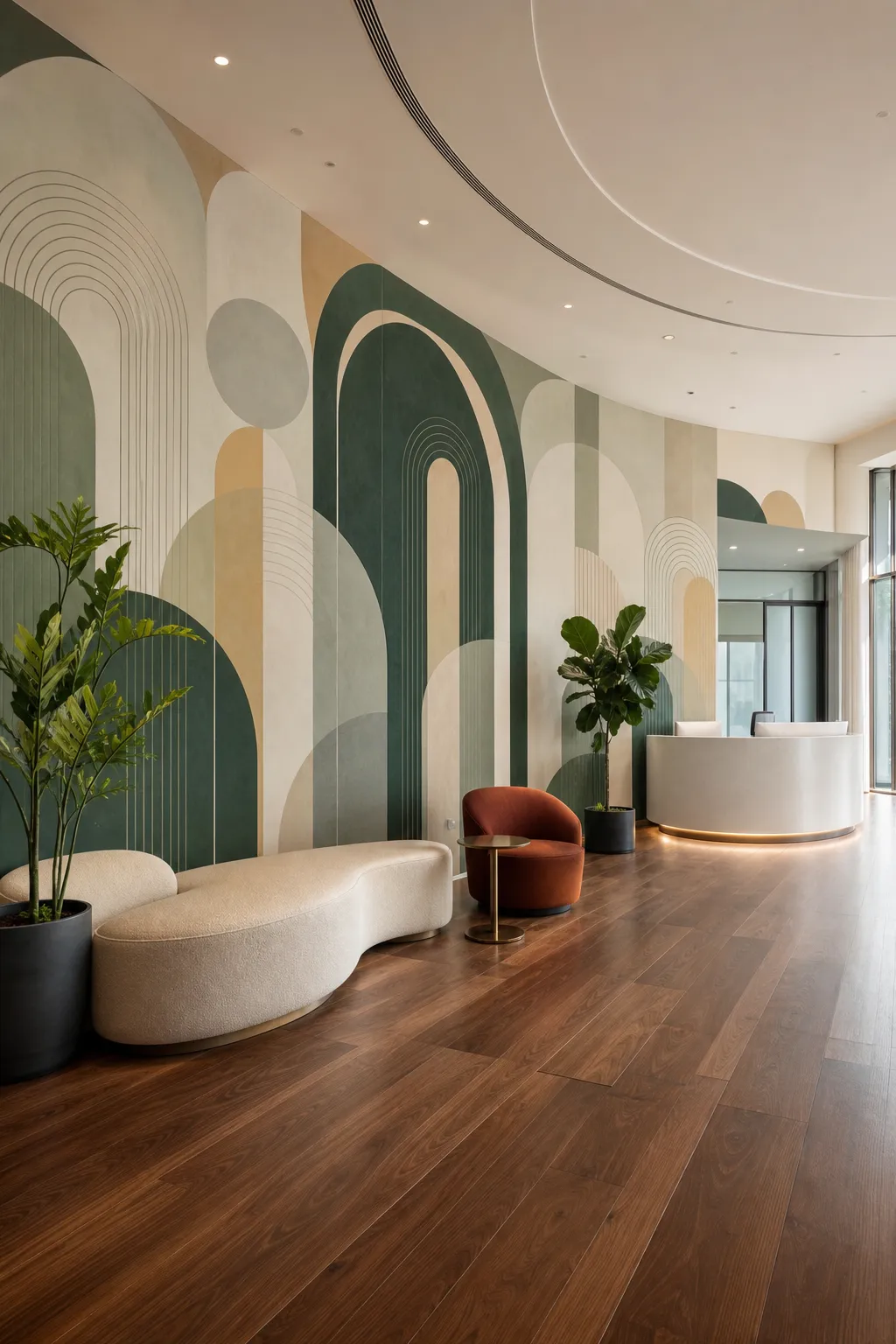

Layer sage, olive, mint, and forest-green forms to give an office entrance a fresh, grounded identity. Organic curves feel approachable and can visually soften hard architectural surfaces.
Natural wood, stone, and cream upholstery complement the botanical palette without turning the lobby into a literal nature theme. The result is a calm first impression for employees and visitors.
Wake Up a Waiting Area With Colorful Angular Forms
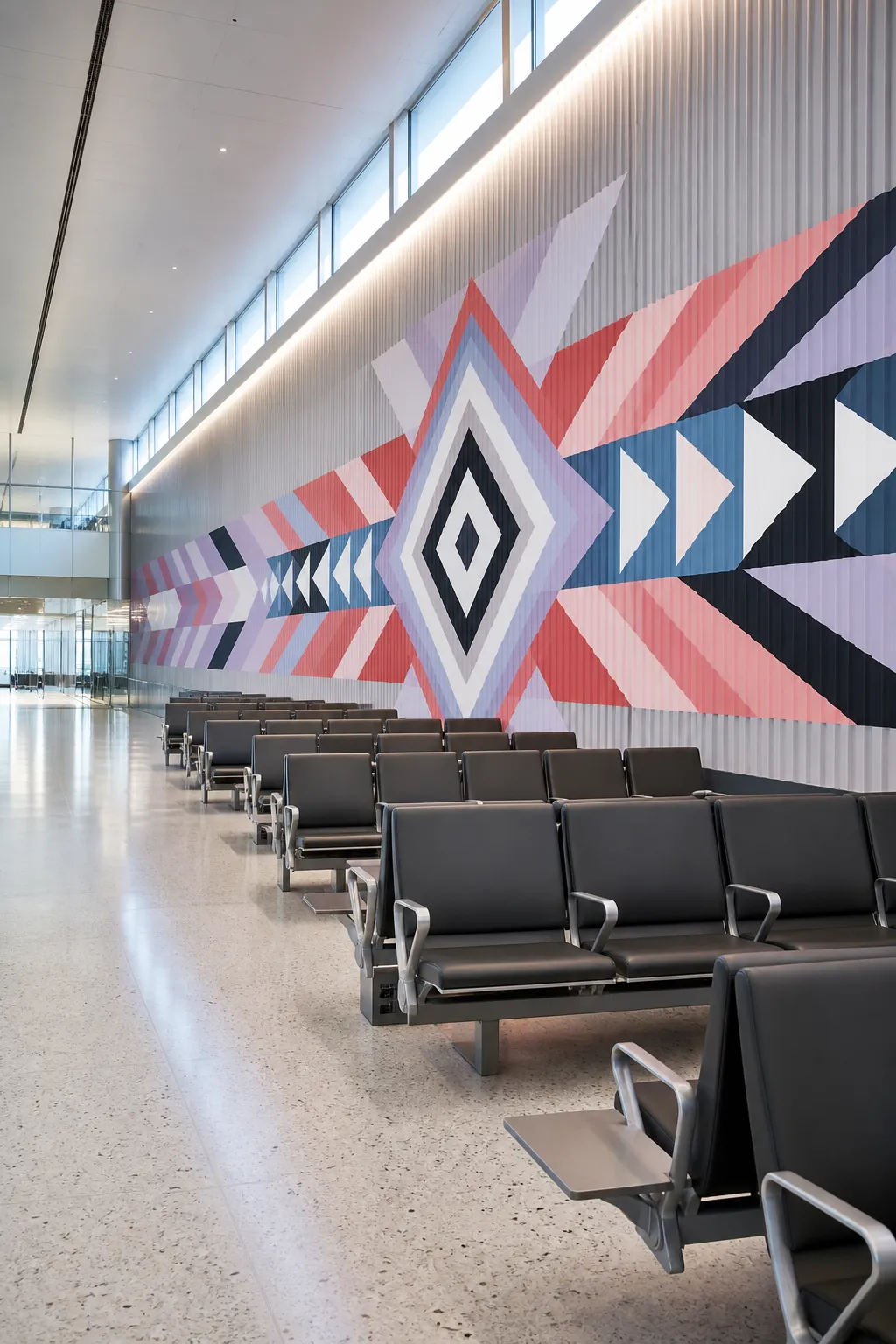

Sharp diagonals and interlocking polygons can make waiting time feel less static. Use saturated colors in measured sections to create energetic visual movement without overwhelming the seating area.
Choose durable, simple furniture that follows the mural’s clean lines. Leaving some wall space quiet gives the angular composition room to breathe.
Warm a Reading Nook With Mid-Century Organic Geometry
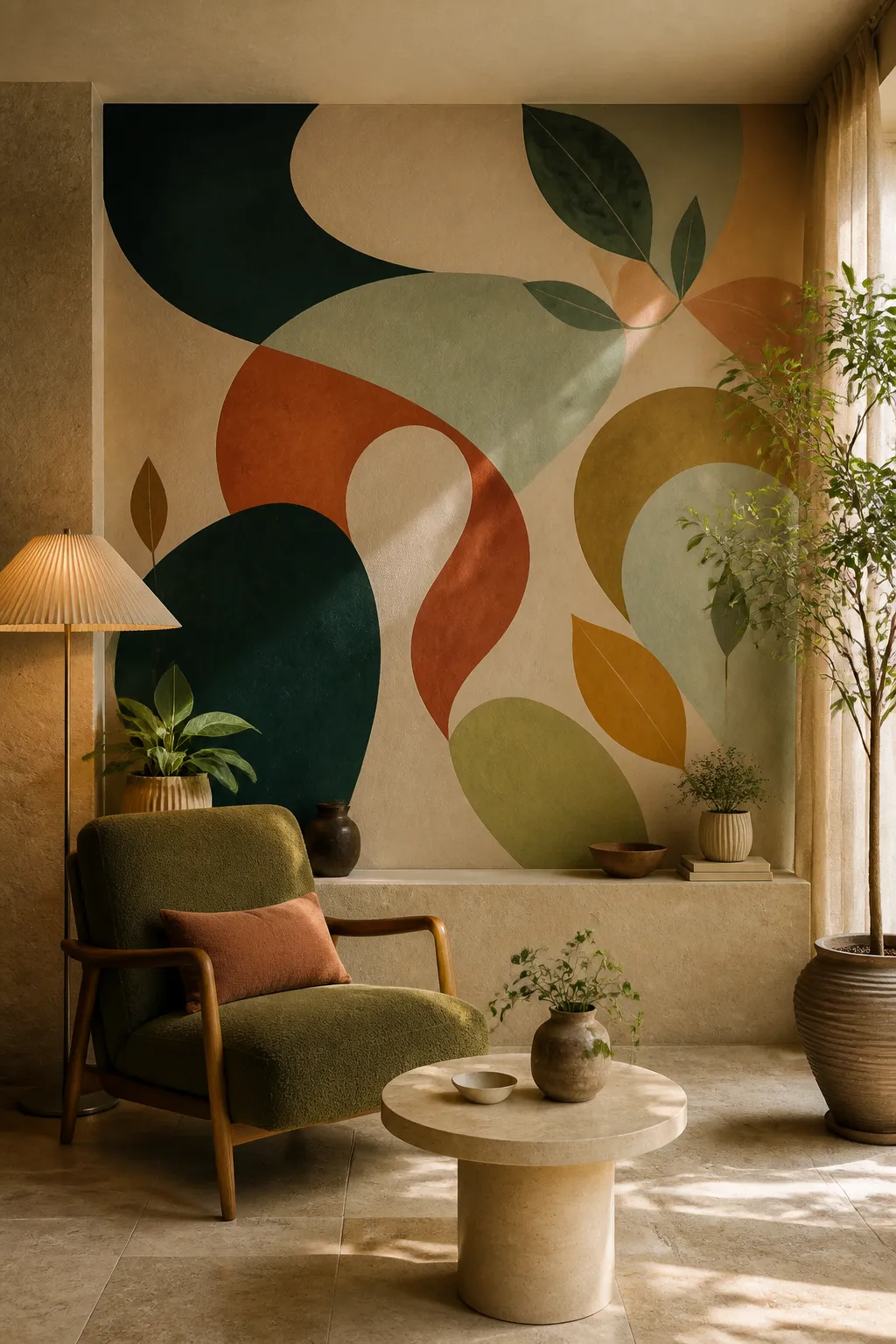

Soft-edged forms in rust, mustard, olive, and cream create an enveloping backdrop for books and quiet moments. Earthy mid-century color adds warmth while remaining sophisticated.
Complete the nook with a curved chair, a wood side table, and a softly glowing floor lamp. Textured fabrics introduce tactile comfort that echoes the mural’s relaxed shapes.
Elevate a Luxury Living Room With Navy and Gold Drama
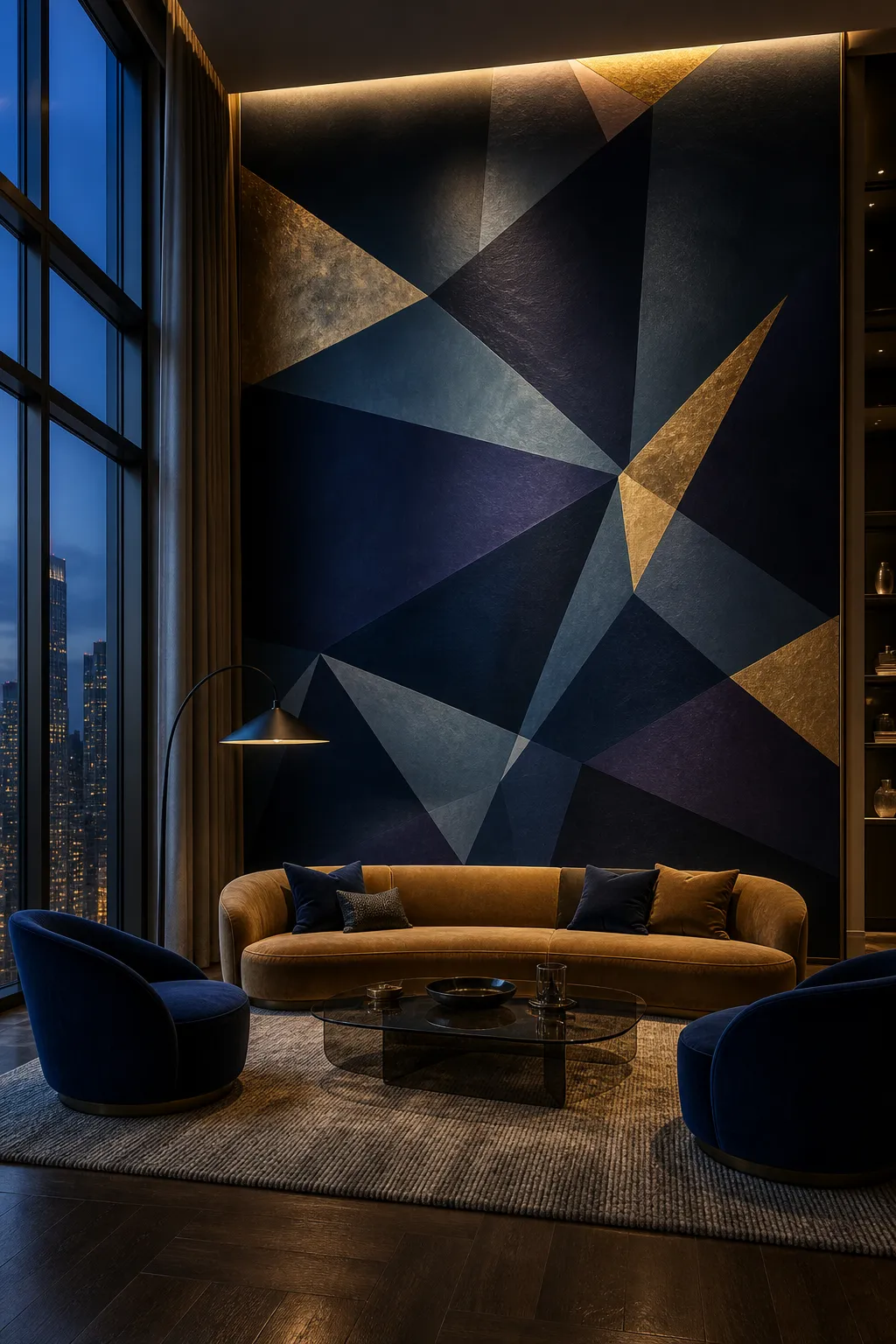

Deep navy creates a rich foundation for sweeping gold lines and carefully placed geometric accents. The pairing delivers high-contrast glamour suited to an elegant living room.
Balance the dramatic wall with pale upholstery, velvet textures, and warm metallic details. Thoughtful restraint keeps the luxurious focal point refined rather than flashy.
Style a Chic Dining Room With Neutral Bauhaus Forms
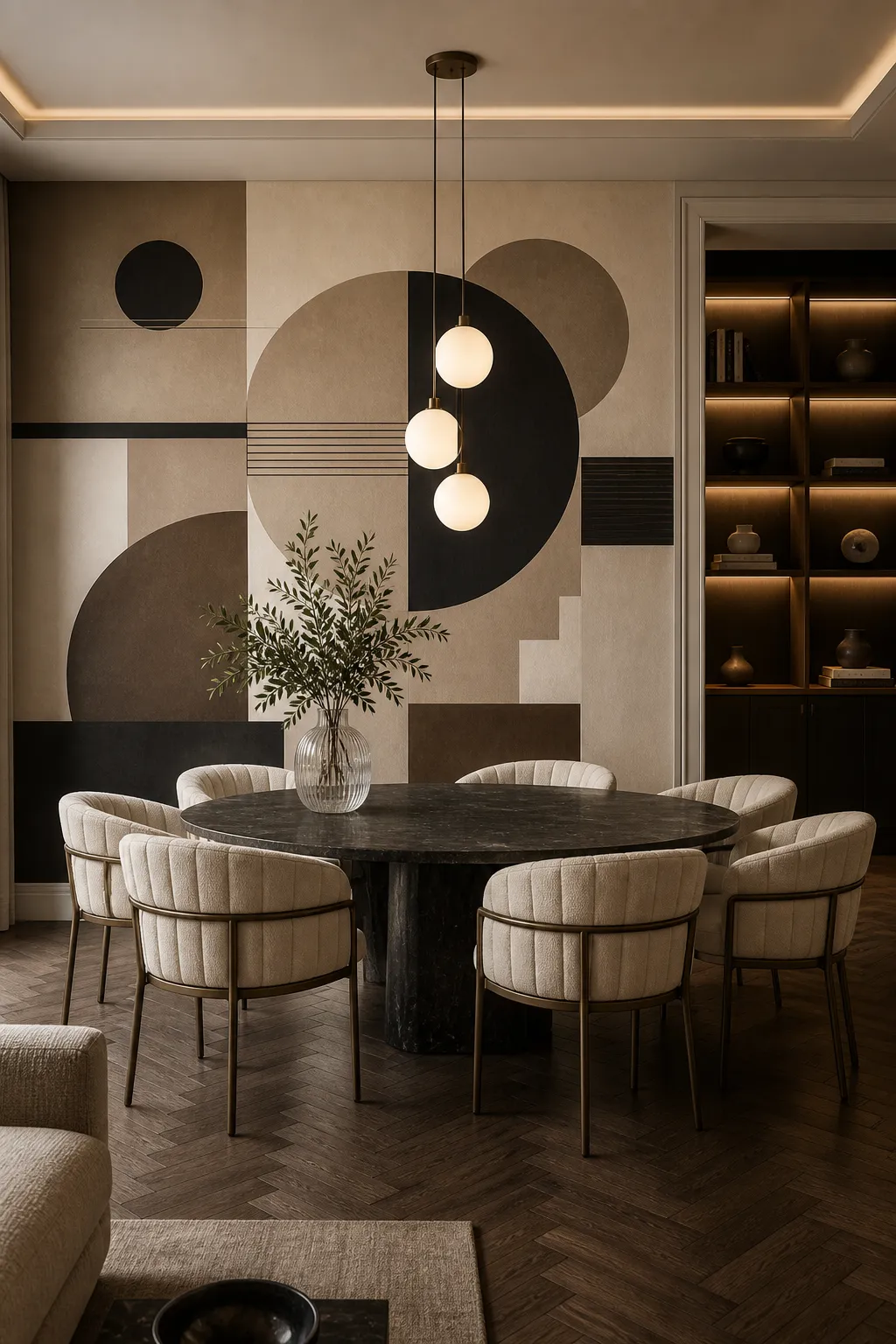

Translate Bauhaus geometry into a quieter dining space with circles, arches, and bars in beige, taupe, black, and warm white. This neutral graphic palette feels artistic without competing with meals or conversation.
A sculptural pendant and clean-lined dining set reinforce the composition. Introduce wood or woven textures to give the modern geometry a warmer, more welcoming edge.
Create Graphic Depth With an Emerald Maze Pattern
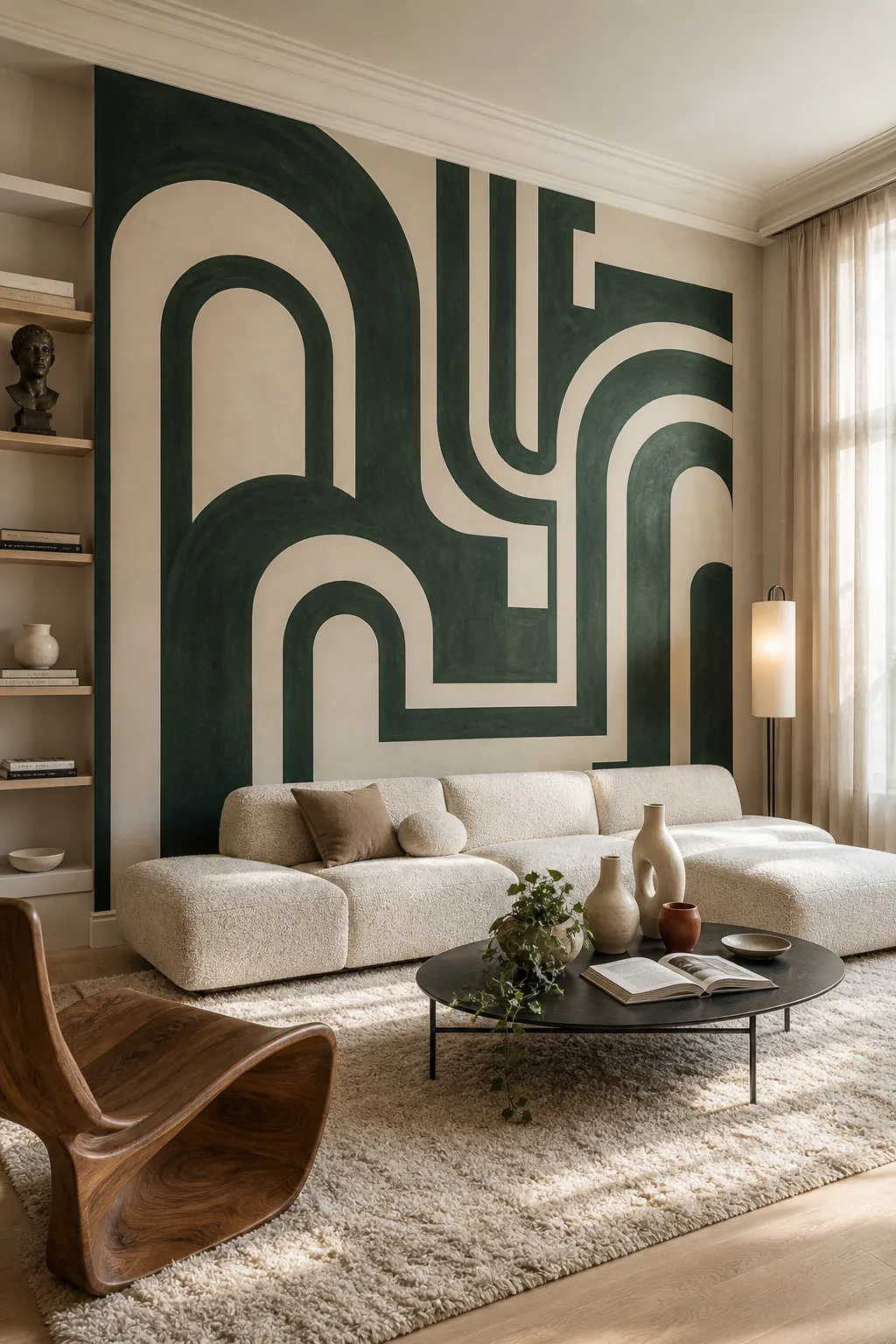

An emerald maze pattern turns a flat wall into an absorbing focal point. Deep green tones add richness, while interlocking lines create a convincing sense of movement and depth.
Keep nearby furniture streamlined and neutral so the geometry stays legible. Small brass, black, or warm-wood accents can reinforce the sophisticated palette without competing with the design.
Color a Dining Nook With Cubist Blocks and Angles
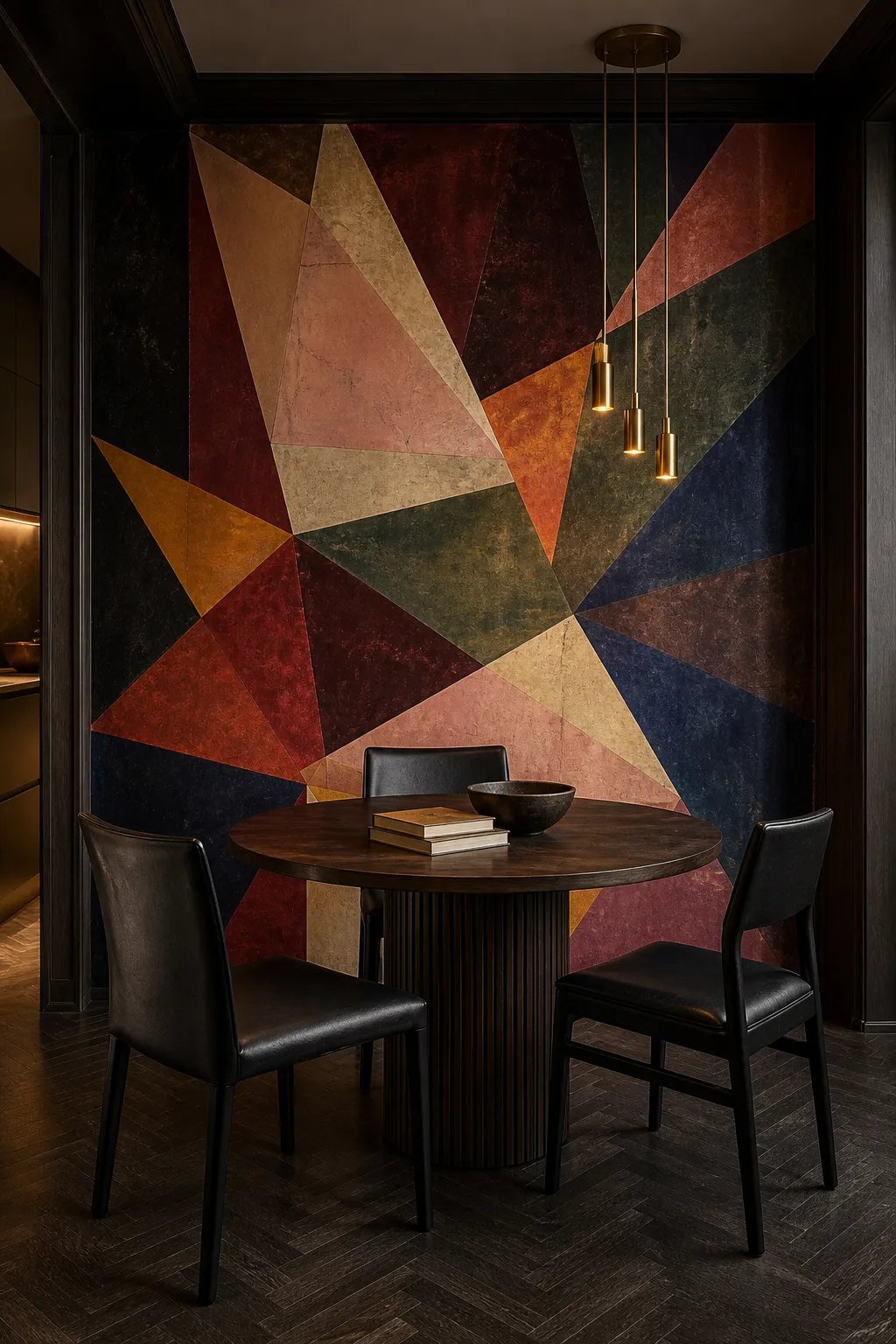

Cubist blocks bring energy and structure to a compact dining nook. Overlapping angles can visually widen the wall while defining the table as the center of the space.
Repeat one or two mural colors in the chairs, lighting, or tableware. This creates a coordinated setting without making every element feel overly matched.
Set a Serene Home Office Mood With Aqua Marble Geometry
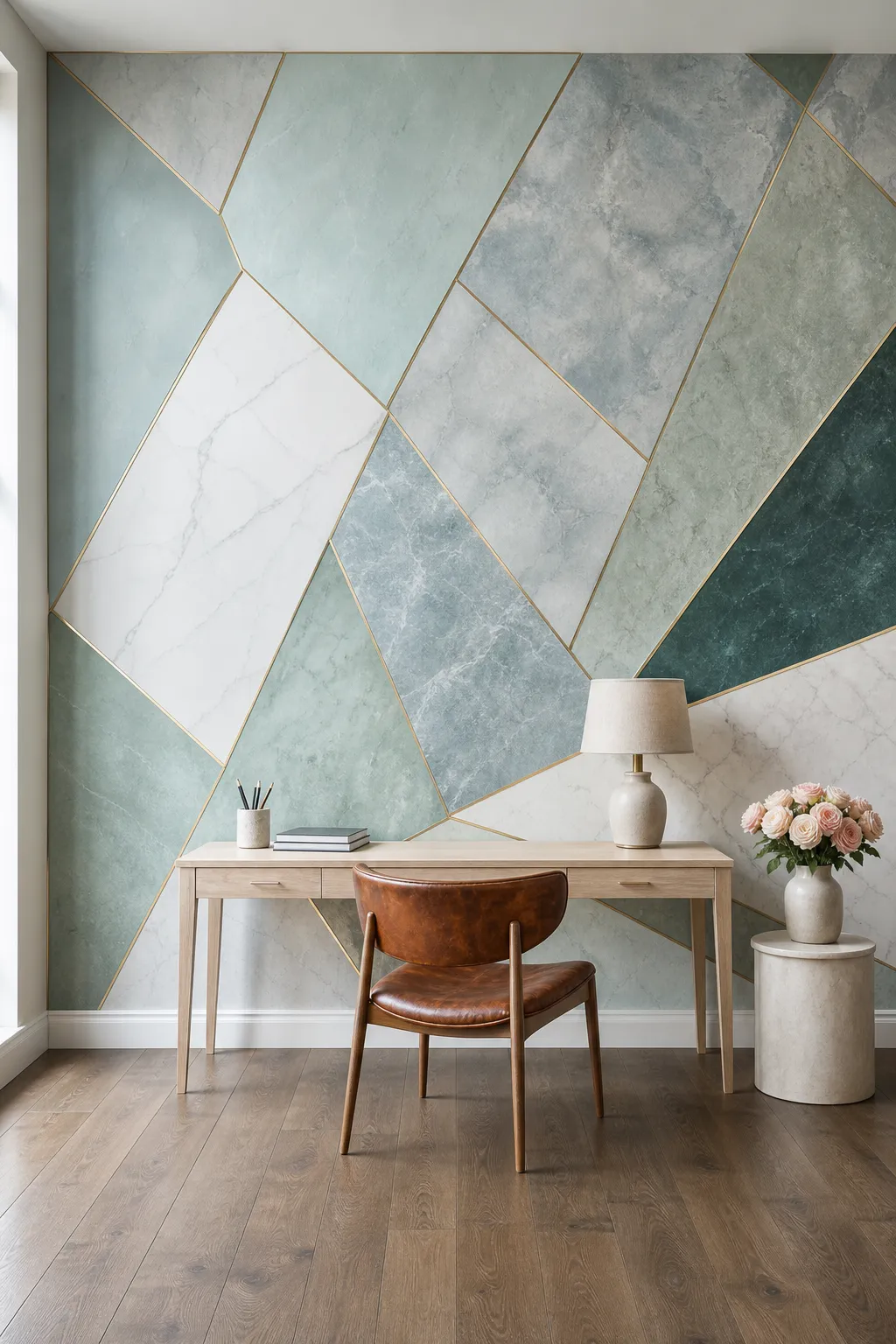

Aqua marble geometry combines crisp modern lines with the calming movement of stone. Watery blue-green hues help establish a focused, restorative atmosphere for working.
Choose a simple desk and pale finishes to preserve the airy effect. Soft gray, white, and natural wood accessories complement the pattern while keeping visual distractions low.
Lighten a Living Room With Soft Pastel Prisms
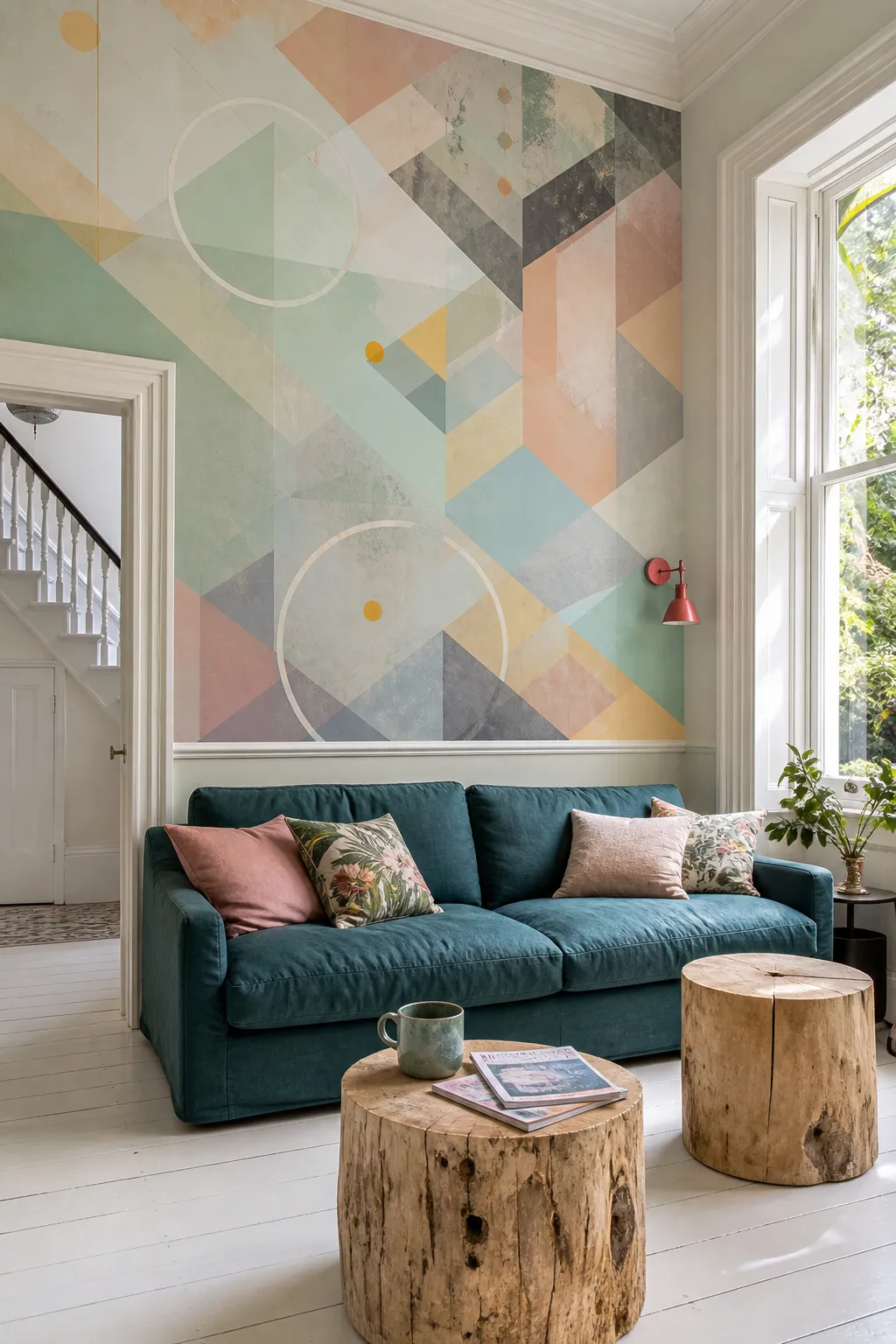

Pastel prisms introduce color while maintaining a light, open feeling. Their translucent-looking planes give the wall gentle dimensionality without the intensity of darker geometric designs.
Pair the pattern with cream upholstery and slender furniture. Cushions or artwork in blush, mint, and powder blue can quietly connect the room to the feature wall.
Give a Modern Lobby a Luxe Gold and Graphite Finish
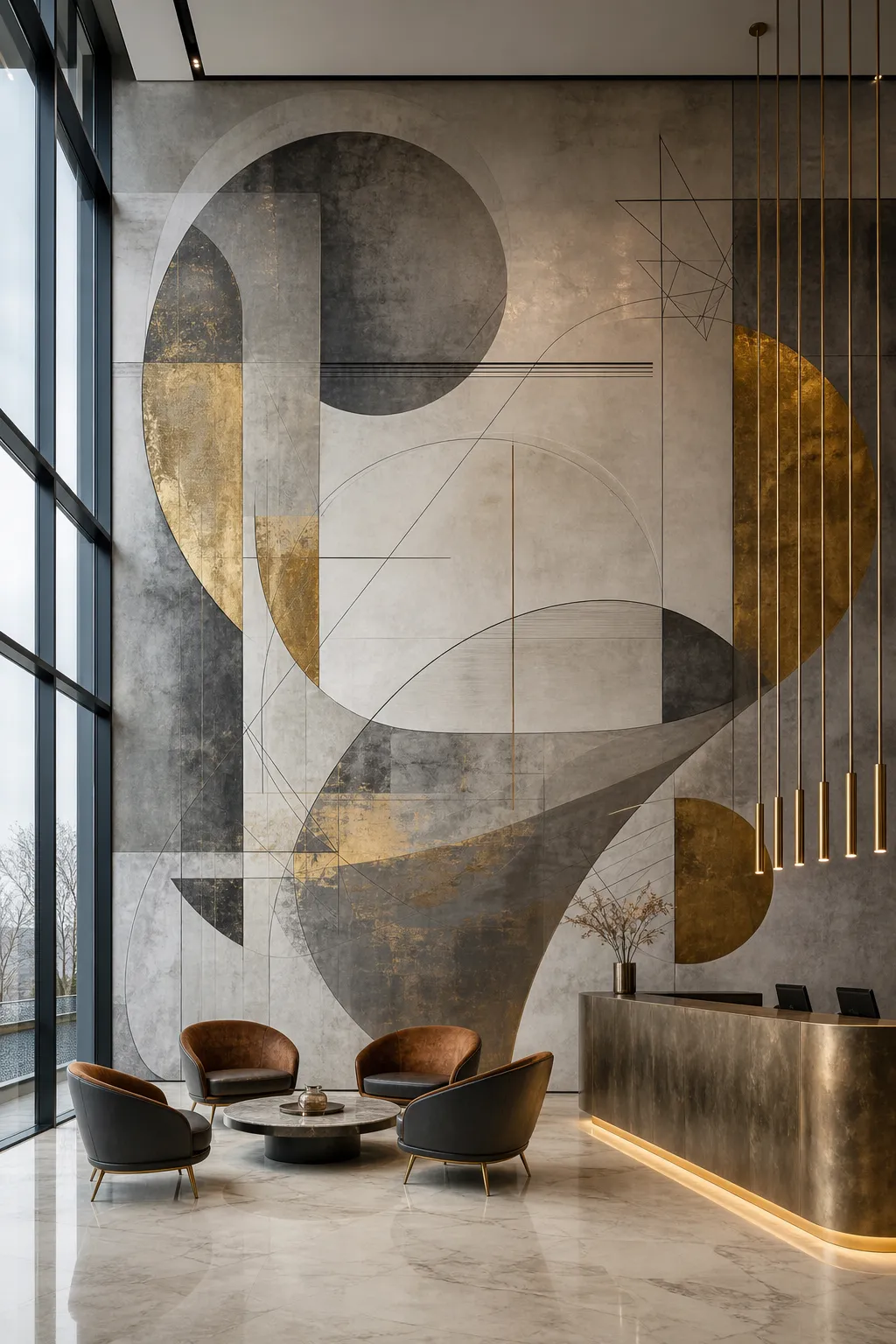

Gold and graphite create an immediate sense of polish in a modern lobby. Metallic highlights catch the light, while charcoal sections give the composition weight and architectural definition.
Use warm, focused lighting to bring out the gold details. Black furniture, stone surfaces, and restrained accessories will support the luxurious finish without making the entrance feel ornate.
Bring Retro Semicircles Into a Relaxed Living Room
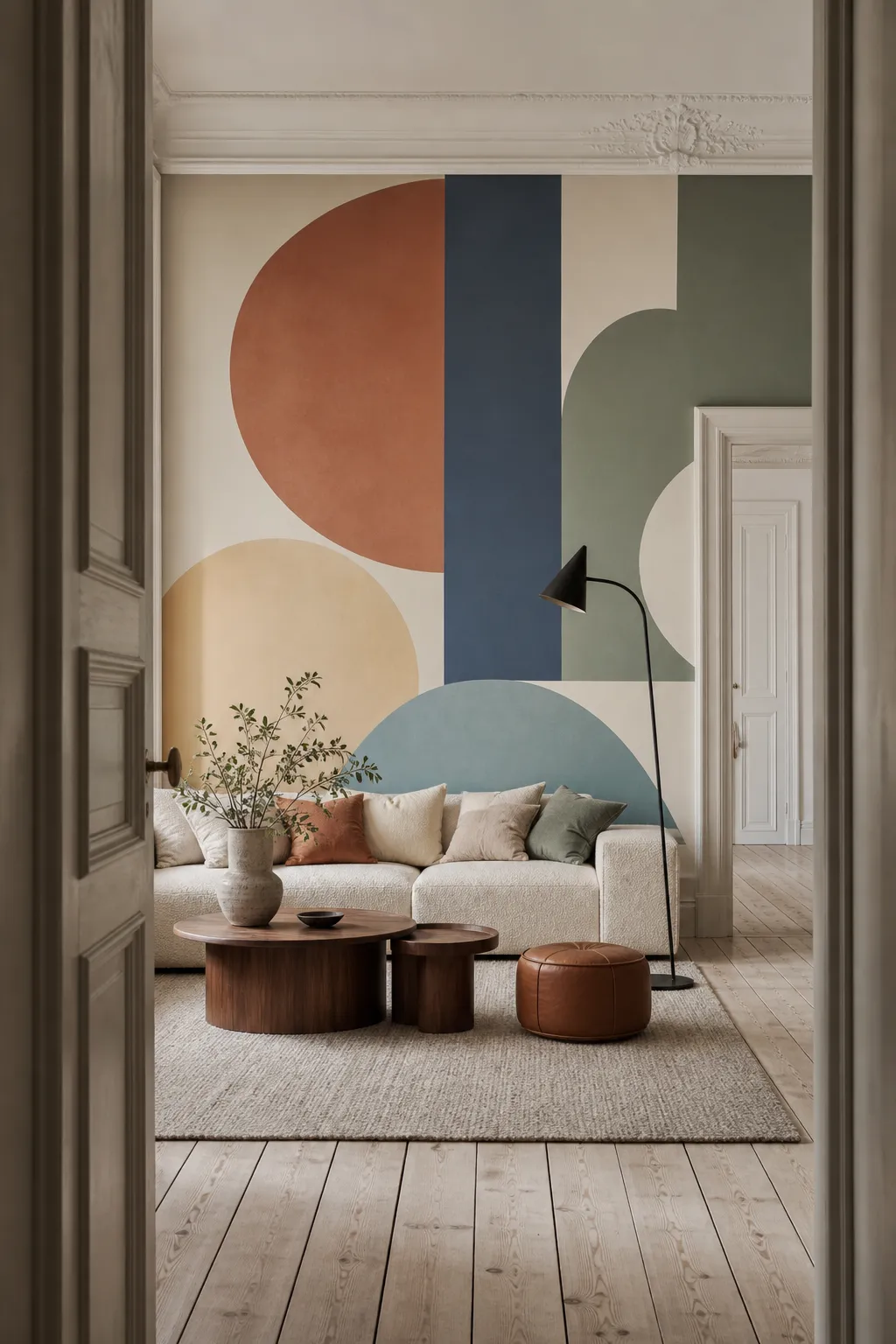

Rounded semicircles soften a living room and introduce an easy retro rhythm. Muted vintage colors such as ochre, rust, olive, and cream make the geometry feel warm rather than rigid.
Balance the pattern with low-profile seating and tactile fabrics. A curved lamp or round coffee table can echo the motif and create a pleasantly cohesive composition.
Layer Moody Organic Shapes Across a Lounge Wall
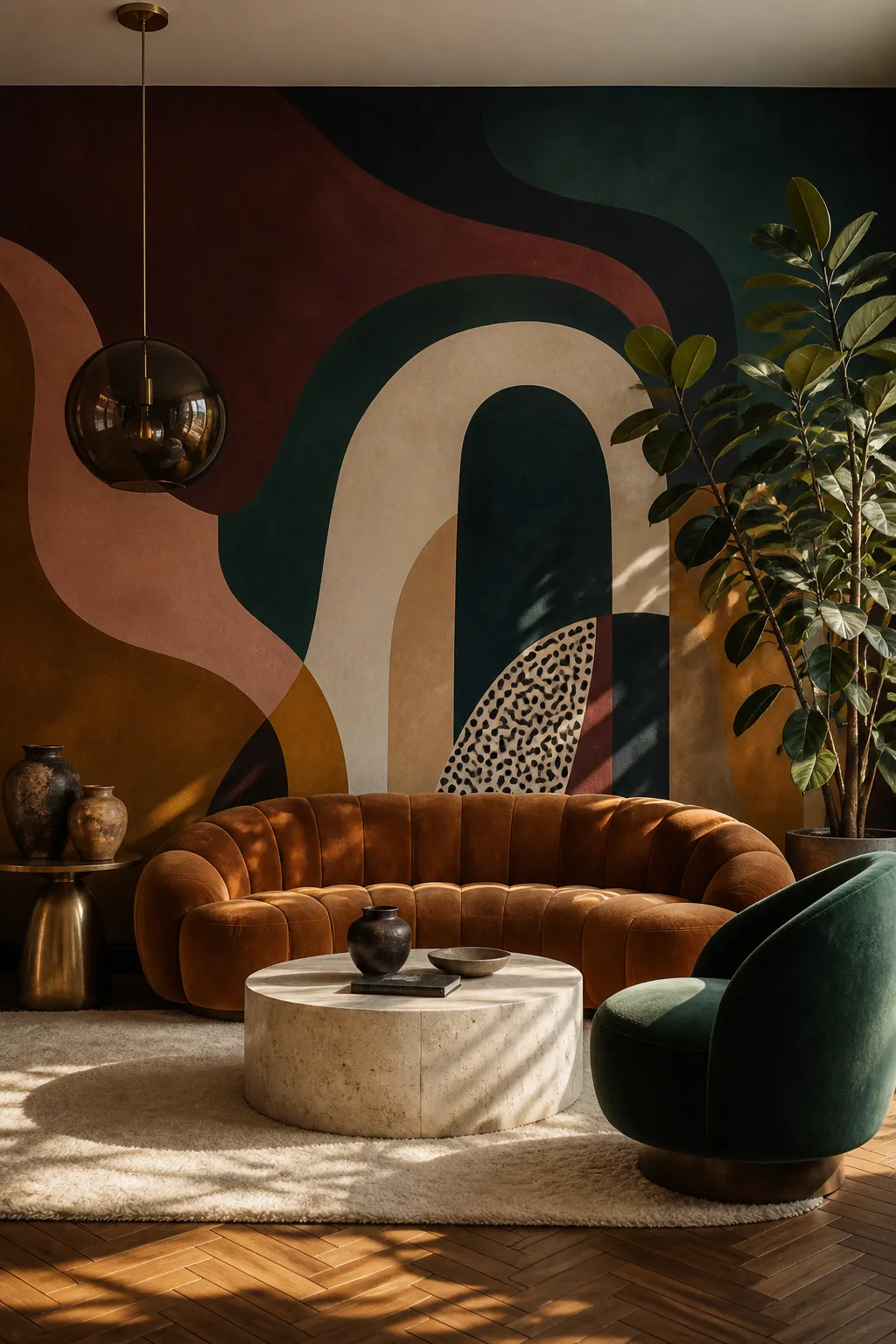

Layered organic forms give a lounge wall depth without relying on sharp symmetry. Inky, earthy shades create a cocooning mood, while curved edges keep the arrangement fluid.
Let the mural dominate by choosing furniture with simple silhouettes. Velvet, dark timber, and softly diffused lighting will enhance its intimate, sophisticated character.
Fill a Living Room With Bright Faceted Color
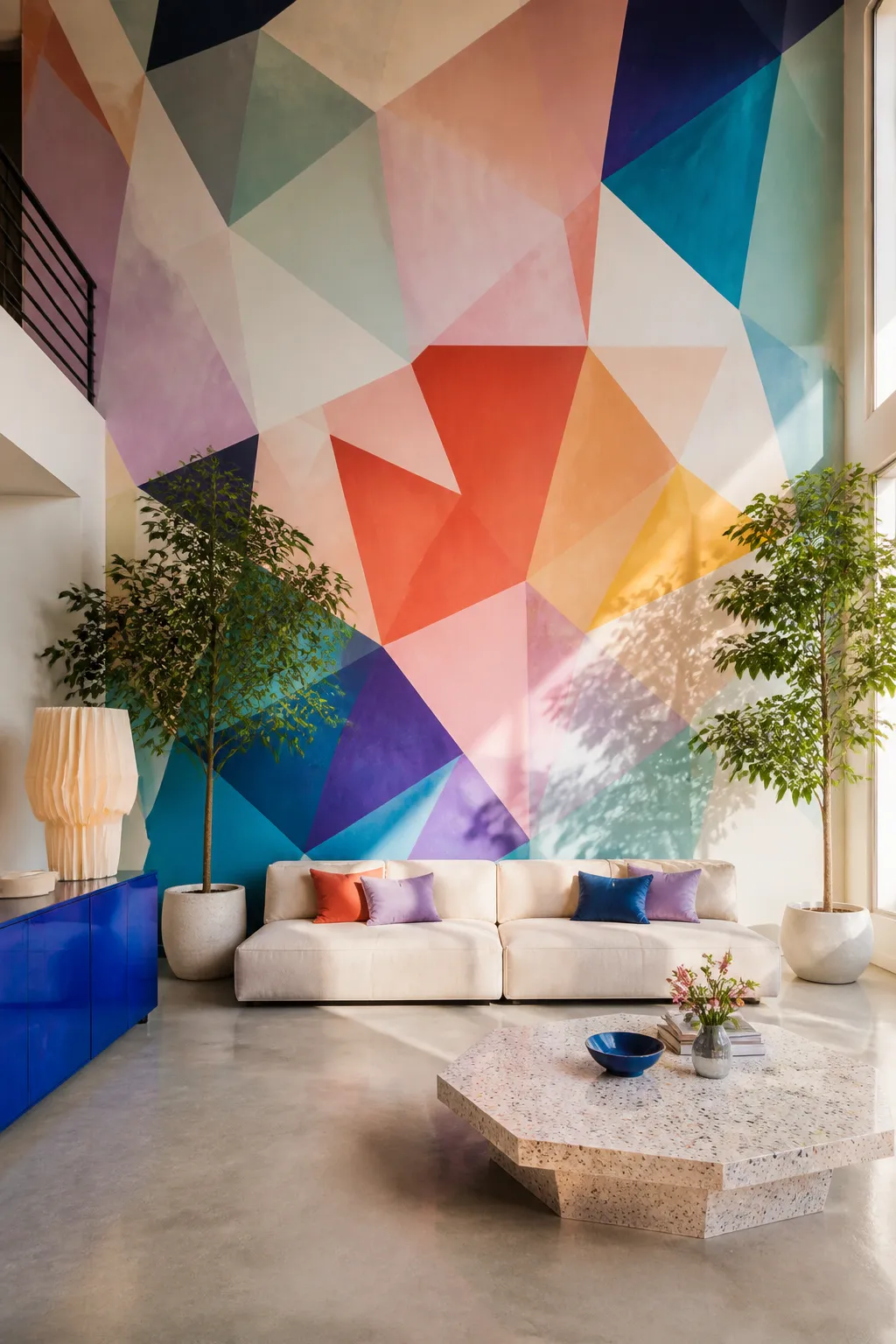

A faceted wall treatment breaks bold color into lively planes, making the room feel animated from every angle. High-contrast facets work especially well as a backdrop for a simple sofa.
Pull a limited selection of hues into cushions and accessories rather than repeating the entire spectrum. Neutral flooring and uncluttered furniture will give the vibrant geometry space to breathe.
Refine a Lounge With Delicate Art Deco Linework
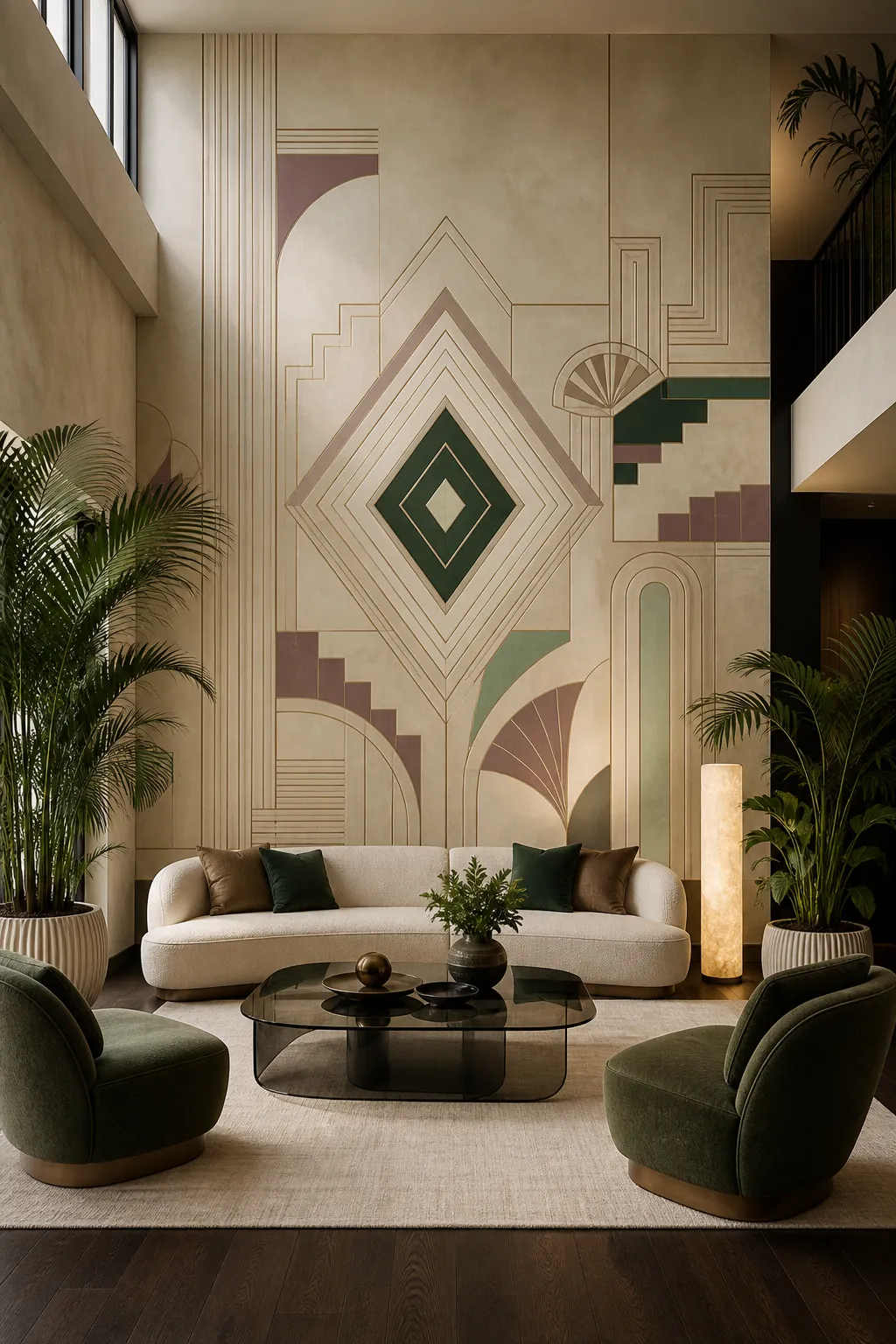

Fine Art Deco linework adds elegance without overwhelming a restful lounge. Symmetrical metallic details lend order and glamour, particularly against a deep navy, emerald, or charcoal background.
Complement the wall with curved seating, glass, and subtle brass accents. Keeping decorative objects minimal allows the slender geometry to remain crisp and refined.
Use Modern Arches to Frame a Colorful Living Room
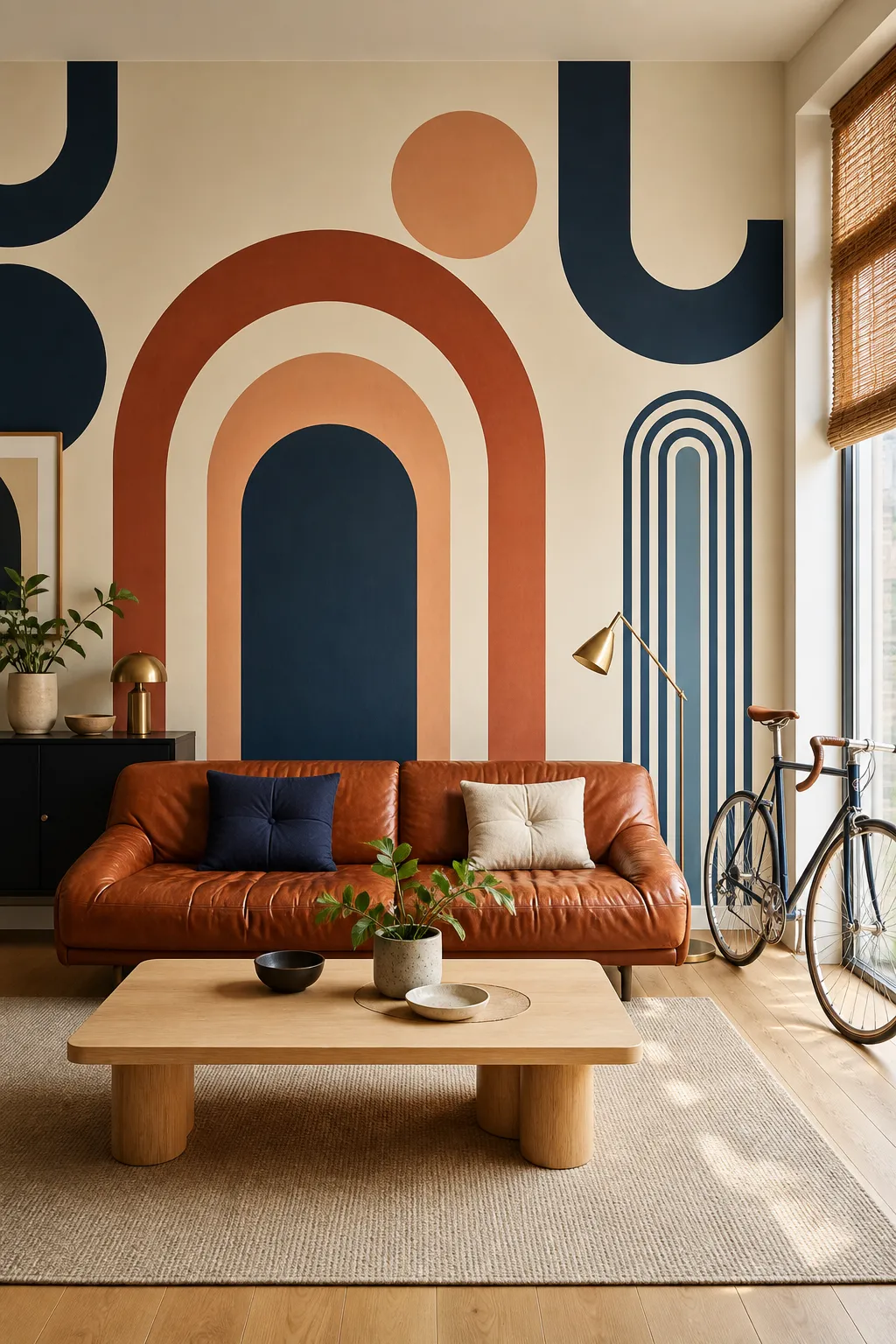

Large modern arches can visually frame a sofa, console, or artwork while adding architectural character to a plain wall. Layered bands of color create depth and direct attention toward the seating area.
Choose shades already present in the room for a connected look. Rounded furniture and lighting can repeat the curves, while a few straight-edged pieces keep the composition balanced.
Wrap a Reading Corner in Moody Terracotta Shapes
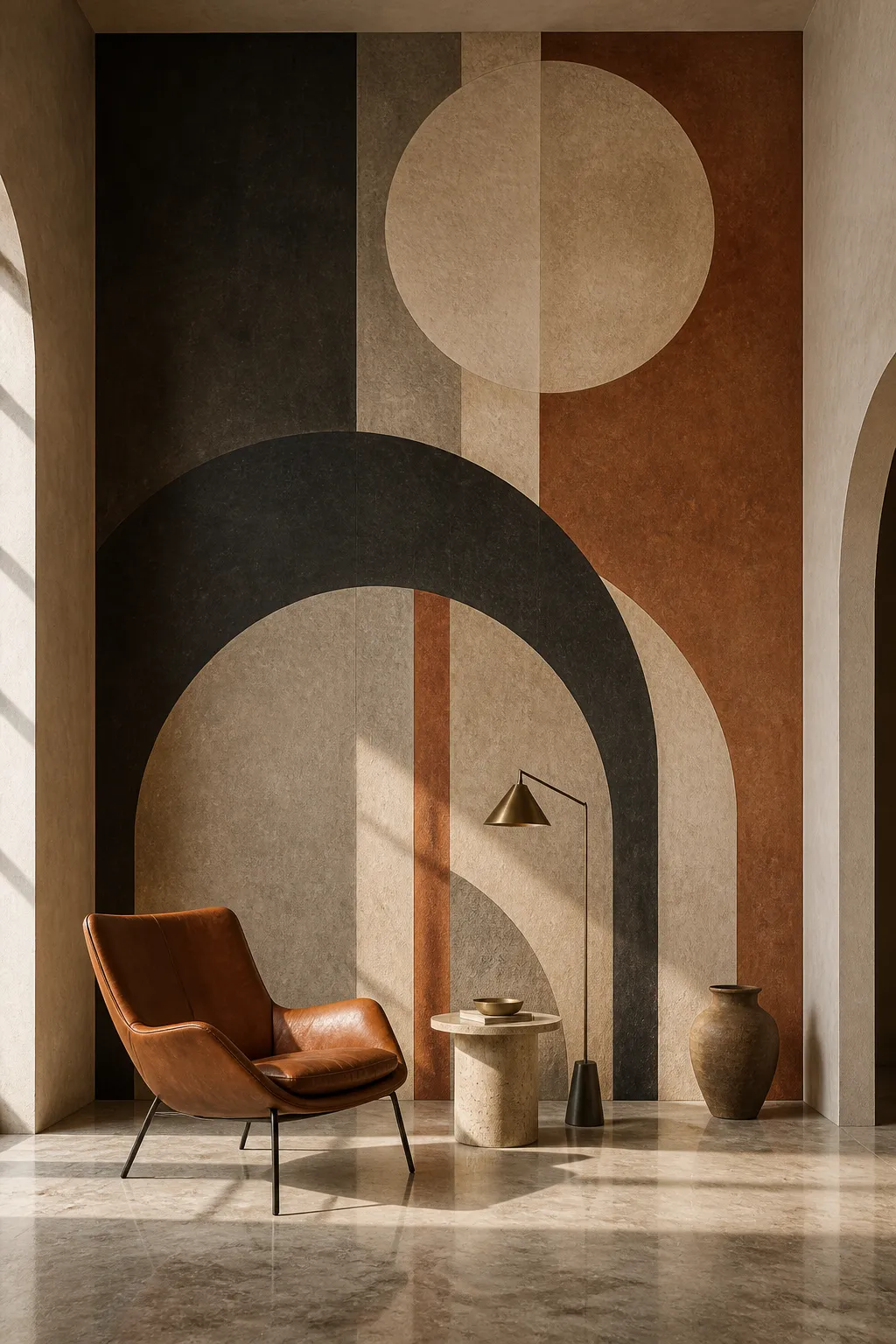

Terracotta shapes make a reading corner feel warm, grounded, and deliberately set apart. Deep clay tones pair naturally with enveloping curves and layered abstract forms.
Add a comfortable chair, warm task light, and tactile throw to strengthen the sense of retreat. Walnut, tan leather, and muted charcoal details will deepen the earthy palette.
Illuminate a Living Room With Sunlit Color Blocks
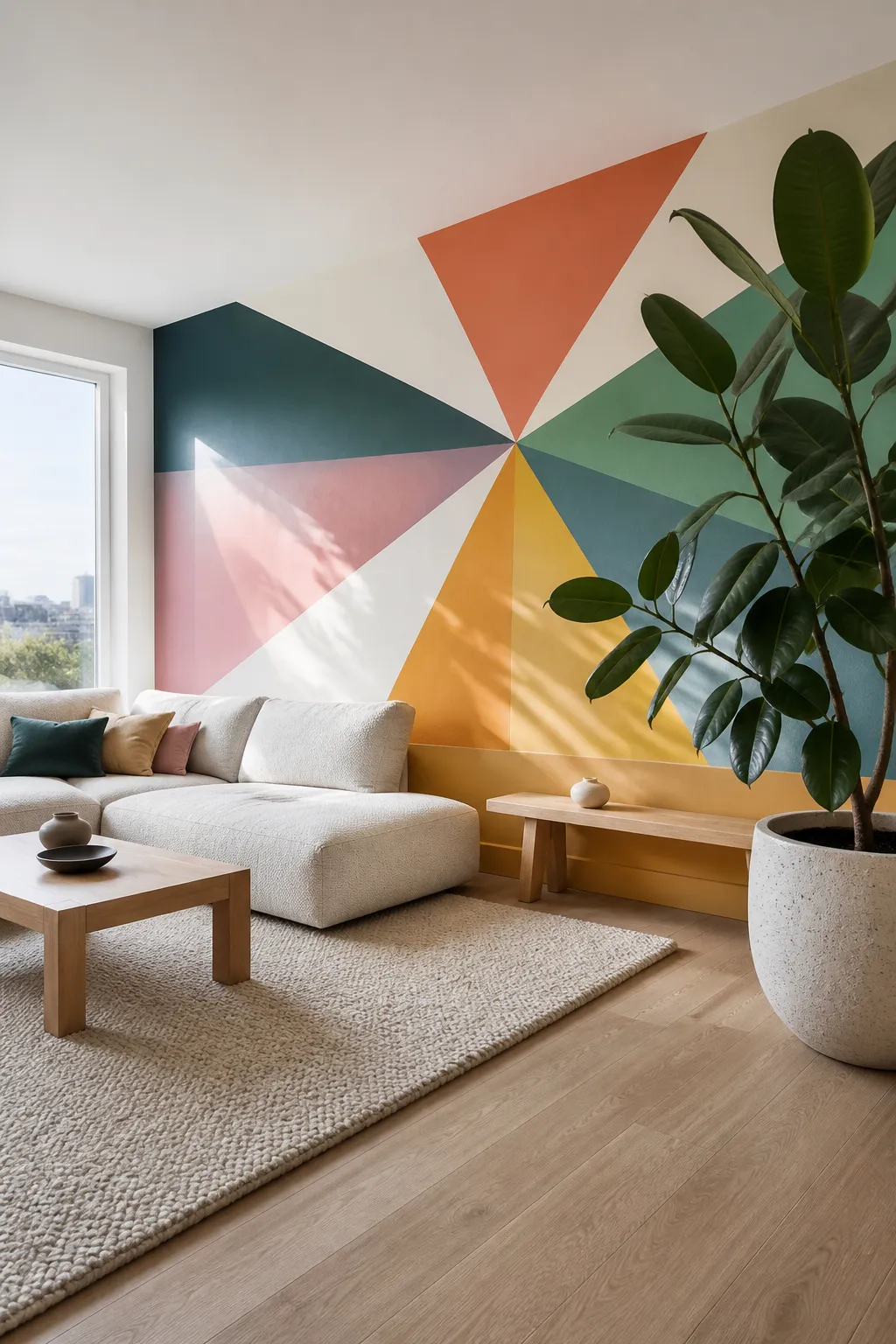

Warm color blocks can capture the feeling of sunlight even when natural light is limited. Golden yellow and peach tones brighten the wall, while structured shapes keep the scheme contemporary.
Position the design where daylight can enhance its changing tones. Pale upholstery, sheer curtains, and light wood finishes will amplify the cheerful, open atmosphere.
Give a Retro Lounge a Bold Bauhaus Centerpiece
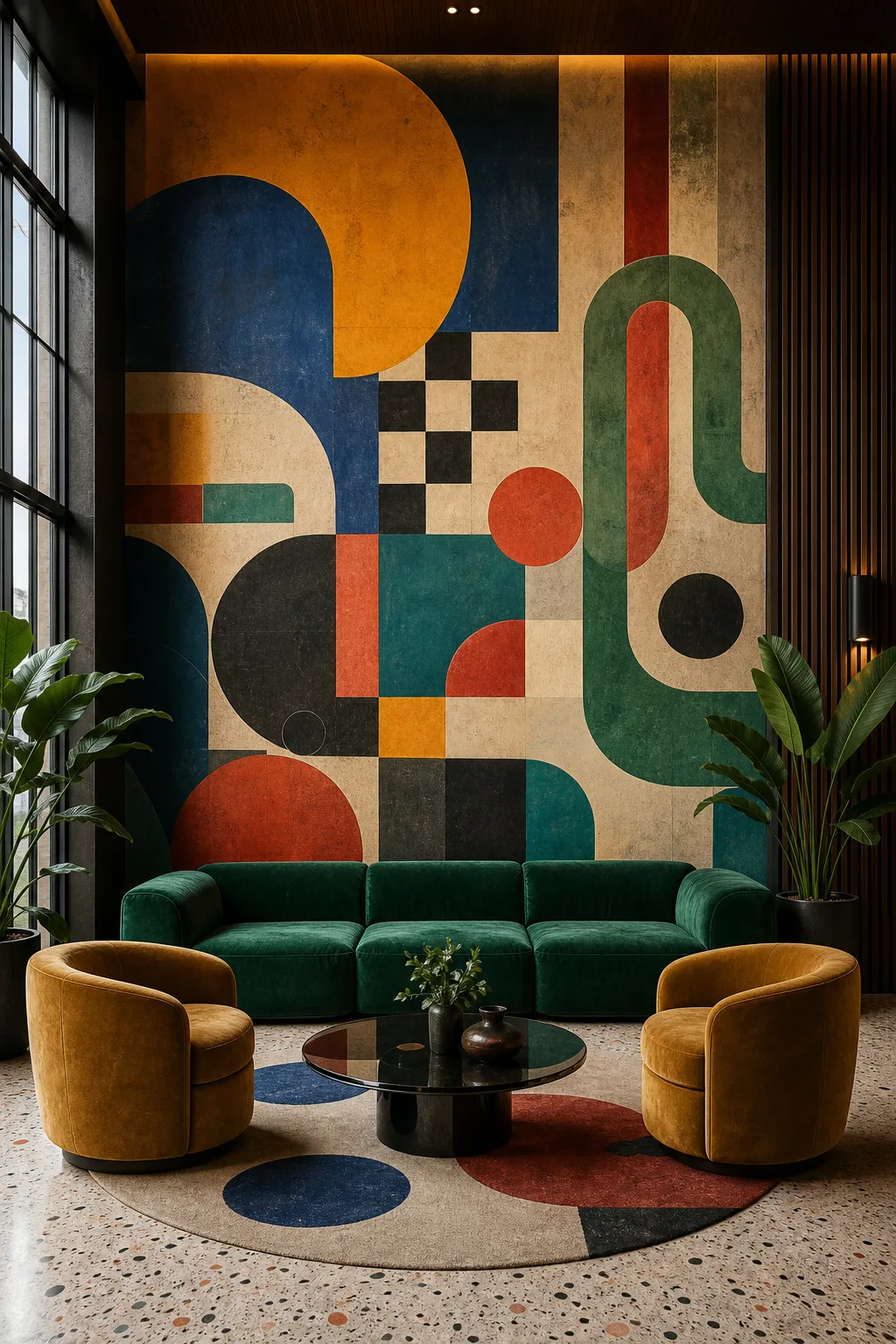

A Bauhaus-inspired centerpiece brings disciplined energy to a retro lounge through circles, grids, and strong primary color. Bold geometric contrast gives the room an unmistakable focal point.
Surround it with uncomplicated furniture so the composition stays sharp. Black accents and a few carefully repeated colors will connect the artwork to the wider room.
Balance a Modern Dining Room With Pastel Geometry
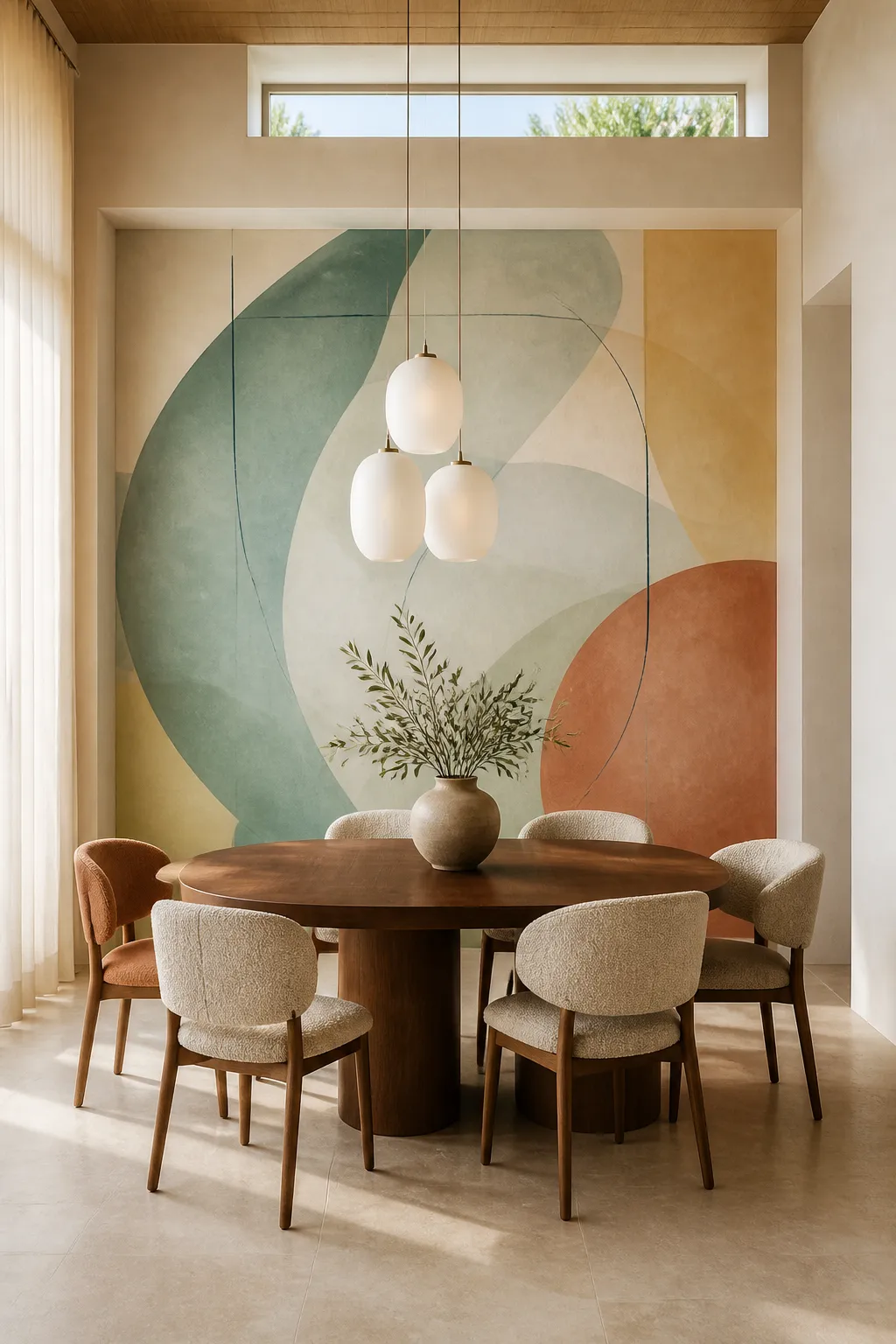

Pastel geometry adds definition to a dining room without making it feel busy or formal. Soft intersecting shapes bring balance and visual interest behind a streamlined table.
Anchor the delicate palette with light timber, matte black, or warm gray furnishings. Repeating a single pastel shade in table linens or seating creates a subtle sense of continuity.
Finish a Playful Living Room With Memphis-Style Shapes
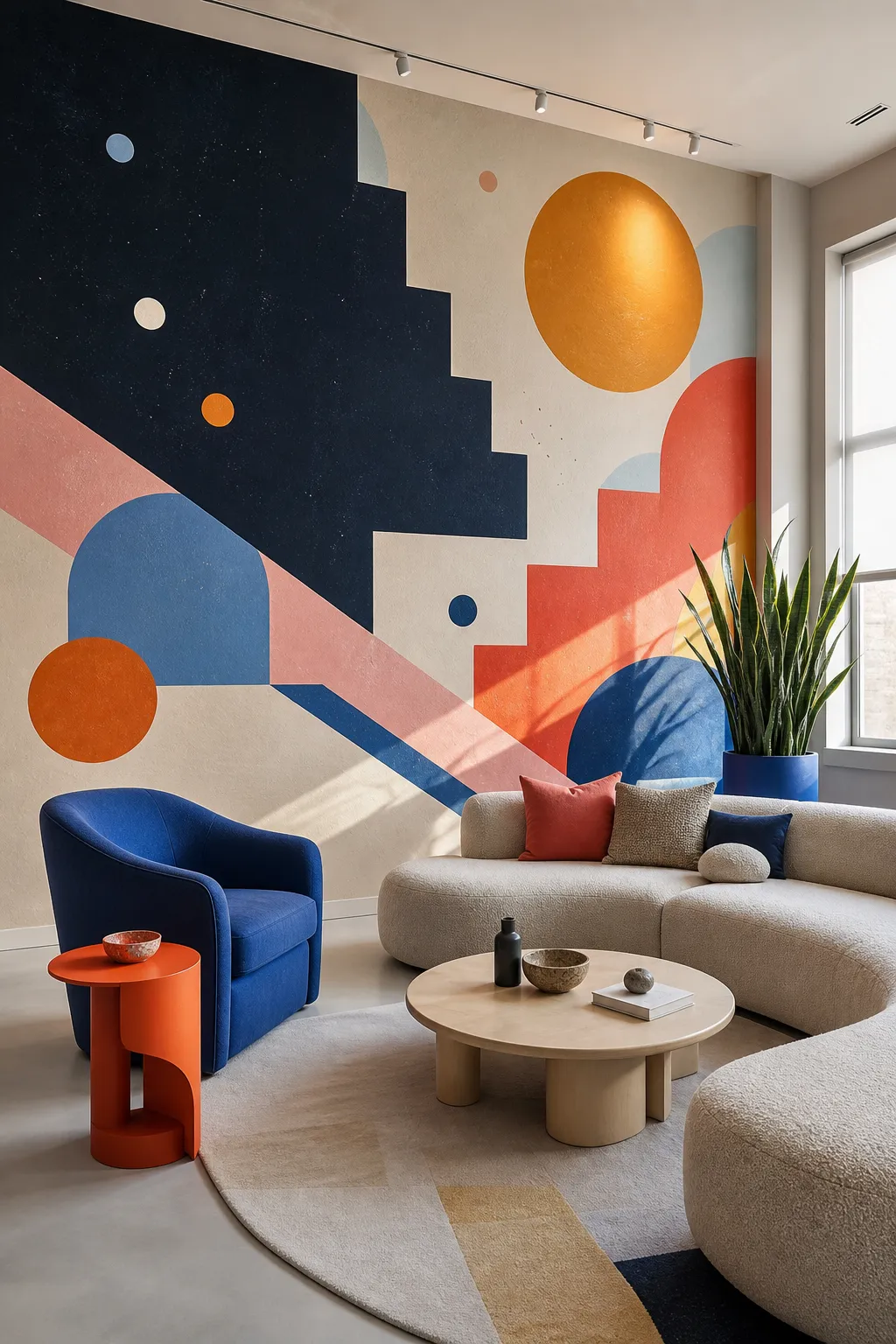

Memphis-style squiggles, dots, and geometric cutouts give a living room an upbeat finishing layer. Unexpected color combinations make the wall feel expressive and full of personality.
Keep large furniture pieces relatively simple to prevent visual overload. Pick two or three motif colors for cushions, lamps, or small objects to unite the playful arrangement.