35 Striped Wallpaper Nursery Ideas in Soft Neutrals and Playful Colors
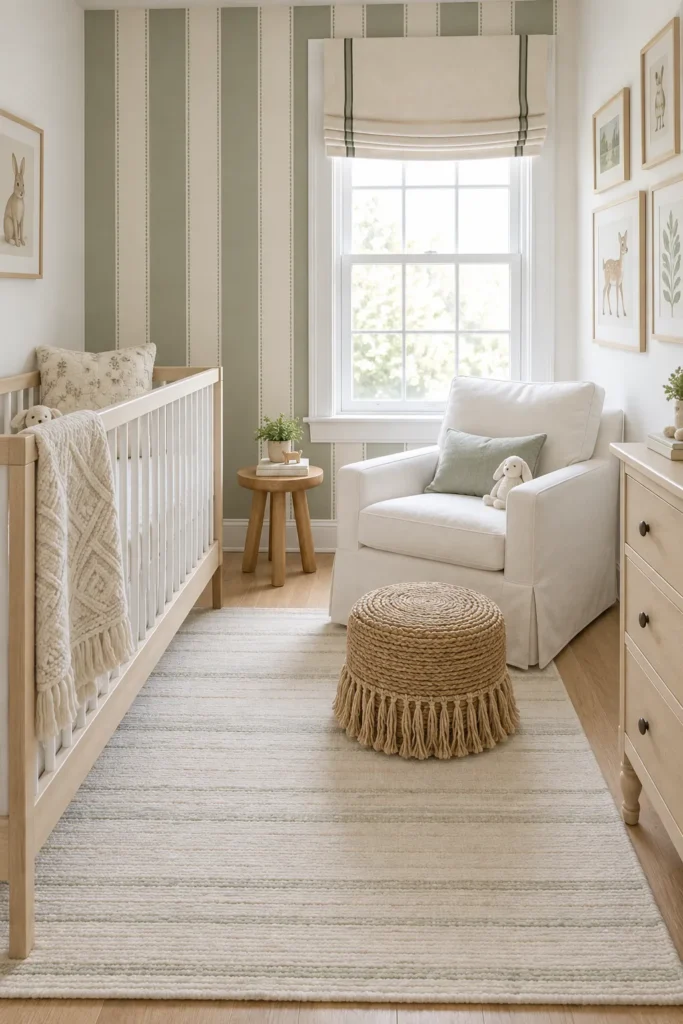
Striped wallpaper nursery ideas range from quiet gray pinstripes to colorful scallops and soft watercolor lines. These 35 looks pair stripes with natural wood, vintage accents, botanical art, and playful themes to give a baby room its own character.
Start with color and stripe shape, then consider how furniture and textiles will work alongside them. Subtle neutrals offer a gentle backdrop, while wavy edges and warmer colors bring more pattern into the room.
Pair Gray and White Stripes with a White Crib
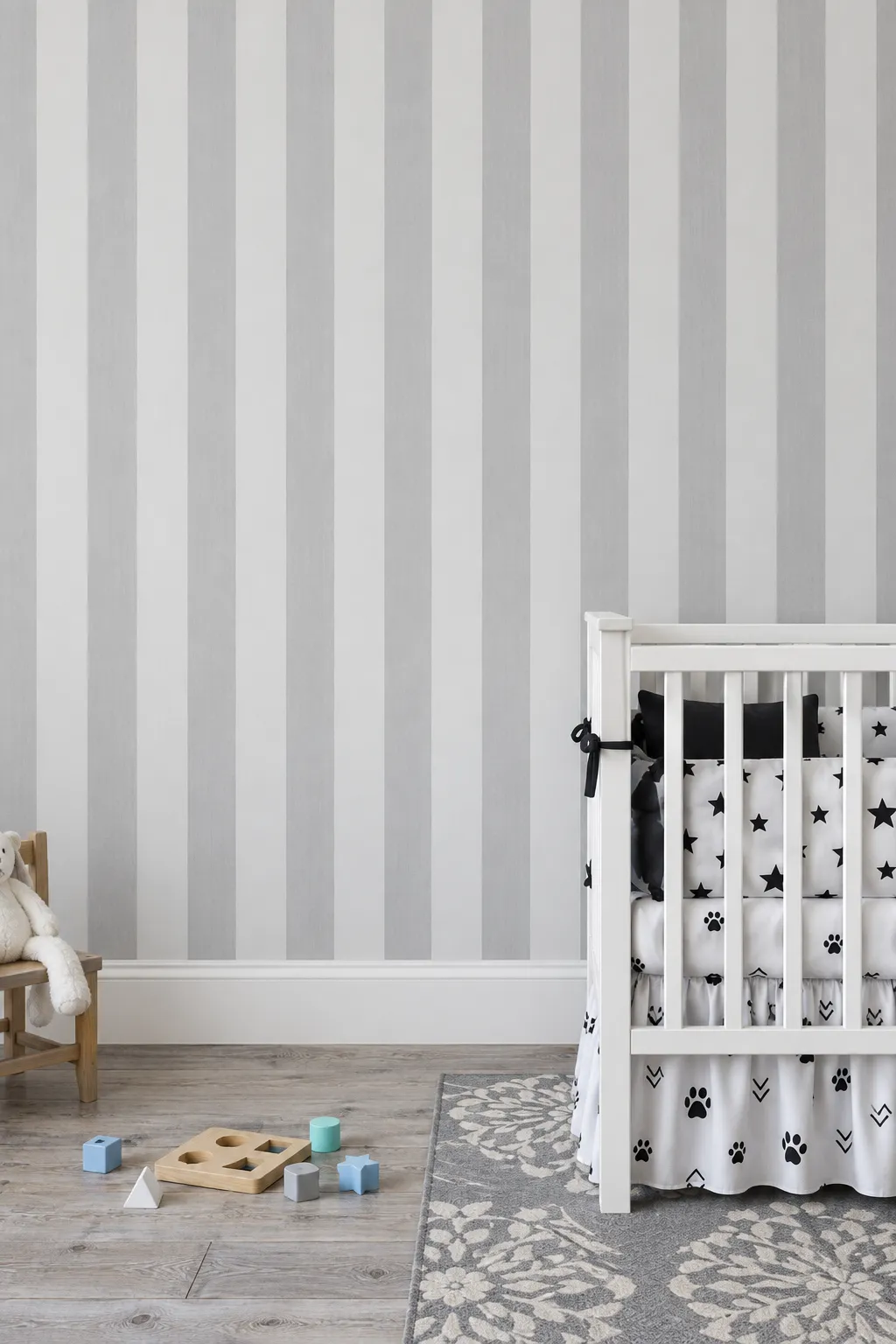

Gray and white stripes give a nursery a clear pattern while keeping the palette quiet. A white crib echoes the lighter stripe, helping the furniture feel connected to the wall.
Choose a gentle gray for a softer contrast, then bring in texture through a knitted rug or linen curtains. Keep nearby accessories simple so the stripes remain the main decorative feature.
Keep Pale Gray Stripes Airy with a Natural Wood Crib
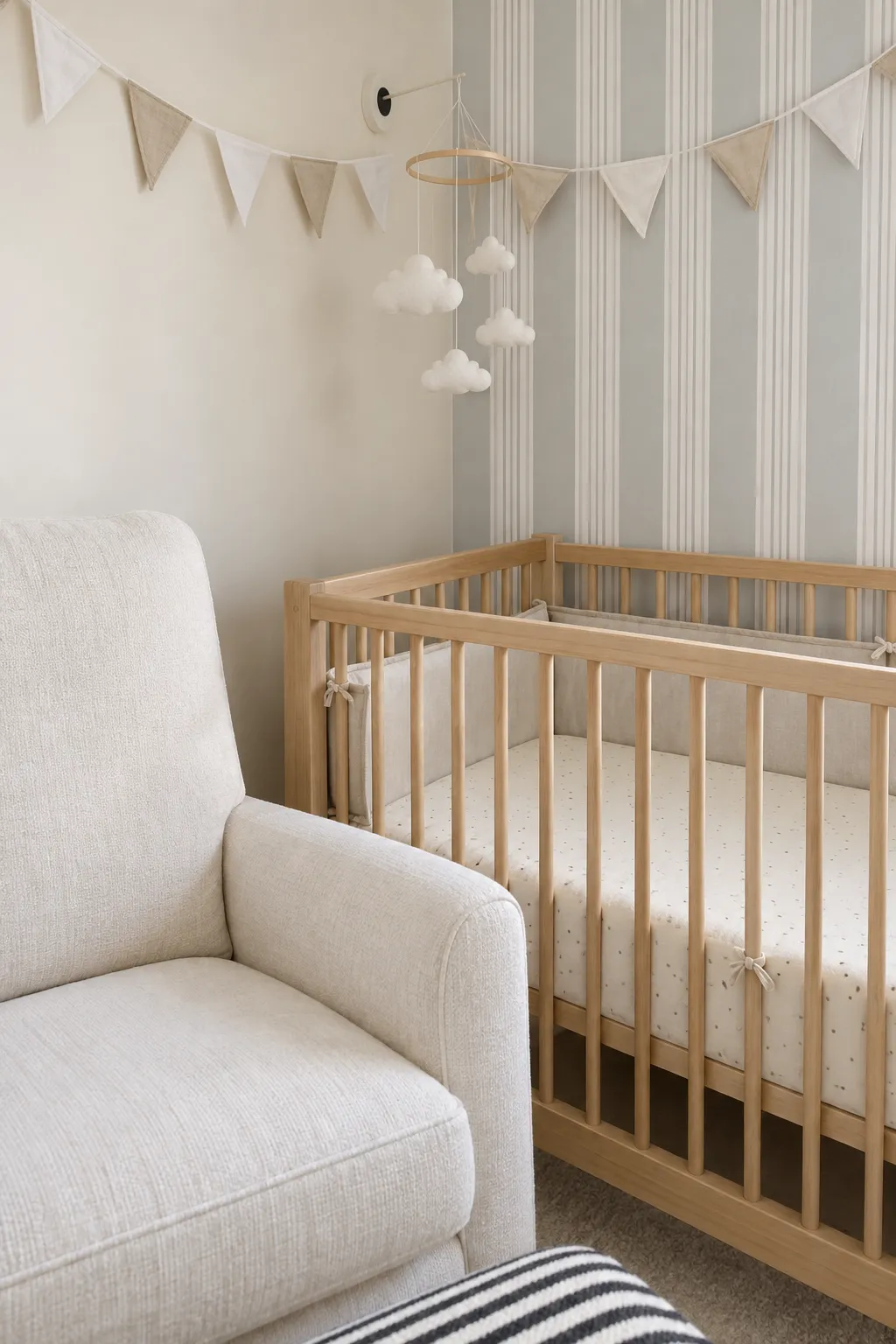

Pale gray stripes add definition without making the walls feel visually heavy. Pair them with a natural wood crib to introduce warmth and a subtle grain against the smooth pattern.
Use ivory curtains and a light rug to carry the airy palette around the room. A restrained mix of wood tones keeps the crib prominent and helps the space feel cohesive.
Add Coastal Character with Stripes and a Wooden Surfboard
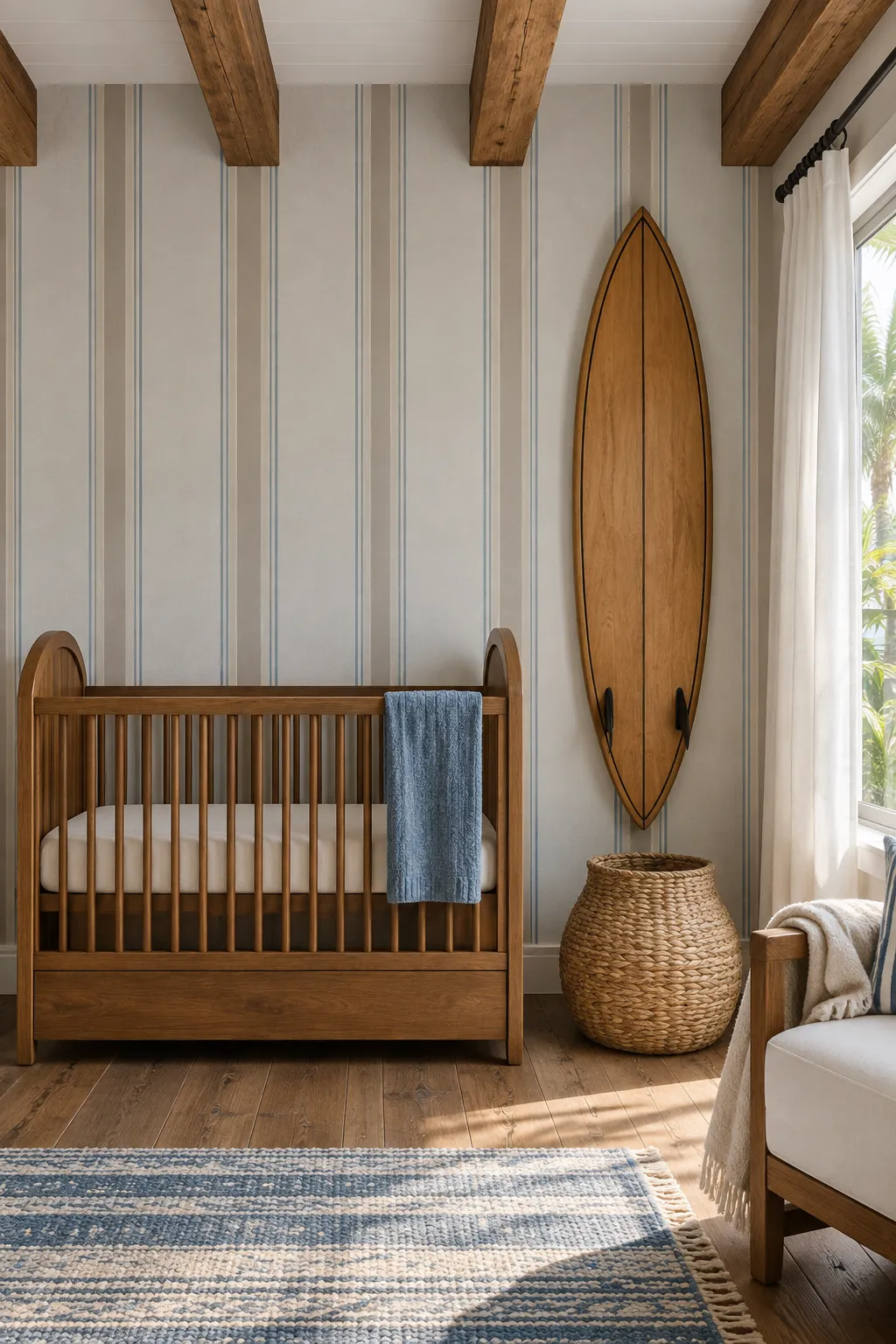

Stripes establish a relaxed coastal mood, while a wooden surfboard adds a more distinctive reference to the shore. Let the surfboard be the statement piece, with its wood tone repeated in a frame or small table.
Cream textiles and sandy neutrals keep the scheme easygoing without adding more nautical motifs. Secure the decorative board away from the crib and play area rather than leaving it leaning against a wall.
Combine Orange and White Stripes with a Retro Green Armchair
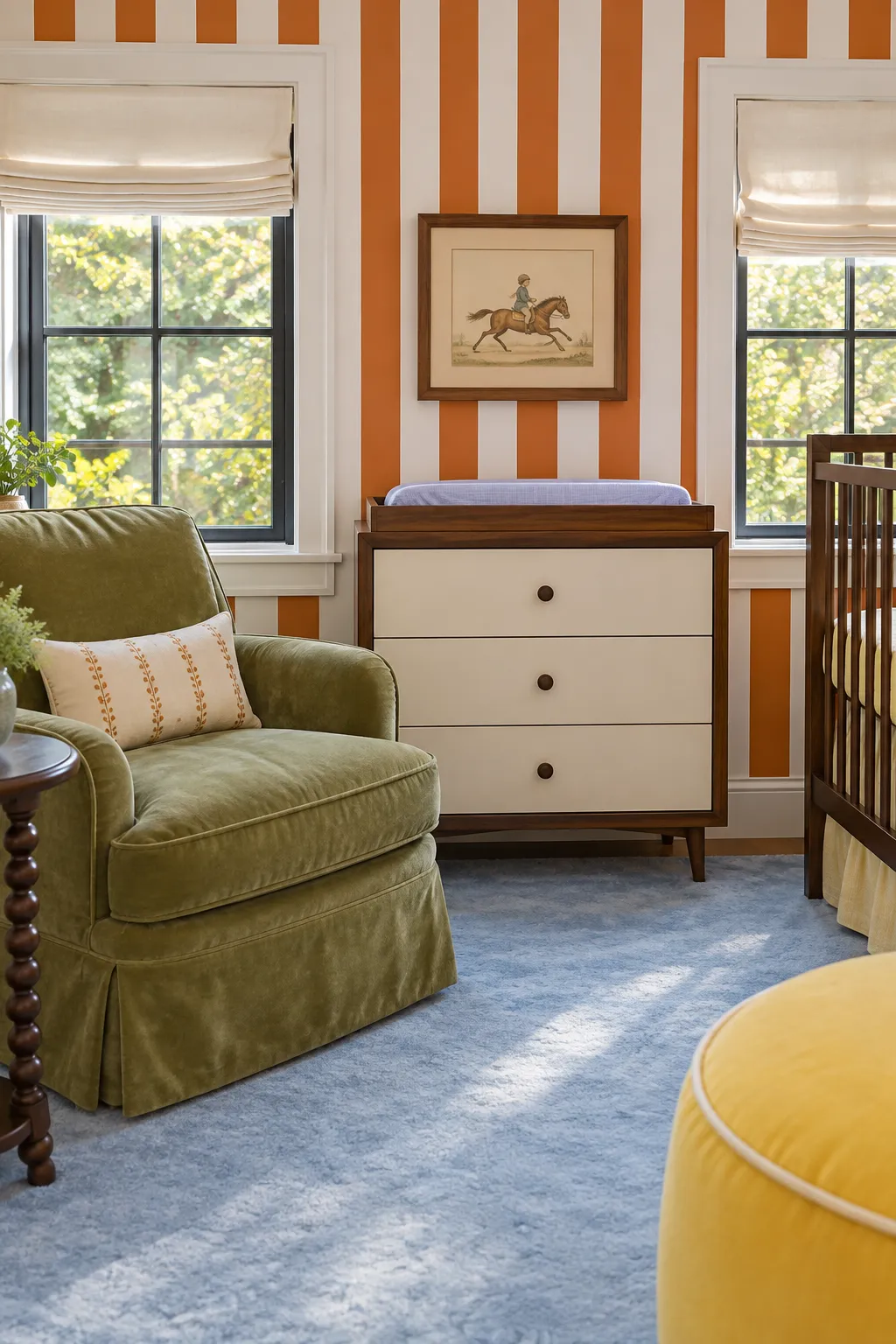

Orange and white stripes bring energy to the walls, and a retro green armchair adds a playful second color. Choose muted orange and olive green if you want the pairing to feel warm and mellow.
Give these colors breathing room with a cream rug and simple wood furniture. Repeat one accent in a small artwork to connect the seating corner with the striped wall.
Warm Up Taupe Stripes with a Woven Pouf
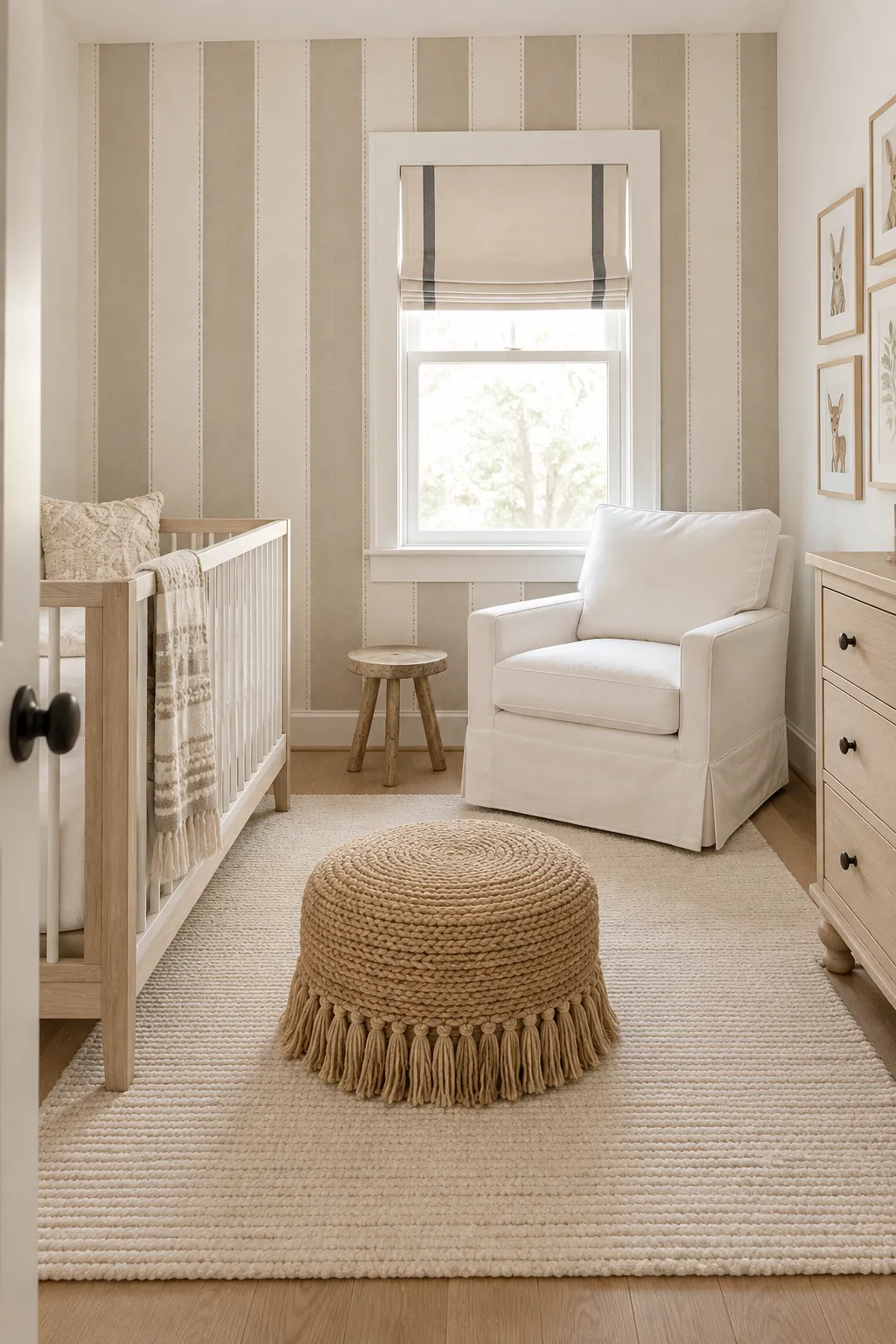

Taupe stripes create a gentle backdrop that welcomes tactile materials. A woven pouf brings a rounded shape and visible texture to balance the orderly lines on the wall.
Look for a weave with sandy or oatmeal tones that complement the taupe. Position the pouf beside the adult seating area, leaving a clear route through the room.
Bring Botanical Charm to Sage Stripes and a White Crib
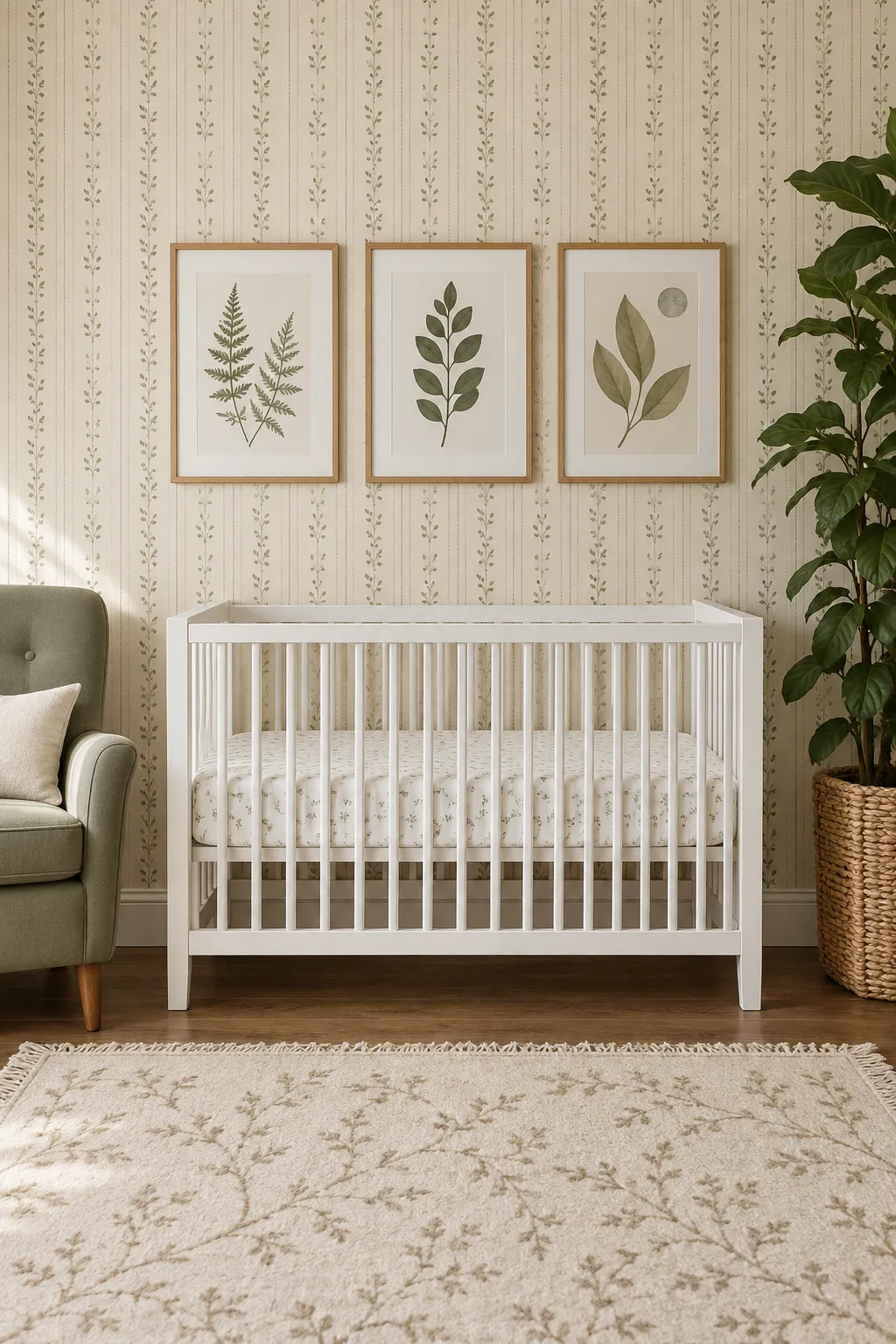

Sage stripes suggest a garden palette, while a white crib keeps the combination fresh. Add botanical artwork to develop that theme without covering every surface in leaves.
Choose prints with generous cream backgrounds so they sit comfortably against the stripes. A wood frame and a small leaf motif on the curtains can introduce detail while keeping the room restful.
Create a Soft Accent Wall with Dusty Blue and Cream Stripes
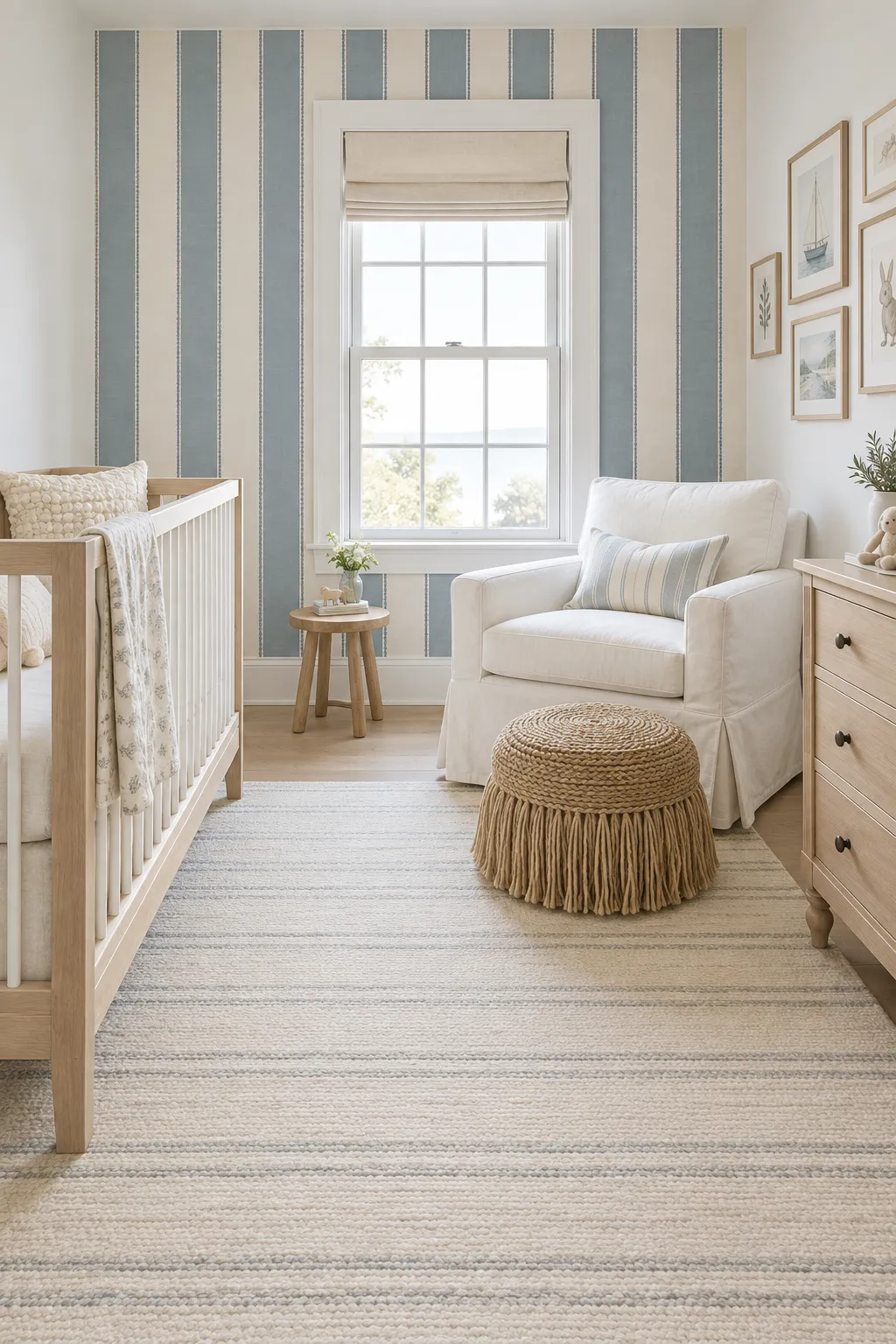

Dusty blue and cream stripes make an accent wall feel defined yet gentle. The muted contrast gives the pattern presence without the sharper effect of blue against bright white.
Paint the surrounding walls a compatible cream to make the transition feel intentional. Use mostly solid fabrics nearby, allowing texture and subtle variations in blue to provide depth.
Frame an Oak Crib with Blush Scalloped Stripes
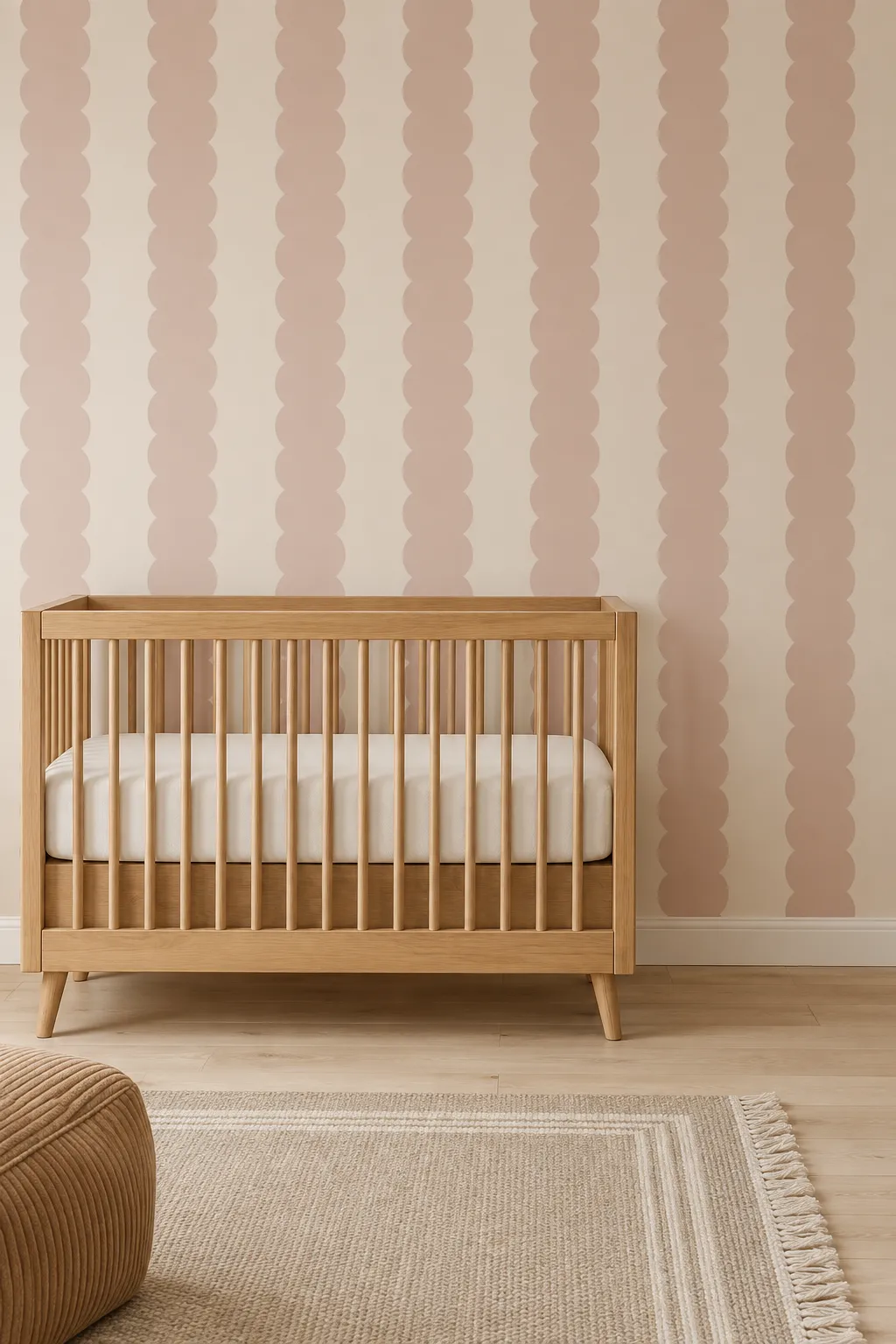

Blush scalloped stripes bring a soft, curved rhythm behind an oak crib. The oak’s warm grain complements the pink, while the crib’s straight lines give the decorative pattern some structure.
Let the scalloped wall frame the crib by keeping surrounding details restrained. Ivory textiles and simple furniture shapes allow the curved edges to stay clearly visible.
Balance Wavy Blue Stripes with a Rust Rug
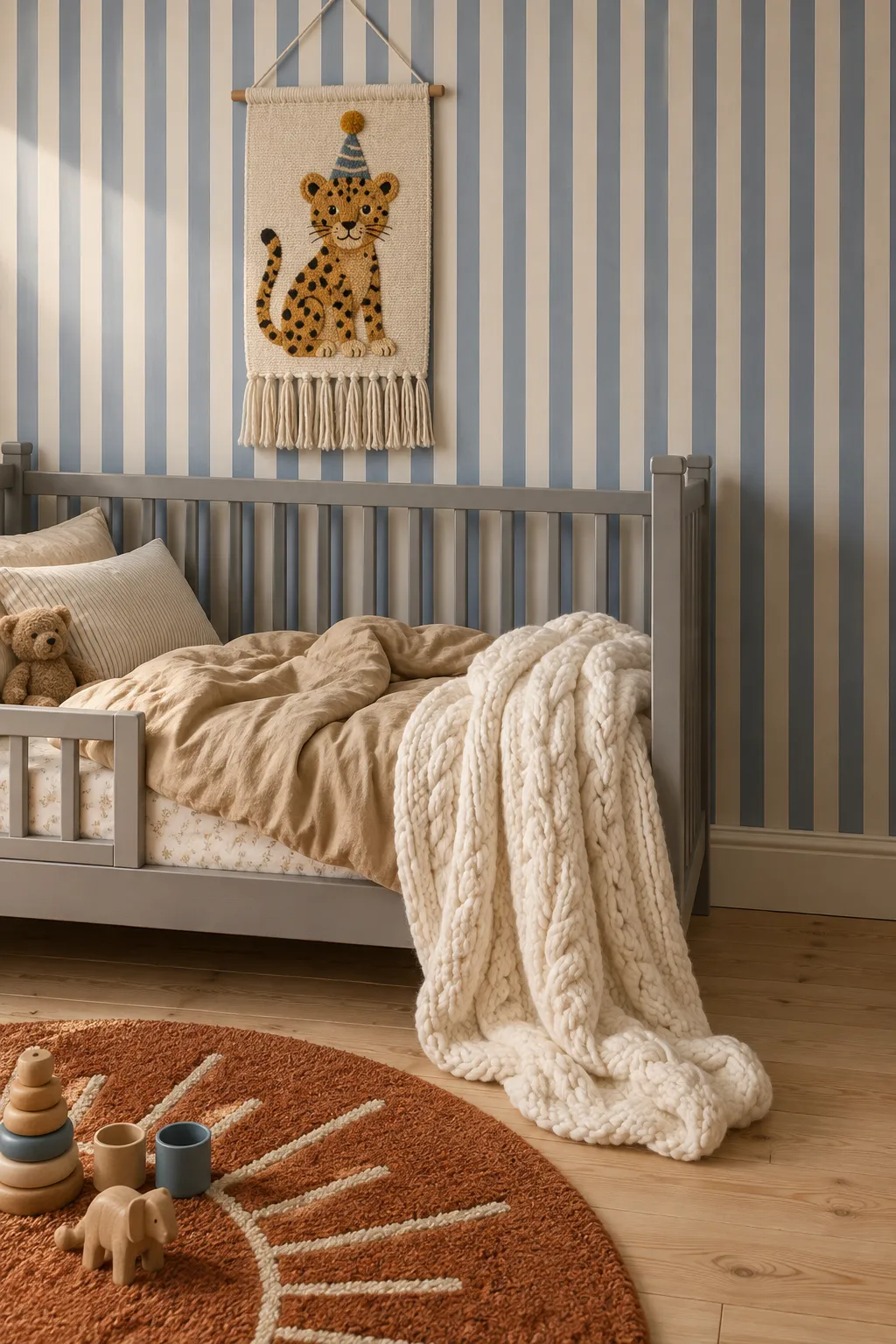

Wavy blue stripes add movement, while a rust rug brings warmth to the floor. This cool-and-warm pairing gives the room depth, especially when both colors have a muted finish.
Choose a mostly solid rug so its color balances the wallpaper without adding another busy pattern. Cream furniture or pale wood offers a quiet pause between the blue wall and earthy floor.
Build a Gender Neutral Palette with Sage, Cream, and Natural Wood
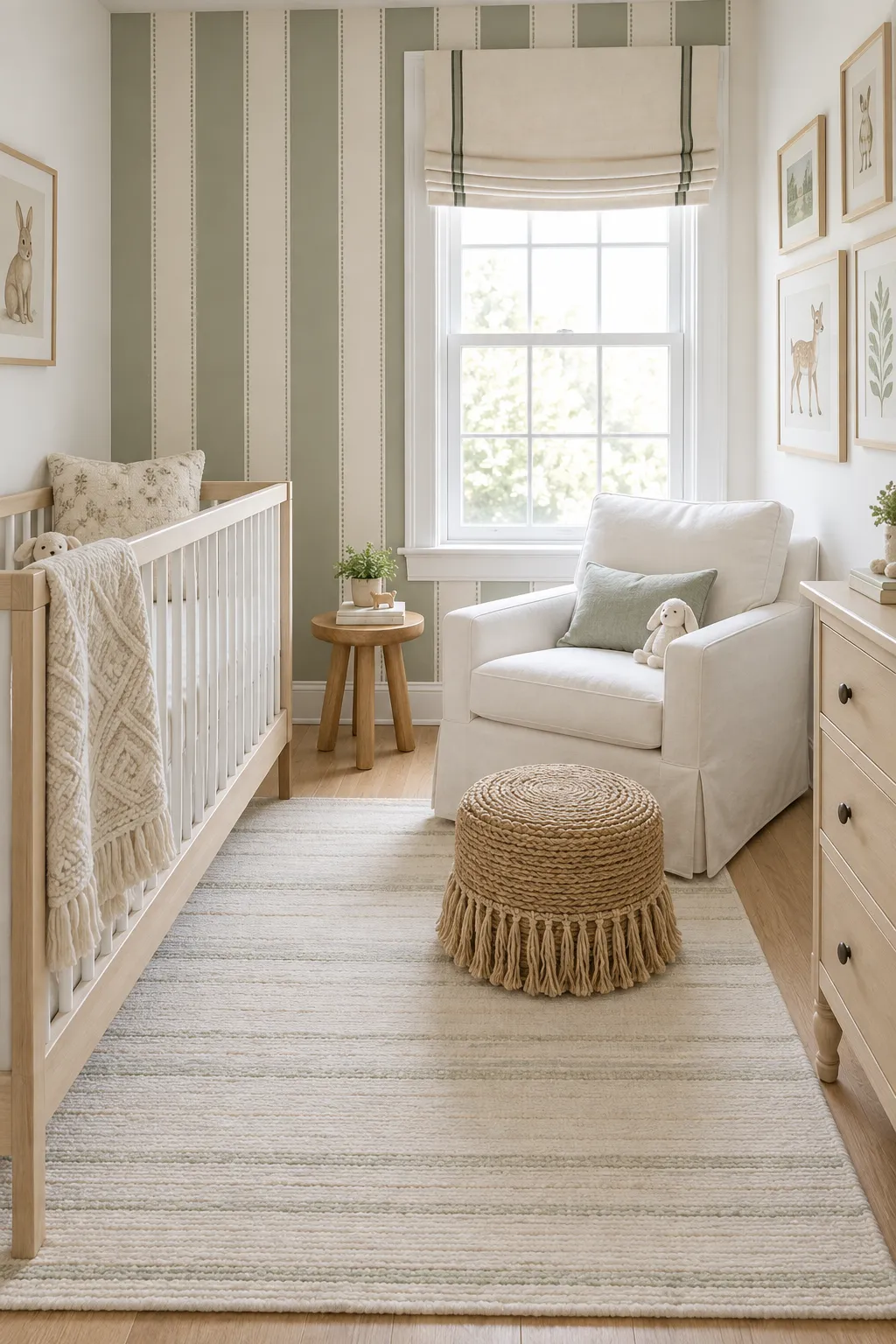

Sage, cream, and natural wood form a flexible foundation for a gender neutral nursery. Give each element a role: sage for gentle color, cream for lightness, and natural wood for warmth.
Carry the palette through a few larger surfaces before choosing accessories. Sage stripes, cream curtains, and a wood crib create enough variety to keep smaller decorative pieces minimal.
Give Neutral Gray Stripes Warmth with an Oak Crib
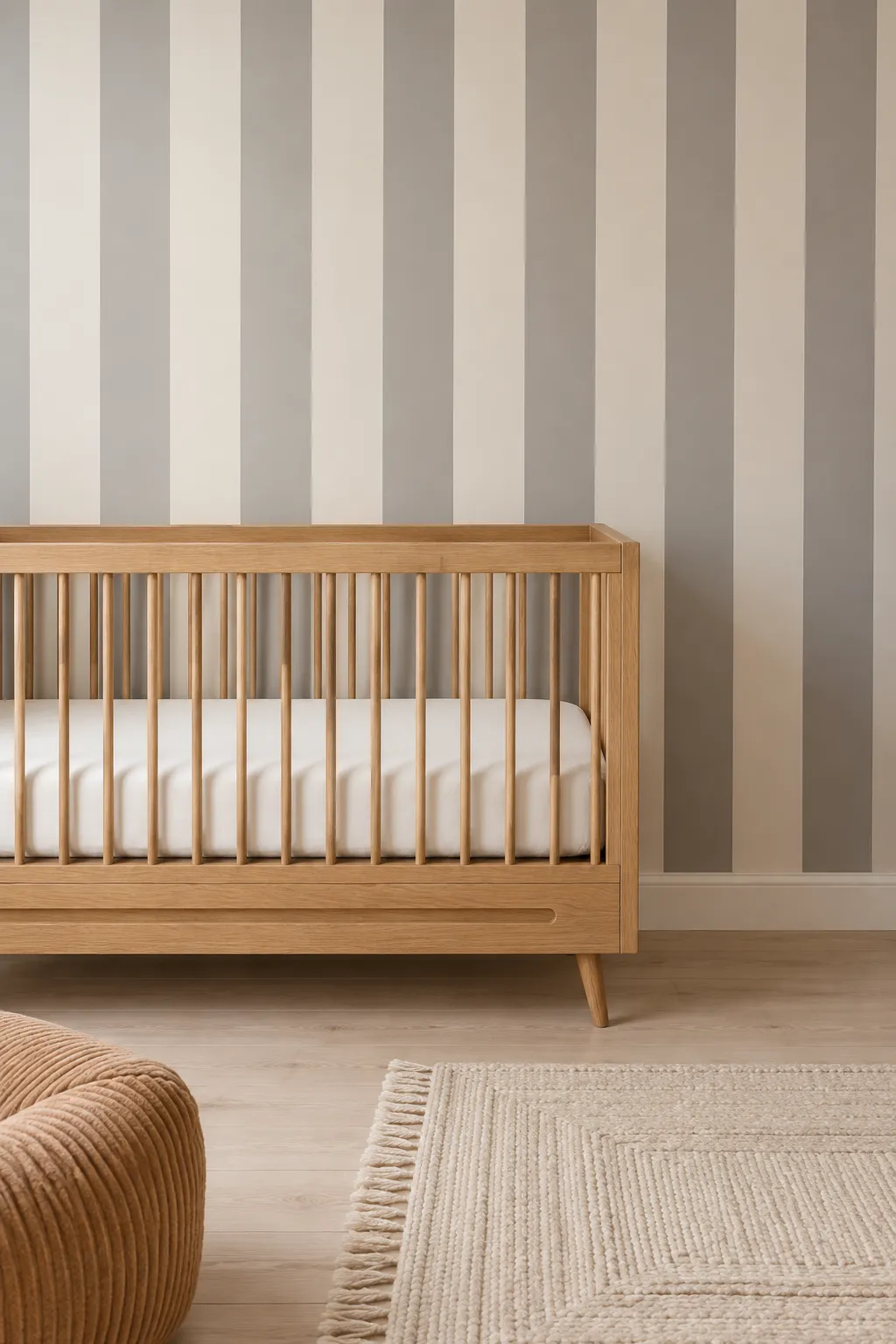

An oak crib adds a warm focal point against neutral gray stripes. Its visible grain introduces variation that helps the gray scheme feel less uniform.
Compare wallpaper samples beside the oak finish before settling on a shade. Gray with a warm undertone is a useful starting point, and oatmeal curtains can help connect the wall color with the wood.
Layer Botanical Art over Pastel Striped Wallpaper
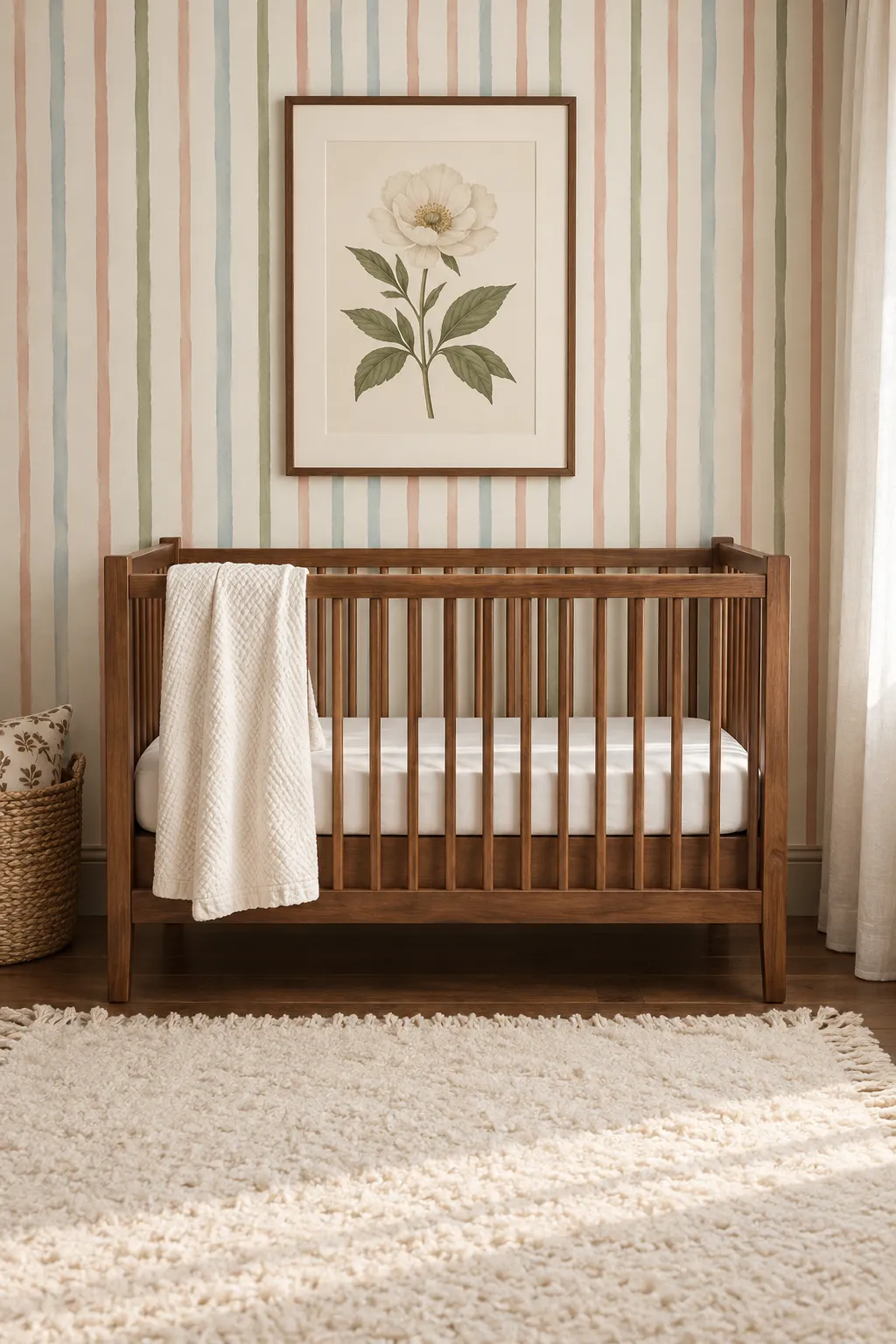

Botanical art gives pastel stripes a focal point and an extra layer of detail. Choose illustrations with open, uncluttered backgrounds so their leaf and flower shapes remain legible against the wallpaper.
A generous mat creates a visual break between each print and the stripes. Repeat one wallpaper color within the artwork, and keep the frame finishes consistent for a composed arrangement.
Ground Blush Scallops with a Textured Jute Rug
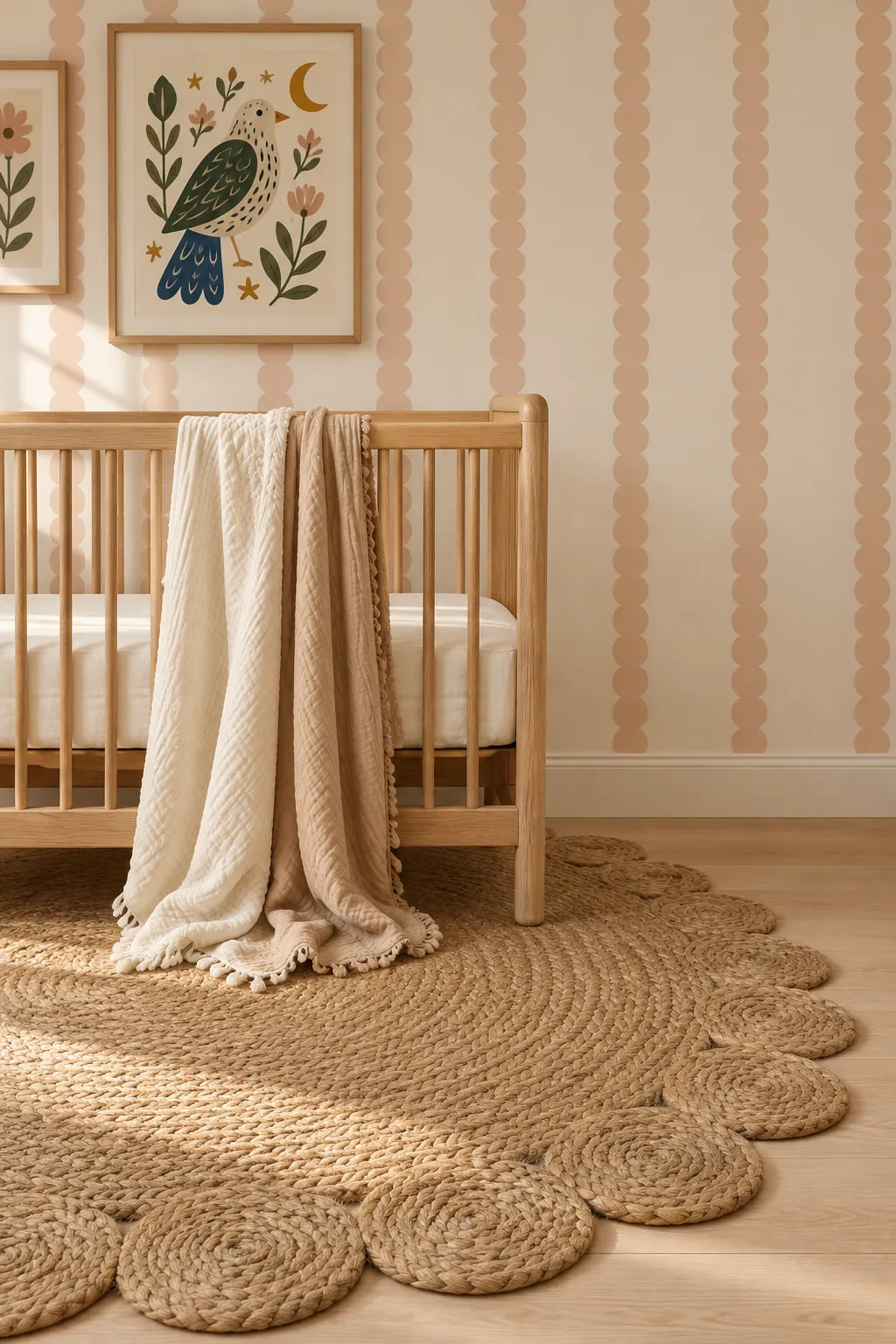

Blush scallops bring delicate curves to the walls, while a jute rug adds an earthy surface underfoot. The rug’s natural texture balances the decorative pattern and gives the pale palette more substance.
Choose a simple rug shape that lets the scalloped edges remain the main motif. Because jute can feel coarse, use a separate soft, washable play mat for floor time.
Coordinate Blue Stripes with a Gray Armchair and Crib
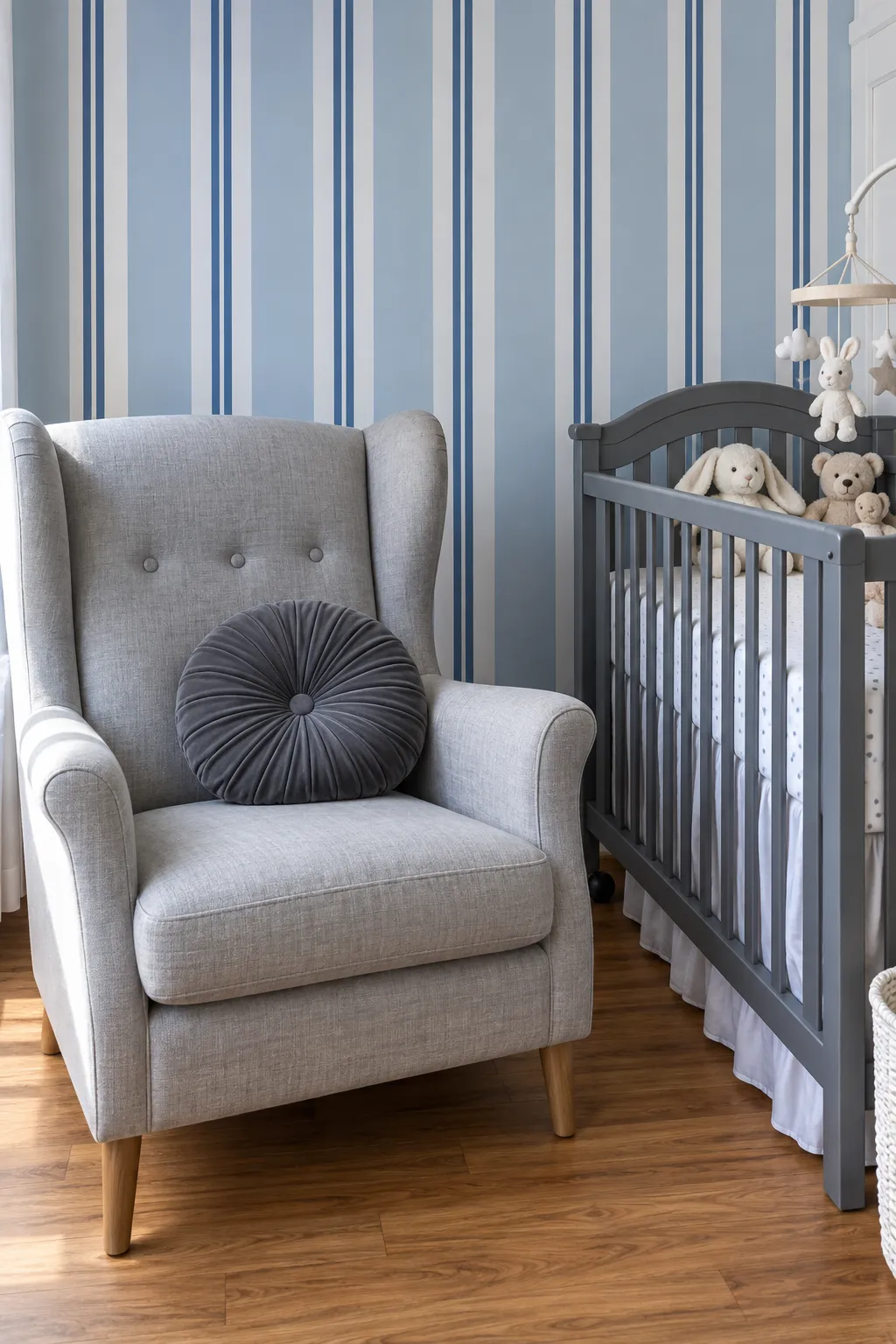

Blue stripes work well with a gray armchair and crib when the undertones feel compatible. Blue-leaning grays create a close color relationship, while soft neutral grays leave more attention on the wall.
Use different textures within the gray palette to keep the furniture from feeling overly matched. A woven chair fabric, smooth crib finish, and cream rug give each element its own presence.
Style Dusty Blue Stripes with a White Crib and Vintage Accents
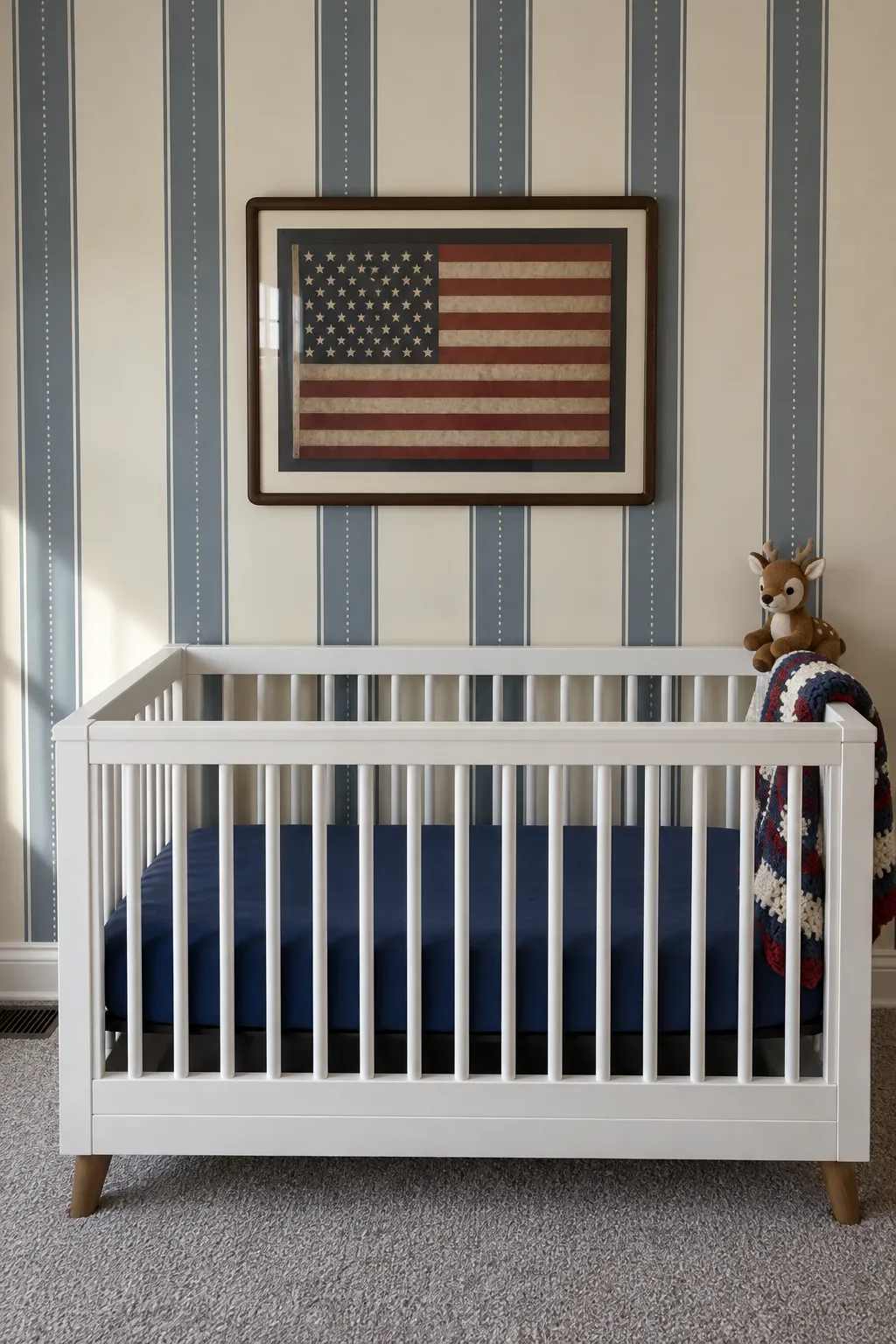

Dusty blue stripes and a white crib create a gentle backdrop for vintage accents. A weathered picture frame or an antique-style dresser introduces character through finish and shape.
Keep the vintage details selective so the room feels collected without becoming crowded. Repeat a warm wood or aged brass finish in a couple of places, and display decorative objects away from the crib.
Add a Leopard Wall Hanging to Beige Wavy Stripes
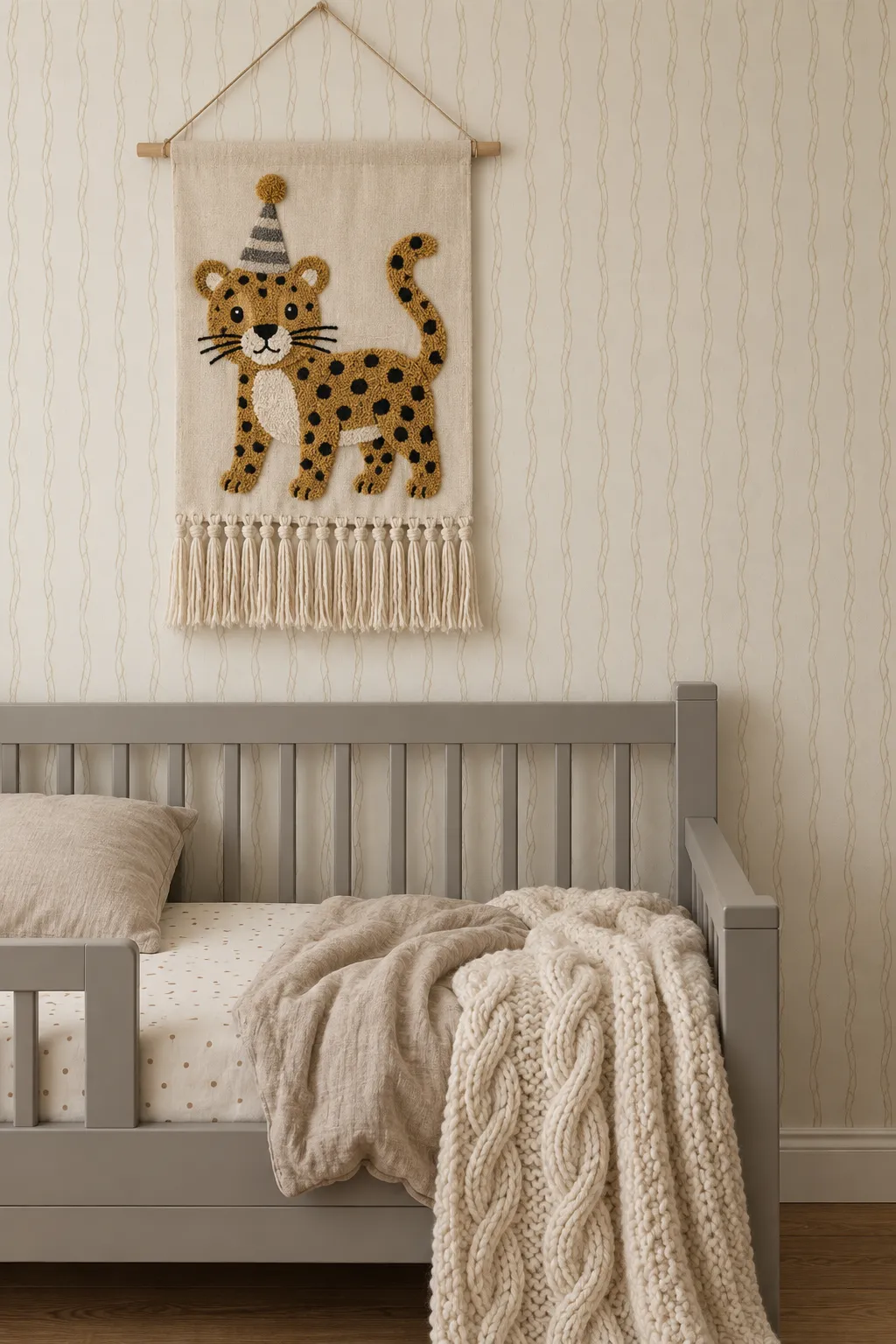

Beige wavy stripes make a gentle backdrop for a leopard wall hanging. The animal motif adds a focal point, while the curved lines keep the wall from feeling too formal.
Choose a hanging with tan, ochre, or dark brown details to connect it to the wallpaper. Keep nearby accessories simple so the leopard silhouette stays easy to pick out.
Set a Vintage Wardrobe against Sage Scalloped Stripes
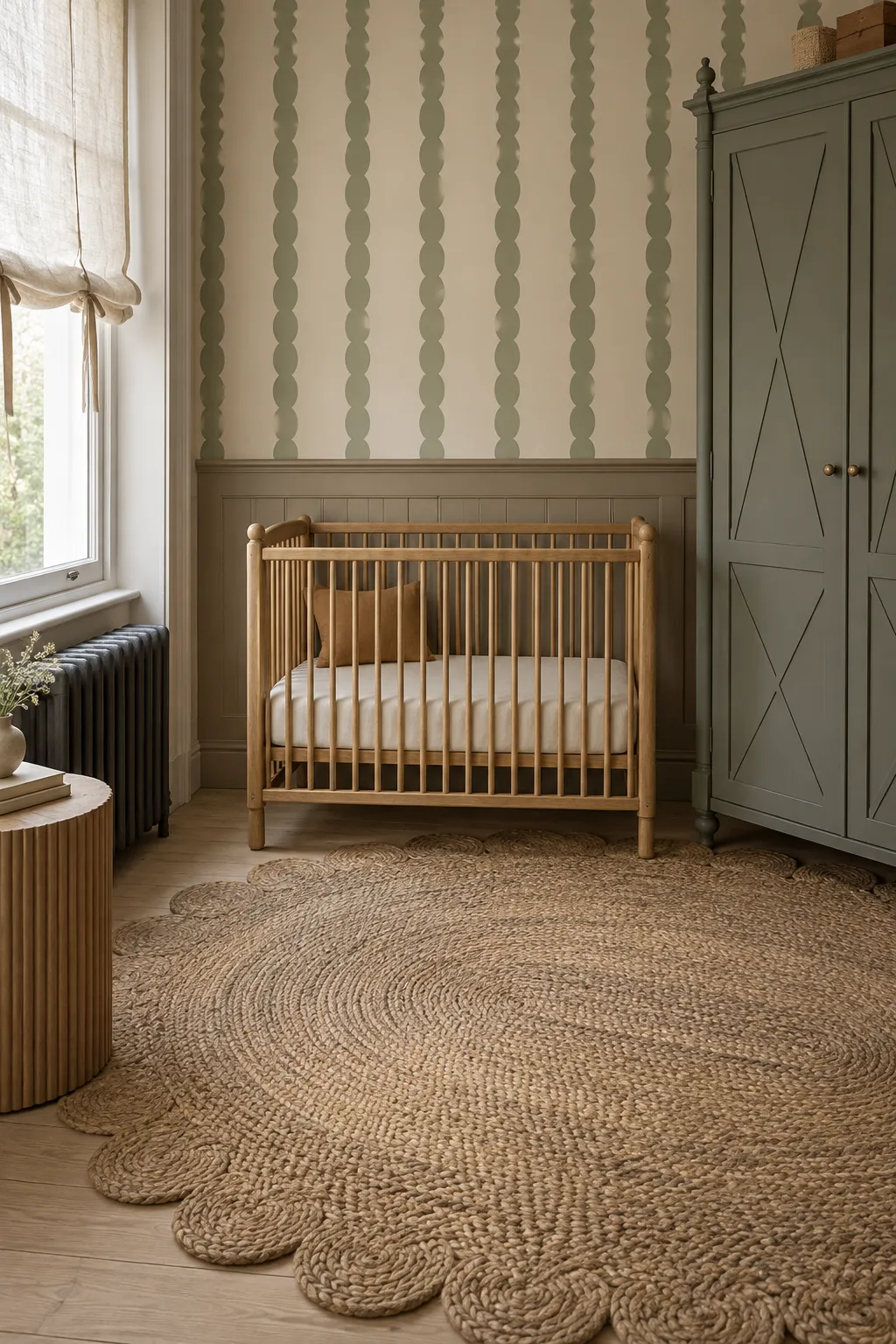

A vintage wardrobe gives sage scalloped stripes a substantial focal point. The wallpaper’s soft curves balance the furniture’s straight edges, especially when the wardrobe has a warm wood finish.
Let the wardrobe’s patina guide smaller details such as picture frames and storage baskets. Leave some striped wall visible on either side so the furniture’s outline and the scalloped pattern each have room to register.
Pair Blue and White Stripes with Botanical Art and a Wood Crib
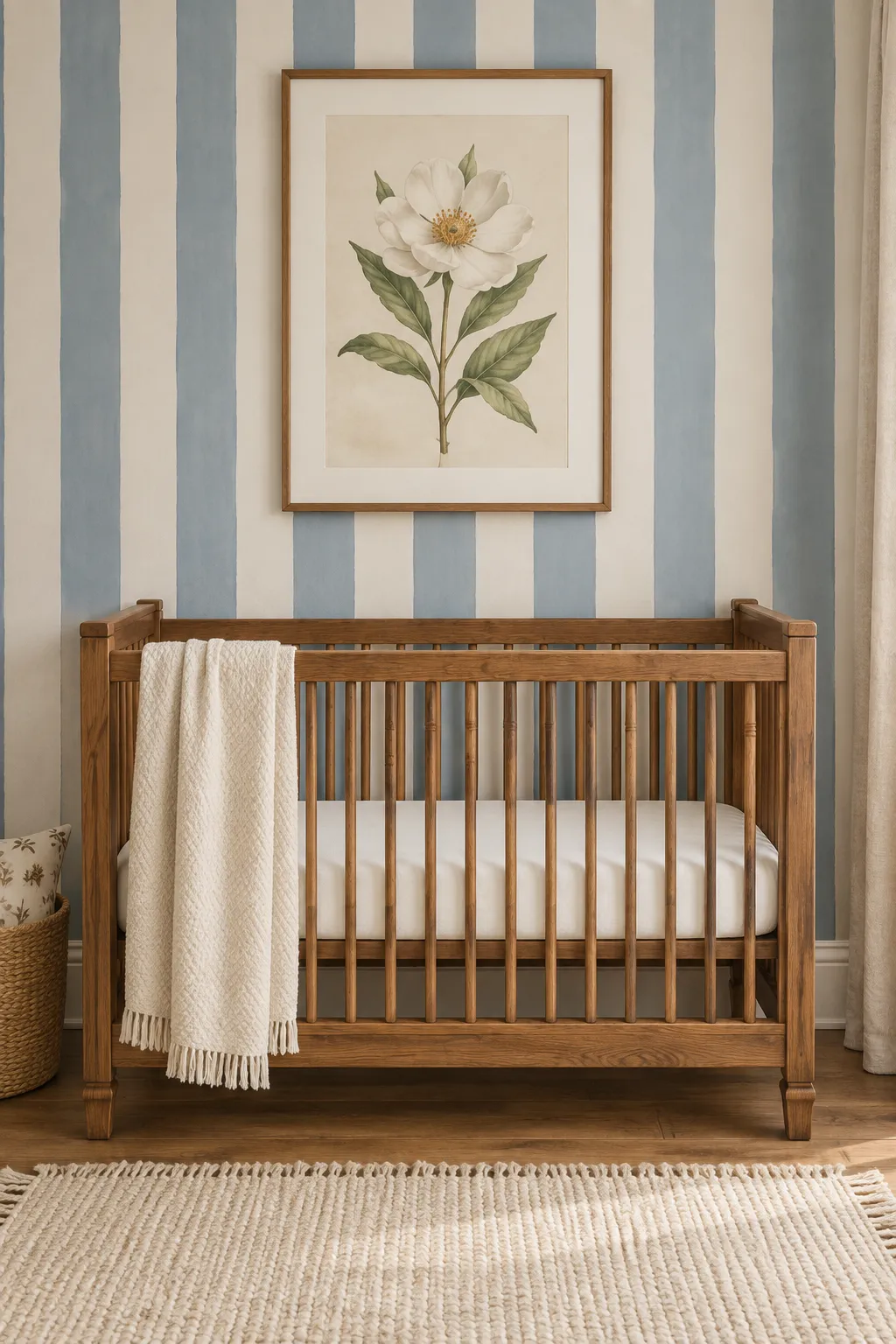

Blue and white stripes bring crisp structure to a nursery, while botanical art adds softer, organic shapes. A wood crib warms the palette and gives the blue a natural companion.
Choose botanical prints with restrained greens and plenty of pale background. Matching wood frames can tie the artwork to the crib without introducing another strong color.
Choose Subtle Neutral Pinstripes for a Quiet Wood Crib Backdrop
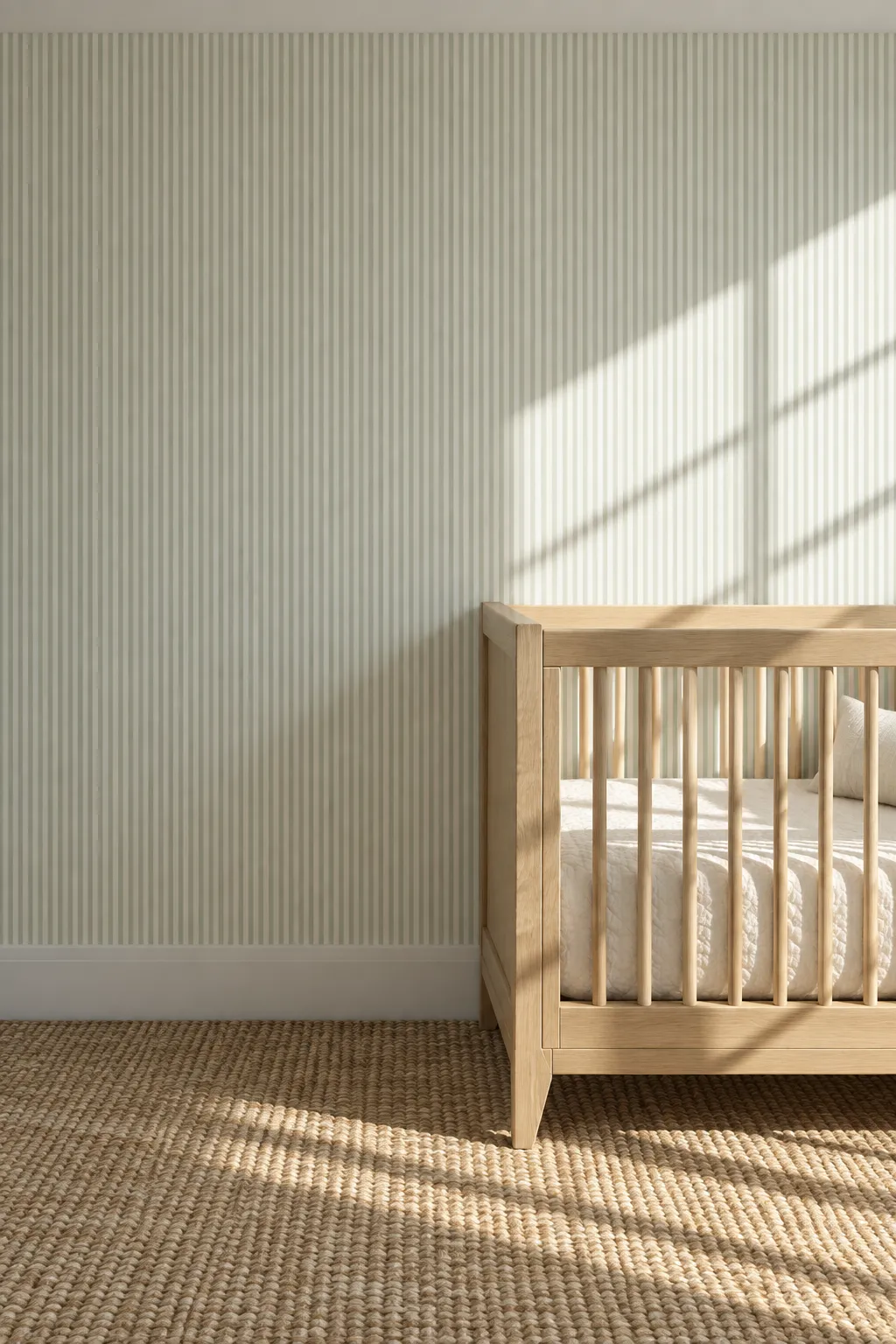

Fine neutral pinstripes add detail without demanding much attention. Behind a wood crib, low-contrast stripes allow the grain and shape of the furniture to become the main features.
Look for a stripe only slightly darker than its background, such as oatmeal on cream. Repeat those pale tones in curtains and a rug to preserve the quiet effect across the room.
Mix Blue Scallops with Oak Furniture and a Checkered Rug
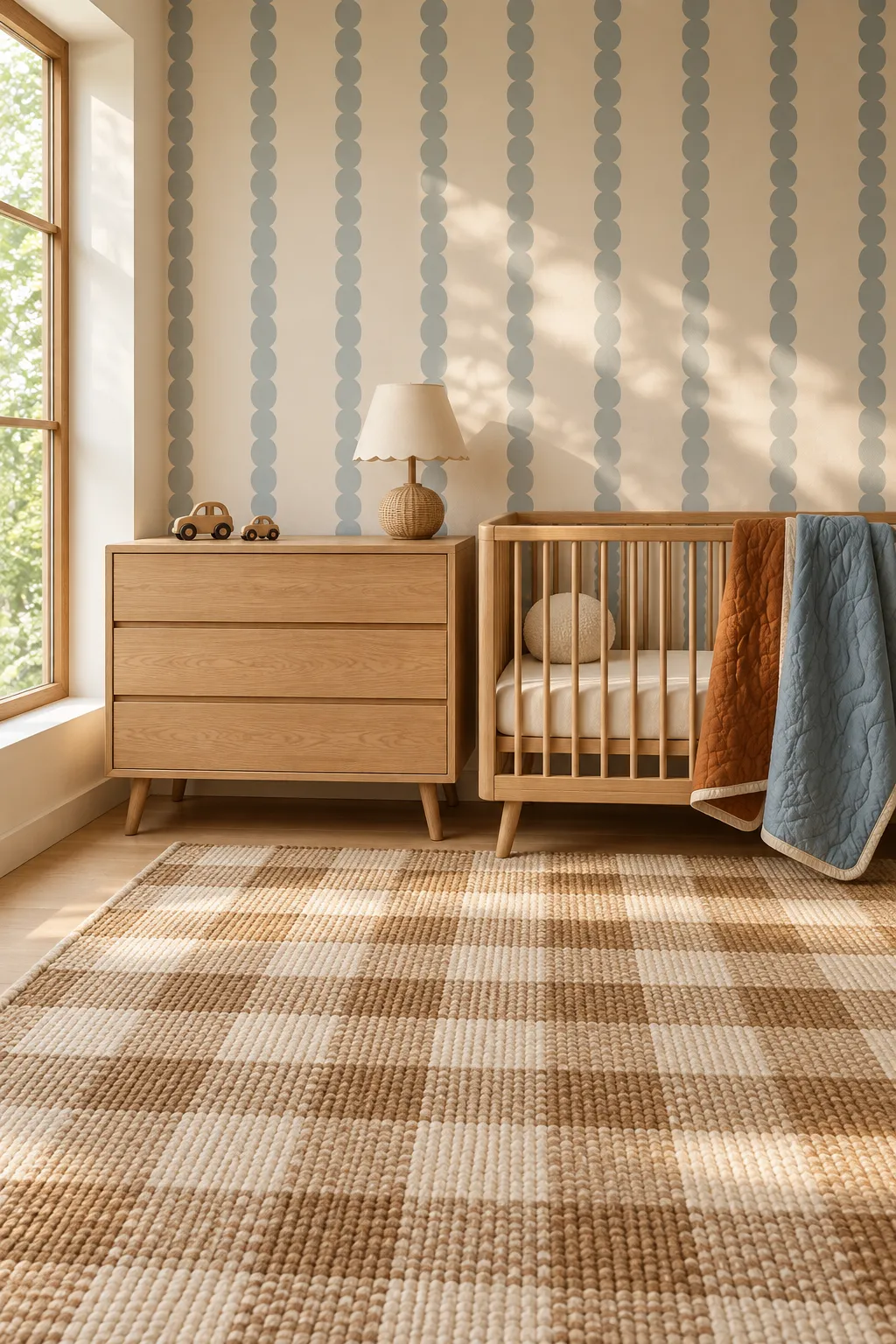

Blue scalloped stripes and a checkered rug can share a room when their proportions differ. Pair a finer wall pattern with larger, simpler checks so the two surfaces remain visually distinct.
Oak furniture adds warmth between the blue walls and the patterned floor. Use plain upholstery and curtains to give the eye a pause from the repeating shapes.
Soften Gray Scalloped Stripes with Natural Textures
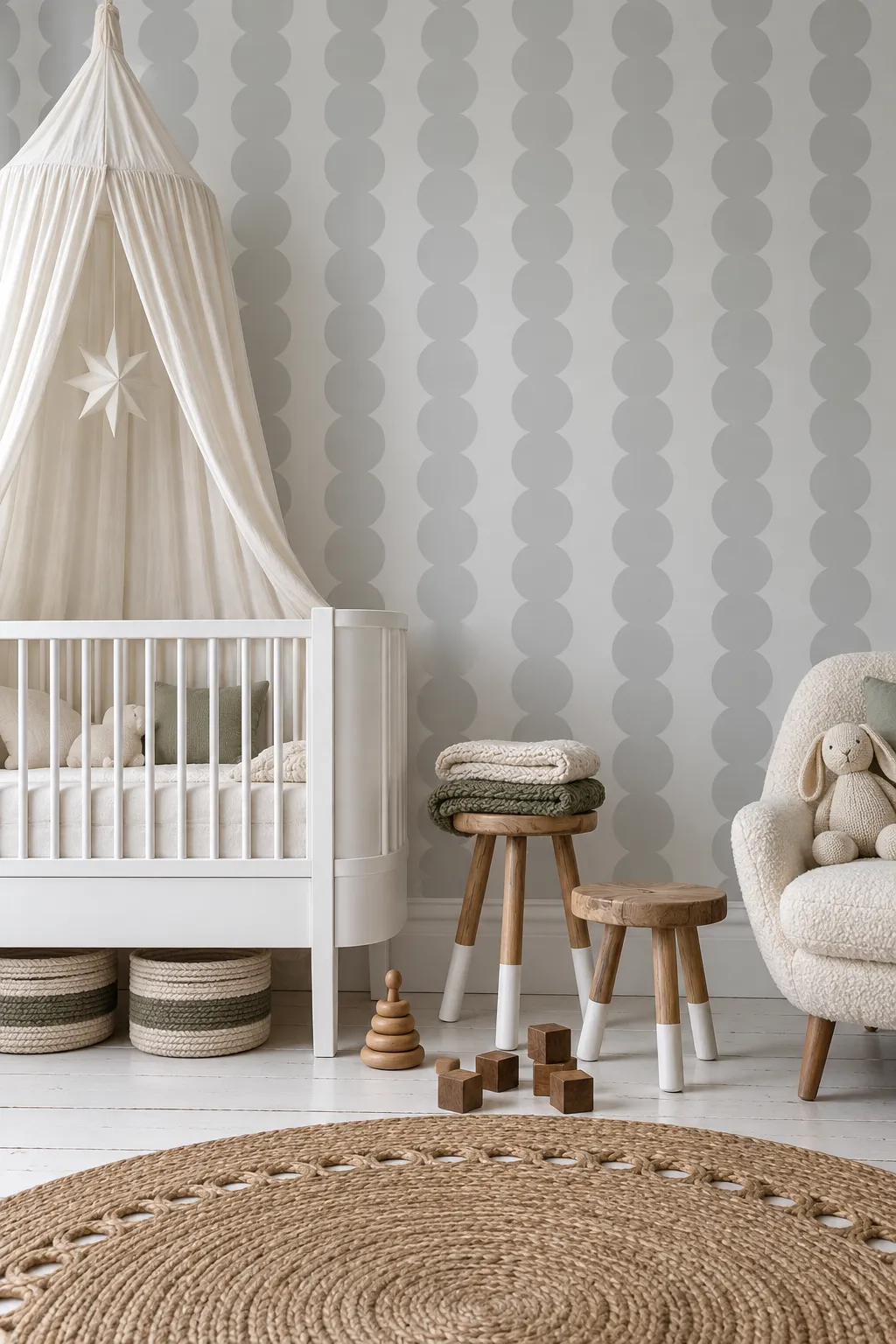

Gray scalloped stripes have a gentle outline, but the palette can still feel cool. Natural textures add warmth through wood grain, woven baskets, and linen-look curtains.
Keep these materials close in tone for a cohesive result. Pale oak and straw-colored accents offer enough variation without requiring another wall pattern or a bold accent color.
Make Multicolor Scalloped Stripes Playful with Animal Art
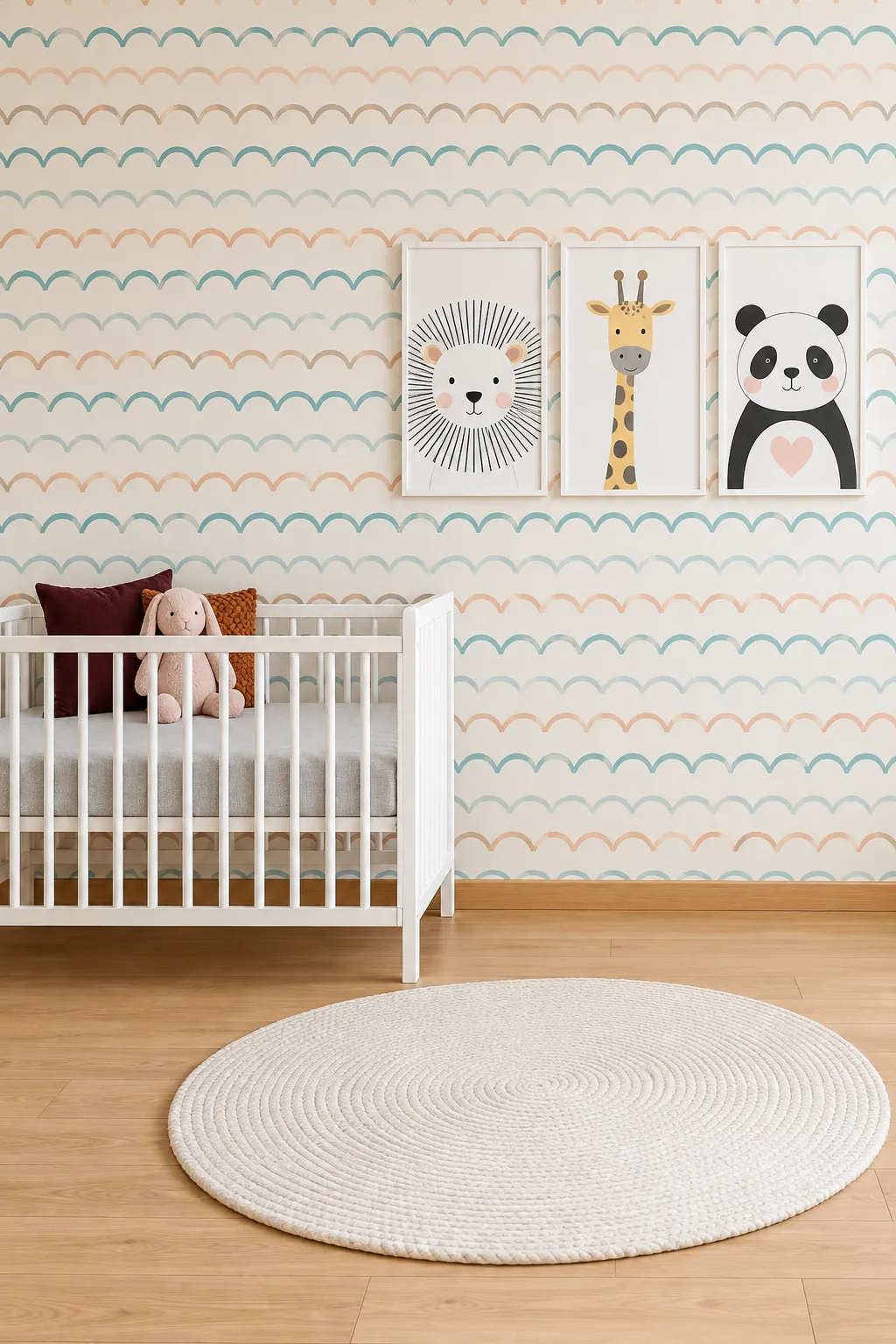

Multicolor scalloped stripes already bring plenty of movement, so choose animal art with clear shapes and uncluttered backgrounds. A few cheerful illustrations can build on the playful mood without crowding the wall.
Pull one or two wallpaper colors into the artwork, then use simple frames to hold the grouping together. Plain furniture and curtains help the colorful wall remain the room’s main feature.
Complement Vintage Blue Stripes with Wicker Storage
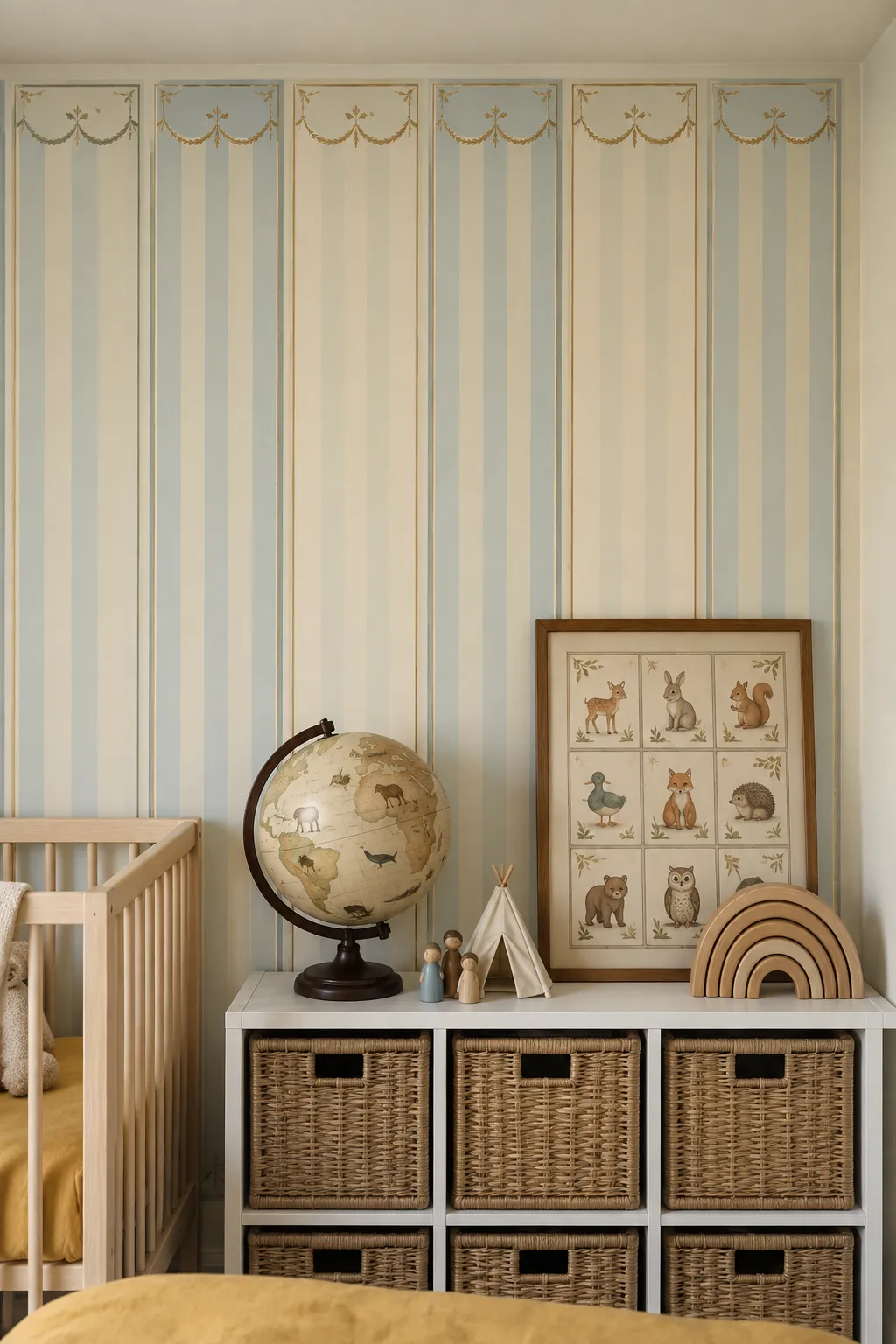

Wicker storage complements vintage blue stripes with warm color and visible texture. Its woven surface suits the relaxed, collected feel of the wallpaper while adding useful space for everyday nursery supplies.
Repeat a consistent wicker tone across a hamper and smaller baskets. Mixing a few basket shapes keeps the arrangement casual, while similar finishes prevent the storage from looking scattered.
Anchor Sage Scalloped Wallpaper with a Rust Rug
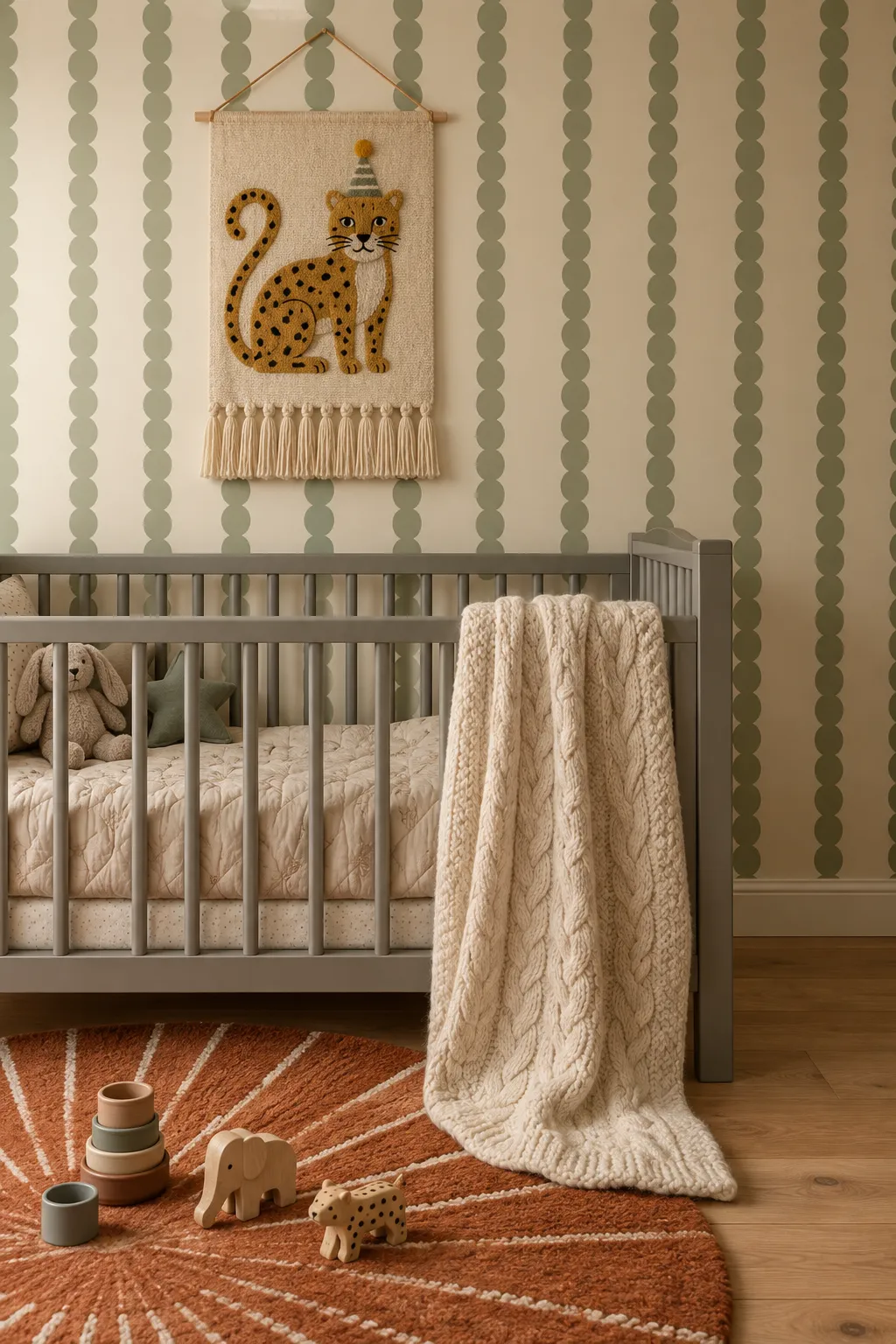

A rust rug gives pale sage scalloped wallpaper a warm, grounded companion. The deeper floor color adds weight to the room while letting the softer green remain airy.
Choose a muted rust shade with earthy undertones, then echo it sparingly in a print or lampshade. A solid or lightly textured rug keeps attention on the scalloped wall pattern.
Use Blue Scalloped Stripes as a Backdrop for Safari Decor
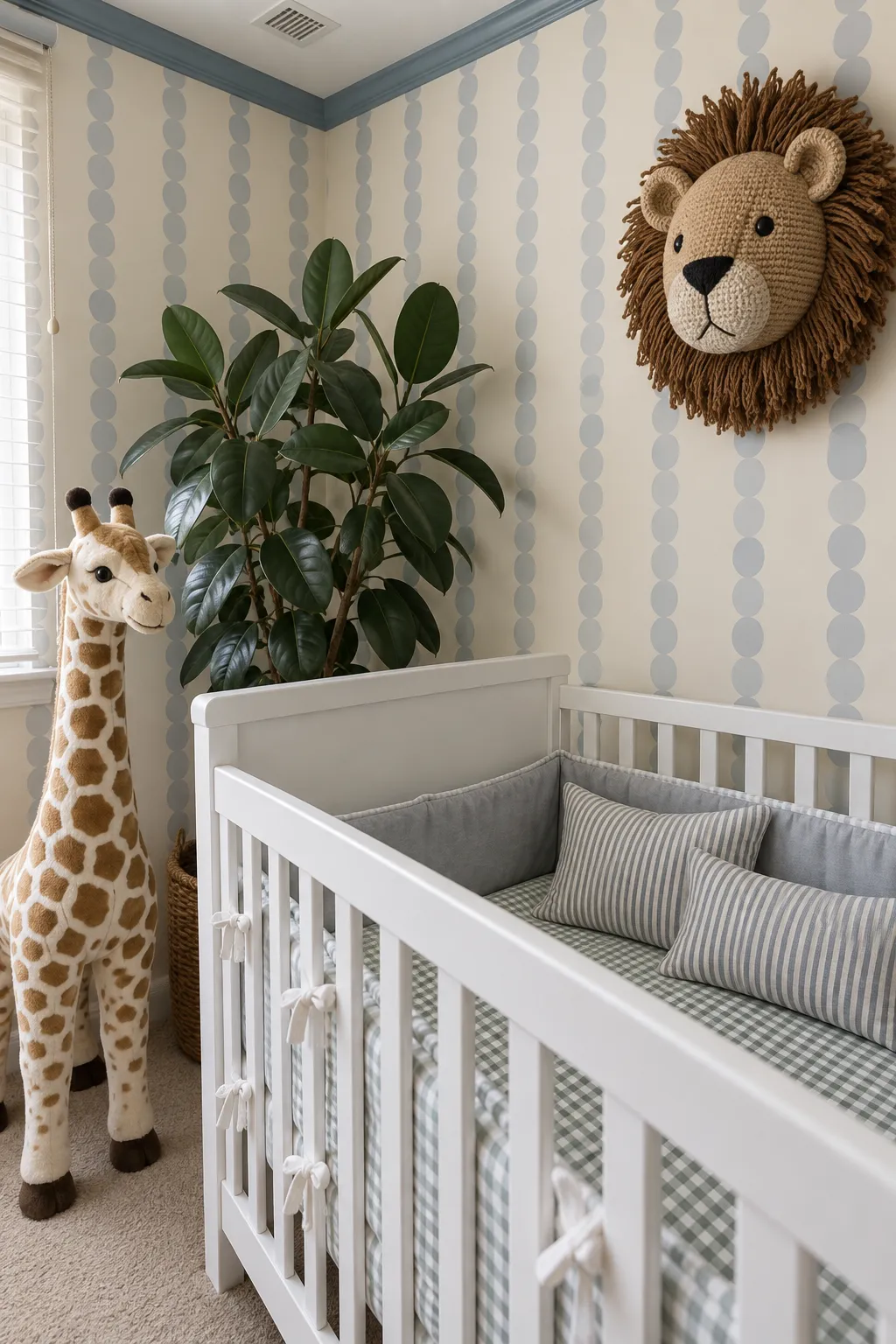

Blue scalloped stripes offer a fresh setting for safari-inspired decor. Sandy neutrals, warm wood, and animal illustrations sit comfortably against the blue without requiring a second themed wall treatment.
Build the theme around a small group of animal motifs, such as coordinated prints or a single sculptural accent on a dresser. Repeat their tan and brown tones through storage to connect the decor to the rest of the room.
Give Striped Walls Vintage Charm with an Ivory Crib and Rocking Horse
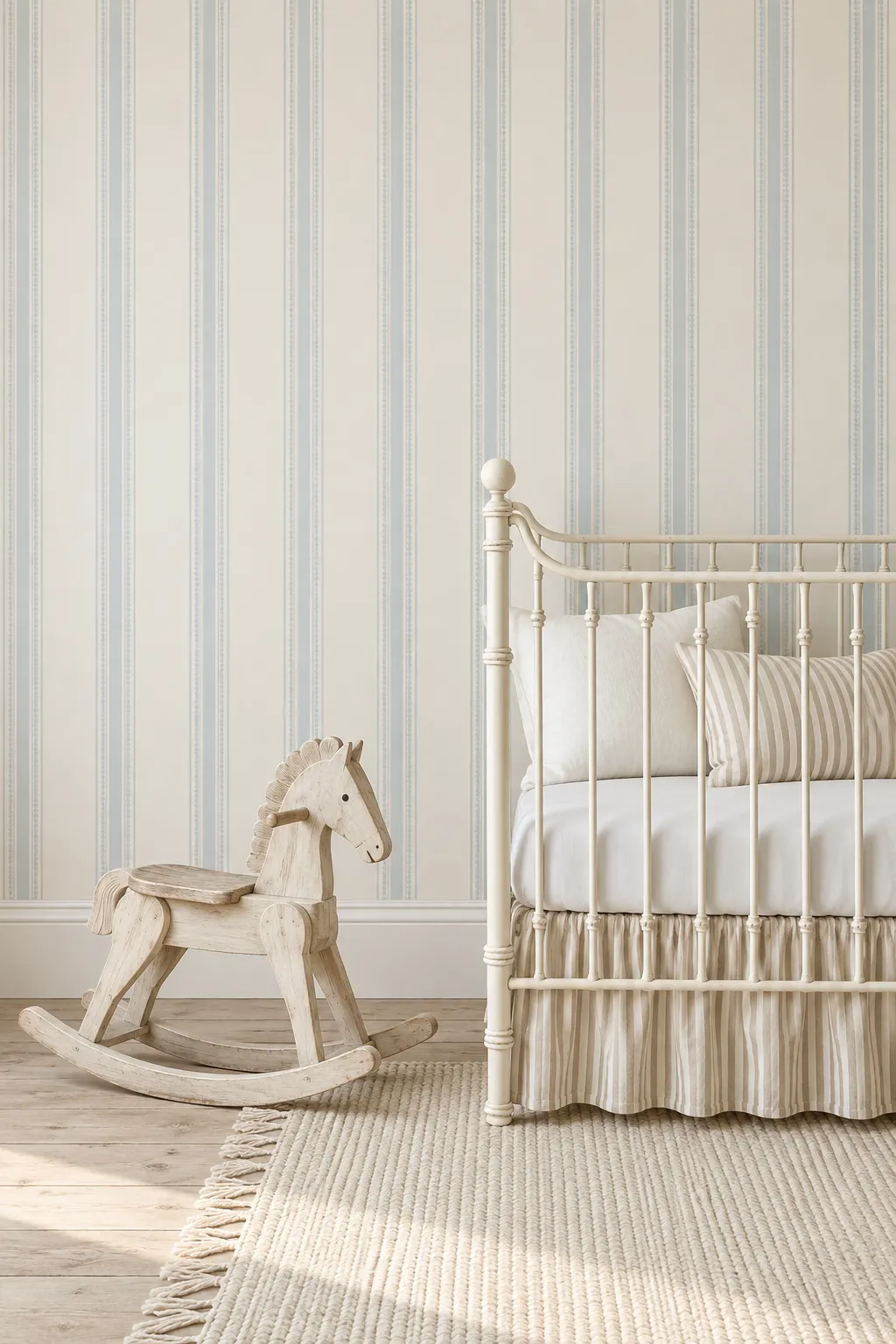

An ivory crib lends striped walls a softer, vintage feel. Its creamy finish pairs naturally with a rocking horse, creating a room shaped by familiar furniture forms and a restrained palette.
Let ivory and warm wood carry the scheme through picture frames and a dresser. Keep additional decorative pieces sparse so the crib and rocking horse retain their individual character.
Build an Ocean Theme around Sage Wavy Stripes
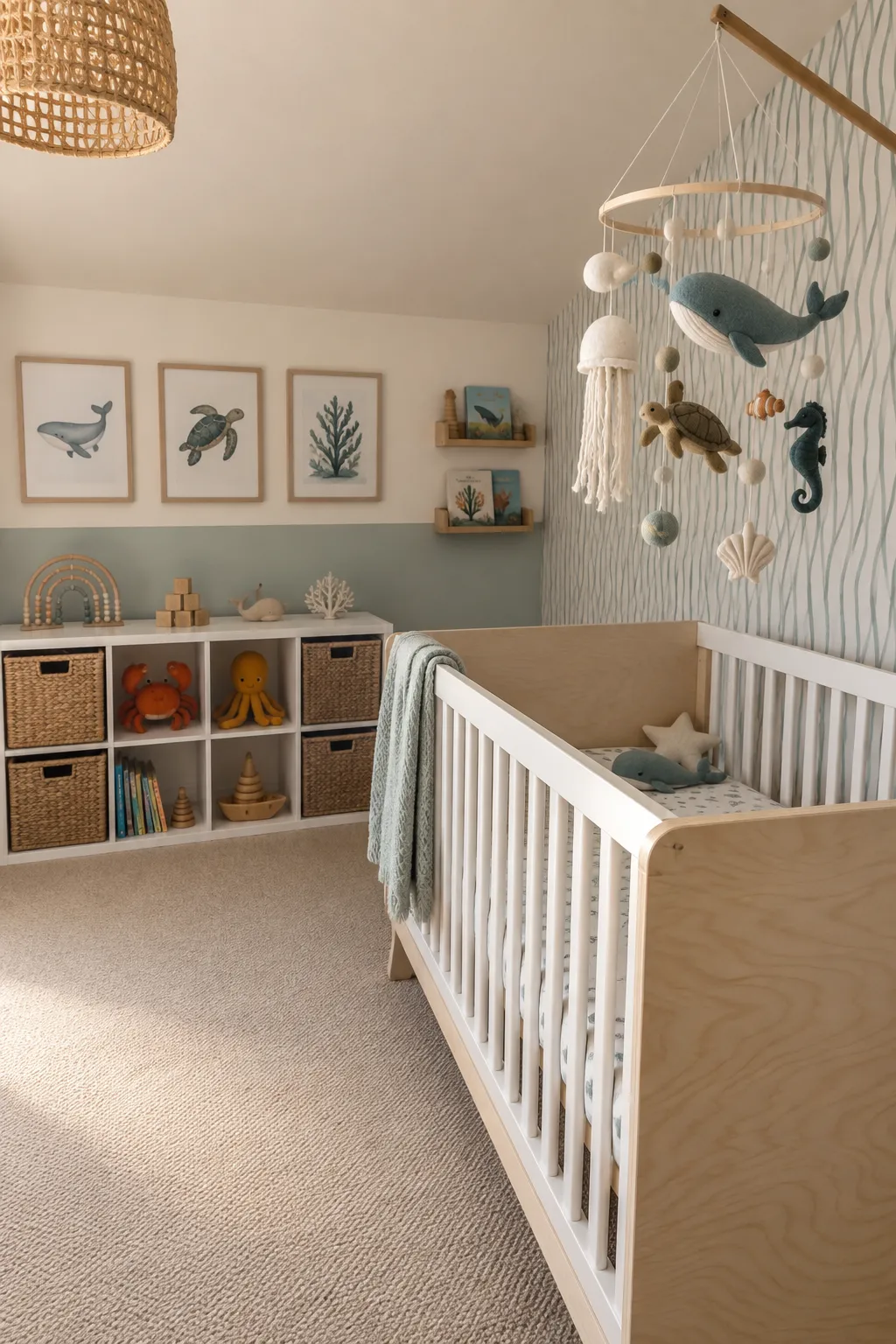

Sage wavy stripes suggest gentle water movement, making them a useful starting point for an ocean-inspired nursery. Pair them with sandy beige and soft ivory for a subdued coastal palette.
Introduce the theme through a few ocean details, such as sea-life illustrations or a shell-shaped accent. Simple wood furniture leaves space for the wavy wallpaper to provide most of the room’s movement.
Let Scalloped Blue Stripes Frame a Natural Wood Crib
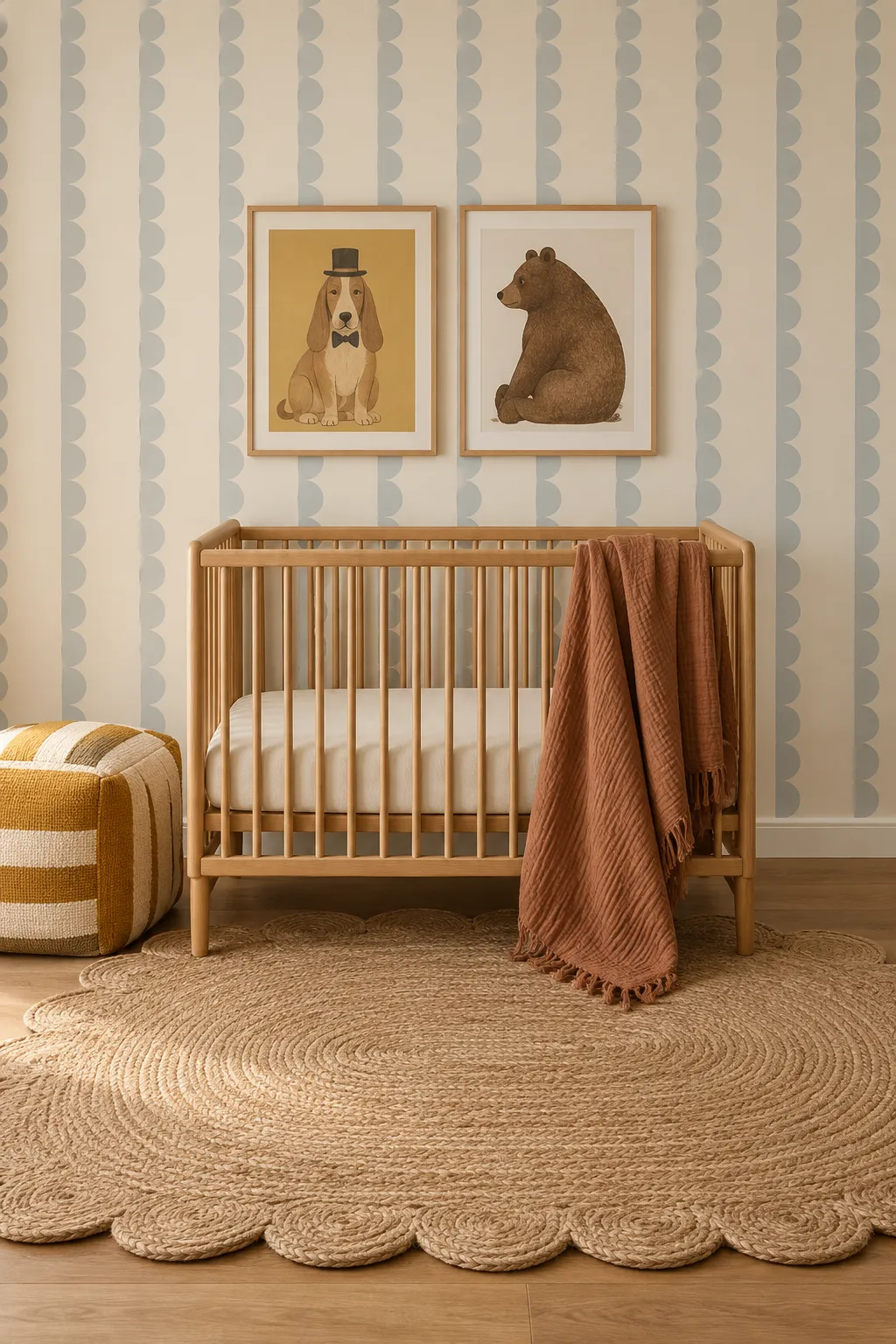

Scalloped blue stripes give a natural wood crib a distinct backdrop without needing an elaborate wall display. The repeated vertical lines draw attention to the crib’s placement, while their curved edges soften the geometry.
Position the crib with visible wallpaper on both sides to make the arrangement feel balanced. Keep neighboring pieces visually light so the blue pattern and warm wood remain the focus.
Define a Striped Changing Area with Vintage Airplane Details
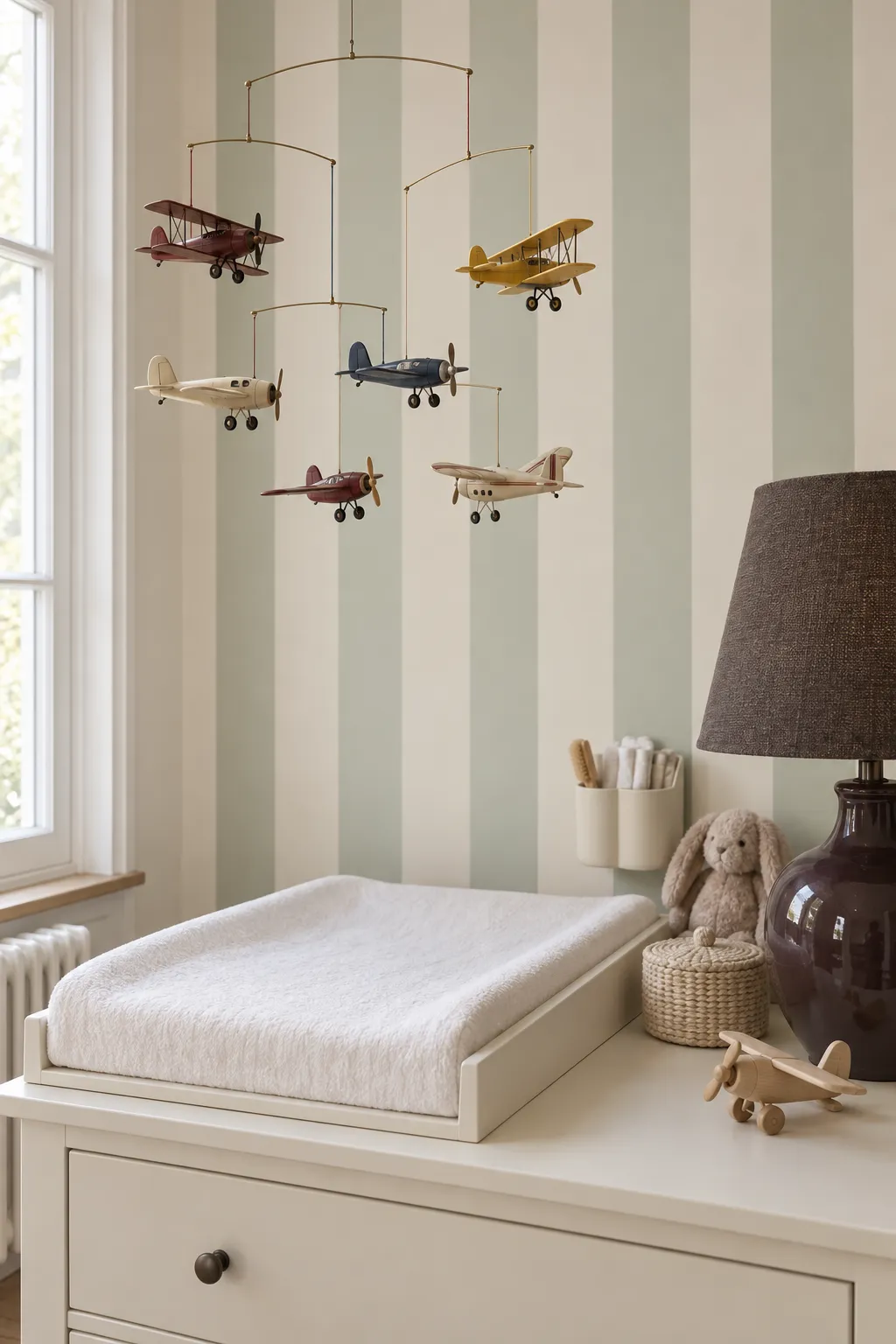

A striped wall can help define the changing area as its own part of the nursery. Vintage airplane illustrations bring a clear decorative theme to the dresser or changing-table setting.
Choose one main airplane print and draw a muted accent color from it for storage containers. Keep the changing surface organized and place decorative objects away from the working area.
Combine Terracotta Scallops and Sage in an Attic Nursery
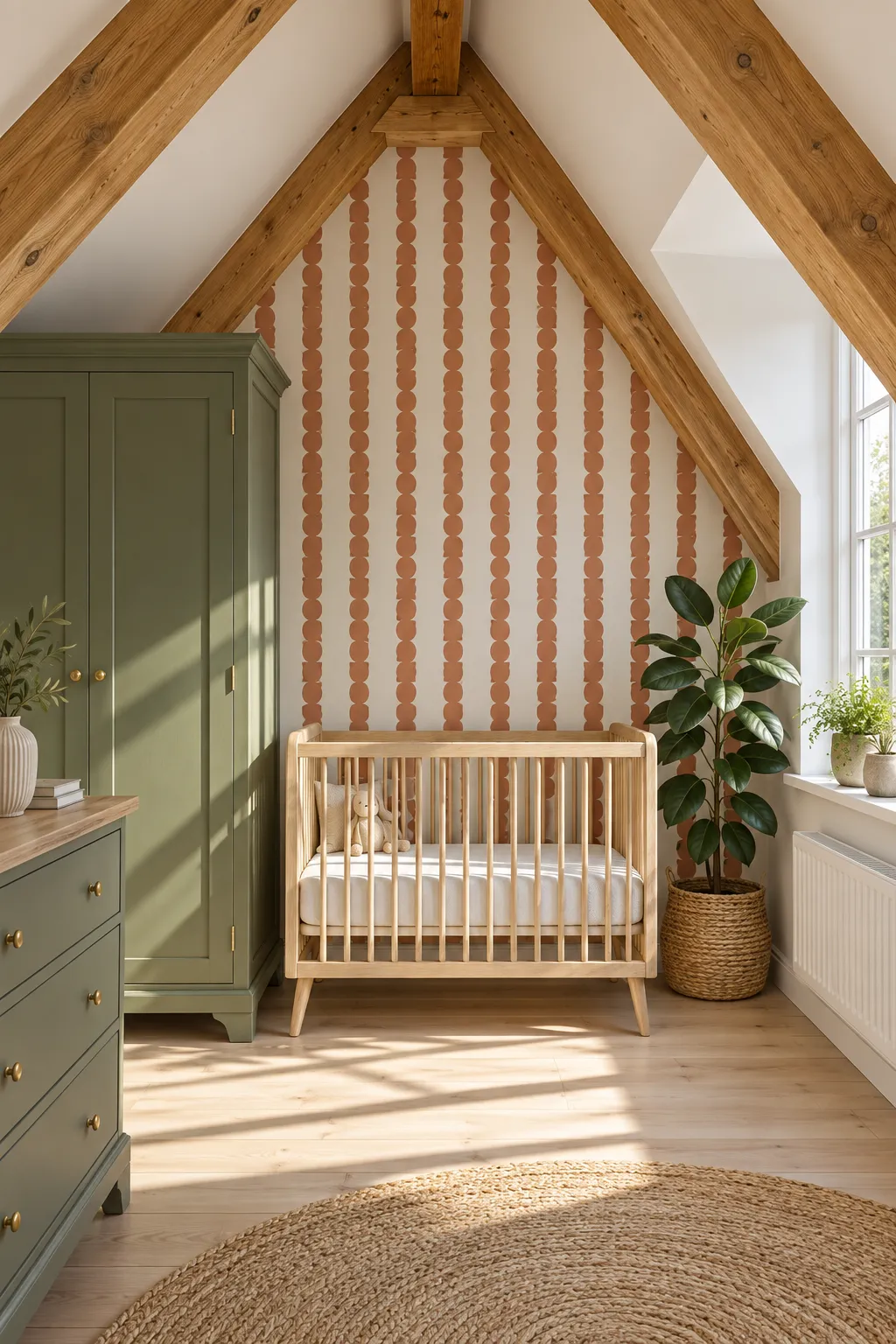

Terracotta scallops bring warmth to an attic nursery, while sage offers a softer companion color. Use the patterned wallpaper on a taller wall so the scalloped repeat has room to show beneath the angled ceiling.
Keep sloping surfaces light and carry sage through larger plain elements, such as a dresser or curtains. This gives the room a clear color relationship without asking every angled surface to carry a pattern.
Keep Beige Stripes Simple with a Natural Wood Crib
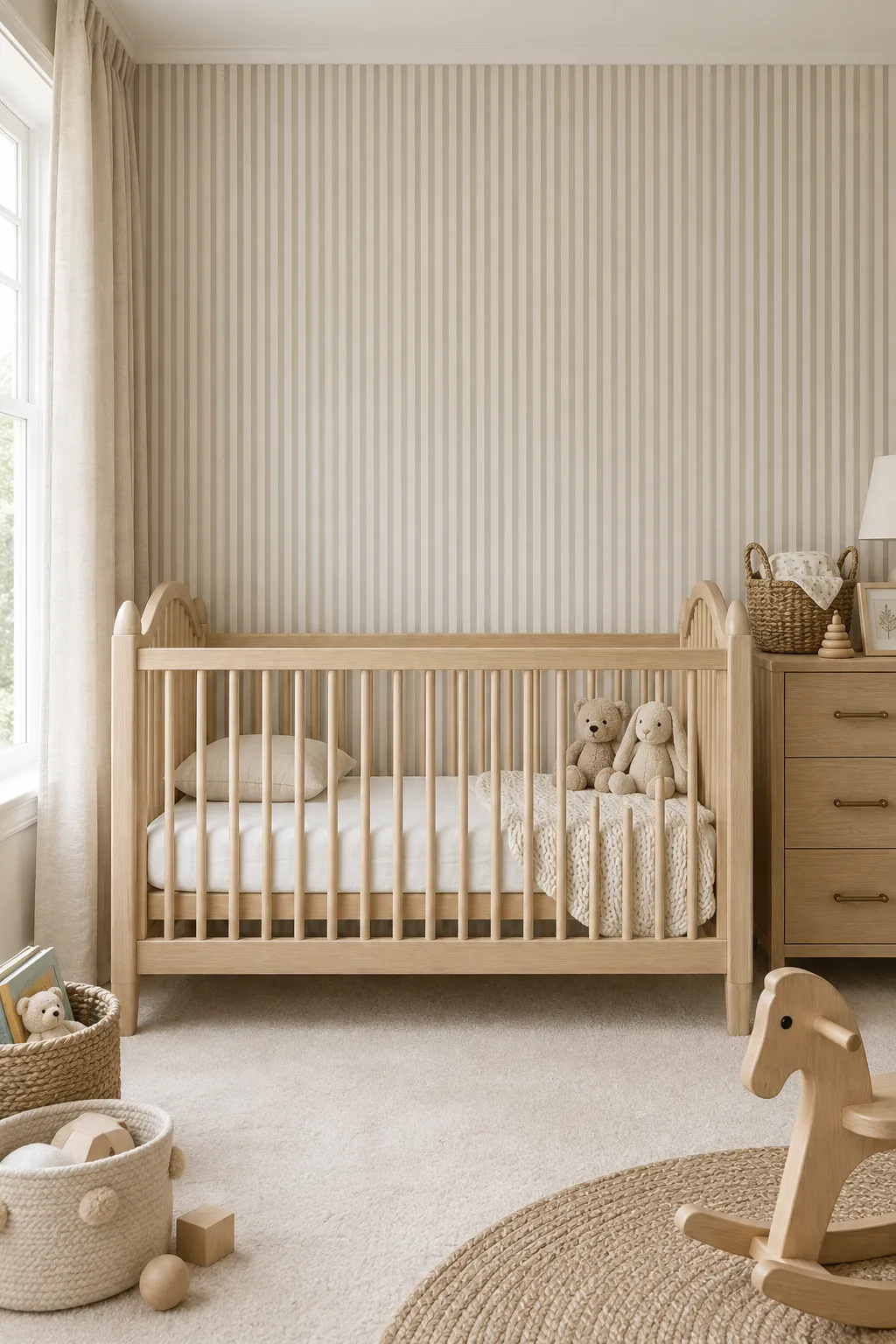

Beige stripes give a nursery gentle structure, while a natural wood crib adds warmth without introducing another strong color. Choose a soft cream background to keep the contrast subtle.
Let the wood grain provide most of the texture, then keep nearby storage and textiles simple. A restrained palette helps the striped wall feel like a quiet backdrop.
Bring Warm Contrast to Sage Stripes with Rust Curtains
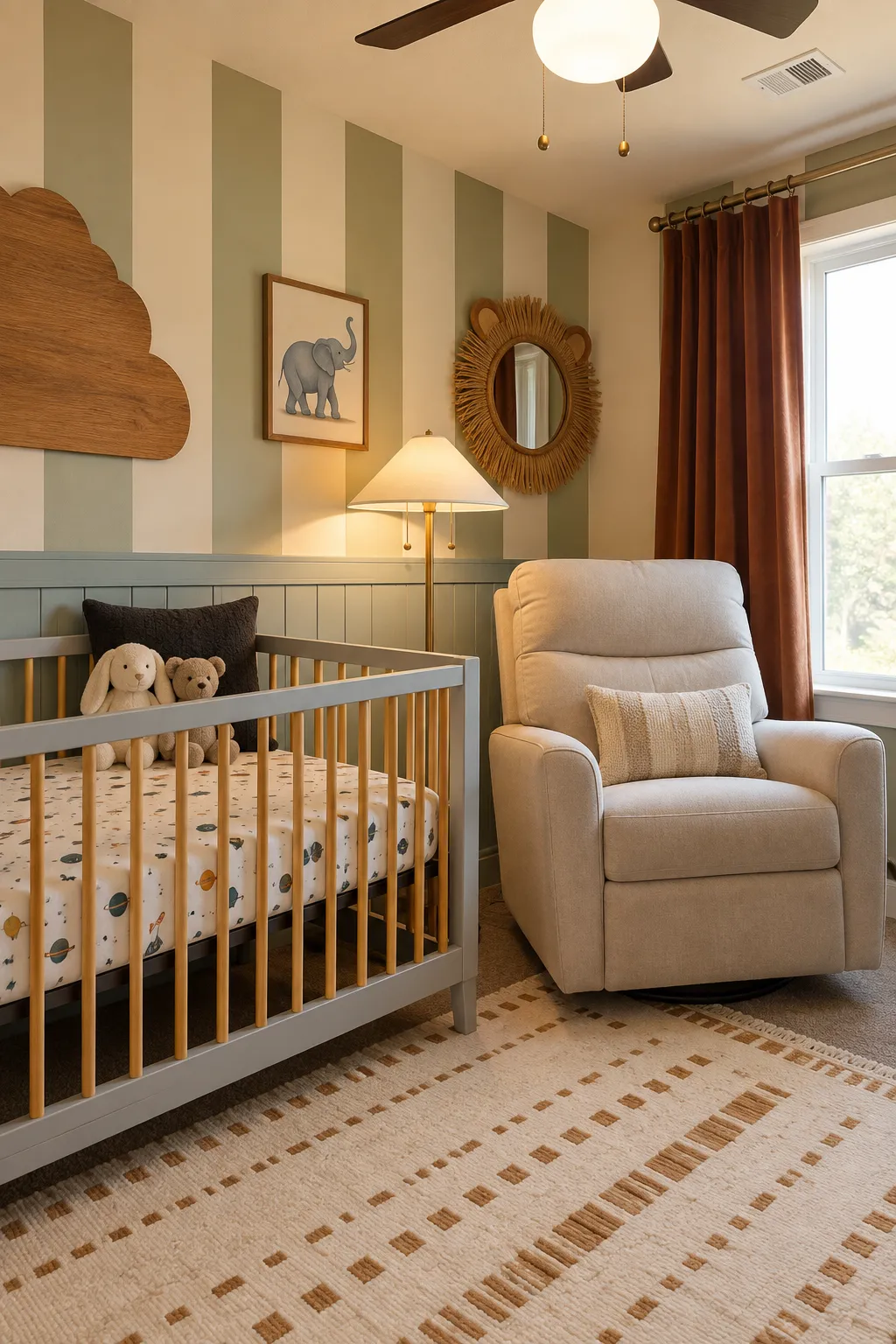

Sage stripes create a muted backdrop that gives rust curtains room to stand out. The earthy red tones bring warmth to the green without needing a brighter accent color.
Choose a plain curtain fabric so the stripes remain easy to read. Repeat the rust shade in one small decorative detail to connect the window treatment with the rest of the room.
Make Terracotta Scalloped Stripes the Main Wall Feature
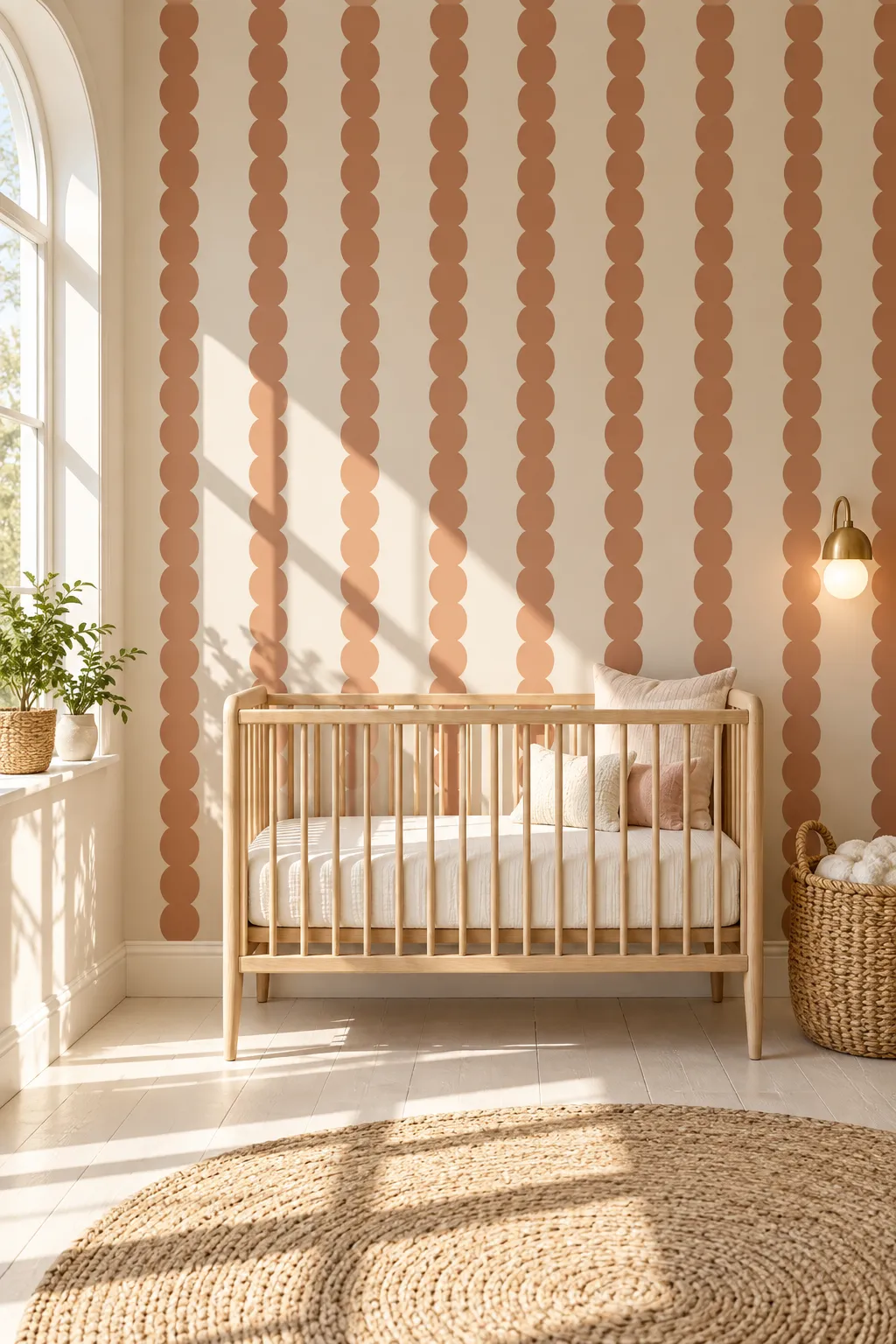

Terracotta scalloped stripes combine warm color with a playful, curved outline. Give them one main wall so the pattern has a clear place to draw the eye.
Keep adjacent walls and larger furnishings understated with cream, pale wood, or soft beige. Sparse wall decor leaves the scalloped edges visible and lets their shape carry the design.
Pair Ochre Scallops with a Cozy Checked Chair
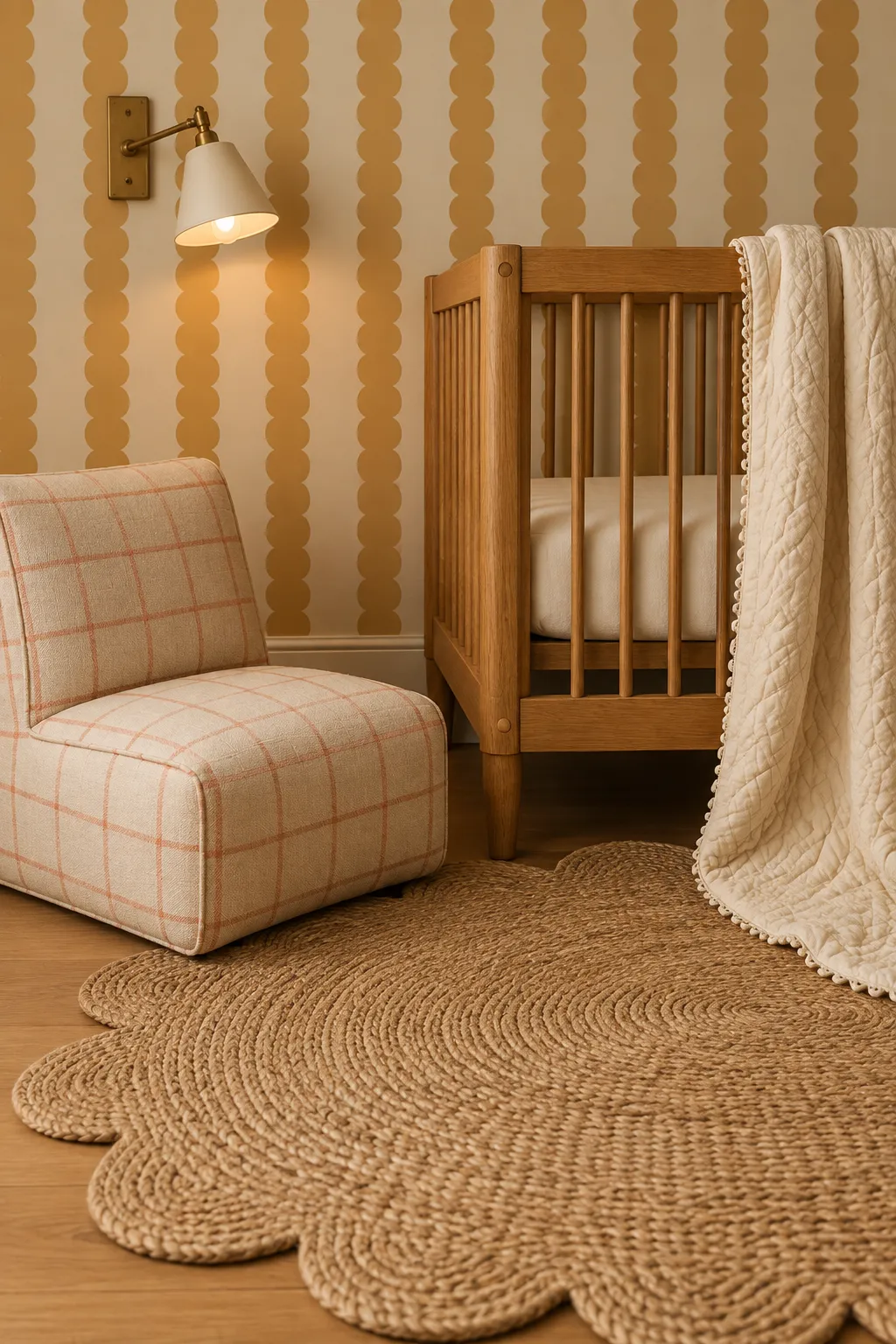

Ochre scallops and a checked chair make a lively pairing because the curves soften the grid of the upholstery. Tie the two patterns together through shared warm tones, such as golden yellow, cream, and tan.
If the wall pattern is broad, choose a smaller check for the chair to give each pattern its own scale. A plain cushion or throw adds softness without making the corner feel busy.
Brighten a White Bed Backdrop with Rainbow Watercolor Lines
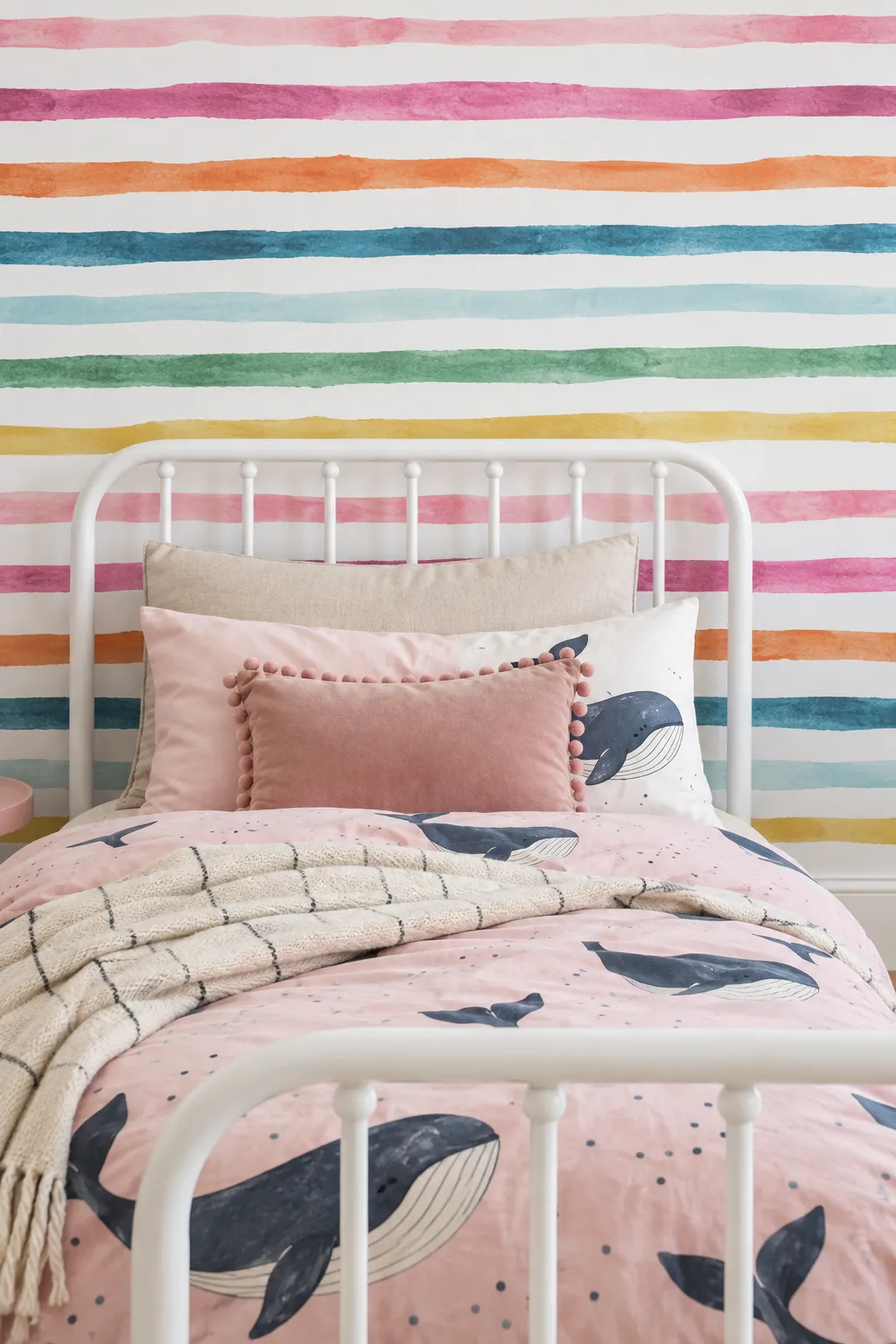

Rainbow watercolor lines bring gentle color to the wall behind a white bed. Their washed edges give the stripes a softer feel, while the white bed keeps the palette airy.
Choose one or two colors from the lines for bedding accents instead of repeating every shade. Leave some plain white fabric visible so the watercolor effect remains the focus.