19 Baby Nursery Wallpaper Ideas for a Cozy Newborn Room
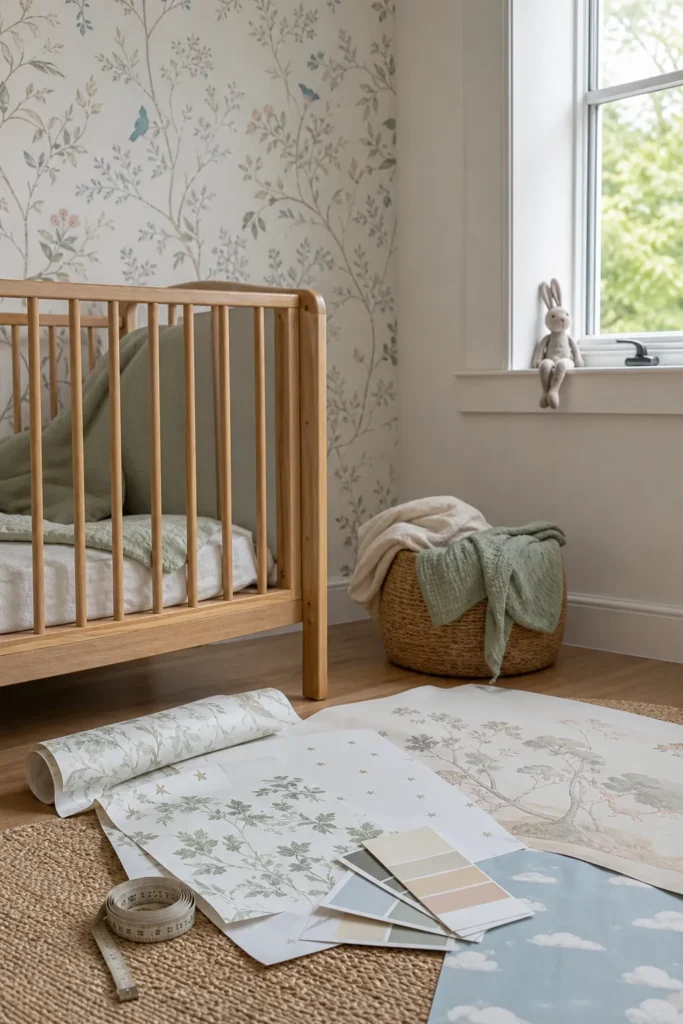
Baby nursery wallpaper can do more than make a newborn room pretty. The right pattern can define the crib wall, soften a practical changing corner, and give the room a clear mood before you buy extra decor. The hard part is choosing a print that still feels calm at 2 a.m., works with safe nursery decisions, and can grow past the first baby stage.
The ideas below focus on real parent concerns that come up again and again: whether peel and stick is worth it, how much pattern is too much, what works on textured walls, how to make a nursery feature wall feel finished, and how to choose wallpaper for baby room walls without creating a space that feels busy or hard to update.
Before you choose baby nursery wallpaper
Start with the wall, not the print. A smooth, clean, fully dry wall gives removable wallpaper the best chance to stay flat. If the wall is textured, test a sample for several days before ordering panels for a whole nursery wallpaper accent wall. For a crib wall, check every edge carefully after installation and avoid loose corners or curling seams within reach as your child grows.
For materials, look for low-VOC or VOC-free printing, PVC-free options when available, and clear installation guidance from the maker. Ventilate the room well after installing wallpaper, paint, adhesive, or new furniture. A beautiful newborn room should feel peaceful, but it also needs to be practical enough for real sleep, feeding, changing, and cleaning.
19 baby nursery wallpaper ideas
1. Start with a soft woodland nursery mural
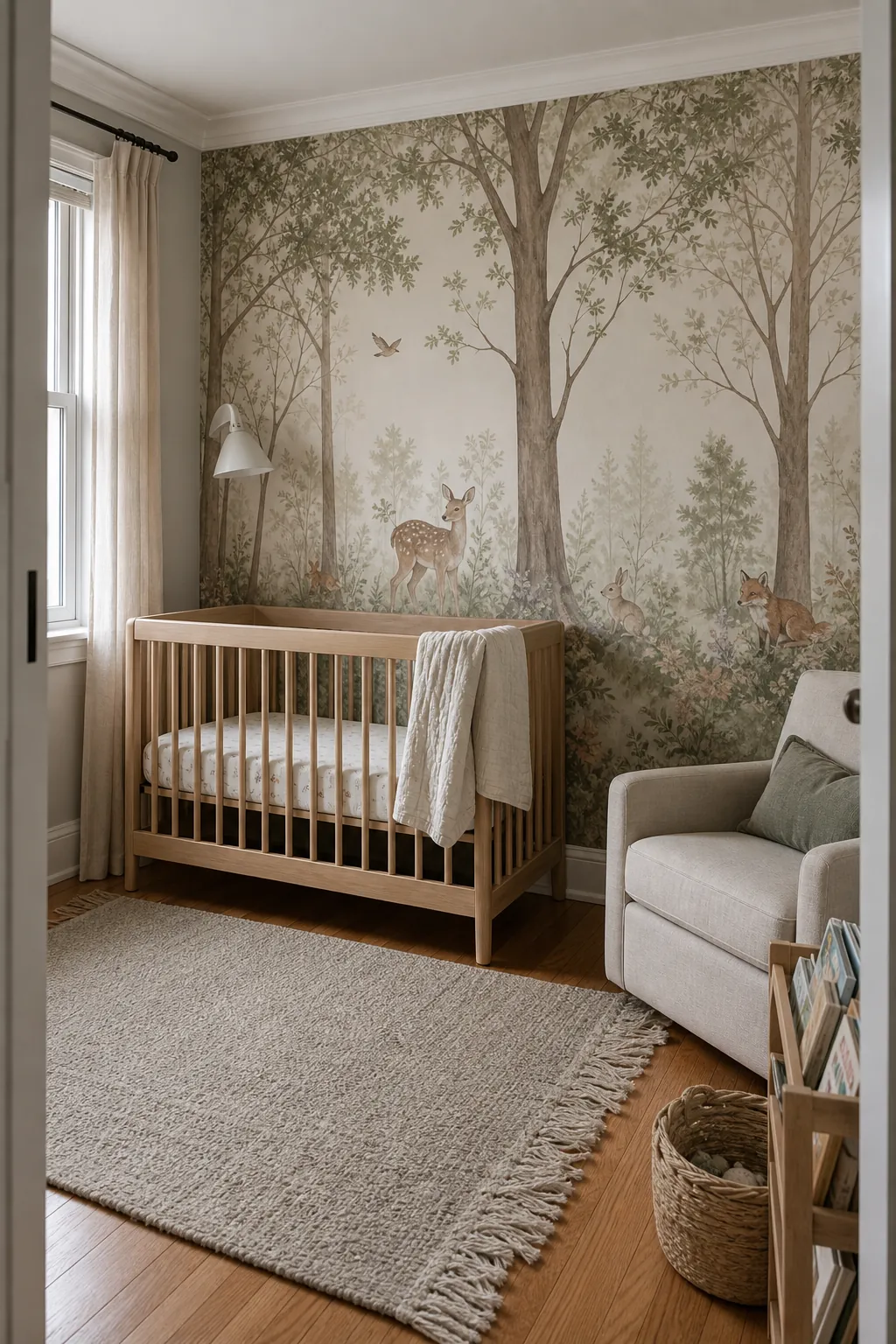

A woodland mural is one of the easiest ways to make a newborn room feel finished without filling it with extra decor. Keep the animals and trees soft rather than cartoonish, then repeat one color from the mural in the crib sheet, curtains, or rug. This approach works especially well for a nursery wallpaper accent wall because the rest of the room can stay quiet and flexible.
2. Use sage botanicals for a gender neutral nursery wallpaper
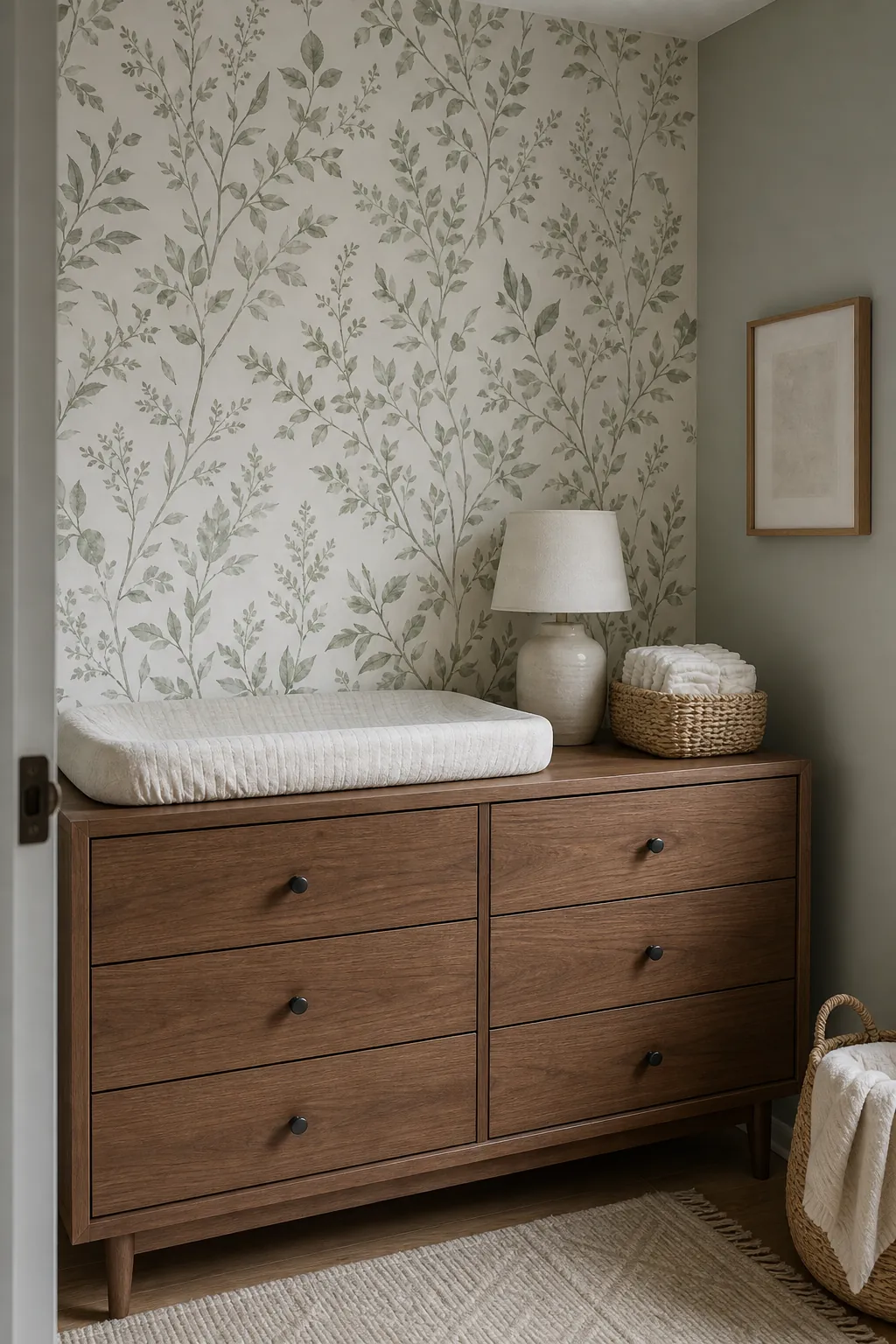

Sage botanical wallpaper gives a gender neutral nursery wallpaper scheme some depth without making the room feel themed. It looks polished with warm woods, cream storage, and black or brass hardware. If the room is small, choose a leafy print with generous spacing so the wallpaper for baby room walls feels breathable instead of busy.
3. Try watercolor clouds when you want calm color
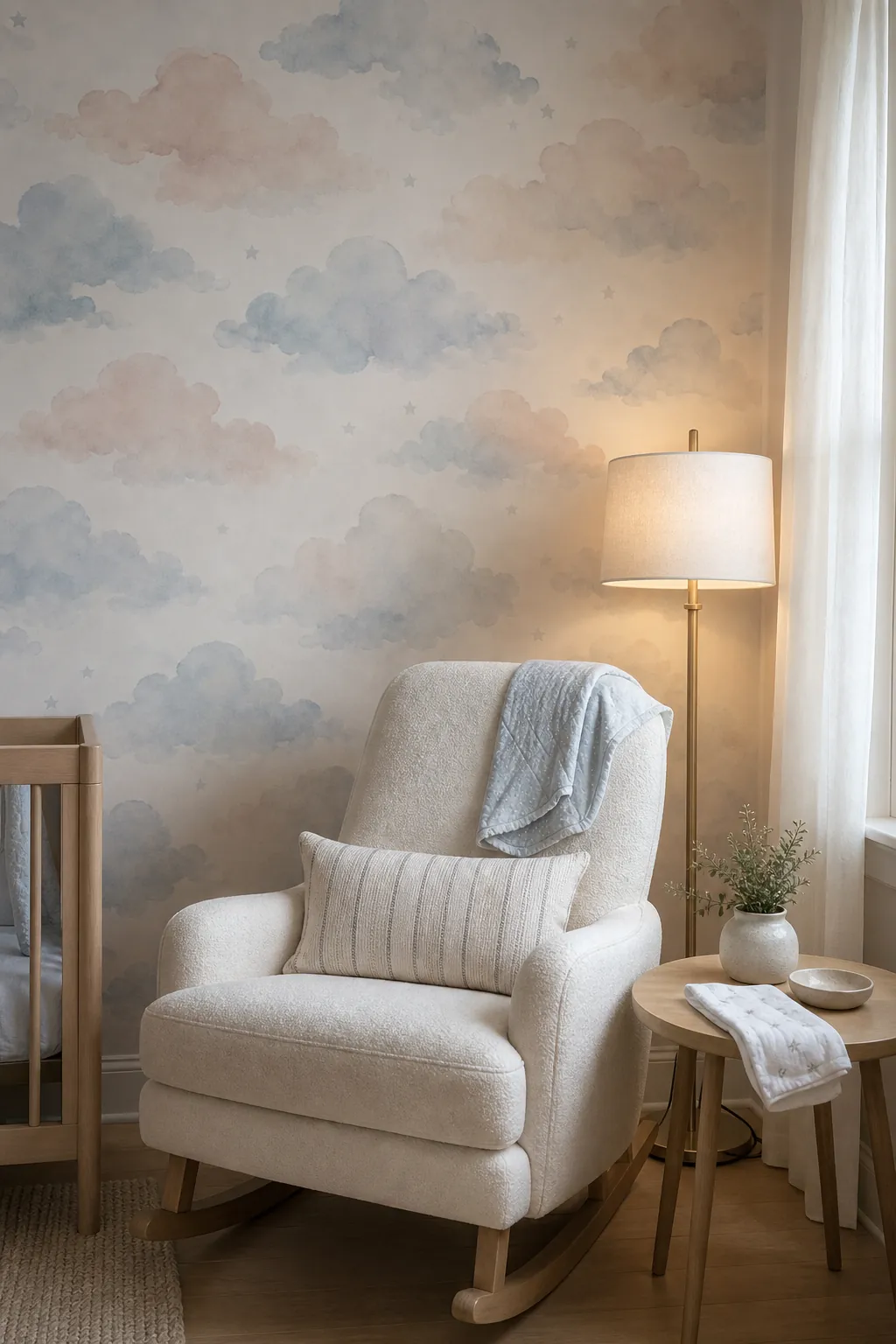

Watercolor clouds are a strong choice when you want colorful nursery energy but still need the room to feel sleepy at night. The trick is choosing a print with blurred edges, not sharp contrast. Pair it with a boucle rocker, a soft floor lamp, and one pale accent color so the wall feels dreamy rather than loud.
4. Add tiny moons and stars for a room that can grow
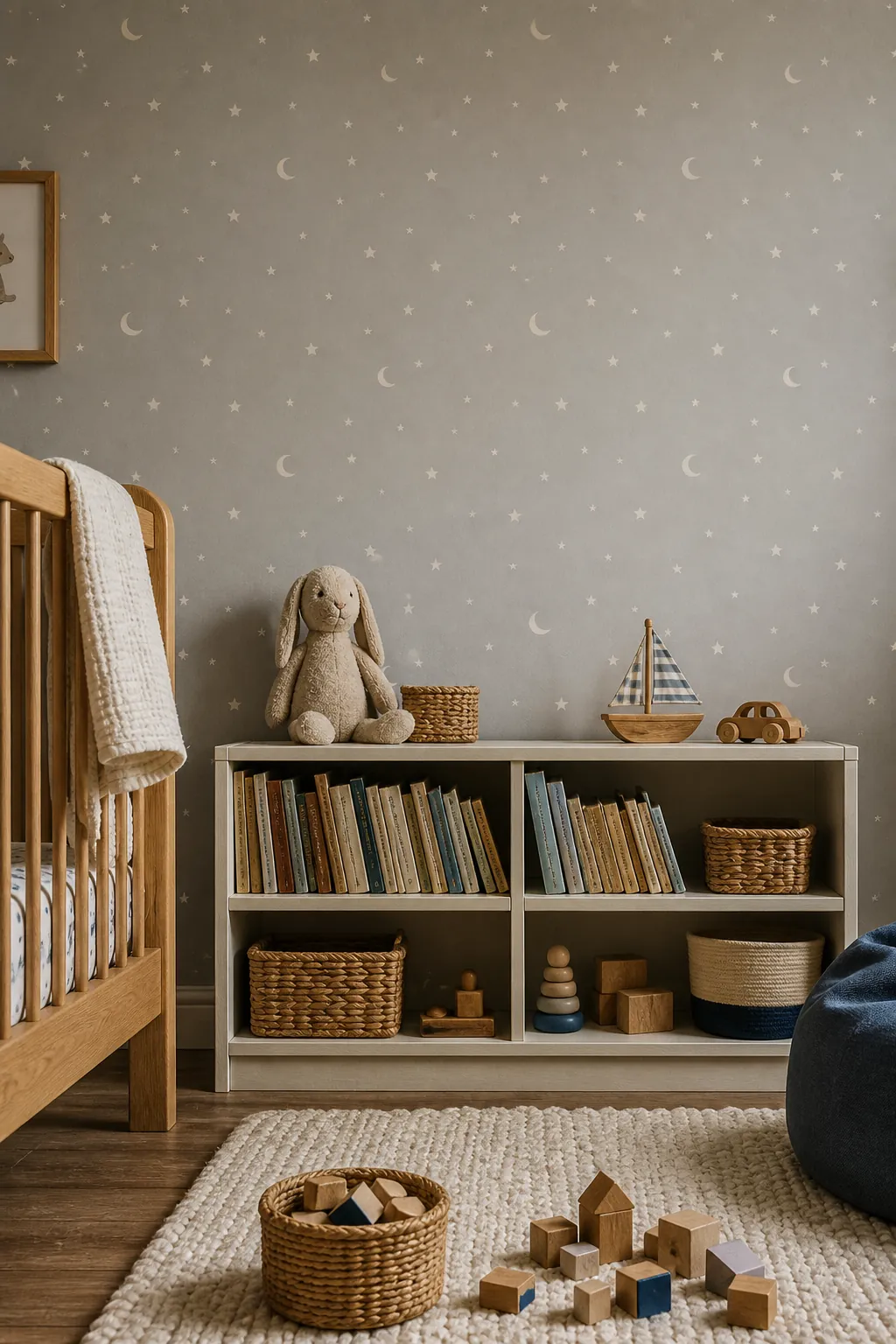

A small moons-and-stars repeat is easier to live with than a giant theme mural. It works for a baby nursery now and can still feel right as kids room wallpaper later. Use it above a low bookshelf or along one wall, then keep bedding and curtains mostly solid so the tiny pattern becomes texture instead of visual clutter.
5. Choose vintage florals when the furniture is simple
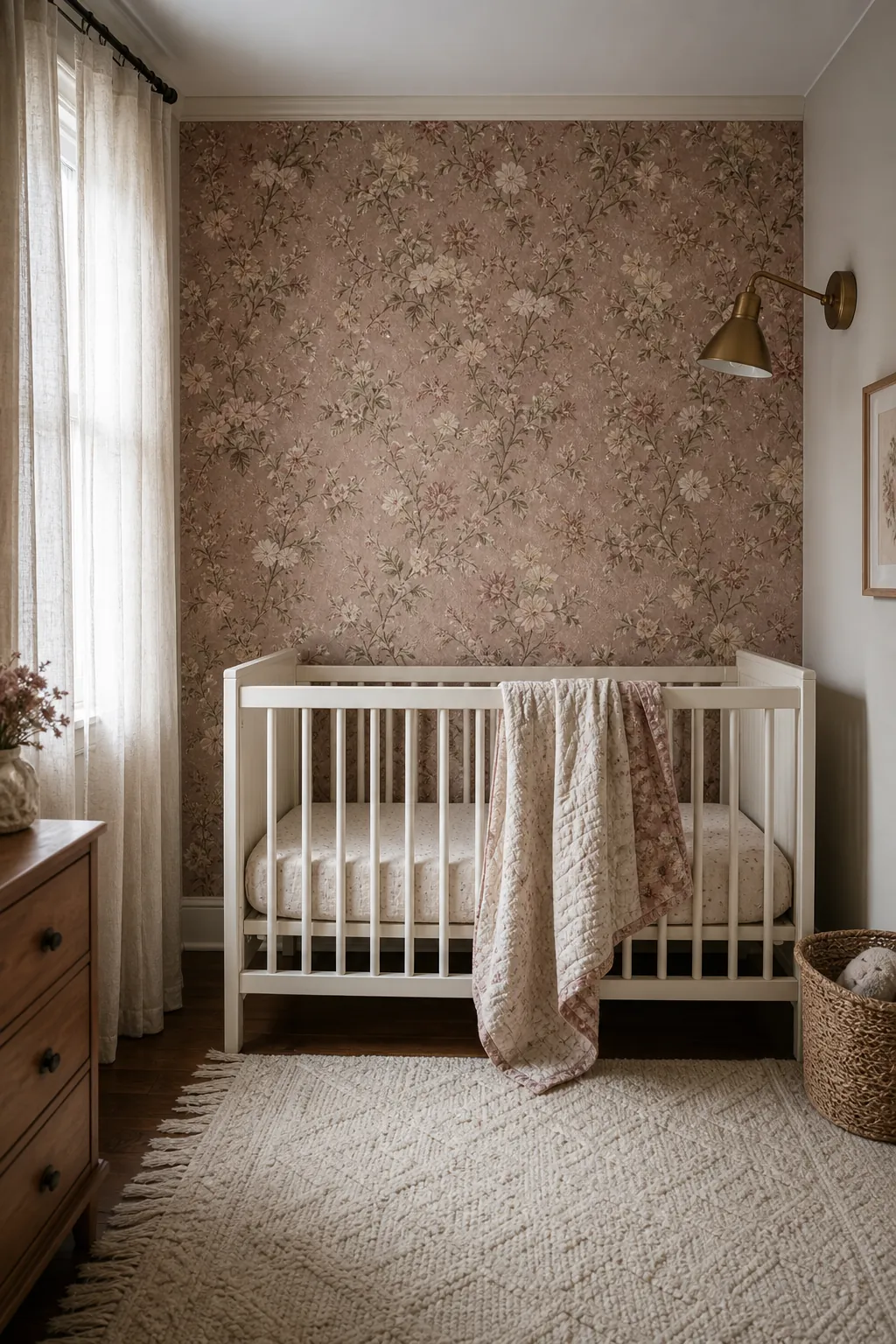

Vintage floral wallpaper can look expensive, but it needs breathing room. If the floral print is detailed, keep the crib simple, skip busy bedding, and let the curtain fabric stay plain. This is a good nursery wall mural or wallpaper choice when you want a soft heirloom feeling without turning the room into a formal bedroom.
6. Use an animal parade print low on the wall
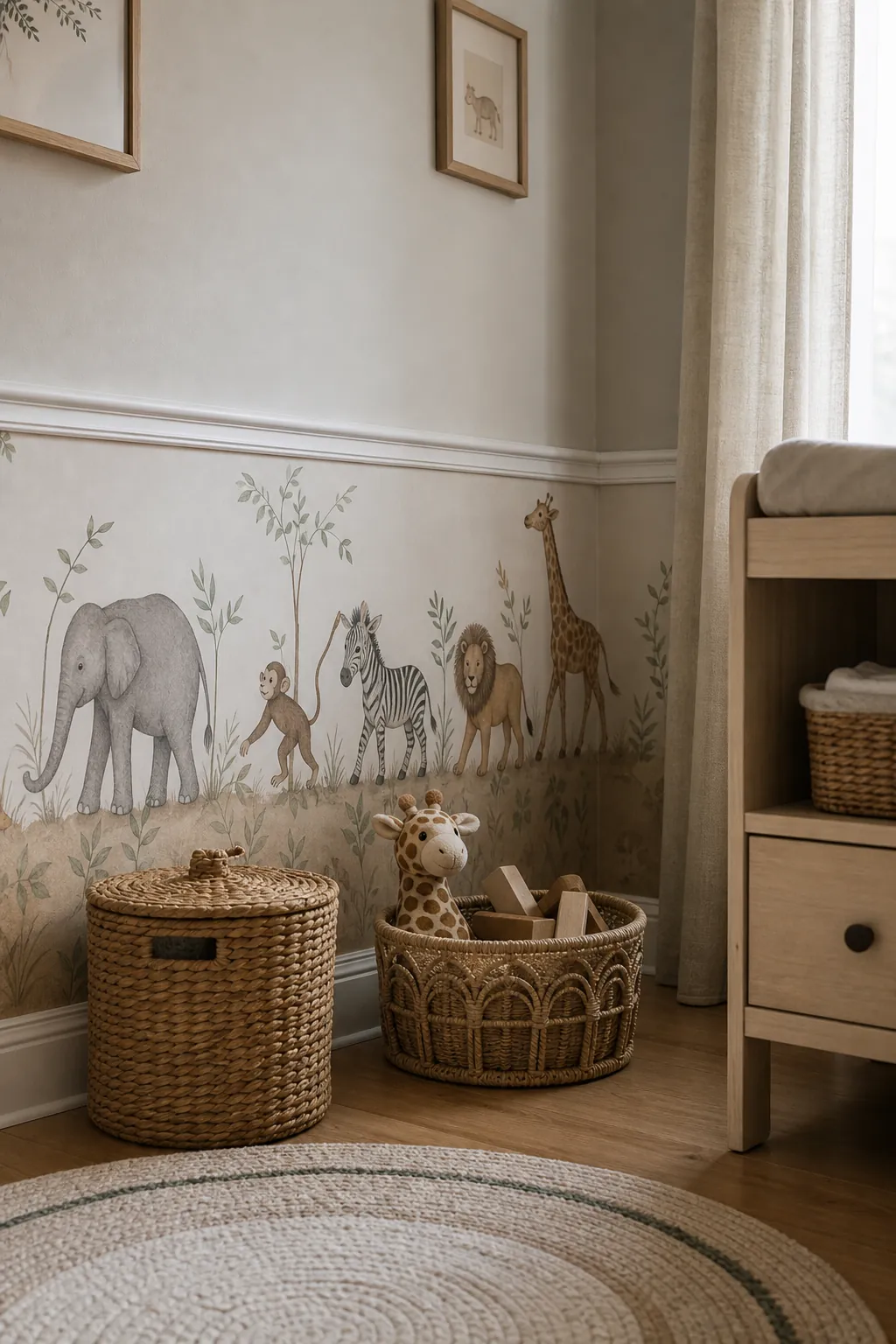

Animal prints feel playful, but a full wall of large animals can overwhelm a small nursery. A lower wall treatment or a wallpaper band keeps the charm closer to a baby's eye level while the upper wall stays calm. It is also easier to pair with art, shelves, and changing storage as the room changes.
7. Make pastel rainbow arches feel modern
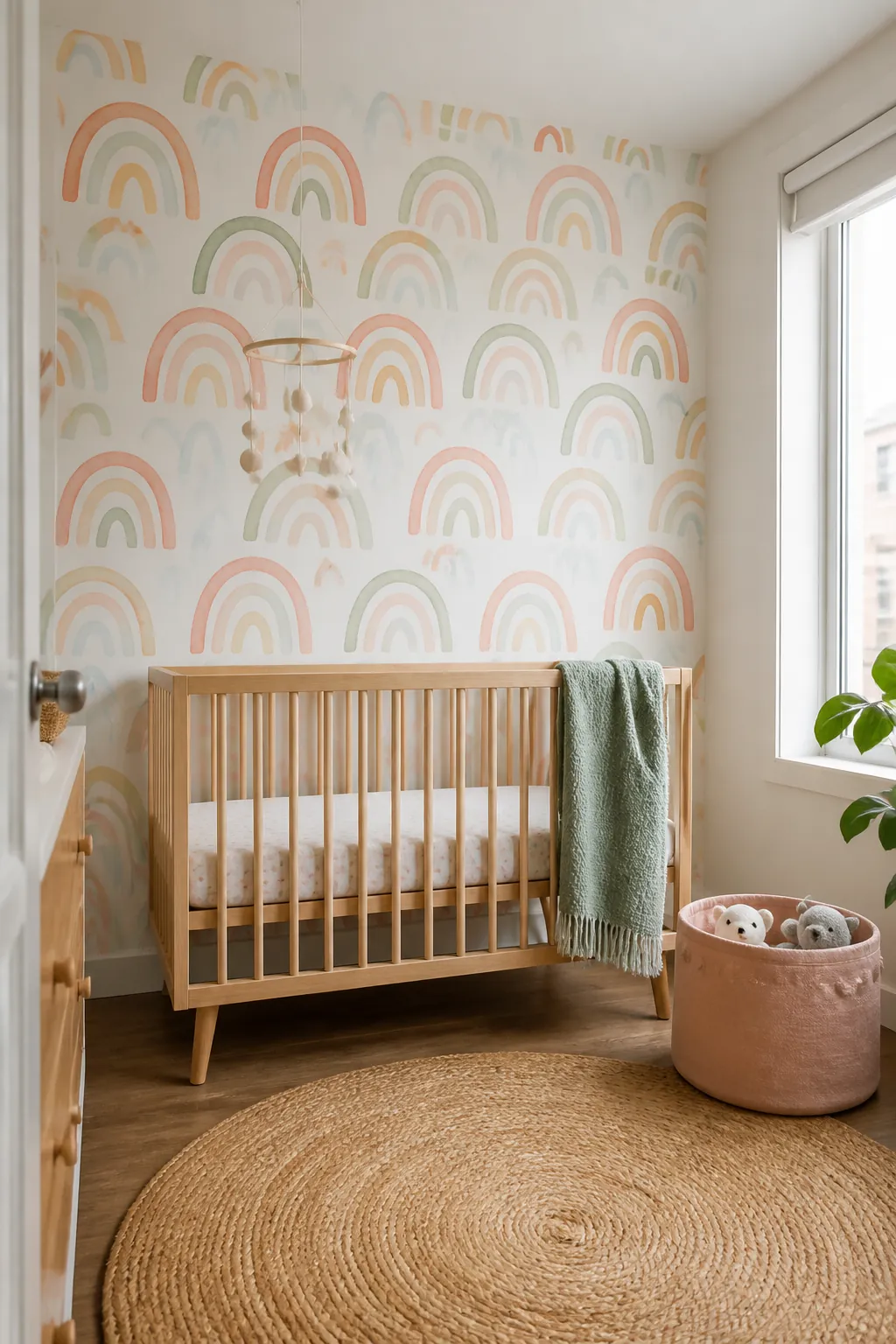

Pastel rainbow arches are cheerful, but they look best when the rest of the nursery is edited. Choose two colors from the print and repeat them in small pieces, such as a throw, storage bin, or mobile. Leave the bigger items neutral so the nursery feature wall stays joyful instead of sugary.
8. Pick a mountain mural for quiet adventure
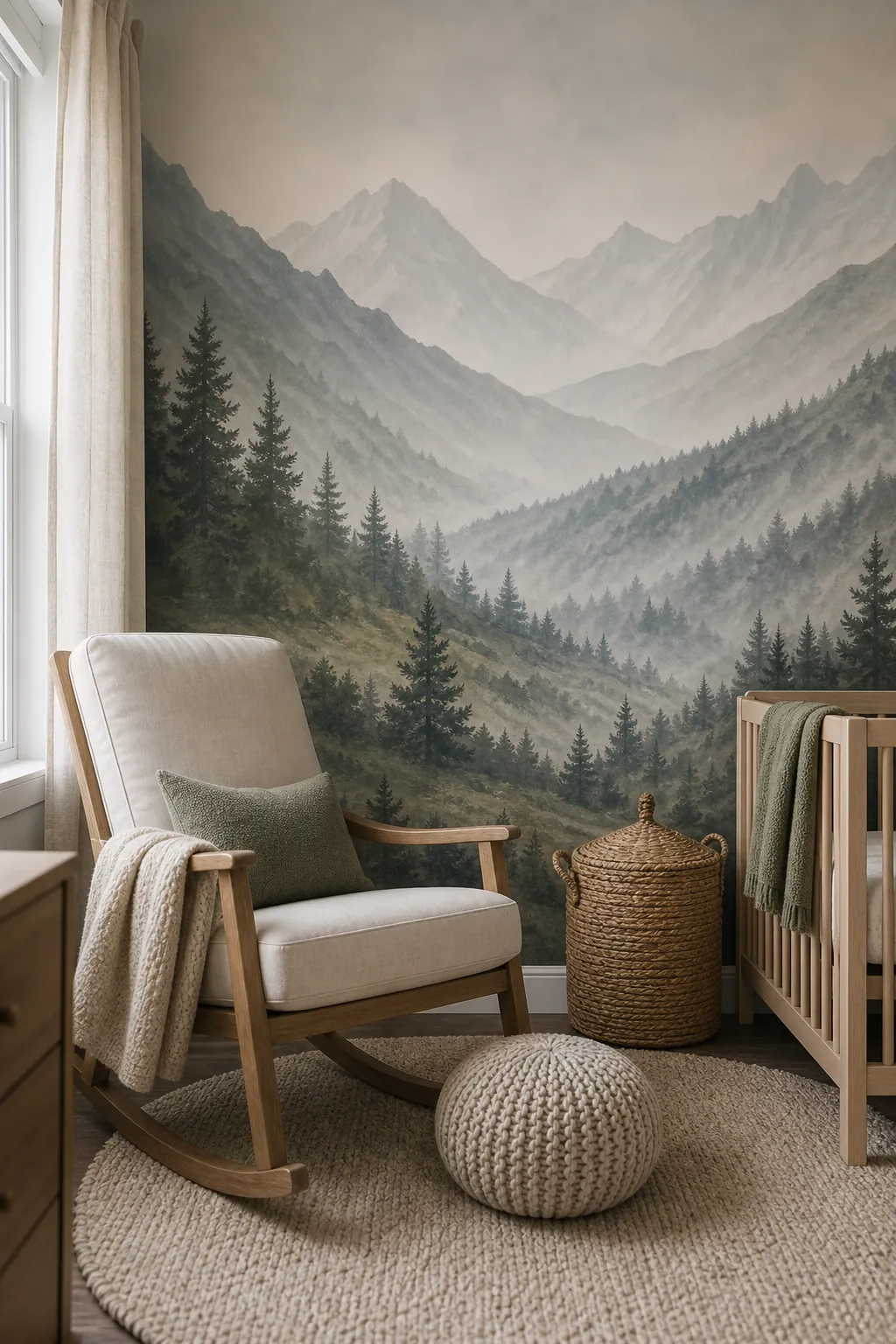

A mountain nursery wall mural is a good compromise between adventure and calm. Look for soft, misty layers rather than sharp cartoon peaks. Gray green, clay, and cream tones work well with natural wood furniture, and the mural can bridge baby decor with a future toddler room without needing a full redesign.
9. Use neutral texture when patterns feel too loud
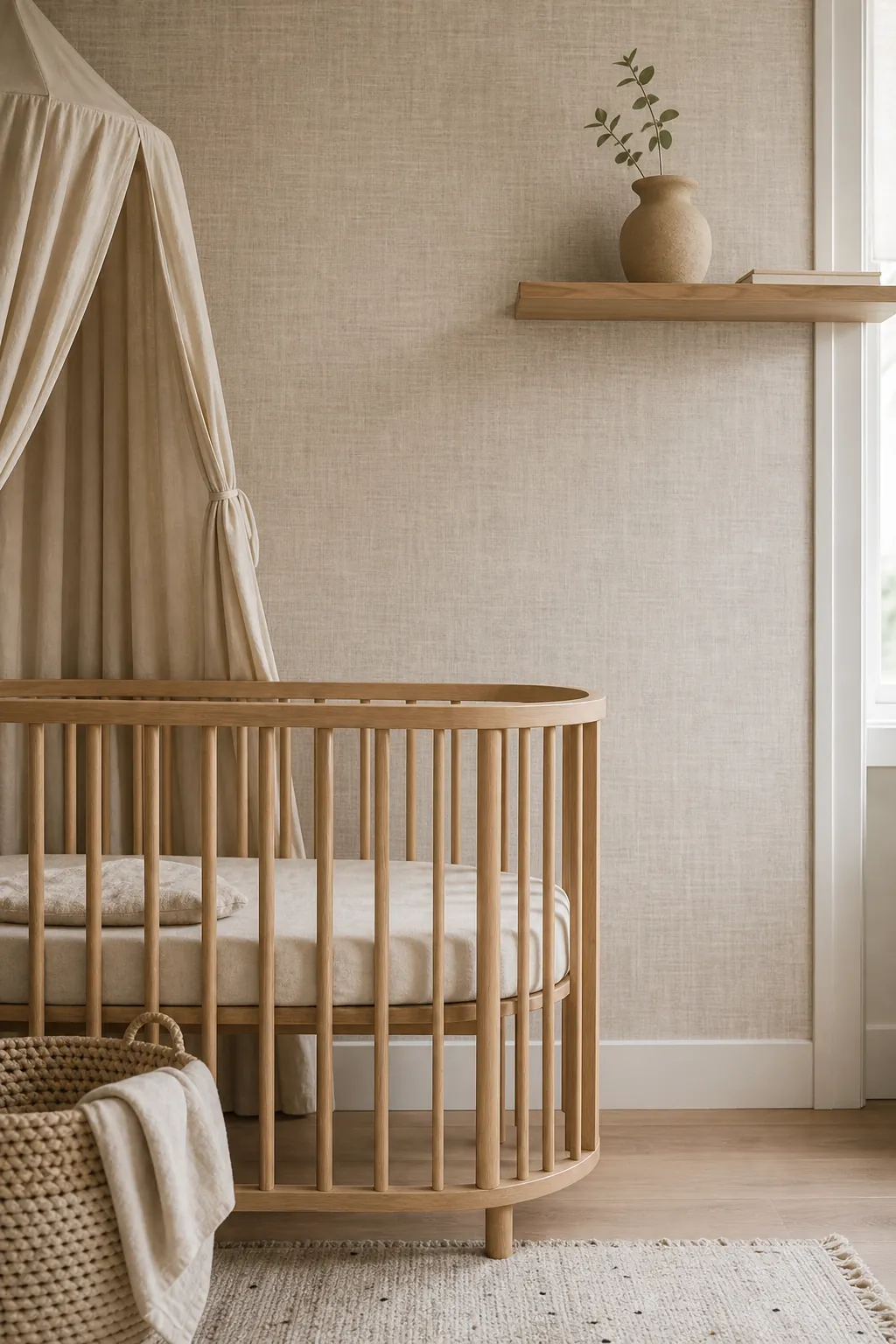

Not every baby nursery wallpaper has to announce itself. A neutral linen, grasscloth-style, or plaster-look wallpaper can warm up a newborn room while keeping it restful. This is especially useful if you already have patterned curtains, a colorful rug, or art you want to keep. Texture gives depth without competing with everything else.
10. Create a storybook reading corner
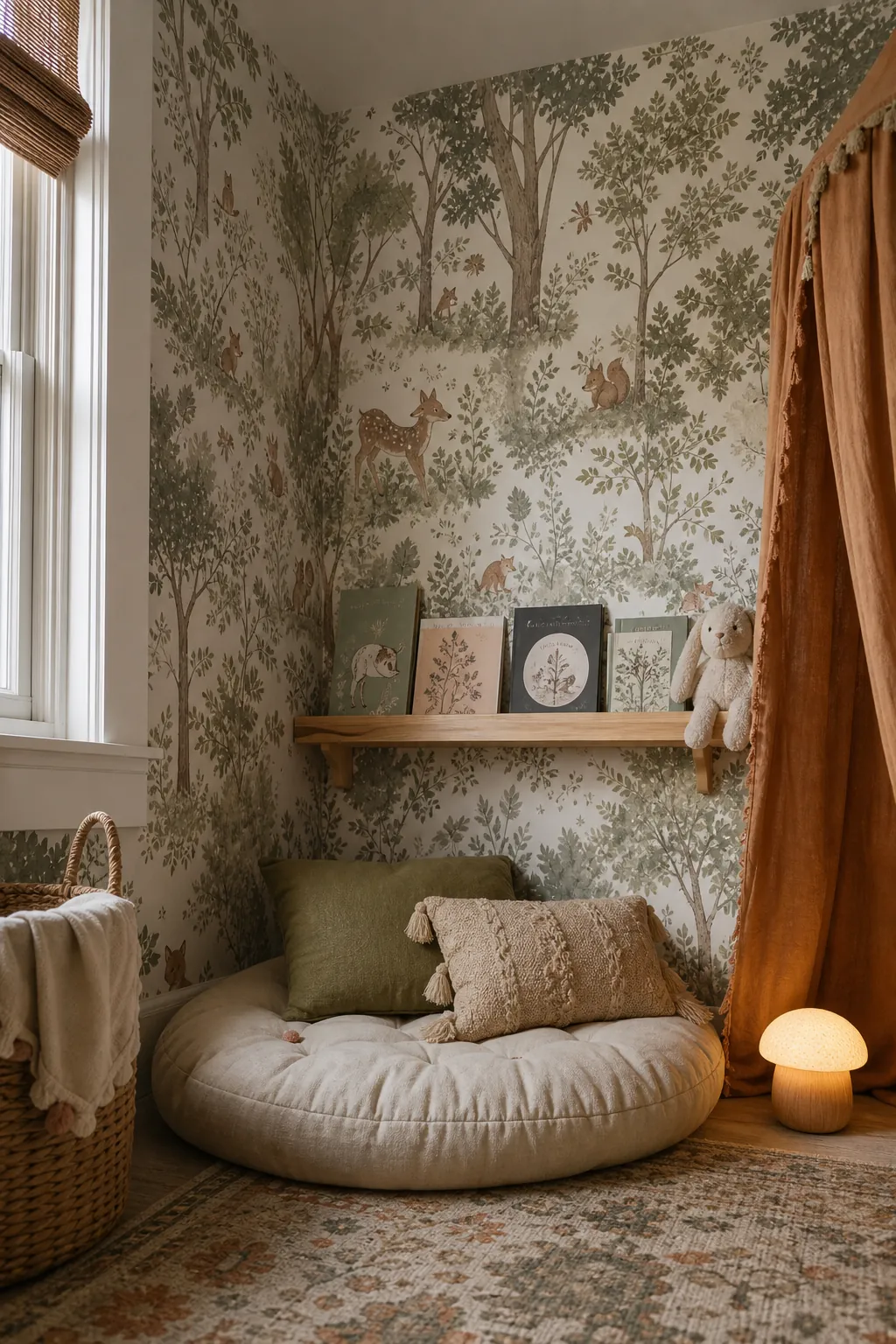

A storybook wallpaper corner can make the nursery feel special even when the crib wall stays plain. Use it behind floor cushions, a low shelf, or a small canopy so the room has a second zone for feeding and bedtime books. The best prints include detail up close but still read as soft from across the room.
11. Use soft coastal color without making it a theme room
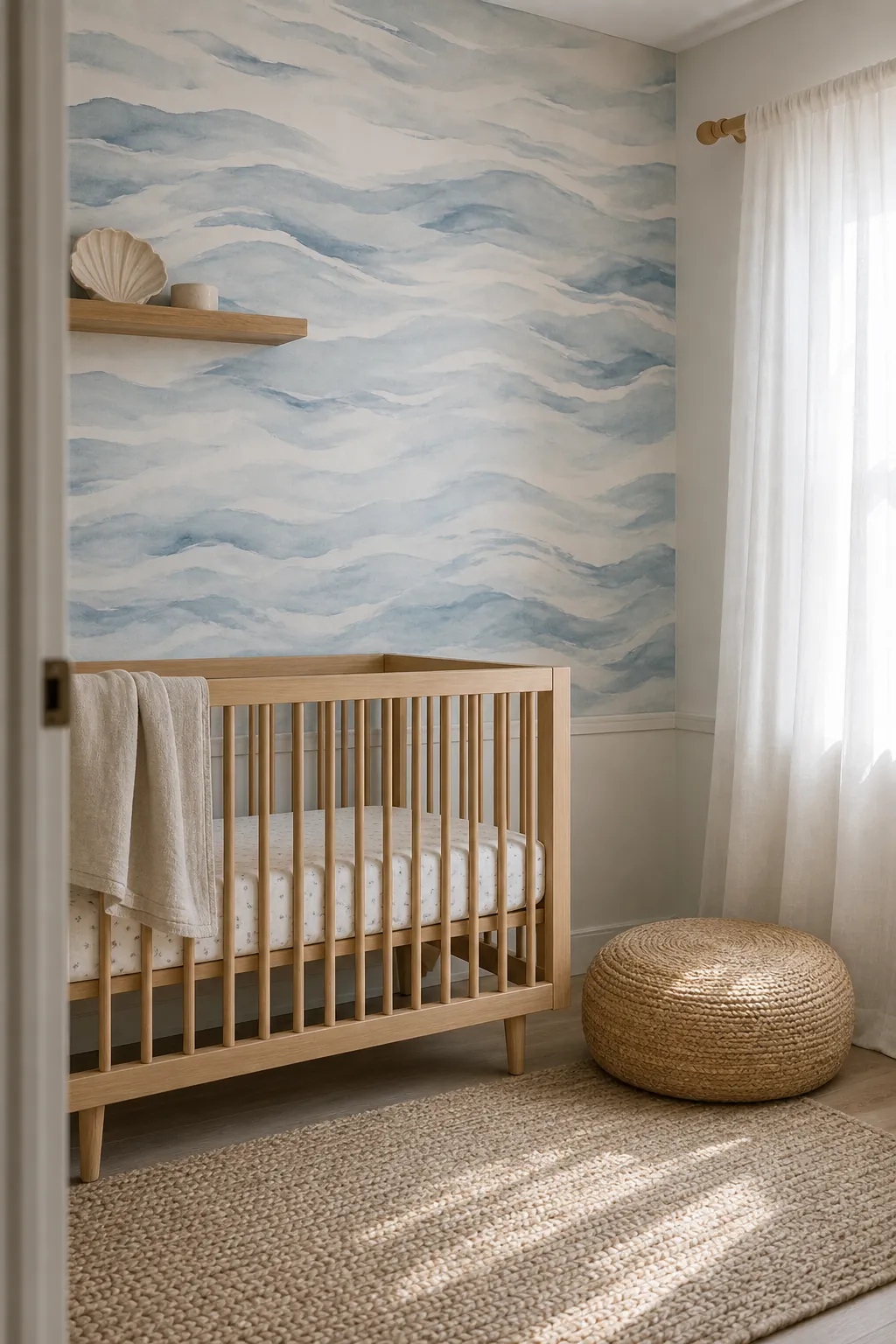

For boy nursery wallpaper, coastal blue can be lovely when it is handled softly. Choose watercolor waves, pale sea grass, or abstract shoreline movement instead of anchors and boats. Natural wood, white, and one sandy accent keep the room feeling fresh while still giving you that gentle blue nursery room design.
12. Bring in colorful nursery energy with geometric blocks
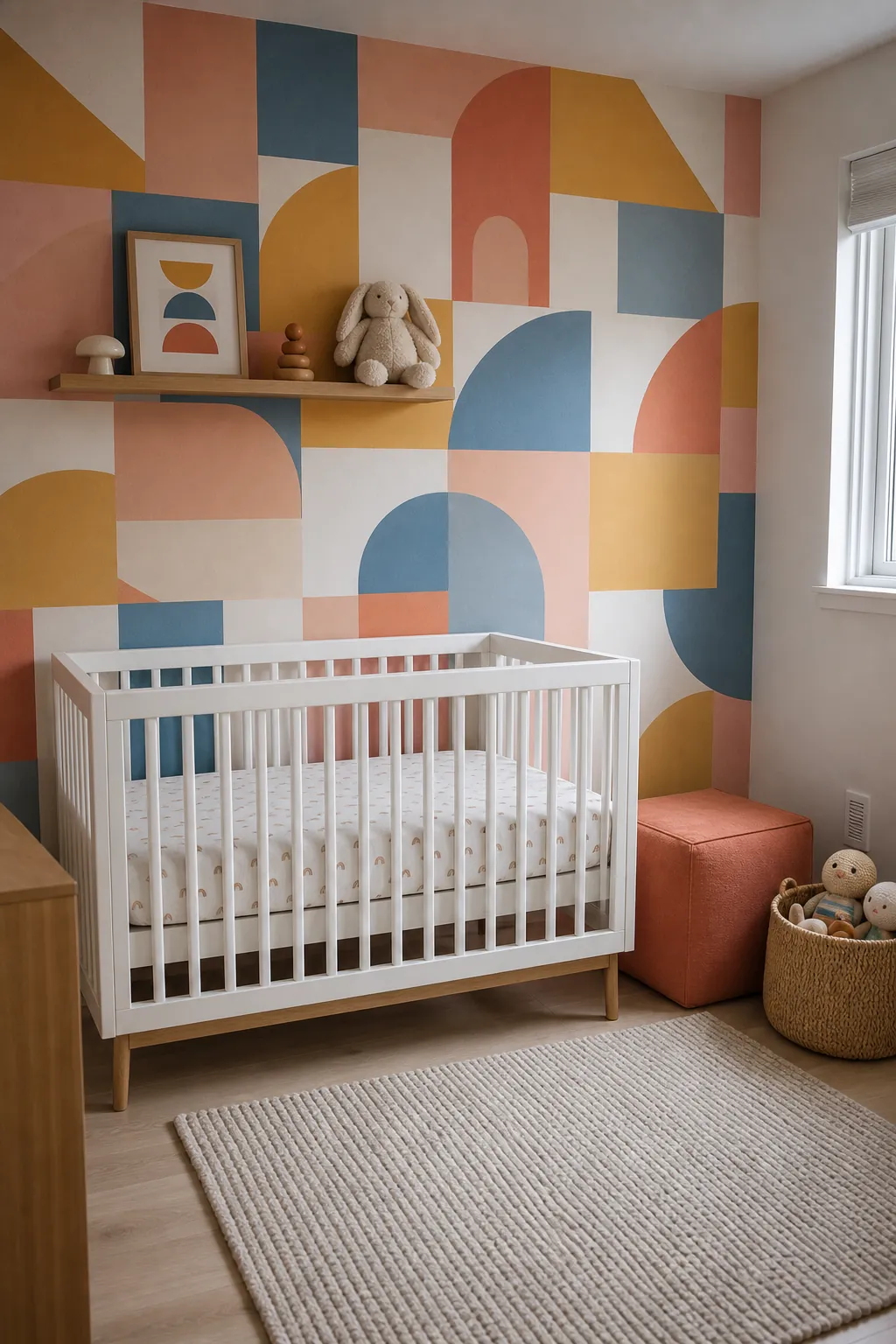

A geometric wallpaper can make a colorful nursery feel intentional rather than chaotic. Pick a print with a limited palette, then let one or two furniture pieces stay plain. This is a smart choice when you want a nursery wallpaper accent wall that photographs well but does not depend on delicate decorative pieces staying in place.
13. Let a meadow mural do the decorating
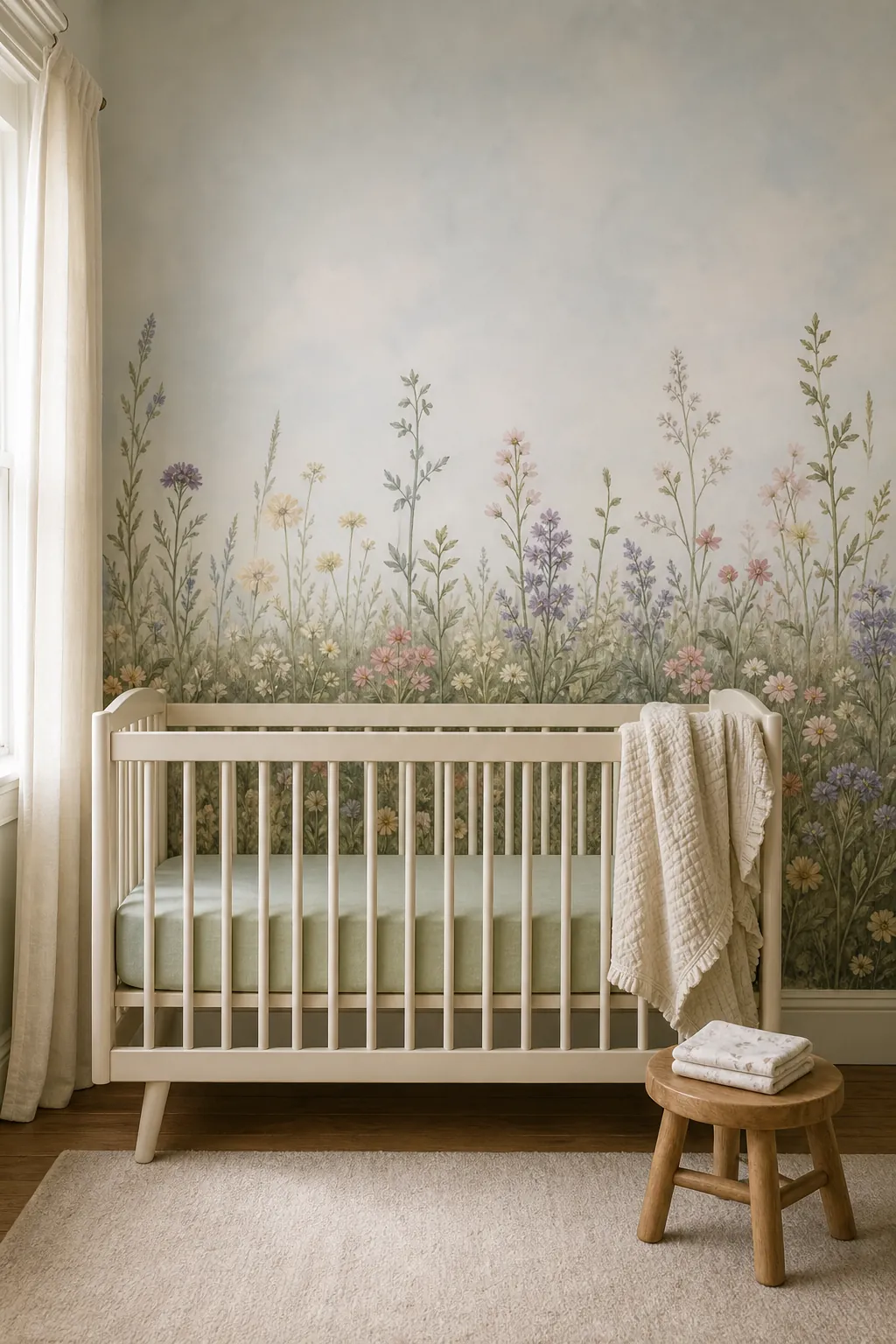

A meadow mural is useful when you want the wallpaper to carry most of the room. Because the flowers sit near the lower wall in many mural designs, they can frame the crib beautifully while the upper wall stays open. Choose muted wildflowers for longevity; saturated florals can date the room faster.
14. Choose warm safari sketches instead of bold jungle prints
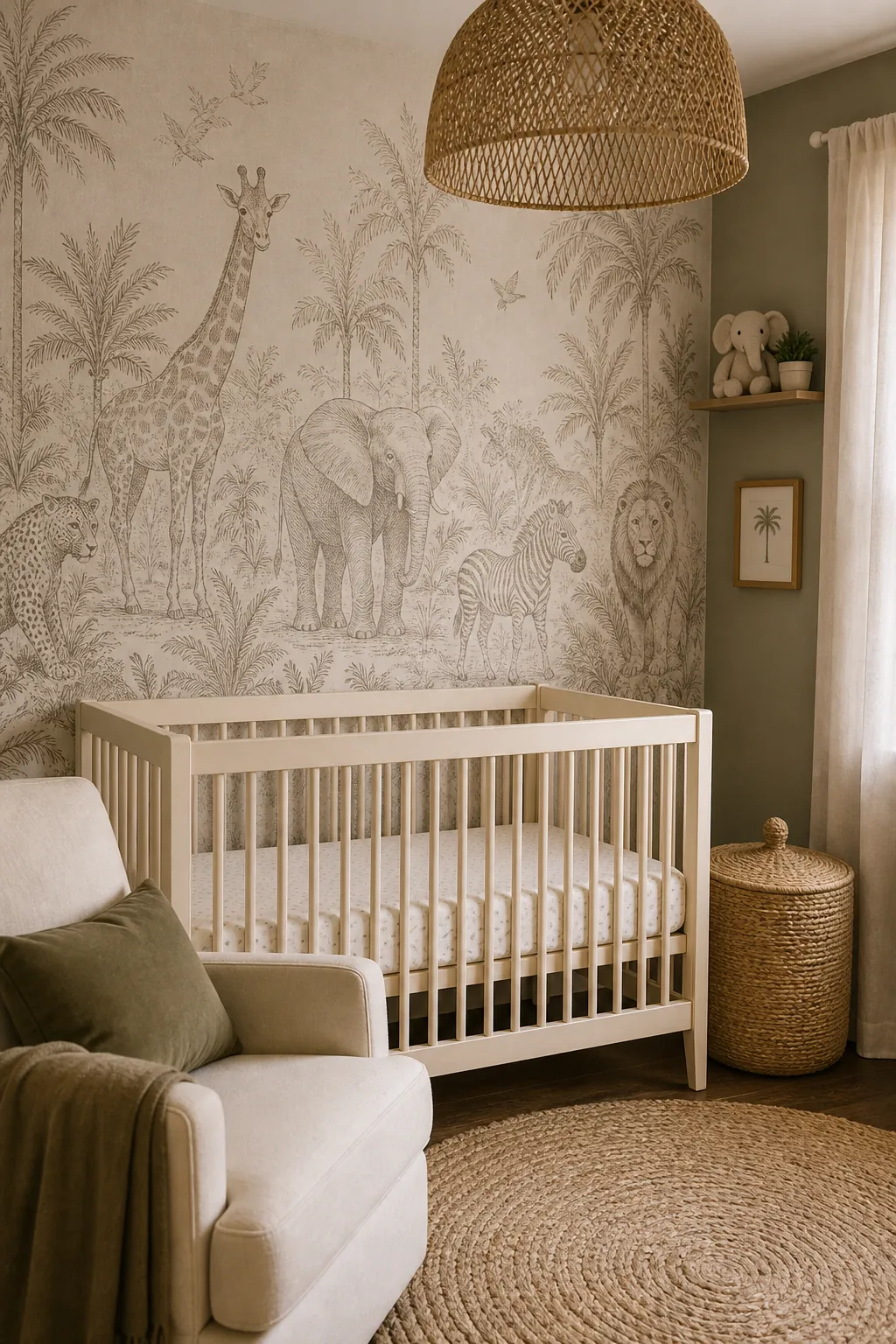

Safari wallpaper can become loud quickly, especially in a small room. A warm sketch-style print keeps the idea sweet and calmer. Pair taupe animals with rattan, cream textiles, and one soft green plant-like accent. The result feels playful enough for a baby but restrained enough for a peaceful sleep space.
15. Use tiny Scandi shapes in a small nursery
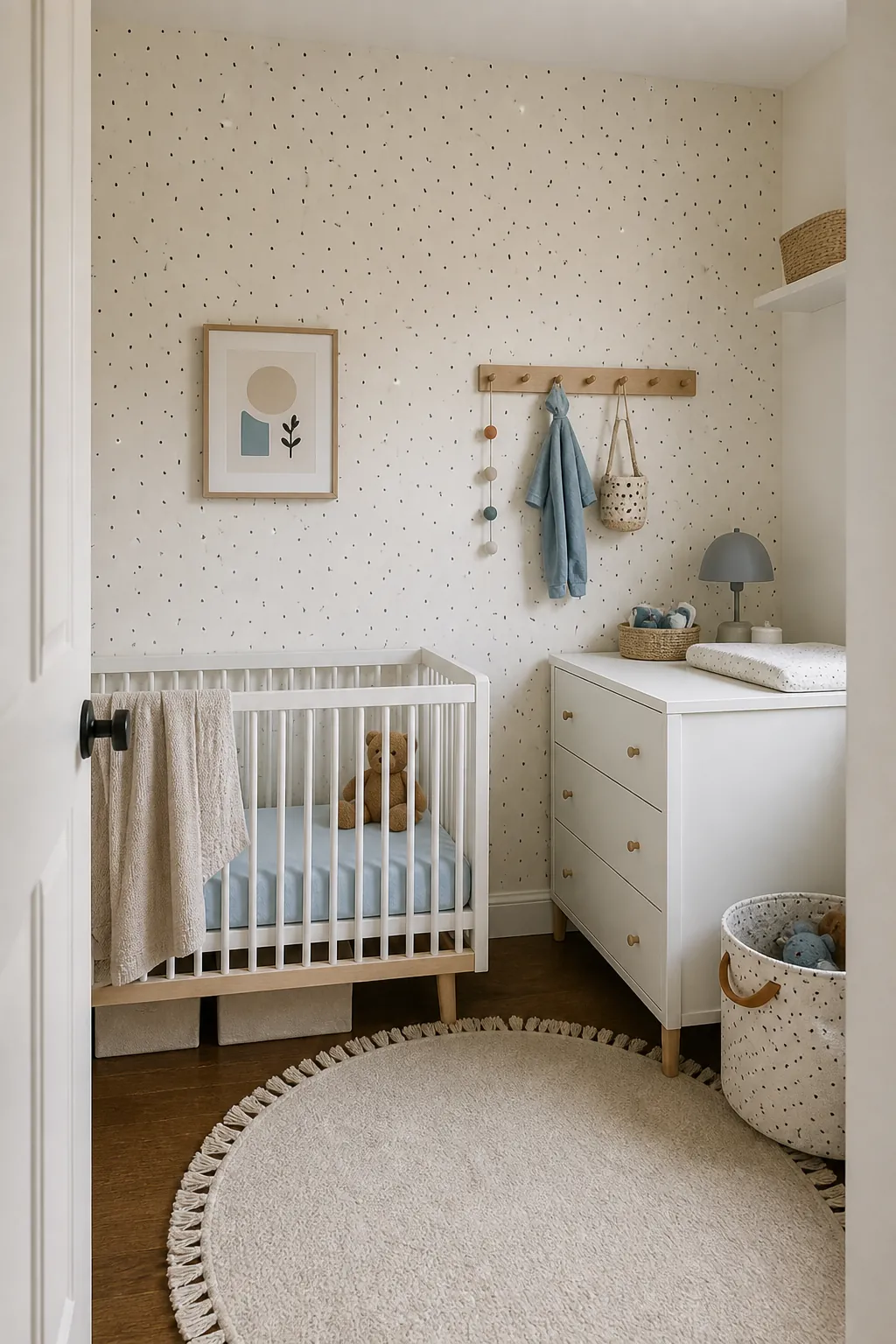

Tiny Scandinavian shapes are forgiving in tight rooms because the repeat reads like texture from a distance. Dots, dashes, and small abstract marks can make a small nursery feel designed without shrinking it visually. Keep the palette to two or three soft colors if the room already needs a crib, dresser, rocker, and storage.
16. Warm the room with cream and terracotta suns
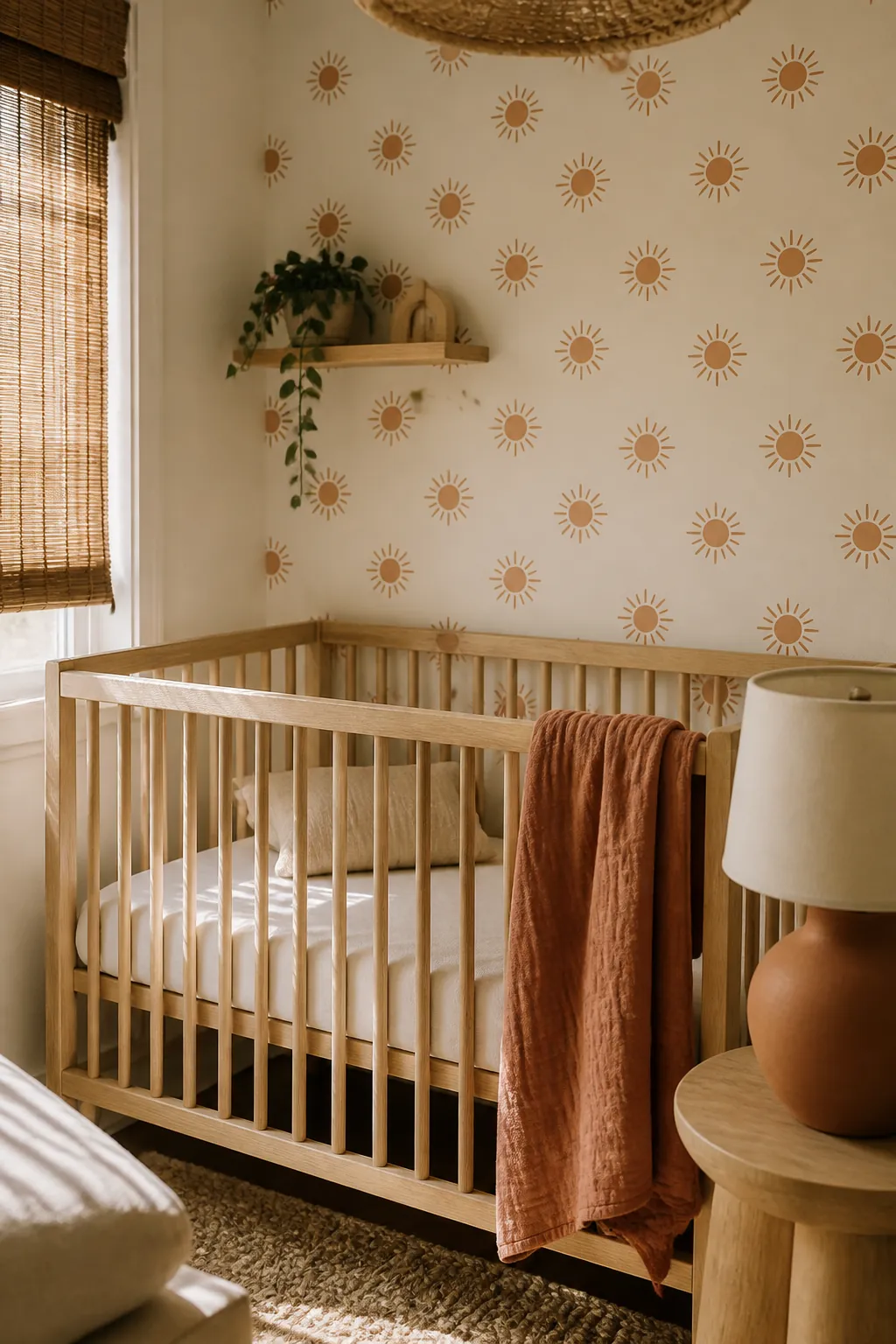

Cream and terracotta sun motifs add warmth without relying on pink or blue. They look especially good with light wood, woven shades, and simple white bedding. If the room gets strong afternoon sun, test a sample first; warm colors can intensify quickly, and you may prefer a smaller repeat over a large graphic sun.
17. Try animal toile for a classic nursery room design
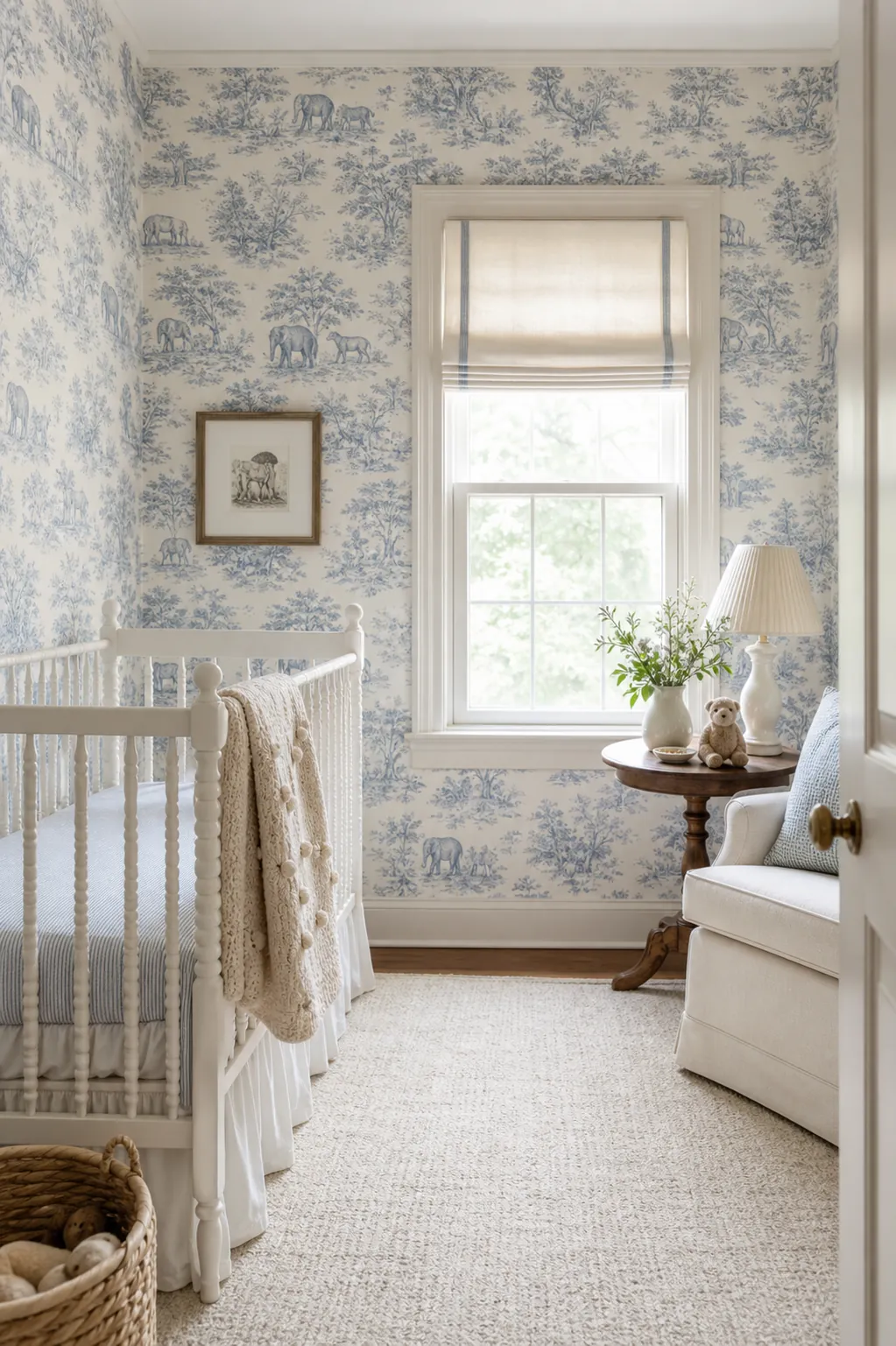

Animal toile is a classic choice when you want pattern but not novelty. Look for single-color linework in blue, green, taupe, or charcoal, then keep furniture silhouettes clean. It is a strong option for parents who like traditional wallpaper but still want the room to feel like a baby nursery, not a formal guest room.
18. Frame wallpaper panels if you rent
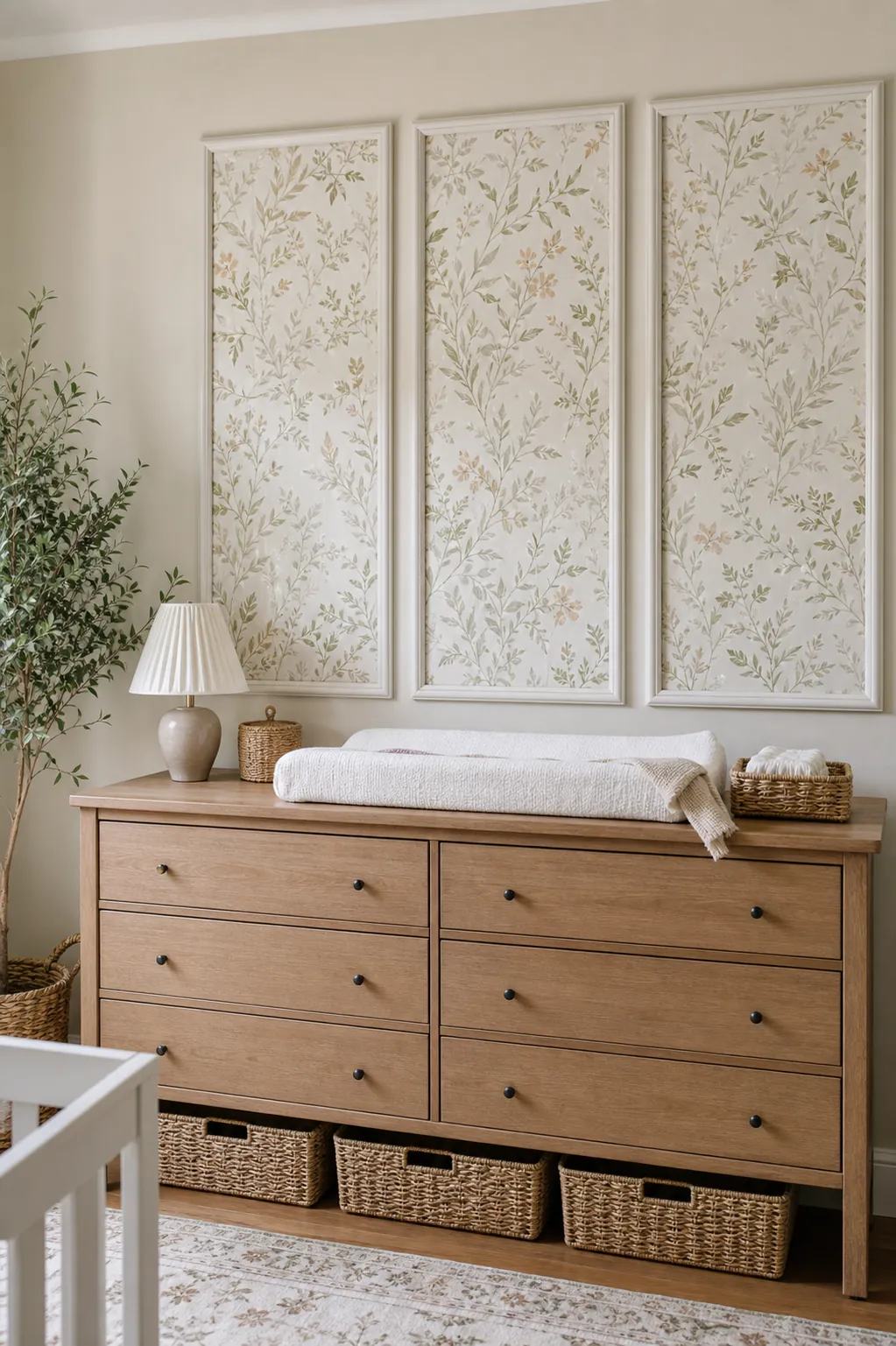

If you rent or worry about removal, framed wallpaper panels can give you the look of wallpaper without covering the whole wall. Use three tall panels above the dresser or changing area, then repeat the same colors in storage baskets and art. It is a practical way to test a pattern before committing to a full wall.
19. Wallpaper the ceiling or upper wall for a gentle surprise
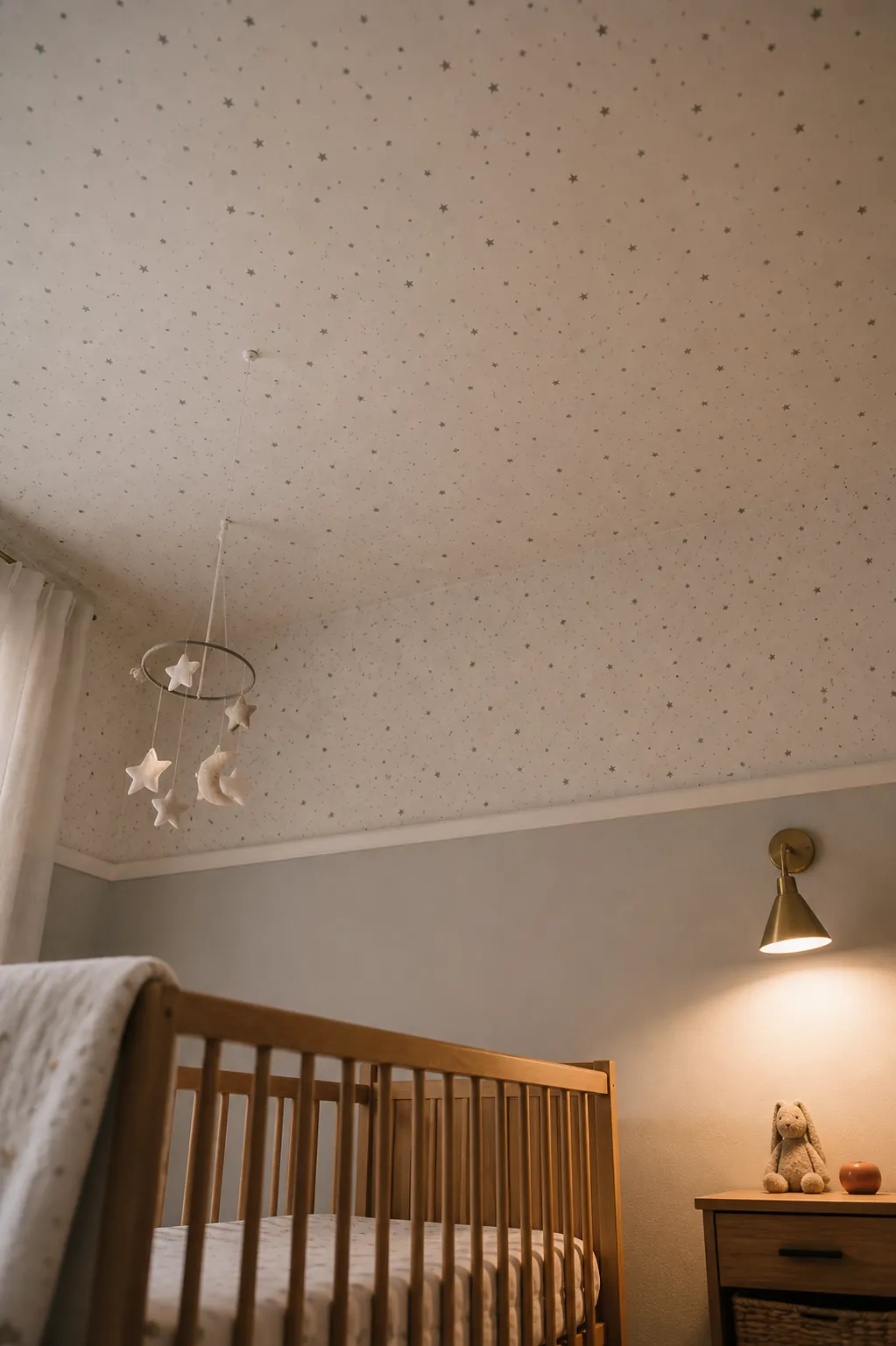

Wallpaper does not have to sit only behind the crib. A ceiling or upper-wall treatment can make the nursery feel magical while keeping the main walls simple. Tiny stars, clouds, or a barely-there pattern work best. Keep every edge secure and avoid loose seams anywhere a child could reach as the room evolves.
Quick nursery wallpaper checklist
- Order samples before committing, especially for peel and stick wallpaper, textured walls, or a large nursery wall mural.
- Check the pattern scale from across the room; tiny repeats read as texture, while large murals become the main decor.
- Use one wallpapered feature wall if the print is colorful, high contrast, or strongly themed.
- Repeat two or three colors from the wallpaper in rugs, storage, curtains, or bedding so the nursery room design feels connected.
- Keep the crib zone calm and inspect seams regularly, especially near furniture a child may eventually reach.
- Buy extra material from the same run when possible so repairs, pattern matching, and future touch-ups are easier.
The best baby nursery wallpaper is not always the boldest print. It is the one that makes the room easier to design, easier to live in, and easier to adapt. Whether you choose a gender neutral nursery wallpaper, a colorful nursery mural, a soft floral, or simple framed panels, let the wallpaper set the mood while the rest of the room stays useful, safe, and calm.