15 Wallpaper for Baby Room Ideas That Feel Calm and Practical
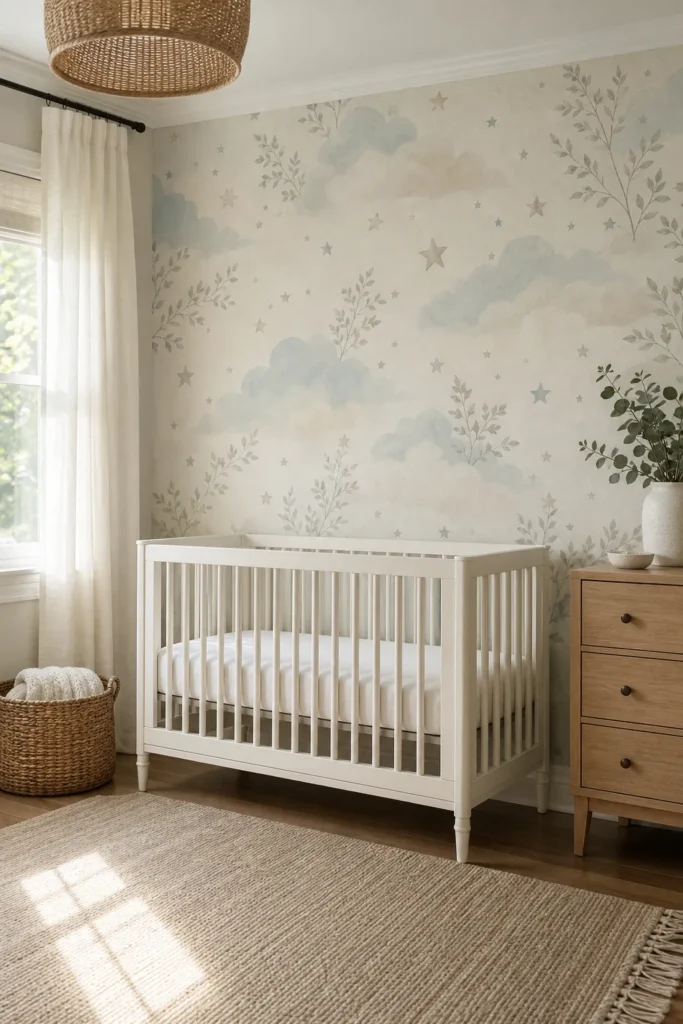
The hardest part of choosing wallpaper for a baby room is not finding something cute. It is choosing something you will not regret after the crib arrives, the room smells freshly renovated, the wall texture shows through, or the pattern turns out harder to line up than expected. The best nursery wallpaper does three jobs at once: it gives the room feeling, it stays calm enough for sleep, and it works with real-life limits like budget, wall condition, safety, and future toddler room changes.
Use these ideas as a practical filter, not just a style list. A good nursery room wallpaper should look beautiful in photos, but it also needs to survive daily life, soft lighting, changing furniture, and a child who grows faster than the theme.
Soft cloud wallpaper for a calm newborn room
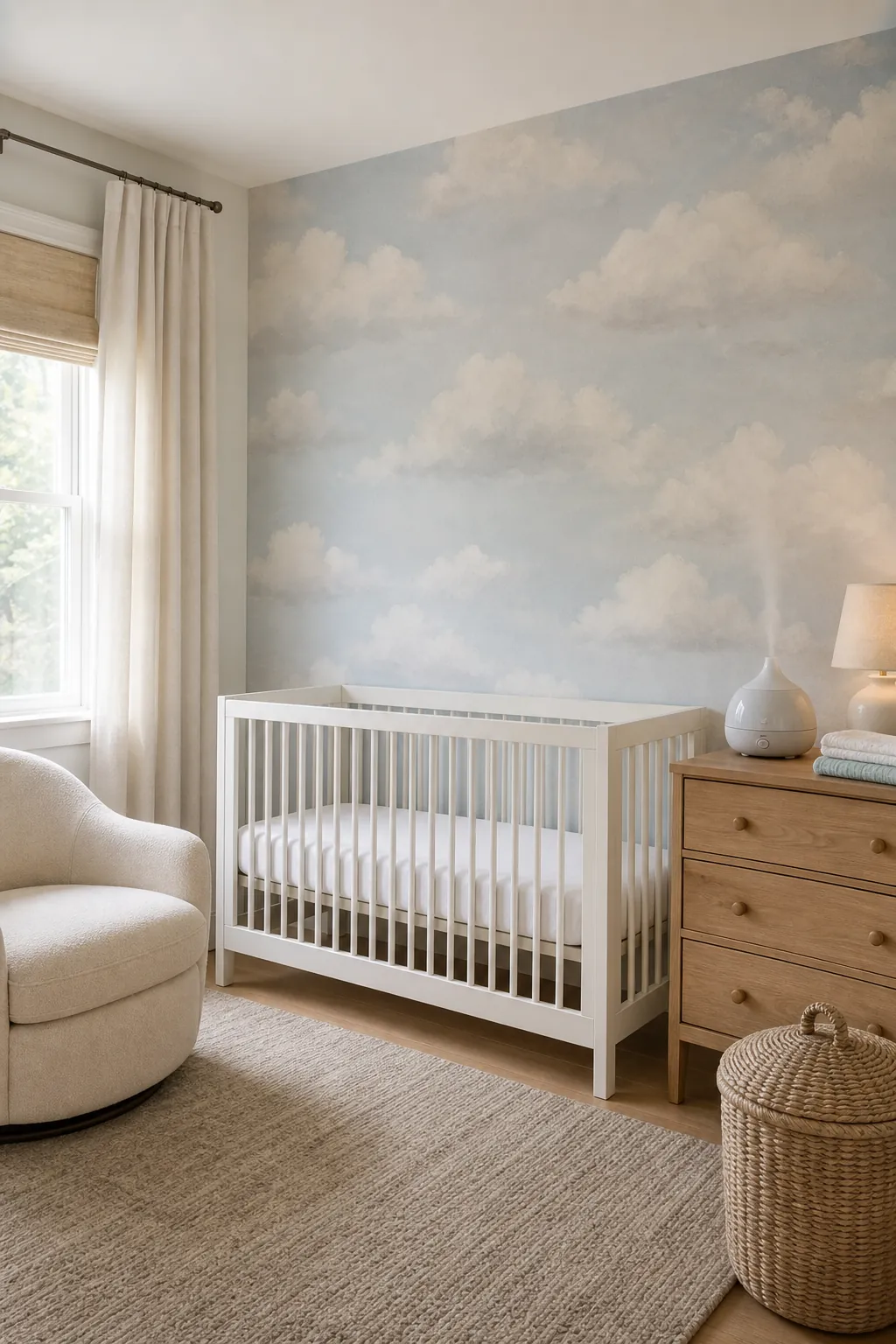

Cloud wallpaper works best when it feels quiet, open, and a little imperfect. Large soft clouds can make a small newborn room feel taller, while a pale blue, ivory, or misty gray palette keeps the wall from becoming too stimulating.
This is a strong choice if you want a gentle nursery background without committing to animals, florals, or a strong gendered theme. Keep the crib bedding simple, repeat one cloud color in the rug or chair, and let the wall carry the softness.
Gentle woodland wallpaper with room to grow
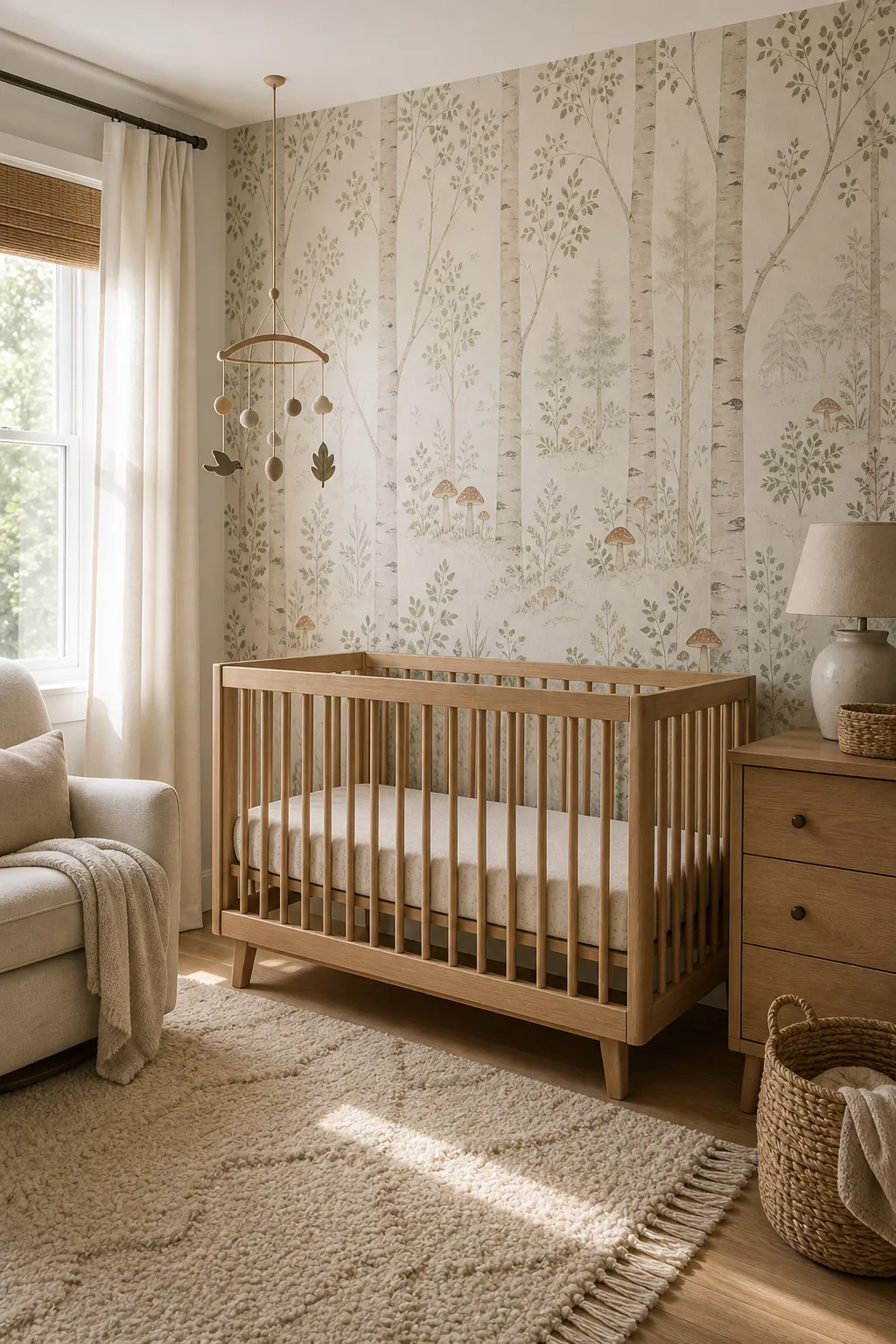

Woodland wallpaper is popular because it feels warm without needing much extra decor. The trick is to choose small trees, soft leaves, and muted forest tones instead of a full storybook scene that the room may outgrow quickly.
It works especially well with oak furniture, linen curtains, woven baskets, and a neutral rug. If you are comparing wallpaper for kids bedroom ideas too, woodland is one of the safer long-term choices because it can still look right in a toddler room.
Soft safari nursery wallpaper without visual chaos
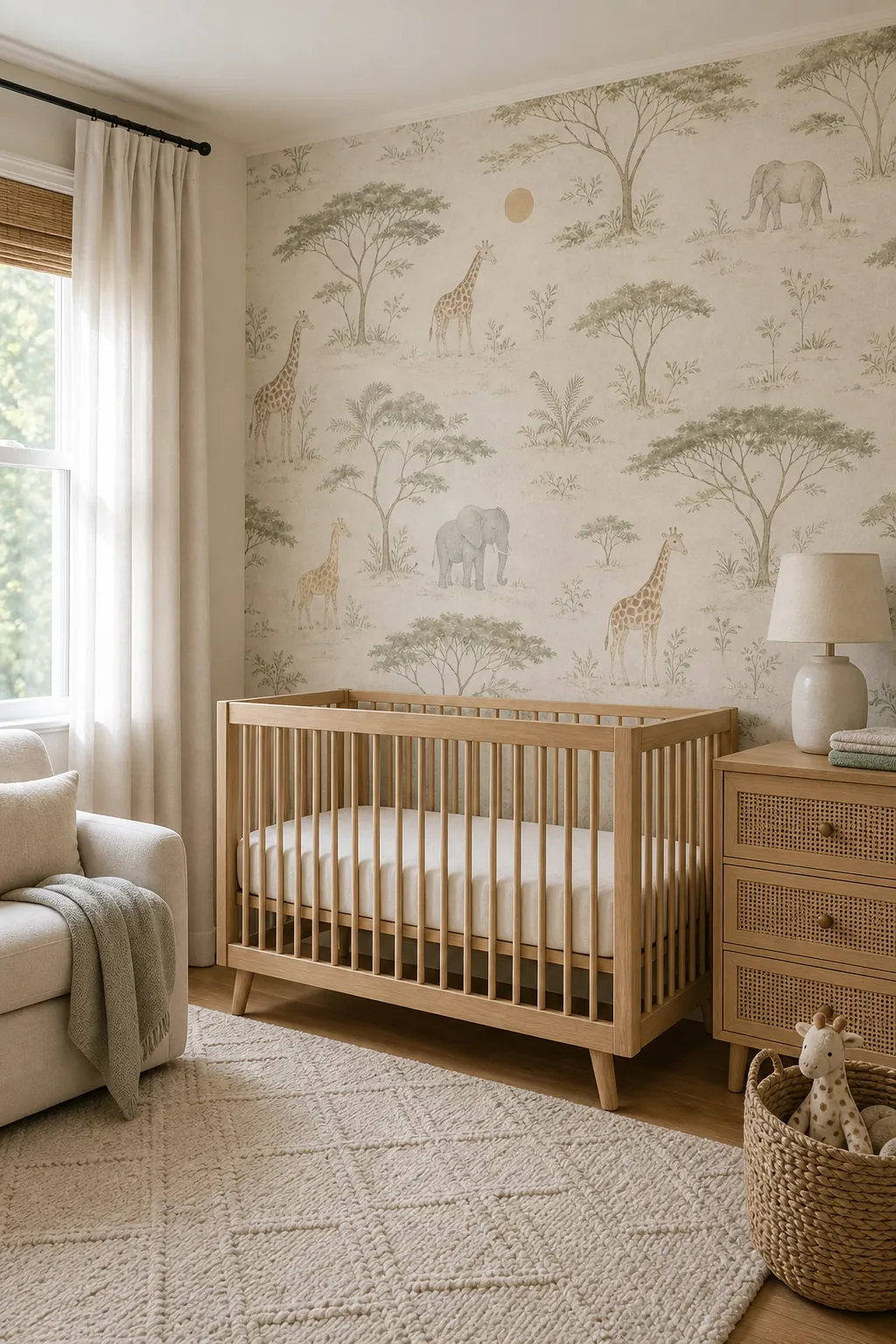

A safari nursery can go wrong fast when every surface competes for attention. Make it calmer by choosing muted animals, open spacing, and a sand-sage-ivory palette instead of bright jungle colors.
For a nursery wallpaper accent wall, safari works best behind the main furniture grouping, balanced with plain paint on the other walls. Keep the rug and curtains simple so the room feels designed, not themed from top to bottom.
Neutral botanical wallpaper for shared spaces
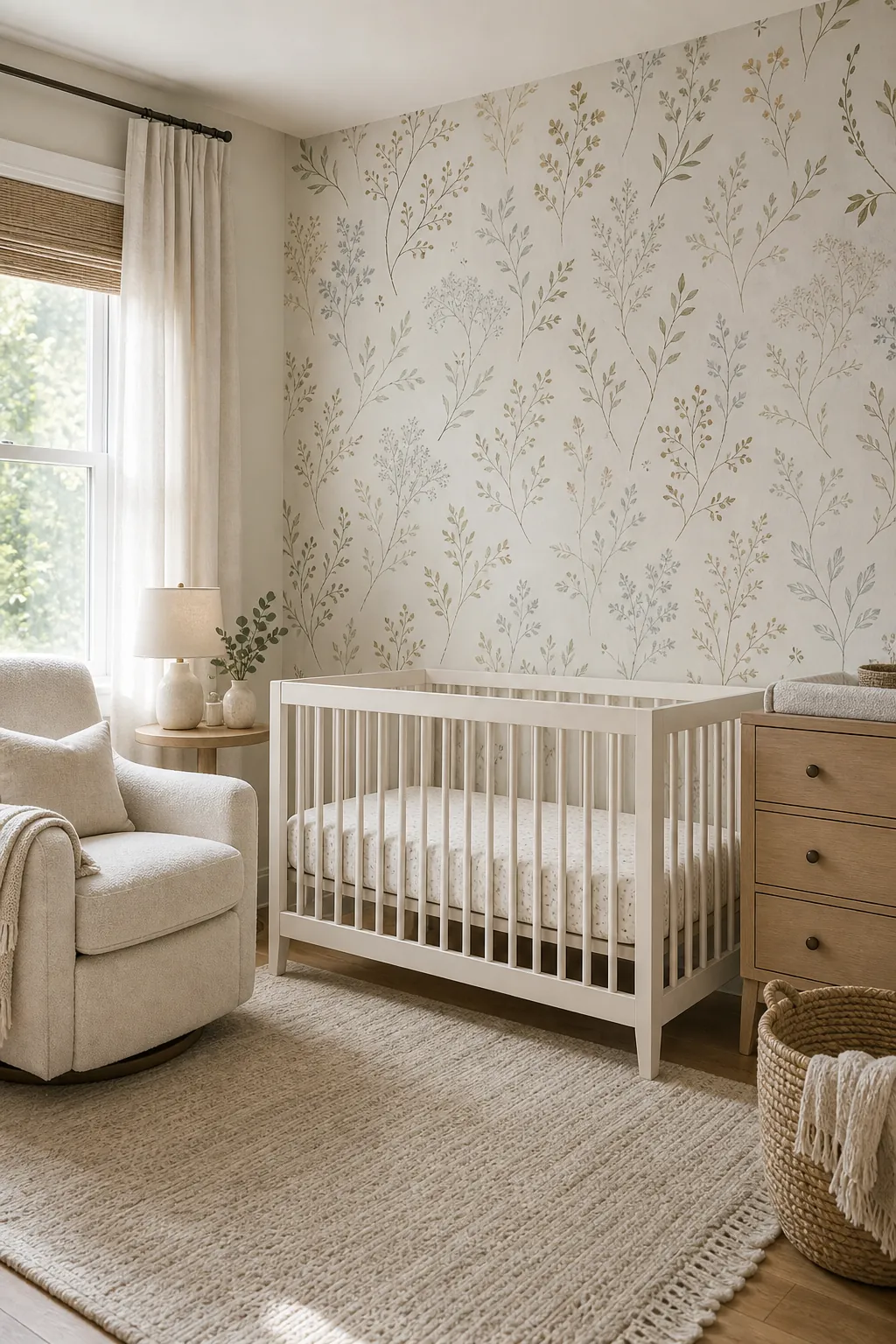

Botanical wallpaper is the easiest way to make a nursery feel finished without making it feel childish. Small leaves, seed pods, and trailing stems create a calm grown-up base for a newborn room, guest room, or sibling-shared space.
This is also a practical baby room wall design if you are buying furniture before choosing a theme. Botanical prints usually pair well with white, oak, cane, painted dressers, brass lamps, and nearly every soft textile color.
Starry night wallpaper that feels sleepy, not dark
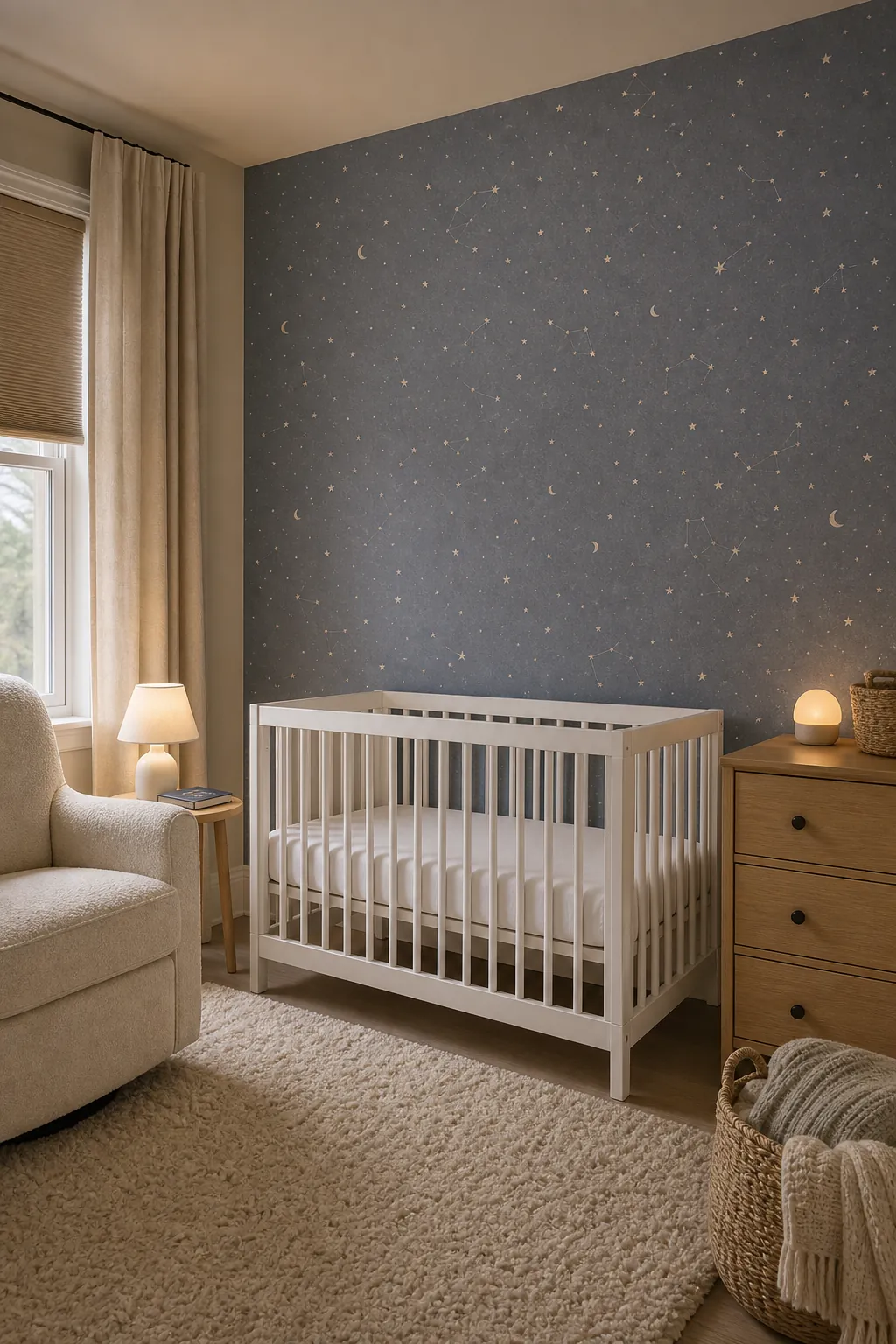

Star wallpaper can be beautiful, but the color matters. Choose dusk blue, warm gray, or muted cream instead of black or navy if the room is small. The goal is sleepy atmosphere, not a planetarium.
A scattered star pattern is also forgiving during installation because tiny alignment shifts are harder to notice. Balance it with pale furniture, warm lamps, and soft flooring so the nursery still feels light during daytime feedings.
Pastel rainbow wallpaper with a quiet palette
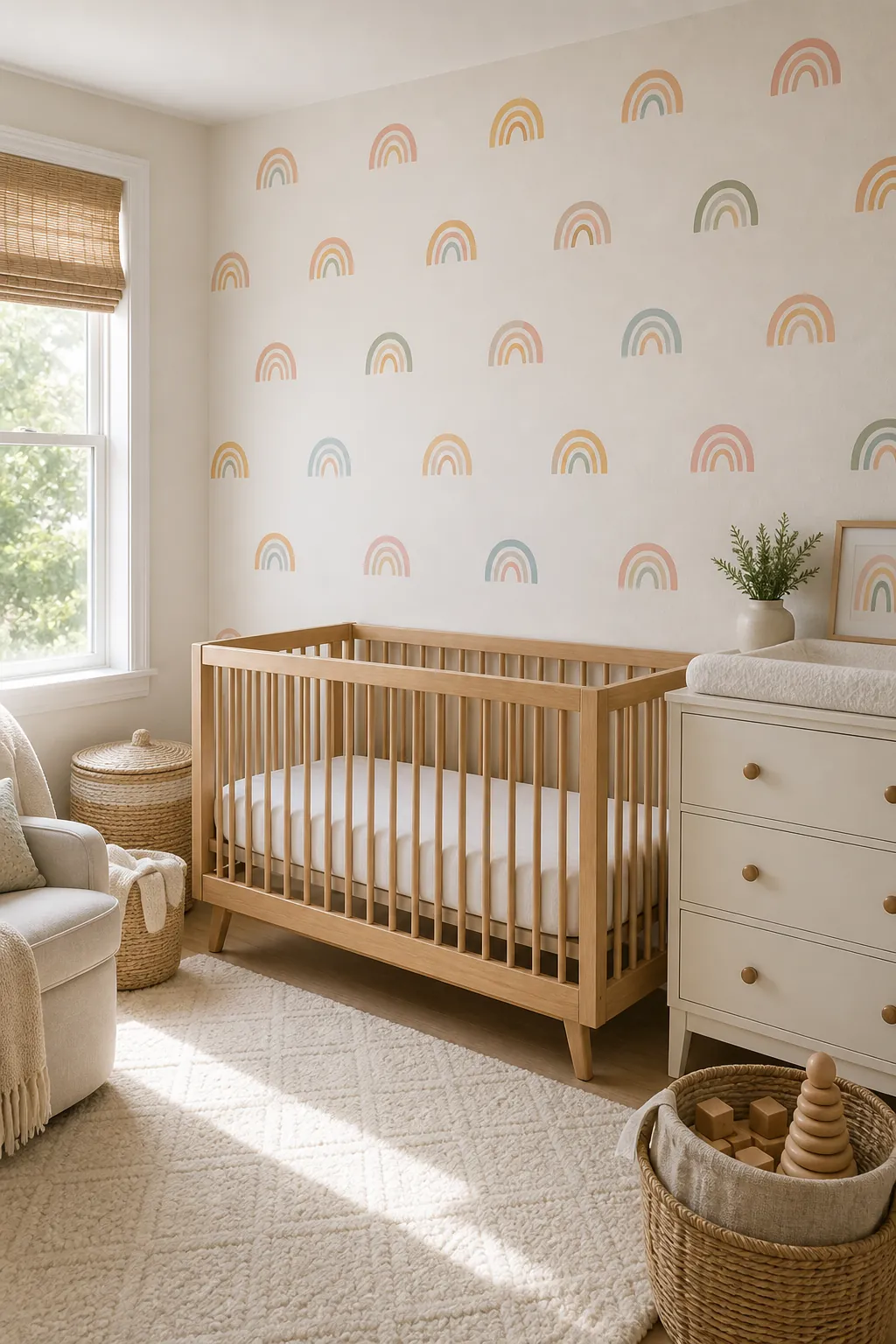

Rainbow wallpaper does not have to be loud. The best version for a nursery uses dusty, low-contrast colors: clay pink, butter yellow, pale sage, soft peach, and powder blue on a warm white background.
This works well when you want color but do not want the room to feel like a playroom yet. Leave enough white space in the pattern, then echo one or two rainbow tones in blankets, storage bins, or a washable rug.
Watercolor animal wallpaper for playful softness
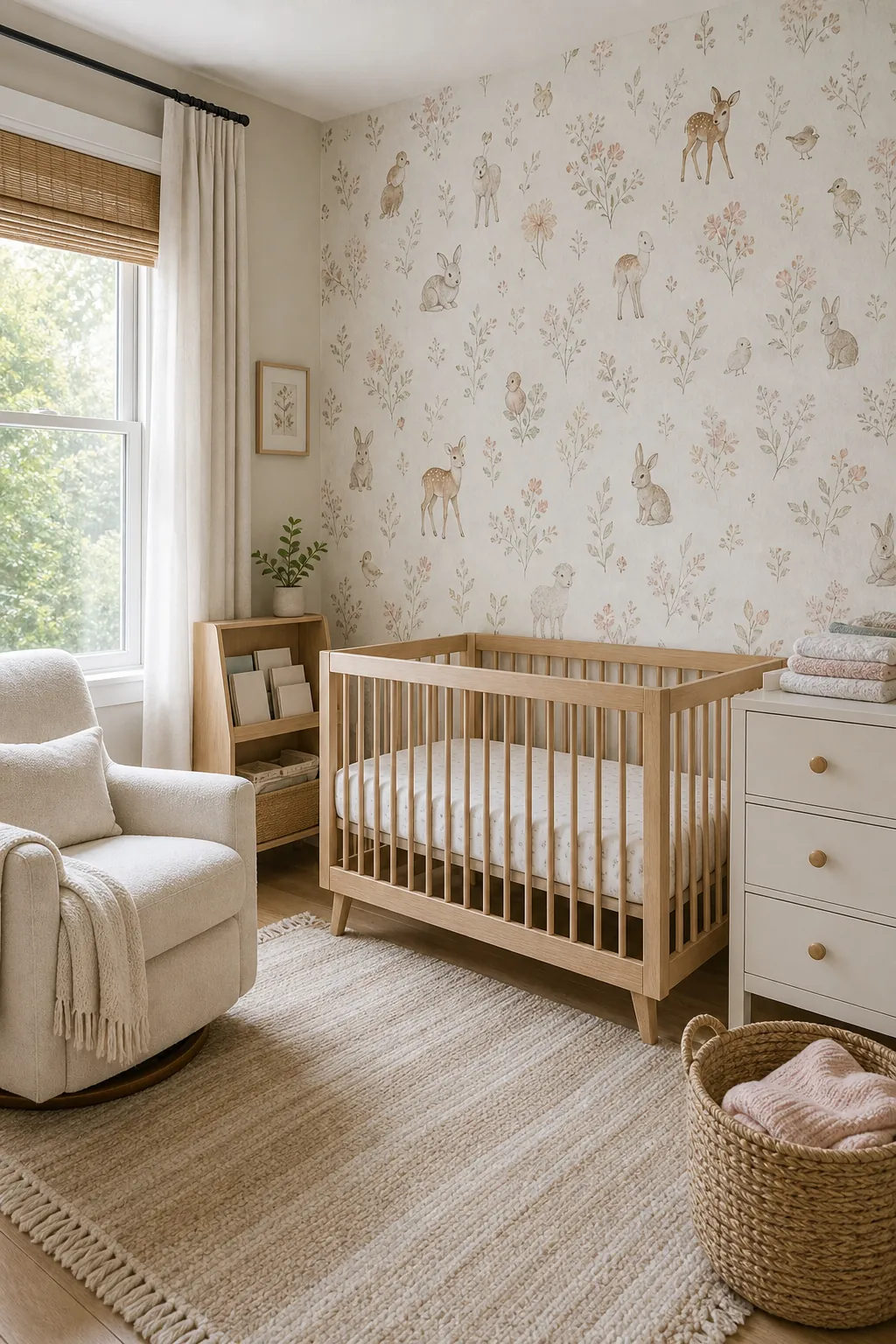

Animal wallpaper works best when the animals feel like part of the room, not like oversized stickers. Look for watercolor rabbits, fawns, birds, or lambs with soft edges and low contrast.
This is a good middle ground for parents who want nursery ideas wallpaper that feels sweet in baby photos but not too busy at 2 a.m. Keep furniture simple, avoid extra animal decor, and let the print be the personality.
Woven-look wallpaper for subtle texture
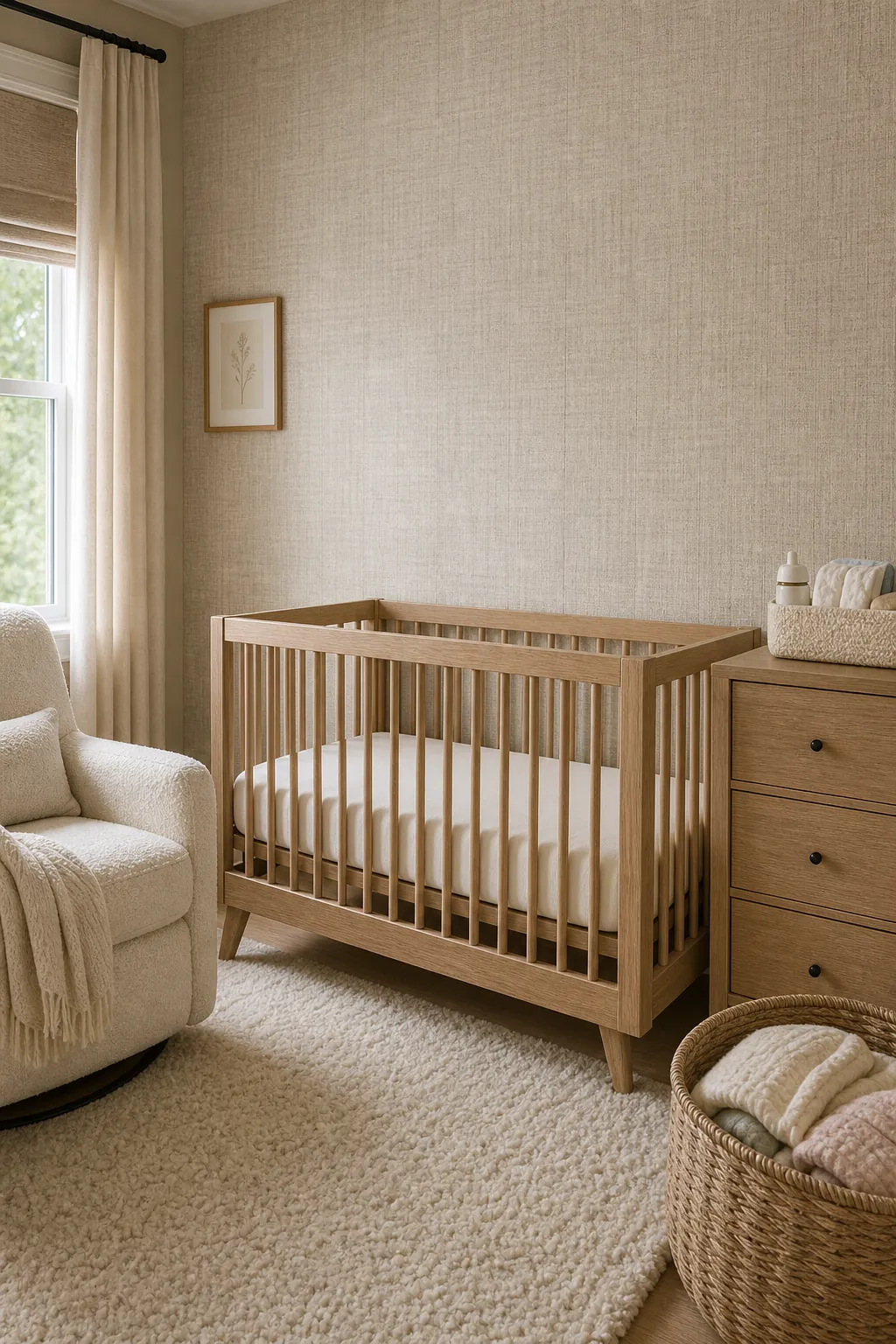

If patterns make you nervous, choose wallpaper that imitates linen, grasscloth, or a soft woven surface. It adds depth without theme pressure, which is useful when the nursery already has a lot of practical furniture.
This idea is especially strong for parents who want a nursery background that can grow into children room wallpaper later. Use it with boucle, cotton, wood, and woven baskets so the room feels tactile rather than decorated.
Tiny floral wallpaper that will not overpower a small room
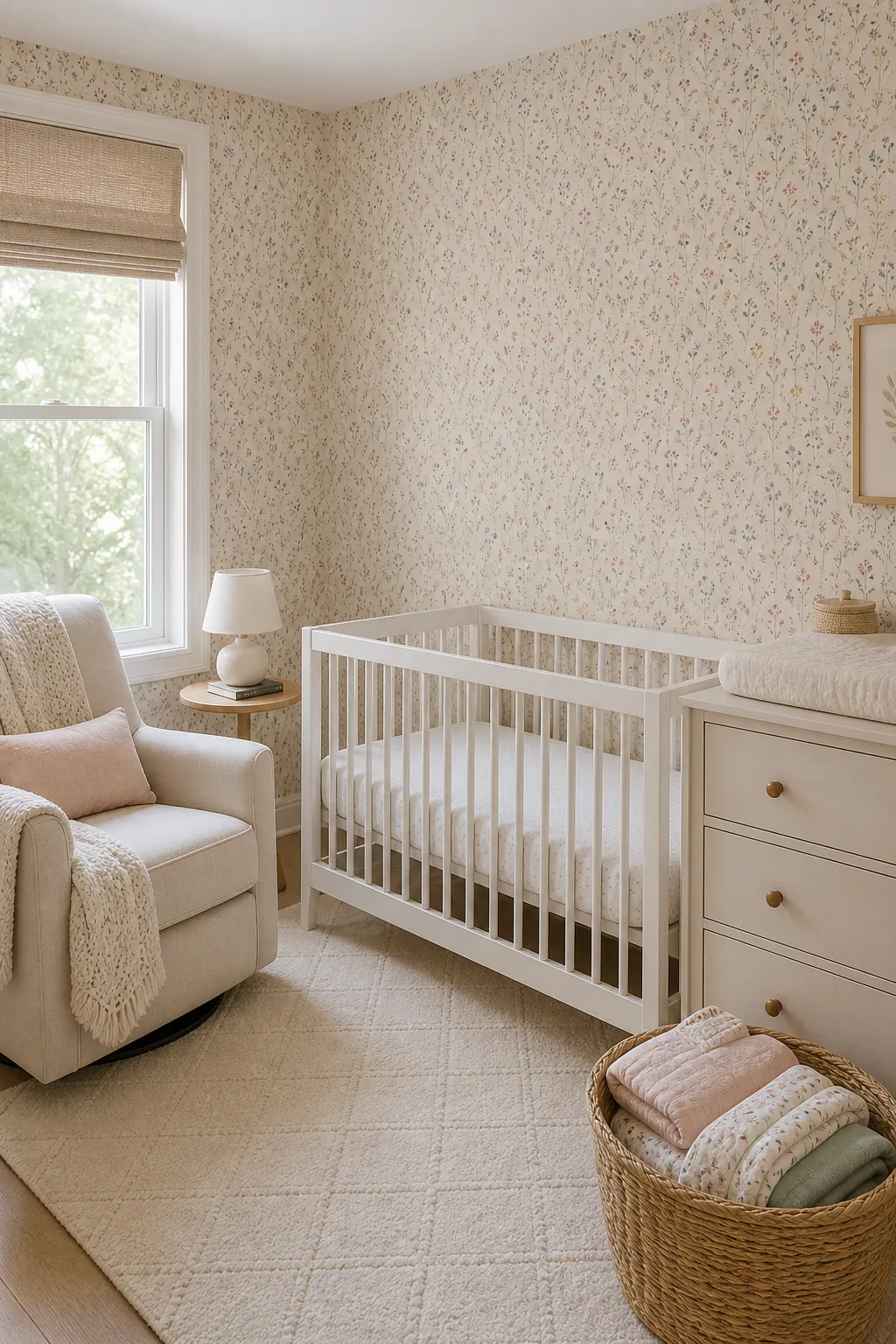

In a small nursery, tiny florals are usually easier to live with than oversized roses or dramatic murals. A small repeat gives the wall movement while keeping the room light, delicate, and flexible.
Choose dusty florals over sugary pinks, and keep trim, crib, and dresser colors quiet. This lets the wallpaper feel romantic without making the room feel crowded or locked into one short-lived baby stage.
Soft mountain mural wallpaper for depth
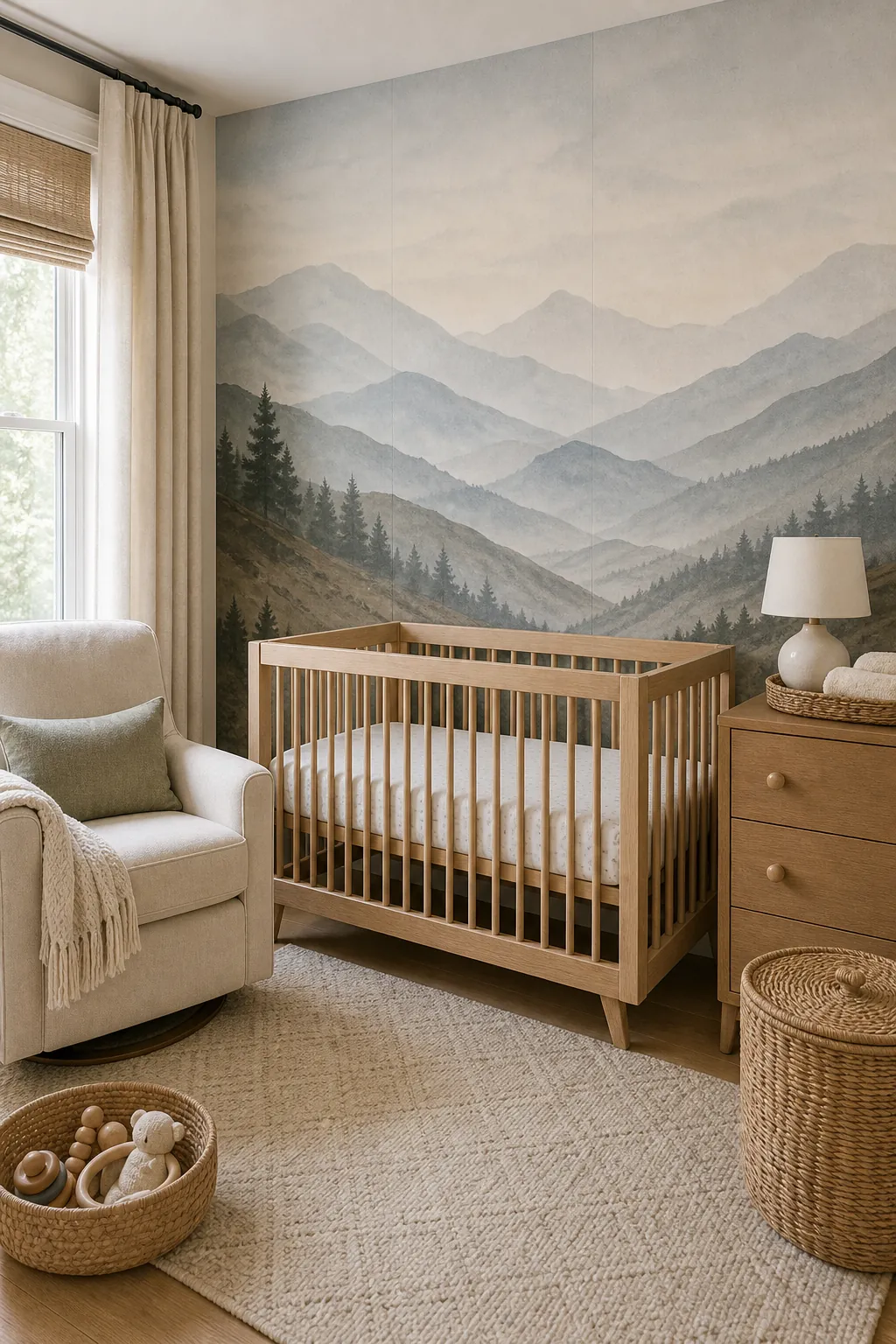

A mountain mural can make a narrow baby room feel deeper, but only if the colors stay misty. Think soft blue-gray layers, pale sage, and warm beige instead of sharp snowy peaks or dramatic sunsets.
Because murals are less forgiving than small repeats, measure carefully and order samples first. If you are worried about panel alignment, choose a hazy watercolor style where tiny shifts will not ruin the whole wall.
Classic gingham wallpaper for a timeless nursery
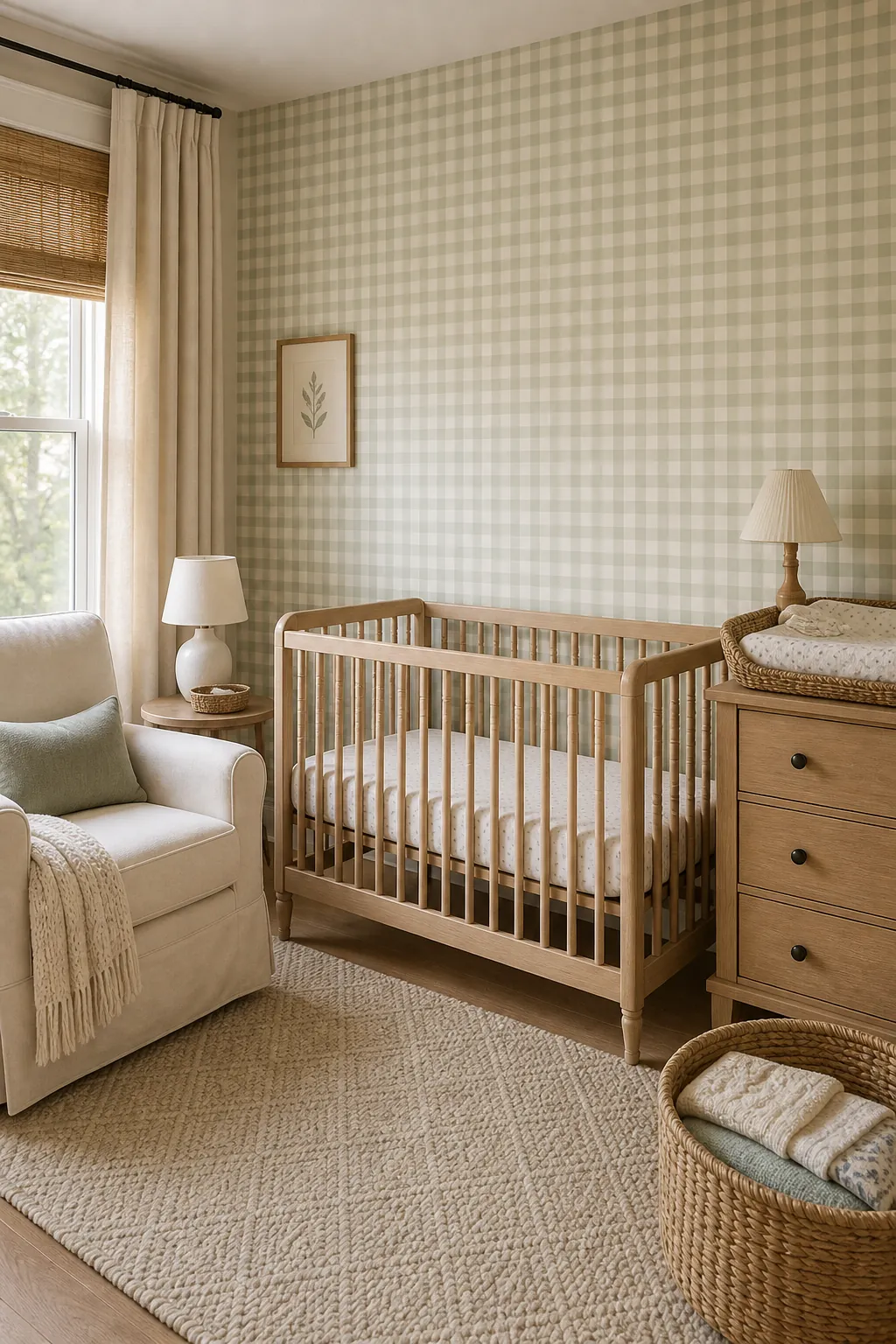

Gingham is a quiet classic because it brings structure without adding a character or theme. A small sage, blue, taupe, or cream check can make a nursery feel neat, soft, and intentionally designed.
The key is scale. Oversized checks can feel busy, while tiny checks can blur from across the room. A medium-soft repeat gives you a clean backdrop for vintage, cottage, modern, or gender-neutral nursery furniture.
Calm ocean wallpaper with soft movement
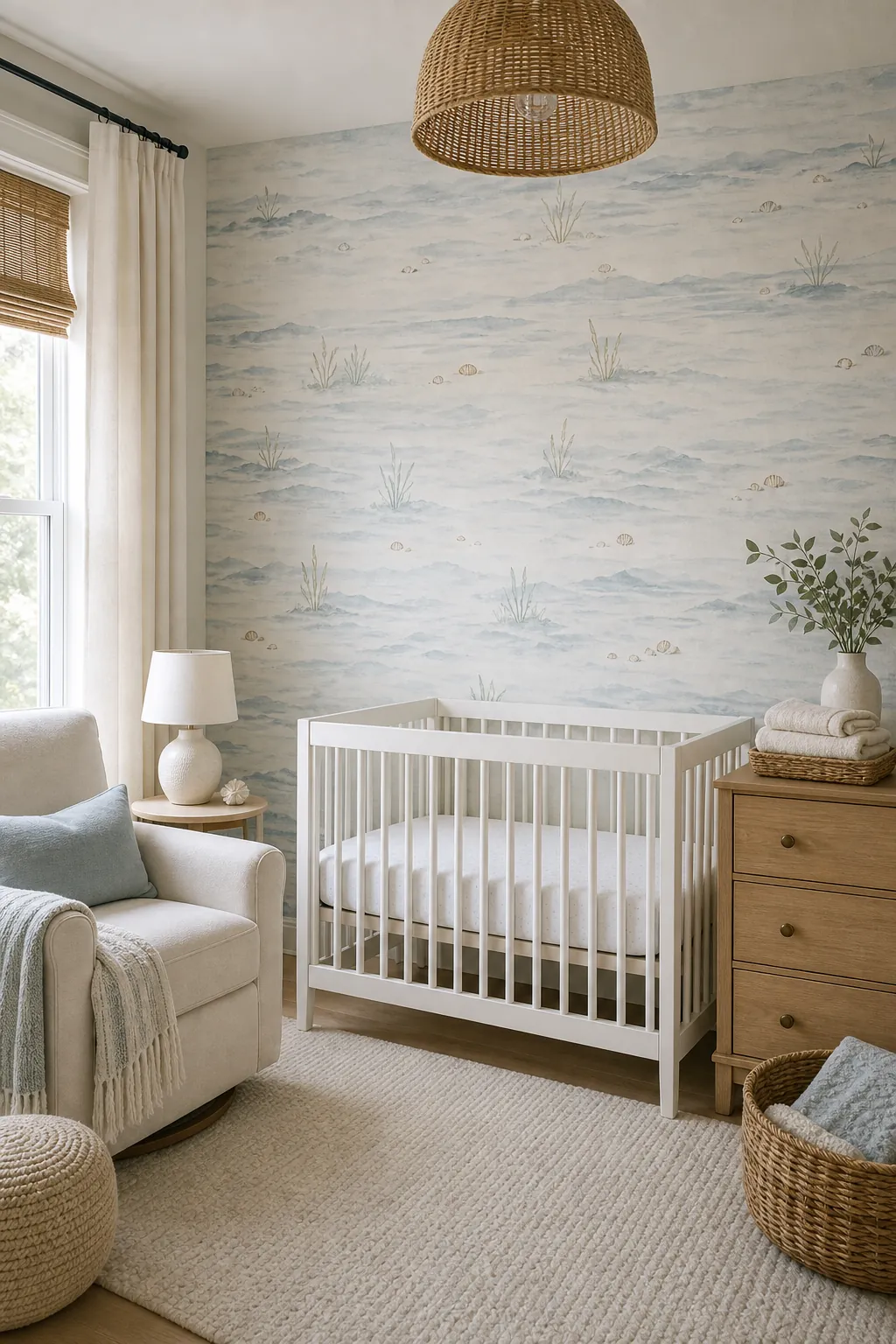

Ocean nursery wallpaper should feel fresh, not nautical by default. Soft waves, sea grass, tiny shells, and pale horizon shapes create a restful sense of movement without anchors, boats, or heavy navy.
This idea works beautifully in bright rooms where you want a breezy baby room wall design. Pair it with white furniture, natural wood, ivory textiles, and one sea-glass accent color so the room stays clean and calm.
Peel-and-stick accent wallpaper for commitment-light decorating
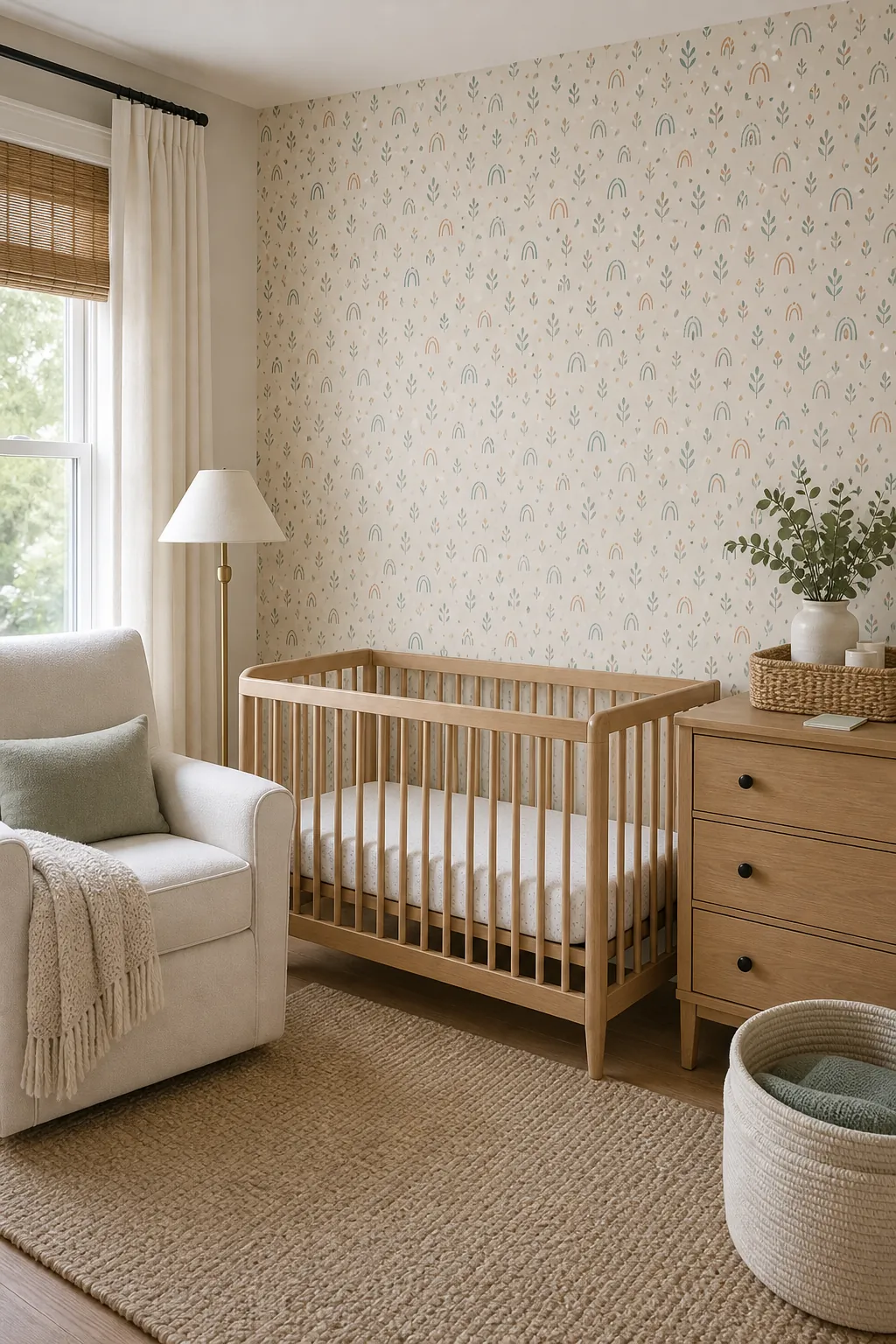

Peel-and-stick wallpaper is tempting because it sounds easy, but it still deserves planning. The safest design move is often one accent wall with a forgiving repeat, not a full room with a pattern that must line up perfectly.
Order samples, test the wall, and be honest about texture before buying every roll. If the wall is bumpy, freshly painted, damp, or poorly prepped, even beautiful wallpaper can bubble, peel, or damage paint during removal.
Ceiling wallpaper for a sweet changing-table moment
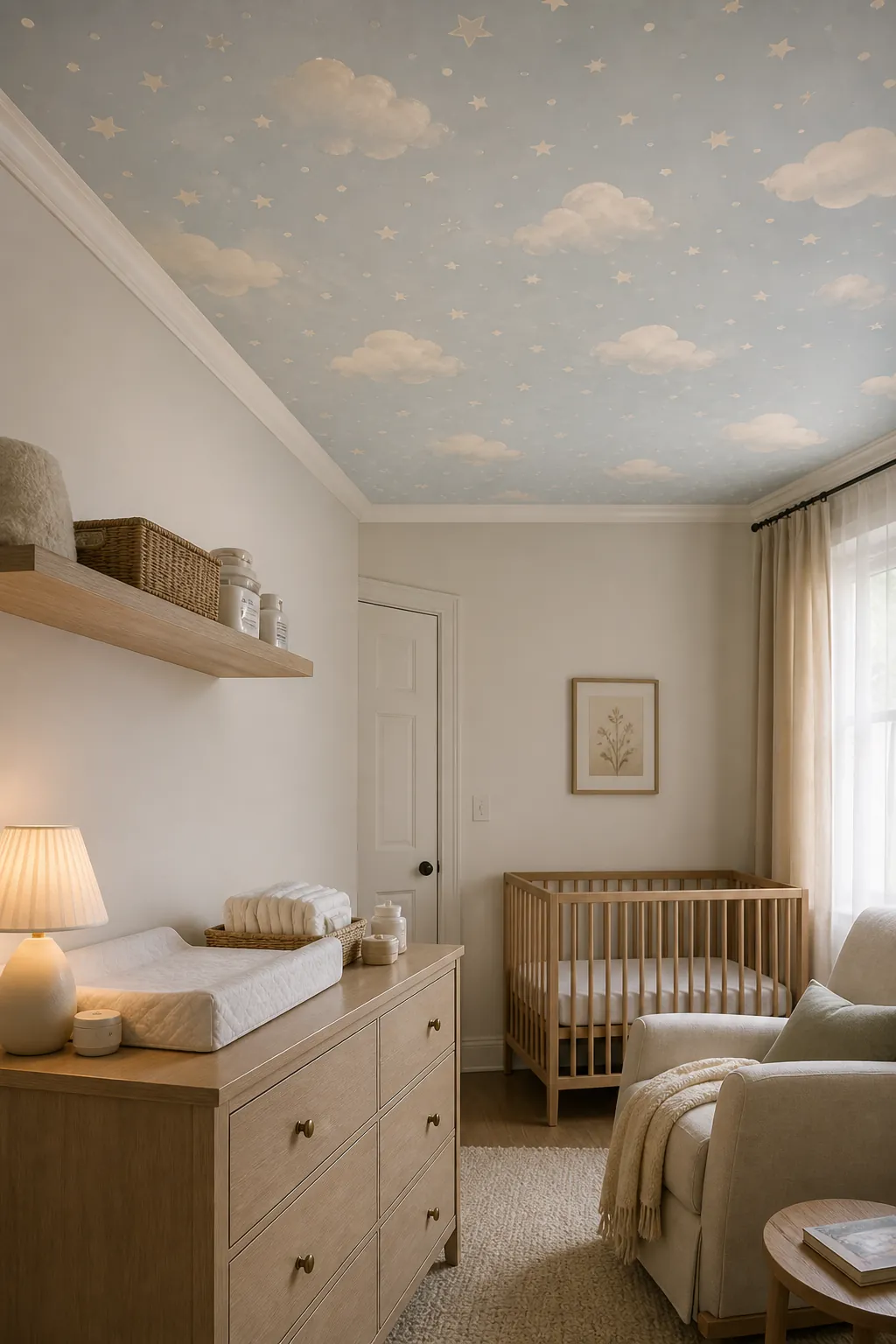

Ceiling wallpaper is a smart option when you want a special detail but prefer calm walls around the crib. A pale sky, tiny stars, or soft cloud pattern creates a little surprise above the changing area.
Keep the pattern light and the rest of the room simple. This idea is strongest when the ceiling is smooth, the room has good light, and the wallpaper does not compete with shelves, cords, or hanging objects near the baby’s sleep space.
Timeless wallpaper border for a room that changes fast
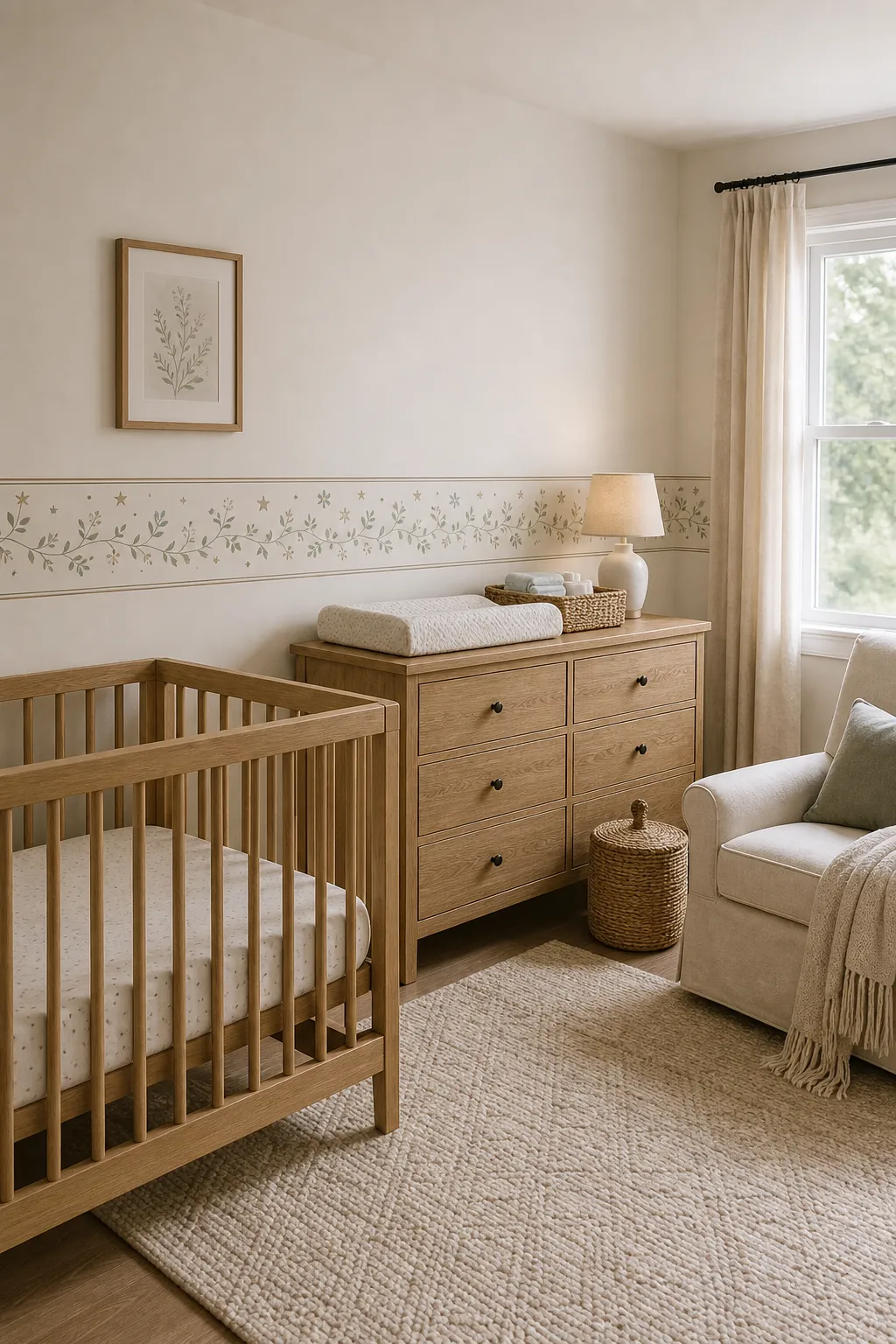

A wallpaper border can feel fresh again when it is narrow, soft, and placed with restraint. Instead of covering every wall, use a small botanical, star, or dotted border to add nursery charm without a full-room commitment.
This is a practical choice if you know the room will change quickly. It leaves most of the wall easy to repaint, keeps the nursery background calm, and gives enough detail to make the baby room feel finished from day one.